In the depths of the financial crisis in 2008 and 2009, the Federal Reserve launched an array of highly unconventional lending programs that placed the central bank in almost every corner of the financial system from short-term commercial paper lending markets where blue chip companies get cash, to money market mutual funds, to repo markets where investment banks satisfy immense daily liquidity needs.
Today, much to the Feds relief, several of these programs were put to rest and nothing bad happened. Stocks and Treasury bond prices rose.
The programs produced an alphabet soup of funny names, like the Commercial Paper Funding Facility (CPFF), Primary Dealer Credit Facility (PDCF) and Term Securities Lending Facility (TSLF). For the most part, the programs did what the central bank was designed to do when it was created in 1913 — act as a lender of last resort which provides emergency credit to firms during a liquidity crisis. And as it promised it would do last year, the Fed has stopped doing them now that the markets have calmed.
This is one exit strategy Mr. Bernanke can check off as being executed fairly seamlessly.
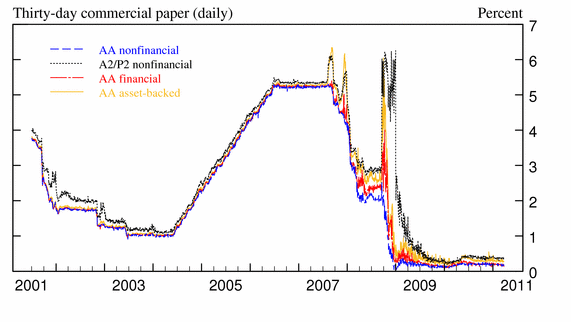
Some of the programs seem to have worked well. At one point, companies came to the Fed for more than $300 billion in commercial paper loans. But theyve weaned themselves off of that government credit. In addition, private commercial paper borrowing rates fell sharply after the CPFF program was introduced, easing a burden on borrowers. (Though private issuance is way down, too, so the market doesnt look completely healed.) Money market mutual funds also have stabilized.
Meantime, it would be hard to argue that the PDCF and TSLF were rousing successes. They were targeted at investment banks and none of the big five investment banks exist anymore as standalone investment banks. But the programs cant be blamed for that the investment banks had problems that not even the Feds lending largesse could solve.
Academics will be debating for years whether these liquidity programs have worked as advertised. But give the Fed this: If its many other interventions like its rescues of American International Group Inc. and Bear Stearns, or its purchases of mortgage debt or its zero-interest rate policy all went away as quietly into the night, Ben Bernanke would be a very happy man.