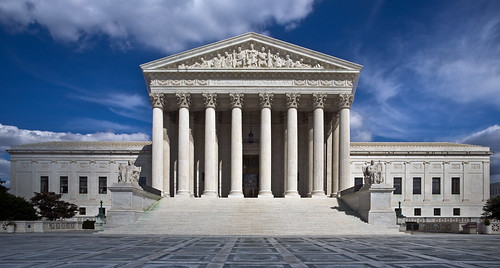
 This week, the Third Circuit Court of Appeals opened the door for Delaware to resume inmate executions, and Attorney General Beau Biden immediately heralded the opportunity to “schedule executions as appropriate.”
It’s a disappointing development, but also one with a lesson in it. For too long, the progressive community and its reform-minded allies have lagged behind conservatives in understanding the judiciary’s importance, and it’s time that attitude changed.
As unsatisfying as this decision may be, the fault here really lies with the Supreme Court, which has bound lower courts with its misinterpretation of the Eighth Amendment. In its decision, the unanimous three-judge panel voiced serious concerns about what they called Delaware’s “occasional blitheness” in its application of a three-drug protocol to execute prisoners. The court also chastened Delaware to respect its “moral obligation to carry out executions with the degree of seriousness and respect that the state-administered termination of human life demands.”
Over the past 40 years, the Supreme Court has waffled on the death penalty’s constitutionality, but recent decisions have backed the idea that capital punishment is neither cruel nor unusual, and permissible under the Eighth Amendment. In 1972, the Court initiated a moratorium on the death penalty, but justices got rid of it just four years later. In 2008, the Court upheld the three-drug lethal injection protocol employed by almost three dozen states, in a highly splintered decision (in which seven out of nine justices wrote their own opinion).
Since then, states have resumed capital punishment with varying degrees of attention to protocol and adequate training for executioners. In too many instances, carelessness has resulted in botched executions. In the words of the late Justice Harry Blackmun, justices continue to “tinker with the machinery of death.”
Why do the majority of justices support capital punishment? Because dumb-on-crime tough-on-crime conservatives have dominated the debate over the judiciary’s role for a generation. Since the 1968 presidential campaign, conservatives have placed the courts among their top priorities. On the other hand, progressives fail to match conservatives’ fevered pitch on the issue, resulting in a lop-sided political landscape that makes confirmation of even left-leaning judges a tough sell — let alone progressive titans that can match wits with the likes of Justice Antonin Scalia.
The courts matter. Conservatives know this, and have taken advantage of progressive inaction to hijack one of our three branches of government. With rumors swirling around the possibility of a pending vacancy on the Supreme Court, progressives need to get their act together to force confirmation of a justice faithful to the language and spirit of the Constitution.
Photo Credit: ken mccown