 In April 2008, I talked about Boeing putting the first manned fuel cell powered aircraft into flight. And there have been many times in the past 4 years (yes, the blog is that old), that I’ve talked about hydrogen powered unmanned aerial vehicles (UAVs).
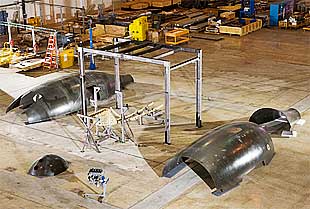
A new liquid hydrogen-powered UAV which is also a high altitude long endurance (HALE) aircraft called the Boeing Phantom Eye is getting ready to be demonstrated. According to Boeing Phantom Works president Darryl Davis, “The essence of Phantom Eye is its propulsion system. After five years of technology development, we are now deploying rapid prototyping to bring together an unmanned aerial vehicle [UAV] with a breakthrough liquid-hydrogen propulsion system that will be ready to fly early next year.”
The important aspects of the Boeing Phantom Eye include its 150 ft. wingspan, 450 lb. payload capability, 65,000 top altitudes and the ability to stay aloft for 4 days. This makes the Phantom Eye a military aircraft that will be useful for surveillance, intelligence, reconnaissance and communication.
But, wait, there’s more (as they say on those cheesy commercials on TV). Boeing is also working on a larger HALE called the Phantom Ray, which will be able to carry a 2,000 lb payload and stay in the air for 10 days. Both the Phantom Eye and Phantom Ray will be propelled by clean hydrogen fuel, fly higher than most typical UAVs and keep military personnel out of harm’s way, while recovering critical intelligence on the ground.
When one thinks of government agencies like NASA and the U. S. military, green energy rarely comes to mind. But, this is the direction both are moving towards and this lead by example philosophy is what we need more of in order to fully realize a hydrogen-based transportation system in the near future.