 When building out the hydrogen highway system in California, New York, Washington DC, Florida or other places the conventional wisdom has to been either build an entire station from the ground up or add a hydrogen fueling pump to an existing gas station.
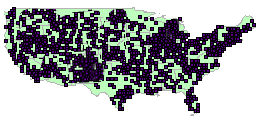
In April 2008, I quoted Larry Burns of General Motors stating, “A network of 12,000 hydrogen stations in the United States would put 70 percent of the U.S. population within two miles of a fueling station. If the stations cost $2 million each (estimates for the cost of a station range from $1 million to $4 million) the network would cost about $24 billion.”
Of course this cost estimate was based on the premise of building hydrogen stations from the ground up and not adding hydrogen fueling pumps to existing stations or to other alternative locations.
I’ve gotten some alternative suggestions over the years from my readers as to where to place hydrogen pumps in order to build out the hydrogen highway system that doesn’t involve traditional gas station. Some of these suggestions involve large warehouse stores, large retailers and other locations such as convenience stores and rest stops.
One reader said that since there are over 20,000 new car dealerships in the U. S. at least some of them could put up a hydrogen pump to support the hydrogen cars they are supposed to be selling in 2015.
But, what really got me to thinking was the East Coast Hydrogen Highway plan by a company called Lumber Liquidators which owns 180 stores nationwide and will use their parking lots to erect about a dozen hydrogen fuelling pumps over the next two years from Maine to Florida as part of its corporate responsibility program.
Now other large companies have come out also with their clean energy corporate responsibility programs. A few names like Google, Walmart, Yahoo and Kohl’s come to mind.
In fact Kohl’s in California is putting more solar panels on their rooftops that both Google and Walmart. So, this got me to thinking about all of the other retailers and malls in the U. S. that have plenty of rooftop space for solar panels that could use some of this clean energy to create hydrogen and host a fueling station or two in their parking lots.
Here’s a list of retailers in the U. S. that have a large number of stores that could build at least one hydrogen fueling pump in many strategic locations in their parking lots.
- Costco Stores in the U. S. – 460
- Sam’s Clubs in the U. S. – 602 (Oregon and Vermont are the only states without Sam’s Clubs)
- BJ’s Wholesale Club – 160
- Walmart stores in the U. S. – 3,700 – already testing hydrogen forklifts
- Seven-Eleven stores in U. S. 5,900
- Home Depot – 1,000 stores in the U. S.
- CVS Caremark – 6,300 drugstores
- Target – 1,500 us stores
- Sears – 3,800 us stores
- Safeway food stores – 1,175
- SuperValu – 2,500 stores
- K-Mart 1,400 stores
- J. C. Penney 1,000
- Delhaize American supermarket chain 1,500 stores
- Staples – 1,800
- TJX Companies fashion and apparel – 2,300
- The Gap 3,000
- Office Depot – 1,200
- Kohl’s 800 stores – already building rooftop solar panels
- H-E-B Grocery – 500 stores – already using hydrogen forklifts
- OfficeMax – 1,000 stores
- Dollar General Stores – 8,000
- Family Dollar Stores, Inc – 6,000
- Borders Books and Walden Books 1,100
- Lumber Liquidator stores – 180 – already committed to building East Coast Hydrogen Highway at 11 of their stores
Now, perhaps this isn’t a totally fair comparison since some of these retail chain stores are located inside of malls and don’t have a say over what happens to the parking lots outside. In the U. S. there are a total of over 2,800,000 retail stores most of which rent space and don’t have a say about what happens outside the confines of their buildings.
But, then I decided to check out the number of shopping centers in the U. S. that could support at least one hydrogen fueling pump and that number is 47,000.
As one can see, this number far exceeds the 12,000 hydrogen fueling stations that GM’s Larry Burns had talked about 2 years ago. In an age of corporate green responsibility there is no reason that a company like Lumber Liquidators should be building the East Coast Hydrogen Highway system by itself.
Where are the larger corporate partners in this venture? Where are the large nationwide retailers, wholesale clubs, car dealerships and mall operators that could step up to bat and take it upon themselves to build out part of the national hydrogen highway system with their own resources?
Perhaps this is too outside-the-box thinking for most retailers. Or perhaps not? In Southern California at least several Costco wholesale clubs not only sell gasoline but have electric charging stations that are holdovers from a few years ago before the large automakers crushed their electric cars. These charging stations sit near the fronts of the stores similar to handicap parking spots and let consumers recharge their vehicles while shopping. Something similar could be done for hydrogen cars only fill-ups would be done much more quickly.
Many of the 5,900 seven-eleven stores in the U. S. also sell fuel and like some of the Shell gasoline stations could easily add a hydrogen pump as well. So, this is not as radical of thinking as some would assume because similar projects have already been demonstrated.
This is a call to action aimed at the U. S. retailers to take ownership of corporate environmental responsibility and start building hydrogen fueling pumps in strategic locations. Tax breaks and government subsidies aside, it’s the right thing to do.