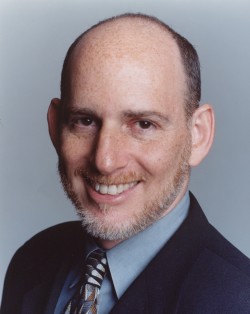
 Ethan Nadelmann is part of Change.org’s Changemakers network, comprised of leading voices for social change. Change.org asked Mr Nadelmann to respond to questions to provide context for his work and the causes he supports.
Change.org: What cause or causes would you most like to promote as a Changemaker and why?
Nothing matters to me more than ending the war on drugs and reducing our extraordinary overreliance on the criminal justice system. I want to make marijuana legal, decriminalize all drugs for personal use, and shift our drug policies to a health-based approach.
The U.S. has less than 5 percent of the world’s population, but almost 25 percent of the world’s prisoners, ranking first in the per capita incarceration of our fellow citizens. We have increased the number of people behind bars from roughly 500,000 people in 1980 to 2.3 million today – and altogether we now have over 7 million people under criminal justice supervision.
The drug war – the dominant role of the criminal justice system in dealing with certain drugs and the people who buy, sell, make, and use them – is driving this explosive increase in incarceration more than anything else. The U.S. arrests almost a million people for marijuana each year and over a half million people are behind bars tonight for a drug law violation.
The movement for drug policy reform stands in the footsteps of other movements for individual freedom and social justice – it currently stands where the gay rights movement stood in the 1970s, or where the civil rights movement stood in the 1950s, or where the women’s rights movement stood in the early part of the 20th century.
In each case, it’s about advancing freedom and justice. In each case, it’s about fighting powerful vested interests in our society.
And in my case, it’s specifically about articulating a core principle that underlies much of my work: that no one deserves to be punished – or discriminated against or amongst – simply for what we put in our bodies, absent harm to others.
Now, the fact of the matter is, there has never been a drug-free society in human history, and there never will be one. Our challenge therefore is not how best to build a moat between ourselves and drugs; rather, our challenge is to learn to live with drugs – the reality of drugs – so that they cause the least possible harm and the greatest possible benefit.
It’s on this basis that we can build a movement for freedom and justice that ends America’s exceptional reliance on incarceration and the criminal justice system – and that embraces a drug control policy grounded in science, compassion, health, and human rights.
Change.org: If you could ask 1 million people to all do 1 thing to advance your cause or causes, what would it be?
Come out of the closet about your drug use. Drug war propaganda demonizes and dehumanizes people who use drugs. Let your fellow citizens – your colleagues, your friends, and your family – know the real face of the American drug user.
We need credible people, especially public figures, to stand up and say, “I contribute to society, I work hard, I love my family, and I am an otherwise law-abiding citizen – but I do not believe that people should be treated as criminals simply because of what they put into their bodies. This law is wrong.”
The war on drugs is really a war on people. Roughly half of all Americans have used an illegal drug, and the last three U.S. presidents have all used illegal drugs – in fact President Obama was quite candid about his marijuana and cocaine use. Would Obama, and our country, be better off if he had been arrested?
Think about someone you know who has used an illegal drug. Then ask yourself: would that person be better off in prison? Would that person be more likely to have become a productive member of society if they were stripped of their freedom, their property, their children, and their job?
Once the silent majority of illegal drug users begin to speak out, the stereotypes that drive the drug war will be impossible to sustain. The vast majority of Americans who use drugs illegally are doing no harm to anyone else, and in most cases are doing no harm to themselves. None of us deserve to be treated as criminals or locked up in a cage.
Change.org: If you could ask President Obama and the U.S. Congress to do one thing to advance you cause(s), what would it be?
It would be to commit – in practice, not just in rhetoric – to the principle that federal drug policies should be grounded in science. Our elected officials need new metrics to determine whether progress is being made.
Rather than measuring success based on slight fluctuations in drug use, the primary measure of effectiveness should be the reduction of drug-related harm and drug war-related harm. Despite trillions of dollars spent and millions of Americans incarcerated, the harms associated with illegal drugs – addiction, overdose, and the spread of HIV/AIDS and hepatitis – continue to grow. Meanwhile, the war on drugs has created new problems of its own, such as rampant racial disparities in the criminal justice system, over-incarceration, eroded civil liberties, turf violence, corruption, broken families, increased poverty, and loss of law enforcement credibility.
It’s time for a new bottom line for U.S. drug policy – one that focuses on reducing the cumulative death, disease, crime, and suffering associated with both drug misuse and drug prohibition. Federal drug agencies should be judged – and funded – according to their ability to meet these goals.
Change.org: What are the greatest obstacles to change on your issue?
Our greatest obstacles are grounded in prejudice, profit, fear, and ignorance.
The ground has never been more fertile for a change in our nation’s drug policies. Still, I can’t say that we’ve reached a tipping point – at least not yet.
Three forces are at play. First, we’re up against an unholy combination of prosecutors, private prison builders, police and corrections officers unions, and other government-funded agents of the criminal justice system that have never been more powerful. I hope that we don’t have to wait until January 2017 for President Barack Obama to have to give a farewell speech warning about the pernicious power of the drug war industrial complex, and the emerging homeland security industrial complex, like the speech that Eisenhower gave in January 1961 with respect to the military-industrial complex. We should not have to wait that long.
We’re also up against the fear of the unknown. It’s commonly assumed that prohibition represents the ultimate form of regulation. But, in fact, prohibition represents the total absence of regulation – it is not drug control, but drug chaos. When alcohol Prohibition was repealed in 1933, most people could remember a time when alcohol was legally regulated. Unfortunately, the drug war has continued for so many decades that it is difficult to conceive of alternatives to the presumption that the criminal justice system has to be front and center in dealing with particular drugs in our society.
The final obstacle is the belief that it could never happen.
There are two mistakes we could make right now. The first is to underestimate the power and ability of our opponents, most notably in the drug war industrial complex, to undermine and reverse the progress we’re making now.
But the second mistake could prove even more fatal. That would be to underestimate the potential for rapid and major reform. Most people, a generation ago, would not have predicted the dissolution of the Soviet Union or the emergence of China as the most dynamic capitalist economy on earth. Who, just ten years ago, could have imagined the rapid progress of gay rights, and especially public support for gay marriage? Or that the country would elect as president a black man named Barack Hussein Obama?
Our struggle to end the dominant role of the criminal justice system in drug control is a multi-generational effort – but we should never underestimate the possibility of making sudden and unprecedented leaps forward.
I’m not prepared to predict that we’ll make marijuana legal or end the drug war in the next three years – but it could happen a lot sooner than most people think.