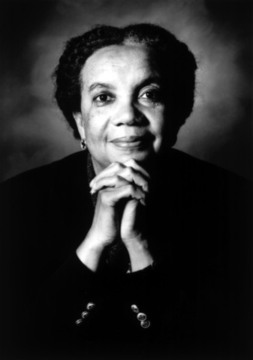
 Marian Wright Edelman, founder of the Children’s Defense Fund, is part of Change.org’s Changemaker network, a group comprised of leading voices for social change.
Nineteen-year-old Jasmine Lynn arrived at Atlanta’s Spelman College, my alma mater, as a smart, dedicated student full of promise. She was a psychology major with a 3.8 grade point average who wanted to be a lawyer. Her friends knew her as a “beautiful, free-spirited ball of energy [who] always had a smile on her face.”
But last September, just a few weeks into her sophomore year at Spelman, Jasmine was walking with friends on the nearby campus of Clark Atlanta University when she was hit and killed by a stray bullet. The young man charged with her murder, Devonni Benton, was a 21-year-old student who had gotten into a fight with some peers. And so an area that should have been a safe haven and sanctuary of learning for students attending the historically black institutions that make up the Atlanta University Center — including Martin Luther King Jr.’s alma mater Morehouse — became just one more urban war zone, with Jasmine caught in the crossfire.
Jasmine was doing all the right things — enrolling in college, excelling in her classes, planning for her future. Ironically, the alleged shooter was trying to pursue his education too. As an editorial published in the Spelman campus newspaper after Jasmine’s death wrote, quoting Spelman president Beverly Daniel Tatum: “This incident could have happened anywhere…It could — but it shouldn’t.”
The Children’s Defense Fund’s annual report Protect Children, Not Guns reported last year that 3,184 children and teens were killed by firearms in 2006. Put differently, that’s almost the total number of U.S. combat deaths to date in Iraq, and over five times the number of American combat fatalities in Afghanistan.
Every week, over sixty children and teenagers are killed by firearms. More preschoolers are killed by firearms than the number of law enforcement officers killed in the line of duty. More 10- to 19-year-olds die from gunshot wounds than from any other cause, except car accidents. Some were homicides, some suicides, and some accidents — but in every one, a gun was the instrument that ended a life that, like Jasmine’s, had hardly begun.
In the days and weeks after Jasmine’s death, students at Spelman, Morehouse, and other nearby universities came together for vigils and walks. They began to demand change — not just increased security on their own college campuses, but a change in our culture. We need to hear their cries and add our voices to theirs. Too many of us know someone like Jasmine whose life was cut short because of a gun. And even those Americans who haven’t been personally touched still shoulder the social costs of such crimes.
Had Jasmine graduated from Spelman and received her law degree, who knows what she may have become? How senseless and sad that we’ll never have the chance to find out.