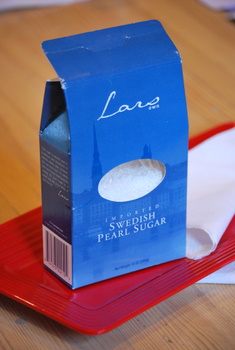
Pearl sugar is a type of specialty sugar that is often used in baking in Scandinavia and a few other countries in Northern Europe. The sugar is not completely round, like real pearls, but it comes in large round-ish chunks of sugar. The most remarkable thing about this type of sugar is that it doesn’t melt easily when exposed to moisture or to high heat, meaning that you can mix it into some cookies for a little crunch or sprinkle it on top of a cake and the sugar will stay put (and stay very visible) as you bake. Pearl sugar can be found in different sizes, varying primarily by brand. Some are the size of large sea salt flakes, while others are more like peas or macadamia nuts. For me, the smaller sizes tend to me more versatile because they can double as sprinkles for baking.
At a glance, pearl sugar resembles sugar cube pieces. Sugar cubes are compressed blocks of sugar that are designed to dissolve easily in hot liquid. The individual grains of sugar are not held tightly together. Pearl sugar is much more heavily compacted, which is why it does not melt easily during baking. Mixing pearl sugar into baked goods will give them soem extra sweetness and crunch. Sprinkling it over the top of a bread or pastry will do the same, and will also give your baked good a nice finishing look.
You won’t find pearl sugar in just any market – not unless you live in Scandinavia, Belgium or some other country where it is commonly included in goodies – but you can find it at some specialty cooking stores, like Sur La Table, and at Scandinavian import stores, like the food section at Ikea. And, of course, you can also find it online.