 Mass incarceration is breaking our democracy. According to the often-cited PEW report, “One in 100: Behind Bars in America 2008,” over two million people — or one in every 100 adults — is locked behind bars. In 2007 states spent more than $49 billion on corrections, up from $11 billion 20 years before. Recidivism rates continue to stay the same, with about half of released inmates returning to jail within 3 years. There is growing public demand for criminal justice reform, but change is slow. One impediment to reform is barring people with felony convictions from the polls. Another subtle, yet equally damaging, way that mass incarceration puts its thumb on the scales of democracy is through the U.S. Census.
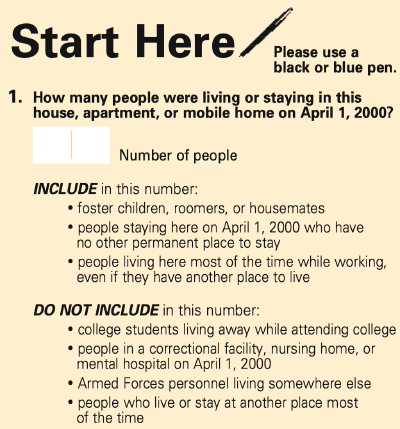
The U.S. Census counts prisoners where their bodies are located on Census day, not where they come from and where they will return, on average, 34 months later. This remains true even though prisoners cannot vote and they remain legal residents of the places they lived prior to incarceration.
Census counts are used to apportion political power at all levels of government. When states draw districts based on the Census Bureau’s flawed counts, districts with prisons are afforded extra representation simply because the prison industry has a facility there. The practice of crediting thousands of disproportionately urban and minority men to other communities has staggering implications for modern democracy.
This new problem has old roots. When the Census began in 1790 its role was limited. The Census’ sole constitutional mandate was to count the number of people in each state to determine their relative populations for purposes of Congressional reapportionment. It didn’t matter — for purposes of comparing New York’s population to New Jersey’s — whether an incarcerated person was counted at home in the Bronx or in prison in Attica, as long as they were counted in New York State. But today, our democracy requires far more detailed and accurate data to reflect where the populations — including people in prison — actually live. In almost every respect, except for how it counts people in prison, the Census Bureau’s methodology has evolved to keep pace with the changing needs for its data. But now that such a large percentage of the population is incarcerated, where the Census Bureau counts people in prison needs to change, too.
Today, legislative districts are drawn based on population counts and federal law requires that districts contain the same number of people in order to ensure equal access to the political process. The Supreme Court set this precedent through the “one person one vote” rule, holding that the Constitution prohibits redistricting plans that gives voters in one area power beyond their numbers. In other words, they declared that accurate population counts were the only constitutionally sound way of distributing political power. The days of apportioning political power on the basis of counties or even wealth are over; however, a new problem for Democracy has arisen–drawing legislative districts based on flawed Census counts.
Yet when legislators use prison counts to pad out legislative districts, they give extra influence to some people just because they happen to live next to a prison. The residents of all other districts – and especially those who live in high incarceration communities – receive less influence. In fact, the prison populations are so large in some districts that the actual populations wouldn’t even qualify as districts under federal law.
One such illegitimate district is New York’s 59th Senate District, represented by Dale Volker. He disclaims any interest in representing the prisoners who are crucial to his senate seat. Instead, Volker advocates policies that are detrimental to the prisoners’ interests. For example, he was one of the strongest proponents of retaining New York State’s Rockefeller Drug Laws.
Senator Volker makes no qualms about the fact that he denies the interests of the 8,951 prisoners assigned to his district, 77% of whom are Black and Latino. As reported in a 2002 interview, “Senator Volker… says it’s a good thing his captive constituents can’t vote, because…’They would never vote for me’.” In fact, in the same article Senator Volker acknowledged that he comes from a part of the state with “more cows than people” – and would sooner view the cows as constituents than the incarcerated persons in his district. Unfortunately for Volker number of cows per district is not how political power is apportioned in the US. Enumeration of people in the Census is what determines political power in the US.
The fast approaching 2010 Census is poised to count 2.5 million people — a population larger than our 4 smallest states combined — in the wrong place. The result will be a systematic inflation of the political power of districts with prisons while diminishing the vote of everyone else. Experts say it’s too late to change the 2010 Census, but there are ways in which states can fix the mistakes of the Census for purposes of reapportioning. The often-overlooked Census miscount illustrates one of the ways in which mass incarceration is ruining our democracy. With bills pending in New York and Illinois, change is on the horizon. The sooner we can fix out democracy, the sooner criminal justice reform can get a fair hearing in the legislature.
Photo via Prison Policy Initiative