Author: Serkadis

  • Antiquities law: Egypt tightens penalties

    Al Ahram Weekly (Nevine El-Aref)

    Over the past year various committees in the State Council and the People’s Assembly have been reviewing the new antiquities law, which has finally been approved and will be endorsed on Monday. Parliament also rejected every suggestion made by some MPs to allow licensed antiquities trafficking in Egypt.

    “It really is a great success. I am very happy that this law has finally seen the light of day,” Culture Minister Farouk Hosni told Al-Ahram Weekly. He added that the last session of parliament had approved the law with speed and efficiency, and stressed that it was an important step for Egyptian heritage since it would provide better protection than the previous Law 117/1983 since the penalties it imposed for trafficking were too lenient. “We need stiffer penalties to stop further trafficking,” Hosni said.

    The new law prohibits all antiquities trading and cancels the 10 per cent of unearthed goods previously granted to the foreign excavation missions who discovered them. “In fact, when I took over Egypt’s cultural portfolio in 1987 I made a decision to call a halt to this practice, but my decision had to be ratified since anyone could file a lawsuit on the grounds that it was permitted by the old law. Now the division of any discovered objects is prohibited by the new law, and no one can ever divide newly- discovered artefacts with Egypt,” Hosni said.

    Middle East Online (Riad Abu Awad)

    Parliament amended Egypt’s antiquities law on Monday to bring in stiffer punishments for the theft and smuggling of relics while granting patent rights to the country’s antiquities council.

    The amendment requires Egyptians who have antiquities to report their possessions to the Supreme Council of Antiquities, headed by Zahi Hawass, in six months. The sale of antiquities is still banned.

    “Parliament agreed on article eight that forbids trade in antiquities but allows possession of antiquities with some individuals, on condition that they cannot use them to benefit others, or to damage and neglect them,” Hawass said.

    These relics, he said, can in future only be given as a gift with the council’s authorisation. They may also be passed on as part of an inheritance.

    The antiquities legal counsel, Ashraf el-Ishmawi, who helped in the drafting of the amendments, clarified that the law precluded antiques and heirlooms.

  • In the field: Exploration of Giza Cave-Tomb

    i-Newswire

    Work at the enigmatic tomb concealing the hidden entrance to Giza’s lost cave-world has stepped up a gear as Dr Zahi Hawass, Secretary General of Egypt’s Supreme Council of Antiquities, reveals that the mysterious location is being probed by a host of experts.

    “We have experts in all fields working with us,” he revealed this week. “Archaeologists, geologists, engineers, and architects, to name a few.”

    Dr Hawass is, however, being tight lipped on exactly why there is so much interest in the tomb, designated “NC2”.

    “I will be posting information about our excavation at Giza on my web site,” he said, “and will be publishing the results of our work in due course.”

    Work at the cave-tomb began quietly in August last year, and has continued ever since, with two new rock-cut shafts and stairways being uncovered to date. These have been found to lead into a maze of underground chambers and galleries never seen in modern times.

  • In the field: Sphinx-lined alley hints at wealth of Egypt’s lost empires

    Egypt State Information Service

    In an important step to implement the plan for developing Luxor over the coming 30 years and turn it into an international archaeological open museum. Mr. Farouk Hosni Minister of Culture stressed that the development project includes 3 stages.

    The initial one is of the mud-brick wall along the road to protect it from any infringements and the second is the exploration work and the third stage is the repairing one.

    President Hosni Mubarak will inaugurate the Avenue of Sphinxes in a great gala in mid-March after finalizing development works on the archeological site in Luxor.

    Culture Minister Farouk Hosni examined on Wednesday 3/2/2010 excavation works at the Avenue of Sphinxes that connects the Luxor and Karnak temples.

    Excavations at the ancient 600 meter-long pathway should be completed ahead of March 3, a date set by the ministry for inauguration.

    Supreme Council of Antiquities (SCA) Secretary General Zahi Hawwas, who accompanied the minister during the inspection tour, said a number of residences and stores were relocated to make way for the roadway with their owners compensated.

    The Council contributed LE30 million to relocate the residences and a similar sum for restoration and excavations, he added.

    7 News

    The ancient path that Egyptian worshippers and Roman provincials once trod as they crossed between the temples of Luxor and Karnak will be opened to tourists next month, officials announced on Wednesday.

    Surrounded by urban sprawl, the sphinx-lined Kabash path in Luxor testifies to the astonishing affluence of an ancient king and later empires that perished long ago but left striking traces of their remote civilisation.

    Excavation work on the 2.7 kilometre (1.7 mile) road, which for centuries was covered in sand and buildings, began three years ago.

    Archaeologists are now closer to uncovering the entire road that ancient Egyptians promenaded along once a year with the statues of Amun and Mut in a symbolic re-enactment of the deities’ marriage.

    The fabulously wealthy Pharaoh Amenhotep III, who ruled about 3,400 years ago, built the road during a halcyon era of ancient Egypt to connect the vast Karnak temple in ancient Thebes to the Luxor Temple.

    Sphinxes were built on either side of the road, alongside chapels stocked with offerings for the deities.

    Touring the uncovered parts of the alley, Egyptian Culture Minister Faruq Hosni said workers had discovered 650 sphinx statues.

  • Teaser: News to be released

    Biyka Masr

    Hawass said that “the next three months will see a series of discoveries and important events at the level of Egyptian antiquities, including, along with what the golden pharaoh Tutankhamun, other important archaeological discoveries in the area of Saqqara and the Pyramids,” south of Cairo.

    He added that during the next few days, Egypt will announce important discoveries in Saqqara at a conference on the same area of archaeological discovery, while the month of March will witness the “introduction of robots to the corridors of the Great Pyramid of King Khufu to reveal the secrets of these corridors.”

    Hawass said that the restoration of antiquities, undertaken by the Council “include all kinds of antiquities and history of Egypt, the Pharaonic, Coptic, Jewish and Muslim, and that are entirely within the Egyptian cultural heritage.”

  • Feature: Adventures of Amice Mary Calverley

    Heritage Key (Owen Jarus)

    There will never be another archaeologist like Amice Mary Calverley. She was a plane-flying, war-filming, desert-living Egyptologist, who created stunning drawings of the Temple of Seti I at Abydos.

    With the onset of World War II she found herself fighting in a propaganda war against the Axis. However, one of the people who edited her Seti work, Egyptologist Hermann Junker, was aiding the Nazis. He did this even as he was still editing Calverley’s work!

    Born in Chelsea, London, UK in 1896, her drawings, financed by John Rockefeller Jr., were published in four oversized colour volumes. Her drawings were so good that her editors could find hieroglyphic errors made by the ancient Egyptians, but scarcely one made by her.

    To say she lived an adventurous life would be an understatement. For months at a time she lived at Abydos in a house more than 10 kilometres from the nearest town. She took to shooting ethnographic videos of the people in the area, before being declared persona non grata in Egypt, in 1948, after her work rankled the Egyptian government.

    She then went to Greece where she shot film of the Greek Civil War and nursed the wounded during the pivotal Battle of Gramos in 1949. The Greeks were so impressed by her that they gave her a commando badge, something she is said to have valued deeply.

    And in case you haven’t noticed – she was a she! She did all this between the 1920s and 1950s – a time when both Western and Egyptian society were still fairly patriarchal.

  • Repatriation: Temple fragment returns to Egypt

    The Independent, UK (Ann Wuyts)

    Egypt’s Minister of Culture Farouk Hosni and Dr. Zahi Hawass today returned a piece of red granite belonging to an ancient Egyptian temple to its rightful place – the base of Amenemhat I’s naos.

    Both officials are on an inspection tour along the Avenue of Sphinxes that connects the Temple of Luxor with that of Karnak, home to the Ptah temple where the naos is to be found.

    The naos pieace was returned to Egypt last October by the Metropolitan Museum of Art in New York, after it was purchased by the Museum from an antiquities collector in New York.

  • Compact Stainless Steel Triplex Plunger Pumps

    Cat Pumps introduces the 7CP6111 and 7CP6171 stainless steel pumps. These new 7CP stainless steel triplex plunger pumps feature corrosion resistant 316 Stainless Steel liquid-end for
    corrosion resistance. These 7CP pumps are designed for pumping liquids like sea water in small SWRO installations, DI water for misting or hot water and sanitizers for sterile cleaning systems.

    These 7CP stainless steel pumps offer the flexibility of either belt-drive or direct-drive bell housing mounting. Both 7CP stainless steel pumps provide a compact, space saving footprint and deliver an impressive 10.5 GPM up to 2000 PSI.

    7CP6111 Single Shaft-Direct-Drive 10.5 GPM, 1750RPM, 2000 PSI

    7CP6171 Single Shaft-Belt-Drive 10.5 GPM, 1450 RPM, 2000 PSI

    Pre-assembled Motor-Pump-Units are also available with either 10 HP or 15 HP motor.

    Features and Benefits

    – Space saving compact footprint
    – High performance premium STG V-Packings offer extended seal life
    – 316SS high strength corrosion resistant manifold for liquid compatibility
    – Dipstick for rapid oil level check

  • Damp & Seal: optimum solution for considerably better pneumatic cylinders!

    Damp & Seal is Simrit’s innovative, tried and tested solution for component reduction and design simplification of pneumatic cylinders.

    This product not only replaces conventional 2 or 3 component solutions, but also helps to get away from intricate cylinder end-cap designs with undercuts to accomodate the cushioing seals. Damp & Seal integrates 3 functions in one single component. It pneumatically decelerates the piston movement towards the end of stroke by throttling the exhaust air, functions as a mechanical cushioning ring in the end position, and statically seals between barrel and cylinder end-cap. Due to its sophisticated design and the use of resilient, high-grade materials, Damp & Seal absorbs reliably and with minimum noise the impact of the piston at the end of stroke.

    Webcast and Whitepaper available online!

  • Video: The most beautiful seatbelt advocacy commercial ever?

    Filed under: , , ,

    Embrace Life PSA – click above to watch the video

    Over the years, we’ve seen plenty of public safety announcements that tackle the issue of buckling up behind the wheel. Most rely on fear to convey their message – be it fear of a police citation (“Click it or ticket”) or the menace of graphic violence, dismemberment and death.

    This slow-motion spot from the Sussex Safer Roads Partnership, however, takes a different tack without sacrificing its effectiveness or drama, all while adding an unexpected element of artistry and grace to go along with the obligatory heartstring-tugging. (And before you ask, yes, it most certainly reminds us of a certain incredible Radiohead music video). Check it out after the jump and see if you don’t agree. Hat tip to Duy!

    [Source: Sussex Safer Roads Partnership via YouTube]

    Continue reading Video: The most beautiful seatbelt advocacy commercial ever?

    Video: The most beautiful seatbelt advocacy commercial ever? originally appeared on Autoblog on Fri, 05 Feb 2010 14:58:00 EST. Please see our terms for use of feeds.

    Permalink | Email this | Comments

  • Friday link: Discovering Updike country in verse

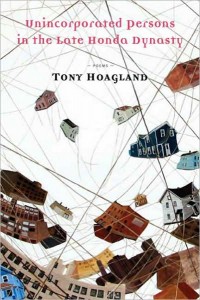
    Today in Scatterville we’re taken with Dwight Garner’s review in the New York Times of Tony Hoagland’s new book of poetry, Unincorporated Persons in the Late Honda Dynasty.

    tonyhoagland1For one thing, that’s just a terrific title, even better than the review’s zinger of a headline (based on a quoted poem set in a grocery store), The Free Verse Is in Aisle 3.

    Mostly, though, we’re happy that Mr. Hoagland has a new collection on (or in) the market, and that Mr. Garner has so cheerfully brought it to our attention.

    The review draws comparisons in Hoagland’s poems to Randall Jarrell, Frank O’Hara, Marianne Moore. And we love the way that Garner fixes not just Hoagland’s poetry but an entire school in the firmament, in the process defining both what Mr. Hoagland is as a poet and what he is not:

    “On a superficial level Mr. Hoagland’s poems — he writes in an alert, caffeinated, lightly accented free verse — resemble those of many writers in what one is tempted to call the Amiable School of American Poets, a group for which Billy Collins serves as both prom king and starting point guard. But Mr. Hoagland’s verse is consistently, and crucially, bloodied by a sense of menace and by straight talk.”

    That makes Hoagland, in the Scatter Book of Literary Comparison, akin to the great John Updike, poet (in prose and verse) of suburban middle class unsettling awareness. Something growls, softly, beneath the placid surface. Think of that as you read these excerpts, from a poem set at a wine-tasting, that Garner quotes from Hoagland’s 2003 collection What Narcissism Means to Me:

    But where is the Cabernet of rent checks and asthma medication?
    Where is the Burgundy of orthopedic shoes?
    Where is the Chablis of skinned knees and jelly sandwiches?
    with the aftertaste of cruel Little League coaches?
    and the undertone of rusty stationwagon? …

    When a beast is hurt it roars in incomprehension.
    When a bird is hurt it huddles in its nest.
    But when a man is hurt, he makes himself an expert.
    Then he stands there with a glass in his hand staring into nothing
    as if he was forming an opinion.

  • Museum: Cairo Railway Museum

    Al Masry Al Youm (Hazem Zohny)

    A week ago, an informal group of Egyptian train lovers attempted to bring the deteriorating state of a railway museum to the attention of the authorities, bombarding them with faxes highlighting the museum’s condition. Al-Masry Al-Youm decided to investigate the situation of Egypt’s forgotten railway treasures.

    It all started with the idea of linking India and Europe. The year was 1833, and Mohamed Ali Pasha was considering a suggestion by the British to build a railway from Suez to Ain Shams. The idea was abandoned, but a little over twenty years later, the first railway in Africa connected Cairo and Alexandria.

    The events that led up to such a momentous achievement and the ones that followed it, as the history of Egypt’s railway, is a matter of varying concern for the little known Railway Museum at Cairo’s central train station, at Ramsis Square.

    Why varying? Perhaps more than any other Egyptian museum, this is one that appears to have perfected the ability to simultaneously impress, and depress.

  • Museum: Grand Egyptian Museum

    Yahoo! News

    Hill International (NYSE:HIL – News), the global leader in managing construction risk, announced today that a joint venture between Hill and EHAF Consulting Engineers has received a contract from the Ministry of Culture’s Supreme Council of Antiquities of the Arab Republic of Egypt to provide project management services during the design and construction of the Grand Egyptian Museum.

    The five-year contract has an estimated value to the Hill/EHAF joint venture of approximately $50.0 million. Hill has a 70% interest in the joint venture and EHAF has a 30% interest.

    The Grand Egyptian Museum, which has a total estimated project cost of approximately $550 million, will be the largest and most important Pharaonic museum in the world, the largest museum in Egypt and one of the leading scientific, historical and archaeological study centers on the globe. The museum’s twenty-first century galleries will be located in an iconic and distinctive building located where Cairo meets the desert, abutting the Giza Pyramids world heritage site. The museum, designed by Heneghan Peng Architects, Ove Arup, Buro Happold and others, will cover 3,500 years of ancient Egyptian history and house more than 100,000 artifacts.

    “With the selection of a project manager, we have achieved yet another milestone in the development of the Grand Egyptian Museum,” said Farouk Hosny, Egypt’s Minister of Culture.

  • mocoNews Quick Hits 02.05.2010


    Droid Google Maps

    »  Google (NSDQ: GOOG) Maps updates its Droid app to allow pinch-to-zoom. [Engadget]

    »  Ever wish your iPhone could be your personal assistant? There’s an app for that. And it works. [VentureBeat]

    »  NYC names winners of its BigApps contest, some of which include transportation and public school info apps. [Bits]

    »  AT&T (NYSE: T) launches FamilyMap app with interactive maps, scheduling checks and messaging features. [Release]


  • Know Before You Go: Tickets May Come at a Higher Price Than You Realize

    As part of our Terms of (Ab)use project, we pay close attention to the fine print of online agreements for provisions that are potentially dangerous to consumers. We’ve noticed a troubling change in the way event planners restrict the rights of individuals who attend their shows. Where once these limitations had to fit on the back of a ticket, increasingly event organizers have moved their fine print online, where they are able to use even more contract law to avoid the limits of trademark and copyright law and actively control what ticket holders can say or do even after the event is over.

    These burdensome terms can show up in some pretty unexpected places. Last year we noted how the Burning Man Organization (BMO) used online ticket terms to require participants to assign to BMO—in advance—the copyright to any pictures they took on the playa. Tickets for the 2010 event went on sale in mid-January, and we hoped the new terms would acknowledge the concerns we had expressed. Sadly, the new terms are just as onerous as before.

    The “assignment in advance” clause is not the only burdensome provision. The BMO ticket terms limit participants’ rights to use their own photos online, obliging them to take down any photos to which BMO objects for any reason and forbidding them from allowing anyone else to download or copy the photos. This means participants cannot donate their works to the public domain or to license their works, even through Creative Commons—no matter what is depicted or whether a use is noncommercial.

    Even the notoriously protective Olympics allow spectators to take their own pictures or videos under their Ticket License Agreement, requiring only that the images “not be used for broadcast, publication, or any other commercial purpose.” It is disappointing that the BMO cannot be at least as flexible.

    Burning Man also continues to strip ticket holders of their right to make perfectly legal uses of its trademarks, forbidding participants from even using the (trademarked) term “Burning Man” on any website. In other words, participants who’d like to blog about their experiences at the event can’t use the words ”Burning Man.” Thus Burning Man uses contract law to do what it cannot under either copyright or trademark law—exert extraordinary control over participants’ speech.

    Why would BMO—the organizer of an “an annual experiment in temporary community dedicated to radical self-expression and radical self-reliance”—undermine speech and creativity like this? BMO claims that the terms in the Burning Man ticket agreement are necessary to protect Black Rock City’s unique culture and the privacy of its participants. Furthermore, BMO points out that the limitations are rarely enforced and they only claim copyright if the photos are used in a way BMO doesn’t authorize. By claiming copyright in all photographs taken at the event, BMO can use the streamlined “notice and takedown” process enshrined in the Digital Millennium Copyright Act (DMCA) to quickly remove unapproved photos from the Internet.

    But using online ticket terms for fast and easy takedown and to restrict CC-licensing and dedication to the public domain is a terrible precedent to set. As we pointed out in our post about this issue last year, doctors working with the tort reform group Medical Justice used contract law in the exact same way to censor negative reviews on Yelp and similar sites.

    We understand the real challenges BMO faces in trying to preserve its noncommercial, community character. And we are aware that the current BMO enforces these terms only rarely. But a benevolent censor is still a censor—and BMO may not always be so benevolent. The bigger danger, though, is that other event organizers will take a page from the BMO/Medical Justice playbook, and assignment and abrogation of rights will become standard Terms of Ab(use) in all online contracts.

    Copyright and trademark law were not intended to be used this way, and the collateral damage to speech and creativity inherent in the restrictions included in the Burning Man ticket agreement is too great. If the good folks at BMO continue to use ticket restrictions like this, Burning Man may very well become a new kind of model—not of temporary community and support for individual creative expression, but of permanent restriction on that very expression.

  • Ripoff Video Maker “Vision Media Television” Renames As “Great America HD”

    “Vision Media Television,” after getting exposed in a NY Times story as a ripoff production company, has changed its name to “GreatAmericaHD” and is back to its same tricks. The way it works is they call up non-profit organizations with an alluring pitch: a chance to be featured in a nationally-broadcast PBS show anchored by established broadcaster. In this case, Hugh Downs. What they don’t tell you is that you’ll have to front upwards of $20,000 in production costs, and the “program” they shoot will never see the light of day.

    The company defends its actions, saying that it only distributes the programs to public television stations, which air them at their “discretion,” and blames its “customers” for confusing public television with PBS. Judging by the fact that PBS has an explicit disclaimer on its website denying any relationship between itself and Vision Media Television and other similar groups, this appears to be a confusion that Vision Media Television is not, shall we say, working very hard to erase.

    Center for Science in the Public Interest says, “We got a call from them today, probably by 10th such overture in the past 7 or 8 years I’ve been at CSPI. Which is pretty funny since we helped expose the same exact scam when it had Walter Cronkite and Morley Safer as “hosts” back in 2002!”

    Beware, nice organizations looking for exposure!

    PREVIOUSLY: So-Called PBS “Production Company” Sues Blogger For $20 Million
    RELATED: Company Pitches a Television Production, and Nonprofit Groups Are Wary

  • Confusion Hill

    Piercy, California | Mystery Spots and Gravity Hills

    It has suggested that instead of calling “images that differ from objective reality,” optical illusions, they should instead be called “brain fails,” which is in effect, exactly what they are.

    One can experience this strange, and rather delightful sense of brain failure at California’s appropriately named “Confusion Hill” one of a number of mystery spots and gravity hills which dot the west coast in particular. However, because Confusion Hill is a self-guided tour, rather than the tightly controlled tours at other mystery spots, you have the opportunity to explore the forced perspective, Ames room illusion to the fullest. Among the illusions are rolling a golf ball out the window and having it come back to you, standing on the walls, and a gravity chair, which is easy to get into and difficult to get out of.

    The other attractions on Confusion Hill, are appropriately confusing, and include a “Redwood Shoehouse” which was used as a float in a 1947 parade, and has been on the hill since 1949 when Confusion Hill was originally built. It also boasts the largest freestanding Redwood Chainsaw Carving at over 40 feet tall, and a mountain train ride on a 20 gauge track.

    Unfortunately, though Confusion Hill is located amid a redwood forest, much of the forest has been logged leading one commentator to say that it looked like “a nuclear bomb decimated the redwood forests.”

  • Book Review: Aegyptiaca serta in Soheir Bakhoum memoriam

    Bryn Mawr Classical Review (Review by Paul Edmund Stanwick)

    Dominique Gerin, Angelo Geissen, Michel Amandry (ed.), Aegyptiaca serta in Soheir Bakhoum memoriam: mélanges de numismatique, d’iconographie et d’histoire. Collezioni numismatiche 7. Milano: Edizioni Ennerre, 2008.

    This memorial volume celebrates Alexandrian-born scholar Soheir Bakhoum (d. 2003), a numismatist specializing in Roman Alexandria. Initially educated at Alexandria University and later at l’École des Hautes-Études, Ms. Bakhoum was at one time on the staff at the Graeco-Roman Museum in Alexandria, and later a researcher at the Centre national de la recherche scientifique (CNRS) in Paris. Her writings include many articles as well as the 1998 Sylloge Nummorum Graecorum catalogue of Alexandrian coins (Augustus to Trajan) in the collection of the Bibliothèque nationale de France and the 1999 book, Dieux égyptiens à Alexandrie sous les Antonins: recherches numismatiques et historiques.

    Festschriften often provide an opportunity to publish articles around a theme. In this case, the theme is Alexandrian coinage, particularly of Roman Egypt, an apt choice which commemorates Ms. Bakhoum’s interests and accomplishments.

  • New Book: Egyptian Archaeology

    Blackwell Books

    Edited by Willeke Wendrich. I have seen a preview of the first chapter and it looks great. You can see the full Table of Contents on Amazon.

    “Egyptian Archaeology” explores ancient Egypt using a uniquely archaeological approach, drawing on original research to both synthesize and challenge existing scholarship. It is written by leading Egyptologists, based on original research and fieldwork. It illustrates how practical research is a vital component of any theory-based discussion about the ancient world. It examines the cultural and historical processes of ancient Egypt from a global perspective. It is visually engaging with over 80 illustrations. The chapters explore fundamental issues and themes, but focus on specific periods and key archaeological sites.
  • President Obama Outlines Latest in a Series of New Small Business Proposals

    02.05.10 10:40 AM

    Successful SBA programs expanded to increase working capital, help businesses refinance

    WASHINGTON – Today in Lanham, Maryland, President Obama proposed the expansion of two critical Small Business Administration (SBA) lending programs, aimed at allowing small businesses to refinance and increasing limits for working capital. These are both legislative proposals designed to help small businesses through what continues to be a difficult period in credit markets.

    President Obama said, “The true engine of job creation will always be businesses. What government can do is fuel that engine: by giving entrepreneurs and companies the support to open their doors, expand, and hire more workers. Today, we’re taking another step towards assisting small business owners get the capital they need to grow and hire.”

    SBA Administrator Karen Mills said, “These proposals will provide us with two effective tools to help small businesses meet specific challenges brought on by the recession. First, in the tight credit market of the last two years, lines of credits have been cut for small firms. Raising the limit on SBA Express loans to $1 million will mean more small business owners will have quicker access to this source of capital to help restock inventories and support larger revenue sales, and literally take that next step to grow their business and create new jobs. Second, thousands of good, creditworthy businesses find themselves caught by declining real estate values as a result of this recession. With many of them now facing mortgages coming due in the next few years, the ability to refinance into SBA’s 504 loan will give them the chance to lock in long-term, stable financing, as well as protect jobs by protecting small businesses from foreclosure.”

    Details of the President’s new small business initiatives are below:

    1. Expand SBA’s existing program to temporarily support refinancing for owner-occupied commercial real estate loans:

    The Administration is proposing legislation to temporarily allow for the refinancing of owner-occupied commercial real estate (CRE) loans under the SBA’s 504 program, which provides guarantees on loans for the development of real estate and other fixed assets. Currently, 504 loans cannot be used for the refinancing of maturing debt. This change would respond to the difficulties many current, solvent borrowers face in refinancing existing commercial real estate loans.

    Businesses with a loan maturing in the next year who are current on all loan payments will be eligible. Lenders that are refinancing mortgages for existing customers will make a loan for up to 70 percent of the current property value; and SBA will help finance the remaining 20 percent. For new lenders taking on a refinancing project, SBA will take on a greater share of financing, up to 40 percent. SBA’s proposal for a temporary, zero-subsidy CRE refinancing program would be funded through additional fees for refinancing projects, not through a Congressional appropriation. This proposal will help refinance up to $18.7 billion each year in commercial real estate that might otherwise be foreclosed and liquidated.

    2. Temporarily increase the cap on SBA Express loans from $350,000 to $1 million:

    The President is proposing to temporarily increase the maximum SBA Express loan size to $1 million, which would expand the program’s ability to help a broad range of small businesses through a streamlined approval process. Unlike traditional 7(a) loans, lenders can use their own paperwork for SBA Express loans, which can be structured as revolving lines of credit. Currently, these Express loans are capped at $350,000 and carry a 50 percent guarantee. Fees would cover virtually all of the added costs of this proposal.

    These proposals complement the President’s broader small business agenda – a key part of his overall jobs plan. The other elements of the small business agenda include:

    Extending small business expensing and bonus depreciation for 2010. Eliminating capital gains taxes for small businesses in 2010.A Small Business Jobs and Wages Tax Credit that would cut taxes for more than 1 million small businesses by paying up to $5,000 for every net new job and covers payroll taxes on overall wage increases in excess of inflation.A proposal to transfer, through legislation, $30 billion to a new Small Business Lending Fund that will support lending by community and smaller banks.Additional SBA lending proposals, including an extension of the Recovery Act programs that eliminate fees and raise guarantees on SBA’s two largest loan programs and permanent increases in the maximum loan sizes for major SBA programs.

    White House.gov Press Office Feed

  • President Obama Signs New Jersey Disaster Declaration

    02.05.10 10:45 AM

    The President today declared a major disaster exists in the State of New Jersey and ordered Federal aid to supplement State and local recovery efforts in the area struck by a snowstorm during the period of December 19-20, 2009.

    Federal funding is available to State and eligible local governments and certain private nonprofit organizations on a cost-sharing basis for emergency work and the repair or replacement of facilities damaged by the snowstorm in the counties of Atlantic, Burlington, Camden, Cumberland, Gloucester, Ocean, and Salem.

    In addition, assistance is available to State and eligible local governments on a cost-sharing basis for emergency protective measures, including snow assistance, for a continuous 48-hour period during or proximate to the incident period.

    Federal funding is also available on a cost-sharing basis for hazard mitigation measures statewide.

    W. Craig Fugate, Administrator, Federal Emergency Management Agency (FEMA), Department of Homeland Security, named Stephen M. DeBlasio Sr. as the Federal Coordinating Officer for Federal recovery operations in the affected area.

    FEMA said additional designations may be made at a later date if requested by the State and warranted by the results of further damage assessments.

    FOR FURTHER INFORMATION CONTACT: FEMA (202) 646-3272.

    White House.gov Press Office Feed