Author: Serkadis

  • Brooke Mueller Rehab

    Charlie Sheen’s estranged wife is in rehab. The Insider claims the mother of the actor’s 9-month-old twin sons is seeking treatment at a drug and alcohol rehab center in North Carolina. Mueller — who has a history of substance abuse and an arrest record for cocaine possession — had Sheen arrested after he allegedly threatened her with a knife during a Christmas Day argument in Aspen, Colorado. Last week, the former real estate agent was hospitalized in critical condition as she battled a bout with pneumonia.


  • How Do Storms Form?

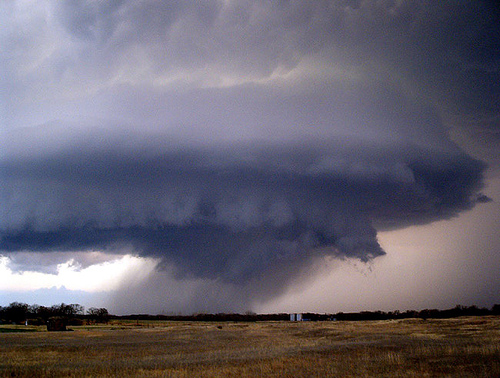
    Storms are a disturbance on a planet’s atmosphere affecting its surface. They are usually characterized by accompanying rushes of wind, rain, thunder, lightning, sow, hail and sleet. Storms are exciting to watch on television but can be vastly destructive in reality.

    Thunderstorms are the most common type of storms and are known to accompany tornadoes, hurricanes etc. They are formed due to the convection currents. In the formation of a tornado, the air which is heated, rises and is pushed upwards by heavier, cooler mass of air. As the air moves up higher, it begins to cool and expand.

    The water vapour in the air cools and condenses to form water droplets. With this process carrying for a prolonged period of time, a big thundercloud is formed and looms high in the sky. The activity of the air currents moving upward creates friction and electric discharges are set-off, resulting into lightning. The air cools down further, strong winds begin to blow and rain falls as the drops become too heavy to be sustained in the cloud.

  • Michael Jackson Lisa Marie Presley Marriage Certificate Sold For $70K

    The marriage certificate from Michael Jackson and Lisa Marie Presley’s 1994 quickie wedding sold for $70,800 at an auction last weekend.

    The document was issued to the couple following a 15-minute ceremony in the Dominican Republic on May 26. Michael and Lisa Marie divorced in 1996.

    “My wife and I have been collecting autographs and memorabilia since 1973. Several years ago we were outbid on the marriage certificate signed by Marilyn Monroe and Arthur Miller and I did not want to miss the chance to own this one. We were very excited,” says the anonymous collector who purchased the coveted certificate on Saturday.


  • Illinois Department of Insurance revokes license of insurance agent, insurance agency for auto insurance scam

    Department of insurance also imposes $100,000 fine

    CHICAGO –- The Illinois Department of Insurance has issued an Order against Daniel Martin Deitz of Bloomingdale and his Schaumburg-based agency Danny Martin CLU and Associates (collectively “Martin”) for distributing fraudulent letters on stationary falsely appearing to be that of the Department.

    Martin’s letters misled his current or former clients to believe their automobile insurance policies had expired and their driving licenses would be suspended unless they met certain insurance requirements.

    In December 2009, the Department learned that some Illinois residents had received letters printed on Martin’s fake Department letterhead advising recipients that their “automobile insurance policy is cancelled” and that their “Driver’s License and/or License Plates will be suspended within 10 days from receipt of this letter.”

    The Department immediately launched an investigation and issued a Consumer Alert to ensure consumers knew the letters were fraudulent.

    The Department quickly traced the fraudulent letters to Martin, who eventually confessed to creating and distributing the letters and to impersonating a public official.

    Martin also provided the Department with a list of some consumers to whom the fraudulent letters were mailed.

    The Department immediately ordered Martin to cease and desist his unlawful conduct.  On Jan. 21, 2010, the Department revoked his Illinois insurance producer license and his insurance agency’s business entity license, and imposed a $100,000 fine – the maximum penalties allowed under Illinois law.

    “The Department works hard each day to protect consumers from individuals and companies engaged in deceptive insurance practices,” said Michael T. McRaith, Director of the Department.

    “The Department’s action against Mr. Martin and his company should serve as a sharp reminder to those who carry out fraudulent insurance practices that unlawful conduct will be investigated and punished to the fullest extent of the law.”

    The Department does not maintain insurance records on individual consumers, and would not send unsolicited letters, faxes, or emails asking consumers for “proof of insurance” or other personal information.

    Moreover, the Department does not have the authority to suspend any individual’s driver’s license or license plate.

    The Department advises consumers who receive unsolicited letters asking for personal, insurance-related information to take the following steps:

    • Inform the Department. If you think you may have received a fraudulent insurance-related letter, please call the Illinois Department of Insurance toll-free at (866) 445-5364.  In order to aid the Department’s investigation, you may be asked to provide a copy of the letter and, if applicable, the envelope in which it was mailed.

    • Be wary of unsolicited inquiries or offers. You should avoid evasive or pushy salespersons attempting to sell any insurance product.  If you have concerns about a particular insurance company or insurance agent, please contact the Department to verify that the company or agent is licensed in Illinois.  Never purchase insurance coverage by telephone without first requesting and reviewing all written documentation.

    • Protect against possible insurance fraud or identity theft. As always, you should take steps to protect yourself against possible insurance fraud or identity theft.  Never give out personal information—including insurance-related documents or credit card information— over the phone, by email, mail, or fax, unless you know who you are dealing with.

    Illinois consumers in need of information or assistance should visit the Department’s Web site at insurance.illinois.gov or call its toll-free hotline at (866) 445-5364.

    Helpful information can also be obtained at the Department’s Facebook page, facebook.com/insuranceIL or on Twitter at twitter.com/insuranceIL.

    More Information

    The Department’s mission is to protect consumers by providing assistance and information, by efficiently regulating the insurance industry’s market behavior and financial solvency, and by fostering a competitive insurance marketplace.

    The Department assists consumers with all insurance complaints, including health, auto, life, and homeowner.


  • Tron Legacy Bike Appears in Meatspace [Movies]

    We’ve seen the badass trailer for Tron Legacy, but now here’s a shot of one of the new light bikes in real life.

    Created by toymaker Spin Master to help promote the movie (which doesn’t come out for another 11 months, by the way), it looks pretty awesome. They’ll be making more reasonably-sized versions for sale as, you know, toys, closer to the release of the movie. [Pocket Lint]


  • Fed launches national auto database to curb theft, fraud. Only took 17 years

    Filed under: ,

    You may or may not know this, but that used vehicle on sale at your local dealership with a “clean” title could have been wrecked, stolen or involved in a flood. So much for the pristine title that you looked at before purchasing the vehicle. Congress and the Justice Department have known about this problem for decades and in 1992 the nation’s governing body ordered the creation of a national database to show which vehicles were involved in thefts or other incidents.

    That’s a step in the right direction for sure, one that took a full 17 years to come to fruition. The feds have finally released the National Motor Vehicle Title Information System, a comprehensive list of 300 million vehicles. The national database will reportedly save Americans $4 billion to $11 billion per year in fraudulent claims. That’s a lot of money because there are a lot of fraudulent transactions every year. Experian claims there were 185,000 damaged vehicles that were retitled in another state, providing a fraudulent clean bill of health. The Detroit News says over one million vehicles are stolen each year and retitled in another state.

    Now that the federal database is online, customers and dealers will be able to find out whether the vehicle was salvaged, scrapped or reported stolen almost anywhere in the U.S. Unfortunately, only 77 percent of vehicles are covered under the new database because five states opted not to participate. The five states not participating are Oregon, Illinois, Mississippi, Kansas and the District of Columbia. All four states reportedly cited budget problems as the reason for not being included in the registry.

    Customers and dealers can go to vehiclehistory.gov for more information. There are even links to a pair of government-approved sites where you can run a Vehicle Identification Number for $4.95. It may be a bit annoying to pay for a service that was provided largely by federal tax dollars, but it beats the heck out of purchasing a vehicle that was in a serious accident or was found in six feet of water.

    [Source: vehiclehistory.gov via The Detroit News]

    Fed launches national auto database to curb theft, fraud. Only took 17 years originally appeared on Autoblog on Wed, 27 Jan 2010 11:00:00 EST. Please see our terms for use of feeds.

    Read | Permalink | Email this | Comments

  • After Three Months, Newsday’s Grand Paywall Experiment Has 35 Paying Customers. Yes, 35.

    Like many, we were amazed at the decision by Cablevision to try charging $5 per week (yes, per week) for its paywall to Newsday content online. The newspaper itself is not particularly good and doesn’t really provide all that much in the way of excess value compared to what else is out there. And $5/week is extremely high. Yet, even so, we’re a bit surprised that after three months, the paper has a grand total of 35 paying subscribers. Yes, 35. I’m sure that extra $175/week comes in quite handy. Oh right, they also saved on the salary of their popular columnist who quit, rather than have his work hidden behind a paywall.

    To be fair, Cablevision never really seemed to view this much as a direct source of revenue, but rather as a churn reducer for its cable subscribers, who can get to the Newsday website for free. Still I doubt there are really that many people who decide not to drop their Optimum Cable service just because they get free access to Newsday online. I can’t imagine that the $175, in any way, makes up for the drop in visitors and ad revenue. According to multiple online tools, the general estimate is that Newday has lost 50% of its web traffic since putting up the paywall. And in return, they get $175/week. Nice one, Cablevision.


    Permalink | Comments | Email This Story


  • Reforms Could Lead to Huge Water Savings for California, Pacific Institute Says

    The Pacific Institute believes California can conserve already threatened freshwater resources, but keep growing.

    leaky-faucet-290By Andrew Maddocks
    Circle of Blue

    Replacing inefficient appliances in homes and upgrading wasteful agricultural equipment could save one million acre feet of water in California, according to a Pacific Institute report released Monday. These reforms could also save the parched state six to eight million acre feet by 2020.

    Peter Gleick, founder and president of the Pacific Institute, delivered the findings during a U.S. House of Representatives Subcommittee on Water and Power hearing. The congressional meeting was called to discuss ways to reach Gov. Arnold Schwarzenegger’s call to reduce freshwater consumption to 20 percent by 2020.

    In an interview with Circle of Blue, Gleick said the meeting was “contentious,” as some in attendance took the opportunity to express anger regarding the already diminishing freshwater supply. Among those who also testified were farm owners, businessmen, water district general managers and professors.

    Despite the tense atmosphere, Gleick said his recommendations were well-received.

    “I was trying to say, ‘here’s the good news,’” he said. “Part of our water problems can be resolved by reducing the wasteful use of water.”

    The institute proposed implementing relatively low-cost efficiency and conservation measures that would save 400,000 acre feet currently lost in at-home usage, as well as 600,000 acre feet that’s lost on farms.

    Some suggested changes included replacing two million inefficient or leaky toilets, showerheads and faucets, as well as old, top-loading washing machines. Replacing several hundred thousand spray valves, used for dishwashing in restaurants, was another proposed solution to lower urban consumption.

    As for the agricultural sector, Gleick suggested certain farms develop more efficient irrigation systems and better soil moisture management. He also suggested implementing a timed, water-budgeting practice called regulated deficit irrigation.

    Those measures would have a high up-front cost, but be cost effective over the lifetime of the investment, Gleick said.

    The institute estimates installing new household and commercial appliances would cost $1.7 billion, while upgrading the states’ orchards, vineyards and farms would cost roughly $100 per acre foot.

    “There’s no solution that doesn’t require money and effort,” Gleick said.

    But the MacArthur fellow believes these measures will save more water at lower economic and environmental costs than proposed industrial alternatives.

    One of the leading alternative proposals is the Temperance Flat reservoir, a $3 billion project that will expand the freshwater supply rather than promote conservation.

    During his testimony, Gleick said that the proposed Temperance Flat dam would exceed $3 billion in costs and likely only provide between 100,000 and 200,000 acre feet of water. He has also previously written about the cultural and environmental damage the dam would have inflict upon Native Americans.

    But some farmers have called the institute’s recommendations unrealistic, according to the Valley Voice newspaper. Other farmers have already experienced severe impacts from water shortages, and might not be able to afford the immediate costs of efficient equipment retrofits and alternative irrigation, NPR reports.

    Gleick said funding for urban and agricultural upgrades should come from a variety of sources: home and farm owners, as well as local, state and federal governments, or even outside grants. He added that these measures promise a return on investment for years to come.

    Andrew Maddocks is a reporter for Circle of Blue. Reach him at [email protected].

  • China: We Won’t Limit Android

    Fears that Android handsets might not find their way into China have been calmed.  Reuters is reporting today that China will not try to limit use of Android.  So long as the platform complies with Chinese law, Ministry of Industry and Information Technology spokesman Zhu Hongren said China would not place limits.

    Two handsets were scheduled to be launched last week on China Unicom’s network but were delayed over the cyber-attack/Cold War between Google and China.  As of now, no announcements have come from Google, Motorola, or Samsung as to when we’ll see them.

    Other Great AndroidGuys Posts


  • Writing a Great Case Statement

    Every fundraising campaign has the Case Statement at its center. It is the core document that sits at the center of your plan and strategy.

    The Case explains to your potential donors what you need the money for, and what the benefits will be if the donor gives to your cause. Case Statements can be used in any fundraising campaign, but they are particularly useful in major gift campaigns, capital campaigns, and endowment campaigns….

    Read entire article at About.com

  • Splitsville For Brooke Hogan & Rapper Beau Stack$

    Brooke Hogan has officially rejoined the Land of Single Ladies. The aspiring pop star and her rapper boyfriend Yannique Barker, a.k.a. Stack$, have broken up, Life&Style Weekly dished this week.

    “Brooke Hogan and Stack$ have split but remain friends. He was a big part of her life for a very long time, and she still cares about him and his family dearly,” Brooke’s rep, Janice Lee, told the mag.

    Stack$– who was frequently featured on Brooke’s VH1 reality show Brooke Knows Best – collaborated with the blonde on her 2009 single, “Falling.”

  • uTorrent 2.0 Gets Integrated Speed Test with a Little Help from Google

    Regardless of the controversy surrounding BitTorrent, it remains one of the most widely used internet technologies and millions of people use it everyday. It is also one of the heaviest network applications out there and there have been plenty who have criticized the protocol and the apps that use it for ‘hogging’ bandwidth… (read more)

  • Another Ferrari Exec Moves to Lotus

    Following the appointment of Donato Coco as the new Director of Design for Lotus, the British manufacturer announced it managed to snatch yet another executive from the Prancing Horse, namely its now former Director of Business Development, Andreas Prillmann. Prillmann will take the position of Chief Commercial Officer of Lotus Cars.

    Lotus extends a very warm welcome to Andreas, we are very fortunate to benefit from his tremendous industry experience. Andreas’ instinctive understanding of whe… (read more)

  • The Struggle for Indigenous and Freshwater Rights at Copenhagen and Beyond

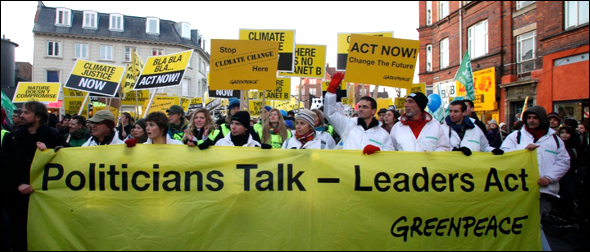
    A look back at the concerns of indigenous communities during the historic climate talks in Copenhagen last month.
    Copenhagen Climate Protest

    Photo © J. Carl Ganter / Circle of Blue
    On the ground with activists from around the world at one of the biggest demonstrations during the United Nations climate talks in Copenhagen last month. Grassroots organizers and underrepresented groups banded together to give voice to the water consequences of climate change.

    By Aubrey Ann Parker
    Circle of Blue

    For two weeks in Copenhagen last month climate negotiators debated carbon levels, emissions, and balancing the financial burden of saving the planet among developed and developing countries. Still, even as international leaders wrestled with the complex mix of geopolitics, science, economics, and diplomacy, another important ingredient in the climate crisis was barely mentioned: the effect of the warming planet on the Earth’s freshwater.

    The same oversight, however, was not repeated by public interest organizations and water advocates who also were in Copenhagen, especially indigenous representatives from underdeveloped countries that are most vulnerable to climate change and the diminishing access to fresh water.

    Numerous groups, such as the Khapi community in Bolivia and the Tagalog in the Philippines, banded together in Copenhagen to explain at a number of meetings and public events how climate change is already threatening their access to food and water, as well as the sustainability of their thousands years old cultures. Some of the strongest voices were heard during the World Water Movements and COP15: Proposals and Strategies for Water and Climate Justice panel.

    Debating Water as a Right to Life
    “Almost all countries, except those that are victims of climactic disaster, are not interested in dealing with water,” said Riccardo Petrella, author of The Water Manifesto and founder of the Lisbon Group, a think tank that critically analyzes globalization. “Because if they deal with water, they have to deal with the right to life.”

    Petrella, one of the members of the World Water Movements Panel, criticized the economic model that categorizes water as a commodity rather than a “precious community resource and fundamental human right.” Currently there is no international law to regulate the right to freshwater supplies, but Petrella argued that the United Nations climate negotiations, which are expected to continue in Cancun, Mexico near the end of the year, should be the gateway to further reform. If water were to be included in the global climate agreement under negotiation, nations would be responsible for ensuring the preservation of both these “common goods,” Petrella said.

    “It is not your right to good energy,” he said. “Nor your right to a good car—your four by four powered by green oil. We need to challenge the type of consumption that is part of today’s [climate] negotiations, which should lead to a global contract—not only on energy and on agriculture—but also on water and the right to life for everybody.”

    “We should defend water as a common good,” he added, “because it is an instrument of the right to life.”

    “We should defend water as a common good,” he added, “because it is an instrument of the right to life.”

    André Abreu of France Liberté, a French-based foundation that works to improve access to fresh water, also spoke during the discussion and cautioned that identifying the connections between water and climate isn’t enough. Different policy must take shape. Since the right to water and the right to life are synonymously interchangeable, he claimed that water protection should instead be tied to necessity.

    “Floods, dryness, temperature—all are main aspects to climate change have a link to water,” Abreu said. “But we know that it is fuel first at these negotiations. Water is not considered with the importance that it deserves.”

    Abreu warned that the presence of transnational companies during negotiations at the Bella Center, where the UN Climate Change Conference was held, was very dangerous. He said he was especially weary of businesses that offered to use green technologies to fight food and water shortages.

    The Philippines: A Look at the Hydropower Dilemma
    Public restiveness around the world over climate and water issues is increasing in developing nations. In the Philippines, for instance, southern areas of the country could experience intense droughts, while erratic rainfall and typhoons are projected for the north. In September, a flood led to 900 deaths.

    In November, more than 100 members of the northern Tagalog indigenous communities marched 100 miles to protest the Laiban dam project on the Kaliwa and Kanan rivers, which could potentially displace 4,500 families.

    Although this project—located near the Marikina-Infanta earthquake fault line, according to the Philippine Daily Inquirer—is not for energy, critics of the project assert it will divert 1.9 billion liters per day for domestic water supply in the nearby city of Metro Manila by flooding 28,000 hectares of rain forests that previously currently serve as a carbon sink.

    Around the same time, indigenous communities protested the Pulangi V dam project in Bukidnon, which would increase the city of Mindanoa’s electricity grid by more than 300 megawatts by 2015, but submerge 80,000 hectares of land—including sections of seven towns and the sacred ancestral lands of the Pulangi-Manobo tribe, according to Indigenous Peoples Issues and Resources.

    Dianne Roa—co-author of a report on alternative power industry reform in the Republic of the Philippines and another panelist for the event—said that hydropower is a complex issue that involves prioritizing amongst domestic water use, downstream agricultural use, or low-carbon energy.

    Roa explained that for several years the water district of the southern city of Davao has been fighting for the possession of the last remaining potable river in the area. Meanwhile the Hedcor corporation has proposed a large hydropower project for the Tamugan River. Opponents claim the dam diverts valuable drinking water and destroys the aquatic ecology while giving corporate control to a public entity.

    “Hydropower makes use of climate change in packaging itself,” Roa said, “presenting itself to the public as clean energy, therefore it is good. This complicates things—not simply for ensuring access to water for drinking—but also that our need for water is not exploited for private profit at the expense of our climate and the environment.”

    Roa argued that the existing framework that has been used for the last century in water management does not have the capacity to address the complex issues of the intimate reflections between climate change and water, as described in her three Philippine examples. Including water in the UN climate agreement would not be enough. In fact, she said, the issue could become even more dangerous if water is treated as a commodity, allowed to succumb to the same problems that energy and carbon emissions have in the market economy.

    “Once water is in the UNFCC, the more difficult step will be creating a new framework such that water doesn’t go down the same path as energy,” Roa said.

    Bolivia: Melting Glaciers and Resource Migration
    In addition to alternative energy pressures, climate and water problems have been a driving force behind resource migration for indigenous communities.

    The pace of glacial melting and retreat is accelerating in Bolivia, according to a recent article in The New York Times. In the Andean region in Bolivia, more than 1,000 indigenous communities depend on tropical glaciers for their water sources. During the rainy season, ice mass is added to glaciers while the water slowly runs off the mountains and is used for food, sanitation, and drinking during the dry season.

    Indigenous Rights

    Photo © J. Carl Ganter / Circle of Blue
    Cristian Dominguez is the secretary of Natural Resources of the Bolivian Confederation of peasant Trade Unions or CSUTCB. CSUTCB played a significant role in demonstrating against Bolivia’s previous president, Carlos Mesa, and supports the nationalization of natural gas reserves and opposes water privatization in the country.

    “We don’t have a glacier anymore. There is no ice. Just a mountain of rocks,” said Roxana Castellon, an attorney with Agua Sustentable, a non-profit that provides a forum for stakeholders to discuss water issues in Bolivia. Castellon appeared at one meeting in Copenhagen during which she showed two photos displayed side-by-side. One was of a snowcapped Chacaltaya Glacier in 1945, while the other, taken 50 years later, showed only a small piece of ice at the top. Earlier this year, the same perennial mass of ice completely disappeared.

    “This glacier for us signifies life because the water cultivates our crops—we need these waters,” said Alivio Aruquipa, who was representing the Andean Khapi community. In Palca, a municipality of La Paz, 48 families consisting of the 1,500 Aymara indigenous peoples depend on the Illimani glacier to regulate the seasonal flow of water. In the last 10 years, the Illimani has experienced 10 percent loss of ice. Aruquipa explained that scientists have consulted his people, and given the life expectancy of the glacier as 7 to ten years before it is nothing more than “a big black rock.”

    “We don’t know where we are going to go. Like the ice, the source of our lives will be disappearing too. Where are we going to go?” Aruquipa and his people are very worried because they have heard stories of what happened when glaciers have disappeared in other places around the world. The Khapi community is traditionally an agricultural community, and many families do not speak Spanish. He fears they will not have a chance to integrate into other places easily.

    Bolivian President Evo Morales has heard the complaints and announced in December his intention to hold an alternative climate summit in April, one that will bring together governments and indigenous leaders to discuss the rights of natural resources. It is to be held in Cochabamba, the country’s capital.

    “Without water, our plants will dry out and our animals with die. Our lands—the area will become a desert,” said Aruquipa. “But we are based at the Illimani by tradition for many years. We have our own language and our own cultural traditions, which we would lose if we were to leave because the [glacier] water is part of our culture.”

    Aubrey Ann Parker, an undergraduate student at the University of Michigan, is a reporter for Circle of Blue where she specializes in data visualization. Reach her at [email protected].

  • Honda Solar Hydrogen Station Begins Operation

    Today Honda is beginning operation of its new Solar Hydrogen Station at its headquarters in Torrance, California. The new Honda Solar Hydrogen Station replaces the Honda Home Energy Station IV.

    Back in November 2007, I had talked about the Honda Home Energy Station IV (which was in collaboration with Plug Power Inc.) as a piece of promising technology that would put consumers in control of their own refueling by putting a hydrogen station right in their own garages. In fact, Honda isn’t the only company developing home hydrogen fueling stations as there are a few others such as ITM Power.

    Honda compares the new station to the old, “The previous solar hydrogen station system required both an electrolyzer and a separate compressor unit to create high pressure hydrogen. The compressor was the largest and most expensive component and reduced system efficiency. By creating a new high differential pressure electrolyzer, Honda engineers were able to eliminate the compressor entirely – a world’s first for a home use system. This innovation also reduces the size of other key components to make the new station the world’s most compact system, while improving system efficiency by more than 25-percent (value calculated based on simulations) compared to the solar hydrogen station system it replaces.”

    But, even though the Honda Solar Hydrogen Station name implies that photovoltaic power is to be used to create H2, the device can also use “smart grid” technology from the electric company during off-peak hours for minimal cost. During the daytime, the Honda Solar Hydrogen Station can even sell electricity back to the grid.

    The idea behind the Honda Solar Hydrogen Station is to complement fast filling public H2 refueling stations and not compete with them. The Honda Solar Hydrogen Station does not store hydrogen, but creates it on demand and thus is considered a slow filling (overnight) means of refueling one’s fuel cell vehicle.

    One might find parallels between slow fueling a hydrogen car and trickle charging an electric vehicle overnight, but there is a significant difference with the Honda Solar Hydrogen Station. The Honda device can also be used as a power station to supply electricity to one’s home as well as refuel the car and the H2 car will have a longer range.

  • Today: Live Coverage of Apple’s “Latest Creation” Media Event

    Quick reminder that today at 10AM PST Apple will be holding its “Latest Creation” Media Event. TheAppleBlog will be there providing you a steady stream of updates on everything announced.

    You can get your live coverage fix via two methods tomorrow.

    TheAppleBlog Live — This is the fastest way to get updates and the most interactive. In addition to our own updates (with text and photos), you can send in a comment/thought/observation and if we feel it’s relevant, we’ll post it for the thousands of others reading the updates. Our coverage will start around an hour before the event begins.

    TheAppleBlog Twitter — We’ll be tweeting updates here, so be sure to follow @theappleblog.

  • Science Wednesday: Lisa Jackson, Eco-Warrior!

    Each week we write about the science behind environmental protection. Previous Science Wednesdays.

    How great it would be to be on the cover of the Rolling Stone! (…or would it be Spin now?) Dr. Hook and the Medicine Show aspired to this position in their famous song of 1972, written by Shel Silverstein. Well, getting an article about you in Rolling Stone is almost as good. So I was thrilled to read the current issue of Rolling Stone (Feb. 4, 2010) which has an article on our “Eco-Warrior” administrator, Lisa Jackson. Reporter Tim Dickinson says, “Taken together, Jackson’s efforts represent a sweeping attempt to revitalize an agency…The goal, as she (Administrator Jackson) sees it, is to once again base environmental regulations on science and the law…”

    Sustainability is often described as a three-legged stool, with one leg each for the environment, the economy, and society. I think that the legs are not even, and the major support comes from the environment. Without the natural capital provided by our environment, we’d have no society or economy. Convincing evidence for the importance of the natural environment came from the Biosphere 2 project.

    In the early 1990’s, a huge structure was built in the Arizona desert. Over 3 enclosed acres housed a variety of ecosystems with manmade recycling systems designed to imitate earth’s natural systems. The project, however, could not independently sustain humans or the other organisms inside. There were problems with oxygen and food, and outside electricity had to be used. Because of Biosphere 2, we learned that people don’t have the ability to design a self-sustaining ecosystem for human life. If we lose our natural ecosystem by failing in environmental protection, in the words of Dr. Gro Brundlant, chair of the first World Commission on Environment and Development, there will be no sanctuary. EPA’s mission, protecting the environment and human health, is key to our sustainability and survivability.

    At EPA we rely on science and our intelligent leaders like Lisa Jackson to carry out this mission. Rolling Stone has duly recognized her, and I am very proud. Maybe next year she will make the cover!

    About the Author: EPA Environmental scientist Dr. Barbara Karn focuses on “green” nanotechnologies, including using green chemistry, green engineering and environmentally benign manufacturing to make new nanomaterials and products for preventing pollution.

  • Illinois EPA to recognize environmental projects by Illinois youth; Agency accepting project applications from Illinois students

    Springfield–Illinois Environmental Protection Director Doug Scott is encouraging Illinois youth to apply for the annual Governor’s Green Youth Awards.

    The Award recognizes outstanding environmental protection and conservation projects created and developed by Illinois students.

    “If you have recently participated in an environmental or conservation project, I encourage you to submit an application for a Governor’s Green Youth Award,” said Director Scott.

    “Teachers who support these projects reinforce the value of helping to protect environment to Illinois’ youth.”

    Classrooms or individual students currently enrolled in K – 12 school, scouts, 4-H or others, and who have participated in an environmental project started no earlier than 2008 are eligible for the award.

    The project must involve one or more of the following categories:  waste reduction; prevention/reduction of pollution in the air (climate change/global warming), land or water; restoration, preservation or enhancement of natural areas; and energy or water efficiency.

    An application and additional information about the program are available from the Illinois EPA Web site at:  epa.state.il.us/green-youth/index.html, or by calling Deirdre McQuillen at 217-558-0073 or email [email protected].

    The deadline for applications is Friday, March 19, 2010.

    The Awards ceremony will be held on Earth Day, Thursday, April 22 at the Abraham Lincoln Presidential Library and Museum in Springfield.  Winners will receive a ticket to the Museum, in addition to their award.

    Examples of past winning projects include:

    • Waste Reduction: a school-wide recycling program that encouraged not only recycling but also waste reduction and environmental education
    • Reducing Water Pollution: a storm sewer stenciling project
    • Restoration/Preservation: the creation of a wetland area
    • Energy Efficiency: school-wide energy audit and facilitation guide


  • Governments must be held to account for secret detentions


    Amnesty International on Wednesday called on all states to take concrete steps to end secret detention, following publication of a detailed United Nations report on its widespread use in the name of countering terrorism.

    The UN study highlights the global nature of the problem, naming dozens of countries, covering every region of the world, as undertaking secret detention, or being complicit in it through international networks of detainee transfers and intelligence agencies.

    Secret detentions, as the UN report clearly states, constitute a series of human rights violations and "cannot be justified under any circumstances." The practice is irreconcilable with international human rights law and international humanitarian law.

    "Secret detention is not only unlawful in itself, it enables a range of abhorrent abuses including torture and extrajudicial execution," said Widney Brown, Senior Director of International Law and Policy for Amnesty International.

    "States must act swiftly to implement the recommendations in this important study, to confront and end secret detention and the human rights violations it entails and enables."

    Amnesty International has campaigned for decades against human rights violations associated with secret detentions worldwide, including enforced disappearance, torture and other cruel, inhuman and degrading treatment, extrajudicial execution, and arbitrary deprivation of liberty.

    The UN study highlights secret detention practices in USA-led global "war on terror" operations since 11 September 2001.

    Amnesty International said it continues to push for real accountability for abuses, including crimes under international law, perpetrated by the United States government in the course of such operations.

    Governments that colluded in US rendition and secret detention programmes have also been urged to investigate the human rights and criminal implications of their own roles.

    This week, Amnesty International wrote to the Lithuanian Prosecutor General urging him to open a criminal investigation into allegations that secret detention facilities existed on Lithuanian territory from 2003 to 2005.

    Other human rights violations related to secret detention in the name of "countering terrorism" that Amnesty International has campaigned against include enforced disappearance in Pakistan, and the secret or prolonged incommunicado detention of "security suspects" in Saudi Arabia and those accused of involvement in terrorism-related activities in Tunisia.

    The Joint Study was prepared by four Special Procedures of the UN Human Rights Council (the Special Rapporteur on human rights and counter-terrorism; the Special Rapporteur on torture; the Working Group on Arbitrary Detention; and the Working Group on Enforced or Involuntary Disappearances).

    Amnesty International welcomed the decision of the four Special Procedures to produce a joint study, which enabled them to address the human rights aspects of the practice of secret detention in an integrated and comprehensive manner, and welcomed the global geographic coverage of the report.

    The Special Procedures will present the Study for discussion by states and civil society at the UN Human Rights Council at its next session; the presentation and discussion is scheduled for the week beginning 8 March.

    Amnesty International submitted information to the experts and the organization’s published research features among the wide range of sources cited in the study report.

  • PHOTOS & VIDEO: Michelle Obama at Joint Armed Forces Officers’ Wives’ Luncheon

    First Lady Michelle Obama continued her commitment to military families yesterday when she spoke at the Joint Armed Forces Officers’ Wives’ Luncheon yesterday at Bolling Air Force Base in Washington, DC. In her remarks the First Lady announced that the President’s 2011 budget will include a record $8.8 billion for military family support programs.

    For only $40 the ladies dined on fresh spinach salad, tarragon marinated breast of chicken with a béarnaise sauce, whole green beans and julienne red & yellow peppers topped with toasted almonds, oven roasted red bliss potatoes, triple chocolate charlotte with raspberry drizzle, and of course wine. There was also a vegetarian menu option. Wonderful menu selection and they got to hear from the First Lady. Sounds like a steal to me.

     Posted by Aminah Hanan

    Michelle Obama Addresses Joint Armed Forces Officers Wives Luncheon


     Michelle Obama Addresses Joint Armed Forces Officers Wives Luncheon


    Michelle Obama Addresses Joint Armed Forces Officers Wives Luncheon


    Michelle Obama Addresses Joint Armed Forces Officers Wives Luncheon

    Post to Twitter Post to Plurk Post to Yahoo Buzz Post to Delicious Post to Digg Post to Facebook Post to MySpace Post to Ping.fm Post to Reddit Post to StumbleUpon