Author: Serkadis

  • An iPhone Lover’s Take On The Nexus One

    Screen shot 2010-01-12 at 3.31.25 AMLast week, I attended the Google Android “Nexus One” event. As you may have heard, they gave many of us in the audience the device to try out. I decided that before I wrote anything about it (other than saying on television that it’s a “nice little device“), I would give it a real shot, so here I am, a week later, with my thoughts on it. To be clear, this isn’t meant to be a full review or overview, for that, see our review here. Instead, I’m going to come at this from the perspective of a pretty hardcore iPhone user of the past two-plus years.

    I’ll come right out and say what everyone will want to know: Do I think the Nexus One is better than the iPhone? No. There are certain things it does better (I’ll get to that), but overall, if I had choose one, I would still choose the iPhone — specifically, the iPhone 3GS. Is that my bias talking as someone who has used the device on a daily basis for over two years? Maybe a bit, but overall I do believe that while the Android phones are rapidly catching up to the iPhone, they are still not quite up to that device’s quality.

    Lest you think I’m a complete newbie to the Android platform, I’ve actually had and used a number of Android devices over the past year or so. I still have a G1 unit, as well as the myTouch3G. I’ve also used the Droid quite a bit since its release. Each of those devices is solid in their own regard when compared to 99% of the phones on the market. And the Nexus One is the best yet. But none are the iPhone.

    I’m going to focus on the three biggest things that stand out in my mind about the Nexus One as compared to the iPhone (both good and bad).

    Google Apps

    Praise of the iPhone aside, there is no question what the Nexus One does better: Google apps. Every single Google app is better on the Nexus One (and all Android phones, for that matter, but on the Nexus One it’s more obvious because this device is the fastest). Gmail, Maps, and Google Voice in particular absolutely blow away their counterparts on the iPhone (of which only Maps is a native application, and Google Voice, famously, isn’t available).

    Screen shot 2010-01-12 at 3.33.14 AMIt’s hard to describe just how great Google Voice is on Android. When I set it up, I had to confirm maybe three or four things, and I was all ready to go. In two minutes, my Google Voice number completely took over my Nexus One. This included getting not only getting all Google Voice incoming calls and voicemails, but doing outbound calls with my Google Voice number as well. This is absolutely the future of number portability, and that no doubt has the carriers — and likely even Apple – spooked.

    Gmail is also ridiculously better on Android because it includes things like native support for starring messages, labels, and threading. Again, this is true of all Android phones, but the Nexus One showcases how much better Gmail is on Android than on the iPhone because it’s the fastest. If there is one thing that makes me want to use Android every day, it’s Gmail. And that won’t change unless Google ever (or ever is allowed to) build a native Gmail app for the iPhone.

    Maps offers a number of features on the Nexus One that aren’t on the iPhone native version. This includes Latitude (which can run in the background), and Navigation. Other Google apps, like Google Sky Map and Google Goggles are also pretty cool, and useful to varying degrees, and again, only available for Android.

    Third Party Apps

    Maybe the hardest thing (or Apple’s greatest strength, depending how you’re looking at it) in using an Android device after being accustomed to the iPhone is the app difference. Simply put, iPhone apps, as a whole, are much, much better than Android apps. Maybe that’s because Android apps aren’t quite as mature yet. But I don’t know. The Android Market has been around for over a year now, and the fact that there still isn’t a Twitter app that’s as good as the top five iPhone Twitter apps is a bit odd to me. Seesmic for Android is the closest yet, but it still gets blown away by the polish of apps like Tweetie on the iPhone.

    That said, there are a number of apps that are useful on the Nexus One in ways they couldn’t be on the iPhone. That includes the instant messaging apps (again, Google’s own seems to be the best), and Pandora. Pandora on the iPhone is great, but you have to it open at all times. On the Nexus One, it’s brilliant because it can play music in the background while you do other things. Obviously, this issue (background apps) has been talked about in the past ad-naseum, so I won’t dwell on it here.

    Again, it’s worth repeating that the best Android apps are all Google-made. That’s not true on the iPhone where most of the best apps aren’t Apple-made. To me, that speaks to the power of Apple’s platform. Android’s platform will continue to mature no doubt, but so will the iPhone’s. It has to be worrisome for Google that the divide is still this wide.

    Hardware

    Screen shot 2010-01-12 at 3.38.01 AMThe Nexus One hardware is in some ways superior to the iPhone. For example, I’ve never been a fan of the iPhone’s plastic backing, which it received after the first generation (which had an aluminum back). The Nexus One has more of a solid rubber and aluminum back that feels nicer. HTC, which makes the device, has also finally managed to get a removable battery backing that isn’t awful or ugly.

    The front of the Nexus One leaves something to be desired in my opinion. It’s the closest yet to the iPhone in terms of sleekness, but whereas the iPhone is almost one smooth surface except for the one button indent, the Nexus One has a face that is broken up by its frame and the silly trackball that Google keeps insisting manufacturers include. I have never once used the trackball, nor do I intend to. It’s a waste of space, and makes the device look and feel cheaper.

    While the Nexus One does have a nicer screen than the iPhone, it has a downside too. The OLED screen is much harder to see in daylight when compared to the iPhone’s screen. This is the same problem the new Zune HD has, and it really is a problem. In the dark, these screens look beautiful, better than the iPhone’s — but it’s not always dark. And when outside during the day at time, it’s almost unusable.

    Instead of the one button that the iPhone employs, the Nexus One sticks with the standard 4-button (not including the scroll ball) Android approach. These buttons take a little getting used to, but can be powerful if used correctly. That said, I’m still not sure Android’s hardware wouldn’t be better served if these were software-based. There are a number of ways to get to Search via these buttons, for example. And while I get that this is Google’s thing, I find this repetitive, and in some cases confusing. One method to do that would be fine.

    The Nexus One’s 5 megapixel camera does seem to take significantly nicer pictures than the iPhone’s 3 megapixel variety. But the biggest advantage of the camera pay be its LED flash, which is pretty powerful (though not fantastic for taking pictures in dark rooms still). I’d be shocked if the next version of the iPhone didn’t gain both of these upgrades.

    The single biggest problem I have with the Nexus One hardware is likely a combination of hardware and software. I mis-click on things way too often on the Nexus One. While the device’s touch screen is obviously a huge improvement over the original G1’s, it’s still nowhere near as accurate as the iPhone’s. I’m not the only one who has noticed this. I often find myself mis-hitting icons, mis-typing letters, and the touchscreen mixed with the Nexus One web browser is simply not very good at all (try the menu system on espn.com to see what I mean). Apple is great at nailing the little things, and I’m not really sure why the touchscreen mechanics are so much better on the iPhone. But they are.

    Speaking of the touchscreen, whereas before it was just odd that Google wouldn’t include multi-touch support in its apps, now it’s just annoying. The little “+/-” magnifying glass that shows up when you should just be able to pinch to zoom is beyond lame. And it may be even worse when viewing/manipulating pictures on the Nexus One. I’m not sure if Google still has their gentlemen’s agreement with Apple not to use the multi-touch gestures, but Palm seems to be using them just fine.

    One Device To Rule Them All

    Screen shot 2010-01-12 at 3.39.20 AMIf you were to ask me to describe in general terms why I like the iPhone more than the Nexus One, it would be hard to do. On paper, Nexus One seems to have a lot going for it, including a nicer screen, a better camera, a faster processor, etc. But using them side by side, when it comes to regular, everyday use, the iPhone (again, the iPhone 3GS) still wins.

    Perhaps the single biggest reason that I like Apple products, and their software, in particular, is the attention to detail the company puts in. In my mind, that’s exactly what still separates the iPhone from all the Android phones. It’s the little things. The things that are almost too small for you to even notice, but the make the experience subtly better.

    Android is like a very nice painting done entirely with broad strokes. The iPhone is more like a masterpiece in which every little detail has been meticulously defined. Just as people have different tastes in art, people will have different tastes when it comes to the iPhone versus the Nexus One. But that doesn’t change the fact that some pieces of artwork are considered to be a masterpieces, while some are considered to be merely very good.

    If you’re an iPhone user who is sick of AT&T or just looking for a new device, I’m not sure that the Nexus One will be enough to satisfy you. Both Jason and Mike of TechCrunch have successfully switched from the iPhone to the Android platform, but both will admit that there were speed bumps (well, Jason will anyway — while Mike will privately, then deny saying such things).

    Jason made some compelling arguments a few days ago about that switch, and how it takes time to get used to Android. I definitely agree with that. And think I could get pretty comfortable with Android. But the point is, I don’t really want to. In my mind, the iPhone is still the better device. Not better in every regard, but better overall. The Nexus One comes close, closer than any Android phone yet, but it cannot snatch the iPhone’s cigar.

    Further, the problem with switching to something like the Nexus One now is that even if you think it’s better than an iPhone, a new iPhone is inevitably coming in another 6 months or so that will be much better than the Nexus One. Who knows, maybe we’ll even see it on Verizon this year, which would negate at least half of the complaints about the device.

    And, of course, there will be better Android phones coming down the pipeline as well. So if I were an iPhone user thinking about switching (which again, I’m not), I’d probably wait to see what Apple announces in June and then see what Android phone is available by then if the next iPhone doesn’t blow you away.

    It’s impressive how far these Android devices have come in a year. But the software/hardware combination still lacks the refinement of the iPhone. Maybe by this time next year, with Google now taking a more hands-on approach, they’ll have a device that can match Apple’s. But they’ll still likely lack the apps. And the iPhone will still likely lack the best Google apps. But it’s good to have competition. And it’s good to have two companies that can play off each other and push innovation — while at the same time, changing the industry. It’s becoming very clear that Google and Apple will be those two.

    Crunch Network: CrunchBoard because it’s time for you to find a new Job2.0


    Buy This Item: [Click here to buy this item]

    Read Original Article

  • Oh, Snap! Streamy Runs Out Of Steam, Looking For A Buyer

    If I were to pen my own list of products I love and use every day, Streamy would be somewhere up top. I only started using it 8 months ago when the Web-based personalized news network / social network aggregator added more communication features like instant messaging, and it instantly became my new start page.

    Sadly, the team behind the application secured only a modest round of angel funding in 2007 and again in 2008, and has been unable to raise follow-up funding last year. The fledgling company is now running out of cash, and is looking for another party to keep it alive and continue development on the app. And boy, do I hope someone ends up doing just that.

    The reason why I like Streamy so much is because of its versatility. The service basically marries two daily routines of mine, RSS reading and social networking, fits both of those activities in a single, attractive user interface and bolts a ton of sharing and communication features on top of it. Think FriendFeed on steroids.

    You really have to try it to get a feel for it, but for me Streamy is the main reason why I stopped using desktop applications for keeping track of Twitter, Facebook and my RSS feed subscriptions. It’s far from perfect, but there’s a lot of potential to the idea, and in fact I don’t understand why players like Seesmic and TweetDeck haven’t tried combining classic RSS feed reader functionality alongside the aggregation of social networks. Contrary to what others claim, I don’t believe Twitter and Facebook is the death of RSS, and Streamy is a great example of how the two could (and should) be able to co-exist.

    Anyway, 2009 sucked Streamy dry, and co-founders Don C. Mosites and Jonathan Gray have given up trying to convince investors to inject capital into the startup. Mosites also tells me they had a bit too much ambition for Streamy, and that the product as it is know is still far from what he and Gray had envisioned when they kicked off development.

    Fortunately for me, the service won’t be shut down in the near future, and apparently some potential buyers are already in discussion with Streamy about a potential purchase of the technology, team and brand. I’d be hard-pressed to find a single application that can replace Streamy for my own content consumption and social networking needs, so here’s to hoping one of the interested parties comes through. Pretty please?


    Crunch Network: CrunchBoard because it’s time for you to find a new Job2.0


    Buy This Item: [Click here to buy this item]

    Read Original Article

  • Malls in Lviv/ ТЦ/ТРЦ Львів

    ТЦ "ВАМ-1"-Вул Виговського 100,-Cільпо,Фокстрот,Мегаспорт.

    ТЦ "ВАМ-2"-Вул.Наукова 35а,-Сільпо,Антошка.

    ТЦ "ВАМ-3"-Вул.Шевченка 358.-Сільпо,Мобі,Промінвестбанк.

    ТЦ "ВАМ-4"-ПР.Червоної Калини,-Сільпо,Фоксмарт,Банк-Львів.

    ТЦ "Інтерсіті-1"-Пр.Чорновола 67-г,-«Укрзолото»,«Елітоптика», «Reporter»,«Hot Oil»,«DIM»,«Bergoff»,«Vinzer»,«Wellman» тощо.

    Gla-12000 кв.м

    ТЦ "Інтерсіті-2"-Пр.Червоної Калини 68-б,-Орендатори невідомі.

    GLA 10000 кв.м

    http://www.inter-city.com.ua/

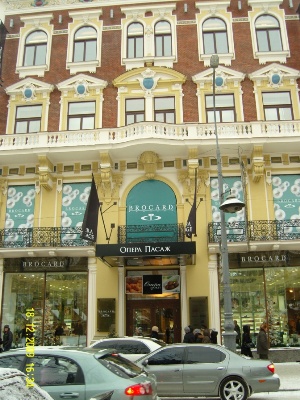
    ТЦ "Опера Пассаж"-ПР.Свободи 27,-Carreblanc and Blumarine, Baume & Mercier, Maurice Lacroix, Balmain, Chanel, Bvlgari, Dolce & Gabbana, Prada, Versace, Salvatore Ferragamo, Roberto Cavalli, Tom Ford, Brioni and Ermenegildo Zegna тощо.
    \
    GLA 5500 Кв.м

    http://www.operapassage.com/

    ТЦ "Скриня"-Вул.Городоцька 179.-Сільпо,Мобілочка,Біла Ворона.Хаус,Репортерр,Бігстар,Аргос,Лотто,Мегаспорт тощо.
    [IMG][/IMG]
    8500м.кв.

  • Prophezeiungen – Zukunftsperspektiven

    Niall Fergusson ist wieder da.

    Euro und Dollar wackeln, die Staatsschuld explodiert, der Goldpreis eilt von Rekord zu Rekord, China zieht ökonomisch an Deutschland und Japan vorbei. Instinktiv spüren die Menschen, dass die neue Dekade eine Dekade der großen Umbrüche sein wird.

    2010 wird eine Schuldenkrise über uns hereinbrechen, sagt der Star-Historiker Niall Ferguson. Und das ist erst der Anfang. WELT ONLINE fragte den intimen Kenner der Wirtschaftsgeschichte, welche großen Veränderungen sich Anleger und Steuerzahler in den nächsten zehn Jahren einstellen müssen.
    Keiner wäre besser dafür geeignet, den Blick in die Zukunft zu werfen als Ferguson. Der Harvard-Professor und Autor des Buchs „Der Aufstieg des Geldes“ ist Experte für „virtuelle Geschichte“, die Entwicklungsstränge des Weltgeschehens genau analysiert und weiterdenkt.

    Hier sind seine Prophezeiungen:

    Im Jahr 2020 erholt sich der Westen langsam von einer verlorenen Dekade. Die Zeit des niedrigen Wachstums, der hohen Arbeitslosigkeit und der Beinahe-Deflation gehen zu Ende. Doch das Erbe der Schuldenkrise von 2010 lastet weiterhin auf den Staaten.

    Politik und Wissenschaft debattieren immer noch darüber, ob es besser gewesen wäre, wenn Deutschland damals die Defizite der PIGS-Länder (Portugal, Irland, Griechenland, Spanien) geschultert hätte. Vielleicht wären die Kosten geringer gewesen als die Straßenschlachten, die im Sommer 2010 als Folge der schmerzhaften Sparhaushalte in Lissabon, Athen, Dublin und Madrid tobten.

    Die Europäische Union ist nicht auseinandergebrochen, aber sie expandiert auch nicht mehr – zum Leidwesen der Ukrainer, Serben und anderer. Eine weitere Zentralisierung der Macht hat nicht stattgefunden. Deutschland legt gegen jeden Versuch, den EU-Haushalt auszuweiten, sein Veto ein. Die Türkei hat ihre Bewerbung um eine EU-Mitgliedschaft zurückgezogen und sich stattdessen einer neo-osmanischen Konföderation muslimischer Staaten im Nahen Osten und Zentralasien angeschlossen.

    Im Jahr 2020 ist China nicht nur die zweitgrößte Volkswirtschaft in der Welt, sondern auch die zweitgrößte Militär- und Seemacht auf dem Globus. Das Unbehagen über das „Imperium“ des Landes in Afrika und Lateinamerika wächst. In Peking sucht man Zeichen politischer Reformen vergebens. Vielmehr ist die Freiheit der Rede nach dem „Taiwan-Zwischenfall“ – wie die Chinesen die Annexion der Inselrepublik nennen – weiter eingeschränkt worden. Auch der nach dem Tod Kim Jong Il vollzogene Schwenk zu einer Ein-Korea-Politik hat zur Beschneidung der Meinungsfreiheit beigetragen.

    Chinas Weigerung, die Politik der USA gegen den Iran zu unterstützen, hat die Beziehungen zwischen Washington und Peking schwer belastet. Vor allem die Verurteilung der israelischen Luftschläge auf iranische Atomanlagen war von schriller anti-amerikanischer Propaganda begleitet. Die Welt blickt verwundert zurück auf den Erfolg der Revolution im Iran. Noch mehr aber hat sie sich gewundert über die stillschweigende saudische Unterstützung für Israels Vorgehen und die Eskalation der Gewalt zwischen Sunniten und Schiiten im Nahen Osten.

    In den USA sind die vier Jahre Barack Obama nur noch eine ferne Erinnerung an eine kurze Episode. Präsident Michael Bloomberg bereitet sich auf den Ausklang seiner zweiten Amtszeit vor. Seine Wahlkampagne von 2012 mit dem Slogan „Back to Business, America“ ist vielen noch gut im Gedächtnis. Bloomberg ist es gelungen, den US-Haushalt durch eine radikale Steuerreform in Kombination mit Subventionskürzungen auszugleichen. Die von ihm durchgesetzte Einführung einer Pauschaleinkommensteuer von 20 Prozent und einer bundesweiten Mehrwertsteuer hat die Arbeitslosenquote zurück auf fünf Prozent gedrückt.

    Vizepräsident McChrystal läuft sich warm für die Präsidentschaftswahl 2020. Der „Afghanistan-Krieger“ hat die amerikanische Linke mit seiner Rede auf dem Parteitag der Republikaner 2012 überrumpelt. Der Titel der Rede lautete „So gewinnen wir den Kampf der Kulturen“. Als McChrystal nach den Terroranschlägen vom 11. September 2011 auf Chicago, Los Angeles und Houston die politische Bühne mit seinem Ruf nach einer „Gegenrevolte der Heimat“ die politische Bühne betrat, wurde klar, dass es Obamas schwerster Fehler gewesen war, McChrystal im Sommer 2010 gefeuert zu haben.

    Im Jahr 2020 haben Zeitungen ein Comeback erlebt. Ein von einem jungen Russen aus Kursk entwickelter Computervirus hat alle Daten auf Google-Servern vernichtet. Das hier Dargestellte, soviel sei betont, ist die optimistische Version der Zukunft.

    http://www.welt.de/finanzen/article5…e-Zukunft.html

  • Eraser (1996) m-720p

    Eraser (1996) m-720p
    Eraser (1996) m-720p
    English | Subtitle: English, Czech | 1h 54mn | 1280*528 | 23.976 fps | x264 ~ 2100 Kbps | AC3 6ch ~ 384 kbps | 1.99 GiB
    Genre: Action | Drama | Mystery | Thriller

    John Kruger is a U.S. marshal who is assigned to protect Lee Cullen, who works for the Cyrez Corporation, a company that manufactures top secret weapons for the military. Lee knows about a scam going on within Cyrez Corporation, and the man behind it is determined to silence Lee, because without Lee, the FBI has no case against the Cyrez Corporation. After taking Lee to New York City to hide her, John discovers that his friend, U.S. Marshal Robert Deguerin, is the mastermind behind the scam!

  • Portaro: Toshiba announces portable, over-priced DVD player

    toshiba_portaro

    Toshiba in Japan announced the Portaro SD-P12DT [JP] today, a new portable DVD player. The main selling point of the device is the 12-inch LCD screen that features an LED backlight and 1,366×768 resolution. Sized at 342×73×326mm (weight: 2.8kg), the Portaro is available in black or white.

    toshiba_portaro_2

    Apart from video DVDs and music CDs, the device supports DVD-R/RW and CD-R/RW (there’s also an SD card slot). It also has a built-in digital TV tuner (that will work only in Japan). Toshiba says the lithium-ion battery has a life span of four hours.

    toshiba_portaro_3

    The Portaro will go on sale in Japan on February 1 for $550, which is a pretty steep price considering you can’t watch Blu-rays on it. Panasonic’s portable Blu-ray/digital TV hybrid, the DMP-BV100, for example (which we blogged about last year), currently costs just $600 [JP].

    Toshiba hasn’t announced yet whether the Portaro will ever be available outside Japan as well, but that’s highly unlikely.


    Buy This Item: [Click here to buy this item]

    Read Original Article

  • In the field: More about Giza tombs

    Egypt State Information Service

    A collection of tombs that belong to workers who built Khufu’s pyramid has been discovered in the area of the workmen’s tombs on the Giza plateau, Culture Minister Farouk Hosni announced on Sunday 10/1/2010.

    Hosni added that the tombs were found by an Egyptian excavation team led by Dr. Zahi Hawass, Secretary General of the Supreme Council of Antiquities (SCA).

    Dr. Hawass said the tombs are dated to the 4th Dynasty and belong to workmen who built the pyramids of Khufu (2609-2584 BC) and Khafre (2576-2551 BC).

    “This is the first time to uncover tombs like the ones that were found during the 1990’s, which belong to the late 4th and 5th Dynasties (2649-2374 BC),” asserted Hawass, pointing out that this group of tombs can be considered one of the most important discoveries of the 20th and the 21st centuries, as they shed more light on the early period of the 4th Dynasty.

    “These tombs were built beside the king’s pyramid, which indicates that these people were not by any means slaves. If they were slaves, they would not have been able to build their tombs beside their king’s,” concluded Hawass.

    The most important tomb is the one belonging to Idu. It is rectangular in structure with a mud brick outside casing covered with plaster. It has several burial shafts cased with white limestone, as well as niches in front of each shaft.

    The area in which the new tombs were found is the beginning of the one kilometre long necropolis, and Dr. Hawass pointed out how this discovery highlights the religious life of ancient Egyptian workers who built the pyramids.

    Evidence uncovered also revealed that the families in the Delta and Upper Egypt sent 21 buffaloes and 23 sheep to the plateau every day to feed the workers. Hawass pointed out that the families who sent these were not paying their taxes to the Egyptian government, but rather they were sharing in one of Egypt’s national projects.

    The number of workers did not exceeded 10,000, said Hawass, contradictory to Herodotus, who recorded that the number of workers reached 100,000.

    Hawass said that this discovery demonstrates that the workers came from top families of the Delta and Upper Egypt. Workers rotated every three months, and those who were buried there died during the construction process.

    Dr. Hawass asserted that according to science and archaeology one cannot fix a time for the construction of the pyramid. Limiting it to a specific season is wrong as it was based on incorrect information that the construction process was only executed during the three months of the flood.

    The transportation of the granite, basalt and limestone blocks used in the construction was only conducted during the flood season, but the construction work was not limited to this season, and lasted for the whole year. The blocks used in the construction of the body of the pyramid were brought from the Giza plateau itself.

    The discovery of the cemetery of the pyramid builders occurred in 1990 when a horse was stumbled on top of a mud brick structure ten meters far of the necropolis located to the south of the wall.

    The necropolis is composed of two levels connected by a ramp. It is composed of different shapes and styles of tombs, some are pyramid shaped while others are vaulted and some contain false doors.

  • VW Eos White Night Goes to Australia

    German carmaker Volkswagen announced that, starting yesterday, the Eos White Night is available for purchase in Volkswagen dealerships across Australia. With retail prices of AU$53,990 for the 103 TDI model and AU$55,990 for the 147 TSI, the Eos White Night comes with a price premium of just $3,500 above the relevant series model.

    The car is basically a contrast of black and white: the body is painted in white, while elements such as the roof, radiator grille and mirror covers are… (read more)

  • Jude Law Sienna Law Engaged — Again?

    Five years after infidelity led to a highly-publicized split, Jude Law and former flame Sienna Miller are again making plans to march down the aisle, The Mirror claims.

    The Sherlock Holmes actor was engaged to wed Sienna before confessing that he was having an affair with the nanny of his three children in November 2005. However, tabloid spies claim that after reconnecting during their recent Broadway tours in New York City, Jude and Sienna have decided to give love a second chance.

    “Sienna was always the one. And now she is back in his life he never wants to let her go again,” says a source. “Jude was a lost soul without Sienna. They have ironed out their old differences and are ready to move on. Sienna’s fed up of the single life and wants to be with Jude for good,” the insider blabs.

    “Jude and Sienna have realized that they’ve exhausted all other avenues, have both screwed and screwed over all other options and have finally realized that they truly, truly deserve each other….”

    Jude and Sienna spent the holidays on the Caribbean island of Barbados with the actor’s three children, from his marriage to ex Sadie Frost; Rafferty, Iris, and Rudy.

  • NAIAS: 2011 BMW 740i & 740Li Pricing Announced

    The BMW Group has announced the U.S. pricing for the 6-cylinder 7 series sedan at NAIAS. The 740i will have a starting price of $71,025* and its long wheelbase sibling, the 740 Li, will retail from $75,425*. Both of them will be available for U.S. customers starting this Spring.

    The nonidentical twins are powered by a twin-turbocharged 3.0 liter straight six engine delivering 315 HP and 330 lb-ft of torque (available form 1600 to 4500 rpm), which features direct fuel injection, an… (read more)

  • In the field: More re Taharqa and other statues

    Reuters UK

    The Pharaoh Taharqa, mentioned in the Bible for saving Jerusalem from the Assyrians, was a Kushite from north Sudan but ruled a wide empire through Egypt to the borders of Palestine. The southern borders are unknown. The Kushite civilization survived from 9th century B.C. to the 4th century A.D.

    “It’s an amazing shock that we’ve found the statues there particularly Taharqa,” said Julie Anderson, co-director of the project in Dangail, about 350 km (217.5 miles) north of Khartoum.

    “This is the furthest south that we know of that a statue of Taharqa has ever been found,” she added.

    The dig found four royal statues, of Pharaoh Taharqa (690-664 B.C.), kings Senkamanisken (643-623 B.C.) and Aspelta (593-568 B.C.) as well as part of a crown of a fourth royal who they have yet to identify.

    The granite life-size statues would weigh 1.5 tons but appeared to have been deliberately broken at the neck, knees and ankles in a ritual, which may have been due to internal dynastic disputes or an Egyptian pharaoh who came south to assert authority.

  • Research: Call for a potential mummy

    Daily Mail

    Every now and again a somewhat grizzly call goes out for someone to volunteer to be mummified (posthumously, of course!) in the interestes of Egyptological research into the entire process of mummification. Here’s the latest. With photos.

    Channel 4 looks set to become embroiled in another taste row after backing a project which seeks to mummify a terminally-ill volunteer for a TV documentary.

    The body of the candidate selected to be embalmed could then end up being displayed in a museum.

    If the project goes ahead it will follow a trail of programmes which seek to challenge views on death. Television audiences have been shown an autopsy, carried out by the controversial German anatomist Dr Gunther von Hagens, and an on-screen assisted suicide.
    Precision process: Egyptians were masters of mummification, but an English scientist believes he has worked out the secrets to embalming

    Channel 4 and production company Fulcrum TV have advertised in magazines for possible candidates to volunteer.

    The advert reads: ‘We are currently keen to talk to some one who, faced with the knowledge of their own terminal illness and all that it entails, would nonetheless consider undergoing the process of an ancient Egyptian embalming.’

    An English scientist claims to have unlocked the secrets of mummification. His efforts at recreating the work of Egyptians will be the subject of the documentary.

    BBC News

    A terminally ill patient is being sought to donate their body to be mummified for a Channel 4 TV show.

    The programme will explore the mysteries of ancient Egyptian embalming, which was believed would help people reach the afterlife.

    Adverts have been placed asking for dying patients interested in participating to get in touch.

    Channel 4 said: “If the scientists are able to find a donor, we would be willing to follow the process.”

    It is understood the project – which has been proposed by production company Fulcrum TV – is in its very early stages and may not actually be made.

    The idea was uncovered when an executive producer from Fulcrum TV, Richard Belfield, spoke to an undercover journalist posing as a possible volunteer.

    He was quoted as saying it had been suggested – although it was not obligatory – that the body be placed in a museum exhibition to enable people to understand the mummification process.

    The Independent, UK

    With thanks to Glen Fricker for the link.

    Channel 4 confirmed it had contributed a nominal amount of funds to Fulcrum to help with development. This sum typically pays for a producer to look into the research and assess the programme’s viability.

    Yesterday, a Channel 4 spokesman said the channel was supportive of the project: “We’re fascinated by the research that is taking place. If the scientists are able to find a willing donor we’d be interested in following the process. And if you were to question why we were interested we’d say ‘If the scientists have solved one of the ancient world’s most enduring mysteries [the process of mummification] it would give us a unique insight into science and Egyptian history and may well prove to have other significant benefits for medical science’.”

    The concept has drawn some criticism, but it is not the first to do so. An ITV documentary, called Malcolm and Barbara: Love’s Farewell, which showed what some classed as the first televised death in Britain. It involved an Alzheimer’s sufferer, Malcolm Pointon, in 2007, and led to huge controversy. The documentary chronicled Malcolm’s last moments as he slipped into a coma – he died three days later.

  • Jackie Chan Wax Figure Madame Tussauds Hollywood Pictures

    Action star Jackie Chan attended the unveiling of his wax figure at Madame Tussauds Hollywood in Los Angeles on Monday. The unveiling came just days after the Rush Hour star revealed that he would like to write a musical based on his life.

    “I love The Sound Of Music,” Chan explained. “When I was young, I didn’t know English and I saw the whole movie. I’m planning to do I Am Jackie Chan: The Musical. I’ve got a very interesting background. I will talk about how I got into the film business… and how I’ve come to be today. It’s a very interesting, classical musical.”


  • Yahoo Outsources 'Shopping' to PriceGrabber

    Yahoo’s cost cutting efforts have made another victim. The company has decided to outsource Yahoo Shopping and all the results will now be provided by PriceGrabber. Yahoo is not making too much fuss about it and announced indirectly along with the closure of the Yahoo Shopping API. This latter part isn’t going to sit well with developers using the API … (read more)

  • Looting: Treasures the Color of Blood

    asharq alawsat (Zahi Hawass)

    The dream of finding treasure under one’s house is something that has always existed across the length and breadth of Egypt. Every person in every village or city [in Egypt] imagines themselves finding the ancient treasures of the pharaohs underneath their houses. In fact, people have killed each other as a result of this, with brothers killing brothers, and in the end, they die together under the rubble, with the imaginary treasure remaining where it is.

    We also hear stories of djinn guarding treasures, and according to folk tales, mercury can be used to control and command such djinn, and of course there is the word “mummy” which now seems to have an almost magical effect on people. Con artists and fraudsters use the dream of hidden treasure as a means of conning people, and every day we hear news that somebody has found buried treasure under their home, only for archeological survey to reveal such claims to be myths or products of the imagination.

  • The Market Has Now Completely Erased The Financial Crisis From Its Memory

    stress

    Here’s the Kansas City Fed’s financial stress index, which takes into account a range of measures (yield spreads on various instruments and price movements of certain assets) to gauge the amount of stress in the financial system.

    As you can see, we’re basically at pre-crisis levels.

    See the KC Fed’s full announcement here:


    KCFSI.Dec09

    Join the conversation about this story »

    See Also:

  • TV Notes: The Pharaoh who conquered the sea

    BBC iPlayer and web links

    Notes taken from last night’s show on BBC4 (UK). It can still be viewed by UK residents on BBC iPlayer at the above address for the next seven days. There are also other links to articles which may be of interest. The notes are a bit rough but hopefully provide some sort of idea of the programme’s content.

    Hatshepsut’s life is shrouded in mystery. She is the first woman to have reigned over Egypt, for over 20 years in a period of relative peace and prosperity but after her death the records of her were deleted, taking with her the evidence of her nautical expeditions.

    Mersa Gawasis. Archaeologists have revealed information about her reign. The pottery and ceramics suggest that it was used as a bivouac – perhaps a base came for the voyages t the mythical land of Punt? Buried in the sand boxes provide a clue. Kathryn Bard says that they were amazed at the find = an inscription of one of the boxes says “the wonderful things of Punt”. Now desert a bay once existed there. At a cave in a coral terrace Cheryl Ward an archaeologist who specializes in ancient boats finds dozens of coiled ropes left by ancient seafarers. They are astonishingly well preserved – as though they were left yesterday. The archaeologists were the first to see them in 4000 years. Most precious find was a wooden plank that looks as though it was part of a boat just beneath the prow. Several dozen marine timbers were unearthed during the excavation.

    Why would Queen Hatshepsut have mounted such an ambitious expedition? [Acting] Before she became pharaoh she was a princess, the eldest daughter of Queen Ahmose and Thutmose I. She was married to her half brother who inherited the throne soon after their marriage. He fell ill and died soon after his coronation. Her stepson was too young to become pharaoh so she became regent. It is suggested that the expedition to Punt was a way of establishing and reinforcing her power in Egypt.

    Cheryl Ward believed that she needed to reconstruct a boat to challenge those who doubted that the boats would be seaworthy. She teamed up with Tom Vosmer who is both a ship builder and archaeologist. He has supervised replicas of a number of sailing vessels and lives in Oman where he sails old boats of Indian Ocean.

    Ward and Vosmer next visited Paris to research how to create a boat when almost no physical trace of it exists? A few planks and other physical remains and a depiction of it at Deir el Bahri. There was no bitumen, pitch, resin etc surviving.

    The next stop was a visit to Deir el Bahri. Huge seagoing ships are shown with crews of rowers, sailors and cargo loaders together with the cargo. Ward describes the reliefs as “A treasure house of info about the seafaring”. There is also some info which is difficult to interpret in the images which is “a bit of a mystery” (Tom Vosmer). They are the only known images of the ancient vessel but they are incomplete because only show vessel from one side. But the Mersa Gawasis finds of wooden planks and rudders were almost identical to the boat in the reliefs. Ward and Vosmer concluded that boat drawn to scale on basis of existing knowledge – and their measurements put the ships at just over 20m long. [I was surprised at how short that would make them].

    The next part of the show leaves the boats for a minute and looks at Hatshepsut being transformed from female to male with all of a Pharaoh’s appearance and paraphernalia. She also needed to form good relationships with powerful priests of Egypt. The narration suggests that Punt expedition would bring back items desired by priests, including incense.

    The oracle was consulted and Senenmut was commanded to built 5 ships with sails. 3500 years later Ward and Vosmer study Giza ship of Khufu at Giza (43m), much older than that of Hatshepsut but with some similarities in construction methods.

    The next stop was Cairo Museum to see model boats for hull shapes and sails, and a fishing boat excavated at Dashur. Similar length. Width 5m.

    The ship was generated graphically using a computer model by Patrick Couser, the Naval Architect for the project, and then produced as a physical model using the computer model and a 3D modelling device. Around 45 planks on each side would have been required and it was important to understand how they fit together to form an integrated whole.

    A family of Nile shipwrights living outside Alexandria in Rashid were commissioned to build the boat. They were shown the model with suggested planking in place. The boat was built using ancient techniques – with no books these had to be reinvented. [This is some of the most fascinating footage in the programme]. Egyptian archaeologist Mohammed Abd El Maguid stayed after 3 months had passed and Tom Vosmer and Cheryl Ward had returned home and he took extensive notes during the built. An elaborate mortise and tenon system was used to hold the boat together, but curvature of planks made for serious complications because the fit had to be absolutely perfect. The idea is that when wood swells after launch the ship will become watertight.

    Hatshepsut chose Nahisi as captain, a man who had served her father.

    Anchors had engravings of divine protection.

    David Vann will skipper it on Red Sea. Vann describes the vessel as short, fat, and difficult to handle. He saw the big cracks in the hull and was seriously worried about it because he sank in a metal boat with cracks but although reassured by wooden experts that the wood would expand to fill the cracks he was still concerned.

    Rigging shown at Deir El Bahri shows intertwined ropes and knots and a complicated relationship between ropes and masts. No other images exist.

    Cheryl Ward travels to Lake Burullus for search of a clue. The way that the mast is fixed to the hull is intriguing and Cheryl Ward says that it is “another one of those times when you can touch the past” because the system seems so similar.

    At launch the ship building family express their delight. [The complete hull launched into the sea is a lovely thing but looks tiny]. The water comes in quickly and instantly floods the boat but two weeks are predicted for the hull to expand sufficiently to become water tight. After two weeks it takes twelve hours to pump out the boat. In the morning, however, the boat is again filled with water. In spite of everyone’s hard work it is necessary to find a solution to the problem. How can the boat me made watertight using an authentic technique? The shipyard provides the solution – linen fibre stuffed between planks as a way of waterproofing. Beeswax was also added (based on Greek ship building traditions). Both were available in the Delta throughout Dynastic Egypt. 10 months in and the rudders are made. In the streets of Rashid the rigging is made – several kilometres of rope in different thicknesses.

    Raising of the mast was a subject of great celebration, and quite right too! Lovely. But the ropes hanging from the mast are all over the place! Ship was christened Min.

    A statue of Hatshepsut and Amun was created before the sailing to Punt as a gift to that land’s inhabitants.

    Almost a year after construction Min is ready for her maiden voyage. [The linen and wax seem to have worked – she is afloat! But unless I missed a bit, it is not confirmed that the linen and wax alone made her seaworthy] But lots of other questions remain to be answered about the journey to Punt.

    Rope system causes much confusion initially but four lines pull the sail and four change its direction. The others are not used for navigation.

    The small sail had to be used when wind too strong (smaller surface area) and that puts extra stress on the rudders, and the conditions are much rougher. In Tom Vosmer’s words “she wallows like a pig” but that was unsurprising in the conditions. She stayed afloat.

    An earlier journey by Henu, it is speculated, must have been know of by Hatshepsut and Senenmut but the records do not reveal the location of Punt which could have been in Eritrea, Yemen or elsewhere. If she could not sail against the sea she could not reach the far side, Yemen, so this was necessary to test. Proved that she was capable of tacking, and could make progress in spite of variations in the wind which means she could have reached either side of the Red Sea.

    Cheryl Ward says that even living through a small part of the journey demonstrates the ingenuity, creativity, intelligence and craftsmanship of the builders and crew and says that it is a humbling experience.

    The procession of ostrich feathers, woods, panthers, cheetahs, myrrh trees and other resins and many other things were depicted on the walls of Deir El Bahri.

  • Golf Ball Launcher Turns You Into Tiger Woods (Sort Of)

    FCF25AF2-B37F-474A-AFFC-0286E93A95FC.jpg

    Remember when Tiger Woods was known more for his amazing tee shots than for his amazing menagerie of hos? The new Golf Ball Launcher lets you drive the golf ball 300 yards from the tee without the hassle of those annoying golf clubs. Or talent.

    The Golf Ball Launcher is powered by an air compressor and does precisely what you want it to – shoot a golf ball a long, long way.

    While the Golf Ball Launcher will give you amazing tee shots, once you hit the green the putting is still up to you.

    The device is not yet available and is probably illegal on most golf courses. When it does hit the market, expect to shell out around $800.

    [via Oh Gizmo]

    Related posts:

    1. Bad Golfers, Meet The RadarGolf Ball Location System
    2. The Best Tiger Woods Crash Jokes on the Web
    3. The Amazing Toast Launcher Gizmo

  • Yamaha Name New Manager for Jorge Lorenzo

    What was rumored for some time now was finally confirmed by the FIAT Yamaha Team organization, as Spanish rider Jorge Lorenzo found out the name of his new team manager for the 2010 campaign of the MotoGP. Following Daniele Romagnoli’s exit from the team in mid-October, Dutchman Wilco Zeelenberg will take over from the Italian starting the 2010 season.

    With Yamaha closing down their operations in the World Supersport Championship, Zeelemberg – who used to guide Cal Crutchlow’s squ… (read more)

  • Attack on Met Office by Tory MP Nicholas Winterton in House of Commons

    Article Tags: Met Office, UK Winter Forecast 2009/10

    EXETER’S Met Office has defended its work in the face of fierce criticism at Westminster amid claims it has been “hijacked by the climate change lobby”. The defence came after one outspoken MP branded the “serial inaccuracy” of the agency’s forecasts a “scandal”.

    But the forecaster has pointed out its five-day weather predictions were being used to help deal with the prolonged freeze. And its day-to-day forecasts were “very accurate”.

    And despite the current cold snap, there was no doubt that man had contributed to climate change.

    It comes after veteran Tory MP Nicholas Winterton launched a concerted attack on the Met Office in the Commons.

    Click source to read FULL report and many thanks to Tory MP Nicholas Winterton, please can we have more of the same.

    Source: thisisexeter.co.uk

    Read in full with comments »