Author: Serkadis

  • Gauging Mass Opinion: Don’t Label it Social Media

    wisewindowlogo.jpgIn the first generation of the social Web, the marketing groups and public relations teams would develop reports to provide metrics for a particular campaign. They were pretty much the sole users of “social media,” technologies.

    That’s a problem as far as WiseWindow is concerned. Social media is a poor label for describing how comments, blog posts, updates and other opinions can be leveraged to gauge views across social networks and thousands of Web sites.

    “Labeling of it as social media has limited its potential up to now,” said Marshall Toplansky, president of WiseWindow. “That is why we are calling it mass opinion business intelligence and not social media analytics.”

    Sponsor

    Now, the social Web is a real-time engine. Cloud computing is a reality and a new era is upon us that allows the enterprise to mine the vast sea of comments, reviews, updates and blog posts from millions of people. We’re entering an era where the social Web will serve as the main territory for performing predictive analytics.

    WiseWindow is using artificial intelligence technology, web crawlers and the processing power of the cloud to get real-time results for enterprise customers. For example, this means that companies may leverage the social Web to make sales forecasts and gauge the opinions of mass society to immediately understand the current opinions about its brand or those of competitors.

    WiseWindow calls the product Mass Opinion Business Intelligence, describing it as a service that goes beyond keyword search and click-throughs to predict market movement.

    According to WiseWindow, sentiment analysis has failed as a strategic research tool. When matching words, the context is lost. People use words differently to describe their sentiments. The mass amount of data available makes the process overwhelming.

    Instead, the WiseWindow web crawler will search for comments and other opinions across thousands of sites that are not blocked by privacy restrictions. The artificial intelligence trains itself to look for a particular topic. It brings back all related opinions. The information is then distilled for the client or made available through a web portal where the data can be analyzed.

    Recently, WiseWindow worked with a client from the film industry. WiseWindow used its technology to research 400 films, generating 4.5 million comments from 70,000 sites. They distilled the data to lean what is hot and what is not.

    As another example, , WiseWindow did research for the film, Marley and Me, starring Jennifer Anniston and Owen Wilson. The pre-release promotions featured Luke Wilson. But the comments from the Web demonstrated that Anniston had greater appeal than Wilson. As a result, the trailers were changed to feature Anniston more than Wilson.

    WiseWindow was founded in 2007 by Rajiv Dulepet. He has an impressive background. He was a visiting scholar at Stanford’s School of Management and Engineering, spearheading the development of presidential prediction projects for both the 2004 and 2008 elections.

    WiseWindow started developing its technology in 2007 and began working with clients last year. The company has four patents for its web crawling, auto-classifications of opinions, relevance recognition and in statistical language applications.

    Discuss


  • Woman Trashes McDonald’s Over Bad Burger

    Don’t F- with a woman’s Big Mac. Police are on the hunt for an unidentified woman who trashed a Kansas City McDonald’s last week after Golden Arches employees botched her hamburger. The woman was caught on surveillance video causing thousands of dollars in damage as she threw water at the cashiers and pushed cash registers off the counter.


  • Gold and Silver: Kootenay Drill Programs Expected to Add Significant Shareholder Value in 2010 KTN.v, SSRI, SLW, HUI, XAU, TNR.v, ASM.v, EPZ.v, NEM,

    Debt of the United States has surpassed Twelve Trillion a few days ago – it is time to put a few lines about destiny of US Dollar, Gold and pockets of Growth. This debt, which is so dangerously close to be a 100% of GDP is a small shadow of U.S. total obligations which could be as high as 114 Trillion dollars.
    Recently we gave a
    Signal:
    “We promised to give you an update on
    Gold Big Picture. First of all we will refer to the Chart above and will tell you that we see a Sell signal short term in the making.”
    Gold is in a healthy correction now: our Sell signal is confirmed. Things are not rising parabolically, if it is not the last phase of the Gold Bull. We do not think so and now it is time to buy and accumulate positions again. Gold could retest strong support of previous consolidation pattern at around 1000 USD/oz to throw you the number, but do not trade it if you do not have to.
    Jim Puplava is talking this week about Gold doubling from here and Mr Gold Corp – Rob McEwen still throws his 5000 figure and makes a Junior Gold mining index. We are in agreement that it is time to rotate into Junior mining sector. After this consolidation, once investment public will realise that Gold will stay above 1000 USD/oz and it was not a final blip, money will go into Juniors, which still lack as a sector previous excitement of Bull Legs Up. Silver moves will be more dramatic, as usual, with double drivers of Inflation and Commodity High Tech Recovery play.

    Time is is for Juniors in Gold and Silver to play, look for strong aggressive teams, good assets and solid financial positions – the rest will be done by The Gold Bull.

    VANCOUVER, Jan. 6 /CNW/ – Kootenay Gold Inc. (“Kootenay“) (KTN: TSX.V) is pleased to announce exploration has accelerated on its gold and silver properties. Seven drill programs in Mexico and Canada provide multiple opportunities for discovery and added shareholder value in 2010. During the first two quarters of 2010, drill results are expected for the following properties:
    Promontorio, Mexico Drilling Underway
    Espiritu, Mexico Drilling Underway
    – Rosetta Stone, Canada Drilling Complete Results Pending
    – Connor Creek, Canada Drilling Complete Results Pending
    – Santa Lucia, Mexico Drilling Scheduled
    – Jumping Josephine, Canada Drilling Scheduled
    – Deer Park, Canada Drilling Scheduled
    James McDonald, CEO of Kootenay Gold commented, “Drilling and development at the Promontorio Silver/Gold Project continues to be our primary focus while Joint Venture partnerships maximize the potential for new discoveries. We are presently in a healthy financial situation with ~$10 million in the treasury and ~37 million shares outstanding.”
    GEOLOGICAL PROPERTY Information
    Promontorio, Mexico
    Phase I & II Promontorio Drill Results reported 950 grams per tonne (“g/t”) over 18.4 meters (“m”), 162 g/t Silver eqv. over 151m & 386.64m of 70.8 g/t Silver eqv (for full assay results see News Release dated Feb 05, 2009). Drilling continues at Promontorio. The program is designed to drill untested targets; expand on mineralization discovered at the Pit Discovery; and step-out across the 2km Dorotea Trend. The current program focuses on targets identified by systematic exploration (3D IP Geophysical Survey; Mapping; Sampling; EM Airborne Study; Trenching; Drilling) across this large silver-lead-zinc-gold mineral system; The program is being expanded and is to be followed with detailed drilling of the strongest mineralized zones.
    Espiritu, Mexico – Joint Venture
    The Espiritu is an exciting project that has the potential to be a ‘Company Maker’. It has the text book characteristics of a large scale porphyry system. Erosion of the Leach Cap has exposed the enriched Supergene of a Gold Copper system. Mineralization and alterations are hosted along a 5km east northeast trending structure that measures between 1 and 2km in width. Two hundred and sixty-one samples have been collected, with 169 from the northwest porphyry setting. This drill phase is the first look at the system to determine grade and width potential of the supergene and hypogene mineralization (see News Release dated Dec 03, 2009).
    Rosetta Stone, Canada – Joint Venture
    The drill program is a first test on two newly discovered gold showings named the Road and Rosetta Stone showings. The road showing which is 94m long and 4 to 6m wide and can be projected for another 450m along strike; and the Rosetta Stone showing which is exposed for 40m of strike over 2 to 4m wide before disappearing into overburden on both ends. Grab samples from the Rosetta Stone showing range from background to 21.1 g/t, 11.4 g/t, 7.7 g/t, 16.6 g/t, 7.1 g/t and 3.8 g/t, with 11 of 29 samples grading more than 1.0 g/t gold. Grab samples from the Road showing ranged from background to a high of 17.0 g/t gold (see News Release dated Oct 14, 2009).
    Connor Creek, Canada – Joint Venture
    Gold-bearing shear zones, massive sulphide gold-copper veins, polymetallic veins and skarn occur on the property. The massive sulphide veins are similar in many respects to the veins that host the copper-gold deposits of the historic Rossland camp. Although hillsides are steep, little outcrop has been found away from roads and some creeks. A soil geochemical survey over about one-quarter of the property has located several unexplained zones of strongly anomalous values for gold (up to 1554 parts per billion) and other metals. These zones measure up to 1500m long and 500m wide. Drilling in 2007 of newly discovered gold-bearing shears at the CC gold zone at the north end of a 550 meter-long gold soil anomaly returned the following drill intercepts (see News Release dated Nov 13, 2009):
    Hole No. 9 — 16.2 g/t gold over 0.80m;
    Hole No. 10 — 4.75 g/t Au over 3m; 3.29 g/t Au over 1.76m; 1.09 g/t
    Au over 4m.
    Santa Lucia, Mexico – Joint Venture
    During the last several years, Kootenay has conducted extensive exploration on the Santa Lucia Property which includes prospecting, mapping, sampling, airborne mag and EM work. In addition, a complete historic data package was purchased in 2009. The data contains information from more than US$1 million of exploration expenditures conducted in the 1990’s. Based on Kootenay’s exploration and drill intercepts contained within the data package, several compelling Drill Targets have been identified. Planning and permitting is now underway for a comprehensive diamond drilling program at Santa Lucia (see News Release dated Dec 10, 2009).
    Jumping Josephine, Canada – Joint Venture
    Gold encountered over a strike length of 900m and to vertical depths of up to 240m below surface and remains open on strike and at depth. Visible gold is often observed within the stockwork quartz veins and individual meter-wide samples range up to 61.8 g/t gold (hole 048 58-59m). The presence of coarse gold was noted early during exploration and all samples from the stockwork zone were analyzed by metallic screen fire assays.
    Planning and permitting is now underway for a focused and comprehensive trenching and diamond drilling program on the Jumping Josephine Project for the spring 2010, as well as the previously-announced bulk sampling at the JJ Main zone. This work will continue to evaluate the 2km JJ Main structure, as well as testing a number of other high-priority targets (see News Release dated Nov 18, 2008).
    Deer Park, Canada – Joint Venture
    The Deer Park property comprises approximately 420 hectares. Several styles of mineralization have been recognized. Gold occurs within north trending shear zones in quartz veins, veinlets and irregular fracture zones, commonly with minor copper or other base metal sulphides; within a mapped and projected strike length of nearly 3km. Higher concentrations and better grades appear to be associated with small east-trending, crosscutting fractures or faults, with hand sample values containing up to 23 g/t. These gold zones have been the focus of most of Kootenay Gold’s recent exploration including an airborne geophysical survey, geological mapping, soil geochemistry and trenching. Lead-zinc-silver veins occur in the southwestern part of the Deer Park property. Selected grab samples from numerous historical trench piles returned values of several percent combined lead and zinc and up to 68 g/t silver (see News Release dated Dec 11, 2009).
    About Kootenay
    Kootenay is an emerging exploration Company actively developing mineral projects in the Sierra Madre Region of Mexico and in British Columbia, Canada. The Company’s top priority remains the ongoing development of its Promontorio Silver project in Sonora State, northwest Mexico, which encompasses the former producing Promontorio Silver Mine.
    The TSX Venture Exchange has not reviewed and does not accept responsibility for the adequacy or the accuracy of this release.
    Cautionary Note to US Investors: This news release may contain information about adjacent properties on which we have no right to explore or mine. We advise U.S. investors that the SEC’s mining guidelines strictly prohibit information of this type in documents filed with the SEC. U.S. investors are cautioned that mineral deposits on adjacent properties are not indicative of mineral deposits on our properties. This news release may contain forward-looking statements including but not limited to comments regarding the timing and content of upcoming work programs, geological interpretations, receipt of property titles, potential mineral recovery processes, etc. Forward-looking statements address future events and conditions and therefore involve inherent risks and uncertainties. Actual results may differ materially from those currently anticipated in such statements.
    For further information: James McDonald, CEO and President at (403) 238-6986 or Ken Berry, Chairman at (604) 601-5652, 1-888-601-5650, http://www.kootenaygold.ca/
  • Texas Instruments Applies Its WVGA Resolution DLP Pico Projector to Cellphones and Digital Cameras [Projectors]

    Because of its super-compact size, DLP Pico projectors are ideal to cram into all kinds of gadgets. Texas Instruments is doing just that by applying it’s new Pico WVGA resolution chipset into everything from cellphones to digital cameras.

    It’s not the first digital camera with a projector, but the prototype developed by TI and Asia Optical could mean a significant bump in performance with DLP. Other notable new Pico technologies include: a snap on Pico accessory for the LG Expo mobile phone from AT&T ($179), a followup to the pico-enabled W7900 from Samsung and the Brightboxe gaming projector ($199).

    Texas Instruments’ DLP® Pico™ Technology Enables More Than a Dozen New Pico Products From World’s Leading Brands

    New WVGA DLP Pico™ chipset delivers incredible, native DVD images from the palm of your hand

    Las Vegas, NV – Jan. 6, 2010, 11:00 a.m. PST: Today at the International Consumer Electronics Show (CES), Texas Instruments (TI) (NYSE:TXN) DLP® Products is showcasing a spectrum of more than a dozen new products featuring its award-winning DLP Pico™ technology. Also being announced is the production delivery of the new WVGA resolution (854×480) DLP Pico™ chip that provides native DVD images from the palm of your hand. Products using DLP Pico™ technology feature superb image quality, brightness and efficiency in such diverse consumer product categories as mobile phones, cameras, personal media players, toys, gaming, notebook accessories and multimedia pocket projectors.
    “We are thrilled to see the breadth of new products coming to market all enabled by DLP Pico™,” said Frank Moizio, DLP Emerging Markets business manager. “Not only do these products feature incredible DLP image quality at compelling price points, but they are delivering new levels of entertainment and productivity to consumers and business users.”

    DLP Pico™ technology is making an impact on several new product categories, including cameras and gaming. At CES, DLP Products will showcase a prototype camera with embedded Pico projector from Asia Optical, a leading manufacturer of digital cameras. Another new category for DLP is multimedia gaming, where Brightboxe is the first gaming projector to feature DLP Pico™ technology, boasting WVGA resolution at a consumer-friendly $199 price point.

    DLP Pico’s entry into these exciting new product categories is coupled with a deepening of the commitment to innovation in categories where DLP Pico™ projectors are already leading the way. Samsung is following up on the success of its DLP Pico™ projector-embedded W7900 mobile phone in 2009 with the release of a new mobile phone, using the latest DLP Pico™ WVGA resolution chipset. LG will be showing its recently announced eXpo™ mobile phone with an optional DLP Pico™ projector as well. NTT DOCOMO recently announced the availability in Japan of the F-04B phone with an attachable pico projector enabled by DLP Pico™. Media players with embedded DLP Pico™ projectors are breaking into uncharted territory in terms of lumens, with Optoma and LG each announcing media player/projectors with 50 and 300 lumens, respectively. Finally, HP’s DLP Pico™ notebook accessory product is the first to achieve 100 lumens, making it an ideal solution for business professionals on the go.

    While the advancements in DLP technology are providing consumers with increasing brightness and resolution from smaller form factors, the industry-low price points enabled by DLP Pico technology continue to bring the cost of projector products to very affordable levels. Some best-selling DLP Pico products even feature price points below $200, including Optoma’s PK100, the new Brightboxe gaming projector and the new projector snap-on accessory for the LG eXpo™ mobile phone.

    Groundbreaking and innovative new DLP Pico™ products are showcased in more categories than ever at CES this year, including:

    MOBILE PHONE

    LG eXpo™/AT&T Pico projector snap-on accessory: (HVGA) $179; Available on AT&T’s Web site
    NTT DOCOMO Pico projector phone dock F-04B: (WVGA) Availability to be announced
    Samsung Embedded Pico Projector: (WVGA); Availability to be announced

    CAMERA

    Asia Optical Prototype: Demonstration of embedded camera prototype at CES

    PICO PROJECTORS

    Optoma PK100: (HVGA); $199; Available at Amazon.com
    Optoma PK101: (HVGA); now $229; Available at Amazon.com and Apple Stores
    WowWee Cinemin Swivel: (HVGA); $299; Available at Amazon.com, Brookstone

    PICO PROJECTION MEDIA PLAYERS

    Foryou Media: (WVGA) Availability in China to be announced
    JCO-Hite: (HVGA) Availability in China to be announced
    Optoma PK102: (HVGA); $249; Available at Amazon.com and Apple Stores
    Optoma PK201: (WVGA); Availability to be announced
    Optoma PK301: (WVGA); Availability to be announced
    Samsung SP-H03: (WVGA); Availability to be announced

    GAMING/MUTLIMEDIA

    Brightboxe: (WVGA) $199; Available at select Target stores

    NOTEBOOK COMPANION

    HP Notebook Projection Companion: (SVGA/480p); Availability to be announced

    MULTIMEDIA POCKET PROJECTORS

    LG HS200G: (SVGA); $499; Available at online retailers
    LG HX300G: (XGA); Availability to be announced
    Samsung SP-P410M: (SVGA); $540; Available at online retailers

    Detail on the Asia Optical camera prototype:

    First Digital Camera With DLP® Pico™ Projection Showing at CES

    Leading Digital Camera Manufacturer Asia Optical Selects Texas Instruments’

    DLP Pico™ for Its Embedded Camera Products

    Las Vegas, NV – Jan. 6, 2010, 11:00 a.m. PST: Today at the International Consumer Electronics Show (CES), Texas Instruments (TI) (NYSE:TXN) DLP® Products and Asia Optical are demonstrating the first digital camera with award-winning DLP Pico™ projection technology. The camera and embedded pico projection module were developed by Asia Optical, a leading manufacturer for optical technology and a major worldwide supplier of digital cameras. The embedded Pico projector module for digital cameras will be available to the Asia Optical customer base, composed of the most esteemed camera brands, in the second half of 2010.
    The DLP Pico™ projection feature within cameras provides a completely new dimension of social interaction and sharing that has previously not been possible. Today, cameras are limited to viewing pictures on a screen confined by the dimensions of the camera itself. The pico projection feature, while completely transparent to the size of the camera, unleashes that constraint providing incredible viewing options. Consumers can instantly project their pictures to sizes up to 40 inches (in normal indoor light conditions) and in excess of 60 inches (in dark conditions). As a result of DLP Pico™ technology, the paradigm of digital camera use has the potential to change from delayed satisfaction to immediate enjoyment.
    “Following an extensive comparison of all pico technology options we selected DLP Pico™ as the most compelling solution to provide our customers due to its superior image quality, small form factor and energy delivering efficiency,” said Robert Lai, founder, chairman and CEO of Asia Optical. “We believe the market opportunity for embedded displays in consumer electronics products, such as digital still cameras and digital video cameras, is significant and we are excited to launch the first product with DLP very soon.”
    Each consumer electronics category requires unique considerations when embedding Pico projection. DLP’s newest chipset, yet to be announced, is targeted to meet the specific requirements associated with digital camera applications. Asia Optical has taken advantage of its extensive experience and knowledge in the digital camera space to design an optical engine that is completely optimized for this application.

    “We are proud to work closely with Asia Optical, a leader in the digital camera field who can bring deep insight into the special requirements needed when adding projection to enhance the digital camera experience with no compromises,” said Frank Moizio, DLP Emerging Markets business manager. “DLP is committed to pushing innovations in the pico category and continues to optimize the pico chip image quality, form factor and power efficiency to deliver the best consumer experiences.”

    [Texas Instruments]


  • Vodafone: Nexus One Due in”A Few Short Weeks”

    For the folks at Vodafone, spring 2010 is only a “few short weeks” off.  Those of you across the Atlantic will be happy to know that the Nexus One will start rolling out before too long.  After starting in UK,  the handset will land in France, Germany, and more as 2010 rolls along.

    “I can confirm that Vodafone is the first operator to partner with Google to offer the Nexus One in Europe, starting soon in the UK, in a few short weeks,” a Vodafone spokeswoman told AFP. “No detail on pricing and precise timing has yet been made, but that will come in a few weeks.”

    Like T-Mobile US customers, Vodafone subscribers will be able to purchase a subsidized Nexus One phone with a contract.

    Source: Yahoo! News

    Thanks Benjamin!


  • Lamar Odom Khloe Kardashian Ditch Birth Control, Plan Pregnancy

    Khloe Kardashian-Odom is enjoying being an aunt to new nephew Mason so much that the socialite is working on welcoming a bundle of joy of her own with Lakers-starting hubby Lamar Odom. In an interview with Valentine In The Morning Wednesday, the gangly brunette confirmed recent rumors that she is no longer taking birth control and has begun “trying” (Hint, Hint…) to get a bun in her oven.

    Khloe says she would love to have a boy — since there are so many girls in the family — and she’s already designing a nursery in the couple’s new L.A. mansion.

    “Now that she’s married Khloe wants to start a family,” a friend of the E! reality star blabbed last week. “At first Lamar wanted to wait since he already has children, but Khloe persuaded him to give her the baby she wants, so they’re working on it.”

    Click Here To Listen To Khloe’s Baby Plans…..


  • Qualcomm’s Brew Platform To Be Engine For AT&T’s Feature-Phone App Store


    CES 2010 Qualcomm Paul Jacobs

    Qualcomm’s Brew platform got a huge lift today when AT&T (NYSE: T) said it is adopting it for its mid-range, lower-cost handsets in an effort to reduce fragmentation in the industry. By choosing Qualcomm (NSDQ: QCOM), AT&T will gain access to thousands of applications, and likewise, users of these class of phones will have a broader choice of applications.

    The platform will be able to leverage Java and Flash languages, and will be used by major handset partners, including HTC, LG (SEO: 066570), Samsung and Pantech. By 2011, AT&T said that 90 percent of these so-called “quick messaging” devices will be running Brew. As part of this, AT&T will launch a new application store called AppCenter. AT&T will share 70 percent of the revenues with developers, and keep 30 percent for themselves, which is becoming standard thanks to Apple.

    Qualcomm’s CEO Paul Jacobs said the Brew mobile platform is free to operators and handset makers. It also has SDKs ready to go for developers and is working hard with Adobe (NSDQ: ADBE) to implement Flash. “This as open of a platform we know how to make.” The Brew mobile platform will be backwards compatible with other Brew apps already in the marketplace.

    De la Vega said they picked Brew to keep up with the application industry, which is soaring in the U.S. “No country has seen the growth we have seen.” In 2009, apps downloaded in the US increased to 832.7 million apps, which has jumped nine times in the past two years, and revenues from those downloads, which have increased 60 percent.


  • Overcoming Climate Inertia by Joseph A. Olson, PE

    Article Tags: Joseph A Olson

    Image AttachmentImage Source
    Isaac Newton’s First Law of Motion is that a body in motion stays in motion unless acted on by another force. This law seems to apply to more than just the physical world for it seems to apply to society as well. It appears to apply to divisions of society, like the Royal Society.

    Isaac Newton was one of the earliest and certainly the most distinguished member of the Royal Society. He joined at a time when all members meet weekly to discuss their difficulties and progress in their wide range of scientific interests. These meetings fostered the principles of the English Scientific Method. These principles were those of openness, measurability and repeatability that have been the hallmarks of quality science for the last 350 years.

    On Nov 19, 2009 the scientific world was shocked in to admitting what we all had secretly always known, human caused climate change was a FRAUD. What had been publically paid for and would have directed massive public spending was also being claimed to protection as ‘private’. The Hadley hacking exposed what should have always been open and was considered ‘theft’ by some for a brief time. That indefensible position was quickly abandoned.

    Read in full with comments »   


  • GUINEA ECUATORlAL-Unica Nacion Africana Hablante del Español

    Guinea Ecuatorial

    La República de Guinea Ecuatorial es un país del África central, y uno de los países más pequeños del continente africano. Limita con Camerún al norte, Gabón al sur y el golfo de Guinea al oeste, en cuyas aguas se encuentran más al suroeste las islas de Santo Tomé y Príncipe.

    Antiguamente fue una colonia española conocida como Guinea Española, aunque posteriormente fue considerada como provincia española, y obtuvo su independencia el 12 de octubre de 1968. El territorio del país (conocido en su parte continental como "Río Muni" o "Mbini") incluye un gran número de islas, entre las que se encuentra la isla de Bioko (antigua Fernando Poo), donde se ubica la capital, Malabo (llamada antiguamente Santa Isabel). La ciudad de Cocobeach (al sudoeste de la provincia del Litoral) es, desde 2006, de soberanía conjunta con el vecino Gabón (ciudad original de este país). Guinea Ecuatorial es uno de los territorios en la parte continental africana donde el español es un idioma oficial, además de los enclaves españoles de Ceuta y Melilla, y la parcialmente reconocida República Árabe Saharaui Democrática (Sahara Occidental), ocupada por Marruecos.

    Breve Reseña Histórica

    El actual territorio de Guinea Ecuatorial se asienta sobre reinos tribales medievales de escasa organización, sin duda surgidos por la influencia de estructuras protoestatales más avanzadas que se desarrollaron paralelamente en la zona: el Reino Oyo, el Reino del Congo, el reino Benga de la isla Mandj (luego llamada Corisco), el reino Bubi de la isla de Bioko y las villas-estado de los clanes Fang de la parte continental.
    Existe la posibilidad de que la zona del golfo de Guinea fuera visitada por Hanón, un general cartaginés que realizó un viaje bordeando las costas de África hacia finales del siglo VI a. C. o comienzos del siglo V a. C.

    Dominio portugués

    Fueron portugueses los primeros europeos que con certeza exploraron el golfo de Guinea en 1471. Ese año, el portugués Fernando Pó (que buscaba una ruta hacia la India) situó la isla de Bioko en los mapas europeos. La bautizó Formosa (‘hermosa’). Sin embargo, pronto fue conocida por el nombre de su descubridor. El 1 de enero de 1472 los portugueses descubrieron la isla de Pagalú (actual Annobón), a la que llamaron Ilha do Annobom, en portugués Ano Bom (año bueno).
    Hacia 1493, don Juan II de Portugal añadió a la serie de sus títulos reales el de Señor de Guinea y primer Señor de Corisco. Los portugueses colonizaron las islas de Bioko, Annobón y Corisco en 1494, las cuales convirtieron en "factorías" o puestos para el tráfico de esclavos.
    En 1641 la Compañía Holandesa de las Indias Orientales se estableció sin el consentimiento portugués en la isla de Bioko, centralizando desde allí temporalmente el comercio de esclavos del golfo de Guinea. Los portugueses volvieron a hacer acto de presencia en la isla en 1648, sustituyendo la Compañía holandesa por una propia Compañía de Corisco dedicada al mismo infame comercio. Para tal fin construyeron una de las primeras edificaciones europeas en la isla, el fuerte de Punta Joko.
    Desde Corisco, Portugal vendió mano de obra esclava con contratos especiales a Francia (a la que llegó a suministrar hasta 49.000 esclavos guineanos), España e Inglaterra entre 1713 y 1753. En este comercio deshonrado los principales colaboradores fueron los bengas, pueblo dedicado a las razzias o apresamientos humanos, tarea en la que eran ayudados por pamues y nvikos.

    Mapa de 1729 mostrando el área geográfica del golfo de Guinea donde se desarrollan las culturas bubi, fang y benga, entre otras

    Las islas permanecieron en manos portuguesas hasta marzo de 1778, tras el tratado de San Ildefonso (1777) y el Pardo (1778), por los que se cedían a España las islas, junto con derechos de trata esclavista y libre comercio en un sector de la costa del golfo de Guinea entre los ríos Níger y Ogooué, a cambio de la disputada Colonia del Sacramento (en Uruguay). A partir de ese momento, Guinea Ecuatorial fue parte del virreinato del Río de la Plata (fundado en 1776) hasta el desmembramiento definitivo de éste con la Revolución de Mayo de 1810.

    Control hispano-británico

    El 17 de abril de 1778, el brigadier español Felipe de los Santos Toro y Freyre, VII conde de Argelejo, salió de Montevideo rumbo a Bioko, para tomar posesión de los territorios del golfo de Guinea en nombre de España, pero murió cuatro meses más tarde. El segundo gobernador será Fernando Primo de Rivera, que lo fue circunstancialmente del 14 de noviembre de 1778 al 30 de octubre de 1780, momento en el que la misión española decide regresar, desentendiéndose de actuar en el territorio y abandonando el establecimiento de Concepción, primer y provisional centro administrativo.
    Los británicos ocuparon la isla de Bioko entre 1826 y 1832 para luchar contra el tráfico de esclavos. Se establece en Fernando Poo, bajo control inglés, la Comisión de Represión de la Trata para la captura de barcos negreros y persecución de traficantes. En 1827 es fundado el establecimiento de Port Clarence, posteriormente Santa Isabel y hoy Malabo. En 1836 el navegante español José de Moros visita la isla de Annobón, gobernada por Pedro Pomba. Los británicos tras su salida de Bioko regresan en 1840, atacando y quemando varias dependencias y factorías españolas en la isla y en la isla de Corisco. En 1841, a pesar de todo, Inglaterra seguía empeñada en conseguir Fernando Poo, proponiendo la compra de la isla a España. El Congreso Español y la opinión pública lograron parar esta iniciativa. Para afianzar los derechos de España, se envió la expedición de Juan José Lerena y Barry, que en marzo de 1843 izó el pabellón español en Santa Isabel, recibiendo la sumisión de varios jefes locales, como Bonkoro I (rey de los bengas de la isla de Corisco).

    Dominio español

    El 13 de septiembre de 1845 se hace pública la Real Orden por la cual la reina Isabel II autoriza el traslado a la región de todos los negros y mulatos libres de Cuba que voluntariamente lo desearan.
    A partir de 1855 se produce una agitada época de luchas intestinas entre los bengas por la cuestión de las jefaturas locales, luchas que terminan en 1858 con la llegada del primer gobernador español. Éste, Carlos de Chacón y Michelena, en 1858 nombró teniente gobernador de Corisco a Munga I (enfrentado a Bonkoro II). De 1859 a 1875 dejó una guarnición española en la isla, que luego sería trasladada a la isla de Elobey Chico. Dentro de esta política de intervencionismo en 1864 el gobernador Ayllón nombra rey de Elobey Grande al nativo Bodumba.

    El 20 de junio de 1861 se publica la Real Orden por la que se convierte la isla de Bioko en presidio español; en octubre del mismo año se dicta la Real Orden por la que, al no ofrecerse voluntariamente negros emancipados de Cuba para inmigrar a Guinea, se dispone que de no presentarse voluntarios se proceda al embarque, sin su consentimiento, de 260 negros cubanos, a los que se unirán posteriormente represaliados políticos. La región será ampliamente explorada por Manuel de Iradier y Bulfy, a cargo de dos expediciones (en 1875 y 1884) que también tendrá por misión acabar con los levantamientos de varias villas-estado Fang. Durante el periodo 1887-1897, varios representantes españoles establecen relaciones con el rey Moka de Bioko, quien en la segunda mitad del siglo XIX unificó a todos los clanes bubi (le seguirán Sas Ebuera entre 1899-1904 y Malabo entre 1904-1937, año este último en el que el rey fue encarcelado por las autoridades españolas). La porción continental, Río Muni, se convirtió en protectorado en 1885 y en colonia en 1900, año en el que un tratado firmado en París determinó los límites del territorio reconocido a España.

    El 30 de diciembre de 1916 —en el marco de la Primera Guerra Mundial— España envió una compañía expedicionaria de infantería de marina para hacerse cargo de tropas alemanas que, procedentes de Camerún, se habían internado en la Guinea Española huyendo de la presión británica. El grueso volvió en 1917, quedándose oficiales junto a los internados hasta que acabó la guerra.

    Colonia de Guinea Española

    Ambos territorios (insular y continental) fueron unidos en 1926 como la colonia de Guinea Española. Para esta época terminan de disolverse las estructuras previas tradicionales de los reinos tribales, consolidándose la administración de corte europeo importada por los españoles.
    Sin embargo, España carecía de la riqueza y el interés necesarios para desarrollar una infraestructura económica importante durante la primera mitad del siglo XX. No obstante, España desarrolló grandes plantaciones de cacao en la isla de Bioko con miles de peones importados de la vecina Nigeria.
    En los años treinta Guinea Ecuatorial permaneció fiel a la Segunda República Española hasta septiembre de 1936 cuando, iniciada ya la Guerra Civil española, se unió al Alzamiento contra la República.
    Hasta 1956, las islas de Fernando Poo y Annobón, formaron parte del Territorio de Guinea Española. El 21 de agosto de 1956 dichos territorios fueron organizados en provincias con el nombre de Provincias del Golfo de Guinea.
    Dictador Guines Teodoro Obiang

    Economía

    Es estado miembro de CEMAC. La moneda de curso legal es el Franco CFA. La riqueza principal de Guinea Ecuatorial es el petróleo y sus derivados, con una extracción estimada de 300.000 barriles de petróleo diarios, la explotación de maderas nobles, la agricultura, con productos como el cacao, algodón, café, la caña de azúcar, frutas tropicales, etc. También se debe destacar la ganadería debido a la existencia de tierras altas aptas para el vacuno, y los minerales, en particular los metales preciosos, cuyo comercio informal es destacable.
    Desde finales del siglo XX, con la explotación de yacimientos petrolíferos, la renta per cápita ha aumentado espectacularmente, aunque no el reparto de dicha renta puesto que la riqueza procedente del petróleo, según la Asociación por la Solidaridad Democrática con Guinea Ecuatorial, se canaliza en un 98% hacia las compañías mineras, principalmente norteamericanas y francesas, así como a la familia de Teodoro Obiang Nguema, actual dictador del país. La exportación de barriles por habitante es similar a la de Kuwait.
    A pesar de la alta renta per cápita relativa, la inmensa mayoría de los ciudadanos de Guinea Ecuatorial viven bajo umbrales de miseria, destacando la escasa o nula atención médica. La dictadura de Teodoro Obiang Nguema ha convertido a Guinea Ecuatorial en el centro del tráfico de drogas de África Occidental y ha llevado al país al ranking de los más corruptos del planeta.


    Demografía

    Guinea Ecuatorial tiene una población de carácter joven (el 45% no supera los 15 años) con una tasa de natalidad en torno al 42 por mil y una mortalidad del 16 por mil (en comparación, la mortalidad infantil en Cuba es de 5,3. La esperanza de vida es de 49 años para los hombres y 53 para las mujeres (los peores promedios dentro de la Hispanidad). Sólo un 4% de la población tiene más de 65 años.
    La tasa de alfabetización en los adultos estaba en 1992 en el 52%, pero habría subido a un 80% para 1999.
    La mayoría de la población vive en las zonas rurales.

    Etnografía

    Es el único país hispano en el mundo con mayoría negra.
    La población nacional, que representa el 99% de la población, es esencialmente Bantú (Fang) en Río Muni y bubi en Bioko. Los principales grupos étnicos se distribuyen de la siguiente forma: fang (72% de la población, en Rio Muni), bubi (15%, en Bioko), fernandinos (en Bioko), bisios y NDOWÉ en la Región Continental, antigua provincia de Río Muni y annoboneses en la Isla de Annobón, el único territorio del país en el Hemisferio Sur. La minoría predominante de otra raza la constituyen los blancos europeos de ascendencia española. Guinea Ecuatorial recibió asiáticos y negro-africanos de otros países para que trabajasen en las plantaciones de cacao y café. Otros negro-africanos proceden de Liberia, Angola y Mozambique, y asiáticos que son mayoritariamente chinos. Así mismo, han llegado al país comunidades británicas, francesas y alemanas. De todos estos arribos, los únicos que no se adaptaron óptimamente a la lengua española fueron los franceses, ya que su idioma es cooficial.
    Después de la independencia, miles de ecuatoguineanos partieron a España. Alrededor de 100.000 ecuatoguineanos fueron a Camerún, Gabón y Nigeria a causa de la dictadura de Francisco Macías Nguema. Muchas de sus comunidades viven en España, Brasil, muchos países hispanoamericanos, Estados Unidos, Portugal y Francia.

    Lenguas

    Los idiomas oficiales son el español, tal como lo refleja la Constitución del país, el francés y el portugués. La gran mayoría de los ecuatoguineanos habla español, especialmente aquellos que son malaboenses o viven cerca de allí. El español ha sido idioma oficial desde 1844 y a pesar de ello, en Guinea Ecuatorial no hay ninguna Academia de la Lengua Española como en el resto de países que tienen el español como lengua oficial. Aun así, hoy en día Guinea Ecuatorial ha apostado por la creación en el país de una Academia para la Lengua española; el establecimiento de un programa que refuerce la difusión del español en los medios de comunicación social y el reforzamiento de los cursos de español para extranjeros ya establecidos por la Universidad Nacional de Guinea Ecuatorial.13
    La ley constitucional, que modifica el artículo 4 de la Ley Fundamental del Estado, establece que las lenguas oficiales de la República de Guinea Ecuatorial son el español, el francés y el portugués. Se reconocen las lenguas aborígenes como integrantes de la cultura nacional (Ley constitucional Nº 1/1998 del 21 de enero): fang hablado también en zonas de Camerún, Gabón y República Democrática del Congo; bubi (Bioko); annobonés en la Isla de Annobón; balengue en la Región Continental; ibo e inglés criollo (Pidgin English), también en Bioko. La lengua ndowé pertenece al grupo de los ndowé situados en la zona costera de la parte continental del país. En julio de 2007, el dictador Teodoro Obiang anunció la decisión de su gobierno para que el portugués se convirtiera en idioma cooficial de Guinea Ecuatorial, para satisfacer los requisitos para solicitar la calidad de miembro pleno de la Comunidad de Países de Lengua Portuguesa (CPLP).

    Religión

    La gran mayoría de la población es formalmente católica (80,1%), aunque se profesan otras religiones cristianas (6,8%), las religiones de los antiguos habitantes denominadas bajo el apelativo de animismo son practicadas en diverso grado por la mayoría, y existe una minoría islámica (4%).

    Ciudades

    Destacan dos ciudades: Malabo, capital del estado con aproximadamente 90.000 habitantes, situada en la isla de Bioko; y Bata, ciudad en la región continental con algo más de 110.000 habitantes, éstas son las dos ciudades más importantes del país. Otras ciudades son: Ebebiyín, Mongomo, Evinayong, Luba, Añisok, Niefang, Micomiseng, Akonibé, Kogo, Akurenam, Nsok Nsomo, Nsork, Riaba, San Antonio de Palé (Capital de la isla de Annobón).
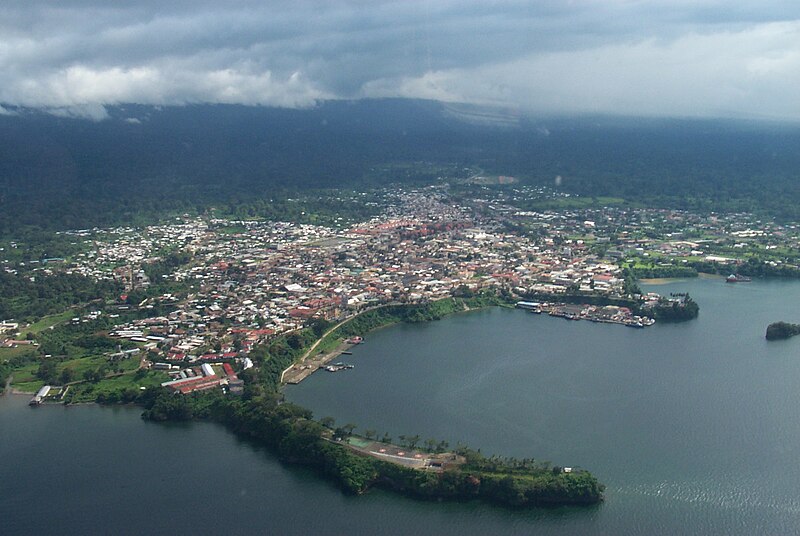

    Puerto capitalino de Malabo

    Cultura y Educación

    El país posee una universidad, la Universidad Nacional de Guinea Ecuatorial (UNGE) con campus en Malabo y una Facultad de Medicina en Bata. La Facultad de Medicina de Bata está apoyada principalmente por Cuba, cuyo gobierno cede a los profesores y médicos del centro[cita requerida]. La Universidad Nacional de Educación a Distancia española cuenta también con una sede en Malabo y otra en Bata.
    En el país están activas varias organizaciones culturales (el Centro Cultural Hispano-Guineano, Centro Cultural Español de Malabo y otros) cuyo fin principal es la alfabetización y promoción cultural de la población. La mayoría del apoyo económico en este sentido proviene del gobierno español.

    Referencias: http://es.wikipedia.org/wiki/Guinea_Ecuatorial

  • Global Environment Fund and Indian Bank to Close $200M Cleantech Fund

    Global Environment Fund (GEF), a Chevy Chase, Md., private equity firm, is reportedly teaming up with India’s Yes Bank to raise a $200 million, cleantech-focused fund set to invest in small and mid-size companies across Southeast Asia. This is less than the $500 million the two partners had set out to raise when they launched the fund back in June 2008.

    The New Energy World Network website reports that the Asian Development Bank and the International Monetary Fund are invested in the fund.

    Last November, GEF invested $46.3 million in AIM-listed India-focused renewable energy generation company Greenko. The investment firm manages over $1 billion in private equity investments.

  • Euro Brinkmanship Escalates As ECB Shuts Door On Greek Bail-Out

    Jurgen Stark, the ECB’s chief economist and the powerful German member on the bank’s inner council, said Greece’s problems are entirely “home-made” and do not meet the terms required to trigger the rescue mechanism under EU treaty law, which is limited to countries that face severe difficulties “beyond their own control”.

    “The Treaties set out a ‘no bail-out’ clause, and the rules will be respected. This is crucial for guaranteeing the future of a monetary union among sovereign states with national budgets. Markets are deluding themselves if they think that the other member states will at a certain point dip their hands into their wallets to save Greece,” Stark told the Italian daily Il Sole .

    Read the whole story at The Telegraph — >

    Join the conversation about this story »

    See Also:

  • Auto Expo 2010, Auto Expo 2010 Ticket Price

    TVS Motor Company will also have on display the TVS QUBE 2.0, carrying forward the iconic minimalistic DNA of the award winning QUBE that uses an electric-hybrid motor, as it gets closer to reality.

    These products are in alignment with TVS Motor Company’s stated mission to produce environment friendly vehicles that exceed prevalent emission norms and create good value proposition to customers. These products further emphasize TVS Motor Company’s commitment to pursue green technologies that will lead to substantial reduction in CO2 levels from a portfolio of products.
    About Auto expo 2010

    Auto expo 2010 is the premier event of Automobile and Auto components industry closely watched by media and industry experts. It is the most prestigious event related to automobile industry in India.

    Here are some other links related to Auto expo 2010

    Auto expo 2010 timings
    Auto expo 2010 Venue
    Auto expo 2010 exhibitor list
    So what are you waiting for – if you are in New Delhi – register online for Auto expo 2010 and just go to visit Auto expo 2010.
    January 5 to January 11, 2010.Auto Expo is the Complete Automotive Show organized jointly by Automotive Component Manufacturers Association of India (ACMA), Confederation of Indian Industry (CII) and Society of Indian Automobile Manufacturers (SIAM). To get tickets and more info and details you can check out the website below.

    Share/Save/Bookmark

    Related posts:

    1. Auto Expo 2010 Tickets, Auto Expo 2010 Tickets Price TVS Motor Company will also have on display the TVS…
    2. Auto Expo 2010 Tickets, Auto Expo 2010 Delhi Tickets The swanky vehicles lined up at the Delhi exhibition are…
    3. Auto Expo Pragati Maidan 2010 The Indian automotive industry has a turnover of more than…

    Related posts brought to you by Yet Another Related Posts Plugin.

  • Auto Expo 2010 Tickets, Auto Expo 2010 Tickets Price

    TVS Motor Company will also have on display the TVS QUBE 2.0, carrying forward the iconic minimalistic DNA of the award winning QUBE that uses an electric-hybrid motor, as it gets closer to reality.

    These products are in alignment with TVS Motor Company’s stated mission to produce environment friendly vehicles that exceed prevalent emission norms and create good value proposition to customers. These products further emphasize TVS Motor Company’s commitment to pursue green technologies that will lead to substantial reduction in CO2 levels from a portfolio of products.
    About Auto expo 2010

    Auto expo 2010 is the premier event of Automobile and Auto components industry closely watched by media and industry experts. It is the most prestigious event related to automobile industry in India.

    Here are some other links related to Auto expo 2010

    Auto expo 2010 timings
    Auto expo 2010 Venue
    Auto expo 2010 exhibitor list
    So what are you waiting for – if you are in New Delhi – register online for Auto expo 2010 and just go to visit Auto expo 2010.
    January 5 to January 11, 2010.Auto Expo is the Complete Automotive Show organized jointly by Automotive Component Manufacturers Association of India (ACMA), Confederation of Indian Industry (CII) and Society of Indian Automobile Manufacturers (SIAM). To get tickets and more info and details you can check out the website below.

    Share/Save/Bookmark

    Related posts:

    1. Auto Expo 2010, Auto Expo 2010 Ticket Price TVS Motor Company will also have on display the TVS…
    2. Auto Expo 2010 Tickets, Auto Expo 2010 Delhi Tickets The swanky vehicles lined up at the Delhi exhibition are…
    3. Auto Expo Pragati Maidan 2010 The Indian automotive industry has a turnover of more than…

    Related posts brought to you by Yet Another Related Posts Plugin.

  • Fired: Napster CEO Ousted by Best Buy

    Napster CEO Chris Gorog will step down after eight years as CEO amid a corporate restructuring that also includes the dismissal of President Brad Duea. Both executives’ positions have been eliminated by corporate parent Best Buy, and Chief Operating Officer Christopher Allen will become Napster’s general manager, according to a corporate spokesperson. Despite increased attention devoted to music subscriptions over the past several months, Napster has mostly spun its wheels, losing market share as new competitors have sprung up.

    In the nearly 20 months since Best Buy announced plans to acquire Napster for $121 million, the music subscription market has become a lot more crowded, with services such as Spotify and MOG capturing most of the buzz. Napster and its longtime rival, RealNetworks-owned Rhapsody, each have struggled for years to reach 1 million monthly customers. Napster hasn’t broken out its subscriber numbers since the Best Buy deal, but its last reported figure was 708,000; Gorog’s goodbye blog post says it has “many hundreds of thousands” of subscribers. (Compare that with European startup Spotify, which 15 months since its launch already reports “several hundred thousand premium subscribers,” and is preparing to launch in the U.S.) Despite dropping its monthly subscription price to as low as $5, depending on commitment, Napster’s site traffic is down, according to this Compete.com chart, and its market share for digital downloads was shrinking as of last summer.  Moreover, its mobile strategy has lagged behind others whose mobile apps allow on-demand streams, although Gorog still writes that streams are “coming soon!” to Napster’s app.

    Given overall trends in media consumption, Gorog might be right in saying that consumers are increasingly prepared to subscribe to a universe of music rather than own collections of CDs and song files. But as the company cedes ground to new competitors, its new owners appear to have had enough.

  • Google Nexus One In India, Google Nexus One India Price

    Google Nexus One Claimed to be “superphone” by the company, it is the search giant’s latest attempt to grab a share of the booming smartphone market popularised by Apple iPhone. Aimed at protecting its online advertising, the phone challenges the likes of Apple, Blackberry and.
    nexus1

    Google phone Nexus Specifications:

    * Operating system: Android 2.1
    * Processor: Qualcomm Snapdragon 1GHZ.
    * Quad-band GSM and 3G support.
    * WVGA high resolution touch screen with accelerometer and other sensors.
    * On screen keyboard and Trackball navigation.
    * Google mobile applications.
    * 5 mega pixel autofocus camera with dual LED flash.
    Nexus One has a 5-megapixel camera which includes an LED flash and takes MPEG 4 videos. The device also has a trackball which pulses light to alert users of events like new emails or SMSes.The phone also has light and proximity sensors, besides a compass and accelerometer. The light sensor will automatically dim the display when a bright light is not needed.

    The proximity sensor also dims the display light when a user moves the phone to the ear to talk. The phone has two microphones — one in the front and one at the back — enabling noise cancellation (especially useful if you’re in a noisy place). The software, Android version 2.1, builds on Android 2.0, and users can place widgets across five home screens instead of three. Android 2.1 voice enables every text field in the device. That means users can speak Twitter messages, Facebook posts and email messages andthe phone will convert them to text to send.

    Nexus One also includes a 3D photo gallery and live wallpapers (the background images sit behind widgets, and are animated. For instance, Quieroz gave a demo of a photo of a small lake with leaves floating in the water. Touching it created ripples on the water). The device also supports popular Google applications such as Gmail, Google Voice and Google Maps Navigation.

    The building market momentum behind Android is unmistakeable. “In-Stat believes new OSs such as Android will cut away at Symbian’s market share,” says Allen Nogee, In-Stat analyst. “Although there are relatively few open source OS-based smartphones in the market today, the open source OS momentum is difficult to ignore. After years of hype, it is easy to see that 2010 will be the year of Android.”

    In-Stat believes the stakes are high. Gone are the days when the basis of competition was solely defined by hardware. Software is becoming the key in determining the user experience. If, however, a particular OS does not garner developer support, then the result could be disastrous, according to In-Stat analysts.

    Google, say analysts, has also upset telcos which cut three-way deals with phone makers and operating system vendors to sell phones exclusively on their network. They attempt to sign-up users with two-year contracts and data services. However, Google, on its part, offers carrier-independent models, too, which implies that telcos would have to compete on pricing and the quality of their networks rather than exclusive deals for hot phones.

    Share/Save/Bookmark

    Related posts:

    1. Google Phone In India, Google Phone In India Price Google Nexus One Claimed to be “superphone” by the company,…
    2. Google Nexus One, Google Nexus One Review 2010 The device, a Snapdragon-powered, HTC-built phone looks — on paper,…
    3. Nexus One Price, Nexus One Price 2010 Information If Google’s strategy is successful at getting other carriers to…

    Related posts brought to you by Yet Another Related Posts Plugin.

  • Google Phone In India, Google Phone In India Price

    Google Nexus One Claimed to be “superphone” by the company, it is the search giant’s latest attempt to grab a share of the booming smartphone market popularised by Apple iPhone. Aimed at protecting its online advertising, the phone challenges the likes of Apple, Blackberry and.
    nexus1

    Google phone Nexus Specifications:

    * Operating system: Android 2.1
    * Processor: Qualcomm Snapdragon 1GHZ.
    * Quad-band GSM and 3G support.
    * WVGA high resolution touch screen with accelerometer and other sensors.
    * On screen keyboard and Trackball navigation.
    * Google mobile applications.
    * 5 mega pixel autofocus camera with dual LED flash.
    Nexus One has a 5-megapixel camera which includes an LED flash and takes MPEG 4 videos. The device also has a trackball which pulses light to alert users of events like new emails or SMSes. The phone also has light and proximity sensors, besides a compass and accelerometer. The light sensor will automatically dim the display when a bright light is not needed.

    The proximity sensor also dims the display light when a user moves the phone to the ear to talk. The phone has two microphones — one in the front and one at the back — enabling noise cancellation (especially useful if you’re in a noisy place). The software, Android version 2.1, builds on Android 2.0, and users can place widgets across five home screens instead of three. Android 2.1 voice enables every text field in the device. That means users can speak Twitter messages, Facebook posts and email messages and the phone will convert them to text to send.

    Nexus One also includes a 3D photo gallery and live wallpapers (the background images sit behind widgets, and are animated. For instance, Quieroz gave a demo of a photo of a small lake with leaves floating in the water. Touching it created ripples on the water). The device also supports popular Google applications such as Gmail, Google Voice and Google Maps Navigation.

    The building market momentum behind Android is unmistakeable. “In-Stat believes new OSs such as Android will cut away at Symbian’s market share,” says Allen Nogee, In-Stat analyst. “Although there are relatively few open source OS-based smartphones in the market today, the open source OS momentum is difficult to ignore. After years of hype, it is easy to see that 2010 will be the year of Android.”

    In-Stat believes the stakes are high. Gone are the days when the basis of competition was solely defined by hardware. Software is becoming the key in determining the user experience. If, however, a particular OS does not garner developer support, then the result could be disastrous, according to In-Stat analysts.

    Google, say analysts, has also upset telcos which cut three-way deals with phone makers and operating system vendors to sell phones exclusively on their network. They attempt to sign-up users with two-year contracts and data services. However, Google, on its part, offers carrier-independent models, too, which implies that telcos would have to compete on pricing and the quality of their networks rather than exclusive deals for hot phones.

    Share/Save/Bookmark

    Related posts:

    1. Google Nexus One In India, Google Nexus One India Price Google Nexus One Claimed to be “superphone” by the company,…
    2. Google New Phone, Google New Phone Nexus One Review 2010 The device, a Snapdragon-powered, HTC-built phone looks — on paper,…
    3. Google Announcement, Google Phone Announcement Nexus One 2010 Google’s “open” strategy began with its multi-billion-dollar bid for wireless…

    Related posts brought to you by Yet Another Related Posts Plugin.

  • LG eXpo may be coming to UK

    lgexpouk

    While UK may be blessed with the HTC HD2 already, if you after a smaller form factor Snapdragon device and were lusting after the LG eXpo, up till now you were pretty much out of luck.

    LG’s official twitter account may have gives Uk readers some hope however, stating the handset may be coming to Uk after all.

    So far no further details are available yet.

    See the tweet here.

    Share/Bookmark

  • AppZapper: a great big upgrade for a small utility

    Filed under: ,

    I discovered AppZapper years ago. It was a huge boon for me, helping me keep my support folders a little cleaner as I began the early stages of my habit of installing 2 or more new apps a day, trying them, and usually deleting them. It let me drag an application to its interface, and would then search for related files that application may have left around the hard drive. A quick double-check (by me) to make sure it wasn’t mistaken, one click and poof, all traces removed.

    I’ve tried other, similar applications over the years … CleanApp has some great features, and Amnesia is pretty cool, but AppZapper “just worked.” I managed to stay loyal to it long after I had assumed its development had gone dead. Then, to my pleasant surprise, a major update dropped yesterday. My AppZapper is not only freshened up, it’s bursting with some very cool features.

    The standard drag and drop panel of old is still around, and its automatic search is snappier. Up at the top corner of that first panel, though, is a switch flips the panel around, revealing the “Hit List.” This clever screen lets you sort a grid of all your applications, plugins, preference panels and widgets (all together or individually) based on their last-opened date and file size. You can, for example, see all the apps on your drive that are larger than 50MB and haven’t been touched in the last two months. From there, you can click on one, see its related files in the bottom bar, and click the “Zap” button to say goodbye. You can also launch apps directly from this screen, which is helpful for those moments when the apps name sounds familiar, but you can’t for the life of you remember what it does. These are 90% sha-na-na-na, hey hey for me, but it’s always nice to be sure.

    Random warning: the new version of AppZapper makes a rather loud, somewhat grating zapping sound when performing a delete. I recommend you jump straight into preferences and disable that (before it scares the whole house in the middle of the night because you forgot to turn your speakers down when you were testing it out).

    Lastly, there’s a whole license management section built into AppZapper now. It’s not just for apps you hate anymore, but the ones you love. Just drag items from Finder or out of the Hit List to indicate you own them. It will create a card for the app, and clicking the card flips it around and allows you to enter purchase info, license details and attach files. Not as full featured as something like 1Password or LicenseKeeper, but it’s a really well-executed touch on this new incarnation of an old classic.

    My license of old seemed to upgrade fine, so I believe existing owners of AppZapper can enjoy the upgrade for free. New users can try out a free download, and pay $12.95US if you love it.

    TUAWAppZapper: a great big upgrade for a small utility originally appeared on The Unofficial Apple Weblog (TUAW) on Wed, 06 Jan 2010 14:15:00 EST. Please see our terms for use of feeds.

    Read | Permalink | Email this | Comments

    Buy This Item: [Click here to buy this item]

    Read Original Article

  • Can a Japanese Cloth Company Make Drugs? FDA Says Yes

    japan flagWhat kind of company gets a drug through the FDA? If you’re a Japanese company, it seems to help if your main business isn’t prescription pharmaceuticals.

    Perusing the list of FDA new drug approvals from Washington Analysis, we found four that originated in the labs of Japanese companies. A new drug for gout came from Teijin, a major textile maker. (Teijin licensed U.S. rights to Takeda.)

    The Otsuka group of companies, best known in some circles as the maker of the Pocari Sweat sports drink, came up with approval for a niche product for certain patients with low sodium levels in plasma.

    Then there’s Kowa, which won approval for a cholesterol-lowering statin called Livalo. We’re somewhat at a loss to describe its core business. Its Web site mentions professional broadcasting equipment, apparel, textiles, home fashion, “bioarchitectural research” and a few other areas in addition to medicines.

    Less successful at getting drugs through the FDA were the pharmaceutical giants that spend billions of dollars each year for precisely that purpose. Pfizer and Merck were among the big names that struck out for the year. That’s food for thought as the pharma industry tries to survive a wave of patent expirations and growth in U.S. prescription-drug spending slows sharply.

    To be sure, some of the bigger names did get new drugs through the FDA in 2009, including Tokyo’s Daiichi-Sankyo, which won approval for the clot-buster Effient (co-marketed with Eli Lilly).

    Image: iStockphoto

  • Microsoft’s Ballmer Will Not Be Showing New Slate PC at CES Opening Tonight [BoomTown]

    face_off_cap_31

    As much as BoomTown likes a good computer tablet face-off, sources with knowledge of the situation said that Microsoft CEO Steve Ballmer will not be whipping out the secret slate PC that the company has been noodling on in his keynote speech opening the Consumer Electronics Show in Las Vegas tonight.

    Last night, the New York Times reported that the software giant would do so in a blog post titled: “Microsoft and H.P. to Reveal Slate PC Ahead of Apple.”

    Apple will be launching its much-heralded slate at an event in San Francisco on January 27, as All Things Digital has previously reported.

    The Apple (AAPL) device is garnering the expected flood of hype, of course. So, don’t expect Ballmer to pointlessly go against the tide on this particular tsunami, thereby painting its slate efforts as also-ran.

    Instead, his speech is more likely to focus on its new Windows 7 operating system, cloud computing, portable and mobile devices and Microsoft’s “software plus services” motto.

    While he might talk about a range of products related to Microsoft (MSFT) and there will be multi-form hardware shown, including multi-touch, tablet-type devices, there will be no grand showing of the one called the Courier, which Microsoft is reportedly working on with Hewlett-Packard (HPQ).

    Hence the possible confusion over the PC slate.

    Now, please go back to gushing over the Apple iSlate ad nauseum!

    Buy This Item: [Click here to buy this item]

    Read Original Article