Author: Serkadis

  • Google Speaks Out Against Australia's Plans for Mandatory Internet Censorship

    Net neutrality may be a topic of hot debate in some parts of the world, most notably in the US, but in other regions the Internet is facing worse threats than throttling YouTube videos, downright censorship is being advocated and we’re not talking about China or other countries notorious for their abuses, the culprit is Australia, a country that bills itself as a democracy. There are plans to institute a mandatory, country-wide filtering system, supposedly designed to keep out child abuse content, but which blocks a much wider variety of content and topics. Naturally, the plan doesn’t exactly have that many fans among political parties, rights organizations or companies and Google is speaking out publicly against the plan.

    “We have a bias in favour of people’s right to free expression. While we recognise that protecting the free exchange of ideas and information cannot be without some limits, we believe that more information generally means more choice, more freedom and ultimately more power for the individual,” Iarla Flynn, head of Policy, Google Australia wrote.

    The biggest issue with the system in its proposed form is that it censors a wide category of content classified in the country as Refused Classification (RC). These include child abuse and other contro… (read more)

  • Peter Gray Discusses the Climate Change Conference in Copenhagen on Bloomberg Radio

    During the December 15 edition of The Hayes Advantage on Bloomberg Radio, Peter Gray discusses the Climate Change conference in Copenhagen as well as the chances of passage of a climate change bill.

    To listen to the interview, please visit: http://video.mww.com/ftpupload/FTPinbox/15/Gray-Bloomberg.mp3.

  • The End of Chimerica

    Published: December 16, 2009
    Paper Released: November 2009
    Authors: Niall Ferguson and Moritz Schularick

    Executive Summary:

    For the better part of the past decade, the world economy has been dominated by a unique geoeconomic constellation that the authors call “Chimerica”: a world economic order that combined Chinese export-led development with U.S. overconsumption on the basis of a financial marriage between the world’s sole superpower and its most likely future rival. For China, the key attraction of the relationship was its potential to propel the Chinese economy forward by means of export-led growth. For the United States, Chimerica meant being able to consume more, save less, and still maintain low interest rates and a stable rate of investment. Yet, like many another marriage between a saver and a spender, Chimerica was not destined to last. In this paper, economic historians Niall Ferguson of HBS and Moritz Schularick of Freie Universität Berlin consider the problem of global imbalances and try to set events in a longer-term perspective. Key concepts include:

    • The financial crisis of 2007-2009 marks the beginning of the end of the Chimerican marriage of convenience. The end of Chimerica is desirable, though the divorce needs to be amicable and its costs kept down.
    • Currency adjustments must become a top priority in the international political debate. The world economy’s key structural imbalance is that the second-biggest economy in the world has pegged its currency to that of the largest economy at a strongly undervalued exchange rate.
    • A policy of Sino-American competitive devaluation at the expense of U.S. allies in Europe and Japan is politically shortsighted and dangerous for global trade.
    • A renminbi revaluation would help the reorientation of the U.S. economy and potentially allow a quicker exit from the extreme policies currently being implemented by the Fed and the Treasury, which carry uncertain risks for the inflation outlook, global liquidity, and capital flows.
    • A renminbi revaluation would also solve at a stroke the problem of China’s excessively large international reserves and dollar exposure.
    • Historically, periodic exchange rate revaluation has been the hallmark of economic success. It is time for China—and its currency—to step up.

    Abstract

    For the better part of the past decade, the world economy has been dominated by a world economic order that combined Chinese export-led development with US over-consumption. The financial crisis of 2007-2009 likely marks the beginning of the end of the Chimerican relationship. In this paper we look at this era as economic historians, trying to set events in a longer-term perspective. In some ways China’s economic model in the decade 1998-2007 was similar to the one adopted by West Germany and Japan after World War II. Trade surpluses with the U.S. played a major role in propelling growth. But there were two key differences. First, the scale of Chinese currency intervention was without precedent, as were the resulting distortions of the world economy. Second, the Chinese have so far resisted the kind of currency appreciation to which West Germany and Japan consented. We conclude that Chimerica cannot persist for much longer in its present form. As in the 1970s, sizeable changes in exchange rates are needed to rebalance the world economy. A continuation of Chimerica at a time of dollar devaluation would give rise to new and dangerous distortions in the global economy. 31 pages.

    Paper Information

  • An early look at the Final Fantasy XIII Trophy Set

    Ah yes, Trophies. This would be the first time for the Final Fantasy series to actually reward you with a badge with things you’ve probably been doing since Terra and Sabin, no, since the Warrior of Light.

  • Holiday Giveaway from RedTango!

    pinkwatch

    Cynthia Petrovic from RedTango knows exactly what you want for Christmas! Check out this awesome watch with a hot pink band and the signature RedTango curvy cat in black on the face. This would make the coolest gift for a friend or for yourself.

    ENTER TO WIN!

    And here’s your chance to win one! To enter this giveaway, please leave a comment on this post. The winner will be selected in a random drawing on December 23. One entry per person.


  • Give The Gift Of Dog Joy: The Happiest Dogs In The Universe

    By Marilyn Dalrymple

    I finished this book in one sitting and while reading it, if I wasn’t smiling, I was laughing!  It’s delightful!

    One hundred and ninety one pages of color photographs of man’s best friends smiling, snickering and just being what dogs are best at – entertaining.  Many of the photographs have a short story about the pet.  For instance, “Portia is a rescued racing Greyhound.  A major reason for her joy is the love of her boy, Patrick.”  Accompanying the story is a photograph of a smiling boy – Patrick – and Portia.

    Page 60 features two obedience dogs, Freedom and Glory.  They say to each other, “Yeah, it’s a great class, but I don’t feel like I’m learning anything I’m going to use in the real world.”  Beautiful little Piper loves to cuddle – the kids call her a “lapsnatcher,” and she loves to chase sandpipers at the beach, says the story.

    Purebreds are featured and so are the pets with questionable heritage.  They all have a smile, grin or at least an earnest effort at having one or the other on their faces.  Dog couples like Fatney and Shelly and Elwood and Walter have a section of their own.  Greyhound Charley whispers in Bella’s ear, “Did you hear the one about the cat who walked into a bar?”  By the look on Charley’s face, he wants to hear the punch line.

    Anyone can easily understand why dogs are referred to as man’s best friends after reading this book.  If you are a dog lover, the book is a must.  It would make a gift that the recipient would be forever grateful for.

    The book came about because of a “Smiling Dog” contest the magazine, Bark initiated. The wonderful images in this book display the dog’s boundless enthusiasm for life.  (We can learn a lot from dogs.)  This small volume brightened my day and made me giggle.  It will be at the front of my book shelf so I can refer to it often.

    Dog Joy: The Happiest Dogs in the Universe (Rodale/ Oct 2009) By The Editors of Bark

    Vets Could Make $100,000 Just Vaccinating For Dog Flu

    Copyright © 2006-2010, Basil & Spice. All rights reserved.


  • Bowling for Michigan: Laid-off GM worker wins PBA championship

    Filed under: ,

    How cool is this? On minute Tom Smallwood is reeling after losing a (once) steady production job at General Motors’ Truck Plant in Pontiac, MI, and the next minute he takes the PBA championship. In a real-life event that mimics some of the great tales in the history of underdog turned champion, Smallwood took third in a PBA qualifier event, making him eligible for one year on the prestigious bowling tour.

    That alone barely makes the story interesting, but the tale becomes far more compelling due to the fact that Smallwood rolled into Wichita, Kansas an also-ran and left holding the first place trophy and a $50,000 grand prize. Smallwood, a 15-year recreational bowler, even had to beat out PBA bowler of the year Wes “Big Nasty” Malott in the final round. The former GM line worker performed superbly under pressure by hitting two strikes in the decisive tenth frame to take the match 244-228. After Smallwood’s big win he was called by GM to take another plant job but the suddenly high-flying bowler turned down the offer in order to stick with his new profession.

    We’re thinking Smallwood’s meteoric rise to the top of the bowling world will net him quite a bit more than his $50,000 top prize. Advertisers love a rags-to riches-story and Smallwood may be selling resin and those wrist things bowlers wear before you’re even finished reading this post. Congratulations Tom!

    [Source: Kicking Tires]

    Bowling for Michigan: Laid-off GM worker wins PBA championship originally appeared on Autoblog on Wed, 16 Dec 2009 08:30:00 EST. Please see our terms for use of feeds.

    Read | Permalink | Email this | Comments

  • Don’t Forget the Watson Giveaway!

    Watson

    The site was down for a little while yesterday, so if you tried to enter the Watson t-shirt giveaway and got a weird error, please try again! Here’s the link.

  • The Iraqi Oil Auction Was Like A High-Stakes American Idol

    oil auction 2As the pseudonymous “Pepe Escobar” of Asia Times pointed out, the oil rights to the new Iraq were auctioned off at an American Idol-like televised gameshow.

    We’ve never been to American Idol, but this sounded awesome. Way more interesting and important.

    Fortunately we found a few wire photos, and we can see what he means.

    Rather than watching singers perform warmed over classics, watching Americans, Chinese, Russians, and Norwegians battle over multi-billion dollar oil fields is seriously good TV.

    Check out the show >>

    Join the conversation about this story »

    See Also:

  • HTC HD2 Sense UI running on the Samsung Omnia 2

    An industrious Italian Argentinian hacker named Rodrigofd over at MoDaCo using ginkage’s OpenGl v1 wrapper library has been working on porting the HTC HD2 ROM to the Samsung Omnia 2, and seems to have nearly perfected the process.

    The above video shows his work in action and seems about 90% feature complete, and combine the best of Samsung and HTC’s work.

    Read more at Hdblog.it here.

    Thanks Giuseppe for the tip.

    Share/Bookmark

  • Congress Gives $30 Million To Fight ‘Piracy’

    Recent studies have shown that — despite a massive recession — both the music and movie industries are having fantastic years. However, both industries are complaining about how they’re being “killed” by “piracy.” There’s no evidence of this of course, but when it comes to copyright, politicians don’t seem to believe evidence is necessary. They just spring into action. So, just as a bunch of Federal government representatives sat down for a private meeting with entertainment industry bosses, Congress agreed to earmark another $30 million to propping up their obsolete business models fighting “piracy.” It’s a nice deal. Copyright infringement should, by any honest definition of the term, be a civil issue, taken up between private parties. There is a criminal component to copyright law, but it makes little sense. However, now the Justice Department and other local officials have a pool of cash so that they can be the entertainment industry’s police force and private prosecutors.

    Permalink | Comments | Email This Story


  • The Most Popular YouTube Videos of 2009

    YouTube is, by far, the largest video site on the planet so if you want to know what were the hottest videos of 2009, there’s no need to look any further. And since this was the biggest year for online video ever, with month after month of record-breaking audiences, there were some pretty big hits out there, most of them completely unexpected, showing that YouTube hasn’t lost its touch.

    “This year has been the biggest yet for online video, and for the first time we’re sharing our official Most Watched lists and some of the fastest-rising search terms on YouTube. Some moments were big (President Obama’s inauguration), some small (a Minnesota wedding party erupts into dance), some expected (“New Moon”), some surprising (Susan Boyle) — but all of them inspired, entertained and connected millions of people around the world via YouTube,” Jamie Davidson, associate product manager at YouTube wrote.

    The biggest video this year, without any shred of doubt was Susan Boyle’s performance at Britain’s Got Talent which went on to get more than 120 million views so far this year, easily overtaking any other popular video even from the previous years. A distant second came the David after Dentist video which was streamed 37 million times. This summer’s most talked-about video, the JK Wedding Entrance Dance, g… (read more)

  • How did our 2009 predictions fare?

    Yesterday we issued our twelve predictions for 2010. Once again, I’ll look back at our 2009 predictions and see how we did. (You can see how we assessed our 2008 predictions here.) The 2009 predictions were:

    1. Open source ECM players get an initial boost
    Yes, the recession gave them a boost, though smart customers are still asking tough questions about multi-year total cost of ownership.

    2. Office14 casts long shadow on SharePoint
    Yes, and no. SharePoint 2010 has energized Redmond’s consulting channel. The new version is mostly casting a long shadow on 3rd-party SharePoint add-ons and some enterprise procurement teams looking to delay strategic decisions.

    3. "Taxonomies are dead. Long live metadata!"
    Definitely less interest in complicated, human-maintained hierarchies.

    4. Regulatory-compliance concerns reignited
    Yes, though somewhat sector-specific.

    5. Renewed interest in pro-active e-discovery
    Not sure there was a major wave here in 2009. What do you think?

    6. SaaS vendors expand offerings
    Yes, though perhaps not as much as we predicted. Salesforce has certainly been active.

    7. Oracle falls behind in battle for knowledge workers
    Yes, but that was an easy one.

    8. New emphasis on application search
    I think so, but then again, we predict it again this year, albeit with some new twists.

    9. Social computing diffuses into the Enterprise
    Definitely.

    10. Long-awaited consolidation comes to the WCM space
    No way. What was I thinking?!?

    11. Mobile and multimedia web analytics become key requirements…and disrupters
    Multimedia for sure, mobile only half way.

    12. Buyers remain in driver’s seat
    Yes. This is another easy one. Just remember that vendors don’t chase every lead in this economy, either.

    So, I give us a cumulative score of 9 out of 12, or pretty much the same average as last year. Maybe .75 is a good co-efficient to apply to our 2010 predictions.

  • 30 MHz Digital Demodulation for Aeroflex 3280A Series Spectrum Analyzers

    Aeroflex announced the 3280A Series spectrum analyzers with 30 MHz digital demodulator and generic vector demodulation as standard features with no price increase over its predecessor, the 3280 Series. Digital demodulation in the 3280A Series spectrum analyzers allows engineers to analyze the transmitter characteristics of wireless devices. The 3280A Series includes many optional measurement suites including WiMAX, WLAN, UMTS, CDMA2000, and GSM/EDGE.
    The 3280A Series spectrum analyzers are accurate, flexible, and easy-to-use. By including a 30 MHz digital demodulator as standard, the 3280A Series provides even more functionality for the price—offering frequency coverage from 3 Hz to 26.5 GHz, impressive RF and microwave specifications, exceptional connectivity, and many ease-of-use features at an affordable price.
    The 3280A Series maintains a high level of accuracy as its predecessor, ±0.15 dB up to 3 GHz. Other performance features include an excellent local oscillator (LO) phase noise <-115 dBm/Hz, 1GHz/ 10 kHz offset and +18 dBm third order intermodulation (TOI) performance. Digital intermediate frequency (IF) offers resolution bandwidths from 5 MHz to 1 Hz. The Windows® XP operating system, internal hard drive and built-in CD-ROM make the 3280A Series easy to operate and allows for a wide range of interfaces, including LAN access, USB interface, RS-232, IEEE 488 (GPIB) and VGA outputs. Centronics parallel ports are provided for printer, mouse, and keyboard connectivity. An optional removable hard drive is available for when the instrument is used in a secure area. The 3280A has a large 10.4 inch LCD display with ample viewing area, so data can be easily seen–even in split screen mode, or with multiple windows open. Three traces can be displayed per window and as many as nine markers can be selected with a marker table viewable in an alternate window. Built-in functions can simplify the evaluation of many common measurements and the 3280A offers several of these, including: channel power, adjacent channel power, occupied bandwidth, spectrum emission mask, TOI measurement, harmonic distortion, X dB down, and phase noise measurement. Delivery for the 3280A is 3 weeks upon receipt of order, pending option configuration. Pricing for the series depends upon selections of bandwidth and options. Contact your Aeroflex sales representative at (800) 853-2352 or [email protected] for more details.

  • How They Roll: NYT investigates the wheels of Mexican drug cartels

    Filed under:

    The Mexican drug trade business is booming. Drugs are flowing between Mexico and the U.S. on a daily basis, overwhelming the Mexican military and U.S. border patrol officers. Most of the drugs arrive stateside via cars and trucks, and the vehicles transporting contraband range from a Rolls Royce to a VW Rabbit. The New York Times spent some time in Sinaloa, Mexico with Mexican General Federico Solórzano at what looked to be a used car lot.

    The general’s troops have seized 766 vehicles to date ranging from Jaguars to brand new SUVs to classic muscle cars. Custom choppers, pickup trucks and sports cars are all accounted for on the lot, but these vehicles are different from cars and trucks you can purchase at your local dealership: they have secret compartments for carrying drugs and weapons across the Mexican boarder. The vehicles housed untold millions of dollars in addition to automatic weapons in false sidewalls, modified bumpers and trap doors. General Solórzano reportedly told the NYT that vehicles have been retrofitted with bullet-proofing tech, machine gun turrets, secret compartments that hold sharp nails for police cruisers in hot pursuit and even a smoke machine to assist in losing the Federalis.

    The vehicles are being stored at a military base because drug traffickers have raided police facilities and took back the vehicles seized near the border. In total, the Mexican government is said to have over 14,000 vehicles in its possession, yet tons of drugs make the trip from South America to the U.S. without detection. The vehicles will eventually be sold at auction or will be used by other federal agencies, but the apparent crawl of the Mexican legal system means trials are sometimes years away. Head over to the NYT to read more about the vehicles that bring drugs from the Mexican boarder to a town near you. Pretty interesting stuff. Top tip, Mehul!

    [Source: New York Times | Image: Jesus Alcazar/AFP/Getty Images]

    How They Roll: NYT investigates the wheels of Mexican drug cartels originally appeared on Autoblog on Wed, 16 Dec 2009 07:59:00 EST. Please see our terms for use of feeds.

    Read | Permalink | Email this | Comments

  • China Pays Rewards for Finding Porn

    90E68339-8F6D-4ED1-B3B2-CF0D29C51160.jpg

    The Chinese government does not like internet porn. So they are now paying people to surf the web to find it. Makes sense, no?

    Shocking as it may sound, this well thought out government plan has actually encouraged people to search for porn more than before. Within 24 hours of the government announcing its incentive program, the Internet Illegal Information Reporting Center received more than 500 phone calls and 13,000 online responses, according to Xinhua, the state news agency.

    The Chinese censors are offering as much as 10,000 yuan – nearly $1,500 U.S. dollars (!) – to the first person who reports a sexually obscene site. Sign me up!

    This is only the latest round in China’s attempt to weed out evil porn sites. Earlier this year Chinese authorities publicly sanctioned Google for not filtering out porn from its search results. Of course, seasoned porn hounds know that Microsoft’s Bing is the best search engine for porn.

    However, the government has backed down – for now – from a program known as Green Dam, which would have installed monitoring software on every computer sold in the country. A small step for porn, a giant leap for horny Chinese men.

    photo credit: PinkMoose

    Related posts:

    1. Bing Makes Finding Porn Just A Little Easier
    2. Google Makes Some Odd Suggestions
    3. YouTube Carpet Bombed with Porn Videos

  • 10 Tips To Make Your Dishwasher Run Better

    121609-dishwasher1.jpgThe holidays seem to test the true capacity and cleaning power of your dishwasher. Although some wash by hand, those who have dishwashers rely on them pretty heavily this time of year. Keep them running like new, or as close to it as possible with these simple tips!

    Read Full Post


  • Lithium and REE: WSJ – The Surge in Electric Cars TNR.v, CZX.v, WLC.v, LI.v, RM.v, CLQ.v, SQM, FMC, ROC, AVL.to, CCE.v, RES.v, QUC.v, HEV, AONE, NSANY

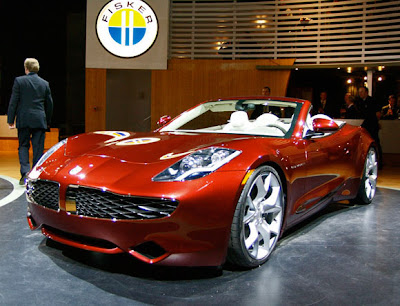
    Fisker Karma Sunset

    The main message from teaser above – Fisker Karma Sunset is that you can chose to be Electric and do not have to slow down. Electric cars are here, they are Cool and ready to go. In order to be Green and stay Cool you do not have to sacrifice on design, power or experience “Range Anxiety”, in couple of years down the road you will have plenty to chose from and they are coming on the roads already now. WSJ is taking the story to the investment mainstream and next idea will be how to capitalise on this Trend.
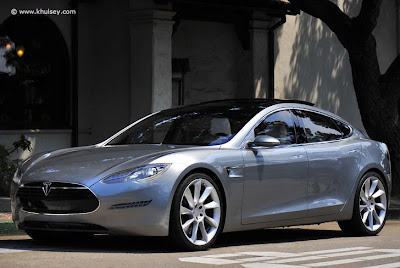
    Tesla S


    WSJ:
    The Surge in Electric Cars

    Why should anyone buy an electric car? That’s going to be a critical question for the auto industry—and the best answer may not be “Because they’re green.”
    WSJ Editor Joseph B. White takes Tesla Motors’ all-electric 2010 Roadster for a drive and finds it’s a sporty “green” car that packs a punch.
    The Obama administration is committing billions of your money to the proposition that electric cars can become a meaningful segment in the U.S. market over the next few years. Faith in the future of such vehicles—which run all or in part on electricity straight from the grid—has waxed and waned many times over the past century, ever since the earliest electric cars were run off the American road by cheaper, more-powerful, more-versatile gasoline-fueled cars.
    We’re in one of the waxing phases now, and a big reason why is Tesla Motors Inc.
    Based in Silicon Valley, Tesla has been offering its all-electric Roadsters for nearly two years and is still the only company selling highway-capable electric vehicles to consumers in volume. That will likely change next year when Nissan Motor Co. launches the Leaf, which is a full-electric, moderately priced family car. Other electric-car offerings are in the wings, including a model from Ford Motor Co. and cars from other startups, such as Coda Automotive.
    Nissan Leaf
    Late in 2010, General Motors Co. plans to launch the Chevrolet Volt, a car the government-controlled auto maker is now promoting not as a “hybrid” but as an “electric vehicle with extended range capability.” The Volt uses a small gasoline engine to recharge its batteries after the first 40 miles of all-electric travel.
    Besides the Volt, there will be other partially electric cars hitting the market. Toyota Motor Corp. has said it will offer a “plug-in” version of its Prius hybrid by 2011. Owners will be able to recharge the car’s batteries by plugging it into a wall socket or a recharging station, allowing it to go further on electric power alone. Conventional gas-electric hybrid cars use a combination of battery power and fossil fuels, which proponents say overcomes one of the big objections to all-electric vehicles: Namely, that if you run out of juice, you could be stranded.
    Driving a Tesla Roadstar Sports model—which I did recently on an extended test drive—is like driving a plus-size go-kart. Some of the Tesla’s basic underpinnings are adapted from a Lotus Elise sports car. The steering is stiff. The suspension is jittery on rough pavement. There’s gobs of wind noise, and hitting a pothole causes the car’s carbon-fiber composite body to shake, rattle and roll. But you can have enormous fun within the legal speed limit as you whoosh around unsuspecting Camry drivers, zapping from 40 to 60 miles per hour in two seconds while the startled victims eat your electric dust.
    Tesla says it became profitable earlier this year, but it’s being buoyed by a $465 million loan from the U.S. Department of Energy awarded to help develop a seven-passenger electric sedan. The company says it will be assembled in the U.S. and sell for about $49,900, after federal tax credits.
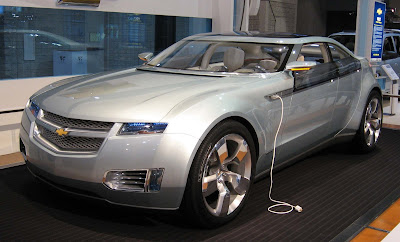
    GM Volt

    For now, Tesla’s sole product is the $109,000 sticker-price Tesla Roadster, or $101,500 after federal tax credits. The Roadster Sport edition costs an extra $19,500. Some states offer additional consumer tax breaks for buying an electric car, topping out as much as $42,000 in Colorado. Still, the Tesla Roadster Sport is a product for an elite few.
    The Leaf and the Volt are expected to be more moderately priced. Nissan says the Leaf will cost “in the range of other typical family sedans.” The Volt is expected to carry a price tag somewhere in the $40,000 range—which makes this Chevy comparable on a price basis to a luxury car such as a BMW 3 Series sedan. In the world of electric cars, that’s “affordable.”
    The Leaf and the Volt have so far been promoted mainly as environmentally correct, advanced-technology vehicles. The Volt has become a symbol of GM’s effort at corporate revival following its bankruptcy earlier this year. The Leaf is a product of Nissan CEO Carlos Ghosn’s determination to show that Nissan can be a clean-car-technology leader, driving out of rival Toyota Motor’s shadow. In promoting the Leaf, Nissan has focused on the fact that it is a “zero emission” vehicle—a traditional environmental pitch.
    The Tesla approach incorporates all the green jargon. But there’s more. The 2010 Tesla Roadster Sport takes the original Tesla’s high-performance drive system to the next level. The regular 2010 Roadster claims a 0-60 time of 3.9 seconds; the Sport will get to 60 mph 0.2 seconds faster. It also offers other refinements from the previous model. You get fast-looking forged wheels, a retro-modern push-button transmission with a “valet” mode that caps the car’s top speed, preventing a parking attendant from rat-racing your baby while you are playing golf. (Some of you will know it as the “Ferris Bueller” switch.)
    Oh yes, and there’s now a glove box in the dashboard. It’s very tiny. You could fit a pair of gloves in there.
    Interior space in the Tesla Roadster Sport is adequate—if your frame of reference is a race car. I am of average weight and height, which is to say I’m a bit short and I could lose a few pounds. My driving partner was a colleague who could play Abe Lincoln if he grew a beard and bought a top hat. He fit in the car. Barely. I had plenty of headroom, but I would have to lose an inch or two of personal width to feel really comfortable.
    These concerns became irrelevant when we got out on the 395 freeway in downtown Washington and hit the gas pedal—pardon me, the power pedal—to get around a slowpoke. I was used to driving a turbo-charged car that delivered a lot of boost in the 30-to-50 mph speed band. The Tesla put my Subaru WRX to shame.
    Tari Cash, Tesla’s Washington-area sales representative, says she has taken orders for 27 Roadsters. Some of the buyers are environmentally conscious. Most, she says, are car enthusiasts who want the New Thing.

    The revelation of driving the Tesla is that electric cars make really fun toys. The Tesla uses electric motors and software instead of pistons and displacement to generate its super-torquey, race-car performance. But behind the wheel, you don’t miss the gasoline.
    Fast acceleration and big helpings of torque are characteristics of electric motors, which deliver all their pulling power right away. “Tesla proves electric cars are going to be a blast to drive,” says IHS Global Insight analyst Aaron Bragman, who calls the Chevy Volt “a rocket ship.” But he says it’s important to temper the current enthusiasm for electric cars. Widespread adoption still confronts big obstacles, such as the lack of public recharging stations, the still-limited range compared with gasoline or diesel vehicles, and the cost. These issues could take another decade to resolve.
    Still, promoting electric vehicles as hot rods could be the key to making “alternative” cars mainstream. For 30 years or more, environmentalists have called on us to eschew excess, slow down and leave a smaller footprint. Many Americans pay lip service to this ideal, but most don’t choose to live it.
    The Tesla turns the frugal environmentalist aesthetic on its head. Sure, it doesn’t burn petroleum, and if plugged into a wind turbine or a nuclear plant, it would be a very low-carbon machine. But anyone who buys one will get the most satisfaction from smoking someone’s doors off. The Tesla’s message is that “green” technology can appeal to the id, not just the superego.”