Author: Serkadis

  • Google Headed To Swiss Court Over Street View

    The Federal Data Protection and Information Commissioner of Switzerland, Hanspeter Thür


    , still isn’t happy with Google.  Thür


    has argued that the Street View program doesn’t do enough to protect individuals’ identities, and despite receiving a concession or two, is now taking Google to court.

    Street View was introduced in Switzerland about three months ago.  Roughly one week later, Thür


    complained that certain faces and license plates weren’t indistinct enough.  He met with Peter Fleischer, Google’s Global Privacy Counsel, Google agreed to make portions of its photos blurrier, and the problem was resolved.  Or so we thought.


    It turns out that Thür


    also objected to the height from which images had been taken, arguing that a normal person wouldn’t have the same vantage point.  He felt that people in more rural areas could be identified even if their faces weren’t visible, too.

    So, as announced in a formal statement, Thür


    "has decided to take the matter further and to take legal action before the Federal Administrative Court."  According to the BBC, Thür


    wants a tribunal to make Google immediately take down all Swiss Street View images, as well (since the case won’t start or end soon).

    This situation could have a big impact on how other countries respond to Street View in the future.


    Related Articles:

    > Google Street View Hits Hawaii, Mexico

    > Street View Coverage Of Two More Countries Goes Live

    > Street View: Soon With More Blurriness

  • Senate Aides: Reid Considering Medicare Payroll Tax Increase On Wealthy

    Senate Majority Leader Harry Reid pondering a proposal to increase the Medicare payroll tax on high earners “to help offset the costs of providing health insurance to millions of Americans, Senate aides said Thursday,” The New York Times reports.

    The proposal is in the health reform package that Reid has sent to the Congressional Budget Office for analysis. “The Medicare payroll tax is the primary source of financing for Medicare’s hospital insurance trust fund, which pays hospital bills for beneficiaries, who are 65 and older or disabled. Employers and employees each pay a tax equal to 1.45 percent of wages. Unlike the payroll tax for Social Security, which applies to earnings up to an annual ceiling ($106,800 in 2009), the Medicare tax is levied on all of a worker’s earnings without limit. Mr. Reid is apparently considering an increase in the Medicare payroll tax rate for workers with incomes of more than $250,000 a year, Senate aides said. One idea is to increase the tax rate by one-half of 1 percentage point, to 1.95 percent for high-income people, with an expectation that the government could raise $40 billion to $50 billion over 10 years” (Pear, 11/12).

    The Washington Post: “Another option is applying the Medicare tax for the first time to capital gains income, White House budget director Peter Orszag said Thursday at a Washington summit organized by a corporate affiliate of Bloomberg News.” Inclusion of that tax could allow so-called “Cadillac” plans to be taxed less than initially proposed, The Post reports. “But Reid is unlikely to completely abandon the Cadillac tax, Democrats say,” because the tax could cause people to buy lower-cost health insurance policies (Montgomery, 11/12).

    The Wall Street Journal reports that “Reid is looking at raising the threshold for insurance policies that would be subject to the 40 percent (Cadillac) tax to $8,500 for individuals and $23,000 for couples, Senate aides said.” Levying a surtax on high income earners instead of on Cadillac plans is one that already has support in the House, which passed an income surtax in its health care reform bill on people who make more than $500,000 (Bendavid, 11/13).

    Bloomberg reports that, also while speaking at the summit, Orszag said he sees a health care reform bill passing by the end of the year, but he “wouldn’t say whether the White House supports” applying Medicare taxes to capital gains. “‘We have to see the package as a whole,’ he said”  (Donmoyer and Jensen, 11/13).

  • Health Reform: Senate Facing Controversies On Coverage Numbers, Abortion Language

    The Wall Street Journal: “When the Senate unveils its health-care bill, all eyes will be on the price tag. But an equally significant number may be how many people get health insurance under the legislation.”

    The two versions of committee-passed legislation in the Senate “would extend insurance to fewer people than the final bill passed through the House.” Senate leaders have been working “to increase that number” as they combine and refine the two bills. Hospitals and insurers are warning that if a Senate bill doesn’t cover more people than what the Senate committees proposed, insurance prices will increase.

    “The health bill passed by the Senate Finance Committee, which is expected to form the backbone of the final Senate bill, would extend insurance to 94 percent of legal U.S. residents, up from 83 percent of legal U.S. residents currently.” But it would leave 25 million without insurance. In the meantime, a mandate that individuals carry health coverage would accompany such coverage expansion, but “[i]ndustry groups are encouraging lawmakers to look at other ways of penalizing people who don’t get insurance” instead of a current proposal that some say doesn’t have teeth and could incentivize someone to only purchase insurance when they need it (Adamy, 11/13).

    The Senate will have to wade through many such issues as it gets ready to begin debate on its health care reform bill, Time reports. “The House fight over abortion guarantees a repeat in the Senate, where conservatives are demanding a similar airtight ban on the use of federal funds to pay for the procedure, and liberals are vowing to stop one they say will also prohibit some women from using private funds” (11/12).

    The Associated Press:  “millions of American women will face tough choices about abortion coverage if restrictions in the House health care bill become law.” Women likely to be affected by the ban would include self-employed women who must buy their own coverage, divorced women formerly insured under their husband’s plan and women who work for small businesses whose owners “decide to seek more affordable coverage through the new exchange” (Crary, 11/12).

    Related KHN story: How The House Abortion Restrictions Would Work (Appleby, 11/10)

    The NewsHour explains another problem facing the Senate: “It’s been an uncommonly high profile year for the [Congressional Budget Office],” which is charged with the responsibility of calculating the costs and savings that will result from these legislative proposals. “The approximately 235 analysts and economists who work for the agency generally crunch numbers in relative obscurity.” But this year, as the agency has often been in the spotlight, it has also been critiqued, “as some analysts and policymakers have questioned its power and its track record in providing accurate cost estimates for health care legislation.” Their task is difficult, which accounts for why scores are not always accurate, officials say (Winerman, 11/12).

  • Business and Insurers’ Groups Back Health Reform, But Not All Legislation

    A group of CEOs, the Business Roundtable and America’s Health Insurance Plans, the insurance industry group, separately expressed qualified support for health overhaul efforts Thursday.

    In a report, the Business Roundtable “which represents big company CEOs, said some of the changes being considered by Congress have the potential to reduce future health care cost increases, bringing medical inflation closer in line with overall economic growth. But the group also warned that other provisions in the bills could raise costs,” the Associated Press reports. President Obama “greeted the analysis as welcome validation at a time when other business groups like the U.S. Chamber of Commerce and the National Federation of Independent Business (NFIB) have soured on the Democrats’ health care bills and are mobilizing the opposition” (Alonso-Zaldivar, 11/12).

    If deployed in the right balance, reform measures could save companies up to $3,000 per employee by 2019, according to the report, which was commissioned by the Roundtable but crafted by Hewitt Associates, a consulting firm, CongressDaily reports. A roundtable official said cost-control is the top priority for big companies. Meanwhile, another business group, the Employment Policies Institute, launched a television ad arguing that the reform plans “will make this (debt) crisis worse” (Edney and Hunt, 11/12).

    Smaller businesses, on the other hand, are concerned about being able to offer low-cost insurance to their employees in the first place, TIME reports. Though lawmakers have crafted proposals overtly targeted at small business, “business groups like the Chamber and the NFIB vehemently oppose the public option. The Chamber says it would pay below-cost reimbursement rates, leading doctors and hospitals to charge private insurers (and the employers who purchase coverage from them) more to make up the difference. But even if that were true — and there are many observers who say this fear is overblown — it’s not clear that small-business owners would be the ones to suffer” (Pickert, 11/13).

    In a briefing Thursday, AHIP chief Karen Ignagni told reporters her industry still supports a full-scale health overhaul this year, despite some qualms about the bills, the Boston Globe reports. “Ignagni echoed the [Business Roundtable’s] assertion that cost-containment efforts should be spread more broadly across the entire health care system, not just confined to experimental projects within Medicare” (Wangsness, 11/13).

  • @comcastcares Dishes on His Top Twitter Apps

    -1

    Om and Frank Eliason of Comcast

    Om and I met Wednesday night with Frank Eliason of Comcast, better known as the person behind @comcastcares. Eliason is a genuinely cool guy who started out as the person solely responsible for handling Comcast complaints on Twitter, and who now has a staff of 10. Each day, he and his staff look over some 10,000 blog posts, handle countless tweets — and then seek to do something about any problems.

    Since he’s such a Twitter power user, I asked him what his favorite applications for the micromessaging site were. He said the original Twitter web site is his favorite, but he’s also a fan of Simply Tweet on his iPhone because he likes the push notifications. PeopleBrowsr, an app that helps businesses mine information from Twitter, is another one he uses heavily. As for CoTweet, which is in the news right now for charging businesses $1,500 a month to find information on the service, he said he wasn’t initially a fan, but that ever since the company has modified the application to keep track of conversations between two users over time, he’s been turning to it more frequently. The ubiquitous TweetDeck isn’t something Eliason uses, but he says some of his staff love it.

    Our conversation was brief as he had to rush off to meet some of his Comcast customers (he notified them of his presence in San Francisco via Twitter) — a reminder that while online interactions are a nice way to initiate relationships, face-to-face meetings are still necessary to cement them.

  • GameStop details in-store DLC service, to be launched in 2010

    gamestop

    It seems the Internet doesn’t like GameStop too much, so I’m not sure how this story will be received. The retailer announced at a conference in New York yesterday that it will launch some sort of in-store DLC service next year. That is, let’s say you buy Game, then immediately buy related DLC from inside the store via a special interface. (GameStop worked with both Sony and Microsoft to figure all this out.) Then, when you get home, the DLC is ready to be added to your game.

    It’s merely a convenience thing, as, come on, who has time to buy a game at the store, go home, navigate Xbox Live or PSN, then download and apply the DLC?

    GameStop’s COO gave a specific example:

    If you love X-Men Origins: Wolverine, imagine being able to take home the physical copy at launch, plus have a few costumes and villains sent to your PS3 waiting for you when you get home.

    No, this isn’t going to totally change the way you live your life, but it should be useful to those of you who, gasp, still buy things at a retail store.


  • GOP Hopes To Rally Sentiment Against Dems’ Health Bills But Face Flap Over RNC Abortion Coverage

    “For the first time, when asked who voters trusted more on handling health care, congressional Republicans tied Obama at 40 percent with 21 percent undecided,” in Ohio, according to a new Quinnipiac poll, Politics Daily reports. PD adds: “In September, respondents favored Obama by 49 percent to 28 percent. (Ohio) voters oppose Obama’s health care plan by 55 percent to 36 percent with 9 percent undecided and disapprove of his handling of the issue by a similar margin” (Drake, 11/12).

    Meanwhile, Republicans are pushing “to re-ignite the town hall fury that inflamed the health care debate and nearly derailed the legislation over the summer,” Fox News reports. “GOP representatives are holding town halls in the next two weeks to rally opposition to President Obama’s sweeping health care legislation that narrowly passed the House last weekend” (Clark, 11/12).

    And in other GOP news, reports indicated on Thursday that the Republican National Committee has offered employees insurance plans that cover elective abortions since 1991 – even as Republicans have opposed measures that could cause taxpayers to indirectly subsidize the procedures, Politico reports. RNC Chairman Michael Steele quickly instructed officials to opt out of the abortion coverage. Cigna, the RNC’s insurance company, said it offers customers the opportunity to opt out when they sign up and that the RNC chose not to (Allen, 11/12).

  • "America's Last Frontier"

    President Greets Troops in Alaska

    President Barack Obama greets troops at Elmendorf Air Force Base in Alaska en route to Tokyo on Nov. 12, 2009. (Official White House photo by Pete Souza)

    En route to Tokyo, the President made a special stop to Elmendorf Air Force Base in Anchorage, Alaska—"America’s Last Frontier."  In his first visit to the state, against a stunning backdrop of snow-covered mountains, the President pledged his support to the brave men and women who sacrifice every day and outlined what he and his Administration have been working on to ensure active servicemembers, their families, and veterans are well taken care of both at home and on foreign soil:

    There are no words that are strong enough and no tribute worthy enough to match the magnitude of such service.  But to you and all who serve, I say this:  The American people thank you.  We honor you.  And just as you have fulfilled your responsibilities to your nation, your nation will fulfill its responsibilities to you.

    So as your Commander-in-Chief, here’s the commitment I make to you.  We’ll make sure you can meet the missions we ask of you.  That’s why we’re increasing the defense budget, including spending on the Air Force and the Army.  (Applause.)  We’ll make sure we have the right force structure.  So we’ve halted reductions in the Air Force, increased the size of the Army ahead of schedule and also approved a temporary increase in the Army.

    We’ll spend our defense dollars wisely.  So we’re cutting tens of billions of dollars in waste and projects that even the Pentagon says it doesn’t need — money that’s better spent on taking care of you and your families and building the 21st century military that we do need.

    I want you guys to understand I will never hesitate to use force to protect the American people or our vital interests.  (Applause.)  But I also make you this promise:  I will not risk your lives unless it is necessary to America’s vital interest.  (Applause.)

    And if it is necessary, the United States of America will have your back.  We will give you the strategy and the clear mission you deserve.  We will give you the equipment and support that you need to get the job done.  And that includes public support back home.  That is a promise that I make to you.  (Applause.)

    Air Force One in Alaska

    Air Force One sits on the tarmac as President Barack Obama greets troops at Elmendorf Air Force Base in Alaska before taking off for Tokyo on Nov. 12, 2009. (Official White House photo by Pete Souza)

    President Talks to Troops in Alaska

    President Barack Obama greets troops at Elmendorf Air Force Base in Alaska en route to Tokyo on Nov. 12, 2009. (Official White House photo by Pete Souza)

    President Boards Air Force One En Route to Alaska

    President Barack Obama boards Air Force One at Andrews Air Force Base en route on his trip to Asia, Nov. 12, 2009. (Official White House photo by Pete Souza)

  • Final Fantasy XIII dated for North America, Europe

    Good news, RPG faithful. Final Fantasy XIII (Xbox360, PlayStation 3) now has a US and Euro launch date.Square Enix today announced Lightning (and Snow…

  • Microsoft Admits, Then Denies, Copying Mac OS X

    It boggles the mind, it really does. Microsoft tries so hard but for each step forward, it seems to take three steps back. Windows 7, Redmond’s answer to the train-wreck that was Vista (subscription required), has been out for just a matter of weeks and has managed to garner mostly positive reviews. But Microsoft can’t help itself. It has to do something silly, and, true to form, it has.

    It seems Microsoft’s middle management can’t decide whether or not it ripped-off Mac OS X when it was redesigning its flagship product. This is the result of a bewildering comment from Microsoft Partner Group Manager Simon Aldous in an interview this week with PCR. He’s neither a developer nor a designer, and he didn’t work on Windows 7. But Aldous didn’t let that stop him saying this about Microsoft’s latest OS:

    One of the things that people say an awful lot about the Apple Mac is that the OS is fantastic, that it’s very graphical and easy to use. What we’ve tried to do with Windows 7 […] is create a Mac look and feel in terms of graphics.

    So. Aldous just made it clear; Windows 7 copies borrows its design from the Mac. Only, no, it doesn’t. Not according to a retort yesterday from Windows Communications Manager, Brandon LeBlanc. Writing on The Windows Blog, LeBlanc said:

    An inaccurate quote has been floating around the Internet today about the design origins of Windows 7 and whether its look and feel was “borrowed” from Mac OS X. Unfortunately this came from a Microsoft employee who was not involved in any aspect of designing Windows 7. I hate to say this about one of our own, but his comments were inaccurate and uninformed.

    The tech press is going bonkers about it, of course, but let’s be honest — when it comes to operating systems, the days when these two giants outright-copied one another and it mattered are far behind us. The common elements of an OS user interface are driven largely by user need/behavior. High resolution color displays and the ubiquity of the mouse and keyboard combo would have led to these similarities irrespective of the company behind them. Put simply, thirty-odd years of OS evolution would result inevitably in functional and aesthetic similarities.

    What Are They Looking At?

    When people say that Windows 7 “looks like” Mac OS X, I don’t understand exactly what it is they’re looking at.

    Mac OS X’s Dock and Windows 7’s Taskbar are similar in function, but not design. The desktop and windows are, again, similar in function — but they don’t look the same.

    Windows 7 has gone overboard with transparencies everywhere, to the detriment of ease of use. Mac OS X, on the other hand, introduced transparencies many years ago and has consistently dialled them down in successive OS updates.

    Windows was long-criticized for its drab, gunship grey interface. XP and Vista moved gradually away from grey, and now Windows 7’s UI is an explosion of green and blue (or red or pink or purple or whatever godawful theme you choose). Mac OS X, on the other hand, remains a stately, elegant… gunship grey. Not at all like Windows 7. I suspect people mistake Microsoft’s bold-yet-vomit-enducingly-colorful design of Windows 7 with the elegance of Mac OS X.

    I’m aware that these observations are subjective. My opinions are just that — my opinions. You might agree with me that it’s wrong to say Windows 7 and Mac OS X look “the same.” You might think I’m desperately uninformed and waste no time telling me as much. (In fact, the predictable result of any article comparing Windows with Mac OS X is the vitriol from commenters apparently unaware they’re reading TheAppleBlog.)

    In any case, consider this; here we have two Microsoft execs, one in product sales, one in product design & development. The former sees how customers perceive the Mac to be a superior product, and tries to exploit that perception by ‘connecting’ Windows 7 to it. (“The Mac is great, so by copying it, Windows is great, too.” etc.) The latter has spent years working hard on this new OS and responds with understandable indignation to the suggestion his team copied anything from the competition.

    Either way, it’s embarrassing. At a time when they ought to be extolling the wonders and miracles an upgrade to Windows 7 may bring, they’re instead drawing attention to their biggest rival.

    I can’t help but imagine an email winging its way through Apple’s Marketing department this week, its subject line reading, “With competition like this, who needs an ad campaign?”


  • Rural Thoughts On Improving The Health Care System; Plus Other State News

    Kaiser Health News examines rural health care in Kentucky and finds that models for community health care that operate there could benefit the nation’s health care system despite. The article notes that Hazard, Ky., was labeled as one of the worst health care regions in America by the 2008 American Human Development Report, but “there are enduring models in places like Hazard that could prove instructive to rebuilding healthy communities across the nation, both rural and urban.” KHN looks at the system in Hazard through the eyes of four residents working to change and improve the health care system. For instance, workers with one health outreach group “are previous clients of community health outreach projects … (d)uring visits, they evaluate patients’ living conditions to see if they qualify for housing and medical care under an array of federal programs, and then complete oral inventories of each client’s health history” (Browning, 11/13).

    Also in Kentucky’s health news, WBKO reports that the state’s  “public option” plan, Kentucky Access, isn’t turning out to be as successful as officials hoped. “Over the past 15 years, the $220 million designated for the program has been steadily taken away by the state government to cover general items.” The plan, which covered 11 percent of the population, saw premiums increase and people drop out of the plan (Dearbone, 11/12).

    In other state developments –

    CBS News/The Associated Press: The North Carolina state health insurance plan for state employees is continuing to pay out more in claims than it budgeted for in the first three months of the fiscal year. “Lawmakers received State Health Plan data Thursday showing paid medical claims are 4 percent higher than expected through Sept. 30. That’s better compared to an 8 percent increase through August” (11/12). 

    The Philadelphia Inquirer: In Philadelphia, municipal managers will have their health plan changed next year to save the city $6 million by increasing co-pays and out-of-pocket maximums, though officials say there are no “significant” reductions in benefits. “Independence Blue Cross retained its contract with the city over a competing proposal from Aetna at a saving of $4.2 million for taxpayers, said the city’s benefits manager, James R. Startare. Similar bids for prescription, dental, and vision resulted in an additional saving of $2.1 million, officials said” (Shields, 11/13). 

    CBS News/The Associated Press, in a separate story: The Mississippi Supreme Court ruled Thursday that Mississippi Medicaid officials should have sought approval before “tinkering with a law that would change reimbursements for pharmacists.” Pharmacies sued in 2009 after a change in the method of reimbursement in the state, which spent $328 million on the program last fiscal year. “The Supreme Court on Thursday upheld a chancery judge’s ruling that the Division of Medicaid had no authority to change how pharmacists were paid to fill prescriptions for people enrolled in the program” (11/12).

  • Massively Increasing Music Licensing Fees For Clubs Down Under Massively Backfires

    We’ve noted the ridiculous and self-defeating efforts by many music collections societies around the world to jack up their rates by ridiculous amounts. None was more ridiculous than the attempt in Australia by the PPCA where some of the rate changes would rocket up from figures like $125/year… to $19,344/year. Well, it looks like it’s already backfiring badly. Reader Dan alerts us to the news that the organization that represents night clubs and similar businesses in Australia, appropriately named Clubs Australia, has set up a system whereby the organization will specifically go out and seek music by artists not covered by the collections effort, and distribute that music to clubs and other establishments. Then, these clubs, gyms, restaurants and the like can tell the PPCA to take a hike, and still play music. We’d already seen that some clubs had started doing this on their own, but now they’ve teamed up to share such music with each other in order to get out from under the PPCA entirely. So, nice job PPCA. Once again, in your effort to get people to pay more for every single use, you end up making it that much more difficult for anyone to actually hear — or care about — the musicians you supposedly represent.

    Permalink | Comments | Email This Story


  • Doctors Face Image Problems; Patients Deal With Shortages, Are Urged To Question Care

    Doctors must not only face the fading image of primary care providers, but also physician shortage issues. Meanwhile, some experts suggest patients consider saying “no” to their doctor to control health care costs.

    The New York Times has a story from Pauline Chen, MD, who reports that many medical students who choose to follow the “ROAD (radiology, ophthalmology, anesthesia and dermatology)” instead of primary care when choosing their specialties. “While 50 years ago half of all physicians were in primary care, almost three-quarters are now specialists.” Even though nurses and physicians assistant are helping out, much of reform could be in danger if there aren’t enough primary care doctors — who are increasingly drawn away from primary care by over-burdening debt, increasing income and plusher lifestyles, The Times reports (Chen, 11/12).

    Meanwhile, Bloomberg reports that the doctor shortage may create even more delays and crowded emergency rooms in America if health care reform is enacted. “Underserved areas in the U.S. currently need 16,679 more primary-care physicians to reach a ‘medically appropriate’ target of 1 for every 2,000 residents, U.S. data shows. The health-care overhaul bills before Congress would raise pay for family doctors, increase residency training and forgive school debt to help meet that deficit.” But those things would likely take years to make a difference (Wechsler, 11/13).

    Finally, Forbes has a story on when patients should say “no” to extra tests or care in order to reduce health care costs. “Health policy researchers furiously debate how much is wasted on treatments sometimes that don’t make people better. … Elliott Fisher and his colleagues at Dartmouth Medical School have shown that medical spending fluctuates wildly from town to town and hospital to hospital, with no measurable improvement in health in the pricey places. They calculate that 20 percent or more of all costs could be eliminated without harming anyone.” Americans share the blame for equating “fancy tests with high-quality care,” Forbes reports, and some tests and treatments that Congress could look at curbing to save money include high-tech imaging, certain mental health treatments and back pain treatments (Langreth, 11/12).

  • FLO TV launches pocketable, smartphone-like TVs

    By Tim Conneally, Betanews

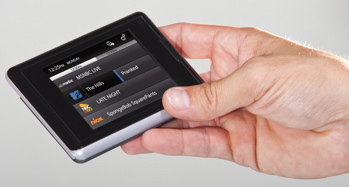
    FLO TV Personal TelevisionChipmaker Qualcomm’s mobile broadcast television subsidiary FLO TV has officially launched its PTV 350 personal television at retail today.

    This is the smartphone-sized device that Qualcomm and hardware maker HTC unveiled in October. Like many of HTC’s smartphones, the FLO TV PTV 350 includes a 3.5″ capacitive touchscreen, built-in stereo speakers, and a battery which can support 5 hours of continuous mobile broadcast viewing.

    FLO TV service is available 24 hours a day and includes programming from Adult Swim Mobile, CBS Mobile, CNBC, Comedy Central, FOX News Channel, MSNBC, MTV, NBC 2Go, and Nickelodeon. Video streams are 320 x 240 QVGA at 15-30 frames per second. Coverage is still mostly concentrated around urban areas, and states such as Kentucky, West Virginia, North and South Dakota, Montana, Wyoming, Vermont, New Hampshire, and Maine have no service yet.

    The FLO TV Personal Television is available today for $249 through Amazon.com and Best Buy.com, and includes six months of free service to entice customers into checking it out. Of course, in order to receive that free half-year, users must sign a contract which incurs a monthly charge between $8.99 and $15.00.

    Copyright Betanews, Inc. 2009


    Add to digg
    Add to Google
    Add to Slashdot
    Add to Twitter
    Add to del.icio.us
    Add to Facebook
    Add to Technorati


  • Political Cartoon: ‘The Affordable Alternative?’

    Kaiser Health News provides a humorous look at health policy developments with Adam Zyglis’ “The Affordable Option?”

  • Health Policy Research Round Up – Medicare and Massachusetts

    Robert Wood Johnson Foundation: The Secrets of Massachusetts’ Success – “By the summer of 2008, less than two years after Massachusetts’ health reform law became effective, only 2.6 percent of state residents were uninsured—the lowest proportion ever recorded for any state.” This study by the RWJF-funded State Health Access Reform Evaluation (SHARE) initiative “explains how national reforms can use similar methods to avoid the pitfalls that have plagued other coverage expansions.”  Through a review of published studies and a series of interviews with policymakers and other stakeholders, the researchers note key factors contributing to the state’s success. Among these factors was the creation of a single application form and system of eligibility determination. (Dorn, Hill and Hogan, 11/11).

    Circulation: Heart Failure: Recent National Trends in Readmission Rates after Heart Failure Hospitalization – Using 2004-2006 Medicare administrative data to identify all fee-for-service beneficiaries admitted to a U.S. acute care hospital for heart failure and discharged alive, the authors of this study find that almost a quarter of heart failure patients with Medicare are readmitted within 30 days. The readmission rates remained “virtually identical” over the three years examined, according to the study (Ross et al., 11/10).

    Kaiser Family Foundation: Medicare Part D 2010 Data Spotlights – In these briefs, researchers analyze key aspects of the Medicare Part D plans that will be available to Medicare beneficiaries in 2010, including the benefit’s coverage gap, or “doughnut hole,” and changes to the drug benefit since it went into effect in 2006 (Hoadley, Cubanski, Hargrave, Summer and Neuman, 11/9).

    Kaiser Commission on Medicaid and the Uninsured: State Variation and Health Reform: A Chartbook – “As the health reform debate progresses, the impact of reform on individual states will vary based on their economic situation, current health insurance coverage, and health care expenditures,” write the authors of this chartbook that compiles data related to state variation, such as the states’ economic profile, rates of uninsured rates, health care costs and insurance markets, among other things (Marks, Schwartz and Donaldson, 11/11).

    Kaiser Family Foundation: Survey on the U.S. Role in Global Health Update – A follow-up to a survey conducted in March 2009. Some key findings include: the majority of Americans support maintaining (32%) or increasing (34%) spending on global health, despite the economic recession; Americans favor investments in programs that help developing countries develop overall health systems (58%) over disease-specific programs (36%); Americans favor giving health aid money to international organizations like the Global Fund to Fight AIDS, Tuberculosis and Malaria (74% in favor), religious or faith-based groups working to improve health in developing countries (55%) and local non-profit organizations in developing countries (53%) over developing country governments (29%). The survey, which was conducted by phone in Spanish and English, included a nationally representative random sample of 1,205 adults ages 18 and older (Brodie, Hamill, Cho and Buscho, 11/12).

    Health Affairs: Hospital Governance And The Quality Of Care – Researchers explore the role that board of directors at hospitals have in the quality of hospital care. “Among our nationally representative sample of chairs of boards of directors from nonprofit U.S. hospitals, a little over half identified clinical quality as one of the two top priorities for board oversight,” the study authors write. “Although 69 percent of board chairs thought that the CEO had great influence on quality of care, just 44 percent identified quality performance as one of the two most important criteria for evaluating the CEO’s performance.” The study highlights the fact that “[m]ajor opportunities exist to shift the knowledge, training, and practices of hospital boards to promote a focus on improved clinical quality” (Jha and Epstein, 11/7).

  • Dell Wisely Chooses Emerging Markets for Smartphone Play

    ViewMedia

    Dell Mini 3

    Dell has finally made its smartphone play official, saying it will target users in Brazil and China with a new Android-based handset dubbed the Mini 3 by the end of the year. It’s a smart strategy — the company’s existing presence in both countries could make for a smooth entry into the cutthroat smartphone space.

    The Round Rock, Texas-based computer vendor said it will release the Mini 3 through China Mobile later this month; the phone will be available through the Brazilian operator Claro by the end of the year. The announcement ends two years of rumors of a Dell smartphone. The company offered few details about the handset other than the fact that it rocks a three-and-a-half-inch high-definition screen and forgoes a physical keyboard in favor of a touchscreen.

    While a move into mobile is overdue, Dell faces a daunting task in differentiating itself from the increasingly crowded Android bandwagon. But the company is wise to enter the difficult Chinese market with China Mobile, which claims 500 million subscribers and — more importantly — with which it already has an established relationship. Dell earlier this year became the first mobile PC manufacturer to embed China Mobile’s 3G technology and services into its netbooks and, according to the company, has become the leading seller of netbooks through retail outlets in China. Dell also has a longstanding presence in Brazil, where it opened a $100 million-plus plant two years ago.

    The relationship with China Mobile will be particularly crucial as Dell enters the smartphone space. China’s position as the world’s largest mobile market is well documented, but the region is teaming with potential pitfalls, including an active gray market and heavy government regulation. Apple is quickly — and painfully — becoming familiar with such hurdles via the Chinese launch of the iPhone. If Dell can leverage its existing relationships in China, the company could quickly establish a foothold in a massive market. And that foothold could be the first step in building a global presence in the increasingly competitive smartphone segment.

  • Best Buy Black Friday ad

    bestbuy 

    It’s here. Best Buy’s Black Friday ad is here. Stores open at 5AM and Best Buy will “pass out tickets for our Doorbuster Specials up to two hours before 5 a.m. store opening,” according to the circular. That means no running, probably. You can still do that thing where you walk really fast and sort of skip a little bit, but no running.

    Doorbusters are marked with an asterisk.

    Automotive

    Alpine 50-Watt x 4-Channel Car Stereo – $99.99

    Pioneer 50 Watt x 4-Channel Car Stereo & Speaker Pair – $89.99

    Cell Phones

    AT&T Sony Ericsson W518a – Free w/2 Year Contract *

    BoostMobile Motorola Clutch i465 – $59.99

    DLO Jam Jacket For iPhone – $9.99

    Jabra BT-2080 Bluetooth Headset – $19.99

    LG Chocolate Touch From Verizon w/Two Year Activation – $0.00 *

    MiFi 2200 By Novatel Wireless w/Two Year Activation – $0.00

    Mobile Broadband Card 598U By Sierra Wireless w/Two Year Activation – $0.00

    Motorola H710 Noise-Canceling Bluetooth Headset – $39.99

    Motorola S9 HD Stereo Bluetooth Headset – $49.99

    Net10 Samsung T401G – $39.99

    Sprint BlackBerry Curve 8330 Smart Phone – Free w/2 Year Contract

    Sprint Samsung Instinct S30 – Free w/2 Year Contract

    T-Mobile Motorola Renew Phone – $7.99

    Verizon Wireless DROID – $199.99 w/2 Year Contract

    Verizon Wireless Motorola Rival – Free w/2 Year Contract *

    Virgin Mobile Kyocera X-tc – $49.99

    Computer Accessories

    Logitech C250 Webcam – $19.99

    Logitech V450 Nano Cordless Laser Mouse – $24.99

    Rocketfish AC Power Adapter – $39.99

    Computers

    Compaq Netbook w/Intel Atom Processor, 1GB Memory, 160GB Hard Drive – $179.99

    Compaq Netbook w/Intel Atom Processor, 1GB Memory, 250GB Hard Drive – $229.99

    Dell 10.1″ Netbook w/Intel Atom Processor, 1GB Memory, 160GB Hard Drive – $379.99

    eMachines Desktop w/AMD Athlon Processor, 3GB RAM, 320GB HD, Windows 7, w/18.5″ LCD Monitor and HP Deskjet Printer – $299.97

    HP 15.6″ Notebook w/AMD Turion II Dual Core Processor M500, 6GB Memory, 320GB Hard Drive, Windows 7 – $599.99

    HP 15.6″ Notebook w/AMD Turion II Dual Core Processor M500, 8GB Memory, 500GB Hard Drive, Windows 7 – $699.99

    Macbook 13.3″ Notebook w/2.26GHz Intel Core 2 Duo, 2GB DDR3 Memory, 250GB Hard Drive, w/$150 Gift Card – $999.99

    Sony 15″ Laptop w/Intel Dual Core Processor, 4GB Memory, 320GB Hard Drive, Windows 7 – $399.99

    Sony 15″ Laptop w/Intel Dual Core Processor, 4GB RAM, 320GB HD, Windows 7, Sony Headphones, Built-In Blu-ray Player, Blu-ray Movie – $479.97

    Toshiba 16″ Laptop w/Intel Core 2 Duo Processor, 3GB DDR3 Memory, 250GB Hard Drive (Model # L505-S5984) – $399.99

    Toshiba 16″ Laptop w/Intel Core 2 Duo Processor, 4GB DDR3 Memory, 320GB Hard Drive (Model # L505-S5984) w/Printer and Case – $499.97

    Digital Cameras

    Canon EOS Rebel Tli D-SLR Camera w/18-55mm IS Lens – $699.99

    Canon PowerShot SD1200 IS 10.0 Megapixel Digital Camera (Grey) – $149.99

    Canon PowerShot SD1200 IS 10.0 Megapixel Digital Camera (Teal) – $149.99

    Canon PowerShot SD1200 IS 10.0 Megapixel Digital Camera w/Extra Battery and Case (Grey) – $179.99

    Canon PowerShot SD1200 IS 10.0 Megapixel Digital Camera w/Extra Battery and Case (Teal) – $179.99

    Canon Rebel Tli Camera w/55-250mm IS Telephoto Lens and Lowepro D-SLR Bag – $849.97

    Fujifilm Finepix Z37 10.0 Megapixel Digital Camera w/Extra Battery and Case – $149.97

    Fujifilm Finepix Z37 Polka Dot 10.0 Megapixel Digital Camera – $119.99

    Insignia 720p HD Camcorder – $69.99

    Insignia NS-DSC10A 10.0 Megapixel Digital Camera (Pink) – $49.99 *

    Insignia NS-DSC10B 10.0 Megapixel Digital Camera (Blue) – $49.99 *

    Kodak EasyShare C140 Digital Camera With 7″ Kodak Digital Photo Frame – $109.99

    Nikon Coolpix P90 12.1 Megapixel Digital Camera – $299.99

    Nikon Coolpix P90 12.1 Megapixel Digital Camera w/Extra Battery and Case – $329.97

    Nikon Coolpix S60 10.0 Megapixel Digital Camera (Red) – $179.99

    Nikon Coolpix S60 10.0 Megapixel Digital Camera w/Extra Battery and Case – $209.97

    Nikon D3000DX 10.2 Megapixel D-SLR Digital Camera w/10-55mm and 55-200mm Lens and Bag – $599.97

    Nikon D3000DX 10.2 Megapixel D-SLR Digital Camera w/10-55mm VR Lens – $499.99

    Sony Cybershot W180 10.1 Megapixel Digital Camera (Black) – $99.99

    Sony Cybershot W180 10.1 Megapixel Digital Camera w/Flexpod and Camera Case – $119.97

    Digital Media Cards

    PNY 4GB Flash Drive – $9.99

    PNY 4GB MicroSD HD Memory Card – $9.99

    PNY 4GB SDHC Memory Card – $9.99

    Sandisk 4GB Memory Stick PRO Duo – $14.99

    Sandisk 8GB MicroSDHC Memory Card – $19.99

    Sandisk 8GB SD Card – $19.99

    DVD Players

    Insignia Blu-ray Disc Player (Model # NS-BRDVD3) – $99.99

    Samsung BD-P4600 Blu-ray Disc Player – $279.99

    Samsung Blu-Ray Disc Player – $149.99

    Sony BDP-S360 Blu-ray Disc Player – $149.99

    Electronics

    2GB Pulse Smartpen w/$30 Gift Card – $169.99

    Bose In-Ear Headphones – $89.99

    Canon Vixia HD HF20 Camcorder – $499.99

    Canon Vixia HD HF20 Camcorder w/Extra Li-Ion Battery & 8″ HDMI Cable – $599.97

    Dynex 7″ Digital Photo Frame – $29.99

    iHome Portable Alarm Clock Speaker iPod Dock – $39.99

    Insignia 7″ Digital Photo Frame – $44.99

    Logitech Harmony 510 Advanced Universal Remote – $39.99

    Panasonic DECT 6.0 Expandable Cordless Phone System w/3 Handsets – $59.99

    Pandigital 9″ Digital Photo Frame – $59.99

    Sony DCR-SR47 Handycam Camcorder – $249.99

    Sony DCR-SR47 Handycam Camcorder w/Extra Li-Ion Battery & Bag – $299.97

    Sony DCR-SX40 Handycam Camcorder – $199.99

    Sony DCR-SX40 Handycam Camcorder w/Extra Li-Ion Battery & 8GB Memory Stick – $259.97

    Sony Reader Pocket Edition w/$30 Gift Card – $199.99

    Sony Studio Monitor Headphones – $9.99

    VTech DECT 6.0 Expandable Cordless Phone System w/2 Handsets – $44.99

    GPS Systems

    Garmin GPS Friction Mount – $14.99

    Garmin Nuvi 205W GPS Navigation System – $99.99 *

    Garmin Nuvi 255WT GPS Navigation System – $129.99

    Lowepro Black Neoprene Sleeve – $7.99

    Magellan SE4 GPS – $89.99

    Tom Tom 540S Portable GPS Navigation System – $149.99

    Tom Tom GO 730 Portable GPS Navigation System – $174.99

    Hard Drives

    LG External Slim Portable USB 2.0 DVD Drive – $49.99

    Western Digital 1.5TB My Book Home Edition External Hard Drive – $119.99

    Western Digital 500GB My Passport Elite Portable Hard Drive Titanium – $79.99

    Western Digital WDTV Media Player – $74.99

    Home Theater

    4″ Monster Cable 700 Series HDMI Cable – $49.99

    Init Cherry Wood Stand With Mount For TVs Up To 46″ – $99.99

    Init Cherry Wood w/Black Glass Shelves TV Stand – $149.99

    Klipsch Icon 2-Way Triple 5.25″ Floorstanding Speaker – $186.99

    Klipsch Icon 2-Way Triple 6.5″ Floorstanding Speaker – $236.99

    Samsung 5.1 Channel 1000W Home Theater System With Blu-ray Disc Player – $399.99

    Sony 5.1 Channel 1000W Home Theater System – $279.99

    Sony 7.1 Channel 770-Watt A/V Receiver – $279.99

    Tilting Wall Mount For 30″-56″ Flat-Panel TVs – $99.99

    Monitors

    Acer 20″ HD LCD Monitor (Model # X203H) – $79.99

    Dell 20″ HD LCD Monitor (Model # S2009W) – $99.99

    MP3 Players

    3 $10 iTunes Gift Cards – $25.00

    8GB iPod 5th Generation Nano (Black) + Wall Charger & Case – $159.97

    8GB iPod 5th Generation Nano (Blue) + Wall Charger & Case – $159.97

    8GB iPod 5th Generation Nano (Pink) + Wall Charger & Case – $159.97

    8GB iPod 5th Generation Nano (Purple) + Wall Charger & Case – $159.97

    8GB iPod 5th Generation Nano (Silver) + Wall Charger & Case – $159.97

    Apple 8GB iPod Touch 3rd Generation w/$30 Gift Card – $199.99

    Bose Sound-dock Series II Digital Music System – $269.99

    Power Pack for iPod/iPhone – $19.99

    Sandisk 4GB Fuze MP3 Player (Black) – $44.99

    Sandisk 4GB Fuze MP3 Player (Blue) – $44.99

    Sandisk 4GB Fuze MP3 Player (Red) – $44.99

    Networking

    Linksys Ultra RangePlus Wireless-N Broadband Router w/4-Port Switch (Model # WRT160N) – $59.99

    NetGear Wireless N Router (Model # WNR2000-100NAS) – $49.99

    Portable USB Storage

    Sandisk Cruzer 8GB USB Flash Drive – $19.99

    Printers

    $10 Gift Card With Any $40 Ink Purchase – $0.00

    Epson Stylus NX110 Multifunction Printer – $24.99

    HP Photosmart C4795 Wireless Multifunction Printer – $64.99

    Software

    Instant Immersion Spanish Software – $19.99

    Microsoft Office Home And Student 2007 – $69.99

    Photoshop Elements and Premiere Elements – $74.99

    Televisions

    Dynex 19″ 720p LCD HDTV (Model # DX-L19-10A) – $149.99

    Dynex 32″ 720p LCD HDTV (Model # DX-L321-10A) – $299.99 *

    Dynex 40″ 1080p 60Hz LCD HDTV (Model # DX-L40-10A) – $499.99

    Insignia 42″ 1080p 120Hz LCD HDTV (Model # NS-L42Q120-10A) – $699.99 *

    LG 32″ 1080p LCD HDTV (Model # 32LH30-UA) – $439.99

    Panasonic Viera 50″ 1080p Plasma HDTV (Model # TC-P50U1) w/Blu-ray Disc Player (Model # DMP-BD60K) – $999.98

    Samsung 32″ 1080p LCD HDTV (Model # LN32B530P7F) – $497.99

    Samsung 32″ 720p LCD HDTV (Model # LN32B360C5D) – $397.99

    Samsung 40″ 1080p 60Hz LCD HDTV (Model # LN40B500P3FXZA) – $597.99

    Samsung 42″ 720p Plasma HDTV (Model # PN42B400P3DXZA) – $547.99

    Samsung 46″ 1080p 120Hz LED HDTV (Model # UN4686000VF) – $1599.99 *

    Samsung 46″ 1080p LCD HDTV (LN46B500P3FXZA) – $847.99

    Samsung 50″ 1080p Plasma HDTV (Model # PN50B530S2F) – $897.99

    Samsung 50″ 720p Plasma HDTV (Model # PN50B430P2D) – $697.99

    Sony 32″ 720p 60Hz LCD HDTV (Model # KDL32L504) – $377.99

    Sony 40″ 1080p 60Hz LCD HDTV (Model # KDL40S504) – $662.99

    Sony 46″ 1080p 60Hz LCD HDTV (Model # KDL465504) – $852.99

    Video Games

    $20 Gift Card w/Any DSi Game System Purchase – $0.00

    Assassins Creed (PC Game) – $19.99

    Bash Party (Wii) – $14.99

    Bioshock (PC Game) – $19.99

    Bolt (DS Game) – $9.99

    Brutal Legend (PS3) – $34.99 *

    Brutal Legend (Xbox 360) – $34.99 *

    Call of Juarex (PS3) – $19.99

    Call of Juarez (Xbox 360) – $19.99

    Civilization IV (PC Game) – $19.99

    Cooking Mama (DS Game) – $9.99

    Cooking Mama (Wii) – $14.99

    Crash (DS Game) – $9.99

    Dragon Age (PS3) – $34.99 *

    Dragon Age (Xbox 360) – $34.99 *

    Excite Bots Trick Racing (Wii) – $14.99

    Fallout 3 (PS3) – $19.99

    Fallout 3 (Xbox 360) – $19.99

    Family Game Night (Xbox 360) – $19.99

    Far Cry 2 (PC Game) – $4.99

    FIFA Soccer 10 (PS3) – $34.99 *

    FIFA Soccer 10 (Xbox 360) – $34.99 *

    Guinness World Records (DS Game) – $9.99

    Hawx (PS3) – $19.99 *

    Hawx (Xbox 360) – $19.99

    Left 4 Dead 2 (PS3) – $34.99 *

    Left 4 Dead 2 (Xbox 360) – $34.99 *

    Madagascar 2 Escape From Africa (Wii) – $14.99

    Madden 10 (PS3) – $34.99 *

    Madden 10 (XBox 360) – $34.99 *

    Marker Man (DS Game) – $9.99

    Marvel Ultimate Alliance (Wii) – $14.99

    My Sims Kingdom (Wii) – $9.99

    My Word Coach (DS Game) – $9.99

    NBA Live 09 (Wii) – $9.99

    NBA Live 10 (PS3) – $34.99 *

    NBA Live 10 (Xbox 360) – $34.99 *

    Need For Speed: Shift (PS3) – $34.99 *

    Need For Speed: Shift (XBox 360) – $34.99 *

    NHL 10 (PS3) – $34.99 *

    NHL 10 (Xbox 360) – $34.99 *

    Nintendo DSi Brain Age Bundle (White) w/$20 Gift Card – $169.99

    Nintendo DSi Mario Bundle (Metallic Blue) w/$20 Gift Card – $169.99

    Pikmin Classic (Wii) – $14.99

    Rayman Raving Rabbids (Wii) – $9.99

    Resident Evil 5 (PS3) – $19.99

    Resident Evil 5 (Xbox 360) – $19.99

    Riddick (PS3) – $19.99

    Riddick (Xbox 360) – $19.99

    Slots (PC Game) – $19.99

    Sonic Chronicles The Dark Brotherhood (DS Game) – $9.99

    Sony PlayStation 3 Package w/120GB Console, Little Big Planet, and Ratchet And Clank – $299.99 *

    Spyro (DS Game) – $9.99

    Stalker (PC Game) – $4.99

    Sudoku Ball (DS Game) – $9.99

    The Bigs 2 (PS3) – $19.99

    The Bigs 2 (Xbox 360) – $19.99

    Wii Sports Snowboard (Wii) – $14.99

    Wii Sports (Wii) – $9.99

    World Of Warcraft (PC Game) – $4.99

    Xbox 360 Elite 120GB Bundle w/Four Pack Game Set – $299.99

    BestBuy Black Friday Ad [BlackFriday.info]

    More Black Friday deals…


  • AMA Takes On Social Issues, Backs Reform, Rebuts 100-Year Trend

    After a century of health-reform opposition – with highlights such as coining the term “socialized medicine,” – the American Medical Association is now supporting Democrats’ overhaul efforts, as well as taking on a few one taboo social issues, NPR‘s Health Blog reports. At a recent meeting, the group called for the government “to revisit the classification of marijuana as a Schedule I drug,” and for the military to sack the “don’t ask, don’t tell policy on gays and lesbians in its ranks.

    In an interview with Dr. James Rohack, the association’s president, NPR asks “What’s going on?” Rohack says, “In the past some have painted the AMA as an organization of ‘no.’ We oppose, we oppose, we oppose. In the 21st century, I think the AMA reflects an organization that looks to improve care and meet our mission of helping doctors help patients” (Hensley 11/12).

  • Chrome OS due out in one week?

    chrome_logo

    Well, what do we have here? The Washington Post is reporting it has reliable intel indicating that Google’s much hyped Chrome OS will be released for download within the next 7 days. Ba-zing. The piece is a little light on fact and high on speculation about the unveiling, and we encourage you guys continue with the speculation in the comments. Would a Chrome OS powered netbook motivate any of you to jump in the market? Or is the thought of a cloud-centric OS a little to much to swallow right now?Read