BioWare and Electronic Arts has announced that Dragon Age: Origins (PS3, PC, Xbox 360) has officially gone gold and is now currently in manufacturing …
Author: Serkadis
-
Mythbusters test golf ball effect on real car
It’s almost like someone got their Top Gear in my Mythbusters lately. First the duct tape holding up a car, and now the ‘golf ball’ effect on mileage. So what exactly does happen when you cover a car with clay, and then dimple it like a golf ball?
You can watch the video and find out, or just scroll past the picture of the lovely Kari Byron. The car part is about 40 minutes in.

Yes. Apparently, covering your car in clay and dimpling it like a golf ball will result in a significant increase in gas mileage. Who would of thunk it? The real trick it to make sure the dimples are scaled up to the proper size. I could get into the science, but it’s easier to let Jamie and Adam tell you all about it.
-
New Zealand Newspaper Tries 3D Issue To Get People To Pay More Attention
As various newspapers continue to think about new business models, Adam points us to the news of a community newspaper in New Zealand that experimented with a special 3D issue, including various 3D images and (of course) special 3D glasses. The idea is to get people to spend more time looking at the newspaper. While it does seem like a neat gimmick, it doesn’t seem like it is a sustainable idea on its own (they expect to do it again, but probably not for another year, due to the effort it takes). But, of course, no single gimmick needs to be sustainable by itself. It’s neat to see publications recognizing that they at least should be trying out other things to add value that people will appreciate.
Permalink | Comments | Email This Story
-
Madagascar Has Experienced a 10% Increase in Temperature and 10% Decrease in Rainfall in the Past 50 Years

2009Oct23: Madagascar has experienced a 10% increase in temperature and 10% decrease in rainfall in the past 50 years, according to the World Bank (Guardian.co.uk).
Reference: Guardian.co.uk http://www.guardian.co.uk/world/2009/oct/23/madagascar-drought
Image Description: Ampefy, Madagascar. Photo by dada bob, 2006May25. Image Location: Wikimedia Commons http://commons.wikimedia.org/wiki/File:Chute_de_la_Lili_%281%29.jpg Image Permission: This file is licensed under the Creative Commons Attribution 2.0 License.
-
Carl Icahn Done Squatting on Yahoo’s Board
 Activist investor Carl Icahn has resigned from the board of Yahoo, and is praising both CEO Carol Bartz, who just presided over a quarter of improved earnings, as well as the rest of the company’s board for “acting so responsibly” in conjunction with the search transaction with Microsoft that he advocated. Icahn’s resignation was to be expected in the wake of Yahoo and Microsoft inking their deal to collaborate on search (and now that talks of a Microsoft buyout of Yahoo are done), but still marks the end of a particularly political Silicon Valley saga.
According to Icahn’s resignation letter, addressed to the board:
“I believe the Microsoft transaction will provide great long term benefits, the potential of which many still do not understand…I don’t believe that it is necessary at this time to have an activist on the Board of Yahoo! and currently, my attention is focused on other matters. As a result, I do not presently have the time that is necessary to devote to the business and affairs of Yahoo! required if a board member is to fulfill his fiduciary duties to the shareholders.”
Icahn has a long-standing pattern of diving into M&A situations between companies, especially high-profile deals, where he typically has a very targeted agenda. He typically scoops up a large number of shares of one of the companies involved, then adds political maneuvering with the board of directors into the mix.
In 2007, Icahn accumulated a large number of shares in Motorola, and pressed for a seat on its board, but was rebuffed by shareholders. He continued to dive in and out of dealings with the company into 2008. That same year, Icahn disclosed that he owned more than 8 percent of the shares in BEA Systems, which Oracle was seeking to acquire. In Icahn’s share disclosure filing to the SEC, he strongly urged that BEA put itself up for sale, and his share acquisitions and actions toward the boards of directors played a significant role in Oracle’s eventual acquisition of the company. It’s also part of Icahn’s pattern in these deals that once he’s done fulfilling his agenda, he’s outta there.
In the saga of Microsoft and Yahoo — a story that was discussed, and then discussed again and again — it’s worth remembering the roller coaster ride that Yahoo shareholders were put on. Microsoft’s offer to buy the company escalated to a price of nearly $35 a share at one point; they ended Friday’s session at $17.22. Icahn’s involvement in an eventual search deal between the companies is just a footnote compared to that series of events that the shareholders in Yahoo endured.


-
Stat Shot: The Silicon Ceiling In Tech
 It’s no secret that women and certain minorities are rare in technology positions, as a Forrester report out today illustrates (see chart). In practice, this means that as a woman who covers tech I don’t have to wait in line at the restroom when I’m on assignment at a conference, but leaving such significant proportions of the population out of the IT world is still discouraging — especially as technology such as social networking, GPS and gadgets become less the domain of gadget geeks and go mainstream.
Want an example? Earlier this week at a GigaOM event designed to look at the next generation of the web, I counted four women and no African-Americans or Hispanics among the participants. And as these folks debated aspects of online privacy, how data should be handled across multiple networks and how people use technology today, it struck me that there was no way these white, South Asian and Asian men could address all of the needs of the cross-section of users that they hope will adopt their respective technologies. For example, as a woman, I think I’m far more conscious of the divides between my work life, my “mom” life and my friend life. I also am a bit more leery about letting folks know where I am at all times via GPS services. Such issues are barely addressed by many of the products out today, and were actively scoffed at by some of the participants of Monday’s conversation.
 So we should employ more woman and minorities in technology, especially given the degree to which technology will continue to touch our lives. The Forrester report lays out several ways to do this that include flex time, setting up mentoring programs, recruiting at schools and organizations for the targeted demographics, and tweaking job listings and interviews to bring out softer skills in addition to technical skills (I’m actually a bit perturbed by this one, since the assumption is that this primarily helps women, when in fact I think it would help an entire section of people who are technically savvy but also have people skills).
However, the biggest component to a lack of women in tech speaks to a cultural problem rather than simply an employer problem:
Make time for training and skills advancement during the workday. Almost 80% of midlevel women in IT who have partners claim that their partners work full-time. For men, this number is almost 38%. The end result? Women in IT are much less likely to have free time outside of work to invest in developing and maintaining their technology skills. Thus, it’s important to make time during the workday for all employees to engage in training and skills development and allow all employees to excel in their positions.
I would argue that making technology a field where one can succeed without working 50-hour weeks all the time is implicit in this fact. The anti-family, macho startup culture that, while it may grant people flexibility, also requires them to be tethered to their jobs, is only accessible to a select few. And such an always-on attitude is pretty far from the mainstream, which means products and services that don’t take such a reality into account may find huge success in Silicon Valley but fall flat everywhere else.

-
Web search in a post-Twitter world
We all contribute to the news cycle when we post timely content online, even if it’s 140 characters or fewer, and this week we learned that our little bits of information have substantive value when search giants Google and Microsoft announced that they will index our tweets and status updates.
But the sheer volume of content that we produce could be a problem, and Twitter users who find day-to-day value in the service may scoff at the idea that the “information firehose” of live content can be tapped and made searchable. It doesn’t take extensive use to see that most tweets are in fact worthless, and that thousands of bots simply use Twitter as a tool for free promotion, by tagging links to a particular Web site with trending topics.
But this seemingly uncontrollable flow of information is shaping the way news gets to us, and it presents an important evolutionary hurdle for the search industry: We know there is extremely valuable information there, but how do we make it work for us?
Gerry Campbell has been dealing in the search space since the days of CompuServe, and was one of the first to work on monetizing Web search at AltaVista nearly 11 years ago. Campbell is an angel investor in nearly a dozen social search companies, including Summize, which came to power Twitter’s own on-board search. He currently heads Collecta, a real-time search engine which shows how far we’ve come in terms of live news: It’s a continuous query search engine that streams news articles and relevant tweets (which are filtered for content rather than indexed) as they happen until the user decides to hit “pause.”
Campbell today shared some perspective on the trends in content creation and consumption. “There are two trends that are fascinating to me, the bright lights of all the trends: The first is the current velocity of content creation. Google has a trillion documents indexed, and about half a billion new indexable pieces of content are being published every single day. But the nature of what’s being published has changed dramatically since Google began about ten years ago. Today it’s short-lived, quickly published documents. They’re high velocity. Old documents were meant to have more weight to them so they could be read longer. Information now is valuable for less time, and an important space is in finding a better way to surface this.”
Startup search services like Worio attempt to do just this, and provide an equally valid mix of results from both traditional sources and “real-time” social sites. Worio combines keyword- and context-based search with “Web discovery” algorithms like the ones that suggest content in Pandora and Netflix. Topics which are spiking in interest on the social sites are more likely to be included in search results.
“You want current news, but you want to carefully look at what is interesting rather than just what is popular. iPhone, for example is historically more popular than Palm Pre. However, on the date such as the Pre’s launch, search results for ‘smartphone’ would have been more skewed toward the Pre because that topic had more traction at the time. Some search results are always more popular than others, but social media activity helps us determine how interesting a topic is,” Worio CEO Ali Davar said today.
The second important trend that Gerry Campbell pointed out today is the Web’s changed role in our daily life.
“The Internet isn’t a destination any more, we don’t make time in our schedules to get on the Internet,” Campbell said. “The emerging model goes beyond even the ‘always on’ concept. I’ve got my phone on, my notebook open at every meeting, with information constantly flowing to me at all times. I don’t necessarily want a summary explaining what happened…I want to be involved as the story evolves. All of those little bits of information have a daily value to us which gets less valuable over time. This is the evolution of news.
“The topics have a shelf life based upon the format in which they’re presented. A study recently showed the diffusion of a news story: it starts in Twitter and on social sites, then as it moves into blogs, it gets colored with interpretation and opinion, and the value goes up. Finally, mainstream media gets it and value goes up even further with trustworthy analysis.”
With the increased flow of real-time data and increased daily use of mobile devices, Web search in a post-Twitter world is not going to be a destination model, but rather a model of integration.
-
New US Ambassador To Canada Kicks Things Off By Pushing For Bad Copyright Laws
So it looks like the “timing” on Barrie McKenna’s ridiculous Globe & Mail column spewing a bunch of recording industry propaganda wasn’t so random after all. Just after it came out, the new US ambassador to Canada, David Jacobson, made a point of scolding Canada for its copyright laws, and sticking by the decision to put Canada on the “watch list” in the USTR special 301 report. Once again, despite early suggestions that the new administration might actually take an evidence-based approach to intellectual property, it looks it’s instead decided to simply act as an enforcer for Hollywood make believe. Too bad.
Permalink | Comments | Email This Story
-
Reality Check: The Continuing Effects of the Recovery Act
 As a teacher, I should have realized that many people have trouble with the distinction between growth rates and levels. As noted in a new article by the Christian Science Monitor, I made the uncontroversial statement in testimony yesterday that fiscal stimulus has its greatest effect on economic growth over the period where it is ramping up most quickly. This statement seems to have caused some confusion and misunderstanding.When we go from no stimulus to substantial tax cuts, increases in government spending, and aid to state governments, this has a large effect on the growth rate of real GDP – just as when you press hard on your car’s accelerator and go from 0 to 60, you have a great change in your speed. This sense of acceleration is exactly what we have been experiencing since the start of the year. Fiscal stimulus has been steadily increasing, raising GDP growth by between 2 and 3 percentage points in the second quarter and between 3 and 4 percentage points in the third quarter. Because GDP was falling rapidly before the stimulus, the contribution of the Recovery Act to growth has changed what would have been a continued rapid decline in GDP to only a modest decline in the second quarter, and changed what probably would have been a further decline into what is now widely expected to be a moderate increase in the third quarter. We expect that stimulus will continue to have a positive effect on growth in the fourth quarter of 2009 and well into 2010, though, by design, not by as much as it did in the second and third quarters of 2009. As a result, we expect the largest effect of the stimulus on the levels of GDP and employment to occur well after the largest effects on growth rates.At some point, the stimulus plateaus at a high level. That is important too. Such continued stimulus may not add much to growth, but it is keeping the levels of GDP and employment much higher than they otherwise would have been – just as keeping pressure on the accelerator keeps the car going at 60 mph.If you take your foot off the gas, the car goes from 60 back down to a slow crawl – a serious case of deceleration. Taking stimulus off in an economy where private demand has not adequately recovered could lead to negative GDP growth and a fall in the level of both GDP and employment. This is something I think we can all agree would be detrimental to the U.S. economy and American families.
Christina Romer is Chair of the Council of Economic Advisers
-
Nokia files suit against Apple, claims patent infringement

Nokia makes the world’s most widely-used handsets — by a wide margin — and they went on the offensive to defend their technology announcing a lawsuit against Apple, Inc. The claim, filed in Delaware district court, alleges 10-counts of patent infringement for technologies used in all iPhones produced since 2007. Nokia’s press release states, “Apple’s iPhone infringes Nokia patents for GSM, UMTS and wireless LAN (WLAN) standards.” No other specifics about the suit have been released. After Apple’s recent earnings blowout announcement we can guarantee you one thing: if these claims have any merit Apple will be settling.
-
EU Parliament Pressured By France, Removes Clause That Bans Kicking People Off The Internet
With France passing its new law to kick accused file sharers off the internet based on accusations rather than due process, you may wonder how that could possibly square with the EU Parliament’s position from earlier this year that no one should be kicked off the internet without due process, and should only be allowed in “exceptional circumstances.” Well, it looks like the lobbyists and the French gov’t put enough pressure on the EU Parliament that it’s now ditched that clause, even though 88% of Parliament agreed to it the first time around. Forget gov’t for the people, the EU Parliament has shown that it’s now the gov’t for an entertainment industry that doesn’t want to innovate. Sad. In the meantime, we’re back to asking the basic question that no one in the industry ever answers: how will kicking fans of your content offline make them want to buy anything? It may get some to stop file sharing, but it won’t make them buy. It seems the industry has become so confused that it actually thinks stopping file sharing is more important than making money.
Permalink | Comments | Email This Story
-
Motorola Droid (”Sholes”) hits the FCC with AT&T-friendly 3G – for real this time.

Looks like Verizon might not be the only one getting the Moto Droid. A few days ago, we wrote a post highlighting the fact that a GSM version of the oh-so-hypetastic Motorola Droid (otherwise known as “Sholes” or “Tao”) had cleared the FCC runway. At first, we got a bit excited and misread the details, reading them as if that GSM version of the Sholes had AT&T-friendly 3G bands built in. It didn’t (it was the European GSM version) – but this one does!
-
Microsoft Wants To Block Out 3rd Party Storage
faceless writes “Xbox Live’s Major Nelson (aka Microsoft’s Larry Hyrb, Director of Programming for Xbox Live) announced on his blog that the newest Xbox 360 Dashboard update will block unauthorized 3rd party memory devices. These 3rd party items are big sellers because Microsoft charges $30 for a 512MB Memory card and $130 for a 120GB HDD. A 3rd Party 2GB Memory Card is $40 and is also expandable as it supports Micro SDHC cards. A 3rd party HDD is $70, and the Microsoft HDD’s are just 2.5″ drives in a proprietary enclosure.
Consumers having larger memory devices is good for Microsoft, since more space means people can buy more Xbox Live Arcade games and more Downloadable Content such as new map packs, levels and expansions for retail disk based games, as well as buying and renting Movies and TV Shows via the Xbox 360’s online marketplace. Another important factor is these devices have been sold for years. In the case of the hard drives, the Microsoft and 3rd party devices look identical, so many consumers may not even know that they have purchased an unauthorized device.
People on various videogame forums, such as NeoGAF are worried about the content they bought not working and not even being able to get online on their Xbox 360 console if their memory device is locked out by the update.”
Once again, this seems incredibly short-sighted by Microsoft. The idea of breaking legitimately purchased hardware that makes the core of Microsoft’s profit center (the games) more valuable, this only serves to piss off Microsoft customers and drive them away from Microsoft. Blocking out third party hardware — especially without a detailed explanation for why — goes against the basic right to do what you want with your own, legally purchased, hardware.
Permalink | Comments | Email This Story
-
Just in time for Halloween: The Fleshlight Succu Dry

I’m leaving this image of kittens here for those who don’t want to see the images after the jump. However, this is a $44 Fleshlight (for putting your penis into) with vampire teeth. That’s right – you can recreate all your favorite scenes from your Twilight slashfic in the comfort of your own home, car, or place of worship.The device is just a Fleshlight with teeth but what a profile this thing has. It looks like a nerdy lamprey. Here’s what the website has to say:
Introducing Succu Dry Sex in a Can from Fleshlight, the world’s first vampire inspired sex toy for men. Take a walk on the dark side and get familiar with this pale brew. But be careful! Though this may feel like love at first bite, make sure you have wood poised to penetrate before you get completely drained! Enjoy to excess to ensure encounters with Succu Dry are A-Positive experience.

Sex in a can: what America is having for dinner.
-
Android Users Outspending iPhone Counterparts
Is it better to have tons of customers, or some who are willing to spend a little more? Well, whatever its corporate stance, it seems that Google has found its way into the second category with Android, according to one company’s findings.
WhitePages specializes in exactly what you might expect: phone-related apps. More specifically, think phone directories and caller ID. And WhitePages peddles its apps to both Android and iPhone users, so it has a decent understanding of both markets.
However, with respect to Android, Kevin Nakao, the vice president of mobile and monetization at WhitePages, told Paul Boutin, "Conversion rates and premium penetration rates are better than we expected."

He then continued, "We had projected five to six percent of people would buy the app. Instead we’re seeing 13 to 15 percent conversion from our free trial Caller ID users to the $6.99 (for 6 months) premium version."
That could have developers dropping whatever they’re doing in order to create apps for Android. They’re even more likely to do so as more and more Android phones come out and the user base increases, too.
Of course, many app developers probably do better with iPhones, so the WhitePages revelation hardly marks the end of the war.
-
Microsoft Sees 14% Decline, But Remains Enthusiastic
Microsoft reported its quarterly earnings today with a 14% decline in revenue from the same period a year ago. The company reported revenue of $12.92 billion for the quarter.
Operating income, net income and diluted earnings per share for the quarter were $4.48 billion, $3.57 billion and $0.40 per share, which represented declines of 25%, 18% and 17%, respectively, when compared with the same period last year.
The company noted that the reported financial results reflect the deferral of $1.47 billion of revenue, an impact of $0.12 of diluted earnings per share, relating to the Windows 7 Upgrade Option program and sales of Windows 7 to OEMs and retailers before general availability.
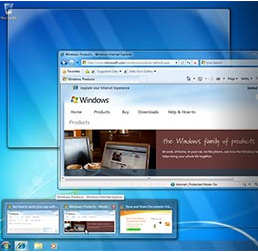 Adding back the deferred revenue, the company says, revenue totaled $14.39 billion, a 4% year-over-year decline, and EPS totaled $0.52 per share, an increase of 8% over the same period of the prior year.
"We are very pleased with our performance this quarter and particularly by the strong consumer demand for Windows," said CFO Chris Liddell. "We also maintained our cost discipline, which allowed us to drive strong earnings performance despite continued tough overall economic conditions."
The company will be looking for a much stronger report next time as the company just released Windows 7 to the public and its first retail store both this week, among other products.
"The worldwide launches of Windows 7, Exchange Server 2010 and Windows Server 2008 R2 are exciting milestones for Microsoft, our partners and customers," said Kevin Turner, chief operating officer at Microsoft. "We are pleased by the early positive response we are receiving for these products."
Time will tell how Windows 7, the store, and the rest really fares for the company (and Bing for that matter). The company appears quite optimistic.
-
Monster Energy Drink Backs Down Due To Public Pressure; Vermonster Beer Lives On
You may recall that we recently wrote about the effort by Hansen’s drink company to stop a small Vermont brewery from offering Vermonster Beer, claiming that it infringed on the trademark they held for Monster Energy Drink (because any moron would confuse beer with an energy drink). That situation got a ton of publicity (all of it negative towards Monster Energy Drink and Hansens), and Brendan alerts us to the news that it looks like Hansen’s has backed down. And the guy behind the Rock Art Brewery (maker of Vermonster) has put up an open letter with the timeline of events (pdf) — thanking everyone for creating the public pressure that got Hansens to back down.
Of course, it looks like Hansens only backed down in this one instance. Yet, as we noted, Hansens appears to have contracted with notorious abuser of the trademark system, Continental Enterprises, who likes to send cease-and-desist letters to anyone even mentioning a trademark name. Just recently, beyond the whole Vermonster situation, Hanses — via CE — has gone after a beverage review site (which had a negative review of Monster Energy Drink) and an actor who was a movie monster.
Will Hansens call off Continental Enterprises from its abusive practices?
It’s great that public pressure got the company to back down on Vermonster beer, but those other situations didn’t get nearly as much attention.
Matt Nadeau, from the Rock Art Brewery is asking how we can continue to use the community that came together to help him to do more to protect other small businesses from the same thing. As a starting point, why not point them to these other abuses by Hansens and CE and get Hansens to back down? After that, it would be great to get people to recognize that we need serious trademark law reform that brings trademark law back to its intended purpose: acting as a consumer protection technique against appropriation and confusion, rather than what many believe it’s become: a property right and a monopoly.
Permalink | Comments | Email This Story
-
Kindle is coming to the Mac and the BlackBerry

Just so you don’t, you know, leave your place of work today without this bit of news: Kindle is making an app for Macs and Blackberries. This news follows the announcement for a yet-unreleased PC version announced yesterday.No expected release date. It’s just being worked on. And now you know. And knowing is half the battle.
-
Cable joins the war in Marvel Ultimate Alliance 2
This one goes out to queenanthai following us on Twitter. It was last month when he/she asked if Cable was in Marvel Ultimate Alliance 2 (PS3, PSP, PS…
-
Verizon To Launch BlackBerry Storm2 on October 28th, Priced at $179.99?
Verizon has yet to officially announce the BlackBerry Storm2, although we know it’s coming soon, possibly even next week. EngadgetMobile received what appears to be an internal document stating the BlackBerry Storm2 will be available in all channels on Wednesday, October 28th. Yes, this Wednesday. It won’t have the fanfare of the first Storm, but we’re eager to see the improvements made in the Storm2.

The document also reveals pricing. When available, the Storm2 will retail for $179.99, with a 2-year commitment.
Very odd timing on the part of Verizon. The company has a Droid event planned for October 28th, with that release looking more and more like November 9th.
[via EngadgetMobile]


