Author: Serkadis
-
Ronald Reagan UCLA Medical Center receives award for excellence in heart care
Ronald Reagan UCLA Medical Center has been honored by the American College of Cardiology and the American Heart Association for its commitment to and success in implementing a higher standard of care for heart attack patients.The medical center was one of only 121 hospitals nationwide to be recognized for achieving the aggressive goal of treating acute myocardial infarction patients with high compliance to levels of care outlined by these two leading national organizations dedicated to promoting quality cardiovascular care and reducing mortality from heart disease.The honor, known as the American College of Cardiology Foundation’s NCDR ACTION Registry–GWTG Gold Performance Achievement Award, was created through the merger of the American College of Cardiology Foundation’s registry and the American Heart Association’s Get With the Guidelines–Coronary Artery Disease program.“The time is right for us to be focused on improving the quality of cardiovascular care,” said Dr. Gregg C. Fonarow, director of the Ahmanson–UCLA Cardiomyopathy Center at Ronald Reagan UCLA Medical Center. “The number of acute myocardial infarction patients eligible for treatment is expected to grow over the next decade due to increasing incidence of heart disease and a large aging population.”To receive the award, the hospital consistently followed the treatment guidelines in the ACTION Registry–GWTG for 24 consecutive months. These included aggressive in-hospital use of medications like cholesterol-lowering drugs, beta-blockers, ACE inhibitors, aspirin and anticoagulants.“We are dedicated to providing the highest level of care for our patients, including coronary care after a heart attack,” said Dr. J. Thomas Rosenthal, chief medical officer and associate vice chancellor of the UCLA Health System. “We are pleased to receive this prestigious recognition.”“The American College of Cardiology Foundation and the American Heart Association commend the Ronald Reagan UCLA Medical Center for its success in implementing standards of care and protocols,” said ACTION Registry–GWTG steering committee chair Dr. Christopher Cannon, an associate professor of medicine at Harvard Medical School and an associate physician in the cardiovascular division of Brigham and Women’s Hospital in Boston.Fonarow, who is vice chair of the ACTION Registry–GWTG steering committee, noted that the full implementation of guideline-recommended acute and secondary prevention therapy is a critical step in saving the lives and improving outcomes of heart attack patients.The merger of the ACTION Registry and the Get With the Guidelines–Coronary Artery Disease program combines the best of both in a single, unified national registry, bringing together the robust data collection and quality reporting features of the registry with the collaborative models, unique tools and quality improvement techniques of the GWTG program.With the collective strengths of these two programs, the ACTION Registry–GWTG empowers health-care provider teams to consistently treat heart attack patients according to the most current science-based guidelines and establishes a national standard for understanding and improving the quality, safety and outcomes of care provided for patients with coronary artery disease, specifically high-risk STEMI and NSTEMI myocardial infarction patients.The UCLA Health System has been a leader in patient care, medical research and teaching for more than 50 years. Today, our physicians provide an array of cutting-edge and research-based primary and specialty services in four hospitals on two campuses, and in numerous outpatient clinic locations. Composed of the UCLA Hospital System and the UCLA Medical Group and its affiliates, the UCLA Health System has provided the best in health care and the most advanced treatment options to the people of Southern California, the U.S. and the world. UCLA’s preeminence in health care — a strength that comes from the union of research, teaching and excellence in patient care — continues to be recognized nationally and internationally. The clinical programs of Ronald Reagan UCLA Medical Center, Santa Monica–UCLA Medical Center and Orthopaedic Hospital, the Resnick Neuropsychiatric Hospital at UCLA, and Mattel Children’s Hospital UCLA constitute a system of hospital care that has been ranked among the best in the nation. UCLA physicians and hospitals continue to be world leaders in the full range of care, from maintaining the health of families to the diagnosis and treatment of complex illnesses.For more news, visit the UCLA Newsroom or follow us on Twitter. -
Feelings of stigmatization may discourage HIV patients from proper care, study finds
The feeling of stigmatization that people living with HIV often experience doesn’t only exact a psychological toll — new UCLA research suggests it can also lead to quantifiably negative health outcomes.In a study published in the October issue of the Journal of General Internal Medicine, researchers from the division of general internal medicine and health services research at the David Geffen School of Medicine at UCLA found that a large number of HIV-positive individuals who reported feeling stigmatized also reported poor access to care or suboptimal adherence to antiretroviral therapy (ART).In fact, individuals who experienced high levels of internalized stigma were four times as likely as those who didn’t to report poor access to medical care; they were three times as likely to report suboptimal adherence to HIV medications.These findings were due, at least in part, to the poor mental health found among many of the participants. Researchers found that HIV stigma was one of the strongest predictors of poor access to medical care and that both HIV stigma and poor mental health predicted suboptimal adherence to medication. Adherence to HIV medications is already known to lead to better health outcomes, including survival, among people living with HIV.“We were surprised to find that in our models, experiencing high levels of internalized HIV stigma was one of the strongest predictors of poor access to medical care, even after controlling for sociodemographics such as gender, race and ethnicity, income, insurance status, and clinical variables such as T-cell count and years since HIV diagnosis,” said the study’s lead investigator, Dr. Jennifer Sayles, an assistant professor of medicine at the David Geffen School of Medicine at UCLA and medical director of the Los Angeles County Department of Public Health’s Office of AIDS Programs and Policy.The study — one of the first to quantify how internalized feelings of stigmatization among people living with HIV negatively influence health outcomes — is available online at www.springerlink.com/content/71h5331844161x75/fulltext.pdf.The findings demonstrate the urgent need for more community dialogue, education and awareness about HIV and the stigma that surrounds the disease, according to Sayles.“It also highlights the need to address some of the social and contextual aspects of HIV for those living with the disease and to develop interventions that reduce internalized HIV stigma as a barrier to care and treatment,” Sayles said.The two-year study focused on 202 HIV-positive men and women in Los Angeles County, many of them minorities and many with limited incomes and limited education. Study participants completed anonymous surveys assessing internalized HIV stigma, self-reported access to medical care, their regular source of HIV care and ART adherence.Overall, one-third of the participants reported experiencing high levels of stigma, and, on average, participants described experiencing or perceiving stigma slightly less frequently than “some of the time.” Additionally, 77 percent of participants said they had poor access to care, 42.5 percent reported suboptimal adherence to ART and 10.5 percent reported having no regular source of HIV care.The researchers point to some limitations in the study. They could not establish causality between internalized HIV stigma and negative outcomes — only a strong association between them. Also, the study did not directly measure social inequality, social support, self-efficacy and other similar covariates that may be related to HIV stigma. The study may also have missed people who do not access care or HIV services at all, given that study participants were recruited from community organizations providing outreach and social services to people living with HIV and from HIV clinical care sites. Finally, non-English speakers such as Latinos and Asian Americans were underrepresented in the sample.Study co-authors include Mitchell D. Wong, Janni J. Kinsler and William Cunningham, all of UCLA, and David Martins of Charles R. Drew University of Medicine and Science.Grants from the American Foundation for AIDS Research, the California HIV Research Program Network for AIDS Research in Los Angeles, the National Institute of Mental Health, the National Center on Minority Health and Health Disparities, and the National Institute on Aging supported this research.The General Internal Medicine and Health Services Research Division in the department of medicine at the David Geffen School of Medicine at UCLA provides a unique interactive environment for collaborative efforts between health services researchers and clinical experts with experience in evidence-based work. The division’s 100-plus clinicians and researchers are engaged in a wide variety of projects that examine issues related to access to care, quality of care, health measurement, physician education, clinical ethics and doctor-patient communication. Researchers in the division have close working relationships with economists, statisticians, social scientists and other specialists throughout UCLA and frequently collaborate with their counterparts at the RAND Corp. and the Charles Drew University of Medicine and Science.For more news, visit the UCLA Newsroom or follow us on Twitter. -
Judge Keeps Gag Order In Place On ISP Boss Over Feds Demand For Info On Customer
The government has the ability to issue “national security letters” that let them demand information without a court warrant and at the same time gag those who are forced to reveal the info. Given such power, it’s no surprise that the Justice Department abused it widely and conveniently forgot to report many of the uses when some oversight was attempted. The whole setup of NSLs seems highly questionable. What’s wrong with actually getting a warrant? Adding a gag order to it is especially troubling — so it was great to see an anonymous ISP owner pushback on such a use of NSLs. Last year, an appeals court limited when such NSLs could be used, tightening the standard. However, the lower court has said that, even with these tighter restrictions, the government’s use of NSLs against this ISP was proper. Of course, it’s difficult to determine if this actually makes sense, because the gov’t revealed secret info to the judge that even those on the other side of the case were unable to see. The problem, obviously, is that there’s simply no way to know if this is legit or not — but any opportunity you give the government to say “just trust us” on being able to get otherwise private info with no oversight seems like an area ripe for abuse.
Permalink | Comments | Email This Story
-
Apparently Even VCs Get Confused Over Ratio Ownership Compared To Total Value
Venture capitalist Fred Wilson recently had a great post where he calls out a bunch of his colleagues in the venture capital business (not by name) for insisting on owning a certain percentage of a company in order to invest. Fred notes, correctly, that it’s not the percentage that matters, but the actual value (and the appreciation of it) of the equity that one holds. In simplest terms: owning 10% of a $1 billion company is always going to be a hell of a lot better than owning 40% of a $1 million company.
But, what I find amusing — and what Wilson doesn’t mention — is that this very argument is quite commonly presented to entrepreneurs from VCs. That is, when an entrepreneur frets about giving up a portion of his or her company, a VC will often make the point that “with our investment, we can take your company’s valuation way up — so even if you own a smaller percentage, your absolute value will increase.” And it’s a true argument (if the value increase happens). And, in many cases, it’s the very same VCs who will use a line like this that then insist on owning a certain percentage. It makes you wonder if they believe what they’re saying themselves, or if they’re just using all of it as a negotiating tactic to take a larger cut of the deal.
Permalink | Comments | Email This Story
-
Mega Man Drum Kit = Awesome
What are you doing reading the text?! Look at the picture! It’s a frakkin’ Mega Man drum kit! Those rings light up and everything!
This thing is almost as cool as those Star Wars guitars back in 2002.
[VIDEO]
-
What Twitterers Want: News
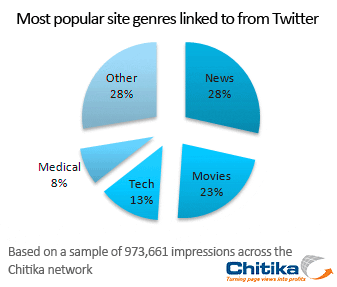
Twitter can be a lot of things for a lot of different people. However, according to online ad network Chitika, more of them want news than anything else. Chitika released results from a study of its users, looking at what Twitter users want.
Chitika categorized the sites that get the most links from Twitter. Here’s how it shakes out by genre according to the ad network:

"Given Twitter’s unique ability to bring information instantly to large numbers of people, it’s not surprising that news leads the way," says Chitika. "From being the first to publish pictures of a Turkish Airlines plane crash to the social network’s breaking of US Airways Flight 1549’s dramatic crash into the Hudson River earlier this year, Twitter’s instantaneous and collaborative nature has made it out to be the bleeding edge of all news."
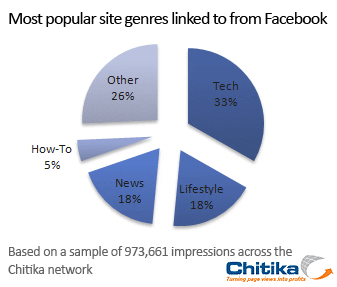
"Compare Twitter’s results, though, with older, more established social network Facebook, and the value and perception of Twitter’s speed become more obvious," the network adds. "While news sites do receive a good deal of Facebook’s referrals, they lag behind tech and lifestyle sites – tech sites dominate Facebook’s traffic with over 33% of the network’s referrals going there."
Here’s how Chitika’s numbers for Facebook traffic look:
On a semi-related note, a new real-time news discovery site called Thoora just launched. Thoora was a finalist of the TechCrunch50, and describes itself as a way to help people discover news attracting the most attention within social and traditional media by exploring the entire blogosphere, Twitter, and thousands of traditional media sources. Twitterers who are after the news may find such a service useful.
-
Steamboat Leads Sometrics Round
Sometrics, a Los Angeles-based moetization platofrm for online game developers, has raised an undisclosed amount of Series B funding. Steamboat Ventures led the round, and was joined by return backers Greycroft Partners and the Mail Room Fund.
PRESS RELEASE
Sometrics (http://www.sometrics.com) today announced the closing of a Series B round of financing led by Steamboat Ventures (http://www.steamboatvc.com). Concurrent with the investment, Beau Laskey, a managing director at Steamboat Ventures, has joined Sometrics’ Board of Directors. Original investors, including the Mail Room Fund (http://www.mailroomfund.com) and Greycroft Partners (http://www.greycroftpartners.com), also participated in the round.
“Sometrics’ market-leading monetization platform is transforming the way consumers use virtual currency and opening new doors for online publishers and developers to increase their revenue through the virtual economy,” said Laskey. “Sometrics has experienced significant growth over the past year and is well positioned to capitalize on the tremendous market opportunities that are being created through the popularity of social gaming. We look forward to working with the management team to help the company fulfill its potential.”
“We gain a wealth of expertise and opportunities through this partnership with Steamboat Ventures,” said Ian Swanson, Sometrics co-founder and CEO. “Our solutions for optimizing virtual currency have been embraced by a range of companies that specialize in social gaming, free-to-play MMOs, virtual worlds and casual gaming. This latest infusion of resources will help us continue to expand the ways we can help our clients maximize revenue and customer engagement.”
The new funds will enable the company to grow its market presence through strategic hires and by boosting its investment in marketing.
Social gaming is the fastest growing segment of the video game market. Worldwide sales of virtual goods within games and virtual worlds are expected to exceed $2.2 billion this year, according to research firm Piper Jaffray. Sometrics’ innovative technology enables publishers, developers and advertisers to more effectively analyze user data and better target their audience, and provides consumers with a trusted solution to manage their virtual currency across a number of gaming platforms.
Sometrics launched the industry’s first virtual currency platform last December, to help publishers manage all virtual currency monetization from multiple offer providers. Today, the company’s Offer Solution and Payment Manager have a global reach with more than 4,000 ads across the network.
Using Sometrics’ solutions, game developers and publishers are able to see what’s going on across all offers and networks, see which audience demographics are responding to which offers, and direct traffic accordingly to optimize conversions and increase revenue.
On average, Sometrics partners have seen a 15 percent lift through optimizing third-party virtual currency offer providers and ad networks. The Sometrics solutions have achieved an average eCPM of more than $700.
For product demos, contact Jennifer or Mickey at [email protected].
About Sometrics
Sometrics (www.sometrics.com) pioneered social intelligence – combining deep, relevant social analytics with precision-targeted ad serving capabilities to help developers and brands monetize the social web. The company has adapted its advanced targeting and optimization expertise to give online game developers the first-ever full-service offer and payment management solution. Sometrics provides one place to manage everything – all the ads, all the offers, and all the offer networks – coupled with powerful analytics capabilities that help publishers/developers analyze all activity, down to detailed demographics. Sometrics is the first recipient of capital from The Mail Room Fund, an investment consortium that combines big Hollywood (the William Morris Talent Agency) with Silicon Valley (Accel and Venrock). Its first funding round also included AT&T and Greycroft Partners. Sometrics is based in Los Angeles.
About Steamboat Ventures
With offices in Los Angeles, Shanghai and Hong Kong, Steamboat Ventures is a global venture capital fund that invests in digital media, consumer and technology companies in the U.S. and Asia. Steamboat Ventures pursues a distinctive investment strategy, cultivating investment opportunities that are simultaneously financially promising and also possess the potential to have significant strategic interest to The Walt Disney Company. Founded in 2000, Steamboat Ventures has invested in a range of leading digital media and consumer technology companies, including: Fastclick (acquired by VCLK), Iridigm Display Corporation (acquired by QCOM), Pure Digital Technologies (acquired by CSCO), Quigo Technologies (acquired by TWX), Move Networks, Netmovie, and UUSee. For more information, please visit www.steamboatvc.com.
-
Pegasus Tower Completes Asset Sale
Pegasus Tower Development Co., a portfolio company of Primus Capital, has sold ten multi-tenant wireless communications towers. No financial terms were disclosed.
PRESS RELEASE
Pegasus Tower Development Company, LLC (”Pegasus”), a Primus Capital Fund V portfolio company, has completed the sale of ten multi-tenant wireless communications towers. The sale was part of the initial investment strategy of building a portfolio of towers and generating liquidity through the sale of all or portions of the towers based on their successful lease up, free cash flow generation, and purchase multiples available in the market. Primus co-led a $35 million growth financing in April 2006.Pegasus develops, acquires, and manages wireless communications towers across the nation. Pegasus continues to pursue new tower sites that have attractive economics and strong lease-up potential. The company currently has a portfolio of over 150 towers constructed or under development.
About Primus
Founded in 1983, Primus invests in established middle-market companies in the business services, healthcare and education industries. Primus partners with experienced management teams to accelerate growth and improve the operating performance of the companies in which it invests. The types of transactions pursued include buyouts, control and minority recapitalizations, and expansion financings. More information about Primus can be found at www.primuscapital.com
-
Flexion Therapeutics Raises $33 Million
Flexion Therapeutics, a Woburn, Mass.-based drug development startup, has raised $33 million in Series A funding. Versant Ventures led the round, and was joined by 5AM Ventures and Sofinnova Ventures. Flexion was formed in 2007 by Chorus co-founders Mike Clayman and Neil Bodick.PRESS RELEASE
Flexion Therapeutics today announced the successful completion of a Series A financing round totaling $33 million. The funds will be used to advance a number of promising drug candidates through clinically meaningful proof of concept and beyond.
The financing was led by Versant Ventures and included founding investors 5AM Ventures and Sofinnova Partners.
“We’re delighted to have raised significant funds from top-tier investors, especially in this very tough financial climate,” said Mike Clayman, Chief Executive Officer of Flexion Therapeutics.
Brad Bolzon, Managing Director at Versant Ventures added: “The clinical team at Flexion has developed a unique capability to assess the potential of a given drug candidate as efficiently as possible. We look forward to applying this approach toward building a strong product portfolio and a valuable company.”
“We have been overwhelmed by the response from the pharmaceutical industry, which very much wants to partner with the proven team at Flexion,” commented Andrew Schwab, founder and Managing Partner at 5AM Ventures.
“It normally takes about four years and up to $40 million to reach clinical proof of concept,” continued Rafaèle Tordjman, Partner with Sofinnova Partners. “Flexion can reach that all important milestone in about half the time and an eighth of the cost. That is an outstanding achievement and a paradigm shift in terms of productivity for the pharmaceutical industry.”
The Flexion team has evolved the model it first established at Chorus in 2002 to meet the demands of a new environment for drug development. Its strategy includes the advancement of high-value specialty products to market.
The team has taken multiple drugs through Phase 3 to market, including seven global submissions for Lilly. Flexion soon expects to announce deals with three major pharmaceutical companies.
Veteran venture capitalist Sam Colella of Versant Ventures and entrepreneur Pat Mahaffy, Chief Executive Officer of Clovis Oncology, recently joined Flexion’s board of directors.
About Flexion Therapeutics
Flexion Therapeutics advances drug candidates through clinically meaningful proof of concept and beyond. The company was established in 2007 by Mike Clayman and Neil Bodick, the founders of Chorus, Lilly’s in-house proof-of-concept drug unit, which demonstrated a level of productivity far greater than the industry standard.
By providing expertise and risk-sharing, Flexion effectively expands the development capabilities of its partners. For more information, please visit www.flexiontherapeutics.com
About Versant Ventures
Versant Ventures is a leading healthcare-focused venture capital firm specializing in early-stage investment in medical devices, biotechnology and pharmaceuticals, healthcare services and healthcare information technology. The firm, founded in 1999, consists of a seasoned team of twelve managing directors with more than 130 years of venture capital investing experience and more than 150 years of operating experience.
Versant Ventures currently manages in excess of $1.6 billion in committed capital and a portfolio of over 75 companies. For more information, see www.versantventures.com
About 5AM
5AM Ventures is an early-stage venture capital firm focused on building next-generation life science companies. Founded in 2002, 5AM Ventures has over $390 million under management and is actively investing its third fund, 5AM Ventures III. The firm has offices in Menlo Park, CA and Waltham, MA. For more information, visit www.5amventures.com
About Sofinnova Partners
Sofinnova Partners is an independent venture capital firm based in Paris, investing in early-stage companies, corporate spin-offs and turnaround situations in the technology and life sciences spaces, including cleantech. Sofinnova has financed 460 companies in Europe since 1972. Of those, over 20% have gone public, over 20% have been acquired and, on average, revenues have multiplied eight times between financing and exit. For more information, go to www.sofinnova.fr
-
Qosmio G60: Toshiba unleashes new super-laptop

Toshiba Japan has announced a slew of new and updated notebooks today, and one of them [JP] is a monster of a notebook (more will be posted later). The Qosmio G60/97J is basically a high-end computer, digital TV and Blu-ray player rolled into one.
The notebook is powered by a Core 2 Duo P8700 processor (2.53GHz) and has 4GB of RAM, a 500GB HDD, GeForce GT230M, Ethernet, IEEE 802.11n Wi-Fi, Ethernet, an HDMI port, and Windows 7 on board.

It also features a 18.4-inch full HD LCD screen, not one but two TV tuners (so that you can record a TV program while watching another), a Blu-ray drive, harman/kardon speakers and Toshiba’s self-developed SpursEngine processor (which is supposed to boost the quality of video recordings). Toshiba also throws in a remote control.
The Qosmio G60/97J weighs 5kg and is sized at 442.6×294.2×41.5mm. It will hit Japanese stores at the end of next month for $3,200. A trimmed down version, the GX/G8K, with weaker resolution (1,680×945), a 400GB HDD and no TV tuners or SpursEngine processor, will be available for $800 less.
No word yet from Toshiba concerning a possible worldwide release.
-
Sonos s5: Mo’ money, mo’ powerful wireless speakers

If you’re familiar with the Sonos system, then there isn’t too much news here. In fact, there’s not too much news even if you don’t know what Sonos does. Let me break it down for you: the Sonos system is a nice, comprehensive wireless music system for your house that you can control via your iPhone. If you haven’t heard of it before and you’re wondering how to get your music collection to various rooms in your house, check out the demo.The rest of you, think on your current Sonos speakers: are they good enough? No? Well, these ones are better. The focus groups they’ve been running must have gone something like “No, everything’s great, actually. I guess we could use a bit more power.” And that is how the Sonos S5 was born. Stereo tweeters and mid-range drivers, plus a sub in each unit.
Trouble is, these fancy magic speakers cost $400 each. Zounds! Of course, some would say they’re worth it. Personally, I just turn up my speakers loud enough that I can hear them in the shower or while cooking, but that’s not really the most sophisticated solution (though I must say it is elegant).
-
Will ‘Paranormal Activity’ Teach The Movie Industry A Lesson?
I have to admit I don’t usually like scary movies, and I didn’t like the Blair Witch Project at all. But I can’t help but be impressed that the Blair Witch movie cost just $60,000 and pulled in a cool $140 million back in 1999. That kind of return makes me wonder why more movies aren’t filmed on really small budgets. So it’s somewhat surprising to see that it took about a decade for another Blair Witch-like film to get promoted by a major studio… and that a perfect candidate was almost missed. The movie Paranormal Activity was apparently filmed for just $11,000 over 7 days, and it was bought by DreamWorks/Paramount — which originally planned to shelve the low-budget flick and re-make it with bigger stars and a much higher budget.
Goodman also admitted that DreamWorks, formerly a leg of Paramount co-headed by Steven Spielberg, had swooped in and pocketed ‘Paranormal Activity’ with every intention of leaving it on the shelf and remaking it with a big budget and marquee stars. Then they wised up.
They wised up indeed, and they also started promoting this movie in an interesting way, too — by getting potential fans to demand it be shown in their neighborhoods and nationwide. Paramount promised to distribute the movie nationwide if a million requests for the movie were logged via Eventful. And it looks like they’ve already reached that goal.
As I said, I didn’t like Blair Witch very much, and I’m not exactly looking forward to this movie, either. But from a pure business angle, it seems a bit shocking that movie studios wouldn’t be trying to find/create more low-budget films that would appeal to moviegoers. Promoting the distribution of films in a way that actually target fans is a smart move, too. So with this example, there are about a million customers (or at least thousands, if you don’t believe the Eventful numbers) willing to pay to see this movie that was made for (much) less than a $1 per fan — and the movie studio’s first gut-instinct was to try to re-make the film and drive their own costs up? It’s a strange industry where insiders are always asking “how can we make a $200 million movie?” rather than how can they make good, but profitable movies, no matter what the cost. The industry seems so focused on what movies cost, that it so rarely seems to consider spending money more intelligently. Creating quality works for less, and targeting your best customers is a plan that’s foreign to Hollywood, but perhaps it’s about time they start exploring that plotline.
Permalink | Comments | Email This Story
-
Sixty million years of evolution says vitamin D may save your life from swine flu
(NaturalNews) People still don’t get it: Vitamin D is the “miracle nutrient” that activates your immune system to defend you against invading microorganisms — including seasonal flu and swine flu. Two months ago, an important study was published by researchers at Oregon State University. This study reveals something startling: Vitamin D is so crucial to the functioning of your immune system that the ability of vitamin D to boost immune function and destroy invading microorganisms has been conserved in the genome for over 60 million years of evolution.
As this press release from Oregon State University (http://www.eurekalert.org/pub_releases/2009-08/osu-kfo081809.php) explains:
The fact that this vitamin-D mediated immune response has been retained through millions of years of evolutionary selection, and is still found in species ranging from squirrel monkeys to baboons and humans, suggests that it must be critical to their survival, researchers say.
“The existence and importance of this part of our immune response makes it clear that humans and other primates need to maintain sufficient levels of vitamin D,” said Adrian Gombart, an associate professor of biochemistry and a principal investigator with the Linus Pauling Institute at Oregon State University.
The announcement goes on to explain:
In primates, this action of “turning on” an optimal response to microbial attack only works properly in the presence of adequate vitamin D, which is actually a type of hormone that circulates in the blood and signals to cells through a receptor. Vitamin D is produced in large amounts as a result of sun exposure, and is available in much smaller amounts from dietary sources.
Vitamin D prevents the “adaptive” immune response from over-reacting and reduces inflammation, and appears to suppress the immune response. However, the function of the new genetic element this research explored allows vitamin D to boost the innate immune response by turning on an antimicrobial protein. The overall effect may help to prevent the immune system from overreacting.
Without vitamin D, you’re a sitting duck
What this study reveals is that without sufficient levels of vitamin D circulating in your blood, you’re a ripe, juicy target for influenza (H1N1 or otherwise). If you lack vitamin D, your immune system can’t “activate” to do its job. That’s why people who are deficient in vitamin D so frequently get winter colds.But people who are high in vitamin D have the nutritional power to activate their immune system so that it can respond to invading pathogens. Crucially, vitamin D also manages to balance immune response and prevent inflammation — the leading cause of death in the 1918 influenza pandemic.
So not only does vitamin D protect you from the initial infection; it also prevents your body from over-reacting and killing you with inflammation (which typically gets expressed as bacterial pneumonia, an infection of the lungs).
Smart people today are doing two things:
1) Saying NO to vaccines.
2) Saying YES to vitamin D.If you take vitamin D, you don’t need a vaccine!
Sources for vitamin D
Where can you get vitamin D? There’s some vitamin D naturally present in fish oils and marine omega-3 oils, but the two most abundant sources are:1) Sunlight
2) Vitamin D supplementsYou can get sunlight for free by exposing your skin to the sun. You can get vitamin D supplements at www.Vitacost.com or just about any vitamin retailer (local or online).
Vitamin D is easy to get. Your body actually manufactures it when you’re exposed to the sun.
Why no vitamin D advice?
The research supporting vitamin D’s ability to halt influenza is overwhelming. And yet the vaccine industry (and the doctors who push vaccines) don’t want you to know about vitamin D. Why is that?It’s because if people knew the truth about vitamin D, the vaccine industry would collapse. Who needs a vaccine if you’re got a powered-up immune system to do the job automatically? Plus, your immune system is natural, while vaccines are completely unnatural injections of toxic chemicals that are increasingly being linked to not just autism, but seizures, brain damage and death.
Why risk a vaccine when vitamin D is so remarkably safe?
You’ll need at least 4000 IU a day just to prevent deficiency, according to many nutrition experts. Some people I know take 8000 IU a day. I personally don’t take any vitamin D but I get at least 30 minutes of sunlight every day near the equator (which is a unique geographical situation, I understand, that not everybody can replicate).
Our national “health” officials (if you can call them that) are making a crucial mistake with the swine flu. Instead of ordering more vaccines, they should be recommending vitamin D supplements to the population. For less than the cost of the vaccines, we could provide vitamin D supplementation to every man, woman and child in America. We would not only end the swine flu pandemic, we would also see cancer rates plummet!
Perhaps that’s why our health authorities don’t dare recommend vitamin D — the financial impact on the cancer industry would just be too great. The vaccine makers would lose billions, and the cancer industry could lose tens of billions. Diabetes rates would fall, depression would fade away in many people, kidney function would improve and a long list of other diseases would be prevented or reversed following adequate vitamin D intake.
Vitamin D is the answer to our national health care problems. Just one nutrient, if distributed freely to everyone, could probably slash our national health care costs by one-third within five years, I believe.
And yet they dare not mention it. “It’s not approved by the FDA,” they say. So the CDC won’t mention it. The WHO won’t recommend it. The FDA pretends it doesn’t exist, and the doctors aren’t allowed to prescribe it.
Here it is — vitamin D — the great CURE for influenza. It’s here right now. It’s cheap, it’s safe, and it’s available. Yet it’s being utterly ignored.
Let me go on the record to state the obvious: There is an agenda under way to keep the American people deficient in vitamin D and ignorant about its healing properties. This is a conscious, planned scheme that seeks to keep the people disinformed while pumping them full of vaccines, chemotherapy and prescription drugs instead of teaching them the simple nutritional cures that exist right now.
Mark my words: With the swine flu or any future pandemic, the populations suffering the highest death rates will be those with the highest rates of vitamin D deficiency. And the vaccine? It offers no protection compared to the power of the vitamin D.
The laws of biochemistry cannot be suspended by FDA bureaucrats
To any doctor or health authority who scoffs at the notion of vitamin D being far more useful than vaccines, ask them this question: If vitamin D has no purpose in human health, then why have the immune system genes that are specifically activated by vitamin D persisted in the genome (which is now the human genome) for more than sixty million years?Why is the human immune system programmed to use vitamin D to activate itself?
Why does human skin generate vitamin D in response to sun exposure?
To hear mind-numbed doctors answer it, this is all just coincidence! There is no specific reason that vitamin D genes exist at all!
But it gets even more bizarre: According to the FDA, vitamin D has no beneficial biological effects in the human body! It’s true: The FDA says that any substance that has a beneficial (therapeutic) effect in the human body must be a DRUG, not a nutrient. And vitamin D has never been approved as a drug. Therefore, it is inert.
Do you follow that? Vitamin D has no benefit to the human body because the FDA says so. How’s that for bureaucratic arrogance? It’s like saying gravity doesn’t apply in our world because we haven’t yet “approved” the laws of physics. But one step off a high ledge reveals, indeed, that the laws of gravity are still in effect, and so are the laws of biochemistry.
You need vitamin D, not a vaccine
Your body doesn’t need a vaccine to combat the swine flu (or seasonal flu, for that matter). What it needs is vitamin D, restful sleep, adequate hydration with clean water, and good nutrition. These things make the vaccine obsolete.They’re safe, affordable, natural and readily available. You don’t have to wait in line to get vitamin D, and you don’t need a doctor’s prescription. There’s no needle involved, and there’s no risk of you suffering a seizure or permanent brain damage, either.
With sufficient levels of vitamin D in your blood, your immune system will do its job to protect you from swine flu, bird flu, human flu or even the pandemic infectious nonsense being spread around by the CDC, FDA and WHO. Your immune system has all the technology it needs right now to keep you alive from almost any widely-circulating microorganism… as long as it has the biochemical tools (like vitamin D) to “activate” its adaptive response.
Do you realize that without a functioning immune system, you would have been killed by microorganisms a thousand times over by now? Your immune system saves your life every day, quietly, behind the scenes. It is the reason you’re breathing right now as you read this article. Receiving a vaccine injection is the ultimate insult to your own body because it admits that you have no faith in the very same immune system that has already saved your life countless times.
Don’t put your faith in chemical injections. Believe in your immune system — and give it the nutritional tools it needs to keep on saving your life.
Additional resources for this story include:
http://www.eurekalert.org/pub_releases/2009-08/osu-kfo081809.php -
Proton pump inhibitor linked to pneumonia deaths in hospitalized patients
(NaturalNews) Proton pump inhibitors (PPIs, for short) have become hugely successful money makers for Big Pharma over the past decade, with sales of these stomach-acid reducers adding up to about $25.6 billion last year alone. The drugs (like Prilosec, Nexium, Prevacid and Aciphex) are sold both in prescription strength and over-the-counter to treat heartburn and gastroesophageal reflux disease (GERD). As NaturalNews has previously reported, PPIs are not the safe and innocuous medications most physicians claim them to be and are increasingly linked to a host of side effects. Now comes word that one type of PPI in particular, pantoprazole (marketed under the name Protonix) has a particularly bad downside — causing potentially fatal pneumonia people who are already seriously ill and hospitalized.
Seriously ill patients are frequently given PPIs to supposedly prevent them from developing stress ulcers. In a new study just published in the journal CHEST, researchers at Wake Forest University School of Medicine compared treatment with pantoprazole (which has become the favorite drug of its kind in many hospitals because it is more powerful than other drugs in its class) to another PPI, ranitidine (sold under the name Zantac).
“We conducted this study, in part, because we thought we were seeing more pneumonias than we were used to having,” study co-author Dr. Marc G. Reichert, pharmacy coordinator for surgery at Wake Forest University Baptist Medical Center, said in a statement to the press. The researchers wanted to see if there was a connection between the PPIs and the increasing pneumonia rate.
In fact, the results showed a significant linkage. Both PPI drugs decreased stomach acid but when the scientists analyzed the charts of 834 patients, they found that hospitalized cardiothoracic surgery patients treated with pantoprazole were three times more likely to develop pneumonia.
This is a critically important finding because hospital-acquired pneumonia increases hospital stays by an average of seven to nine days, greatly increases medical costs and ups the risk of other complications. But the most important point is that this kind of pneumonia is a killer.
“As best we can tell, patients who develop hospital-acquired pneumonia or ventilator-acquired pneumonia have about a 20 to 30 percent chance of dying from that pneumonia. It is a significant event,” senior study author Dr. David L. Bowton, professor and head of the Section on Critical Care in the Wake Forest Department of Anesthesiology, said in the media statement.
So why would a PPI cause someone to develop pneumonia in the hospital? The researchers point out that acid-reducing drugs turn the stomach into a more hospitable environment for disease-causing bacteria to colonize. And when hospital patients are placed on breathing machines, stomach secretions containing these bacteria can regurgitate into their lungs, resulting in life-threatening pneumonia.
Currently, doctors and nurses are advised to raise the heads of patients’ beds when they are on breathing machines so that refluxed stomach secretions are less likely to get into the lungs. However, the Chest study suggests another way to keep critically sick patients from coming down with possibly fatal ventilator-associated pneumonia: don’t give PPIs to them at all.
In the media statement, Dr. Bowton explained that the incidence of stress ulcer bleeding has gone down in recent years. This most likely is a result of hospitalized patients on breathing tubes being fed earlier after surgery than in years past — having food in their stomachs most likely neutralizes or reduces the effects of stomach acid naturally, without the use of drugs.
When doctors insist on putting patients on PPIs, the researchers said using an acid reducer other than the super strong pantoprazole is best in order to decrease the risk of developing pneumonia. But the bottom line is patients should not be on these drugs or, if they are, should be taken off PPIs as soon as they are off the breathing machine and eating. “Stopping the drugs earlier appears to be the best thing for patients,” Dr. Reichert said.
In addition to putting hospitalized patients at increased risk for pneumonia, researchers have found PPIs may cause health problems ranging from dizziness and osteoporosis (http://www.naturalnews.com/025369_drugs_medication_osteoporosis.html) to an increased risk of heart attacks and even worse GERD symptoms (http://www.naturalnews.com/026836_heartburn_GERD_drugs.html).
For more information:
http://www1.wfubmc.edu/News/NewsARticle.htm?ArticleID=2711
http://www.nlm.nih.gov/medlineplus/druginfo/meds/a601246.html -
UCLA gets $4.8M to create Preparedness and Emergency Response Research Center
The UCLA School of Public Health has received a major grant from the U.S. Centers for Disease Control and Prevention to establish a center that will facilitate research to strengthen the ability of federal, state and local public health agencies to prepare for, respond to and recover from natural and human-induced disasters, including terrorism.The award, which totals $4.8 million over four years, will allow the school’s Center for Public Health and Disasters (CPHD) to build on more than two decades of experience in addressing the critical issues faced when a disaster impacts a community. The new Preparedness and Emergency Response Research Center (PERRC) will be directed by Kimberley Shoaf, associate director of the CPHD and an associate professor of community health sciences.The grant will support three independent research projects designed to explore the interorganizational cooperation necessary to create and sustain a public health system that is resilient to disasters. These research projects will:- Improve collaboration between local school systems and public health agencies to enhance preparedness.
- Build effective public health partnerships with community-based and faith-based organizations for disaster readiness.
- Conduct community-based participatory research to develop environmental health emergency resilience.
“A coordinated public health system is critical to ensure an effective, timely response to public health emergencies and disasters,” Shoaf said. “This new center will enable UCLA to develop evidence-based tools to help local, state and federal entities prepare for, respond to and recover from natural and human-induced disasters.”The UCLA School of Public Health is one of nine accredited U.S. schools of public health to receive CDC funding to conduct research that will evaluate the structure, capabilities and performance of public health systems for preparedness and emergency response activities. The establishment of the new PERRCs is mandated by the Pandemic and All-Hazards Preparedness Act of 2006, which calls for research to improve federal, state, local and tribal public health preparedness and response systems.The UCLA Center for Public Health and Disasters was established in 1997 to address the critical issues faced when disaster impacts a community. The center facilitates interaction between public health and medicine, engineering, physical and social sciences, and emergency management. The CPHD collaborates with state and local public health agencies, community-based organizations, schools, hospitals and agencies in the public and private sector.The UCLA School of Public Health is dedicated to enhancing the public’s health by conducting innovative research, training future leaders and health professionals, translating research into policy and practice, and serving local, national and international communities.For more information, visit the UCLA Newsroom or follow us on Twitter. -
Uncharted 2 Fortune Hunter Edition hunted down on eBay
I just reported earlier that there will be a weekend full of opportunities for you to win yourself a Fortune Hunter Edition for Naughty Dog’s Uncharte…
-
Pachter: This holiday will wake up to sleeper hit, Brutal Legend
Michael Pachter of Wedbush Morgan is betting on Electronic Arts’ Jack Black starrer, Brutal Legend (PS3, Xbox 360) to be this holiday’s sleeper hit. H…
-
Environmental Capital Buys Cascade Drilling
Environmental Capital Partners has acquired a majority stake in Cascade Drilling LP, a provider of environmental drilling services for water and soil assessment, monitoring and remediation purposes on the West Coast. No pricing terms were disclosed. PNC Business Credit arranged the leveraged financing, while Cascade was advised by Morgan Stanley.
PRESS RELEASE
Environmental Capital Partners (“ECP”), a New York based private equity firm, with its affiliates announced today that it has made an investment in Cascade Drilling, L.P. in order to fund the Company’s future growth initiatives. Bruce Niermeyer, the Company’s founder, remains a significant shareholder and will continue as President and CEO of the Company. Mr. Niermeyer has been a leader in the drilling industry for decades and has been instrumental in developing Cascade Drilling into one of the largest independent drilling companies in North America focused on the environmental sector. The transaction enables the Company to expand significantly while affording it the ability to continue to service its customers at the highest level. Terms of the agreement were not disclosed.
“We are delighted with our investment in Cascade Drilling. By providing environmental drilling services for water and soil assessment, monitoring, and remediation purposes, Cascade Drilling is a perfect fit with our broader mission to promote the growth of companies that enhance environmental sustainability,” said Robert Egan, a Managing Partner of ECP. “Our investment provides the business with the flexibility to grow beyond existing locations in Seattle, Los Angeles, Sacramento and Portland and for expanded service offerings while maintaining its keen focus on safety and customer service. Technological advances in remediation, an ever increasing need to assess and clean up contaminated sites, and the improved economics of applications such as geothermal heat transfer will provide secular growth in Cascade Drilling’s core sectors. Bruce Niermeyer has built an industry leading company through deep knowledge and outstanding leadership; we look forward to partnering with Bruce in developing Cascade Drilling in the coming years.”
“Our relationship with ECP will provide us with a long-term partner to promote future growth and enable us to build upon our leadership position by expanding the locations in which we offer clients the highest level of service and safety,” Cascade Drilling President and CEO Bruce Niermeyer said. “I view the transaction as a natural progression within Cascade Drilling’s lifecycle. We have grown without outside resources to cover the entire West Coast and are now at the point where it makes sense to team with an institutional partner to take the Company to the next level. ECP has shown a strong commitment to Cascade Drilling’s core values of safety first and quality while demonstrating the skills and track record I was looking for in a partner.”
Morgan Stanley Smith Barney’s Capital Strategies Group served as exclusive financial advisor to Cascade Drilling in this transaction. PNC Business Credit arranged the financing for the transaction. O’Melveny & Myers LLP and Karr Tuttle Campbell provided legal advice to ECP and the Company, respectively.
About Cascade Drilling
Cascade Drilling is a leading provider of environmental drilling services for water and soil assessment, monitoring, and remediation purposes on the West Coast. The Company is a recognized regional leader in auger and direct push drilling, standard drilling methods for assessing the extent of subsurface contamination. Cascade Drilling also provides rotary, sonic and other drilling methods, which allows it to offer a wide range of environmental drilling services. The Company drills holes for a wide range of reasons, including providing samples of water and soil, installation of devices through drilling that facilitate monitoring, and subsurface application of chemicals or other agents for in situ remediation. Cascade Drilling’s core beliefs are safety first, customer service and quality. For more information about Cascade Drilling, visit www.cascadedrilling.com.About Environmental Capital Partners
ECP provides long-term capital and management support to leading middle-market companies in the environmental industry with a focus on companies that provide goods and services to prevent, limit, or correct environmental damage to water, air, soil, or human health. Based in New York, ECP typically seeks to invest $5 to $25 million of its own capital in companies with sales of $20 to $150 million. ECP’s model is to invest in established businesses with strong growth potential that can benefit from its financial, operational and strategic resources. For more information, visit the company’s website at www.ecpcapital.com.