Author: Serkadis

  • MN Broadband Task Force Meeting Agenda: May 14, 2013

    I am planning to attend the next meeting and will take notes. However, it’s always nice for the Task Force to hear from local folks – and TIES often has freshly baked cookies in the lobby!

    Governor’s  Task Force  on Broadband
    May 14, 2013
    TIES  Event  Center,
    Hamline  Room*
    1640  Larpenteur Ave. N.,
    St. Paul, MN 55108
    10:00 a.m. – 2:00 p.m.

    10:00-­‐10:15 Welcome/Introductions/Public Comments/Approve minutes from April 23, 2013 meeting
    10:15-­‐10:45 Jennifer Fritz, Deputy Director, Office of Health Information Technology, Health Policy Division, Minnesota Department of Health
    10:45-­‐11:30 Dave Hemler, CEO, Revation Systems, Inc. (See www.revation.com)
    11:30-­‐12:00 Pete Frank, Information Technology Director, MNSure
    12:00-­‐12:30 Lunch
    12:30-­‐1:00 Sandy Long, PhD student in Health Informatics at the University of MN Topic: Health Information Technology in all areas of consumer engagement
    1:00-­‐1:20 Subgroups “Best Practices/Incentives” and “Broadband Adoption” meet
    1:20-­‐1:40 Subgroups “Mobile/Wireless” and “Coordination Across Govt./Monitor FCC & PUC Decisions/Cost of Broadband” meet
    1:40-­‐2:00 Legislative update/Next meeting location and topics/Wrap-­‐up
    2:00 Adjourn

    *Park in main lot off of Larpenteur Avenue and enter building through the glass entry doors that face Larpenteur to enter the new event center where the Hamline Room is located upstairs—note street address is 1640 Larpenteur.

  • Another blow for Nintendo: Next-gen EA games will skip the Wii U

    EA Games Wii U
    Things keep getting darker for video game giant Nintendo. The news that the company’s previous-generation Wii console outsold the new Wii U during the first quarter really put Nintendo’s troubles in perspective, and now more bad news has emerged for the video game giant. As picked up in a report from Joystiq, an Electronic Arts executive has confirmed on Twitter that the company is abandoning plans to build its new gaming engine for the Wii U.

    Continue reading…

  • Google Maps Is Reportedly About To Look Like This

    Alex Chitu at Google Operating System has shared a couple of screenshots of what it says is the new Google Maps interface. It’s no small redesign:

    New Google Maps

    Chitu hints that we could see the new look unveiled at Google I/O next week. Google does apparently have a three-hour keynote lined up.

    It’s hard to say for certain just how authentic these screenshots are, as Chitu appears to be the only source (though he thanks a Florian K.). Chitu has a pretty credible track record of Google coverage though, and is always conscientious to point out when new Google features are simply tests. His post makes him seem pretty confident that this is the real deal. I guess we’ll find out soon enough.

    Chris Velazco at TechCrunch makes a couple of good points, like for one, that the design seems to fall in line with other Google products of late – the “cards” look in particular. Also Google has had a history of recent product leaks.

    According to The Atlantic, everybody hates the new look. What do you think of it?

  • openSUSE Education says ‘get a Li-f-e’

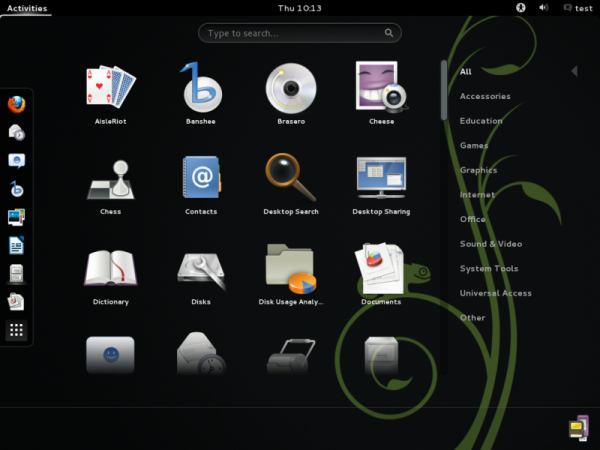
    If Linux is good enough for the International Space Station, why not your school computers? The developers over at openSUSE must think so, today releasing Li-f-e (Linux for Education) 12.3-1.

    I confess to not being familiar enough with Linux (go ahead, beat me with a stick — or with words in comments). But a reader complained this week about BetaNews’ rather absent coverage of the open-source operating system. He’s absolutely right about that. Reporters here tend to write about what they use, and we don’t have a Linux lover currently on staff. Please pardon my light treatment of the news, in place of someone more qualified.

    Minimum hardware requirements are 1GB of RAM and 15GB storage. openSUSE doesn’t state processor. You can install from a USB stick, which should take about 40 minutes. Burning the ISO to DVD means longer installation time. I assume, and someone correct me if wrong, Li-f-e 12.3.1 should be fine on a netbook or laptop with smaller-size SSD. Breathe new life into that aging XP PC, baby. Of course, you can run the software from a virtual machine, if preferred.

    “This first release is based on openSUSE 12.3 with all the official updates applied”, Lars Vogdt, openSUSE Services Team leader, says. “Li-f-e incorporates latest stable versions of all popular desktop environments such as KDE, Gnome and Cinnamon, it includes wide range of softwares catering to the needs of everyone, selection from openSUSE Education repository, multimedia from the Packman repository, development tools, KIWI-LTSP allowing normal PC or diskless thin clients to network boot from a server running Li-f-e and lot more”.

    Supported software — much, but not all included with Li-f-e — includes (but there’s more):

    You can download openSUSE Edu Li-f-e 12.3-1 from Fileforum. There also is a 64-bit version part of SUSE Studio. But the “64-bit edition has not gone through rigorous QA”, Vogdt warns.

  • Open Compute Will Begin Building Network Switches

    opencompute-power

    A look at some of the network cabling in a Facebook data center. Facebook will lead an effort by the Open Compute Project to develop an open top-of-rack network switch. (Photo: Facebook)

    In a move that will likely accelerate the shakeup in the networking sector, the Open Compute Project said this week that it will expand its “open source hardware” initiative to include network switches. The project, which was founded by Facebook to promote standardized hardware for web-scale data centers, has led to rapid innovation in the server market and has also developed a storage offering.

    The announcement is the largest step yet in extending the open source hardware movement to networking, a sector which has been dominated by a handful of large vendors offering routers and switches managed by proprietary software. It follows several years of progress in the development of software to support open networking, especially in the use of software-defined networking (SDN) that allows network equipment to be managed by external devices (typically commodity servers).

    The Open Compute Project (OCP) said it has formed a team to work on a specification for an “OS-agnostic” top-of-rack switch. Najam Ahmad, who runs the network engineering team at Facebook, will lead the project, with participation from the two standards groups – the Open Networking Foundation, and OpenDaylight – as well as  as well as Big Switch Networks, Broadcom, Cumulus Networks, Facebook, Intel, Netronome and VMware.

    Goals: Innovation, Efficiency, Freedom

    “It’s our hope that an open, disaggregated switch will enable a faster pace of innovation in the development of networking hardware; help software-defined networking continue to evolve and flourish; and ultimately provide consumers of these technologies with the freedom they need to build infrastructures that are flexible, scalable, and efficient across the entire stack,” the OCP’s Jay Hauser wrote in a blog post. “This is a new kind of undertaking for OCP — starting a project with just an idea and a clean sheet of paper, instead of building on an existing design that’s been contributed to the foundation — and we are excited to see how the project group delivers on our collective vision.”

    The announcement provides a reminder of how the pace of innovation has accelerated in the data center world. It’s been less than three years since Amazon’s James Hamilton predicted huge changes in networking in a keynote at the Velocity conference. Here’s an excerpt from our coverage at the time:

    “We’re very close to a fundamental change in the networking world,” said Hamilton, who said the industry is beginning to look beyond tightly integrated vendor offerings. He envisions a future in which data center operators can more easily mix and match hardware and software from disparate sources, including open source offerings. “We’ll get our Linux of the networking world,” Hamilton said.

    There’s been great progress on the software side of the business. Open Compute has quickly built an ecosystem of hardware companies developing designs based on its efforts. In less than two years, the OCP has grown beyond its origins as a showcase for Facebook’s design innovations, evolving into an active community building cutting-edge server and storage hardware, disrupting the traditional IT supply chain in the process. If similar progress occurs with the OCP effort on a top-of-rack switch, the networking sector will soon get even more interesting and competitive.

  • Yahoo Has Some New Search Products Coming Our Way

    As it has indicated numerous times in the past, Yahoo still takes search seriously, even if it’s outsourcing its system to Microsoft these days (we’ll see how long that lasts). But in recent months, since former Googler Marissa Mayer took over at the helm, we’ve seen a renewed focus, or at least heard about one.

    In January, upon releasing the company’s Q4 earnings report, Mayer said, “Overall in search, it’s a key area of investment for us. We need to invest in a lot of interface improvements. All of the innovations in search are going to happen at the user interface level moving forward and we need to invest in those features both on the desktop and on mobile and I think both ultimately will be key plays for us.”

    A new report out from Bloomberg indicates that Yahoo is planning on unveiling some new search products over the coming months. While nothing specific is mentioned (other than SVP of Search, Laurie Mann, indicating that they have “some really cool things in the pipeline”), it is said that some of the new stuff is being developed “in tandem” with Microsoft, while some of it will be uniquely Yahoo’s.

    It’s been quite a while since Yahoo did anything really innovative in search, but let’s not forget (as I’m sure you haven’t) Mayer’s past. She was, after all, instrumental in the evolution of the Google we know today. Bloomberg quotes Mann:

    “As someone who works with Marissa literally every day, there is nothing more important to her than getting search right. She knows search better than pretty much anyone in the industry.”

    Mayer has expressed disappointment with its deal with Microsoft in recent months, but this week, news came out that Microsoft has extended its revenue guarantee to Yahoo, a guarantee it hasn’t done a great job of living up to in the past.

    image: An Evening with Marissa Mayer (YouTube)

  • Fusion-io Shares Plunge After CEO Departs

    Shares of flash memory specialist Fusion-io plunged more than 20 percent today after the company announced that CEO and President David Flynn and Chief Marketing Officer Rick White had departed to “pursue entrepreneurial investing activities.” Board member Shane Robison has been named Chairman, CEO and President.

    Flynn’s sudden departure didn’t sit well with securities analysts, who noted that its been just two weeks since Fusion-io announced a $100 million acquisition. Analysts also fretted about whether Flynn’s exit would impact the company’s business with Facebook, which along with Apple is Fusion-io’s largest customer. Several analysts suggested Flynn had been a key player in the relationship with Facebook.

    Shares of Fusion-io closed off $3.40 to $14.60, a drop of 19 percent, in trading on the New York Stock Exchange.

    Robison, 59, has more than 30 years of experience in management roles with some of the world’s leading technology companies, including AT&T Labs, Cadence Design Systems and Apple. He most recently served as Executive Vice President and Chief Strategy and Technology Officer of HP from May 2002 until November 1, 2011.

  • Teradata Announces Teradata Intelligent Memory

    Teradata has introduced a new database technology called Teradata Intelligent Memory, which the company says “creates the industry’s first extended memory space beyond cache that significantly increases query performance and enables organizations to leverage in-memory technologies with big, diverse data.”

    In other words, Teradata says, it’s the first in-memory technology that supports big data deployments.

    The product is part of the “Unified Data Architecture” strategy, which leverages Teradata, Teradata Aster, and open source Apache Hadoop. As the company notes, data in Apache Hadoop that is frequently used can be accessed through Teradata SQL-H, and based on temperature of the data, moved to Intelligent Memory to take advantage of its computing capability.

    “The introduction of Teradata Intelligent Memory allows our customers to exploit the performance of memory within Teradata Platforms in a new way, and extends our leadership position as the best performing data warehouse technology at the most competitive price,” said Scott Gnau , president, Teradata Labs. “Teradata Intelligent Memory technology is built into the data warehouse and customers don’t have to buy a separate appliance. Additionally, Teradata enables its customers to configure the exact amount of in-memory capability needed for critical workloads. It can be difficult, expensive, and impractical to keep all data in memory, and Teradata’s unique approach means the right amount of memory can be applied to the right set of data for blinding performance – automatically.”

    “Teradata’s new in-memory architecture is integrated with its management of data temperature,” said Richard Winter , chief executive officer, WinterCorp. “This is very significant, because the hottest data will migrate automatically to the in-memory layer – Teradata Intelligent Memory; the next hottest data will move automatically to solid state disk; and, so on. Teradata also provides the column storage and data compression that amplify the value of data in memory. The customer sees increased performance without having to make decisions about which data is placed in memory.”

    Teradata Intelligent Memory is available to current Teradata workload-specific platforms running the Teradata database. It’s available as part of Teradata Database 14.10, which will be released in the second quarter.

  • A $0.99 HTC First shows that people may not like a phone built around Facebook

    AT&T has a special deal going on for the HTC First, a smartphone dedicated to Facebook users. You can pick up the handset for $0.99 with a two-year contract or pay $350 for a contract-free experience. While that sounds great for consumers, I wonder what it really means for Facebook’s biggest effort to date in trying to get a foot in the door of the hardware market.

    Facebook Android HomeIt’s not uncommon for handsets to see reduced prices over time. After all, new models appear, making older phones a little more obsolete. Carriers, which generally buy inventory in advance, then discount the older phones to spur higher sales and the service revenues that come along for the ride. But in terms of the HTC First, there is no successor model available.

    I reached out to AT&T for some thoughts and while the carrier won’t comment on individual manufacturer handset sales, I was told that it’s a promotion, which as I noted above, isn’t uncommon. There is no indication if or when the reduced prices may end.

    So this could be due to sales or not. I suspect it is, mainly because I’m ruling out the other options. For starters, the phone works on AT&T’s LTE network and falls back to speedy HSPA+ service, so there’s no reason to blame the network. As far as the phone: It’s a mid-range handset made by HTC that I’d consider fairly generic.

    My colleague Om reviewed it — I haven’t had a chance to use the First yet — and as someone who vastly prefers iOS to Android, his impressions were better than I expected. He mostly liked the Facebook Home software, which I have used. I think it’s actually very well done and runs nicely on my Galaxy Note 2. But I think this alludes to the key problem: The market is clamoring for a Facebook phone just as much as it is for a phone built around Twitter or another social service. Meaning: It’s not.

    It’s difficult enough for a high-end flagship phone to stand out from its peers, let alone a mid-range handset. Frankly, I can’t see how Facebook Home helps the HTC First differentiate itself enough; particularly when the software is already available for download on better phones and is expected to arrive on other handsets in the future. Sorry Facebook, I don’t think the market likes your attempt at a smartphone.

    Related research and analysis from GigaOM Pro:
    Subscriber content. Sign up for a free trial.


  • Now LinkedIn Wants You To Follow Channels

    A little over two years ago, LinkedIn launched LinkedIn Today, the company’s version of a social news destination. It’s been fairly popular, and last year, it got a design refresh. Today, LinkedIn announced another one.

    The new design includes personalized content channels, new ways to sort content, and supposedly more relevant content, including more relevant emails. Perhaps it won’t be all emails about Richard Branson anymore (though he is prominently featured in the intro graphic for LinkedIn’s slideshow on the new design):

    “Through channels you can follow broader topic areas that cross multiple industries and professional sectors,” explains LinkedIn’s Kevin Gu in a blog post. “By following channels you will have access to timely and relevant professional news and insights that can help you stay one step ahead and be in the know on what’s trending in your professional network. Channels represent a more comprehensive way to discover, share, and engage with high-quality Influencer posts, top news sources, and SlideShare content — all in one place.”

    Users can follow over 20 different channels (Your Career, Economy, Social Impact, Big Ideas and Innovation, Higher Education, etc.). Naturally, content from the channels you follow will appear in your stream. LinkedIn says it will be adding more channels in the future.

    LinkedIn Today Redesign

    Users can sort by “Your News,” “Influencer Posts,” “All Influencers,” and “All Channels”. The emails will provide overviews of top Influencer posts, trending professional news, and Slideshare content.

    The new design and features are rolling out this week in English.

    According to Business Insider, LinkedIn is utilizing its Pulse team to build similar experiences for its mobile apps. LinkedIn announced the Pulse acquisition last month, paying $90 million.

    LinkendIn has 225 million users. Earlier this week, it celebrated its tenth birthday. Last week, they announced their Q1 earnings, including a 72% increase in revenue year-over-year, though the forecast for Q2 disappointed Wall Street.

  • 10 milestones Tesla hopes will make it a $43 billion company

    The stock of electric car maker Tesla Motors hit an all time high of over $60 per share this week. Partly that’s because later this afternoon the company, led by entrepreneur Elon Musk, plans to announce what it says will be its first profitable quarterly earnings in Tesla’s history . While Tesla is enjoying the brightest time in its decade-old lifetime, Musk, and the company’s board, actually have far grander ambitions than the current already impressive $6.4 billion marketcap.

    According to documents prepared for Tesla’s upcoming annual meeting, Musk has an equity and stock grant package — called “2012 CEO Grant” — which was granted last summer, and which would deliver him another 5 percent of Tesla’s total shares if Tesla meets certain milestones and certain marketcaps. Musk is already a fabulously wealthy person, but it’s the operational company milestones, and accompanying soaring marketcap, which underscore Tesla’s ambitions.

    Tesla Model S

    The first tranche of the grant becomes available if Tesla’s marketcap hits $7.2 billion, and one of its operational goals is met. The remaining parts of the grant become available for every $4 billion added to the marketcap, along with an additional operational milestone, until the market cap reaches $43.2 billion and all ten of the operational milestones are met (see the milestones below).

    As of April, when the documents were filed for the annual meeting, none of the milestones had yet been met, and Ford and GM had marketcaps of $53 billion and $40 billion respectively. For comparison’s sake, Apple — which Tesla has often times been compared to in its approach, brand and leader — has a marketcap of $430.52 billion.

    • Successful completion of the Model X Engineering Prototype (Alpha)
    • Successful completion of the Model X Vehicle Prototype (Beta)
    • Completion of the first Model X Production Vehicle
    • Successful completion of the Gen III Engineering Prototype (Alpha)
    • Successful completion of the Gen III Vehicle Prototype (Beta)
    • Completion of the first Gen III Production Vehicle
    • Gross margin of 30 percent or more for four consecutive quarters
    • Aggregate vehicle production of 100,000 vehicles
    • Aggregate vehicle production of 200,000 vehicles
    • Aggregate vehicle production of 300,000 vehicles

    Related research and analysis from GigaOM Pro:
    Subscriber content. Sign up for a free trial.


  • Heck yeah! Facebook’s Open Compute Project is making an open source switch

    The Open Compute Project, which Facebook launched a little more than two years ago, has decided that utterly disrupting the server and storage market isn’t enough. On Wednesday, it said it would solicit input on an open source top-of-rack switch.

    The project, in a presentation by Frank Frankovsy at Interop, said it was taking a slightly different tack with its design, deciding to get input from others before actually making and releasing the hardware to the community. However, just because the hardware isn’t designed yet, Facebook isn’t going to twiddle its thumbs for a traditional multi-year design cycle. Frankovsky told me in an interview that he expects the hardware to b out in 9 to 12 months.

    “We have built these islands of openness in the data center but the last element, and the one that was connecting the compute and storage, was the network,” said Frankovsky. “And there is a lot of pent-up passion out there for breaking open this appliance model.”

    Networking is the last bastion of proprietary profits

    Prepare to be disaggregated, switch!

    Prepare to be disaggregated, switch!

    For those who don’t dwell in data centers, the top-of-rack switch is the networking gear that sits on the top of a rack of servers directing traffic between those boxes and between the other racks in the data center. While the networking world is all aflutter over the promise of OpenFlow and software-defined networking, very little real progress has been made in building switches for the webscale data center.

    Google, a few years back, had famously issued a request for a new type of switch that would fit its very specific scaled-out needs and no one responded. Now the search giant makes its own hardware. But soon after that, Andy Bechtolsheim saw the need for Google-like speeds and scale and started Arista, a switch company that has dominated in the webscale, financial and high-performance switching space. Meanwhile, at the lower end, Cisco’s cheaper Nexus line of switches have done really well.

    Facebook's Najam Ahmad.

    Facebook’s Najam Ahmad.

    Yet, these options aren’t palatable for Frankovsky or Najam Ahmad of Facebook (Ahmad will be at our Structure conference in June discussing more about Facebook’s networking strategy). On the existing product side, Frankovsky is frustrated by hardware that doesn’t play nicely at scale. He specifically mentioned that the side venting of heat on switches means he can’t place them right next to another switch. Ahmad, who is in charge of the social-networking giant’s network, is concerned about getting out of the proprietary OS model.

    “We want it to be OS-agnostic so we can use one from our existing provider or build our own,” he said. He added that he’d prefer an open Linux-based implementation. These proprietary OSes — Cisco has IOS, Juniper has Junos and Arista has EOS — are one of the reasons that companies are locked into one networking gear provider. They are also stuck using proprietary code to make changes.

    Who will be the Red Hat of the networking OS?

    Networking cables along the ceiling at Facebook HQ.

    Networking cables along the ceiling at Facebook HQ.

    If you are chock full of technically savvy people, losing the agility that comes from writing your own code as well as paying higher prices for the proprietary hardware and software combination is probably maddening. Hence Facebook’s interest in the open source OS. Of course, building out the underlying hardware is only the first step, the next will be supporting an OS that runs on top of that system.

    While Facebook might build its own OS, not every company will want to do that, and Facebook may not open source its own networking OS if it ever makes one. That leaves a market opportunity. Perhaps a firm like Arista might move in here with an open source version of EOS, although given that Arista uses merchant silicon in its boxes, putting up an open-source version of its software would eat into its margins.

    This is neither Open Flow nor SDN

    But let’s go back to the box. Facebook is working with Broadcom, Intel, The Open Daylight Foundation, the Open Networking Foundation and Big Switch as some of its collaborators on this project. The box itself might run x86 hardware or a proprietary ASIC, according to Frankovsky. As for the protocols, Open Compute is going to see what the other collaborators want.

    Software-defined networking

    Software-defined networking

    But for those wondering about Open Flow support, it’s likely. Frankovsky said that the Open Networking Foundation asked Facebook to get involved via the Open Compute Project with making open networking hardware. While Frankovsky and Ahmad didn’t cop to it, I know there has been frustration in many areas of the webscale and networking world that the promise of commodity hardware that Open Flow could offer has not really hit the market in a way that offers the most flexibility for data center operators.

    Frankovsky said that the ONF approached Open Compute (Facebook is a founding member of both organizations) in part because it believed it could move quickly on this. And it will. But it’s worth noting that this announcement is about an open source top-of-rack switch, not a controller and not some type of software-defined networking play.

    Other companies may take this box and perhaps an open source OS if one is developed, and then layer on some type of controller software to make a software-defined network, but this is just a box.

    That being said, this is a box that could seriously disrupt the existing players in networking, from giants like Cisco and Dell all the way to smaller startups like NoviFlow or even Pica8. Much like Facebook is changing the server market with Open Compute, we’ll see if it can tweak the model and do the same in networking.

    Related research and analysis from GigaOM Pro:
    Subscriber content. Sign up for a free trial.


  • iPhone 5 brings T-Mobile back to life

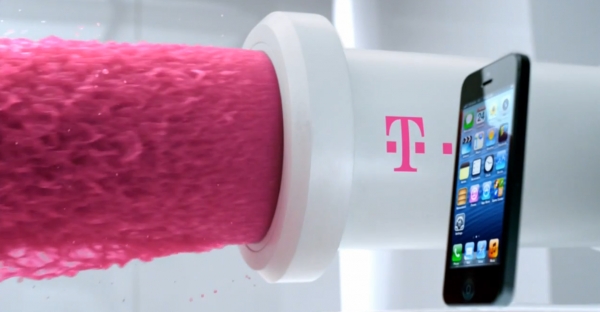
    I’m not sure who does whom the bigger favor — Apple or T-Mobile USA. The nation’s fourth-largest carrier started selling iPhone 5 in stores April 12 (preorders a week earlier) and today reports 500,000 sold to date. T-Mobile also added 100,000 previous iPhone owners (presumably the majority from AT&T based on network types). The carrier also sells iPhone 4 and 4S but kept the big news to the 5.

    Half-million new iPhones sales is just what Apple needs, too, with the U.S. smartphone market rapidly saturating. Apple is the country’s leader, with 39 percent subscriber share in March, according to comScore. Samsung follows with 21.7 percent share. T-Mobile’s contribution is sure to lift iPhone against rivals, when April numbers release.

    iPhone is part of a four-prong strategy to revive T-Mobile. Second is MetroPCS merger, which was official May 1. Network expansion — massive 4G LTE rollout — is the third. Then there is Simple Choice, a no-nonsense contract-free plan, where subscribers pay less upfront for the phone than other carriers followed by 24 payments. There is also the option to buy phones outright.

    T-Mobile does not sell phones unlocked, something you might not expect from the marketing. A store representative told me yesterday that unlock codes typically are issued after 45 days, except for handsets purchased outright. Code comes within hours.

    The carrier hopes that iPhone and the new “un-carrier” plan will revive subscriber losses. The company’s bigger success is prepaid customers, for whom Simple Choice may resonate. During Q1, T-Mobile added 202,000 branded prepaid customers, the seventh consecutive quarter of gains. However, postpaid subscribers fell by a net 199,000, which is actually a 61 percent improvement — meaning the artery isn’t gushing quite as much blood. Pink — or should that be Magenta — gained just 3,000 branded subscribers. While small number, behind are big implications: First growth in 3 years.

    Many carriers let prepaid customers bring their own devices, a strategy that worked well for T-Mobile when its network didn’t fully support iPhone and promises to be better now that the handset is official. Simple Choice lets people bring their own unlocked devices to a postpaid service that starts at $50 per month for unlimited text, talk and web — the latter is high-speed for just the first 500MB of data. There is no contractual commitment.

    For people buying phones, T-Mobile courts the budget-minded — those worrying what they’ll pay upfront and on a monthly basis. For example, iPhone 5 is $99.99 upfront and 24 $20 monthly payments — or $579.99 outright. Full price through Apple or big-three carriers: $649. The 32GB is $199.99 and the 64 gigger $299.99 upfront and 24 monthly payments, or $679.99 and $779.99 outright, respectively, from T-Mobile. Upfront price from Apple and the big three: $199 (16GB), $299 (32GB), $399 (64GB). Full price: $749 and $849.

    When the phone is paid off, the T-Mobile bill goes down by $20 a month. With, say, AT&T, the bill stays the same after the contract commitment is complete. Meaning: Subscribers pay a subsidized phone price premium, whether or not they have a contract. Last week, I got my first full T-Mobile bill: $161, compared to $294 for my last bill with AT&T.

    Until there is a full quarter, or even two, of iPhone sales and Simply Choice, T-Mobile’s bet is uncertain. If the carrier fails, it won’t be for want of trying.

  • Why 3 celebrity data scientists are willing to work for free — for you

    Hadoop-in-the-cloud startup Mortar Data is on a mission to bring recommendation engines to the masses, and it has recruited three well-known data scientists to aid its cause. On Wednesday, the company will start accepting applications on its website from companies that would like to have Mortar Data — as well as Bit.ly’s Hilary Mason, IA Ventures Scientist-in-Residence Drew Conway and freelancer (and former OKCupid data scientist) Max Shron — build them a custom recommendation system.

    The way it works, said Mortar Co-founder and CEO K Young, is that his company will choose eight companies (in addition to the two it has been working with already) to implement custom systems based on their specific needs and businesses. Mason, Conway and Shron will split their time among the 10 total companies, but will be much more than advisers — they’ll actually dig into the data and be hands-on to ensure the right techniques and algorithms are applied in the right places.

    The companies will keep any custom code, but the ultimate goal from Mortar’s perspective is to learn some best practices and create reusable building blocks that will let anyone create recommendation engines without pre-existing data science knowledge. Recommendation engines are commonplace on large web sites (Netflix, Spotify, iTunes, Google, Amazon, LinkedIn, Eventbrite and the list goes on) but smaller companies can sometimes struggle to do them, or to do them well. Young hopes Mortar can establish an open source reference architecture of sorts that makes it easy to implement everything from building data pipelines to the actual algorithms that power recommendations.

    “They’re really common and they’re really useful, but they’re really hard,” he said. “That’s why [a reference implementation] hasn’t been done before.”

    They can get pretty complex, as evidence by this Netflix example.

    They can get pretty complex, as evidence by this Netflix example.

    Presently, Young explained, anyone wanting to build a recommendation system probably knows some of the algorithms to begin with and then gets to work researching how to implement them with specific processing frameworks (e.g., MapReduce) and on their specific data. Alternatively, they might have to hire a consultant that helps them build the recommendation engine. Either way, he noted, they’re probably not open sourcing it at the end because it’s presumed too valuable a competitive edge.

    Mortar Data’s recommendation framework will be based on Pig, Python and Java, just like the company’s flagship platform for creating Hadoop jobs. Those languages will make the implementation more accessible and customizable by more people, Young said.

    Really, he added, any web site or service that has multiple customers and deals with multiple entities — be they restaurants, songs, dating profiles, artisan necklaces, what have you — should have some sort of recommendation engine to help provide a more-intelligent customer experience. “It should become so ubiquitous that any service you go to knows enough about you to put forward the things you actually want to see,” Young said.

    There is, however, one catch to Mortar’s plans as they stand right now: Because the service is hosted on Amazon Web Services, anyone interested in having Mason, Conway, Shron and Mortar work on their systems must have their data in AWS or be able to move it there. The initial reference implementation will likely be AWS-centric, too, but Young hopes contributors will use it and share methods for running it atop other platforms.

    Feature image of Hilary Mason at Structure: Data 2011 courtesy of Pinar Ozger (www.pinarozger.com).

    Related research and analysis from GigaOM Pro:
    Subscriber content. Sign up for a free trial.


  • Samsung’s 16-megapixel ‘Galaxy S4 Zoom’ to launch in June, rugged ‘Galaxy S4 Activ’ debuts in July

    Samsung Galaxy S4 Zoom Release Date
    Samsung is reportedly prepping three new variations of its flagship Galaxy S4 smartphone and they will begin launching in early June, according to a new report. SamMobile has a good track record with details surrounding unannounced Samsung devices, and the blog reports that Samsung’s first Galaxy S4 variation will be the Galaxy S4 Zoom, which is set to debut in Europe during the first week of June. The Galaxy S4 Zoom reportedly features a 16-megapixel camera, a 4.3-inch qHD display and Android Jelly Bean.

    Continue reading…

  • Samsung Galaxy S4: Jack of all trades, still master of just one

    Samsung Galaxy S4 Review
    The king is dead, long live the king. The Galaxy S4 helped Samsung keep its impossible promise and unlike most products that see the kind of hype this one did ahead of its debut, the S4 actually delivered. This new handset is an improvement over its predecessor in every way and we loved it when we reviewed the Galaxy S4 last month. But after spending some time with Samsung’s new flagship phone, I also see a worrying trend emerging in the Galaxy S4 and it’s one that could potentially get Samsung into trouble down the road.

    Continue reading…

  • Amanda Berry Has Arrived At Her Home, May Address Media

    Amanda Berry has arrived home, according to reports.

    ABC has video of the homecoming, showing the front of her house covered in balloons, with a big “Welcome Home, Amanda” sign.

    Berry was expected to address the media at 12PM, but as of the time of this writing, it appears that she will not immediately do so.


    The emotional arrival is resonating throughout the Twitterverse.

  • ’105-Year-Old Bacon Woman’ The Latest Oscar Mayer ‘Old People And Meat’ Campaign

    A 105-year-old woman who loves bacon has gone viral. Pearl Cantrell, apparently eats bacon for every meal, and even tries to convince her family and friends to eat more.

    Naturally, Oscar Mayer saw an opportunity to use her as something of a mascot for its bacon products, and gave her a ride in the Oscar Mayer Weinermobile. From WIVB.com:

    “We’ve seen a lot of stories on the road, but nothing quite like this one. So we’re excited to be here,” said Abraham Luna, a “hotdogger” for Oscar Mayer. “We know she’s an inspiration. Pearl is an inspiration for the community and her friends and family.”

    Hitting the streets of her hometown of Richland Springs, Pearl is riding “shot-bun” in the Wienermobile, waiving to several generations of people that she’s seen grow up throughout the years.

    I’m not sure what weiners have to do with bacon, but anything for the brand, I guess. Oscar Mayer has of course been hitting social media promoting the whole thing:

    Even before that, Oscar Mayer was running old people-related meat marketing campaigns. In fact, just less than a week ago, the company tweeted out this “#TransparentGrandpa” video:

    Grandpas and deli fresh ham.

    I guess we know which demographic Oscar Mayer is focusing on these days.

  • Hold on tight: Nokia Lumia 928 camera shines in roller coaster video demo

    Although Nokia hasn’t officially announced the Lumia 928 yet, it’s already starting to take shots at the smartphone’s competition. On the U.S. landing page for the phone — the URL has ends with “lumia928″ — Nokia sticks it to both the Samsung Galaxy S 4 and Apple’s iPhone 5, with a video to show off the handset’s camera.

    If you get motion sickness easily, I’d be cautious watching the video: It’s taken with all three phones at night with some parts on a moving roller coaster called The Hurricane.

    After watching the video, I can’t see anyone disputing the Lumia 928 as a clear winner. It handles the low-light extremely well and uses optical image stabilization to smooth out the bumps and turns while riding the coaster. And it’s smart of Nokia to focus — no pun intended — on the features and expertise it brings to smartphones. Hopefully, this footage is from an actual Lumia 928: I’d hate to see a repeat of Nokia’s camera demo faux pas from last year.

    But there’s a reason why iPhone models take up the first three spots in the top five most-used cameras on Flickr: They take all-around great shots and they’re super simple to use. Will the Lumia 928 win out over its peers in low-light situations? Most assuredly, although the HTC One is quite good in the same scenario. What else will the Lumia 928 offer to sway buyers, however? That’s the missing piece of this picture.

    Related research and analysis from GigaOM Pro:
    Subscriber content. Sign up for a free trial.


  • Teradata Leverages In-Memory Technology For Big Data

    Teradata (TDC) introduced Intelligent Memory, a new database technology that creates extended memory space beyond cache that significantly increases query performance and enables organizations to leverage in-memory technologies with big, diverse data.

    “The introduction of Teradata Intelligent Memory allows our customers to exploit the performance of memory within Teradata Platforms, which extends our leadership position as the best performing data warehouse technology at the most competitive price,” said Scott Gnau, president Teradata Labs. “Teradata Intelligent Memory technology is built into the data warehouse and customers don’t have to buy a separate appliance. Additionally, Teradata enables its customers to buy and configure the exact amount of in-memory capability needed for critical workloads. It is unnecessary and impractical to keep all data in memory, because all data do not have the same value to justify being placed in expensive memory.”

    Intelligent Memory is a part of the overall Unified Data Architecture strategy, which leverages Teradata, Teradata Aster, and open source Apache Hadoop. It manages the data by predictively placing the “hottest” or most frequently used data into memory, then automatically updating and synchronizing it. Access to data in-memory eliminates disk I/O bottlenecks and query delays, and increases system throughput.

    Intelligent Memory uses algorithms that automatically age, track, and rank data to ensure effective data management and support for user queries. Data can be stored and compressed in columns and rows, which maximizes the amount of data in the memory space. Teradata Intelligent Memory places only the hottest data to the new extended memory space.

    “Teradata’s new in-memory architecture is integrated with its management of data temperature,” said Richard Winter, chief executive officer, WinterCorp. “This is very significant, because the hottest data will migrate automatically to the in-memory layer -Teradata Intelligent Memory; the next hottest data will move automatically to solid state disk; and, so on. Teradata also provides the column storage and data compression that amplify the value of data in memory. The customer sees increased performance without having to make decisions about which data is placed in memory.”