Author: Serkadis

  • Please let the newest HTC Windows tablet rumors be just that: rumors

    Every few months I hear rumors with these two words: HTC and tablet. On Tuesday, I heard them again with a source telling Phone Arena that HTC is expected to debut a pair of new tablets by year’s end. One is allegedly a 7-inch tablet while the other is expected to be a 12-inch device. A tablet isn’t what HTC needs to turn around its sales and profits problems.

    HTC’s prior tablets and the market for Windows RT

    HTC did create a 7-inch Intel Atom-powered tablet in 2007 called the HTC Shift. It had a hardware keyboard and ran Windows, but like many other UMPC models from that time, it was never a hit. The company doesn’t have expertise with Intel chips and the full version of Windows, however. A few Android tablets from HTC — the Flyer and the Jetstream — came and went without fanfare as well. Given HTC’s experience with ARM-powered chips in smartphones, it would likely build new tablets with similar silicon. That would mean both would run Windows RT and not the full Windows 8 software.

    Microsoft Surface RTUnfortunately, I’m not yet convinced there’s a market for Windows RT devices. I fully understand that some readers may have purchased one and are quite happy with it. However, there’s no data to support that Windows RT is a success by any measure: Microsoft hasn’t yet broken out Windows RT license sales from Windows 8 sales.

    And after spending time with Surface RT and other Windows RT slates, I haven’t been able to recommend them to anyone. It’s not because they’re bad products; I actually like the user interface and the hardware of the various models. But at a similar price point, it may make more sense to buy an Intel Atom slate that provides similar battery life and performance to RT tablets but also adds support for legacy Windows software.

    HTC’s current issues stem from several problems

    HTC OneI can understand why HTC might want to expand its product line to include Windows tablets: The company’s smartphone sales have been falling and so too are HTC’s revenues and profits. Instead of leading the pack with Android phones like it used to, HTC is losing out to Samsung. So too are other companies that used be smartphone stars; HTC isn’t unique. As a result, HTC reported just $2.88 million profit on $1.45 billion in revenues last quarter and unless it can quickly reverse its fortunes with the new HTC One, it could see profits dip into losses.

    We’ve previously discussed why HTC is in its current predicament. Stronger competition is one part of it. The relative lack of brand awareness and marketing is another big reason. And a lack of focus — too many different permutations and combinations of similar products — haven’t helped either. And therein lies the rub: all three of these issues would only be magnified in the market for Windows tablets.

    Losing focus isn’t a winning strategy

    A better idea for HTC might be to get its smartphone house in order. It’s definitely on the right path with the HTC One; it’s a top-notch Android smartphone. If the phone is successful, I supposed the company could re-invest profits into designing a Windows tablet or two, but it might be better to continue improving the smartphone line first.

    Tablet sales are growing, even as PC sales are slowing, but the market for smartphones is still bigger than both. I’d hate to see HTC lose focus by entering an already crowded market for products that haven’t yet proven successful. It just seems like a big risk that HTC isn’t in a position to take right now.

    Related research and analysis from GigaOM Pro:
    Subscriber content. Sign up for a free trial.


  • TripAdvisor Launches Review Express Email Marketing Tool

    TripAdvisor has a new service for businesses called Review Express, which sends bulk emails to customers on said businesses’ behalf.

    While some have raised spam-related concerns about the product, as far as we can tell, it basically operates like other third-party email marketing products. Customers won’t be getting surprise spam from TripAdvisor.com. They’ll be getting emails from hotels they’ve stayed at, which they’ve agreed to get emails about (even if it’s TripAdvisor doing the actual sending behind the scenes). The emails just come with encouragement for guests to leave reviews on TripAdvisor.

    The video shows the basic process:

    Review Express lets businesses add their own logos and personalized messages, and includes the ability to bulk upload up to 1,000 email addresses. It also processes send requests within 24 hours, and provides automatic notification of successful and unsuccessful sends. It can send messages in 21 languages.

    “With Review Express, TripAdvisor aims to extend the relationship between businesses and their guests to encourage them to write reviews. This is a time-saver for owners, providing them with a powerful system to manage multiple emails and requests at no cost to the business,” said Severine Philardeau, vice president of global partnerships, TripAdvisor. “Review Express has been developed and enhanced based on extensive user testing and is an invaluable service for hospitality business owners looking to build their online reputation. When used in conjunction with our free display offerings for owners, Review Express provides a great online marketing package for small and independent hospitality business owners to capture the value of user reviews for their property.”

    Businesses will want to follow the best practices TripAdvisor has laid out.

  • How Fisker’s struggles will affect electric cars, investing and government support

    Some of the most important feedback I got after publishing my long investigative piece on Fisker Automotive (A look under the hood: why electric car startup Fisker crashed and burned) was that many people thought that Fisker’s struggles were such an anomaly that they wouldn’t likely affect the broader market for electric vehicles. That was also the majority opinion from the recent survey (subscription required) we conducted for GigaOM Pro, our premium research service, on the fate and implications of Fisker’s downfall.

    According to our survey of 108 respondents, almost 60 percent think that Fisker’s problems will not have much of an affect on the greater electric car market. As evidence, you can look at how sales of electric cars have been slowly and steadily growing (see our 4 charts), and Tesla plans to announce a profitable quarter on Wednesday.

    A little less than a third of our respondents, at 29 percent, thought Fisker’s problems would have a modest effect on electric car sales. And only 4.7 percent of our respondents thought that Fisker’s struggles would greatly affect the electric car market.

    Fisker chart

    To see the rest of the responses to our survey, including how Fisker will affect government spending on cleantech innovation, as well as cleantech venture capital investing, check out the full report on GigaOM Pro (subscription required). The report is a 22-page report, highlighting our survey, and my analysis of what went wrong with Fisker. Survey respondents can get copies of the report complimentary — thanks for participating!

    Related research and analysis from GigaOM Pro:
    Subscriber content. Sign up for a free trial.


  • 100M Windows 8 licenses is NOTHING

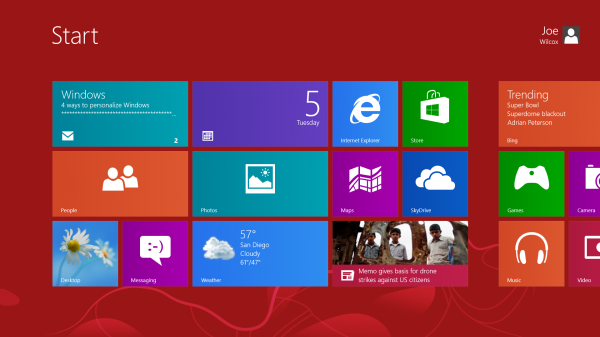
    Colleagues Mihaita Bamburic and Larry Seltzer both have stories today about Microsoft’s newest sales milestone. They make valid points in “Windows 8 is such a failure Microsoft sells 100M licenses” and “You wish you could fail like Microsoft“. However, 100 million is less than you might think and represents Windows 8’s failure.

    Meanwhile, the announcement is Microsoft’s attempt to use seemingly good news to admit failure, by softballing step-backwards changes coming with Windows Blue.

    Do the Math

    Windows 8 shipped on October 26, but OEMs started buying licenses soon after the operating system released to manufacturing, first week of August. Being greatly generous to Microsoft, let’s use October 1, start of fourth quarter, as measure of license sales. According to IDC, for the two quarters ended March 31, manufacturers shipped 166.7 million PCs (90.4 million plus 76.3 million). By the most liberal assessment, Windows 8 shipped on 60 percent of new PCs over the first six months. But the real number is much less.

    Microsoft’s 100 million figure is to date, which means at least five more weeks of sales, and honestly, another five weeks (or more) during third quarter, as OEMs bought licenses for new PCs. Most analysts put Windows PC market share at about 90 percent.

    By that reckoning, Microsoft’s newest OS shipped on about 66 percent of Windows PCs for the six months, although when including those missing weeks my guesstimate is, best case, 50 percent of all and 54 percent for those with Microsoft’s OS.

    Windows Dirt Cheap Edition

    But wait! That’s still an overly gracious measure. Microsoft offered Windows 8 dirt cheap through January 31 — $39.95 Windows 8 Pro upgrade download, or $69.95 on DVD. The pricing is the lowest Microsoft has ever offered for the Professional product. The company doesn’t disclose how many of those licenses are cheap upgrades, but reasonable guesstimate is possible.

    Based on Microsoft financial statements, cheap upgrade sales and volume-license ones to businesses were unusually brisk. For example, non-OEM revenue increased by 40 percent year over year during calendar first quarter (Microsoft’s fiscal third). Additionally, the percentage of revenue from OEM sales fell to 65 percent. Typical level is 75 percent to 80 percent. The two figures mean an increase of license sales outside the PC channel, and one unusually high for a new version during the initial launch.

    Let’s cut the numbers differently, for shorter time period, so we can make better use of that 65 percent OEM figure. In January, Microsoft boasted 60 million Windows 8 license sales. Three months later, the number is 40 million more, which looks good at first glance. However during first quarter — and, again, generously ignoring that extra five weeks of calendar second quarter — 52 percent of all PCs and 58 percent running Windows. Real numbers are more likely closer to 50 percent and 55 percent, respectively.

    Apple Pie a la Mode

    Now let’s do some comparisons to other devices. During the same 6 months, Apple sold 85 million iPhones and 42 million iPads, or more higher-profit devices than Windows 8 licenses. Most analysts now acknowledge that smartphones and tablets displace, or even replace, PC sales; from that perspective, comparison is reasonable, while granted compared straight software to hardware and software. In calendar first quarter alone, combined revenue from the two iOS devices accounted for 73 percent of Apple’s $43.6 billion in revenue.

    Heck, revenue for just the Mac nearly matched Microsoft’s Windows division — $5.4 billion to $5.7 billion, respectively. While some commenters will argue that’s an, ah, apples to oranges comparison, it represents two different business models competing for the same consumer dollars. However, when removing a one-time deferral, Windows division revenue was only $4.6 billion. So from computers representing about 5 percent of the global PC market, Apple generates more revenue than supplier of major operating system to most of the market.

    Windows Blue in the Face

    From where I sit typing this analysis, 100 million is great marketing, but much less when crunched. Strangely, the announcement means so much more. As a journalist I loathe Microsoft Q&As, where one employee gets to ask another softball questions. Concurrently with the license numbers, the company posted a Q&A with Tami Reller, Windows division CFO.

    She says the next OS version is “opportunity for us to respond to the customer feedback that we’ve been closely listening to since the launch of Windows 8 and Windows RT”. That’s coded-language for Microsoft stepping back from some Modern UI capabilities, and the real reason for the numbers’ release: To soften the public relations blow for such action.

    Reller granted an interview to the Financial Times, where she acknowledges “key aspects” of Windows 8/RT will change. Not that she says what. That’s admission of failure, something analysts have said for months.

    In March, Bob O’Donnell, IDC vice president summed up the first quarter PC crisis:

    At this point, unfortunately, it seems clear that the Windows 8 launch not only failed to provide a positive boost to the PC market, but appears to have slowed the market. While some consumers appreciate the new form factors and touch capabilities of Windows 8, the radical changes to the UI, removal of the familiar Start button, and the costs associated with touch have made PCs a less attractive alternative to dedicated tablets and other competitive devices. Microsoft will have to make some very tough decisions moving forward if it wants to help reinvigorate the PC market.

    Suffice to say those decisions are made.

  • Blandin Broadband eNews May 2013

    BBC MapNews from the Blandin on Broadband Blog

    Minnesota Broadband Task Force In April, the Broadband Task Force heard from broadband providers and supporters that offered reduced rate access and training to low income Minnesotans. Also there was some discussion of current broadband-related legislation, especially sales tax exemption for broadband deployment. The Task Force had recommended tax exemptions, but the Governor’s broader tax plan reduces exemptions. There was some discussion on the proposed Office of Broadband Deployment as well.http://wp.me/p3if7-2dt (An entrepreneur from the Iron Range voices his opinion on the tax issues as well, echoing opinions heard at Task Force. http://wp.me/p3if7-2e4)

    The Governor’s Office recently appointed two new members to the Minnesota Broadband Task Force: Fred Underwood, Director of  Technology at the Fond Du Lac Reservation and Andrea Casselton, Director of the Office of Technology and Communications in St Paul.http://wp.me/p3if7-2dY

    Minnesota Broadband Not World Class The latest Akamai report has been released, tracking worldwide broadband growth from Q4 2012. The US does not rank highly by international standards; Minnesota does even worse when compared to other states. We don’t do well with speed or adoption. We saw the same results last August. http://wp.me/p3if7-2dE

    Update on Policy Broadband-Related Bills

    • The Legislature learned more about the Minnesota Telecommunications Regulations Bills (HF 985/SF 584) inclduing enforcement authority, tariffs, alternative regulation plans, obsolete provisions and plans to meet with FCC plans for 2019.http://wp.me/p3if7-2d5
    • The Legislature is looking at E-Government Advisory Council (SF804) to improve online government information services to citizens and businesses. (They are also looking at State procurement and solicitation provisions modifications.) http://wp.me/p3if7-2cZ
    • Senator Klobuchar talks about unlocking cell phones so that consumers can change providers without steep penalties; she also speaks about the importance of enforcing call completion regulation to ensure that rural areas receive calls from all providers.http://wp.me/p3if7-2cT
    • The House Taxes Committee met and quickly dismissed bills with potential to provide funding for broadband. Anything in HF1686 that related to fiber was dismissed once the legislators realized that this amendment might conflict with other policies. Legislators were not in favor of the broadband development grant program (HF389); perhaps relating to the tenuous connection between pre-paid phones and broadband more than the fund itself. http://wp.me/p3if7-2cP
    • North Dakota passed legislation exempting telecommunications equipment purchases from the sales tax, creating an incentive for high tech firms to invest in North Dakota’s communications infrastructure. http://wp.me/p3if7-2dN

    Local Broadband News

    Cloquet Valley Some progress is being made toward better broadband in a group of townships north of Duluth known as the Cloquet Valley Internet Initiative. They are encouraging local collaboration and awareness. http://wp.me/p3if7-2cw

    Eagan Joining an informal worldwide initiative of programmers who are working to teach students the language of computers, Thomson Reuters offers computer-coding classes for 50 middle-school-age children . http://wp.me/p3if7-2dQ

    Lake County Lake County breathes a sign of relief as half of their ARRA-funded fiber network is complete and the incumbents who have opposed the network seem to be backing away from the project. http://wp.me/p3if7-2dr

    Minneapolis The Minnesota High Tech Association hosts their annual Spring Conference. Hot topics included innovation and creativity. http://wp.me/p3if7-2dS

    Minneapolis is named fifth nerdiest city. http://wp.me/p3if7-2d8

    Monticello Monticello extends the statute of limitations on legal claims bondholders can file against the city (related to FiberNet broadband network), striving to reach a resolution with the temporary agreement, set to expire June 1, 2013. http://wp.me/p3if7-2d2

    Redwood County The Redwood Area Development Corporation (RADC) posts their recent feasibility study. It indicates that residents in town have better access to broadband than residents in small communities or living on the outskirts of communities. http://wp.me/p3if7-2cj

    Southwest Minnesota Thanks to a grant from the Minnesota Public Utilities Commission, portable Interactive Television systems will be placed in 36 elementary schools within in Southern Minnesota providing advanced educational opportunities for more than 9,000 K-6 children.http://wp.me/p3if7-2co

    St Paul PetChatz is the ultimate petcam; it can be controlled from afar using a phone app or desktop browser. With the tap of a touchscreen or a keyboard, the owner can release a treat from within the device for Fido to enjoy. http://wp.me/p3if7-2dB

    Events

    May 14: Webniar – Broadband Adoption Toolkit – 2:00-3:30 p.m. EDThttp://wp.me/p3if7-2dV

    May 16: Webniar – Economic Development Webinar: Planning, Benefits and Impact – 2:00-3:00 p.m. EDT http://wp.me/p3if7-2dV

    May 22: Webniar – Broadband Adoption Toolkit Webinar with Toolkit Creatorshttp://wp.me/p3if7-2dV

    June 1-2: Civic Hack Day (various locations TBA) http://wp.me/p3if7-26t

    July 29-30: eLearning Summit (St Paul) http://wp.me/p3if7-2dj

    Looking for more events? Check out TechDotMN’s calendar http://tech.mn/events/. Many events are based in the Twin Cities but it is a comprehensive list. (If you have an upcoming event, consider submitting it.)

    Bill_ColemanStirring the Pot

    Question: What does our extended cold and snowy weather have in common with broadband?

    Answer: The promise of 10-20 Mb ubiquitous broadband and 70 degrees and sunny weather both seem like they will never come!

    We do know that 70 and sunny will be here sometime in the next 90 days, but the path to meeting the state broadband goal is much less certain.  The areas that lack wired broadband solutions that meet state broadband goals are clearly not easy to serve; densities and terrain ensure that private sector companies cannot invest in these areas and reach their ROI hurdles.  We know from the feasibility studies recently completed in some areas that the business case for these areas is marginal even with much longer public sector financing horizons and 100% adoption.   These areas with broadband are the same areas that needed significant subsidies to get telephone and electric utilities as those technologies emerged as standard requirements for quality of life and economic competitiveness.

    The legislative session is almost over and once again, there are no signs of any new tools, financing programs or incentives to stimulate private or public sector investment, or a more defined or enabled public sector authority to stimulate broadband investments at the local or county level.

    Even as we fail to reach the current state broadband goals, those very goals seem increasingly inadequate as Gb broadband is fast emerging as the new global standard.

    What’s more, in Minnesota we still have health care, education, public safety all doing their own thing with no coordination in sight and not even on the task force agenda.

    I am encouraged to see some regional planning emerging and hope that they can push their way forward to some new solutions – kudos to the east central broadband initiative and to the new group in Region Five!

  • Photos Of Kidnapped Women Amanda Berry And Gina Dejesus

    The story of the three missing girls (now women) who have been rescued after being kidnapped a decade ago, has taken the nation by storm. It’s a tragic story, without question, but it’s nice to at least see one in which the victims survived.

    Amanda Berry has been deemed the “real hero” of this whole thing by Cleveland police, after she called 911 and got the whole thing “rolling”.

    There has been a website dedicated to finding Berry, including these pictures from before the kidnapping:

    Amanda Berry Photo

    Amanda Berry

    Amanda Berry photo

    Amanda Berry photo

    Amanda Berry photo

    Amanda Berry photo

    Hat tip to EveryJoe, who also shares these photos of Gina DeJesus, one of the other kidnapped women:

    Gina Dejesus

    Gina DeJesus

    Gina Dejesus

    Gina Dejesus

    Photos of the third woman, Michelle Knight, are not circulating so much. According to Mail Online, while Berry’s and DeJesus’ cases have remained “high profile” over the past ten years, not as much is known about Knight, and according to the publication, no picture has been published of her so far.

  • Nest Acquires MyEnergy To Boost Its Home Energy Management Tools

    nest_myenergy

    Nest proved that energy monitoring can be tantalizing. And it’s about to get even better. The company just announced that it has acquired MyEnergy to further enhance its suite of monitoring tools. Terms of deal were not released.

    Originally called Earth Aid, the startup launched its online dashboard in 2009 as one of the first energy monitoring solutions. Similar to EnergySavvy, Google’s Powermeter andMicrosoft’s Hohm, Earth Aid, and now MyEnergy, provides consumers with information on how much electricity, water, and natural gas they use and how much they spend on these utilities. Simply connect your online utility accounts with the platform, and the system imports all the necessary bits and displays them on the beautiful web dashboard.

    Spend a few quick minutes on MyEnergy.com and it’s easy to see why Nest wanted MyEnergy in its corner. The system is wonderful. Just like the Nest Learning Thermostat.

    In 2011 the startup raised $4 million in Series A funding from Point Judith Capital, the Clean Energy Venture Group, and Capital-E. According to today’s announcement, MyEnergy has users in all 50 U.S. states and spans more than 1,500 utility territories.

    “Giving our customers more in-depth access and analysis of their energy usage has always been part of the Nest vision,” said Tony Fadell, Nest founder and CEO said in a released statement today. “We’ve made great strides in the past year and a half; by bringing MyEnergy into the Nest family, we can reach our goals even faster. The MyEnergy team is incredibly like-minded and we’ve already begun working with them to find ways to integrate their technology into Nest products.”

    The Nest Learning Thermostat is beautiful. But the web dashboard is lacking in depth. There is plenty of room for improvement. MyEnergy will likely not only make it look better, but dramatically enhance the tool set by giving the homeowner information from their neighborhood.

    Nest is charging forward, simultaneously building out consumer aspects and partnering with utility companies. This acquisition clearly fits within Nest’s vision. It’s unclear exactly what Nest plans to do with MyEnergy, but as a Nest user myself, I’m rather excited to see what Tony Fadell and team does with the beautiful MyEnergy platform.

  • Nest acquires MyEnergy (formerly Earth Aid), moves deeper into utility data

    Smart thermostat maker Nest has acquired energy data startup MyEnergy, formerly called Earth Aid. Nest didn’t disclose terms of the deal, but said in a release on Tuesday that the acquisition would help Nest further its goals of helping its users “understand and address” home energy consumption.

    MyEnergy is a startup that was founded back in 2007. The company was called Earth Aid for several years, and has developed algorithms that collect, analyze and provide recommendations around utility energy data. MyEnergy CEO Ben Bixby told me in an interview that MyEnergy is already hard at work stitching MyEnergy into the fabric of the Nest service, and he thinks that the union between the two services could be a “game changer” for energy data.

    Nest 2G_3-4_Dramatic_autoaway

    Unlike some startups like Opower that collect and aggregate energy data for utilities to deliver services to their customers, the MyEnergy platform aggregates utility energy data largely to deliver energy efficiency services straight to the consumer. For example, if your utility has an online account, and you gave MyEnergy permission to link that account to its system, then the site would pull your energy consumption data into its network. MyEnergy then would use that data to offer the user recommendations for how to reduce energy consumption and also create a sort of social network around energy consumption. The important part to remember is that your utility doesn’t even have to be involved in the process.

    In recent years some utilities have embraced the Department of Energy-backed Green Button program, which is supposed to make this process of collecting and managing utility energy data even easier and standardized.

    MyEnergy also has a utility-facing data product, but Bixby clarified that the utility data product isn’t white labelled (the way Opower’s is), and is branded with MyEnergy. Nest said it will also use MyEnergy to provide services for energy providers, so it clearly will be using MyEnergy for both straight to consumer data services and utility data services.

    Nest

    The acquisition move shows how Nest is increasingly working with utilities and energy service providers on energy efficiency and energy services. While Nest, founded by former Apple designers, is well known for making a chic learning thermostat, one of its under appreciated values is its ability to collect and use energy data in new ways. The move also puts Nest in closer competition with leading energy utility data companies like Opower.

    Last month Nest announced a variety of energy services that its collective thermostats can provide to energy companies and utilities. Examples of energy services include “demand response,” which is when power companies turn down power usage of a collective group during peak times (like a hot summer afternoon).

    MyEnergy doesn’t provide detailed numbers on how many users it has, and Bixby would only say that its customers are found within 1,500 utility service territories. Boston-based MyEnergy had 12 employees before the acquisition, and some of those folks will be coming out west to work with the Nest team. MyEnergy is backed by Point Judith Capital, Clean Energy Venture Group, and Conservation Services Group. Nest is backed by Venrock, Kleiner Perkins, and Google Ventures.

    Related research and analysis from GigaOM Pro:
    Subscriber content. Sign up for a free trial.


  • Here’s Amanda Berry’s 911 Call [Video]

    Three women – Amanda Berry, Gina Dejesus and Michelle Knight – disappeared over a decade ago in Cleveland, and were found today after being kidnapped and held captive.

    Cleveland police chief Ed Tomba reportedly said today, “The real hero is Amanda. She got this rolling.”

    Here’s her 911 call:

    Charles Ramsey, a guy who lives next door to the house where the girls have been held, heard the screams, and helped Berry, who also had a six-year old daughter with her. The father of the child has not been disclosed.

    The two other girls were found inside the home. Three brothers: Ariel (the owner of the house), Pedro and Onil Castro, have been arrested.

    Berry was reported missing on April 21, 2003.

  • BlackBerry momentum may be slowing as Galaxy S4 sales soar

    Galaxy S4 Sales
    Samsung’s new Galaxy S4 flagship smartphone is now upon us, and early signs are pointing to a big launch. Canaccord Genuity analyst Mike Walkley doesn’t formally cover Samsung, but he fancies himself as being plugged into wireless retail and he suggested in a recent research note that Samsung’s new king is off to a solid start.

    Continue reading…

  • It’s Old Spock vs. New Spock In The Latest Audi Ad

    Audi’s latest ad is titled: “Zachary Quinto vs. Leonard Nimoy: “The Challenge”. This features the original Star Trek’s Spock (Nimoy) and the new Star Trek’s Spock (Quinto).

    As an added bonus, it also features Nemoy doing his Bilbo Baggins song.

  • Microsoft Extends Revenue Guarantee To Yahoo In ‘Search Alliance’

    In a recent financial filing, Yahoo cited that Microsoft extended its revenue guarantee in the two companies’ ongoing “search alliance”. This is a guarantee that Microsoft has so far failed to live up to, but continues to extend, presumably, to keep Yahoo from walking away from the deal, and potentially into the arms of a certain competitor.

    Reuters reports:

    The U.S. revenue-per-search guarantee, which had expired on March 31, will be extended for one year, and took effect on April 1, Yahoo said in its 10Q filing with the Securities and Exchange Commission on Tuesday.

    Extension of the search revenue guarantee marks Yahoo’s first agreement with Microsoft since Marissa Mayer became Chief Executive of Yahoo in July. Mayer, who is seeking to reverse a multi-year decline in Yahoo’s revenue and in its online traffic, has been critical of the Microsoft partnership struck by former Yahoo CEO Carol Bartz.

    Indeed she has. At the Goldman Sachs Technology and Internet Conference in February, she expressed her disappointment, saying that they need to see monetization working better, “because we know that it can and we’ve seen other competitors in the space illustrate how well it can work.”

    There have been rumors in the past that Yahoo would kill its deal with Microsoft prematurely, but Microsoft has indicated that it would not make it easy for Yahoo to pull out. Of course, there has also been plenty of speculation that Yahoo could try a deal with Google again. Yahoo initially tried to partner with Google, but potential regulatory hurdles led to that falling through and Yahoo settling for Microsoft.

    But that was a long time ago, and under different leadership.

    The Microsoft Yahoo Search Alliance could still fall apart.

    “On March 31, because of the failure with RPS, Yahoo potentially could have terminated its deal with Microsoft on February 23, 2015,” explains Search Engine Land’s Danny Sullivan. “That’s the five year mark into the ten year agreement, where there’s an out for both sides.”

    “That’s still a date to watch, but April 1, 2014 is more important,” he adds. “If Microsoft fails to deliver for a third time, maybe by then, Yahoo will want to move on. Assuming, of course, that US regulatory bodies even allow it to partner with Google.”

    Google has cleared some significant regulatory hurdles since it tried to partner with Yahoo before. It would be interesting to see how such a scenario would develop in the future.

    In semi-related news, Chitika announced a multi-year extension of its advertising agreement with Yahoo.

    “Yahoo! has a proven track record of capitalizing on strong, successful partnerships, helping the organization meet and exceed its business goals,” said Venkat Kolluri, Chitika’s CEO. “Extending and expanding our relationship with Yahoo! reaffirms our commitment to deliver innovative online and mobile ad technology solutions, which will help contribute to the growth of Yahoo!’s search marketplace.”

  • Apple does it again: iPad mini opens the floodgates for 8-inch tablets

    8-inch Android Tablets
    When Apple unveiled the iPad in 2010, smartphone vendors were caught off guard and they rushed to launch similar tablets to take advantage of the new market that had been created. Their early efforts were absolutely awful, however. Android slates have gotten much, much better since those early days and now Android vendors’ combined tablet market share looks ready to pass Apple’s share. The Cupertino, Calif.-based company isn’t done setting trends though, and its iPad mini is the latest device Android vendors will look to base their new models on moving forward.

    Continue reading…

  • Brocade Integrates with EMC ViPR

    At the EMC World event this week in Las Vegas Brocade announced that its SAN solutions are integrated with EMC’s new ViPR platform, and Dimension Data adds tiered EMC storage to its Public Compute-as-a-Service offering.

    Brocade integrated in EMC ViPR

    Brocade (BRCD) announced its Gen 5 Fibre Channel storage area network (SAN) solutions are integrated with the new EMC ViPR Software-Defined Storage Platform. This solution will allow more than 50,000 joint EMC and Brocade customers to immediately realize the virtualization benefits of the new EMC ViPR software-defined storage platform within highly virtualized cloud environments.

    With Brocade technology integration, EMC Connectrix SAN customers can now utilize the EMC ViPR platform to enable existing SAN infrastructure to leverage existing storage infrastructures for traditional data center workloads, as well as provision new EMC ViPR Object Data Service and EMC ViPR HDFS Service through access to Amazon S3 and OpenStack Swift for next-generation workloads. This complete spectrum of capabilities can be run against enterprise or commodity storage.

    “As a crucial component of today’s storage infrastructure we are very excited with the work we’ve done with Brocade to ensure seamless integration of the networking stack with ViPR,” said Christopher Ratcliffe, vice president of marketing, Advanced Software Division, EMC Corporation. “The ability to automate and define policy across the entire storage environment extends our common vision to deliver proven, simple-to-use solutions for storage networks and private clouds with unparalleled ability to transform enterprise data centers. We look forward to continuing our long term strategic relationship to further improve the utilization of our customers’ existing and future storage investments.”

    Dimension Data Tiered storage

    Dimension Data announced the availability of tiered storage options as part of its enterprise-class Public Compute-as-a-Service (CaaS) offering. Public cloud clients can now access three tiers of block-based storage at $0.07 to $0.44 per GB per month, enabling businesses to increase efficiencies in the cloud and significantly reduce total storage cost by matching the level of protection, performance and accessibility of data to the storage media that best suits an application.

    The offering uses the EMC VNX storage platform, and is provisioned through a web-based user interface or API, enabling organizations to change the type of storage required for cloud servers on the fly. The new service leverages solid state drives (SSD) to accelerate performance for both the High-Performance and Standard options.

    “Dimension Data is committed to providing a high-performance cloud that is easy to use and customize,” said Steve Nola, Cloud Solutions Business Unit CEO at Dimension Data. ”Providing additional options around storage media is an important innovation that enables our clients to leverage the cloud for a variety of applications including high-performance databases, as well as less demanding applications such as archiving, backup and long-term data retention.”

  • Saul Bass Gets The Google Doodle Treatment

    Google is running a doodle celebrating the birthday of graphic designer and typographer Saul Bass in parts of the world where the date has changed to May 8th.

    Also a filmmaker, Bass is best known for his work on movie title sequences, posters and corporate logos. How many films can you pick out from Google’s animation?

    Saul Bass did title sequences for the following films:

    Carmen Jones (1954)
    The Big Knife (1955)
    The Man with the Golden Arm (1955)
    The Racers (1955)
    The Seven Year Itch (1955)
    The Shrike (1955)
    Around the World in Eighty Days (1956)
    Storm Center (1956)
    Attack (1956)
    Edge of the City (1957)
    Saint Joan (1957)
    The Pride and the Passion (1957)
    The Young Stranger (1957)
    Bonjour Tristesse (1958)
    Cowboy (1958)
    Vertigo (1958)
    The Big Country (1958)
    Anatomy of a Murder (1959)
    North by Northwest (1959)
    Psycho (1960)
    Spartacus (1960)
    The Facts of Life (1960)
    Exodus (1960)
    Ocean’s 11 (1960)
    West Side Story (1961)
    Something Wild (1961)
    Advise and Consent (1962)
    Walk on the Wild Side (1962)
    The Victors (1963)
    Nine Hours to Rama (1963)
    It’s a Mad, Mad, Mad, Mad World (1963)
    The Cardinal (1963)
    In Harm’s Way (1965)
    Bunny Lake Is Missing (1965)
    Grand Prix (1966)
    Not with My Wife, You Don’t! (1966)
    Seconds (1966)
    Such Good Friends (1971)
    That’s Entertainment, Part II (1976)
    Broadcast News (1987)
    Big (1988)
    The War of the Roses (1989)
    Goodfellas (1990)
    Cape Fear (1991)
    Doc Hollywood (1991)
    Mr. Saturday Night (1992)
    The Age of Innocence (1993)
    Higher Learning (1995)
    Casino (1995)

    He did movie posters for:

    Carmen Jones (1954)
    The Man with the Golden Arm (1955)
    Edge of the City (1956)
    Storm Center (1956)
    Love in the Afternoon (1957)
    Saint Joan (1957)
    Bonjour Tristesse (1958)
    The Big Country (1958) (style b poster)
    Vertigo (1958)
    Anatomy of a Murder (1959)
    Exodus (1960)
    The Magnificent Seven (1960) (design not used)
    One, Two, Three (1961)
    Advise & Consent (1962)
    It’s a Mad, Mad, Mad, Mad World (1963)
    The Cardinal (1963)
    In Harm’s Way (1964)
    Bunny Lake is Missing (1965)
    The Firemen’s Ball (1967)
    The Two of Us (1967)
    Why Man Creates (1968)
    Very Happy Alexander (1969)
    Exodus (1960)
    The Magnificent Seven (1960) (design not used)
    One, Two, Three (1961)
    Advise & Consent (1962)
    It’s a Mad, Mad, Mad, Mad World (1963)
    The Cardinal (1963)
    In Harm’s Way (1964)
    Bunny Lake is Missing (1965)
    The Firemen’s Ball (1967)
    The Two of Us (1967)
    Why Man Creates (1968)
    Very Happy Alexander (1969)
    Such Good Friends (1971)
    Rosebud (1975)
    Brothers (1977)
    Notes on the Popular Arts (1977)
    Bass on Titles (1978)
    The Human Factor (1979)
    The Shining (1980)
    The Solar Film (1980)
    Return from the River Kwai (1989)
    Schindler’s List (1993)

    Saul Bass The Shining poster

    Bass also did logos and designs for:

    Alcoa (1963)
    AT&T Corporation (1969 and 1983)
    Avery International (1975)
    Boys & Girls Clubs of America (1980)
    Celanese (1965)
    Continental Airlines (1968)[10]
    Dixie (1969)
    Frontier Airlines (1978)
    Fuller Paints (1962)
    Geffen Records (1980)
    General Foods (1984)
    Girl Scouts of the USA (1978)
    Japan Energy Corporation (1993)
    J. Paul Getty Trust (1993)
    Kibun Foods (1984)
    Kose Cosmetics (1991)
    Lawry’s Foods (1959)
    Minami Sports (1991)
    Minolta (1978)
    NCR Corporation (1996)
    Quaker Oats (1969)
    Rockwell International (1968)
    Security Pacific Bank (1966)
    United Airlines (1974)
    United Way (1972)
    US Postage (1983)[11]
    Warner Communications (1974)
    Wienerschnitzel (1978)
    Wesson Oil (1964)
    YWCA (1988)

    Hat tip to Patrick from DoodleShow, Lists from Wikipedia

  • Snapchat’s act of faith in building on Google Compute Engine

    Building out the infrastructure for Snapchat was an act of faith, according to co-founder and CTO Bobby Murphy. The company, which apparently was so easy to build that a Facebook engineer took two weeks to mock up a similar service, operates on Google’s Compute Engine. That’s a notable choice in a field of startups that have chosen the more popular Amazon’s cloud services.

    But Murphy told me in a phone call that he likes Compute Engine and he believes Google is scaling out and willing to invest in this platform. He prefers some of the features for Snapchat’s purposes and believes when it comes to scale, Google could offer more than AWS for his application. The details behind his consideration will be the focus of Murphy’s chat onstage at the Structure conference occurring June 19 and 20 in San Francisco.

    So if you caught Murphy’s appearance on The Colbert Report and want to learn more about the infrastructure and the economics of scaling out an app with 150 million photos uploaded daily, then register for Structure.

    Murphy’s is one of several developer-focused talks we’ll have this year as we try to draw more attention to the fact that building out applications on massive cloud infrastructures requires a change in thinking. It’s not just about learning how to build an application in the cloud, but also mandates a strategic approach regarding how to architect your applications in a way that takes into consideration to the economics of hosting them on someone else’s infrastructure.

    We’ll have conversations with Cory von Wallenstein, the CTO of Dyn, focusing on how to build a process for evaluating and changing your architecture without disrupting your existing users. There will be another with Gleb Budman, the co-founder and CEO of Backblaze, and Adrian Cockcroft, cloud architect at Netflix, about building hugely scalable infrastructures in the face of serious logistical obstacles.

    Structure 2012: Aditya Agarwal - VP Engineering, Dropbox, Adrian Cockcroft - Director, Architecture, Netflix, Alexei Rodriguez - VP of Operations, Evernote Corporation, Jonathan Heiliger - General Partner, North Bridge Venture Partners

    Structure 2012: Aditya Agarwal – VP Engineering, Dropbox, Adrian Cockcroft – Director, Architecture, Netflix, Alexei Rodriguez – VP of Operations, Evernote Corporation, Jonathan Heiliger – General Partner, North Bridge Venture Partners

    Six-and-a-half years ago when we started thinking about our first Structure event, it was a hard sell. People didn’t understand what cloud computing was, nor why a small technology blog would want to build a conference around web infrastructure. Our advertising team got questions like, “You want to hold a show on servers? Why?”

    But we knew that just as the printing press changed the distribution of knowledge, the emergence of cloud computing, web-based services and even mobility would change how we disseminate information all over again. And in the process it would create new economic opportunities and change the way the world works.

    However, that first Structure conference was about building that vision, not about the servers. If we were around back in the 1400s, we’d hold a gathering at a local tavern not about paper, but about the coming revolutions promised by that technology and and maybe even looking forward to the creation of the novel and widespread literacy.

    So make sure you are in the audience at this event so you can predict how the future of the web is changing; not just how infrastructure has evolved, but how we’ll build businesses on top of it. Register here and we’ll see you in June.

    Related research and analysis from GigaOM Pro:
    Subscriber content. Sign up for a free trial.


  • Beyond Meat CEO: One day eating meat will have no connection to animals

    The CEO of plant protein startup Beyond Meat, Ethan Brown, says that in 50 to 100 years he thinks that the super market meat counter will no longer have a relationship with animals. The transition to a meat counter filled with plant protein will be similar to how society moved from the horse-drawn carriage to the automobile, said Brown at Wired’s business conference in New York on Tuesday.

    Beyond Meat makes plant-based meats and is currently selling a chicken product at select stores like Whole Foods. The product hasn’t been widely available, but is supposed to be scaled up at stores in the coming months. Beyond Meat has a partnership with Whole Foods, and the startup is looking to sell its products out of the meat counter, instead of in an alternative meat section, which Brown described as “a penalty box.”

    In contrast to the current fake meat products on super market shelves, Beyond Meat is trying to use technology to create food that mimics the taste and feel of eating meat. We’ve got “OCD, obsessive chicken disorder,” joked Brown, explaining the company is looking to replicate “the fibrous structure of meat.”

    The company is backed by Kleiner Perkins and Obvious Corp, the company behind Twitter. As I wrote in this article earlier this year, Silicon Valley investors have been looking to fund sustainable food innovation. Brown said that Beyond Meat grew 50 percent last quarter. “If we’re successful, we can be like Tyson or Perdue,” said Brown.

    The animal meat market is a $177 billion market, said Brown. While Beyond Meat is focused on selling its chicken product, it’s also working on a beef product made from pea protein and sea salt, said Brown.

    The World Bank says that livestock contributed to 51 percent of the greenhouse gas emissions globally. “The efficiencies around taking protein from plants instead of animals is massive,” said Brown.

    Related research and analysis from GigaOM Pro:
    Subscriber content. Sign up for a free trial.


  • WordPress’ Share Of The World’s Top Blogs Increases

    The majority of the world’s top 100 blogs are using WordPress, according to a new report from Pingdom, and the content management system’s share of these blogs is on the rise.

    According to the firm, 51% of these blogs are using WordPress, up from 48% a year ago.

    To come up with the top blogs, Pingdom looked to Technorati, which is famous for its annual State of the Blogosphere report, which has transformed into the “Digital Influence Report“. It’s worth noting that Pingdom was only able to identify the platform in use by 94 out of 100 sites.

    WordPress

    As you can see, the next largest piece of the pie comes from custom systems, followed by Drupal, N/A, Gawker, BlogSmith, Movable Type, TypePad, Blogger, Ceros, Joomla, and Tumblr.

    Considering Tumblr’s rising popularity in recent months, it’s interesting to see it carry such a small percentage here (1 site).

    TypePad has increased from two sites to four sites, while Movable Type decreased from seven to four. Drupal dropped by one site. Google’s Blogger gained one site, reaching three.

    Here’s the list of blogs, and which platform each uses:

    Top 100 blogs and their blog platforms – complete list
    Technorati ranking Site Platform
    1 www.huffingtonpost.com Movable Type
    2 www.tmz.com Ceros
    3 mashable.com Custom
    4 www.techcrunch.com WordPress
    5 www.gothamist.com Movable Type
    6 www.mediaite.com WordPress
    7 www.theverge.com Custom
    8 www.gawker.com Gawker
    9 arstechnica.com WordPress
    10 www.buzzfeed.com Custom
    11 jezebel.com Gawker
    12 www.gizmodo.com Gawker
    13 bits.blogs.nytimes.com WordPress
    14 www.infowars.com WordPress
    15 laughingsquid.com WordPress
    16 theonion.com Custom
    17 www.theblaze.com WordPress
    18 hotair.com WordPress
    19 www.joystiq.com Blogsmith
    20 www.zerohedge.com Drupal
    21 www.scotusblog.com WordPress
    22 www.engadget.com Blogsmith
    23 googleblog.blogspot.com Blogger
    24 krugman.blogs.nytimes.com WordPress
    25 www.eurogamer.net N/A
    26 www.deadline.com WordPress
    27 politicalticker.blogs.cnn.com WordPress
    28 www.boingboing.net WordPress
    29 thenextweb.com WordPress
    30 www.deadspin.com Gawker
    31 9to5mac.com WordPress
    32 funnyordie.com N/A
    33 www.towleroad.com TypePad
    34 www.wired.com/wiredscience WordPress
    35 www.neatorama.com Custom
    36 www.neowin.net Custom
    37 www.businessinsider.com Custom
    38 www.macrumors.com WordPress
    39 www.slashgear.com WordPress
    40 thecaucus.blogs.nytimes.com WordPress
    41 americanthinker.com Movable Type
    42 www.redstate.com WordPress
    43 bleacherreport.com Custom
    44 mlbtraderumors.com TypePad
    45 www.sbnation.com Custom
    46 artsbeat.blogs.nytimes.com WordPress
    47 thisisnthappiness.com Tumblr
    48 marginalrevolution.com WordPress
    49 ycorpblog.com N/A
    50 blog.us.playstation.com WordPress
    51 blogs.reuters.com/felix-salmon/ WordPress
    52 www.extremetech.com WordPress
    53 www.dailykos.com N/A
    54 townhall.com Custom
    55 www.wired.com/threatlevel WordPress
    56 eurekalert.org Custom
    57 www.tor.com Joomla
    58 americablog.com WordPress
    59 sethgodin.typepad.com TypePad
    60 www.whitehouse.gov/blog Drupal
    61 www.autoblog.com Blogsmith
    62 thebiglead.com WordPress
    63 joemygod.blogspot.com Blogger
    64 www.refinery29.com N/A
    65 flavorwire.com WordPress
    66 www.lifehacker.com Gawker
    67 blog.twitter.com Drupal
    68 rightwingwatch.org Drupal
    69 www.tuaw.com BlogSmith
    70 thisiscolossal.com WordPress
    71 www.dlisted.com Drupal
    72 www.comicbookmovie.com Custom
    73 inquisitr.com WordPress
    74 economix.blogs.nytimes.com WordPress
    75 www.geekologie.com N/A
    76 www.geekosystem.com WordPress
    77 thelede.blogs.nytimes.com WordPress
    78 opinionator.blogs.nytimes.com WordPress
    79 directorblue.blogspot.com Blogger
    80 www.bleedingcool.com WordPress
    81 www.bostonherald.com/sports Drupal
    82 www.kottke.org Movable Type
    83 economistsviews.typepad.com TypePad
    84 blogs.the-american-interest.com/wrm/ WordPress
    85 consequenceofsound.net WordPress
    86 www.cinemablend.com Custom
    87 www.wired.com/dangerroom WordPress
    88 wattsupwiththat.com WordPress
    89 www.geek.com WordPress
    90 consumerist.com WordPress
    91 www.popsugar.com Drupal
    92 www.celebitchy.com WordPress
    93 trailblazersblog.dallasnews.com WordPress
    94 www.siliconera.com WordPress
    95 www.nakedcapitalism.com WordPress
    96 www.mediabistro.com/galleycat WordPress
    97 www.ubergizmo.com WordPress
    98 hip2save.com WordPress
    99 animalnewyork.com WordPress
    100 phandroid.com WordPress

  • Google Glass is no iPad

    Google Glass Analysis
    The consumer electronics industry has gotten pretty boring lately. That’s not to say the new products that have debuted recently are boring, but we’re definitely in a period marked by iteration. Each new smartphone closely resembles the smartphone that came before it, each new tablet is a tweak and a spec bump away from its predecessor, and Windows 8 hasn’t reinvented the PC like we had hoped. The timing couldn’t have been better for Google to shake things up with Google Glass, the curious connected eyewear that will launch next year. But is Glass really the next big thing or are we all just so bored that anything seems like a breath of fresh air?

    Continue reading…

  • Where are your five nines now? CenturyLink’s nationwide outage affects millions

    CenturyLink, the nation’s third largest telco network is experiencing an outage of its broadband service nationwide, leaving its support systems overwhelmed and even causing its website to hit a few snags this morning. The company, which at last count has 5.8 million broadband subscribers, has no estimates yet on how long it will take to restore service.

    A spokeswoman confirmed the outage, but had few details:

    “We are currently experiencing a disruption with our Internet service. We are working with our vendors to restore service as soon as possible and apologize for any inconvenience this has caused our customers. We will continue to work towards resolution until all issues are resolved.”

    Earlier this year in January, AT&T experienced a substantial service outage affecting thousands of its customers, and lasting for a few days. The culprit in that outage was a software update that affected some, but not all of AT&T’s 7.4 million U-verse subscribers.

    While power outages, fiber cuts and even software updates can take out a subscriber’s broadband for a bit, nationwide outages are rare. Maybe tomorrow on its earnings call, CenturyLink will explain what happened to cause this one. Meanwhile, a mobile hotspot or event a project like the recently launched BRCK, would come in handy right now for CenturyLink’s subscribers.

    Related research and analysis from GigaOM Pro:
    Subscriber content. Sign up for a free trial.