Xray Grippers by Zaytran, for large parts and high accelerations including truck wheels, engine blocks, and forgings. The XRAY gripper concept was developed for applications that impart high acceleration to heavy objects or require extremely long, precisely positioned jaws. These applications put extreme stress on the gripper. XRAY grippers use a ceramic bearing system, the same system that is used in ZAYTRAN high load LSA actuators, to isolate the precision jaw positioning system from jaw torque and force. The ceramic bearing rail allows the grippers to be small and light weight while delivering gripping force in excess of 2500N (560 pounds) and to tolerate jaw torque of 600NM (405 ft-lb). XRAY grippers truly deliver: “TWICE THE FORCE…HALF THE SIZE”.
Author: Serkadis
-
Fast and gentle handling of packages
Chronopost International in France, one of Europe’s leading express delivery services, will modernise its existing distribution centre and install BEUMER Belt Tray Sorters for sortation of national and international express goods in an efficient and gentle way at the Charles de Gaulle Airport in Paris. BEUMER, the international leader in the manufacture of intralogistics for conveying, loading, palletising, packaging, sortation and distribution technology will supply and install three high-capacity sortation systems with a total length of 720 m. These Belt Tray Sorters – having a width of 1,400 mm – are the widest ones BEUMER has ever installed. The order comprises two sub-projects: The sortation system for national express shipments is to start operations in spring 2010, the one for the international express shipment in autumn 2010. The total order value is more than 7.5 million Euro.
The Belt Tray Sorter consists of a series of conveyor belts, arranged orthogonally to the direction of the running of the sorter. This enables items to be fed onto the belt tray at a speed adapted to the sorter speed and the angle of induction, permitting items to be fed or discharged optionally to the left or to the right. For the discharging process, the belt moves towards the discharge and the item is guided gently into the destination.
Compared to other cross belt sorters, the BEUMER Belt Tray Sorter incorporates 50 % fewer components, while the distance between the conveyor belts has been reduced to a minimum. The use of belt trays makes it possible to arrange smaller, closely stacked destinations, thus reducing reducing the square footage occupied by the sorter.Each belt tray is driven by a maintenance-free DC motor. Energy is transmitted to the Belt Tray Sorter without direct contact. This as well as the contactless working linear drive of the whole system contribute to reduction in wear and maintenance. “The contactless energy supply keeps the operating costs low and the modular structure allows for an adaptation of the system to any building situation – and that without any loss in performance” sums up Olivier Prato, President of Beumer SARL in Saint-Ouen l’Aumône.
-
High-Quality End-of-Line Packaging Solution Protects Cocoa Powder
Barry Callebaut focuses on the BEUMER packaging line:
Modernisation of the packaging line
As general contractor, BEUMER Corporation in Branchburg, New Jersey (USA) installed a complete packaging system, various conveying systems as well as a bagging system. With partner Behn + Bates America, a division of Haver Filling System, Inc., BEUMER equipped the line with the Integra system, a fully automated, completely premounted bagging system for bulk materials in the food industry. This system fills bags with cocoa powder and seals them. As part of the quality control process, the BEUMER belt conveyors transport the bags to a metal detector and a checkweigher. Here, bags containing metal or over- and underweight bags are rejected. After the palletising process, the stack press removes residual air from the bags, thus increasing the stack stability. When designing the packaging line, the handling of different batches on different-sized pallets was one of the challenges. For this reason the high-capacity BEUMER robotpac was installed providing excellent stack quality and load stability.Commissioning of the high-capacity packaging system
The innovative BEUMER stretch hood is also part of the scope of supply. This high-capacity packaging system pulls a stretch hood over the palletised bag stack to protect the products against wind, rain and dust while providing ultimate safety during transport. The bag stack is completely packaged and transported to the take-away post. Thanks to the permanent tension force of the film in vertical and horizontal direction, the bag stack provides high stability – even if the cocoa powder settles in the bags, thus reducing the bag volume.Sensors on the BEUMER stretch hood measure the height of the pallet. This automation allows for the calculation of different stacking heights as well as the optimisation of film consumption. The film is then cut and sealed. The formed hood is pulled over the complete bag stack forming a stable unit.
More safety and less film consumption
Since the modernisation, the workflow at Barry Callebaut’s packaging facility runs without any problems. The products are protected against wind, rain and dust. Besides the packaging capacity, the stretch hood technology provides improved visibility of the palletised products thanks to the smooth surface of the film hood. The material costs for packaging have been reduced since five to ten per cent less material is required, making this solution not only more cost effective for Barry Callebaut but an important contribution toward safeguarding the environment. -
ARO 1″ Pro Series Non-Metallic
Robust construction with thick walled injection, molded fluid casings and Cast Iron or Aluminum center sections to withstand the toughest industrial applications!!
Efficiency – Motor design delivers optimum air efficiency
Reliability – ARO’s patented “Unbalanced” air valve ensures no-stall operation
Versatility – Multiple porting options for your application needs – Available in Flanged, Threaded, or 3 piece Manifold configurations
Environmentally Sound – Bolted construction for leak-free fluid handling
Serviceability – Easy access to ball checks and fluid caps for maintenance and repairsccessories
637161-XX-C Fluid Section Service Kit
637118-C Air Section Service Kit
66073-2 Air Line Connection Kit: contains Piggyback Filter / Regulator, pipe nipple & 5′ section of hose
67078 Flange Connection Kit: converts connection to N.P.T.F. threading configuration
67072 Count Down Batcher
66975 Cycle Counter Kit -
Gmail Gets a Two-Pane Interface on the iPad
 The heavily anticipated Apple iPad was launched over the weekend and the public response, as expected, has been huge, with the device selling in the hundreds of thousands. It’s understandable, then, why everybody is interested in catering for the new, must-have device, Google included. Despite not being in the best of terms with Apple, the two giants … (read more)
 -
A truly terrible event

(AFP/Getty Images/Matt Sullivan)
Overnight the mine disaster in West Virginia has become even worse.
Rescue teams planned to search again for four workers missing in a coal mine where a massive explosion killed 25 in the worst U.S. mining disaster in more than two decades, though officials said Tuesday that the chances were slim that the miners survived.
All the deaths were tragic, of course, and poignant:
Benny R. Willingham, 62, who was five weeks away from retiring, was among those who perished, said his sister-in-law Sheila Prillaman.
He had mined for 30 years, the last 17 with Massey, and planned to take his wife on a cruise to the Virgin Islands next month, she said.
And not surprisingly:
Though the cause of the blast was not known, the operation run by Massey subsidiary Performance Coal Co. has a history of violations for not properly ventilating highly combustible methane gas, safety officials said.
-
Final Fantasy XIV race details now out
You’ve heard of the location, now it’s time to know about the settlers. Square Enix has now revealed more information regarding the five new clans that you’ll find in the realm of Eorzea, the place to be
-
Download WordPress 3.0 Beta 1
 Self-reliant bloggers everywhere should be getting pretty excited as WordPress 3.0 is coming very, very soon. For now, they can play with WordPress 3.0 Beta 1, released last week, which comes with most of the new and updated features slated for the big release, but it still has some rough edges in a few areas. The highlights include a new default theme, the WordPre… (read more)
 -
Reply to article from Joe Bastardi: Up in the Air by Elizabeth Kolbert
Article Tags: Joe Bastardi, Reply To Article
AccuWeather’s Senior Long Range Meteorologist. Bastardi is responding to this New Yorker article (Up in the Air by Elizabeth Kolbert) on him and other skeptics.
We finally have an objective way of measuring temps, and they are obviously afraid that their answer is wrong.
I am growing weary of stating the obvious.. in a fight that is a side issue to me. My agenda is nailing the weather, not saving the planet. I believe what I believe based on research to get to the correct forecast on anywhere from a day to a multi-decadal trend. That the IPCC is busting on lower trop temps, upper trop temps, the stratosphere, the positive feedback, and the death to the ice cap people have now also been beaten back , at least for the time being, should make any person of good will understand there is room for a debate here. Which is what I advocate in the spirit of what has made this nation great, the exchange without fear of ideas in the open forum. Its not a debate I want to be in, but one I want to watch to make sure I have all the ideas in front of me. What could possibly be wrong with this cry for sanity in this matter.
A nation that has homeless and uninsured should not be dumping money into chasing something that may not be there, when we have problems that are there. I am sorry that my old New England John Kennedy roots come out with that statement, actual concern for what I know to be rather than a ghost that may not be there. A nation that has built itself, in spite of its faults, on the freedom to confront the truth will not survive if those freedoms are discouraged and hard realities are not confronted.
-
The Day the Earth Froze
 This seems to be our week for new material on the comet impact event of 13,000 years ago. Yesterday we discussed the emptying ofThis interpretation of the impact event that is associated with what I have styled the Pleistocene nonconformity comes up short but still builds the literature. The event itself was only recognized several years ago. It is still way too early for researchers to accept that the crust itself shifted at the time actually ending the Ice Age.I do not know were scientists come up with the idea that the improbability of an event is an argument against it. That is errant nonsense. It is merely a sound reason to not be personally concerned at all today. In the meantime we have gobs of evidence that an event took place.As I have posted the comet struck the northern Ice Cap near the then location of the pole. Yesterday’s post onWe also see the wildfire theory been repeated. I made the mistake of accepting that idea at first also. Had it any basis in natural processes there would be a thick layer of soot on the ground because of the natural forest fire cycle.What happened is that all that soot is cometary dust which we now understand consists of mostly elemental carbon. This was no mild event. This also clarifies the expansion of a comet as it approaches the sun. The carbon charges up and is forced apart by electrostatic pressure.I am pleased to see this advent of much more substantial evidence than I had available to make my conjectures. It is often necessary in science to develop a conjecture and then wait for evidence to catch up.I would like to see folks debating the merits of the crustal shift conjecture simply because masses of evidence exists that simply needs reinterpretation. So far it is only my eyeballs and few others. Thousands of eyeballs would quickly flood us with plenty of supporting data. It certainly is there everywhere I found it possible to look.With or withoutThe day the Earth froze: An hour-long storm started a mini ice age, say scientists
Last updated at 8:48 AM on 02nd April 2010An hour-long hailstorm from space bombarded the Earth 13,000 years ago – plunging the planet into a mini-ice age, scientists claimed today.The catastrophe was caused by a disintegrating comet and saw the planet sprayed by thousands of frozen boulders made of ice and dust.The collisions wiped out huge numbers of animal species all over the world, disrupted the lives of our stone age ancestors and triggered a freeze that lasted more than 1,000 years.New theory: An hour-long hailstorm from space bombarded the Earth 13,000 years ago – plunging the planet into a mini-ice ageThe theory is the brainchild of Professor Bill Napier, fromScientists have long been puzzled by what caused a sudden cooling of up to 8C (14F) just as the Earth was warming up at the end of the last ice age.The change in climate caused retreating glaciers to advance once again, and coincided with the extinction of 35 families of North American mammals.Some geologists have argued that the world was hit by a giant asteroid – a smaller version of one which wiped out the dinosaurs 65million years ago.The collision left behind tell tale traces in the rocks – including a black ‘mat’ of soot an inch thick thought to have been created by continental wide wildfires.Microscopic ‘nanodiamonds’ created in massive shocks and only found in meteorites or impact craters have also been discovered dating back to the disaster.Wiped out: The woolly mammothThese findings have led to claims that a 2.5mile long comet or asteroid smashed into the ice sheet covering what is nowBut other scientists say the chances of the Earth being struck by such a large object only 13,000 years ago are one thousand to one against. And they say a single impact cannot explain such widespread fires.Professor Napier’s theory suggests the devastation took place when the Earth strayed into a dense trail of fragments shed by a large comet.Thousands of chunks of material from the comet would have rained down on Earth, each one releasing the energy of a one megaton nuclear bomb.The impacts would have filled the atmosphere with smoke and soot and blotting out the Sun.Prof Napier says a comet swooped into the inner solar system between 20,000 and 30,000 years ago and has been breaking apart ever since.‘A large comet has been disintegrating in the near-Earth environment for the past 20,000 to 30,000 years and running into thousands of fragments from this comet is a much more likely event than a single collision,’ said Professor Napier.His model, published in the journal Monthly Notices of the Royal Astronomical Society, suggests that the ‘hailstorm’ would have only lasted about an hour.It would have caused thousands of impacts, generating global fires and depositing nanodiamonds at the ‘extinction boundary’ marking the point in time when many species died out.One recent impact that may have come from the comet is known as theThe object fell onRead more:
-
Dense Plasma Physics Update
 Test shots continue at focus fusion and appear to be going very well. Good things are been learned about the material been used. I suspect that production models will have a lot of graphene in them before we are too far down the road.They do a back of the envelop analysis on the topic of future economics which can best be premature and likely optimistic in terms of the state of our knowledge.However, we are looking at direct conversion of fusion/fission energy into electrical current. It will surely put all other energy sources straight out of business. We will end up converting huge amounts of inconvenient surplus energy into heat which is the opposite of what we have been doing.We may even have to simply ground the excess in many cases. Needless to say this technology if it succeeds will be a complete revolution of the global economy as we can expect these devices to be placed everywhere including trains and ships. It will also be swift. Both this technology and the polywell are amenable to early mass production since no radioactive shielding is needed.The press has not jumped on to this but these are the two most important efforts presently underway.Lawrenceville Plasma Physics reports good progress in March, 2010.APRIL 03, 2010At the beginning of March, good shots (those without pre-firing and with pinches) were a bit under 50% of the shots we fired. Since mid-month, we have increased that to 90% good shots. The two time-of-flight neutron detectors have produced more evidence that we are already duplicating the high ion energies achieved with higher currents in the
We found that the control shots (with the magnetic coil turned off) were increasingly producing more neutrons (up to about 10 times) as the control shots in the beginning of our testing. It turns out the steel flanges that attach the vacuum chamber to the inner lower bus plate and the bus plate itself were both becoming permanently magnetized. This provides additional (though unintended) evidence that the predicted angular momentum effect is working. In the future, we may find it necessary to replace the flanges and bus plate with those made from non-magnetic alloys, but that will have to wait for now.On March 18, Lerner gave an invited presentation on the DPF to an audience of physicists and engineers at Princeton Plasma Physics Laboratory, the nation’s largest fusion lab. The
Finally, we received enough investment money to carry us through the end of summer, with additional funding pledged. This means we are almost halfway to our goal of raising $900K in this capital drive.
Lawrenceville Plasma Physics had eight objectives for their two year research program This work seems to show good progress on four of the eight objectives.If Lawrenceville Plasma Physics (LPP) achieves the full success, then a Focus Fusion reactor would produce electricity very differently. The energy from fusion reactions is released mainly in the form of a high-energy, pulsed beam of helium nuclei. Since the nuclei are electrically charged, this beam is already an electric current. All that is needed is to capture this electric energy into an electric circuit. This can be done by allowing the pulsed beam to generate electric currents in a series of coils as it passes through them. This is much the same way that a transformer works, stepping electric power down from the high voltage of a transmission line to the low voltage used in homes and factories. It is also like a particle accelerator run in reverse. Such an electrical transformation can be highly efficient, probably around 70%. What is most important is that it is exceedingly cheap and compact. The steam turbines and electrical generators are eliminated. A 5 MW Focus Fusion reactor may cost around $300,000 and produce electricity for 1/10th of a cent per kWh. This is fifty times less than current electric costs. Fuel costs will be negligible because a 5 MW plant will require only five pounds of fuel per year. [About 40 million kWh per year from a 5 MWe plant and 5 MWe is equal to 6705 horsepower]
-
Pict Script Discovered
 The Picts really left no history except as odd mentions in the texts of their neighbors. They are described here as a confederation of Celtic tribes in Eastern andThese types of names were in flux and not yet associated with a greater idea of kingship. Had a recognized king of the Picts arose, then it would be extant today. Instead I suspect under the Normans who thought they ruled the place anyway, the role of kingship became Scottish.It also is no surprise that a writing system existed. In fact rudimentary writing systems existed most places even if only acting as memory aids. Conventions would be established among the priests and bards who themselves would otherwise be outright illiterate. This is a case of the idea been the mother of the invention.It will not lead to much but is a reminder of a cultureNEW WRITTEN LANGUAGE OF ANCIENTOnce thought to be rock art, carved depictions of soldiers, horses and other figures are in fact part of a written language dating back to the Iron Age.By Jennifer Viegas | Wed Mar 31, 2010Riders and horn blowers appear next to hunting dogs on what is called the Hilton of Cadboll stone, pictured here.The ancestors of modern Scottish people left behind mysterious, carved stones that new research has just determined contain the written language of the Picts, an Iron Age society that existed inThe highly stylized rock engravings, found on what are known as the Pictish Stones, had once been thought to be rock art or tied to heraldry. The new study, published in the Proceedings of the Royal Society A, instead concludes that the engravings represent the long lost language of the Picts, a confederation of Celtic tribes that lived in modern-day eastern and northern“We know that the Picts had a spoken language to complement the writing of the symbols, as Bede (a monk and historian who died in 735) writes that there are four languages in Britain in this time: British, Pictish, Scottish and English,” lead author Rob Lee told Discovery News.“We know that the three other languages were — and are — complex spoken languages, so there is every indication that Pictish was also a complex spoken language,” added Lee, a professor in the School of Biosciences at the University of Exeter.He and colleagues Philip Jonathan and Pauline Ziman analyzed the engravings, found on the few hundred known Pictish Stones. The researchers used a mathematical process known asThe resulting data was compared with that for numerous written languages, such as Egyptian hieroglyphs, Chinese texts and written Latin, Anglo-Saxon, Old Norse, Ancient Irish, Old Irish and Old Welsh. While the Pictish Stone engravings did not match any of these, they displayed characteristics of writing based on a spoken language.Lee explained that writing comes in two basic forms: lexigraphic writing that is based on speech and semasiography, which is not based on speech.“Lexigraphic writing contains symbols that represent parts of speech, such as words, or sounds like syllables or letters, and tends to be written in a linear or directional manner mimicking the flow of speech,” he said. “In semasiography, the symbols do not represent speech — such as the cartoon symbols used to show you how to build a flat pack piece of furniture — and generally do not come in a linear manner.”Although Lee and his team have not yet deciphered the Pictish language, some of the symbols provide intriguing clues. One symbol looks like a dog’s head, for example, while others look like horses, trumpets, mirrors, combs, stags, weapons and crosses.The later Pictish Stones also contain images, like Celtic knots, similar to those found in the Book of Kells and other early works from nearby regions. These more decorative looking images frame what Lee and his team believe is the written Pictish language.“It is unclear at the moment whether the imagery, such as the knots, form any part of the communication,” Lee said. He believes the stones also contain semasiographic symbols, such as a picture of riders and horn blowers next to hunting dogs on what is called the Hilton of Cadboll stone. Yet another stone shows what appears to be a battle scene.Paul Bouissac, a University of Toronto professor who is one of the world’s leading experts on signs and symbols, told Discovery News that he agrees “it is more than plausible that the Pictish symbols are examples of a script, in the sense that they encoded some information, which also had a spoken form.”What is known about a writing system, however, “does not amount to deciphering this putative script,” Bouissac added.“We will have to wait for the discovery of what would be the Pictish equivalent of the Rosetta Stone, which made possible the cracking of the Egyptian hieroglyphic code,” he said. “This may or may not ever happen.”
 -
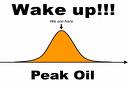
Peak Oil Now Been Accepted
 When I started covering the development of the peak oil crisis, it was by quoting this writer back in 2007. At the time everyone was willingly blind and even trying to insist it was not happening. This has largely changed. The collapse in 2008 was brought on first by an abrupt run up in the price of oil. More precisely, it derailed the speeding train built on the sub prime pyramid scheme indulging the global banking industry.Oil saw a high of $140 which was clearly unsustainable in terms of demand sustainability and worse in terms economic affordability. It crumbled back to $30 some lows and has since recovered back to $80. That is a good operating price.In the sixties, a man made $1.00 per hour in theWhat we have learned is that the oil industry has an unsustainable piece of theThis article spells out that industry and other specialists are now on the same side of the story and the rest will soon follow. You will be reading a lot more about this over the next couple of years. It has become politically legit to begin talking about the problem.It is a problem, unlike the fading hysteria over global warming. The global economy must move double time out of the oil industry. The good news is that it is actually happening through many diverse avenues.The good news is that we can likely survive a sudden sharp drop in oil production because we are rapidly bringing on the Iraqi fields. The probability of such a large drop has been high and continues for the present.This article also makes clear that the oil industry itself recognizes these constraints and is now a natural ally for alternative energy.If I were Exxon today, I would simply divert all surplus capital straight into developing geothermal inAs you read this article then remember that I am increasingly optimistic.Everyone is now awake to the idea that an electric car is a great solution and we are close to solving the range issue. We are also awake to the 60% loss factor in the electric grid system we have and are quickly moving to fix that. And building a national efficient grid is now in the cards while tapping all sorts of new power is underway.In the meantime North American oil production is entering a growth surge of its own from advanced horizontal drilling methodology and the pending implementation ofOfficials Wake Up to Peak Oil, Part 1By Chris Nelder | Friday, April 2nd, 2010When I began writing about peak oil professionally in 2006, it was generally considered a tinfoil hat theory. The notion that oil production might peak around 2012 (plus or minus) was only taken seriously by a few analysts who were considered extremely pessimistic.Official forecasts had no cognizance of it whatsoever. All were confident that oil supply would continue to grow steadily to 130 million barrels per day (mbpd) and beyond, at prices that would be considered astoundingly cheap by today’s standards. Oil companies rarely mentioned peak oil, and when they did, it was in a casually dismissive way.But as time marched on, the cornucopian arguments fell one by one. My longtime readers have seen the story unfold, but for the benefit of new readers, here’s a quick summary…Forecasts grew increasingly pessimistic as it became apparent that regular conventional crude supply had peaked at the end of 2004. Even as the biggest oil price spike in history ensued from 2005-2008, crude production remained flat and unresponsive.OPEC scaled back some of its development plans as costs soared. Non-OPEC production not only failed to deliver any actual increase, but began to decline. Forecasts were revised lower.Corn ethanol boomed and busted, as it was revealed to be the net energy non-starter that serious analysts always knew it was. It also was suspected of adding pressure to food prices at a most inopportune time.Unconventional production from oil shale and tar sands failed to grow as expected, as producers shied away from high-cost, low-production projects.The International Energy Agency (IEA) finally included the depletion of mature fields in its analysis, and became increasingly shrill in its warnings about future supply.A few current and former oil industry executives began making public statements about the diminishing prospects for new supply, and a few even acknowledged that it would be hard to increase production much beyond current levels.Then high oil prices proved intolerable to an economy stretched thin by the bursting of the bubbles in the real estate and financial sectors.Yet official recognition of the peak oil threat remained muted, couched in warnings about “adequate investment” and blithe assertions that demand would soon peak, averting any supply shortage.All that seems to have changed in the last month. A sudden deluge of reports and summit meetings suggest that the oil industry and energy officials are now taking peak oil very seriously indeed.The first bombshell was actually dropped on February 10, when theIt only made the news because Sir Richard Branson personally endorsed it; but the fact that the task force comprised topThe British government, including energy minister Lord Hunt, responded by staging a closed-door summit meeting with the taskforce on March 22. As theVeteran peak oil analyst and taskforce member Jeremy Leggett explained: “Government has gone from the BP position — ’40 years of supply left, the price mechanism works, no need to worry’ — to ‘crikey’.” He urged the assembly to properly assess the risks of peak oil, and to immediately begin preparing for the end of globalization and an era of oil shortages in the West.According to reports from attendees, the summit yielded some important conclusions:
- Peak oil is either here, or close enough.
- Prices will have to go higher as demand outstrips supply.
- Governments will be forced to intervene to maintain critical levels of oil supply, and limit volatility.
- Rationing measures may be unavoidable.
- Electrification of transport must be pursued in order to reduce demand.
- Communities will need to work quickly to reorganize around walking instead of driving, producing food and energy locally instead of importing, and generally try to reduce their need for oil.
However, the notion that peak oil will mean the end of economic growth, as I have argued, apparently fell on deaf ears. Still, the very fact that the government has engaged with the peak oil community and formed a parliamentary group to study the issue offers a sliver of hope that, at least in the UK, we’ll have some measure of consciousness about the issue and an idea of what to do about it as we drive off the peak oil cliff.The next was a report that surfaced around March 12. Three authors from the College of Engineering and Petroleum at Kuwait University had applied advanced mathematics to reserve and production data for the top 47 oil producing countries using a multi-cycle Hubbert model, which demonstrated a much better fit to historical data than single-cycle Hubbert Curve analyses.The model estimates the world’s ultimate crude oil production at 2140 billion barrels, with 1161 billion barrels remaining to produce as of the end of 2005. It forecast that world production would peak in 2014 around 79 mbpd. The annual depletion rate of world reserves was estimated to be around 2.1%.The results weren’t really news to the peakists, for they matched up quite well with the models of Colin Campbell, Jean Laherrère, and other analysts who have warned about peak oil since 1995. What made this report interesting was that first, it was fromThe model indicated that non-OPEC production peaked in 2006 at 39.6 mbpd. It forecasts that OPEC production will peak in 2026 at 53 mbpd, up from 31 mbpd in 2005, with the majority of the increase coming fromOn March 22, another bombshell exploded in the press as former UK chief scientist David King and researchers from Oxford University released a paper claiming that the world’s oil reserves had been “exaggerated by up to a third,” principally by OPEC.Their “objective analysis” showed that conventional oil reserves stand at just 850-900 billion barrels — not the 1,150-1,350 billion barrels that are officially claimed by oil producers and accepted by the politically influenced IEA.They anticipated that demand could outstrip supply by 2014-2015.In a statement that sounded like a direct echo of what peak oil analysts like me have been saying for years, co-author Dr. Oliver Inderwildi remarked, “The belief that alternative fuels such as biofuels could mitigate oil supply shortages and eventually replace fossil fuels is a pie in the sky. Instead of relying on those silver bullet solutions, we have to make better use of the remaining resources by improving efficiency.”Again, it was hardly a revelation. I detailed the “political reserves” additions of OPEC producers in 2007, when I was writing Profit from the Peak. But the fact that it was recognized widely in the press was a marked change from the past.The future of fuel will indeed be all about efficiency and alternative energy. This process — whether you’ve noticed or not — is well underway. Hundreds of billions will be made as a select group of companies slowly eradicate the rampant waste in our electricity distribution system, which has been estimated at upwards of 60% by analysts.ConocoPhillips Gives Up on GrowthOn March 25, ConocoPhillips CEO Jim Mulva admitted that pursuing new oil reserves just doesn’t pay. The remaining resources have become too marginal and too expensive, and the competition for them has become too intense.Rather than keep slugging it out with bigger and better-funded players in pursuit of growth, Conoco has decided to sell $10 billion worth of its assets over the next two years, all of them in the marginal category, and concentrate on producing its core assets.The proceeds will be used to buy back its stock, reduce its debt, and raise dividends — just as rival ExxonMobil has been doing for the last five years or so.When I inferred in Profit from the Peak that the oil majors were spending vastly more money on buying back stock than investing in new exploration because reserves were getting too expensive and risky, veterans of the Street greeted the idea with extreme skepticism.Now it’s a plain fact. AThose of us who have been observing the trend for years greeted the latest Conoco comments with little more than a shrug, but it did get the attention of the laggard mainstream press.In my next Energy and Capital column two weeks from now, we’ll see how the U.S. Department of Energy is now considering the possibility of a decline in world liquid fuels production by 2015, and pick up a few more clues from the International Energy Forum held this week.Until next time,Chris - Peak oil is either here, or close enough.
-
DS homebrew game – Super Smash Bros Crash! DS Demo 5
Homebrew coder miguel28 is back to release a new version of Super Smash Bros Crash!, a portable adaptation of the highly popular Super Smash Bros. game for the Nintendo DS. The latest update of the brew includes
-
Comet Kazi
 Comet-kazi: Sun-observing spacecraft spots a comet’s demiseMarch 26, 2010The Solar and Heliospheric Observatory (SOHO), launched in 1995 by NASA and the European Space Agency to study the sun and its environs, has delivered an auxiliary benefit—discovering more comets than any other mission in history. Most of the more than 1,500 comets
On March 12, -
Two more key developers leave Infinity Ward
As expected, two more key developer’s of the Call of Duty franchise has left the studio, following the earlier departure of Infinity Ward bosses Vince Zampella and Jason West over allegations of “breaches of contract and insubordination”.
-
Beware The Seductive Power Of Surveillance
Jessie Hirsh has a great blog post about the seductive power of surveillance, covering how surveillance systems put in place with limitations and for the best of intentions almost always get abused, as it just becomes too tempting to use them to a much greater level. The example he discusses, of course, is the recent webcam scandal involving a school that used webcam images of a student at home in a disciplinary action. In that case, the “surveillance” was intended for recovering lost or stolen laptops only, but the mandate was allegedly “expanded” when an image taken (supposedly because a “loaner” laptop had been taken off campus) also showed the student eating candy that the school administrators thought were drugs.
Hirsh also points out that, beyond the temptation to just expand what’s monitored, being able to watch over someone just has it’s own (potentially dangerous) addictive quality as well — by noting “the intoxication people feel from being the watcher.” That also, I believe, is a part of the reason why law enforcement is always so keen on increasing surveillance efforts. It’s just incredibly powerful to be able to watch over others.
It’s definitely something that needs to be thought about carefully, as we become an increasingly watched society. But how do you deal with it? Hirsh brings up the idea — proposed many times before — of being able to watch the watchers or even to open up the surveillance process to the public to have them help out. This horrifies some people, but it’s at least something that people need to think about. Greater amounts of surveillance in society aren’t likely to go away any time soon — so recognizing the risks associated with it and coming up with unique and innovative solutions to deal with (or minimize) those risks makes sense.
Permalink | Comments | Email This Story
-
PlayStation Magazine: Red Dead Redemption has the greatest multiplayer lobby ever
Someone’s mighty impressed with Red Dead Redemption. PlayStation Magazine just dubbed Rockstar’s Wild West themed title as “The Greatest Multiplayer Lobby in the History of VideoGames”. Awesome.
-
Zipper: We’ve got something for MAG in the coming months
Getting bored with MAG yet (but how is that possible?!?)? Don’t worry, Zipper Interactive has something up their sleeves for you in the coming months. How do we know? They said so.
-
Reporter Matchmaking: New Journalism At Work
While we still hear some traditional journalists whining and complaining about the dying journalism field, it’s really exciting to see those who aren’t paying attention to that working hard on reinventing journalism in a way that works. We already wrote about how the Planet Money team at NPR spent their own money to buy a toxic asset to learn more about how it worked, and now Clay Shirky points us to another, similar, experiment from new journalism operation ProPublica. In reporting on the mortgage modification story (which is a big, but vastly underreported story), ProPublica is acting as a matchmaker, connecting struggling homeowners with local reporters in order to have their stories told.
As with the reporters buying the toxic asset, it’s about getting past the old “he said/she said” style of reporting, and digging deep by actually getting involved in the story. And, it nicely balances out away from pure “citizen journalism” where the participants do the reporting themselves. Instead, it recognizes that there are times when it’s useful to have a professional help tell the participants’ story — but in a situation like this, where there are so many participants, there previously wouldn’t have been a really effective way to tell that story. You could possibly do a survey, but those are often misleading, and don’t go very deep. But by reaching out and teaming up lots of homeowners going through this process with lots of reporters, you create a potentially really interesting and deep set of news stories about an important topic.
Journalism isn’t dying. It’s just evolving.
Permalink | Comments | Email This Story