Author: Serkadis
-
UCLA-led team may have found key to cause of Cushing disease
UCLA RESEARCH ALERTFINDINGS:Cushing disease is a life-threatening disorder most commonly triggered by tumors, often benign, in the pituitary glands, resulting in excess production of adrenocorticotrophic hormone (ACTH). The condition is marked by progressive weight gain, excessive fatty tissue deposits and a rounding of facial features, known as “moon face,” and can lead to diabetes, hypertension, osteoporosis, obesity and psychological disturbances.Cushing disease, which is more common in women than men, is also associated with a three- to four-fold increase in the risk of premature death. But what drives the tumor growth and the excess production of ACTH?UCLA researchers and their colleagues have now found that testicular orphan nuclear receptor 4 (TR4) is overexpressed in the tumors. The scientists discovered that by knocking down TR4 in lab mice, they were able to reverse tumor growth and excess ACTH production.IMPACT:The findings could potentially lead to a drug therapy for Cushing disease.AUTHORS:Study authors included Li Du, Marvin Bergsneider, Leili Mirsadraei, Steven H. Young, William H. Yong and Anthony P. Heaney of UCLA; Johan W. Jonker of the University of Groningen in the Netherlands; and Michael Downes and Ronald M. Evans of Gene Expression Laboratory at the Salk Insitute of Biological Studies in La Jolla, Calif.JOURNAL:The findings were published in the May 21 issue of the journal Proceedings of the National Academy of Sciences.FUNDING:The research was supported by the National Institutes of Health (grants DK057978, HL105278, DK090962, HL088093, ES010337 and CA014195), the Helmsley Charitable Trust, the Samuel Waxman Cancer Research Foundation, UCLA’s Jonsson Comprehensive Cancer Center, Ipsen/Biomeasure, the Human Frontier Science Program (grant CDA00013/2011-C), and the Netherlands Organization for Scientific Research (VIDI grant 016.126.338). -

GMO genetic pollution alert: Genetically engineered wheat escapes experimental fields planted across 16 states

The genetic apocalypse we’ve been warning about for years may have already begun. The USDA just announced they found a significant amount of genetically engineered wheat growing in farm fields in Oregon. As the USDA announced yesterday, “… -
World Wide March against Monsanto was widely censored by mainstream media

It’s nowhere to be found in the big newspapers or on the “network” TV news, but why? The highly successful, world wide “March against Monsanto” is nowhere to be found in mainstream media, and it wasn’t covered live either. Far bigger than any cancer march, or any MS… -
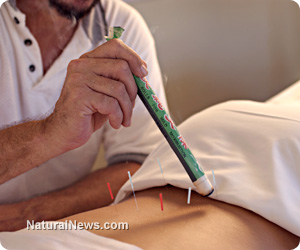
Acupuncture really works for lower back pain: Research

A unique and not well known type of acupuncture in the Western world, motion style acupuncture treatment (MSAT), is used in Korea for lower back pain (LBP) or other musculoskeletal areas of pain that hinder movement. MSAT requires assisted motion of the affected area… -
Eric Holder perjured himself in lie about AP – DOJ intimidation scheme

It is said that when you lie often, sooner or later you will be caught in your own web of deceit. That may have just happened with Attorney General Eric Holder. Last week Holder appeared before the House Government Reform and Oversight Committee to provide testimony… -
IRS hid scandal during 2012 election to help Obama get elected

By now most Americans know that the Internal Revenue Service’s (IRS)targeting of conservative, “patriot” and similar groups by some members of the the agency’s tax exempt status division did so for political reasons, but the political motivations behind those actions… -
FDA denies family’s alternative cancer treatment, shuts down clinic

The Camelot Cancer Care center in Tulsa, Oklahoma has been shut down. The FBI and the FDA showed up in April with a search warrant and seized computers, invoices, bills, cellphones, and important treatment that patients were receiving. Investigators would not speak about… -
The rebel against the controlled world
(NaturalNews)The campaign and attack against the individual takes many forms. In 2012, I was contacted by a disillusioned psychiatrist who had “left the field.” He told me he was interested in discussing his experiences. Here is a key remark he made in our conversation: …
-
Boy diagnosed with autism has higher IQ than Einstein; thriving despite failure of public school system

When the experts told Kristine Barnett of Indiana that her two-year-old son would probably never be able to read or even tie his shoes due to his severe case of autism, the brave mother of three decided to take matters into her own hands. And as a result, she helped… -
Arsenic being intentionally added to conventional chicken

The old saying, “You are what you eat,” poses troubling implications for public health in light of a new study on chicken meat, which found that most of it contains dangerously high levels of toxic arsenic. And the worst part is that industrial chicken producers are… -
How safe are root canals?

Almost 60 million root canals are performed a year (1), on individuals who are mistakenly informed that it is a safe and harmless procedure. While your teeth may look and feel fine after the procedure, the reality is that it is impossible for all of the bacteria to be… -
Why coconut oil is the best vegetable oil

Health is wealth. Additionally, having a healthy body can make people have fewer worries and be happy in life. If you are somebody who thinks the same way, you should beware of cooking oils with canola, sunflower, safflower, soy, or corn as a base. Don’t believe it… -
Bullied over butter: NYC education department threatens school cafeteria managers for using natural butter in meals

America truly is turning into a 1984-esque police state, and ground zero for this authoritarian onslaught appears to be New York City where government-run public schools are now on a crusade to eliminate butter from school cafeterias. As reported by New York Daily News… -
The dismal future of America’s food supply? Lab-grown burgers could eventually hit fast food menus

Scientists from the Netherlands have apparently come up with a new method to produce meat that almost completely does away with the animals. By combining animal stem cells with fetal serum and other materials in their laboratory, Dr. Mark Post and his colleagues from… -
Health benefits of eating pumpkin seeds

If you are acidic, or even somewhat acidic, in your stomach, you’d probably be thankful that pumpkin seeds exist. Everywhere, people are preparing dangerously acidic meals. To counteract the negative effects of acidic foods and meals, take note of studying and incorporating… -
Monsanto: The worst of the worst
(NaturalNews)Monsanto lies about everything and will commit any atrocity against the people to ensure profits. Recently, the Cornucopia Institute reported about the French farmer that was poisoned by one of Monsanto’s “safe” pesticides. Read it for your self. A French farmer…
-
Seven undeniable reasons to homeschool your children

So far homeschooling is legal in all 50 states. Some states require no monitoring, some moderate oversight, and a few require close supervision by testing. Here’s a color-coded-by-state map that indicates those different levels of acceptance (http://www.hslda.org/laws/… -
Tesla CEO: We’re tripling the size of the Supercharger network
Tesla plans to make an announcement about its Supercharger network on Thursday morning, but on Wednesday night at the AllThingsD D11 conference (our live blog here), Tesla CEO Elon Musk let the cat out of the bag early and said “What we were going to announce tomorrow is that there is going to be a dramatic expansion of the Supercharger network. By next month we’ll triple the coverage area.”
Musk said that on Thursday they’d unveil a detailed map and that Tesla Model S drivers would “be able to drive all the way from LA to New York using the Supercharger network.”
Superchargers are basically fast chargers that can charge up one of Tesla’s Model S cars in around 30 minutes (depending on how low the battery is). The idea is that because the market for electric cars is so new, there isn’t enough charging infrastructure out there to enable EV drivers the comfort of driving wherever they want, whenever they want — like taking a road trip up and down the state.
“Range anxiety is real,” said Musk at D11. That’s why Tesla has become an infrastructure provider as well as a car maker. The chargers have solar panels on them from Musk’s other company SolarCity, and Tesla has been building out the chargers along well trafficked long distance highways.
Until now most of the Superchargers had been installed on the coasts. But back in September 2012 Musk had said that within two years he wanted the U.S. to be covered in Superchargers. Tesla also wants to build them in Europe and Asia, too.

Related research and analysis from GigaOM Pro:
Subscriber content. Sign up for a free trial.- Cleantech first-quarter 2013 analysis and outlook
- The fourth quarter of 2012 in cleantech
- Cleantech and investment in 2013
-
August wants to make connected locks that don’t require you to pull out your smartphone
Locks are not only the gatekeeper to your home, but they are also a gateway to building out a connected home. Which is why August, a company building a connected lock is worth a look. The startup, which was formed last year, has built a Bluetooth lock that’s pretty, social and in the same price range as other connected locks.
The service lets you open your door without a key, but it also lets you set times that your door could be unlocked by people you’ve invited into your home. So you might send a plumber the code to unlock your house set for a one-hour window, or you could invite your friends over for a barbecue and they could wander in during a multi-hour window without having to wait for you to let them in. You send or revoke invites from the app on your smartphone, although you can also still open the door using a key if you want (or if your battery dies in your handset).
From a user perspective the most important thing you need to know about the August lock is that the use of Bluetooth means you won’t have to take out your phone and use an app in order to open your door. The Bluetooth radio in your phone (or a friend’s phone if you send them the code via text or email) is enough to trigger the door. This is nice, since other options on the market such as the Lockitron (on older iOS and Android phones that don’t have native Bluetooth support) or specialty products require an app and sometimes even a gateway in the house.But the August lock, designed by Yves Béhar, may benefit you if you do decide to take out your phone. The service provided with the lock (there’s always a service element for the best connected devices) lets people leave “notes” for people who trigger the lock that can be sent via the August app. So if your guest opens the door, you can send them a note about the alarm code once they’re inside or tell them that they can find clean towels in the laundry room. If it’s your husband you can ask him to empty the dishwasher.
I think it would be awesome to sync the locking service to my Evernote account so I could set myself reminders for when I leave the house. That’s not a feature offered yet, but imagine a situation in which my daughter locked the door every Wednesday as she was leaving for school, and she got a reminder asking if she has her karate bag. The locking or unlocking of the front door is a more exact way to pinpoint when someone leaves, as opposed to GPS or Wi-Fi.
In our interview, Béhar also was excited about the social aspects of leaving notes for people after you left the house. I personally could care less if someone who came over for a barbecue leaves a note telling me they liked the ribs, but I am a bit of a curmudgeon. There are plenty of people who will like the social aspects associated with the lock. Plus, technology like this will help overcome some of the physical hurdles in the sharing economy. Being able to grant access via an app is a lot easier than meeting someone to hand over a set of keys.
However, when paired with other services, or even on its own, I think this is a lock worth looking at when it comes out in the fourth quarter of this year. Jason Johnson, a co-founder, said the price would be less than $200 and installation is about a 10-minute endeavor. The lock requires four double A batteries that should last about 6 months (Johnson says it may last up to a year).
August has developed a secure layer on top of the Bluetooth protocol to add a level of security. They also won’t let you send someone an access code to get into the house with the home address, although a diligent search through previous emails or texts on a stolen phone might reveal that. And if you’re like me and wonder how to give people (small children, Luddites) access to your home if they don’t carry a smartphone, Johnson says they are looking at providing a way to let other Bluetooth devices such as personal fitness trackers or even specialty dongles work with the lock.

Related research and analysis from GigaOM Pro:
Subscriber content. Sign up for a free trial.- Siri: Say hello to the coming “invisible interface”
- The connected planet: Smartphones aren’t the only player
- Call it Real-Time, Squared, or NewNet, The Web Is Changing
-
C3 raising more money for energy data plans
How much does one startup need to sell software to manage utilities’ energy data? For Thomas Siebel’s C3, it turns out, a good deal.
According to a filing C3 has raised another $15 million of a planned $30 million round, adding millions to the now about $60 million we estimate they’ve raised. Siebel has said that C3 is building a $100 million to $150 million big data software platform that it has been selling to utilities to help them manage their energy data.
The company’s Board of Directors is also now even more of a who’s who of retired energy executives, including Mayo A. Shattuck III, the former CEO of Constellation, Stephen Ward, the retired CEO of Lenovo, S. Shankar Sastry, the Dean of Engineering at University of California, Berkeley, former Secretary of State Condoleezza Rice, President of Yale, Richard Levin, and former Secretary of Energy Spencer Abraham. Newer executives hired include Tendril’s former COO Ivo Steklac, and Under Secretary and Assistant Secretary at the U.S. Department of Energy, Cathy Zoi.
Earlier this year, Siebel talked about some of the recent milestones that the four-year-old C3 has met, including a data grid analytics project for PG&E, and a joint development deal with GE to create a big data energy platform.
The PG&E project crunched data about commercial and industrial buildings in the utility’s footprint, and helped PG&E work with these customers to reduce their energy usage. The GE software, which is built on the C3 platform stack, can pull in disparate data from a variety of sources like grid sensors, utility databases and even social media sources, and utilities can use the software to peer into their grids, and combat blackouts in real time.
C3 said that as of earlier this year it had three of these types of projects live with customers, and planned to launch another five projects in 2013 and another five in 2014. Other C3 customers include Entergy, Northeast Utilities, Constellation Energy, NYSEG, Integrys Energy Group, Southern California Edison, ComEd, Rochester Gas & Electric, DTE Energy, and McKinsey.
Over the years C3 has pivoted from its original business plan, which was focused more on managing carbon emissions and working with corporations on those sustainability goals. Now C3 is squarely focused on energy data and utilities.

Related research and analysis from GigaOM Pro:
Subscriber content. Sign up for a free trial.- The growth and promise of the LED market
- Big data meets the smart grid
- Green IT Q4: solar, subsidies and the outlook for EVs