Viking Pump has expanded its line of high pressure positive displacement pumps to 190 GPM (43 m3/hr), with either sealless Viking Mag Drive®, single or double cartridge seals, component mechanical seals or lip seals. The SG series offers 29 displacements, with pressures to 500 PSI (34 bar) standard, some offering pressures up to 2,500 PSI (170 bar). All operate at up to 4-pole motor speeds, and offer either foot bracket or close-coupled motor mount to both NEMA C and IEC frame motors.
The SG series are capable of handling liquids from 1 to 250,000 cSt viscosity. These cast and ductile iron pumps are especially applicable on fuels, lube oils, adhesives, polyurethanes, heat transfer liquids, edible oils, solvents, paints and coatings, and general chemical applications. Use of the magnetic drive is especially important where liquid or vapor leakage is not allowable, where air infiltration through a seal into the pump is not allowable, or where unplanned downtime due to seal leakage cannot be tolerated. To match the pump to the application, Viking offers a broad range of bearing options, porting options, clearance options, sealing options and drive options, all of which contribute to ease of installation and reliability.
Author: Serkadis
-
Sealless High Pressure Pumps
-
New model RHG-M60 M4-M60 in stainless steel
Gamor has expanded its range of tapping machines and now complemented with a model that taps from M4 to M60 in all materials. This model has the same characteristics as the model Vitoria, lowering the sizes of the machine. With this machine we present the only hydraulic tapping machine world wide that is able to tap M60 in stainless steel.
-
Toyota planning on starting new plant in June 2011

Toyota is set to begin operating its newest American plant in June of 2011, according to a Japanese newspaper.
The new plant, which is located in Mississippi, was originally slated to commence operation in the second half of 2010, but Toyota suspended construction work on the facility due to declining U.S. auto sales.
The new plant, which will produce the Prius hybrid, will add to Toyota’s American network of 10 assembly plants in the U.S. that along with other operations employ 33,400 individuals. Factor in indirect employees, such as those that work for dealers, and that number increases by 160,700.
– By: Stephen Calogera
Source: Automotive News (Subscription Required)
-
Dailymotion Signs with Warner Music in Another Major Music-Video Deal
 Dailymotion continues to solidify its position in the online video market with a new partnership with Warner Music Group, one of the four major music labels. This comes less than a month after the site announced a very similar deal with EMI, the smallest of the four. Under the new deal, WMG music videos will be available, ad-… (read more)
 -
China Throws A Big Wet Blanket Onto The Gold Market
Sorry gold bulls, China does not intend to make some huge gold purchase, driving the price towards the sky.
Yi Gang, vice-governor of the PBOC, noted that while gold could be a nice asset, China intends to proceed “cautiously” with any further purchases, according to Caijing. He apparently cited general market conditions for the bank’s hesitance to purchase more.
In recent weeks there’s been a lot of talk of China buying a big chunk from the IMF, which is in dumping mode, and so without China aggressively buying, the fear is that this will hit the market and depress prices.
Don’t miss: 15 facts about China that will blow your mind >
Here’s the latest price chart:

Join the conversation about this story »
See Also:
- China, In The End, Didn’t Buy Gold From The IMF Because It Has Better Ways To Use Its Money
- Gartman: Don’t Be Fooled, The IMF Will Ultimately Bail Out Greece
- Euro Bulls Suffer A Near Miss As IMF Suggests Europe Target Higher Inflation
-
Obamacare Countdown: With 9 Days Left To Go, Odds Of Passage Hit Brand-New High
Since healthcare reform is far and away the biggest business issue there is right now, we’ll keep the countdown going until it either happens or it’s dead.
Obama has set a target of March 18 to finish the job, so now we’re down to 9 more days.
POLITICO has the latest on how this year-long battle, and how many huge questions remain. Many of them are highly technical, and regard the reconciliation process, as well as which bill the House will ultimately vote on. It’s pretty wonky stuff, and only politics uber-nerds are encouraged to click.
On InTrade, the odds that healthcare reform passes is up to 64%, the highest it’s been in a long time.

Join the conversation about this story »
See Also:
- The Final Countdown: Obamacare Now Has 10 Days To Live Or Die
- Here’s What You Need To Know About Obamacare’s Chances Of Passing
- Obamacare 2.0: More Of The Same, Just More Expensive
-
US Eases Sanctions On Communications Software For Cuba, Iran And Sudan
Realizing that better communications tools would probably help spread important ideas and efforts against totalitarian regimes, the US has finally eased sanctions against providing communications software in Cuba, Iran and Sudan. In the past, economic sanctions against those countries were supposed to create pressure for the regimes to change — but in practice that’s been a pretty big failure. Now, it appears, folks in the administration are finally realizing that more open communication allows for much greater efforts and organization, as well as more information from elsewhere. This is a good move — just many years too late.
Permalink | Comments | Email This Story
-
Google May Integrate Latitude with Buzz at Some Point
 Google Buzz’s launch is mostly viewed as a failure, despite the service apparently having several million users, largely due to the Gmail integration. But Google is putting it behind and is still working on fixing the flaws the rushed launch exposed. At the same time, it’s also working on expanding the service and possibly offering some inte… (read more)
 -
Integration – Vivien Zarucki

Vivien Zarucki’s mother has vascular dementia and needs nursing care 24 hours a day. Her mother spent a long time in hospital while the funding for her on-going care was arranged. Vivien feels that health and social care services should be working together more effectively.
Vivien Zarucki, 43, works as a financial advisor in Bournemouth. Until last year, her 76-year-old mother lived a short walk away in her own home. Recently her mother’s health has declined rapidly, and after a long stay in hospital she now lives in a nursing home where she gets the care she needs.
Vivien first noticed something might be wrong when her mother’s behaviour started to change. She had previously enjoyed reading, cooking and socialising, but she was doing these things less and less.
“She used to go to bingo a lot, meet up with her friends. Then she stopped going,” says Vivien. “She used to love baking these fruitcakes, and that stopped happening as well. And when you thought it through, you could see it’s all the things for which you require short term memory or concentration – following bingo numbers, following a recipe.”
It was only when her mother suffered a series of small strokes, and her health quickly deteriorated, that she was diagnosed with vascular dementia.
Initially Vivien tried to support her mother to stay living in her own home. But psychological and mental health needs meant her mother had to move, initially to a residential home, and then to a psychiatric hospital.
Following a major epileptic seizure, she was admitted to a general hospital, where she stayed for a number a months. It was clear she would not be well enough to return home, and longer term care arrangements needed to be made.
“They cared for her very well physically. The nursing staff were fantastic and lovely to Mum. But an acute ward on a general hospital isn’t kitted out. She had no treatment for her mental health, none at all,” says Vivien.
Vivien believed that her mother was medically fit for discharge after seven weeks, however she remained in hospital for five months. Vivien says that the primary reason for this delay in her discharge was “bureaucratic”; an inaccurate assessment by the PCT, followed by a dispute between the PCT and Social Services over funding. Once these issues had been resolved, Viven’s mother remained in hospital a further one and a half months because there were no spaces in the right nursing homes.
Vivien explains that the hospital used a single assessment process to work out what care her mother would need when she left hospital. She thinks that in principle this is a very good idea and could help make arranging on-going care easier.
“It saves someone having to go here, there and everywhere, all around the houses,” says Vivien.
In her mother’s case she felt this assessment process did not work as well as it could have done. Her mother’s condition was assessed to see if she had continuing healthcare needs. This would determine whether her nursing care would be funded by the NHS, but it took many weeks to finalise whether her mother qualified for this.
“At the bottom of all this is money, understandably,” Vivian says. “They are there to help and care within budgets, I understand that entirely. But whether it’s social care, whether it’s NHS, it should not delay the end user in receiving the care they need.”
“It’s like warfare between the different departments and there is no-one there who can just guide you through. Nothing makes it easy.”
Vivien believes the involvement of the discharge coordinator at the hospital helped to finally resolve the situation, although she also feels that the threat of legal action encouraged everyone to work together.
“In the end we just started the whole thing afresh, with the discharge coordinator and the multidisciplinary team, everyone in there. It was all done how it should have been done in the first place,” she says.
Vivien is thankful for the support she received from the Alzheimer’s Society for helping her make the right decisions.
“They have been fantastic. It’s putting you in touch with the right people, getting hold of the legislation for you.”
Her mother’s case was “borderline” and went to a panel for a final decision, but she appreciated how the discharge coordinator kept her informed about the process and what to expect.
“You’d much rather be told how it is. You’d rather take it on the chin and have the truth than be misled or misguided, so that you can prepare better for the future,” Vivien says.
Finally the continuing healthcare funding was awarded and Vivien’s mother is now in a nursing home where she can receive the 24 hour support that she needs for her physical and mental health needs.
“The nursing home is a much calmer environment and much better for her,” says Vivien.
-
AutoblogGreen for 03.09.10


At Witz’ End – It’s the Battery, Stupid!
And we need better ones.

Mitsubishi and PSA finalize deal for 100,000 electric vehicles
Europe, get ready.

BMW: Actually, we’re planning on more than 200 ActiveE units for the U.S.
At least 450 will be leased here.Other news: AutoblogGreen for 03.09.10 originally appeared on Autoblog on Tue, 09 Mar 2010 06:02:00 EST. Please see our terms for use of feeds.
Read | Permalink | Email this | Comments
-
India: Women’s Bill Stirs Up A Hornet’s Nest
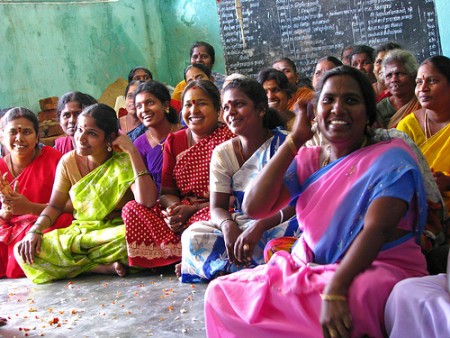
India – Faces – Rural women driving their own change. Image by Flickr user mckaysavage and used under a Creative Commons License
There was a pandemonium in the upper house of the Parliament of India (the Rajya Sabha) when a controversial Women's Reservation bill from more than a decade ago, was re-introduced by the ruling UPA government on March 8th – International Women's Day.
The nation watched in shock as a handful of MPs, belonging to the parties opposing the bill, went on rampage in the well of the House, forcing the the Vice-President Hamid Ansari, who was chairing the session, to adjourn the House.
You can see all the action in this video on the BBC News website.
Manjunath Singe from The Other Side, explains what the bill is all about:
- The Bill seeks to reserve, as nearly as possible, one-third of all seats for women in the Lok Sabha and the state legislative assemblies.
- As nearly as possible, one third of the total number of seats reserved for Scheduled Caste/Scheduled Tribes (SC/ST) in the Lok Sabha and the legislative assemblies shall be reserved for SC/ST women.
- Reservation of seats for women shall cease to exist 15 years after the commencement of the Act.
- (Actual) Reserved seats may be allotted by rotation to different constituencies in the state or union territory.
The government hoped that the bill would pass without event on Women's Day, despite stiff opposition from regional parties such as the Rashtriya Janata Dal and Samajwati Party, thanks to the pledged support from key opposition parties. Proponents of the bill argued that this ‘empowerment gift' to women on their 'special day' would ultimately be a game-changer in Indian politics, enabling the participation of more women in the legislative process of the nation.
Instead, since that first adjournment, the House has been forced to adjourn every time it has met over the course of day and the trend continues into March 9, despite a government effort to scramble together a last minute consensus and a request from the President that the bill be passed “with grace.”
These events have brought the Women's Reservation back in the eye of a storm. Furious debates have re-surfaced, and the heat is reflected in the online citizen media space.
The Ayes:
Rajiv Azad at MeriNews is highly optimistic about the impact of this political step. According to him:
Lets hope this time history would be made in parliament, and on women’s day it would be a fitting gift to women community of the country. Such a move would facilitate in empowering women in society.
Dweep at Desicritics points out:
Such a policy is likely to increase the pool of talent needed at the top of our political class. Few would argue that India's politics suffers from a lack of credible leaders. To the extent that that is the result of limiting our talent pool to men only, this policy is likely to increase the number – if not the probability – of better leaders. [..] This bill may not be the best solution or only solution to empowering women. But let not the perfect be the enemy of the good.
Suvashanand Mishra at First Person Account feels that:
The most valuable gift to women has been presented to Indian women on International Women's Day by introducing the Women’s Reserval Bill in Rajya Sabha.
The Women’s Reservation Bill has been hanging in balance for the last 15 years only because of the opposition by these narrow, closed and orthox politicians. The passage of Women’s Reservation Bill will be a historic and epoch making in empowering Indian women. Women’s adequate participation in government decision making bodies will result in better management of society and the country alike. [..] As women have proved to be better managers, they will deal administrative, political and social issues in a much better way.
Reading Between the Lines, blogger Sanjeev Nair, comments:
The Women's Reservation Bill had been in the making for 14 years. Tabled thrice prior to this, it was always put back in cold storage. But this time was different. This time the only person that counts in the Congress, Madam Sonia Gandhi had thrown her weight behind the bill. [..]
Considering women in general make the headlines in India as victims of abuse, rape or discrimination this would have signaled a significant attempt at correcting some of the wrongs done to our womenfolk.
Prerna at I love Life, so I Explore feels that women representatives would understand and further the cause of Women's issues. She says:
Women constitute half the population of the country. They cannot be ignored. People sitting in the parliament are looking for excuses to stop this bill…Women in Parliament should unite to ensure that the Women’s Reservation Bill is passed in the Budget Session. Everyone pretends to be committed to the cause but except for token statements nothing seems to be moving. Mere lip service won’t help.
The Indian Homemaker feels that till date there has been a reservation in most spheres of life that has passed off as custom and tradition. According to her, it was high time to level the playing field and create an environment where equal opportunities are made available'. She says:
I want some women to represent me in the Parliament.
Manjunath sums up the arguments of the supporters of the Bill in the following words:
The proponents of the policy of reservation state that although equality of the sexes is enshrined in the Constitution, it is not the reality. Therefore, vigorous affirmative action is required to improve the condition of women.
The Nays:
Rahul Mudholkar expresses his concerns in his blog Left and Right:
…two points of the bill really show the lack of intent of the political class in actually empowering anybody but themselves…Firstly the fact that anybody who stands under this bill in an election, winner or looser cannot stand again for 15 yrs!!! What then is the point of that??? Secondly, constituencies are rotated every election thus not holding the incumbent responsible for his/her action or lack thereof….These two are the most disturbing…
Sainagakishore’s Blog expresses inability to understand the need for such as reservation policy. He worried about the possible misuse of this law:
Why the heck do women need reservation? I do NOT understand how women can talk about equal rights and reservations at the same time.
…Let's for instance consider that this bill actually scrapes through. Still, it will NOT achieve the purpose it wishes to achieve, which is to give a chance for the women to speak up in the political game.Kanchan Gupta at the Agent Provocateur calls it ‘An assault on Freedom of Choice’. He writes:
The proposed law reserving legislative seats for women is bad in law. It should never have been proposed, leave alone pushed for adoption by Parliament. If the Bill becomes law, it will remove all incentive to nurse constituencies;sitting MPs will insist nomination for their own kith and kin… This is not about political empowerment of women, but legitimising nomination of kith and kin. Democracies which have empowered women politically and liberated them from gender bias, discrimination and misery have achieved it through policy initiatives and not fraudulent legislation or bogus quotas. Most important, it strikes at the very core of democracy: It restricts freedom of choice. The women’s quota Bill is a travesty and a fraud on the Constitution.
Vinod Sharma in India Retold, concurs with this view. He says:
The proponents of the Women's Reservation Bill have got it all wrong, I believe. Reserving seats for 183 women in Parliament is not going to lead to the empowerment of ordinary Indian women in any manner whatsoever, ever, bar the high decibel chatter. All that it is going to do is to make political gharanas (dynasties) even more powerful, with their women playing primarily the stereotyped supporting role of adding the weight of numbers to the family jaagir (estate).
As before, Manjunath sums up the grievances of the critics succinctly:
1. Opponents argue that it would perpetuate the unequal status of women since they would not be perceived to be competing on merit. They also contend that this policy diverts attention from the larger issues of electoral reform such as criminalisation of politics and inner party democracy.
2. Reservation of seats in Parliament restricts choice of voters to women candidates. Therefore, some experts have suggested alternate methods such as reservation in political parties and dual member constituencies.
3. Rotation of reserved constituencies in every election may reduce the incentive for an MP to work for his constituency as he may be ineligible to seek re-election from that constituency.
4. Reservation would not lead to political empowerment of women because (a) larger issues of electoral reforms such as measures to check criminalisation of politics, internal democracy in political parties, influence of black money, etc. have not been addressed.
5. it could lead to election of “proxies” or relatives of male candidates.The Twittersphere is also abuzz with tweets on the Women's Bill. Some of them have been captured below:
IronicPacifist India going to set a precedent in the Parliament for future to the world, via Women Reservation Bill. Happy Women's Day !!
masarat I'm still mixed about the Women's Bill in #India. Eventually the opportunities will be abused by the corrupt.
KJDevasia Again i say Women's Quota Bill is anti- democratic; not only this all reservations are anti democratic & against fundamental rights…!
jayarajsir Acceptance of Women's reservation bill should be our gift to the women on this day. Its already late lets be better late than never.
karthikatluri By strongly opposing the Women's bill, are the politicians showing signs of fear and competition?
DeepthiBhat I dont understand why there is big fuss abt women's bill, if we are capable enough we should get it without reservation.
DrSankalp Its shame that in country where caste reservation bill is passed in one day women reservation bill could not be passed in one decade!
vinodvhere: Women's reservation bill is nothing but solving the wrong problem. First treat the woman at your home well.
MustafaMir I hope the women's reservation bill does not pass through the parliament…. No more reservations please!!!!!!!!!
kaushikjha Women's bill: it is disgusting that some of the parties should resort to physical means to obstruct it…
sherryrawla International woman's day. Women reservation bill being tabled today. Both occasions do not touch the common woman's life. Cheers to that!
Shubho1987 The womens reservation bill will rightly cement the place for women in Indian politics. Lets wait and watch. hope justice shall be done.
zeqox woman's reservation bill is like saying woman are weak and we want them to remain weak !!!
mynameischirag Why cant Party's who favour reservation for Women, implement the same with in their party without passing the bill. Let us begin somewhere..
Reservations at the top are not enough, we need to begin at the grassroots level says Shefaly in the comments section of Prerna's above-mentioned post:
Unless we sort things at the grassroots, we are not going to get anywhere…A reservation policy at Parliament level is like watering a tree which is uprooted. No point really…
Sandeep Bansal at Desicrtics.org looks at what has happened at the village level after seats were reserved for women in the panchyats (the village councils) and draws a parallel. Seeking a balance between ‘merit and social inclusion', he says:
Empowering women in a society where they have been treated like doormats for centuries is not an easy task. There is bound to be a internal resistance…Therefore reservation is one way to empower women. Since 1993, 1/3rd of the seats in panchayats have been reserved for women. This has been referred to as “the greatest social experiment ever”. Upon adding the numbers, there are more women elected representatives in India than the rest of the world.
Skeptics might argue that it is still the men who take most of the decisions and women are mere proxies. Most probably it is true. But at least it has brought some amount change in the general attitude of the people towards women. This has got them an entry point, something that would not have been possible without reservation…
Reservations are not a panacea and mere reservation is not going to solve everything… Another risk is that this reservation may extend to perpetuity.
Maybe a time will indeed come when all women will join Dupinder in announcing:
…I do not care whether we have a Women's reservation bill or not….I am capable of finding and securing my place in the society and the Parliament…and I had rather do it on my own than have a Bill to become my crutches
…But until then, where do we go from here?
Update : The Women's Bill crossed its first hurdle today, as the Rajya Sabha passed it with a decisive mandate: 186 in favour and only one against (out of a total of 250votes). Prime Minister Manmohan Singh called it a ”historic step forward” towards emancipation of Indian women.
Rezwan has also contributed to this post. -
Toyotas Gone Wild: Cops Forced To Intervene To Slow Down Runaway Prius
Another damaging blow for Toyota. Once again, a Prius went haywire and would not slow down. The police had to get in front of it to make it stop. Here’s video (via LeftLaneNews)
Visit msnbc.com for breaking news, world news, and news about the economy
Join the conversation about this story »
See Also:
- Watch Two Toyota Leaders Cry Defending Their Company
- Toyota Shares Recover As Focus Shifts Towards Incompetent Safety Regulators
- A Quick Guide To Destroying $21 Billion Of Shareholder Value, And Decades Of Reputation
-
The Three Major Near-Term Risks To The Market
(This guest post previously appeared at the author’s blog)
1) Complacency – Complacency levels are getting extremely high as the fears of 4 weeks ago quickly shift to greed. This has been most notable in the very bullish posturing of US portfolio managers (see here) and the Volatility Index. Portfolio managers are now sitting on record low cash levels and haven’t been this bullish since the 2007 highs and the January highs. The VIX has plummeted back to levels just before the January sell-off began. The VIX has now fallen in 17 of the last 19 sessions.

2) Catalysts – Q4 earnings season is now officially over and Q1 reporting doesn’t start until the middle of April. The next few weeks could be characterized by a market that is lacking a catalyst to move higher. Aside from a Fed meeting on March 16th the economic calendar is relatively light over the next few weeks when compared to the last few months. Markets need positive catalysts to drive prices higher. Without a catalyst to cling onto the market could drift or slide lower on any surprises.
3) China – While most equity markets have rebounded substantially over the prior month the Chinese market remains well off its highs and has actually made a series of lower lows. In addition, the Chinese market remains below its 200 and 50 day moving averages – still in bear market territory based on a purely technical definition. China has been the engine of the global recovery and Chinese investors are becoming increasingly concerned about the durability of the recovery. If Chinese stocks continue to trend lower they will almost certainly pull all markets down with them.

Read more market commentary at The Pragmatic Capitalist >
Join the conversation about this story »
See Also:
- US Futures Slip, Euro Headed Lower
- Fitch: US Vulnerable To Interest Rate Shocks, UK In Desperate Need Of Spending Cuts
- Here’s The Latest On Hedge Fund Flows
-
Texas Pension Forced To Invest In Chicago Parking Meters, As Shortage Of Good Assets Makes It Impossible To Get Yield

We’ve been talking about the likelihood of pension shortfalls quite a bit, and one of the sub-stories embedded in the pension equation is the so-called asset-shortage.
There’s a huge demand among savers for yield, and yet in reality there just isn’t very much out there that pays jack squat.
Prior to the collapse, it looked as though this problem had been solved via the invention of frank-bonds (CDOs and such), but in the end, no amount of wizardry could indefinitely create yield with little to back it up.
But the problem hasn’t gone away. The NYT has a nice article about pensions and the bets they’re making to hit lofty targets. Many still have annualized goals of over 8%, which is daunting in this environment, to say the least, especially with such poor returns on any fixed-income assets.
So they’re getting creative:
“In effect, they’re going to Las Vegas,” said Frederick E. Rowe, a Dallas investor and the former chairman of the Texas Pension Review Board, which oversees public plans in that state. “Double up to catch up.”
Though they generally say that their strategies are aimed at diversification and are not riskier, public pension funds are trying a wide range of investments: commodity futures, junk bonds, foreign stocks, deeply discounted mortgage-backed securities and margin investing. And some states that previously shunned hedge funds are trying them now.
The Texas teachers’ pension fund recently paid Chicago to receive a stream of payments from the money going into the city’s parking meters in the coming years. The deal gave Chicago an upfront payment that it could use to help balance its budget. Alas, Chicago did not have enough money to contribute to its own pension fund, which has been stung by real estate deals that fizzled when the city lost out in the bidding for the 2016 Olympics.
if that deal works out fo the Texas teachers that’s fantastic, but the fact that they had to find something so exotic to give them a little payoff is pretty startling, and there aren’t going to be many of these days to go around.
And it’s also yet another example of an Olympics bid damaging a city’s economy. Just imagine how bad things would be if they’d won!
Join the conversation about this story »
See Also:
- 15 Public Pension Chiefs Whose Funds Are Zooming Towards Collapse
- Why Global Central Banks Are Powerless Against The Global, Bubble-Making Asset Shortage
- Why America’s Retiring Boomers Doom Us To Bubble, After Bubble, After Bubble…
-
Google Is Testing a Search Service for TV
 Google may be looking to take another shot at conquering the TV, after its previous attempts have proven less than successful, with a new TV programming search feature embedded in set-top boxes from Dish Network, the satellite TV company with which Google already has a partnership. According to the Wall Street Journal, the search giant is currently runn… (read more)
 -
Google Launches Public Data Explorer Tool in Labs
 Google sure likes data and numbers and, to share the love with everyone, it launched a brand-new tool in Labs, Google Public Data Explorer, which provides a way of visualizing the various data sets the search engine has been incorporating. The tool adds even more data sources to the ones Google had already been using, like the World Bank.
… (read more) -
“It’s not McCarthyism if I get to be Tailgunner Joe”

Marc Thiessen and Rummy dwell upon their heroism
The ‘liberal Post Editorial Page’s’ latest hire, Marc Thiessen is out there to prove his hippy punching bona fides by beating up James Madison:
One lawyer in the National Security Division of Holder’s Justice Department, Jennifer Daskal, has written that any terrorist not charged with a crime “should be released from Guantanamo’s system of indefinite detention” even though “at least some of these men may … join the battlefield to fight U.S. soldiers and our allies another day.” Should a lawyer who advocates setting terrorists free, knowing they may go on to kill Americans, have any role in setting U.S. detention policy? My hunch is that most Americans would say no.
Do other lawyers in question hold similarly radical and dangerous views?
First of all, nice loading of the assumptions before the actual quotes there a-hole. Second, how awful, an American lawyer believing in the American Constitution [Article I, Sec. 9] — how radical and dangerous! And those known radicals on the Supreme Court have agreed with them.
Surely, only Marc Thiessen understands that “FoxNews Facts” trump the Constitution every time. So bring on the McCarthyism from the man who describes torturers as his real heroes.
-
Al Gore Claims Organized Opposition
 Al Gore is back at pushing his global warming agenda at a few select and you can be sure, friendly media outlets. He is certainly sticking to message and emphasizing the conspiracy theory defense to skate around the awful revelations the cause has been hit with over the past four months.It was clearly revealed that those deemed leading climate scientists were colluding to suppress and/or manipulate data to support a clear and lucrative political agenda. This we can refer to as the admitted climate conspiracy.Al Gore on the other hand is accusing the clearly oppressed climate scientists who mostly tried to get their views aired of been part of a massive organized campaign for which we have no evidence, nor expect to find any such evidence. I will go further. All such persons are typically tenured professors with modest budgets at independent institutions or even retired. I have posted many of their writings on this blog and have sufficient knowledge to form such an opinion.So Al’s accusations are spurious and in fact libelous and fraudulent with no evidence in fact. They serve only to draw some of the present heat of the real cabal of global warming promoting scientists. I may have it wrong, but the present rising tide of negative press commentary suggests that the effort is futile and was so the moment the emails got released.The climate change narrative was already under serious pressure just beforeThe advent of climate gate collapsed the charade and since all the material originally relied on and exaggerated in balmier days has been exposed for the rubbish it was.There is no conspiracy needed when a proper scientific review will work just as well. The good news is that science actually works folks. If you try passing of rubbish, some SOB will beg to differ sooner or later. It only gets to be a problem when you evade real peer review for a decade and build up a backlog of such nonsense as happened in this case.In fairness, the unsung hero in this story is the chap who had access to the email traffic throughGore: Organized Campaign Behind Climate SkepticsSunday, 07 Mar 2010 04:15 PMFormer Vice President Al Gore says critics of his global warming warnings are part of a “massive, organized campaign.”
Appearing on the Norwegian talk show “Skavlan” to promote his newest book “Our Choice,” Gore said:
“There has been a very large, organized campaign to try to convince people that it [global warming] is not real, to try to convince people that they shouldn’t worry about it.
“In my country, the oil and coal companies spent $500 million last year just on television advertising just on these questions. There are now five anti-climate lobbyists on Capitol Hill in
Gore was asked if it’s “quite different to be Al Gore today” compared to three years ago, before people started to lose interest in the climate issue and before heavy criticism of his global warming warnings.
“It doesn’t feel different,” said Gore. “It feels like the same struggle. There is still a massive movement worldwide to respond to the climate crisis. It would be an enormous relief if the recent criticism of the science actually meant that there wasn’t a crisis. Unfortunately there is. We’re still putting 90 million tons of global warming pollution every day into the atmosphere, as if it’s an open sewer.”
Also during the interview:· Gore rejected any allegation that he’s a “carbon billionaire.” “I wish that were true – it’s not,” he said, adding that he’s been fortunate in the business world since losing the race for president in 2000.· Gore denied that receiving too much praise for his efforts was a problem, or made him more vulnerable. “I don’t feel it is, because there’s been plenty of blame as well as praise,” he said.· Gore said he still has a long ways to go in his effort to educate the world about climate change. “I have thus far failed, and our world has thus fair failed to respond adequately to this crisis,” he said. -
Fall of Greece
 I have wanted to say something aboutI thinkThe other three weak sisters (Otherwise everyone will hold off looking for a better deal.Remember that all these bad loans were made by lenders who made inexcusable loans. That is where the first fault lies. There is no such thing as a banker that grossly incompetent. There does come a time in which you simply cannot buy enough good loans. That is when you simply accept a low rate of return on government paper.Such action may even putThe Fall ofYes, It Really is a Capitalist PlotBy Diana JohnstoneURL of this article: www.globalresearch.ca/index.php?context=va&aid=17937Global Research, March 4, 2010For Europes poorest countries, European Union membership has long held out the promise of tranquil prosperity. The current Greek financial crisis ought to dispel some of their illusions.There are two strikingly significant levels to the current crisis. While primarily economic, the European Economic Community also claims to be a community, based on solidarity — the sisterhood of nations and brotherhood of peoples. However, the economic deficit is nothing compared to the human deficit it exposes.To put it simply, the Greek crisis shows what happens when a weak member of this Union is in trouble. It is the same as what happens on the world scale, where there is no such morally pretentious union perpetually congratulating itself on its devotion to human rights. The economically strong protect their own interests at the expense of the economically weak.The crisis broke last autumn after George Papandreous PASOK party won elections, took office and discovered that the cupboard was bare. The Greek government had cheated to get into the EUs euro zone in 2001 by cooking the books to cover deficits that would have disqualified it from membership in the common currency. The European Treaties capped the acceptable budget deficit at 3 per cent and public debt at 60 per cent of GDP respectively. In fact, this limit is being widely transgressed, quite openly by France. But major scandal arrived with revelations that Greeces budget deficit reached 12.7 per cent in 2009, with a gross debt forecast for 2010 amounting to 125 per cent of GDP.Of course, European leaders got together to declare solidarity. But their speeches were designed not so much to reassure the increasingly angry and desperate Greek people as to soothe the markets the real hidden almighty gods of the European Union. The markets, like the ancient gods, have a great old time tormenting mere mortals in trouble, so their response to the Greek problem was naturally to rush to profit from it. For instance, when Greece is obliged to issue new bonds this year, the markets can blithely demand that Greece double its interest rates, on grounds of increased risk that Greece wont pay, thus making it that much harder for Greece to pay. Such is the logic of the free market.What the EU leaders meant by solidarity in their appeal to the gods was not that theywere going to pour public money into Greece, as they poured it into their troubled banks, but that they intended to squeeze the money owed the banks out of the Greek people.The squeezing is to take the forms made familiar over the past disastrous decades by the International Monetary Fund: the Greek state is enjoined to cut public expenses, which means firing public employees, cutting their overall earnings, delaying retirement, economizing on health care, raising taxes, and incidentally probably raising the jobless rate from 9.6 per cent to around 16 per cent, all with the glorious aim of bringing the deficit down to 8.7 per cent this year and thus appeasing the invisible gods of the market.This just might propitiate both the gods and German leaders, who above all want to maintain the value of the euro. The financial markets will no doubt grab their pound of flesh in the form of increased interest rates, while the Greeks are bled by IMF-style shock treatment.And what about that great theater of human rights and universal brotherhood, the European Parliament? In that forum everyone gets to speak for a carefully clocked 1, 2, or 3 minutes, but when it comes to the most serious matter, the budget, the authoritative voices are all German.Thus the chairman of the EPs special committee on the economic and financial crisis, Wolf Klinz, has called for sending a high representative of the EU to Greece, an economies commissar to make sure the Greeks carry out the austerity measures properly. The Greek crisis can allow the EU to put into practice for the first time its Treaty instruments concerning supervision of budgetary and economic policy. Interest rates may go up because of risk, but there is to be no risk. The pound of flesh will be delivered.There was no such supervision of the financial fiddling which caused this mess. The EU statistics agency Eurostat recently discovered and revealed that in 2001, Goldman Sachs secretly (but legally, protest its executive officers) helped the right-wing Greek government meet EU membership criteria by using a complicated currency swap that masked the extent of public deficit and national debt. [See Andrew Cockburn and Marshall Auerback, on this site.] Who understands how that worked? I think it is fair to guess that not even Angela Merkel, who is trained as a scientist, understands clearly what went on, much less the incompetent Greek politicians who accepted the Goldman Sachs trickery. It allowed them to create an illusion of success for a while. Success meant being a member of the club of the rich, and it can be argued that this notion of success has actually favored bad government at the national level. Belonging to the EU gave a false sense of security that contributed to the irresponsibility of incompetent political leaders.Having euros to buy imported goods (notably from Germany) pleased rich consumers, while the euro priced Greek goods out of their previous markets. Now the debt trap is closing. The traditional way out for Greece would be to leave the euro and return to a devaluated drachma, in order to cut imports and favor exports. This way, the burden of necessary sacrifices would not be borne solely by the working class. But the embrace of EU solidarity is there to prevent this from happening. German authorities are preparing to lay down the law to the Greeks, after reducing the income of their own working class in order to benefit Germanys export-oriented economy.Austerity measures are the opposite of what is needed in a time of looming depression. Rather, what is needed are Keynesian measures to stimulate employment and strengthen the domestic market. But Germany is firmly attached to the export model, for itself and everyone else (globalization). For a country like Greece, which cannot compete successfully within the EU, exports outside the EU are crippled by its use of a strong currency, the euro. Bound to the euro, Greece can neither stimulate its domestic market nor export successfully. But it is not going to be allowed to extricate itself from the debt trap and return to its traditional currency, the drachma. Poverty appears to be the only solution.There is discontent within the German working class at their countrys policies aimed at shrinking wages and social benefits for the sake of selling abroad. In an ideal social Europe, workers in Germany would come to the aid of workers in Greece by demanding a radical revision of economic policy, away from catering to the international financial markets toward building a solid social democracy. The reality is quite different.The Greek financial crisis exposes the absence of any real community spirit in the EU. The solidarity declared by the countrys EU partners is a solidarity with their own investments. There is no popular solidarity between peoples. The EU has established a surrogate ideology of internationalism: rejection of the nation-state as source of all evil, a pompous pride in Europe as the center of human rights, giver of moral lessons to the world, which happens to fit in perfectly with its subservience to United States imperial foreign policy in the Middle East and beyond. The paradox is that European unification has coincided with decreasing curiosity in the larger EU states about what happens to their neighbors.Despite a certain amount of specialized training needed to create a Eurocrat class, the general population of each EU member is only superficially acquainted with the others. They see them as teams in soccer matches. They go on holiday around the Mediterranean, but this mostly involves meeting fellow tourists, and study of foreign languages has declined, except for English (omnipresent, if mangled). Mass media news reports are turned inward, featuring missing children and pedophiles ahead of even major political events in other EU member states.Northern European media portray Greece practically as a Third World country, peripheral and picturesque, where people speak an impossible language, dance in circles on islands, and live beyond their means in their carefree way. The crickets in the Aesop fable, scorned by the assiduous ants.Media in Germany and the Netherlands imply that IMF-style shock treatment is almost too good for them. The widening polarization between rich and poor, between and within EU member states, is taken for granted.The smaller indebted countries within the EU are amiably designated by the English-speaking financial priesthood as the PIGS Portugal, Italy (perhaps Ireland), Greece, Spain an appropriate designation for an animal farm where some are so much more equal than others.Diana Johnstone is author of Fools Crusade: Yugoslavia, NATO and Western Delusions (Monthly Review Press). She can be reached at[email protected]
 -
Justice Department Decides To Break Up E-Voting Company
As was rumored at the end of last year, the US Justice Department has decided to break up Election Systems & Software (ES&S), the dominant e-voting provider in the country. You may recall that just a few months earlier, ES&S (who has a long and troubled history of inaccurate, buggy and insecure e-voting machines) had purchased the remains of Diebold’s e-voting business for just $5 million. Of course, Diebold also had a long and troubled history of inaccurate, buggy and insecure e-voting machines, so the two made a perfect match. In both cases, the companies relied on security by stonewalling — insisting that nothing was wrong, despite lots of proof to the contrary, and refusing to let third party security experts ever look at their machines. Rather than breaking up the companies, why don’t the feds just require that any e-voting machine use open source software that can be tested by anyone?
Permalink | Comments | Email This Story


