 |
By now, most of us are aware of the controversy surrounding genetically modified crops that are horrendously sprayed with Monsanto’s herbicide Roundup Ready with its active ingredient glyphosate. We know that the main GMO crops are soy, corn, cotton, sugar beets,… |
Author: Serkadis
-
Monsanto lies through their teetrh
-
New cancer test finds cancer before conventional procedures

This is breaking news in the field of cancer screening and testing. We now have a simple (harmless) blood test that can detect and precisely identify all cancers tested to date – way before conventional medical procedures, like positron emissions tomography (PET scans… -
eLearning Summit – July 29-30 in St Paul
It’s a way off yet, but it looks like an interesting conference…
A Summit with Substance! 60+ Summit Sessions and Workshops and Nationally Recognized Keynote Speakers!
Register now for the MN eLearning Summit – July 29 and 30
The Summit connects you with K-12 and higher education practitioners to engage in further discovery and learning through effective and innovative uses of technology. Here is a “snapshot” of topics from the Summit program:
- · Adaptive technology/accessibility · Blended/Hybrid learning models
- · Digital content design/engagement of students · Digital inclusion
- · E-books/Flexbooks/interactive textbooks · eProctoring
- · Flipped learning · Game design for education · GPS Lifeplan
- · Individual learning plans/personal learning communities · iSeek
- · Mobile device tools · MOOCs · NROC/OER · Online digital resources for learning and curriculum support
- · Portfolios/eFolio · Quality Matters
The Summit Program Committee is very pleased with the great response from presenters to address a wide variety of topics! Thank you!
eSynergy: Bringing it All Together connects you with national leaders in education delivering keynote messages, interactive breakout sessions, extended hands-on workshops, showcase sessions featuring innovative technologies, and lots of opportunities to network with colleagues!
If you have questions about submitting a proposal, please feel free to contact a program committee co-chair: Mary Mehsikomer (Twitter: marytmm) or Deborah W. Proctor, Ph.D.
The Minnesota eLearning Summit 2013, July 29-30, 2013 on the beautiful Northwestern College campus in St. Paul, has a fantastic line-up of keynote speakers: Cable Green, Jeff Young and Gary Lopez.
This affordable conference in the upper Midwest is focused on all things digital when it comes to learning: online learning, electronic portfolios, digital resources, you name it! Registration for this conference includes access to all Summit events, materials, meals, and parking. Inexpensive on-campus lodging is also available to attendees on the host-college campus. Register today!
More information on the 2013 Summit is posted at MNeLearningSummit.org. Share information on the Summit with others. Contact us if you need additional information on the conference.

-
Apple sells unlocked T-Mobile iPhones
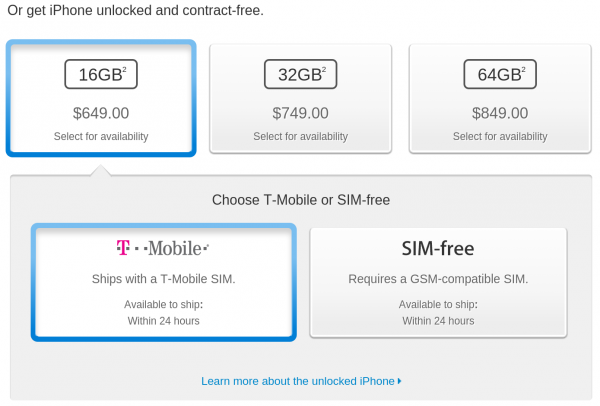
Eight days ago, iPhone 5 debuted at T-Mobile. I should have watched more carefully. The carrier also has iPhone 4 and 4S, and that surprises me. I wondered if Apple Store would carry Pink’s variants, too, given the comparatively low starting price. Yes is the answer, and cleverly.
From AT&T, Sprint and Verizon, the 16GB iPhone 5 is $199 upfront with 2-year contractual commitment. T-Mobile’s handset sells for $99.99 down plus 24 $20-month payments, no contract required. Surely, the three big carriers would gripe if Apple listed their phones alongside T-Mobile’s for twice the upfront price. Solution: The fruit-logo company sells Pink unlocked for full price and T-Mobile SIM. But typical of Apple, expect no bargain. T-Mobile sells the phone for $579.99. Apple asks $640.
Price for unlocked 16GB iPhone 4S from the manufacturer is $450, 99 cents more from the carrier. The phone is $99 with 2-year commitment from the big three. Pink is $69.99 upfront plus 24 $20 payments. iPhone 4 is $549.99 from T-Mobile, Apple is 99 cents less. On contract, the big three charge nothing upfront. T-Mobile takes $18 plus 24 $18 payments. Hell, I’d pay $30 more for iPhone 5 and two bucks extra per month instead.
Here’s reason to check with T-Mobile first. According to the company’s website, neither iPhone 4 or 4S is available for my area (San Diego), but Apple Store will sell me either handset. That’s no assurance the network supports them.
Perhaps this is all old news to you, but it’s not to me, which is why I punched out the quickie post. Surely someone else would want to know, too.
-
Google Chrome 26 – Review
 From square one, Google built the Chrome browser around strong concepts that would ensure the product’s success among all types of users. They designed it to be simple, more stable and faster than what the competition had to offer and secure.
Although in the eyes of the regular user Chrome does not seem to have changed much over time, its functionality an… (read more)
-
Top 5 Data Center Stories, Week of April 20

A vending machine for cables and adaptors? That’s what you’ll find at the new CyrusOne data center in Dallas. It’s part of a focus on worker-friendly design. (Photo: Rich Miller)
For your weekend reading, here’s a recap of five noteworthy stories that appeared on Data Center Knowledge this past week. Enjoy!
The Rise of the Worker-Friendly Data Center – Spiral slides, climbing walls and fitness machines? Data centers are designed primarily to house thousands of servers, but the nondescript concrete bunker of the past is giving way to campuses optimized for humans, complete with comfortable offices, conference rooms, theaters and gaming areas.
Google Expands in North Carolina, Will Boost Renewables – Google today announced a major expansion of its data center campus in Lenoir, North Carolina, saying it will spend $600 million to build new server farms and populate them with IT equipment. The search giant also said it will use its purchasing power to jump-start a renewable energy program for Duke Energy, the utility that provides electricity to the Lenoir facility.
Facebook Unveils Live Dashboard for PUE, Water Use – The era of real-time data has arrived for the data center industry’s leading energy efficiency metric. Facebook has launched a public dashboard that provides up to the minute data on the Power Usage Effectiveness (PUE) of its first two company-built data centers in Oregon and North Carolina. The social network is also providing data on its use of water, a topic of growing interest in data center design and operations.
DataBank Grows Beyond its Dallas Digital Fortress – After filling 130,000 square feet of data center space in the former Federal Reserve building in downtown Dallas, DataBank is extending its model – first in the Dallas metroplex, and then in other second-tier markets around the U.S.
IT Woes Ground American Airlines Flights – An outage in a key reservations system grounded all flights at American Airlines on Tuesday. The technology problems, which left passengers and gate agents unable to manage bookings or print boarding passes, caused backups at airports in many areas of the country.
Stay current on Data Center Knowledge’s data center news by subscribing to our RSS feed and daily e-mail updates, or by following us on Twitter or Facebook or join our LinkedIn Group – Data Center Knowledge.
-
Android this week: HTC One arrives; TweetDeck gone soon; Galaxy Note 8.0 impresses
The big HTC One launch date came and went this week, with two carriers selling the phone in stores on Friday. The Android handset is HTC’s flagship phone that has much riding on its success: HTC is hoping this hero can turn the tide of falling sales and revenue over the past 18 months. Early HTC One reviews are mostly favorable and having used a review unit for a little while, I generally concur: This is probably the best Android phone on the market you can buy today.
 I’ll have a full review forthcoming but there’s little not to like. HTC has designed and built one of the most appealing smartphones in recent memory; even when compared to Apple’s iPhone 5. The One performs admirably in all use cases and works particularly well when shooting images in low light. Those pictures look fantastic on the full-HD screen as well. But not everyone is getting a chance to experience the HTC One.
Enthusiasts that pre-ordered an unlocked, 64 GB Developer Edition of the phone for $649 were expected to have the phone in hand on April 19. Instead, all they received was an email explaining that their phones were delayed. People that pay full price for a smartphone are typically the most passionate and vocal; getting these phones to this group of people could have helped HTC in the word-of-mouth marketing department. For the moment, it’s a missed opportunity for the company.
Also missing — or soon to missing, that is — is Twitter’s TweetDeck application. Last month, Twitter said it would be retiring the TweetDeck mobile app so it could concentrate on a solid web app experience. This week, the TweetDeck blog was updated with more detail:
TweetDeck AIR, TweetDeck for Android and TweetDeck for iPhone will be removed from their respective app stores and will stop functioning on May 7.
It might be handy to find an .apk of the current TweetDeck Android app sometime before May 7. If you already have the app installed, it should keep working as far as I know. But if you switch phones or buy a new phone and want to use the TweetDeck app, you’ll want to keep a copy of the .apk handy.
Last weekend, I bought a Galaxy Note 8.0 even though I was unsure if I’d keep it. I like tablets in this size and thought that the included S-Pen would make the experience even better. It does and overall, I like the Note 8.0 — see my detailed first impressions here — but I’m still not sold on the device.

Galaxy Note 8.0 in hand
It’s not because the Note 8.0 doesn’t deliver; it’s a solid Android tablet. I don’t even mind the $70 premium over a comparable iPad mini: The Note 8.0 offers functions and hardware that simply aren’t possible with the iPad mini. The issue seems to be one of timing.
It’s a reasonable expectation that the next iPad mini will have a higher resolution display and yet the Note 8.0 only has a 1280 x 800 screen. That’s the same resolution on the Galaxy Tab 7.7 (which has a better Super AMOLED screen) that I bought more than a year ago and — likely because of my daily Chromebook Pixel use — my eyes now crave higher resolution screens.
While I get digital ink support and the ability to run two apps at one time on the Note 8.0, my Galaxy Tab 7.7 might suffice for now. I also suspect that we’ll see other high-resolution Android tablets from Samsung and its competitors in the second half of 2013. As a result, I’m leaning towards returning the Galaxy Note 8.0. Had it come out 6 months ago, perhaps I’d feel differently. Regardless, if you’re looking for an 8-inch Android tablet with stylus support now, you won’t likely be disappointed by the Note 8.0.

Related research and analysis from GigaOM Pro:
Subscriber content. Sign up for a free trial.- Analyzing the wearable computing market
- Carrier IQ and the continued erosion of operator trust
- Siri: Say hello to the coming “invisible interface”


-
Report: Facebook is Iowa’s Mystery Data Center Prospect

Will a huge data center like this one rise in Altoona, Iowa? Local sources say Facebook is the company behind Altoona’s Project Catapult. This is a look at the Facebook data center in Forest City, North Carolina. (Photo: Rich Miller)
One of the longest-running mysteries in the data center industry appears to be solved. Facebook is the company behind a $1.5 billion data center project bound for Altoona, Iowa, according to the Des Moines Register. The paper cited “legislative sources” in the report, which follows more than a year in which state and local officials described the company only with the codename Project Catapult.
The data center would be Facebook’s fourth company-built project, with the others located in Oregon, North Carolina and Sweden. It would also be the third major Internet data center project in Iowa, joining a Google facility in Council Bluffs and a Microsoft data center in West Des Moines.
The company behind Catapult has an option on land in Altoona and has submitted site plans to local officials showing phased construction of three data centers, each 466,000 square feet in size. The site plan was originally approved last June, but there were few signs of activity over the summer. The mystery company made site visits to Altoona in both September and October, and by November officials in Altoona were working on “fine details” to finalize a deal.
The company also scouted sites in Nebraska, where officials are using a codename of Project Edge. Nebraska’s leading candidate had appeared to be Kearney, Nebraska, where local officials were confident enough about their chances that in late March the city council approved spending $1.7 million to acquire land for the project.
Much of the speculation in Altoona has focused on Facebook, as the multi-building site plan submitted in Altoona is similar to the site plans for Facebook’s project in Oregon and North Carolina. The potential use of solar arrays and fuel cells in Altoona moved Apple up the list of suspect companies.
The Des Moines Register reported that the project includes a request for wind energy production tax credits that would require legislative action.
At the local level, Altoona officials are considering a new water rate that appears to have been developed for the data center project. The city is establishing a new water rate for customers that use more than 9 million gallons of water within a 30-day billing cycle, in which the customer would pay 6 cents per 1,000 gallons for the first 9 million gallons and 3 cents per 1,000 gallons after that.
-
Security theater moves to Act Two following arrest of Boston marathon bombing suspect

I’m trying to get a grip on the full spectacle of the police state theater we have all just witnessed in Boston. Where to begin? Do we begin with the “lockdown” order that forced 400,000+ Bostonites to stay off the streets and hide in their homes while nobody admits… -
Review: Way Better Snacks delivers non-GMO, gluten-free, sprouted grain chips that are ridiculously delicious
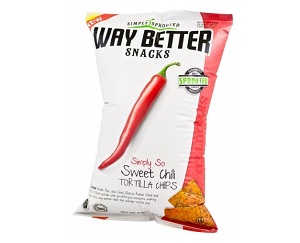
My search for a healthy snack chip has led me to a phenomenally great-testing product from a company called “Way Better Snacks,” makers of Sweet Chili Tortilla Chips. Let’s get the basics out of the way first: These chips are Non-GMO Project verified, certified gluten… -
Hyper-connected, real-time news is a good thing — but so is accuracy
The tragedy that befell Boston earlier this week and its ensuing fallout has resulted in a lot of debate. I mean, everyone is talking about last night’s events. Here are two comments I overheard while having coffee at two different locations in San Francisco today.
“Twitter and (other) social networks are really good at this news thing for first 30 minutes and then everything goes crazy – speculation, rumors and the worse part is the role television plays in it all.” (#1)
“If you watch television and Twitter at the same time, you know how woefully behind television is, and that is when start to wonder, what the role of media is in this future where Twitter is the primary medium.” (#2)
Admittedly, San Francisco is a city that teeters on the naked end of the social media, and so its obsession with it is quite extreme. Nevertheless, it still reminded me of something I wrote last year about amplification and the role media has to play in this increasingly social and hyper-connected world in which random bits of information flow to-and-from nearly infinite nodes.
The point I made in my earlier post was “the media person’s role is no longer just reporting news. Reporting through sharing and curation are going to be vital roles for us to play in the future.” I should add one more thing to the list — being careful and analytical in the near real-time world we live in today. The nodes are now part of the process and as such the process — but not its true objective of accurately informing — has to evolve.
Because otherwise it is just creating a bigger mess than one has to report on. The media’s role is changing and evolving as our behavior on the internet is changing. And the sooner we realize it, the better it will be; not just for media but also for the society it is supposed to serve.


-
Microsoft confirms smaller Windows 8 devices coming soon

During yesterday’s earnings conference call, departing CFO Peter Klein says that Microsoft is “working closely with OEMs on a new suite of small touch devices powered by Windows. These devices will have competitive price points, partly enabled by our latest OEM offerings designed specifically for these smaller devices, and will be available in the coming months”.
The rumors are true, and, presumably, because of the context Klein makes the statement, these devices will run Windows 8 — rather than RT or Embedded. For example, he refers to support for new Intel processors, Haswell and Bay Trail Atom. The former is expected to ship with back-to-school ultrabooks and convertibles. The latter is designed for smaller touch devices, including tablets. During Intel’s earnings call this week, CEO Paul Otellini predicted that for touch-screen notebooks running the new Atom processor, “prices are going to be down to as low as $200”. Merry Christmas!
Plan A Underway
The point: Don’t count out Microsoft or its PC partners just yet. Windows 8 is a work in progress, and that’s by design, while OEMs have yet to step up with the right devices. There is no Plan B, because A is still underway and will be until new hardware reaches the market for the two key selling seasons of the year, back to school and Christmas. I want to restate: There is no Plan B, contrary to what writers Adrian Kingsley-Hughes and Jay Greene, among others, say is necessary.
Many Plan B advocates presume Windows 8 is a failure because PC shipments reached record lows during Q1, following a disappointing fourth quarter. But this trend, spending on smartphones and tablets displacing PCs, started long before Windows 8 shipped, and Microsoft prepared.
“Consumers and businesses are increasingly shifting their focus to touch and mobility, and as a result, they want touch-enabled computing devices that are ultrathin, lightweight, and have long battery life”, Klein says. But the duh statement is obvious but oft overlooked. “While Windows revenue has been impacted by the transition from the traditional PC to a new era of computing devices, the overall addressable markets are growing, and we are excited by the opportunities ahead of us”.
The market for PCs, tablets and ultramobiles will grow 79 percent from 2012 to 2017 — 467.2 million to 836 million units — according to Gartner. Android and iOS are largely confined to tablets, while Windows dominates personal computers and the fledgling ultramobiles. Gartner’s data, which puts Android way ahead of Windows, and Apple platforms just slightly behind, misleads by including smartphones. When doing actual apples to apples comparisons, the PC market (including ultramobiles) rises from 351.1 million last year to 368 million in 2017. Tablets go from 197.2 million to 468 million during the same time frame.
The point: The addressable market for Microsoft grows, as Windows gains tablet share. Certainly Apple won’t snag share going the other way, certainly not with OS X, based on recent market share trends. Microsoft’s Plan A objectives are the same: Get a touch-oriented OS out the door and enable OEM partners to bring different size and form-factor designs to market.
Downsizing Windows
Right now, there are two dramatic shifts underway: Falling tablet prices and consumer shift to 7-7.9-inch models; both are intertwined. NPD DisplaySearch predicts that tablets in that size category will account for 45 percent of shipments this year. That’s where Microsoft sees partners headed, but running a desktop operating system.
The process is arduous. “We built Windows 8 with touch and mobility at the center of the experience, which positions us well in this new era”, Klein says. “However, the transition is complicated, given the size of our hardware and software ecosystem. We still have an immense amount of work to do, yet we feel good about the foundation we have laid and are optimistic about the long term success of Windows”.
Windows 8’s focus on touch is a hot topic of debate. Today, colleague Wayne Williams asks “Do you users really want touchscreen PCs (Because I don’t)“, while in December developer Robert Johnson asserts “Touchscreens on laptops make complete sense“.
I love Surface Pro. Touch and Windows 8 deliver great user experience. But there aren’t yet enough touchscreen choices available at prices that woo buyers from tablets. Wayne’s problem isn’t the touchscreen but how little he can do with tablets. Give him an affordable touch convertible or slate running Windows 8, and his opinion might change. Even yours.
This discussion would be moot, if not for a fundamental shift in Microsoft product development that I explained last month.
“With Windows 8, we are setting a new, accelerated pace for updates and innovations, as we focus on making the Windows experience richer and better”, Klein says. “Since launch we have delivered several important updates to improve our mail, storage, search, music, and video services”.
Photo Credit: Federico Rostagno/Shutterstock
-
Yahoo Shuts Down A Handful Of Products
Yahoo announced today that it is shutting down a number of its products as part of its efforts to make sure its products “are still central to your daily habits”.
The company is killing Upcoming, Yahoo Deals, Yahoo SMS Alerts, Yahoo Kids, Yahoo Mail and Messenger for feature phone (J2ME) apps and older versions of Yahoo Mail. Upcoming, Deals, SMS Alerts, Kids, and the feature phone apps will be closed on April 30.
Yahoo is offering a way to download any events you may have upoladed.
Yahoo provides details for saving coupons from Yahoo Deals here.
“If you’ve been receiving SMS alerts, we encourage you to stay-up-date on all the latest with our mobile apps including Yahoo! News, Yahoo! Weather, Yahoo! Sports, or Yahoo! Finance,” says Yahoo’s Jay Rossiter. “If you’ve been receiving horoscope alerts, you can check your horoscope on yahoo.com. Alternatively, you can go to alerts.yahoo.com and select to receive your alerts via email or Yahoo! Messenger.”
Regarding Yahoo Kids (formerly Yahooligans), he says, “Our youngest users still have plenty of opportunities to engage with Yahoo! content and products. For example, users who are under 13 can register for a Yahoo! ID through our Family Accounts program, connect with family and friends through Yahoo! Mail and Messenger, and check out upcoming family friendly films on Yahoo! Movies.”
Yahoo will continue to support Mail and Messenger on feature phones via the mobile web. Obviously those using old versions of Yahoo Mail are encouraged to upgrade to the new one. The old versions will stop working the week of June 3.
-
This Week With The TechCrunch Gadgets Podcast: Google Glass, Ubuntu, And Vibrating Undies

This week on the TechCrunch Gadgets Podcast we talk about Google Glass, the Galaxy S4, and the magic of Ubuntu laptops. This time we’re joined by Matt Burns, Jordan Crook, Greg Kumparak, and a pair of underwear that vibrates in Australia. Enjoy!
We invite you to enjoy our weekly podcasts every Friday at 3pm Eastern and noon Pacific.
Click here to download an MP3 of this show.
You can subscribe to the show via RSS.
Subscribe in iTunesIntro Music by Rick Barr.
-
8th Grader’s Gun T-shirt Leads To Arrest
According to reports, an 8th grader in West Virginia was suspended and arrested after wearing an NRA t-shirt to school, which says: NRA: Protect Your Right” and features a picture of a rifle.
The shirt apparently caused an argument between the student, Jared Marcum, and a teacher at Logan Middle School. Yahoo News reports:
Police confirmed that Marcum had been arrested and faced charges of obstruction and disturbing the education process after getting into an argument over the shirt with a teacher at Logan Middle School, which is south of Charleston.
There is no apparent language banning such shirts in the school’s policy.
Here’s an interview from CBS 13 with the student and his father, who are both, obviously, pretty unhappy:
WOWK 13 Charleston, Huntington WV News, Weather, Sports The father, Allen Lardieri, has pledged to do everything in his legal power to “make sure this does not happen again”.
The school has remained quiet.
-
Why IBM might ditch servers and become Intelligent Business Middleware
The tides of enterprise IT have shifted. While there’s still money to be made in selling servers, the innovation is now happening higher up the stack. Recognizing this, it looks like IBM has decided not to fight for share in a shrinking or stagnant market, but to get out and focus on the future.
Analysts and reporters are speculating that IBM is in talks to sell its server division to Lenovo, the company that IBM sold its PC division to back in 2005. Lenovo has confirmed it is in talks with an unidentified buyer in a filing to its shareholders. From a Wells Fargo analyst note published Friday morning:
We believe an acquisition could give Lenovo greater scale in similar components to its PC business, which could provide greater margin or the ability to pass along the benefits to customers via lower pricing. This, in turn, in our opinion, may cause further competitive pressures in the industry and have adverse impacts on Dell and HPQ. For IBM, it would be in keeping with its historical strategy of divesting commodity-like businesses. While we would fully anticipate some purchase commitments by IBM, this may signal a longer-term trend of moving away from x86 to a greater focus on System P for its solutions-based products.
Getting out of the server business as it moves closer to becoming a commodity — with fewer customers who are unwilling to pad a hardware maker’s margins — makes sense. While Dell tries to go private, and HP doubles down on the enterprise with servers such as its Project Moonshot offering (which isn’t anything a webscale vendor would want), IBM is looking ahead.
 And what is Big Blue eying? It’s already told us for the most part: big data and mobility.
IBM has spent billions on analytics. It’s researching ways to push the boundaries of memory chips and new types of processing more appropriate for real-time information flows. It’s even building intelligent systems such as Watson. It also has been buying companies such as WorkLight and CastIron Systems to help tie cloud-based applications together and ensure acceptability in a world of federated apps.
IBM is building two things here. One is a near-term strategy that can be thought of as next-generation middleware that will tie mobile applications, the underlying mobile (and wireline) networks and the cloud together in ways that will give enterprise customers the sense of accountability they need. Things like ensuring that APIs are dependable enough to build service level agreements around and secured if needed isn’t sexy, but IBM is taking it on.
Over the longer term, the company is pursing efforts like IBM’s new memory chip research and new processors that work more like the human brain. Watson, which will be delivered eventually as a cloud-based mobile app and likely rely on some of the middleware related knowledge, is the first of IBM’s longer-term plans. Manoj Saxena, the head of IBM’s Watson division, calls this the fourth wave of computing.
And while there will be servers aplenty in that vision, they won’t look like the boxes of today, and they certainly won’t be the profit-centers. The value will be in the services themselves, the hard work of integration and perhaps the new silicon (or graphene or DNA-based) platform on which these things all rest. Today it’s middleware and tomorrow it will be a revamp of the machine.

Related research and analysis from GigaOM Pro:
Subscriber content. Sign up for a free trial.- AWS Storage Gateway jolts cloud-storage ecosystem
- New challenges for the IT organization
- Dissecting the data: 5 issues for our digital future

-
Reddit Surfaces Tamerlan Tsarnaev Death Photo [WARNING: VERY GRAPHIC]
What appears to be a death photo of Boston Marathon bombing suspect Tamerlan Tsarnaev has surfaced on reddit.
The extremely graphic and unsettling image comes from user nfieldflyer under the title: “Suspect #1 … in the morgue. NSFW.” It’s actually being hosted on imgur, as is standard for images on reddit.
At one point, it managed to reach the front page of reddit, but appears to have been moved off. Interestingly, as you can see from the following screen cap, reddit was apparently hit with a DDoS attack as well.

The image is still on the site in the WTF subreddit.
Naturally, the authenticity is called into question, and we have no hard confirmation, but TMZ reports: “Law enforcement sources tell TMZ it’s 100% authentic.”
TMZ doesn’t actually show the image, but describes it in a manner that matches the image in question:

Much has been made over the last day or so about reddit’s role in the coverage of the Boston Marathon aftermath, and in journalism in general. Frankly, it has taken a lot of flack, but Matthew Ingram at Paid Content makes some great points about how the mistakes that have come along with reddit’s “coverage” are really no worse than the mistakes made by mainstream media.
In the comments thread of the reddit post for the death photo, others have been working on trying to determine if the photo is real or not. One person, for example, linked to the TMZ article referenced above.
User kyeraider commented, “The ear is dead on,” linking to this photograph of Tsarnaev that has surfaced:

Then, user donwilson contributed this comparison gif:

TMZ reports that officials are trying to find out who leaked the picture, but also reports that the reddit poster indicated it was obtained “by a ‘friend’ who works downtown.”
We’ve not seen this particular explanation. It’s possible that someone posted it before the poster mentioned above.
As you’ve probably read by now, Tamerlan was killed in a shootout with police early in the morning, and his brother Dzhokhar Tsarnaev, the second suspect, remains at large.
In related news, a redditor who lives in Watertown did a redddit AMA (Ask Me Anything). Here are some highlights.
-
HTC One launch: Available at 2 carriers; web orders for 1; delays for Dev Edition
The HTC One flagship phone is officially available in the U.S., with two carriers selling the handset on Friday. AT&T and Sprint both have the One in stores while T-Mobile announced web orders now and in-store availability on April 24. Unfortunately for the most passionate HTC One fans who ordered the unlocked developer edition for $649, those orders are now delayed.
I see this as another small mis-step for HTC and it’s not the first as it pertains to the HTC One; a very important phone to help the company turn around a string of slowing sales and revenues. Last month, the company had to push the phone’s launch back due to component shortages. Instead of the phone arriving in mid-to late-March as planned, we’re now past the middle of April. That’s potentially bad as Samsung’s Galaxy S 4 — a competing flagship phone — is due in customer’s hands within the next two weeks.
 As far as the developer edition handset, customers were told to expect their phone by April 19, which is today. Instead of receiving the phone, however, those who ordered got an email from HTC saying the units were delayed and should be in hand by the end of the month. Clearly, HTC knew the phones wouldn’t be arriving on time prior to today.
As I’ve always said, “Good news doesn’t get better with age.” It’s a shame that notifications went out on the day the HTC One developer edition was slated for delivery. And making it worse: The people who would pay $649 for an unlocked HTC One with 64 GB of internal storage are likely the most vocal enthusiasts. These folks could have quickly spread the word on how good the HTC One is; something that the company could use since it doesn’t have the marketing budget of a Samsung or an Apple.
If you’re in the mainstream consumer camp and want an HTC One, however, you can still get one today.
AT&T is offering a 32 GB version for $199 with contract ($599 without) or a carrier exclusive 64 GB model for $299 with contract ($649 without). Sprint stores have a 32 GB model for $199 with contract ($549 without) but you can save $100 by porting your number to Sprint from another carrier.
T-Mobile doesn’t have the HTC One in stores yet, but you can order one online today for $99 down and 24 monthly payments of $20 each. In the case of the payment plan T-Mobile drops the $20 monthly hardware charge once the phone is paid off.

Related research and analysis from GigaOM Pro:
Subscriber content. Sign up for a free trial.- Analyzing the wearable computing market
- Carrier IQ and the continued erosion of operator trust
- Siri: Say hello to the coming “invisible interface”

-
85-Foot Trapeze Fall Becomes Viral Video
A video from the Associated Press featuring a circus acrobat surviving an 85-foot fall is gaining viral steam, as more and more blogs are showing it.
The fall apparently happened last month at a circus in Moscow. He hit the safety net, which was waiting directly below the stunt, but unfortunately he fell right through it. Somehow, he still managed to live. He reportedly suffered a fractured vertebra.
According to the AP’s YouTube description for the video, the Kenyan trapeze artist is healing and is expected to turn to work.
-
‘iPhone 5S’ parts supposedly pictured in new leak


