Author: Andrew Maddocks

  • Water Disclosure Project Releases Surveys to 300 Companies

    Questionnaire focuses on usage, operations and supply chains and management strategies in water-intensive sectors.

    By Andrew Maddocks
    Circle of Blue

    Water Disclosure.

    Photo Copyright Carbon Disclosure Project

    The Carbon Disclosure Project, a non-profit that compiles global corporate climate change data, announced the launch of a questionnaire today that will poll 300 businesses in water-intensive industries to release detailed information about their usage of the precious resource.

    This is the first time that the independent British-based organization is applying its model for emissions’ measurements to water. Companies will measure and disclose information on their water usage, explore the risks and opportunities in their operations and supply chains, as well as water management and improvement plans.

    The results, which will be published in late 2010, will give the companies and their investors new tools to analyze water-related risks and bottom line opportunities.

    Marcus Norton, head of the water disclosure program, said the survey’s broad acceptance is a sign that companies are beginning to understand water as an important part of their supply chain.

    “Companies will need to operate in a water-constrained world,” Norton told Circle of Blue. “Investors will be very interested in knowing that it’s a part of their long-term planning.”

    Companies participating this year are concentrated in water-intensive sectors, and includes  Ford, L’Oréal, PepsiCo and Reed Elsevier already signed on. More than 130 financial institutions with a combined $16 trillion in assets, which includes Allianz Group, HSBC, ING, and National Australia Bank, are also contributing, according to a CDP press release.

    The questionnaire has three general categories: water management and governance, water-related risks, and metrics. The first group of questions asks how companies work with various parties, from governments to local groups, when it comes to their water supply. Investors interested in these businesses, Norton said, want to know how companies are anticipating the dangers of operating in water-scarce regions.

    Norton said CDP designed the survey to collect meaningful data that doesn’t create an excessive reporting burden. While it’s a “rocky” process that will develop over many years, companies have no incentive to mislead shareholders, Norton said.

    While carbon emissions have the same effect on London as they do on Michigan, the effect of water scarcity varies across the globe, making useful data harder to gather. This makes localized information the most valuable, according to Norton.
    “Until you look at that I don’t think the data is truly meaningful,” he said.
    CDP aims to use the project as a lens that connects local and global water issues that will, in turn, give companies and investors far more information, awareness and understanding.

    “This is an iterative process of improvement,” Norton said. “We’ll be developing modules for different industries and sectors.”

    Eventually, Norton will use the survey’s first year to explore ways the survey should expand and hopes to prioritize two additional categories: the largest, most water-intensive companies and the regions with the worst water scarcity.
    Meanwhile Norton says this project will advance global awareness of the water crisis in the coming years.

    “I’ve heard people describe us with water as where we were with carbon and climate change five years ago.”

    Companies have until July 31 to respond to CDP’s survey.

    Andrew Maddocks is a reporter for Circle of Blue. You can reach him at [email protected].

  • Q&A: Yusup Kamalov, Fighting for the Aral Sea

    As the Aral Sea gains global recognition as the most extreme kind of environmental disaster, Yusup Kamalov shares an expert’s perspective.

    J. Carl Ganter: Welcome to Circle of Blue Radio’s Series 5 in 15, where we’re asking global thought leaders 5 questions in 15 minutes, more or less.  These are experts working in journalism, science, communication design, and water.  I’m J. Carl Ganter.  Today’s program is underwritten by Traverse Internet Law, tech savvy lawyers, representing internet and technology companies.

    The Aral Sea, nestled in southeast Asia, between Kazakhstan and Uzbekistan, was once the world’s fourth-largest freshwater lake. But in the last 30 years, massive irrigation projects diverted millions of gallons of water from the two major rivers feeding the Aral Sea.  This was diverted for cotton fields and rice paddies.  By the early 1980’s, the Aral’s fresh water supply was completely cut off.

    The lake began to shrink drastically.  Salt and mineral concentrations rose, and the destruction of the Aral decimated the fishing industry and actually changed the region’s climate, shortening the growing season.  High winds also pick up dust from the exposed lakebed now, hurting air quality and reducing crop yields.  Many believe that the Sea is beyond salvation.

    In Nairobi, at World Water Day recently, Circle of Blue Reporter Brett Walton spoke with Yusup Kamalov.  He is chairman of the Union for the Defense of the Aral Sea and Amudarya, one of the longest rivers in central Asia.  It also feeds the Aral.

    First question, there’s a dam built between the northern and southern sections of the Aral Sea.  How effective has that been in restoring parts of the Sea?

    Of course, this dam is very effective to restore the really small, northern part of the Aral Sea, which was actually called the small sea before.  Of course it’s very effective, but unfortunately it has an impact on the rest of the sea because the rest of the sea, without this water, dissipates much more quickly than before. We are losing a big part of the sea in a very short time.

    YUSUP KAMALOV:
    Yusup Kamalov
    Yusup Kamalov is chairman of the Union for the Defense of the Aral Sea and Amudarya.
    Photo Copyright Brett Walton

    What are the health affects in the areas surrounding the sea from the sea’s shrinking?

    I don’t think that the shrinking of the sea has a really big impact on the health of the population. But the polluted water, which comes in by Syr Darya and Amu Darya, has a really big impact on the population.  We do also lack quality water, clean water, and we are drinking this water.  We are irrigating with this polluted water, so it does influence our health.  If you come there, you will see a lot of problem with health in general, I mean ability of people to defend themselves from diseases.  Indicators of hemoglobin in blood is very low, especially of women. There are very high levels of diseases connected to the liver and connected to salt content in people’s bodies.

    In the 1960’s when the Aral Sea was still intact, Vozrozhdeniye Island, Rebirth Island in English, was where the Soviet military was conducting biological weapons testing.  When the Sea started to shrink, that island became part of the mainland.  What is the status of that Island now?

    Unfortunately, we are not informed about the status of the Island.  We know that it’s already connected to the south part of our land, but I have no idea now about [the latest status].

    The two rivers that feed the Aral Sea mainly are used for irrigation.  Do you see any change in the farming practices of any of the countries along these rivers?

    No.  Unfortunately, there are only a few examples, so-called pilot projects, like deep irrigation in just a few farms, and in general, there are no changes.  In general, there is no big movement to save a drop of water.  There is a good example in Ferghana Valley of evolving, integrated water management, but it’s a local example.  It’s the United States, Tajikistan, Uzbekistan, and Kyrgyzstan.

    This pilot project has shown that it’s quite effective, almost without any money, to have a well-scheduled water providing system.  They saved 30 percent of the water.  They installed some measuring instruments along the canals.  It helped a lot.  That means that if the governments will pay more attention to involve new technologies, especially new economic tools to save the water, then we will have success.

    What economic tools are governments using?

    For example, Tajikistan implemented payment for water.  Kyrgyzstan too, and some part of Kazakhstan also.  Still Turkmenistan and Uzbekistan, they’re not doing anything involving water pricing, etc., because they say it could lead us to an unpredictable situation.

    There are a lot of problems in the basin between the upstream mountainous countries and the downstream countries that use water for agriculture.  A big part of this problem is dams.  Recently the World Bank said it would finance a feasibility study to see if dams are appropriate for the area.  How do you see this changing the politics in the basin?

    Of course, downstream countries are afraid of the building of such a big dam. It could be used as a political tool to push downstream countries to make certain decision.  That is why downstream countries are raising their voices against such dams.  If this instrument would be available for mountain countries, then, of course, the situation would be a little bit dangerous for downstream countries.

    For example, Tajikistan can push downstream countries to make what they want because they can save a lot of water in water storage. But they’re not [storing water], so that means that Tajikistan doesn’t have [the leverage] to confront downstream countries.  I don’t think that it would be a real big problem.

    You live in Nukus, which is a city near the Aral Sea, the former border of the Aral Sea.  How has the shrinking of the Sea changed in your life?  What changes have you seen in the region?

    There are a lot of changes, of course, in the region.  There are no more big fishing companies or fishermen, and we are observing a lot of sandstorms.  The scientists say that after 1960’s, there have been 25 times more sandstorms than before.  Of course, the wind became much stronger. I never saw that roofs could be just taken off until the 1990’s, but now it’s just a common picture.  Every year we are losing several roofs in Nukus city, every year.

    That means that the wind picks up dust and salty dust, and it’s flowing or rising to high levels of the atmosphere. I’m pretty sure that it has an impact on the global climate because the surface of the former bottom of the Aral Sea is so big. You can’t imagine how much dust is picked up by the wind every year, about 100,000,000 tons, which is the same as the activity of several volcanoes.  When volcanoes are working, and then the climate is changing.  Now nobody pays attention for this as such a big source of the dust.  I think it should be investigated in the near future.

    Where do you see the future of the Aral Sea?

    It’s a very painful question, because what does the future mean for a dead body?  Nevertheless, I hope that we will have enough water to keep the Aral Sea a certain size.  Maybe it could be three lakes, or maybe even one, but nevertheless we should save the Aral Sea. Because, as I mentioned before, the former bottom of the Aral Sea has a big impact on the global climate.  And secondly, the Aral Sea was really the source of economic prosperity for the people living around it.

    We should negotiate globally about it.  If we are not able to save such a small lake, how can we save the planet? It would be a good example for people that we can do it, even on a small scale.  If are we not able to do it, then everybody might doubt we can save our planet.  This is why we have to save the Sea.

    That was Circle of Blue’s reporter Brett Walton, in Nairobi, speaking with Yusup Kalamov, chairman of Union for the Defense of the Aral Sea and Amudarya.  To find more articles and broadcasts on water design, policy and related issues, be sure to tune in to Circle of Blue online at CircleofBlue.org.

    Our theme is composed by Nadev Kahn, and Circle of Blue Radio is underwritten by Traverse Legal, PLC, internet attorneys specializing in trademark infringement litigation, copyright infringement litigation, patent litigation and patent prosecution.  Join us again for Circle of Blue Radio’s 5 in 15.  I’m J. Carl Ganter.

  • Eco-explorer David de Rothschild Begins Trans-Pacific Journey on Catamaran of Plastic — the Plastiki

    The voyage and vessel are designed to redefine global use, and reuse, of plastic.

    Eco-explorer David De Rothschild to Travel the Pacific in Plastic Ship

    Photo © 2009 J.Carl Ganter for Circle of Blue.
    Environmentalist explorer David de Rothschild, 31, set sail on March 20 on his boat of recycled plastic bottles, the Plastiki.

    De Rothschild and his crew of five set sail March 20 on perhaps the first-ever crossing of the Pacific Ocean that’s being measured in plastic bottle lengths.

    Today, as of 7 p.m., the Plastiki — a 60-foot catamaran with a hull made of 12,500 plastic bottles — had traveled 76 nautical miles. That equals roughly the length of 481,536 plastic bottles.

    And those hundreds of thousands of bottles are only .0080 percent of the bottles thrown away by Americans today, according to The Plastiki Expedition Web site.

    PLASTIC DEBRIS
    Of the six million tons of debris that enter our oceans every year, nearly 90 percent is plastic.
    Today, there is an average of 46,000 pieces of plastic per square kilometer in the ocean. As the plastic degrades, attracting toxins, it gets digested by animals and eventually infiltrates the food chain and can potentially be consumed by people.

    The entire project aims to focus global awareness on the thoughtless, unnecessary damage plastic inflicts on the world’s oceans. And potentially guide people towards more constructive ways to re-use plastic.

    “What I hope that the Plastiki does and what we stand for is not about vilifying people, pointing fingers or just articulating problems,” de Rothschild told Circle of Blue in October. “We are about challenging that thinking.”

    During the next 90 days the crew, directed by skipper Jo Royle, will travel about 11,000 nautical miles from San Francisco, California to Sydney, Australia. The so-called Great Pacific Garbage patch is a focal point of the expedition. Ocean currents from North American and Asian shores sweep along floating plastic, funneling it towards the island of trash, which is already larger France and Germany combined.

    It’s a vivid illustration of the roughly 50 percent of all plastic products that end up in the ocean. The patch also has serious implications for pollution. Project Kaisel at the Scripps Institution of Oceanography is testing the patch for toxins like Polychlorinated Byphenyls (PCB) and DDT that have serious health impacts if they’re absorbed into fish consumed by people.

    Plastiki.

    Photo © Luca Babini for Plastiki
    The Plastiki leaves San Francisco, Calif. for its trans-Pacific voyage, March 20, 2010.

    This expedition is as much about demonstrating the responsible reuse of plastic as drawing attention to its problems.

    “The first reaction that any environmentalist would go for is ‘plastic is the enemy –ban it,’” de Rothschild told Circle of Blue. “Let’s just think for a second and really evaluate — is it the material [that’s bad] or is it our inability to understand how we use it, how we manufacture it, what are we using it for, and most importantly, how we dispose of it.”

    De Rothschild has made a career of exploring ecological challenges, and using his wealth to popularize environmental issues. The youngest heir to the fortune of one of Europe’s oldest and most respected banking families, he journeyed across Antarctica and explored the Greenland ice cap to witness the consequences of climate change firsthand. In 2005 he launched Adventure Ecology, an organization and a Web site that tracks his travels to inspire people to work for positive change for the planet.

    His Pacific plastic bottle mission is a way of reconnecting life style choices to nature, an idea that has become his mantra.

    Follow the Plastiki’s progress at the Plastiki Expedition Web site. To read more about the de Rothschild expedition, please see Circle of Blue’s earlier de Rothschild coverage.

    Sources: Plastiki Control Center, SFGate.com

  • 2010 Stockholm Water Prize Awarded to American Water and Public Health Expert

    Stockholm Water Prize Laureate is Rita Colwell, for her research into preventing waterborne infectious diseases.

    Colwell won the prize for “numerous seminal contributions towards solving the world’s water and water-related public health problems,” the Stockholm Water Prize Nominating Committee wrote in a statement. While her work “has established the basis for environmental and infectious disease risk assessment used around the world,” Colwell focused on preventing the spread of cholera.

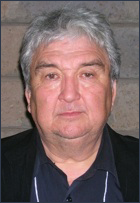
    RITA COLWELL:
    Rita Colwell
    Dr. Rita Colwell, 76, winner of the 2010 Stockholm Water Prize.
    Photo © SIWI

    The 76-year-old professor at the University of Maryland and Johns Hopkins University’s Bloomberg School of Public Health discovered that cholera-causing bacteria can go dormant, then later revert to an infectious state. Therefore, bodies of water frequently store the bacteria, even absent an outbreak of the disease.

    “These findings counteracted the conventional wisdom held that cholera (could only enter) the environment … due to release of sewage,” the Stockholm International Water Institute said in a statement. “As a result of her work, scientists are now able to link changes in the natural environment to the spread of disease.”

    Cholera is a waterborne disease that each year affects between three and five million people worldwide, according to SIWI, and causes an estimated 120,000 deaths.

    Colwell was among the first to link the spread of diseases, including cholera, to climate change, SIWI scientific director Per-Arne Malmqvist told reporters at an announcement in Stockholm. She also led experiments on the impact of El Niño on human health and aquatic environmental stability in the United States.

    Expanding beyond research initiatives, Colwell helped spread community-based water safety education and practical, inexpensive technologies for better drinking water and sanitation in Latin and South America in the 90s.

    She’s held multiple positions during her decades of work in water-related fields, spanning advisory roles in the U.S. government, non-profit science and policy organizations and private foundations.

    Swedish King Carl XVI Gustaf will present the award and $150,000 prize sum to Colwell September 9 in Stockholm.

    Since 1991, the prize has been awarded annually to people, institutes or organizations working to preserve water resources, improve public health and protect the ecosystem.

    Sources: Bay Ledger News Zone, Associated Foreign Press, Stockholm International Water Institute

  • Zafar Adeel: A Conversation With the New Chair of UN-Water

    Circle of Blue reporter Brett Walton spoke with Zafar Adeel, the new director of UN-Water, at World Water Day in Nairobi, Kenya.

    J. Carl Ganter: Welcome to Circle of Blue Radio’s Series 5 in 15, where we’re asking global thought leaders 5 questions in 15 minutes, more or less. These are experts working in journalism, science, communication design, and water. I’m J. Carl Ganter.

    Today’s program is underwritten by Traverse Internet Law, tech savvy lawyers, representing internet and technology companies.

    In Nairobi recently at World Water Day, Circle of Blue reporter Brett Walton spoke with Zafar Adeel, the new director of UN-Water. UN-Water is the organization that coordinates the UN’s 26 member groups and their efforts to manage and improve fresh water and sanitation globally. Entering his second month on the job, Adeel spoke with Walton about his goals for UN-Water during his two year term, lessons from past decades, and the closely intertwined relationship between water and climate change.

    The first question for you is what are your goals for your two year term as Director of UN-Water?

    Well, it’s basically to deliver on the two key strategic directions that we have agreed upon. One is to bring water in the middle of the all the international dialogues which are going on, particularly related to the economic crisis and related to the Millennium Development Goals, and also the issue of climate change, which has gained a lot of significance over the years.

    The point is that climate change is all about water, and we have to make that connection. That would be one goal for UN-Water, to make a significant input and influence into the ongoing dialogue on these larger global issues.

    The second one is to set up mechanisms that will help the UN member states address their own challenges, build their capacities, provide them with policy inputs, and at the end of the day for the UN system to act together when they’re serving member states. As you probably know, a few years ago there was an initiative started which was called Delivering as One, for the member states. UN should be apparent as just one entity, not a conglomerate of various organizations and institutions working separately and sometimes delivering separate messages.

    If we can use water as a medium to have a successful demonstration of Delivering as One for the UN system, that would be a good success for UN-Water.

    “The point is that climate change is all about water, and we have to make that connection.”

    The UN declared the 1980’s as the international decade for drinking water and sanitation. We’re on our second decade of dedication to drinking water and sanitation goals in coordination with the Millennium Development Goals. What has the UN learned from past mistakes and how is it approaching it differently this time?

    I think one of the main things that we have not done before—and by we I mean the water community at large—was to define water in terms of human development, human well-being, and at the end of the day, part of the economic equation because these are kind of elements that politicians and decision makers understand. I think historically what we have done is stay focused specifically on water issues, water quality, on monitoring and doing research, but to relate it to people’s lives and to relate it to policies is something we have not done very well before.

    I think looking at this decade, and we’re halfway through this decade which goes up to 2015, it appears that we’re making significant headway in refocusing our own way of looking at water. There are significant efforts ongoing to define water in terms of both the human costs and the economic factors and elements. I’m quite optimistic that we are now in a position where, when this decade ends, we will have achieved much more in terms of improving the lives of people, which is what it’s all about.

    We are, as I said, halfway through the decade, and we will be meeting in Dushanbe in June of this year to particularly assess the success of this decade and also to chart out the course for the rest of this decade, for the next five years, to ensure that we actually do deliver on the kind of goals we have set for ourselves.

    And one last question. Before the Copenhagen Climate Summit in December, UN-Water was very vocal about the need to include water in the negotiating text. Now the Accord has past, what is UN-Water doing to continue to promote water and climate change and how is UN-Water preparing for climate change refugees involving water?

    ZAFAR ADEEL:
    Zafar Adeel
    Zafar Adeel is the chair of UN-Water.
    Photo Copyright UN-Water

    Let me start with the bottom line, and that is climate change is all about water. What will affect societies is not that your temperature is two degrees higher or four degrees higher. But what will really affect people in their day-to-day lives is how the water cycle is affected, whether you get more extreme floods, whether you get extreme weather events, whether you have long term droughts, and that has also consequences for economic activities of just about every kind that you can think of.

    So far, we can already see that climate change has actually brought those type of impacts. There are examples in Europe where so called 50-year floods are happening every two or three years, so our understanding of how the climate system interacts with the water cycle has significantly change, and we know that change is going to exacerbate. That was our starting point going in to Copenhagen, that when you talk about climate change, you have to talk about what’s happening to water. I think that message is now being well received, and I won’t comment on the success or otherwise of the Copenhagen negotiations, but the point is that people have realized that there is that connection.

    What is also quite positive coming out from Copenhagen is that there has been allocation of resources for adaptation. Again, adaptation is where societies will prepare themselves for these kind of climate changes, again manifesting through what happens to their water cycle. The societies have grown to use water in a certain way, and when that water is not available or the quality is degraded, that can have very significant impacts.

    For UN-Water, we are continuing our focus on that. We have a priority area that looks at climate change. In fact, we are now working on a policy brief which quantifies some of these connections, and we hope that this get audience from politicians, from decision makers, and they start to change some of their thinking in terms of how policies are formulated and how decisions are made. I’d say look forward to other things coming from UN-Water in the next few months which try to further consolidate the linkages between climate change and water and how we might respond to some of the challenges that present to us.

    That was Circle of Blue’s reporter, Brett Walton, in Nairobi, where he’s been speaking with Zafar Adeel, the new Director of UN-Water. To find more articles and broadcasts on water design, policy and related issues, be sure to tune in to Circle of Blue online at CircleofBlue.org.

    Our theme is composed by Nadev Kahn, and Circle of Blue Radio is underwritten by Traverse Legal, PLC, internet attorneys specializing in trademark infringement litigation, copyright infringement litigation, patent litigation and patent prosecution.

    Join us again for Circle of Blue Radio’s 5 in 15. I’m J. Carl Ganter.

  • Designing Water’s Future – New Book Shows Student Solutions to Global Freshwater Crisis

    Competition engages 10,000 communications design students worldwide to develop new solutions and approaches to the global fresh water crisis.

    In August 2008, AIGA, the professional association for design, INDEX, Design to Improve Life, and Circle of Blue issued an ambitious call to the next generation of creative thinkers in the first annual Aspen Challenge, “Designing Water’s Future.” The international contest challenged cross-disciplinary student teams to develop design solutions that explore new ways of understanding and responding to the global water crisis.

    “We wanted to make students realize they can use their profession as designers to make a real difference in their world by addressing serious challenges,” writes Lise Vejse Klint, director of programs at INDEX in a new interactive book of the solutions published on World Water Day today.

    “The subject of the water crisis originated from a discussion held during the January 2007 World Economic Forum, where COLLINS: Design and Circle of Blue presented water-related issues in first, second and third worlds, effectively demonstrating that the fresh water crisis is truly a global issue.

    “In fact, water is the axis issue that intersects the world’s challenges, including health, poverty, and security, as well as climate, energy, immigration, and the environment. Even financial and commodities markets are affected. But the overall issue is complex and requires a 360-degree, multidimensional design approach that includes powerful, fact-based, relevant narratives, accessible information and coordinated channels for action”

    “In fact, water is the axis issue that intersects the world’s challenges, including health, poverty, and security, as well as climate, energy, immigration, and the environment. Even financial and commodities markets are affected,” Klint said. “But the overall issue is complex and requires a 360-degree, multidimensional design approach that includes powerful, fact-based, relevant narratives, accessible information and coordinated channels for action”

  • David Kuria: Sanitation and Toilet Entrepreneur

    Welcome to Circle of Blue Radio’s Series 5 in 15, where we’re asking global thought leaders 5 questions in 15 minutes, more or less.  These are experts working in journalism, science, communication design, and water.  I’m J. Carl Ganter.  Today’s program is underwritten by Traverse Internet Law, tech savvy lawyers, representing internet and technology companies.

    In the sub-Saharan region, 80 percent of recorded illnesses are water-born diseases, and more than two-thirds of these people don’t have access to basic sanitation.  While access to safe drinking water is gaining importance in the political arena, it’s still hard to talk about restrooms and toilets, but today I’m speaking with a man who really does know toilets.  David Kuria is founder of EcoTact.  It’s an organization based in Nairobi that’s really transforming sanitation systems in Kenya and the greater sub-Saharan region.  EcoTact’s campaign breaks down the stereotypes about sanitation.  It’s also created a sustainable model for the Ikotoilet, a community hub of stores and services all built around a public toilet.

    David, tell me about how water-born diseases and basic sanitation are related, and what kinds of transformations need to be made in health and sanitation?

    …the first thing you see, beautiful thing, is a toilet. When you come to the city of Nairobi, you’ll be shocked. And the next thing you’ll be asking is what is this? It’s a public toilet. We are putting toilet monuments just to try and bring back the importance to our people of public convenience and public toilets.

    We are trying to look at social transformation, economic transformation, and to some extent political transformation as far as sanitation is concerned.  I think this is quite a distinct situation from the West, because from the word go, when we are talking about sanitation, back home we don’t talk about it.  It’s a less topical subject that, at homes, we don’t talk about toilets at homes, we don’t talk about toilets at school, and even at the political level.  When you look at the close spectrum, we are moving ahead very well in addressing the water situation, but nobody wants to be associated with sanitation.  It’s a taboo in African culture.  To us, what we are trying to say is, “How do we break these cultural barriers, economic barriers and political barriers to be able to accelerate sanitation access to our people?”  Again, more than half of the people across the region have no sanitation.  They’re either using open defecation, even in cities, or what we are calling in Nairobi, The Flying Toilet, just using the polythene bags and throwing them away.  It’s really the key concern of lack of access, but also the behavior transformation that’s associated with improving dignity, improving public health of our people.

    Sanitation is not something that’s openly discussed in sub-Saharan culture or really anywhere, so how are you working to get beyond the social taboo that restrooms and toilets have in the region and really anywhere?

    What we are doing in my company is an initiative we launched two years ago called the Ikotoilet, which is derived from ecological systems.  Now the idea of Ikotoilet again goes beyond the toilet.  How do you break those cultural barriers of sanitation or toilets that we cannot talk about?  We have gone beyond that, what we are calling thinking beyond the toilet, by putting up one aspect of sustainability, and that’s what we are calling the toilet mall, where you can go to the toilet for more than the pee and poo function, you can have your shoe polished, you can transfer money ATM, we have a system in the toilet, you can buy your soft drink, there’s a fresh cold drink, and trying to lead a transformation in the social thinking associated with a toilet.  That is critical.  Now the other aspect is how do you transform our behavior aspect of this?

    We have engaged several celebrities in the country, including the beauty pageant, to talk about toilets. Everybody sees the beauty pageant. There are religious leaders going to the toilet and talking about it in public. Now we have been able to engage our political heads up to the very high level, including the Vice President, including the Prime Minister and the Deputy Prime Minister in Kenya.

    We have engaged several celebrities in the country, including the beauty pageant, to talk about toilets.  Everybody sees the beauty pageant.  There are religious leaders going to the toilet and talking about it in public.  Now we have been able to engage our political heads up to the very high level, including the Vice President, including the Prime Minister and the Deputy Prime Minister in Kenya, for them to come and visit the toilet, and the public is like, “How can they visit a public toilet?”  Really, it’s purely trying to reinforce the importance of sanitation within the country.  Apart from having the toilet mall, each mall is being served by ten young people, boys and girls.  Again, it’s a pull of employment creation.  This is providing leading number of young people engaged, some in shoe shining, others cleaning the facility. So within one facility of 50 square meters, we are having ten young people fully engaged into really viable employment opportunity.  It’s really that transformation where we are trying to pull people.  The other key aspect is again, in our tradition, most across Africa, is that you don’t see a toilet when you go there.  It’s something hidden. Nobody needs to know you are going to a toilet.  Now we have brought that to a front.  For us to be able to address sanitation, we need to bring sanitation on the fore, and we have done that even at schools, so that as you go to the school, the most first thing you see, beautiful thing, is a toilet.  When you come to the city of Nairobi, you’ll be shocked.  And the next thing you’ll be asking is what is this?  It’s a public toilet.  We are putting toilet monuments just to try and bring back the importance to our people of public convenience and public toilets.  Really, those are some of the transformations that we are undertaking across the country.

    Some might find some wry humor here, but can you give us a few examples of responses you’ve been getting and how are people reacting to the idea of publicizing the private space of the restroom?

    The first time when we launched it last year, it came from the media.  When the Catholic Bishop… you know the blessing when they normally bless their facilities… he was blessing the toilet, and everybody in the media was landing, “Oh, you go there, there’s holy shit.”  They were talking about holy shit.  That’s really creating humor, but again the message gets passsed.  Very interesting to see the beauty pageant, Miss Kenya, visiting the public toilet, and everybody’s like, “Oh, what is she doing?”  To me, it’s really incredible when one of my workers, because again even been getting employees in the initial start was very difficult, but one of the workers when the Vice President visited in the toilet and he greeted the girl and talked to the girl, it was unbelievable.  The girl had to tell the whole story in her house and family, “You know, I met the Vice President.  Where else would you meet a Vice President?  In the loo, yeah?” 

    When the Catholic Bishop… you know the blessing when they normally bless their facilities… he was blessing the toilet, and everybody in the media was landing, “Oh, you go there, there’s holy shit.” They were talking about holy shit. That’s really creating humor, but again the message gets passed.

    She became very open, and she wanted to be identified that I work for Ikotoilet, and they have (a) uniform, and she’s comfortable in wearing it at home, “You know, I work with Ikotoilet.”  She has a photo of the Vice President in the toilet talking to her.  To me, it’s that excitement, for us to break the barrier associated with toilet and be able to solve really the very many casualties that are dying from water-born diseases.  It really brings out, again to us, it’s that debate that needs to come out.  We need to engage and really bring out in the media, bring out on a political level, where we are able to engage and looking for solutions.  To me, I think, one of the critical things when I was starting this initiative, and really made several inquiries, I’m an architect by profession, was that don’t dare put soft drink in a toilet.  Nobody in Kenya and outside that will be able to buy that.  Today, you go to the Ikotoilets in the city, and people are queueing over the lunch hour to grab a Coke and some snack in the toilet.  To me, really a transformation within less than a year, that’s really unbelievable that all of us urban people are now queuing in the toilet.  It has also become like now a point of really a signature in terms of location. You’ll find people talking about can we meet at Ikotoilet on that street.  The most visible thing around the street.

    So David, tell me how education plays into all of this and how are the governments participating?

    We have now started the initiative, what we are calling the Ikotoilet for Schools, again trying to transform, and we have beautiful toilets in our schools that kids want to use, want to be associated with.  When you go to the school, and that’s the most beautiful thing in a school, it’s the school signature.  For you to be, “Wow, in our school, we have the Ikotoilet.”  To me, it’s most of these problems, especially social problems, can be addressed by purely some of social transformation, missions, and social marketing, where we are telling people let’s make sanitation an accepted subject, let’s talk about it.  Again, like some ten years back about HIV-AIDS, nobody in Africa wanted to talk about it.  Today, now, people have opened up and are able to talk about it and solve the problem.  Now sanitation, despite killing more people than HIV-AIDS and polio combined in Africa, nobody wanted to talk about it because people think,

    Nobody wants to talk about that subject. We need to open up the debate; we need to put it on the table and for us to get solutions.

    “Oh, it’s about shit.” And nobody wants to talk about that subject.  We need to open up the debate; we need to put it on the table and for us to get solutions. If you look at our government of the Sahara Region, the financial and budget allocation for sanitation, it’s not fair, and we need to address it at that high level.  We need to see governments allocating sanitation budgets equivalent to water budgets.  You put sanitation, and you put installation on water so that we have save water and sanitation as a combined piece.  That’s when we can now talk about hygiene promotion in earnest.

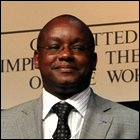
    DAVID KURIA:
    David Kuria
    David Kuria is founder of EcoTact, a Nairobi-based organization transforming sanitation systems in greater sub-Saharan Africa.
    Photo Copyright World Economic Forum www.weforum.org

    How many Ikotoilet installations do you have in Kenya right now?

    We have now finalized 40 facilities across the country, and we are currently serving approximately 30,000 people everyday.  We are hoping by June next year, we should be able to have at least 100 facility installations across the country and also in Zanzibar, in Tanzania, and targeting countries to serve 100,000 people by June next year everyday.

    That’s really incredible.  So, what about taking this beyond Kenya, perhaps as a sustainable model?

    What I see is that to me it’s really an applicable model.  When we started in the city of Nairobi, it was more for the piloting, including with the government.  It was like, “Are you sure this is something?”  Today we are getting requests across municipalities in Kenya and now in Tanzania, Arusha municipality, Dar Es Salaam and now Zanzibar.  To us, it is that people can now see a solution, that not only an investment solution, but a potential business solution and implementation, and also the potential for recovery within less than five years.  To me, the investment is heavy because each Ikotoilet is costing about $20,000, but we are able to recover that within three to five years.  Really, that’s a major achievement, if we can be able to recover that and re-invest in sanitation.  We are hoping that that could be a potential solution in sub-Saharan Africa.

    So what’s next for you, what’s next for your campaign now that you’ve entered the social and media arena, where do you plan to take your marketing strategy for the Ikotoilet?

    It’s quite interesting.  When I started the model two years back, because to me I was looking at the social transformation and sustainable aspect, and I thought in African context, sanitation or the issue of the toilet is the most difficult part.  I said, why don’t I give it a shot, try and see how far we can be able to revolutionize this.  Now the same approach, the same modeling, can be done to other social services, including unemployment in Kenya and really the region, the water crisis, and really market approach in agriculture and other things.  To me, it’s really a model that can be evolved by, and really we can borrow from the distribution of the cell phone.  Within five years, you go to the poorest slums in the city of Nairobi, and you’ll get men and women with cell phones.  It’s expensive, but it’s a status thing.  They want to be associated with it.  It’s a dignative thing.  We need to package sanitation and some of our basic social services to that level of marketing and ensure that everybody wants to be associated with that.  It’s clean.  It’s a dignity issue, and really it’s satisfying.  Everybody’s talking about it.

    Thank you, David.  We’ve been speaking with David Kuria, founder of Ecotact and the Ikotoilet.  To learn more about Ecotact and other projects, be sure to tune in to Circle of Blue online at CircleofBlue.org. Our theme is composed by Nadev Kahn, and Circle of Blue Radio is underwritten by Traverse Legal, PLC, internet attorneys specializing in trademark infringement litigation, copyright infringement litigation, patent litigation and patent prosecution.  Join us gain for Circle of Blue Radio’s 5 in 15.  I’m J. Carl Ganter.

  • Drought in South China is Worst in Decades

    Twenty million people, 16 million acres of farmland affected. Costs estimated over $1 billion.

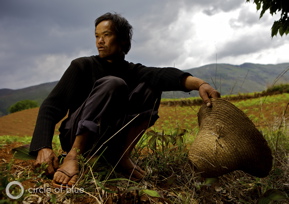
    A farmer outside Qibudi in China's Yunnan Province surveys his field.

    Photo © J. Carl Ganter / Circle of Blue

    Parts of southern China are being ravaged by a severe three-season drought. Millions of people lack adequate water supplies, and millions of acres of cropland are too dry to plant, the Associated Press reports.

    Local governments were forced to tap underground water sources and use cloud seeding for agriculture-sustaining rain in the provinces of Yunnan, Guizhou and Sichuan, as well as the Guangxi Autonomous Region and the city of Chongqing.

    In the Guanxi region, 77 districts have declared a state of emergency. Sixteen have been added to the list since late February. Tens of thousands of people do not have enough drinking water, the China Daily reports, and spring planting for some might be impossible.

    About six million people are affected in Yunnan, which is in the midst of its worst drought in 60 years, according to a China Meteorological Bureau report. Losses in the province amount to US$ 1.46 billion, mostly from lost crops or livestock. The local government has started to pump sources of water hundreds of feet underground.

    Signs of drought are creeping northwards. Several northern provinces haven’t seen rain in 40 days, and farmlands are showing signs of drought.

    Circle of Blue reported from Yunnan Province in January, exploring the region as a microcosm of the challenges facing China’s vulnerable freshwater supply. For China to prosper in the 21st century, it must fit thriving human settlements into a severely damaged landscape where water is scarce, inaccessible, or often too dirty to use.

    More than 400 of China’s 600 largest cities experience water shortages, according to United Nations assessments. Three-quarters of China’s rivers and lakes are dangerously contaminated. By 2020, the World Bank estimates, water stresses in China could create up to 30 million environmental refugees — people who must move from their homes in search of one of the most basic necessities for life.

    Sources: Associated Press, China Daily

    Find Circle of Blue’s complete coverage from China’s karst regions below:
    Hidden Waters and Dragons in the Deep: The Fresh Water Crisis in China's Karst Regions
    Sources

  • Q&A: How General Electric is Tackling the Water Crisis

    Circle of Blue interviews General Electric Water’s Director of marketing Jeff Fulgham.

    By Andrew Maddocks
    Circle of Blue

    Director of marketing for General Electric Water Jeff Fulgham is at the forefront of the multi-billion dollar company’s conservation plans. Fulgham has to understand the water-energy nexus, as well as the ongoing water rights battles in order to push GE forward. From implementing environment- and bottom line-friendly policies for GE and its clients, to tackling local water shortages across continents, Fulgham reveals how the corporate sector is reshaping its relationship with one of the world’s most precious resources.

    From the 50,000-foot perspective, how far have we come in the past four or five years in the corporate water sector?

    At a macro level, it’s the same basic factors we were looking at four to five years ago, but just on steroids.

    In particular, this imbalance of supply and demand is the macro driver. Globally we’ve reached a tipping point, depending on whose data you look at — global demand now is exceeding supply. In some parts of the world it’s much greater than others.

    Globally we’ve reached a tipping point, depending on whose data you look at — global demand now is exceeding supply.”

    What we see is that imbalance is being made up by water reuse, desalination continues growth but at a slower pace than what we saw five years ago, and we’re drawing down our reserves. When you look at major reservoirs, whether it’s Lake Mead or its peers around the world, we’re tapping into reserves, underground aquifers and other places to make up that deficit.

    We’re seeing that becoming more of an issue. So we’re working two drivers — one is trying to reduce that demand, and then create new supplies through things like desalination, water re-use and other technologies.

    The second piece we see is water quality, which is hitting our customers in two places. They’re having lower quality water coming to their asset — industrial plant, municipality, whatever — and they’re also having to meet more stringent regulations on the discharge side in some places in the world. They’re pinched in the middle, at least in the developed world.

    We still see some challenges in Eastern Europe and other places where policy isn’t keeping up, so water quality continues to deteriorate.

    The third big thing that’s really starting to get attention, that didn’t have nearly as much five years ago, is water pricing.

    That’s really a driver for the first two megatrends. Water price still is not equivalent to [the resource’s] value in most places. It makes it tough to justify some of the investment to improve our situation.

    It’s one of the challenges we run into with beneficial water reuse and really approaching a lot of the development in a smarter way. Customers aren’t feeling a cost for their water so they’re reluctant to spend money to improve their situation.

    Tucked into those three big trends are the regulatory components around water quality, water rights issues, and policy in general from an incentive standpoint and penal standpoint.

    It’s only recently that these pieces have even been looked at in the same universe.

    Yes, that’s exactly right. In many parts of the world unfortunately they’re still not. As we work with India, we see this total disconnect between the need for power generation growth — 60,000 megawatts of power needed — and for wastewater treatment.

    We’re trying to bring some of those bodies together to talk about co-solution here. If you would co-locate a wastewater treatment and rescue plant and use that as source water for your power plant, all of a sudden it’s a new game. But it’s really hard to bring the right people together in some parts of the world.

    Is co-solution a piece of the major trends that could emerge from the road map you’ve given us in the corporate sector?

    The energy and water nexus piece, to us, comes in three or four different areas; one is power generation itself.

    Power continues to be a big hog of water. Depending where you are in the world more than 50 percent of water consumption is going to power generation. So project out 10 to 20 years and the ways we’re going to meet the new power generation needs are potentially more water intensive than in the past. In the past there was a lot of once-through cooling in power. While it touched a lot of water, it wasn’t that much consumption, and the water was relatively unchanged from front to back.

    Power continues to be a big hog of water. Depending where you are in the world more than 50 percent of water consumption is going to power generation.”

    Now we see a lot more consumptive water use. As you look at power generation of the future it’s a different mix, and that mix has a different demand on water. That’s one piece of the whole power energy nexus.

    The other piece is to generate fuels we need in the future to meet the broader energy demand. Fuels production is incredibly thirsty.

    The other piece connected to that is the unconventional gas base. As we see the growth of shale in various gas regions in the U.S., or in Australia, these new sources are very water intensive, in production and recovery and wastewater. You could also push that one step further to coal mining.

    Could you talk more about India’s disconnect between power generation and wastewater treatment?

    If you think of it as a country you’re missing something; each of the states is so very different. Just from climate to environment you can go from desert to monsoon and everywhere in between. You’ve got this very dynamic country with very dynamic states with incredibly different philosophies on government, policy everything else.

    You have very high numbers of people with essentially untreated wastewater. You’ve got an incredible demand, with food and population growth and everything else. And you have an even greater pinch on the water supplies.

    You’ve got all these weird dynamics going on at the same time you have a growing middle and upper class that are demanding water. You’ve got all these demand-side pieces for both water and energy. We’re struggling because there are very independent groups at the federal and state level that address both water and power. It makes it hard to look at kind of a joint solution.

    I think they’re underestimating the impact of the need for water on this power growth. There’s a heck of a need for interplay between seeing this as an opportunity, solving this waste problem and at the same time giving yourself a nice sustainable water supply for the power industry.

    If you were to walk into World Economic Forum or Chamber of Commerce and draw a road map for five years, what are a couple of the untold stories that maybe are emerging on the radar?

    Agriculture is a real challenge. I think of basic things like, why are we subsidizing the price of water for farmers, which removes any desire to reduce consumption, while at the same time not subsidizing low flow or alternate irrigation methods?

    There’s enough data and technology out there proving we could reduce our water needs for irrigation by 50 to 70 percent globally, with technology that’s affordable today. But there’s no incentive as long as we’re subsidizing the price of water, not technology.

    So, if I were king, I would first address this wacky imbalance of water use for agriculture, for irrigation. As we grow from 6.3 billion to 9 billion people in the next 30-plus years it’s only going to get worse.

    We can attack water consumption in the industrial sector. But even if we cut that in half we only make a dent in the imbalance because of the agricultural demand. I think we have to deploy companies like Toro and John Deere with great low-flow irrigation technologies first.

    It’s also a big vicious circle. As we over irrigate, we wash all the phosphorus-based materials into the lakes and streams. This run-off concern causes water quality challenges, so you end up with this loop that you just can’t fix

    I think we can really get ahead of that.

    I do think there’s greater opportunities in incentives than penalizing. We’re working now with the U.S. government for a 30 percent tax credit for instance, for beneficial reuse in an industrial sector, with the right energy footprint. You can’t do a total tradeoff with high-energy consumption in order to produce that water.

    There’s this opportunity to incentivize the right behavior rather than smack people when they don’t behave. We’re big fans of incentive versus mandates, and that type of regulatory policy.

    So we think investment tax credits that worked in wind could work in water reuse. There are other ways to incentivize municipalities to do the right thing. It doesn’t take a lot of investment to go from a municipal wastewater plant that’s treating to discharge and clean up tertiary treatment, and purify for beneficial reuse for power or whatever industry.

    We’d love to see a lot more of that going on rather than dumping back to sea.

    How are you seeing GE taking on internal water use, and internalizing your own processes and thinking? What are you learning, and what can other companies learn from you?

    We’ve really aggressively gone after water consumption in our own sites. In May 2008 we committed to reduce our own consumption 20 percent by 2012. We’ve upped that to 25 percent reduction by 2015.

    We’re already well down that path. We’ve got about 7,000 rooftops or so around the world, and so we’ve been working on a step-by-step process across all of our business units looking at the big water consumers. We work very closely with our corporate environmental team, and look at the top 100 water users.

    Then we do treasure hunt events where we take groups into major water-consuming sites and do a full river-to-river assessment.

    We look at at all the ways we could reduce consumption from the inlet to the outlet, and look. A lot of this is improving operating procedure, not spending a bunch of money to install a lot of equipment. It’s smarter operating.

    We’re also installing water re-use systems, waste water treatment, cooling towers where once-through might have been used, replacing old lime softening with reverse osmosis, much more water-smart systems.

    We’re going plant by plant through this step-by-step process to reduce our own consumption, and we’re having a lot of success.

    What motivated GE to cut its own water use?

    It started as the right thing to do to help solve the world’s biggest environmental challenges and drive profitable growth for GE. It was a goal that we set just like greenhouse gas reduction and other things. What it’s become is the individual plants look at investment and water improvement to have a return on investment that justifies the capital invested.

    It’s brought a lot of real savings which drop right to the bottom line that they weren’t necessarily looking at.

    It gets back to water cost again. One of the big industrial GE plants thought of their water as essentially free. They were drawing it out of a river, and didn’t think about paying for the discharge either. In reality, with account pumping costs and labor and everything else, there was a tremendous cost to their water that they weren’t really seeing. It wasn’t like a water bill that we would see on our home expenses.

    So when you bring all that to light, it was a fantastic return on investment.

    You appear to be in a unique position that can extend lessons and methodologies you develop internally to your clients.

    It’s a lot of work to do that, but people are willing and able. It’s definitely beneficial. In some cases GE is almost a tougher customer than most of our customers. We’re a very demanding company.

    We have to have that solid return that meets GE’s own financial goals. It’s a great process. We’ve learned a ton working with our own GE plants that we can take to our customers.

    Are you looking at any additional conservation targets beyond 2015?

    We’re going to walk before we run, but we feel like we can do significantly better. It’s kind of low-hanging fruit, and as we look at the next 100 plants, it gets harder and harder.

    A lot of our assets are commercial buildings. There’s not a lot you can do beyond low-flow toilets and that kind of thing. It ends up being very marginal return on the investment. What we’re looking at is the large consumers, the big industrial plants.

    There are literally billions of gallons of water we can reduce, so that’s what we’re going after.”

    There are literally billions of gallons of water we can reduce, so that’s what we’re going after.

    How do the human rights dimensions of water factor into your work within GE or with clients?

    It’s a huge deal for us, one that we challenge ourselves with and that we are challenged with.

    We do quite a bit with GE Foundation. Typically the Foundation gives somewhere around $100 million through health care and various other parts of our business. We’re a big part of that. We’re giving pure water systems to hospitals in Ghana. So around the world we do philanthropic things.

    But those aren’t long-term sustainable, repeatable things. Those are individual efforts we make to improve lives. What we’re trying to do is make a more widespread impact, at that bottom of the pyramid.

    We have a small, internal board within our water business. We have our monthly reviews, and constantly look for opportunities to work with governments and customers around the world.

    There’s three legs to that stool: One, you have to have technology that honestly is hard for GE at times. We’re always trying to take the next frontier of the coolest new technology. In most cases that’s not what’s needed at the bottom of the pyramid. You need simple to maintain, inexpensive technology.

    Sometimes it’s tough for us because we innovate way at the front end, and we have to think a little bit differently. There’s a technology component to it.

    The second leg of the stool is around funding. There’s a lot of funding. We work with a number of big foundations like the Gates Foundation and Tata Foundation in India that are interested in helping this problem, but want to partner up with someone like GE.

    The third thing we look for is a local entrepreneur on the ground, somebody that has a vested interest and can really make this work.

    There’s 600,000-plus villages in India and 200,000 of those have water quality below human health standards. It’s tough to go solve challenges of 200,000 villages. So we’re trying to build repeatable, sustainable programs that might be funded by a third party and implement our technologies.

    But we might also enable a local entrepreneur to install a water kiosk and sell water for a few rupees a day to citizens of that village and make it sustainable, and so you can create a small-business model there.

    We’re looking at water kiosks in China, we’ve got about 1,000 in India, we’re looking at solar-based kiosks that are independent of the grid in Pakistan — we have a number of projects around the world that are experiments in making these local business models work.

    Any other trends you’re seeing?

    We’re seeing a wonderful trend at the college level. I work quite a bit at schools looking at new talent, and there’s a wave of water-based classes and MBAs with an environmental and water background. It was really neat over the last couple years to see interest level rise. People that never would have thought about water or the environment, you know, the Harvard MBA types, are all of a sudden passionate about trying to address this challenge.

    That’s an area that I think is exciting, to see the twenty-somethings care very differently than I know I did when I came out of school.

    Andrew Maddocks is a reporter for Circle of Blue. Reach Maddocks at [email protected]. To read more about emerging trends in the world of water click here.

  • Taking the Pulse of Global Freshwater Issues

    What’s happening and what will happen in the water world in 2010. A look ahead as citizens, companies and nonprofits jockey for position.

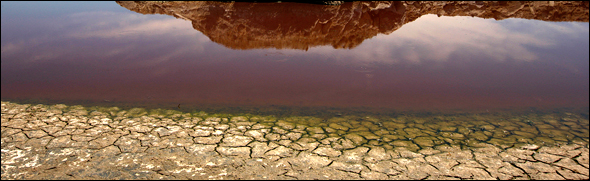
    A scene from a former recreation boating area from the Salton sea

    Photo © Brent Stirton/Reportage for Getty Images/Circle of Blue
    SALTON SEA, CALIFORNIA, AUGUST 2009: This slowly drying sea recedes as farmers save water, and and runoff levels drop. By 2030 people worldwide will withdraw more water than the planet can replenish.

    By Andrew Maddocks
    Circle of Blue

    March 22, 2010 marks World Water Day, a 24-hour observance held annually since 1993 to draw attention to the role that freshwater plays in the world. In recent years it has focused global concern on the dwindling supply of clean water.

    With governments from Australia to India feeling the heat of dryness like never before, multinational corporations pledging to become better global water citizens, and a multitude of nonprofit organizations gaining position in the councils of influence worldwide, the global freshwater crisis is steadily becoming a top public priority.

    In January, global business and elected leaders assembled in Davos at the World Economic Forum learned one more striking fact that underlies international concern. By 2030, WEF experts said, people will withdraw 30 percent more water than nature can replenish. Unless practices for using and conserving water shift dramatically, shortages will hit communities and businesses, especially agriculture, which uses 70 percent of the world’s fresh water.

    Here is some of what we expect in what promises to be a busy year in the world of water:

    Contents

    • Awareness and action
    • Business of water
      1. Bottled Battles
      2. GE: One company’s approach, inside and out
      3. Water Disclosure Project
      4. United Nations CEO Water Mandate
    • Water and Global Health
    • Awareness and Action

      A team of researchers and advocates that includes the Global Water Partnership, Global Public Policy Network on Water Management, Stockholm International Water Institute and the Stakeholder Forum, have been working with hundreds of smaller groups to rally support for water’s role in international climate change negotiations this year.

      The work was prompted by the disappointing outcome of the United Nations Climate Change Conference in December, when water was left out of the Copenhagen Accord. The non-binding agreement calls for modest action on global warming.

      If the international climate treaty doesn’t better emphasize the water-climate intersection, people living in vulnerable coastal nations, such as the island of Maldives, and farmers facing volatile rainfall, such as those in Australia, will be unprepared to face major catastrophes, Stakeholder Forum Policy Coordinator Hannah Stoddart told Circle of Blue.

      At the international level, Stoddart and her team work directly with UN officials, and also are coordinating an unofficial international water day in Bonn, Germany in June. They are arranging high-level round table discussions that will rally more support for water issues in the months leading up to the next climate change summit in December, in Mexico.

      “The eventual goal is for a recognition on an international level that there are currently no operational international treaties addressing water issues specifically,” Stoddart said. “We’re at the beginning of quite a long journey.”

      Garnering local support is an important component of making sure the issue gains global prominence, according to marketing experts who work on environmental issues.

      “It’s so hard to make people realize that they have a connection to the issue, to the sources of the problem,” said Joel Finkelstein a senior vice president and head of the environment team for Fenton Communications, a U.S.-based firm.

      Water offers an even bigger challenge in some ways, he added. It’s still extremely difficult to illustrate the consequences of our current water consumption in countries like the U.S., where citizens can turn on the tap without thinking twice.

      But the consequences of water scarcity are more powerfully conveyed through emotional stories than statistical reports. And Finkelstein believes that social media promises new ways to humanize water and environmental issues.

      “Geography’s going to mean a different thing,” Finkelstein said. “It’s really important to tell local [water] stories with local impacts.”

      Business of Water


      Bottled Battles

      A drop in industry sales and the greening plans of Olympics host cities like Vancouver and London indicates that the battle between bottled water and tap water may be on the verge of greater international attention.

      The battle is the subject of the upcoming book, “Bottled and Sold: The Story Behind Our Obsession with Bottled Water,” by Pacific Institute President and Circle of Blue contributor Peter Gleick. Grassroots efforts like Food & Water Watch’s Take Back the Tap campaign, and a trans-Pacific voyage in a boat built entirely from plastic beverage bottles, raised awareness.

      Water has become one of the highest earning commercial products of the last 100 years, earning tens of billions of dollars in annual sales, according to the publisher’s Web site. Millions of plastic bottles are thrown away almost as quickly as they’re produced each year; 86 percent are not recycled.

      According to the consumer rights group Food & Water Watch, plastic bottle production requires 17.6 million barrels of oil and 2.7 million tons of plastic annually. Incinerating the bottles releases toxic byproducts.

      Gleick’s columns and Pacific Institute reports have consistently addressed the environmental, cultural and cost concerns of a bottled water lifestyle. In a recent column, Gleick highlighted consumer revolts curbing the rise of bottled water sales. A Worldwatch Institute report released in late February found that the growth rate of bottled water consumption in 2008, while still positive, had dropped.

      GE: One company’s approach, inside and out

      Many of the world’s largest companies face a tug of war over water use internally and within their communities. This trend will expand, predicts Jeff Fulgham, chief marketing officer at General Electric. GE, a company that earned $30 billion last year and whose business units run the gamut from coal-fired electricity turbines to a water infrastructure division, is looking at water efficiency system-wide.

      In the past few years the world — and many of its largest companies — has reached a tipping point over water, Fulgham said.

      Global demand is exceeding supply. That imbalance is greater in some parts of the world than others.

      A 2007 graphic of global water availability.

      Graphic courtesy UNEP
      Pictured above: A 2007 graphic of global water availability. Deep blue regions have the most freshwater available per person per year, orange regions have the least. Click to Enlarge

      The numbers are numbing — at 4,500 billion cubic meters, global demand for water already exceeds supply. By 2030 demand for water will grow to 6,900 billion cubic meters, leaving 40 percent supply gaps in some areas, according to a 2009 McKinsey report.

      GE, only one of the companies aggressively assessing future water supply risks, addresses this gap in its internal water use and interactions with a spectrum of clients that need home appliances, jet engines or nuclear power plants. The company aims to reduce its water use by 25 percent by 2015.

      As GE tries to reduce its overall water consumption, two other key issues further define the company’s approach to water management — quality and pricing.

      “It’s the same basic factors we were looking at four years ago, but on steroids,” Fulgham said. Some industries are using poor-quality water, while others are facing more stringent regulations, especially on the discharge side, he added.

      “They’re pinched in the middle,” Fulgham said.

      At the same time some companies and consumers aren’t paying enough for their water, Fulgham said, to reflect how scarce the resource is.

      “Customers aren’t feeling a cost for water, so it’s tough to get them to spend any money to improve their situation,” he said.

      Meanwhile weak government regulations have let water quality deteriorate in some places, such as Eastern Europe and the developing world. Multiplying demand, deteriorating quality, and disconnected pricing are draining major water reserves.

      Fulgham said GE is using a three-pronged approach to respond internally and through its customers: conservation, water re-use technologies and desalination.

      Desalination, which until recently was cited by many as a panacea for supplying drinking water in dry nations, may be reaching the limits of practicality. It is energy intensive and expensive. Since newer technologies can’t guarantee success, GE is emphasizing conservation measures and clean, efficient water re-use.

      GE, like other corporations, is upgrading its appliances, water re-use and treatment equipment. It’s also updating its manufacturing, energy, appliance and real estate holdings.

      Fulgham said he’d like to tackle excessive water use in agriculture. Minimizing the flow of water through farms could intervene directly in what he calls the “vicious cycle” of water, reducing consumption and pollution at the same time. His company also cultivates talent in Ivy League and top engineering school programs related to water, the environment, and business.

      Human rights related to water are a “huge deal,” Fulgham said. GE is working with its own foundation, global peers like the Gates and Tata Foundations, entrepreneurs and appropriate technologies for water-deprived areas to build sustainable programs in the neediest areas.

      Read more from Circle of Blue’s conversation with Fulgham here.

      The CDP Water Disclosure Project in 2010

      ——— February – March Companies review and sign water disclosure questionnaire.
      ——— April 1 Questionnaire sent to approximately 300 of largest corporations in water-intensive sectors globally.
      ——— July 31 Deadline for companies to respond to questionnaire.
      ——— October – December Findings launched through CDP Water Disclosure.

      In a measure of global corporate attention on freshwater issues, 300 corporations in water intensive industries and high-risk areas have pledged to release detailed information about their water usage through the Carbon Disclosure Project. CDP is an independent British non-profit founded ten years ago to help organizations measure and disclose their greenhouse gas emissions. It also creates strategies to help deal with climate change. Now CDP is applying its emissions model to water.

      The first stage of the new program starts April 1 when CDP will survey 300 member companies. The results, which CDP plans to release by the end of 2010, will give the companies and their investors new tools to analyze water-related risks and bottom line opportunities.

      Marcus Norton, head of the water disclosure program, said the survey’s broad acceptance is a sign that companies are beginning to understand water is an important part of their supply chain.

      “Companies will need to operate in a water-constrained world,” Norton said. “Investors will be very interested in knowing that it’s a part of their long-term planning.”

      The questionnaire has three general categories: water management and governance, water-related risks, and metrics. The first group of questions asks how companies deal with various parties, from governments to local groups, connected to a water supply. Investors, Norton said, want to know companies are anticipating the dangers of operating in water-scarce regions.

      Metrics is the most challenging category to survey because there’s no global standard for water measurement. Gathering exhaustive data could put an overwhelming burden on companies.

      Norton said CDP designed the survey to collect meaningful data that doesn’t create an excessive reporting burden. While it’s a “rocky” process that will develop over many years, companies have no incentive to mislead shareholders, Norton said.

      Useful data is harder to gather about water than greenhouse gases. Carbon emissions have the same affect on London as they do on Michigan. Water information is most valuable when localized down to the watershed level because conditions can be so variable.

      “Until you look at that I don’t think the data is truly meaningful,” Norton said.

      Norton will use the survey’s first year to explore ways the survey should expand. He wants to prioritize two additional categories: the largest, most water-intensive companies and the regions with the worst water scarcity.

      “This is an iterative process of improvement,” Norton said. “We’ll be developing modules for different industries and sectors.”

      Norton thinks this project will advance global awareness of the water crisis in the coming years.

      “I’ve heard people describe us with water as where we were with carbon and climate change five years ago.”

      United Nations CEO Water Mandate

      Started by the United Nations in 2007, the voluntary CEO Water Mandate is designed as a public-private venture to help companies develop, implement and disclose water sustainability in their supply chains. In the long term, the CEO Water Mandate hopes its efforts will help mitigate the effects of the global water crisis.

      Companies that sign the mandate pledge to analyze and reform six key water management areas:

      * Direct operations
      * Supply chain and watershed management
      * Collective action
      * Public policy
      * Community engagement
      * Transparency

      Beverage industry giants PepsiCo, Coca-Cola and Nestlé have signed on, along with more than 50 others. The Pacific Institute, Circle of Blue’s parent organization, manages the program.

      But not everyone supports the mandate. An active community is skeptical of corporate involvement.

      Corporate Accountability International, a grassroots watchdog organization, calls the CEO Mandate — among other corporate initiatives — a public relations effort by for-profit corporations to gain control over the world’s water resources and services.

      “Corporations like Coca-Cola, Suez and Nestlé are trying to turn water into a high-priced commodity, the oil of the 21st century,” said CAI in a statement. “This presents a grave threat to people’s access to water. The United Nations needs to stand up for public, democratic control of a resource that is essential to life.”

      In addition, more than 125 organizations in 35 countries urged UN Secretary General Ban Ki-moon to withdraw the UN’s support for the mandate. Tony Clarke of the Polaris Institute, a Canadian-based political think tank, noted during a side event to the World Economic Forum earlier this year that the CEO water mandate is a “thinly veiled public relations effort by for-profit corporations to gain greater control over water resources and services around the world.”

      Pacific Institute Program Director Jason Morrison told Circle of Blue he objects strongly to the assertions.

      “There’s a lot of evidence we’re shown that this is not a public relations exercise,” Morrison said. “In fact, I would challenge anyone to find an initiative, focusing on the private sector, that has done more in the last two years to define what corporate water stewardship means in practice than the UN CEO Water Mandate.”

      The mandate has been unusually successful, Morrison said, in pushing companies to identify water-related impacts and risks throughout their operations. It also places a major emphasis on transparency of water-related data in companies.

      Morrison pointed to a study called “Murky Waters? Corporate Reporting on Water Risk” by the Ceres investor coalition, Bloomberg and UBS Financial Services as an independent measure of success. The study ranked companies’ disclosure of water data across different sectors. While the mandate did not cover all the sectors, its companies ranked among the highest in the study.

      The mandate also defends human rights and the democratic water regulatory process, Morrison said. The Pacific Institute helped draft a responsible engagement and public policy document for companies that’s undergoing a month-long public review. It pushes companies to consider a range of groups its water policy affects, and guides company relationships to serve their best interests.

      While Morrison believes the mandate’s success in reforming the private sector is unparalleled and has ongoing potential, he pointed out that some groups would rather not deal with the private sector at all.

      “There are others, myself included, that hold the view that because industry uses such a large amount of water, it would be to everyone’s benefit if they were better stewards of that water,” Morrison said.

      It’s nearly impossible to get through a day — especially in America — without using an industrial, water-intensive product. Morrison sees that as a call to action and a validation of the mandate.

      Water and Global Health

      While companies assess risks and look for ways to conserve, scarce and polluted water supplies remain one of the world’s greatest public health challenges. More children die every day from a lack of clean water, sanitation and hygiene than from AIDS, malaria and tuberculosis combined, while 20 other potentially fatal diseases can be reduced if water access was better, according to the World Health Organization.

      Such widespread fatal illness could severely limit the United Nations Millennium Development Goals, which form the pillars of the UN’s sustainable development program and are widely seen as benchmarks by which world progress or decline is measured.

      A study by the Japan Water Forum in 2005 found that seven of eight U.N. goals heavily depend on access to clean water for success. According to the study, up to 50 percent of the success rate depends on access to clean water.

      “We can’t accomplish these goals if people are sick repeatedly, or if women are out hauling water two to three hours every day,” said David Douglas, founder and executive director of Water Advocates, a Washington-based nonprofit group focused exclusively on raising funds and awareness for water-related health issues.

      Douglas says he’s motivated by the staggering number of deaths tied directly to water, and the broader, indirect threats limited resource supplies pose to development.

      Water Advocates, which will dissolve this year, is hoping for several pieces of its advocacy work to fall into place before it closes.

      “Whatever the outcome of this year, we’ll have plenty of voices to keep going,” Douglas said.

      World Water Day

      Photo © UN Water

      The research, he says, offers no other interpretation: Water and sanitation-related diseases must be on par in global attention and funding with AIDS, malaria, and tuberculosis. Right now they are barely mentioned in government spending negotiations, Douglas said, adding that he hopes the U.S. will allocate $500 million in 2011 to tackle water-related health problems in the developing world.

      The immensely diverse global water challenges — health, business sustainability, climate impact, agriculture, gender equality, human rights, infrastructure development and repair, to name just a few — form a swarm of intersecting complexities that, says Douglas, will define the success or failure of development in the coming years.

      Andrew Maddocks is a reporter for Circle of Blue working from the Traverse City, Michigan newsroom. Reach Maddocks at [email protected]
  • Clean Water Act Leaves Waterways Vulnerable to Pollution

    Vague language in Clean Water Act allows thousands of nation’s largest polluters to avoid Environmental Protection Agency regulations.

    Water Pollution Oil on Water As many as half of the nation’s largest water polluters might be exempt from the Clean Water Act’s requirements because Supreme Court decisions never clarified what waterways the act protects, The New York Times reports.

    Vague language has allowed certain companies to not be prosecuted, which could be contributing to rising pollution rates in the U.S. Thousands of known polluters have contaminated waterways by spilling oil, carcinogens and dangerous bacteria, according to the U.S. Environmental Protection Agency officials.

    “We are, in essence, shutting down our Clean Water programs in some states,” Douglas F. Mundrick, an EPA lawyer in Atlanta, told the Times. “This is a huge step backward. When companies figure out the cops can’t operate, they start remembering how much cheaper it is to just dump stuff in a nearby creek.”

    The Clean Water Act is supposed to end dangerous water pollution by regulating every major polluter. But thousands of known polluters have skirted punishment because regulators lack or have difficulty obtaining jurisdiction, according to officials.

    The EPA estimated that in the past four years more than 1,500 major pollution investigations have not reached fruition.

    Regulatory ambiguity comes from language that limits the Clean Water Act’s jurisdiction to “the discharge of pollutants into the navigable waters” of the United States.  The Supreme Court has interpreted that language broadly to mean large wetlands and streams that are connected to major rivers.

    Two court decisions have suggested that waterways that reside in one state are not covered by the act, although pollution within these bodies can still contaminate drinking water.

    People who support the more narrow interpretation of the law argue that it helps scale back overreaching federal regulation.

    “There is no doubt in my mind that when Congress passed the Clean Water Act in 1972 they intended it to have broad regulatory reach, but they did not intend it to be unlimited,” Don Parrish, the American Farm Bureau Federation’s senior director of regulatory relations, told the Times.

    EPA and state regulators said that since the Supreme Court never defined what waterways could be regulated, judicial districts were left to interpret the court’s decisions on their own. Regulators struggle to determine how courts will rule.

    Some EPA lawyers have established unwritten internal guidelines about avoiding cases in which proving jurisdiction is too difficult.

    The EPA released a statement that says no significant water body is automatically excluded from the Clean Water Act, even streams that go dry for long periods. But mid-level officials interviewed by the Times believed up to 45 percent of major polluters were not sufficiently regulated.

    Recent legislation in Congress tried to clarify some of the ambiguity, but opposing lobbying groups, like the Waters Advocacy Coalition, have stalled the bills.

    As legislators and EPA officials pursue alternative regulations, state and federal regulators told the Times they cannot protect important waterways.

    EPA reports state that about 117 million Americans get their drinking water from sources fed by waters that are in danger of exclusion from the Clean Water Act.

    Source: The New York Times

  • Millions of Tons of Ice Found at Moon’s North Pole

    The new discovery on the moon contains millions of tons of frozen freshwater that could support life.

    Pictured above: A NASA radar image of ice collected in 40 craters on the moon's north pole.

    Photo Courtesy NASA
    Pictured above: A NASA radar image of ice collected in 40 craters on the moon’s north pole. Click to enlarge.

    NASA announced yesterday that a moon probe discovered enough water on the north pole to potentially help generate oxygen or sustain a moon base, Wired Magazine reports.

    India’s Chandrayaan-I lunar orbiter, which was carrying NASA radar equipment, found ice in 40 craters that ranged in size from 1 to 9 miles in diameter. Based on the discovery, scientists estimate that there are at least 600 million tons of in the area.

    “Now we can say with a fair degree of confidence that a sustainable human presence on the Moon is possible. It’s possible using the resources we find there,” Paul Spudis, from the Lunar and Planetary Institute in Houston, told the BBC.

    He added that new data from lunar missions in the past few months have revolutionized scientists’ view of the moon.

    The ice had to be relatively pure and at least several feet thick to be detected by the probe, NASA officials said. The probe transmits polarized radio waves in which smooth surfaces return right-polarized waves, while rough areas return left-polarized waves. Afterward the probe detects a ratio, called the Circular Polarized Ratio (CPR), of returning left-polarized radio waves to returning right-polarized waves.

    These north pole craters had a high CPR internally and a low CPR on their rim, a unique pattern which indicates ice enclosed in the craters rather than mere surface roughness.

    “There’s not one flavor of water on the Moon; there’s a range of everything from relatively pure ice all the way to adsorbed water,” Anthony Colaprete, the mission’s chief scientist from NASA’s Ames Research Center, told the BBC.

    Polar lunar ice comes from several sources, including interaction with solar wind, migration to the poles’ cooler temperatures, comets and asteroids.

    Researchers also found a range of other compounds on the moon’s north pole, including sulfur dioxide and carbon dioxide.

    As the results from the latest north pole exploration will be published soon, scientists are still analyzing tests from craters at the moon’s south pole.

    Sources: Wired Magazine, BBC

  • ‘Superberg’ Detaches from Antarctic Glacier, Could Disrupt Ocean Currents

    The detachment of a giant iceberg, though not directly related to climate change, could slow global ocean circulation.

    Mertz Amo

    Photos courtesy NASA
    Pictured above: The view from space as a 965-square-mile iceberg broke off a branch of the Mertz Glacier in east Antarctica earlier this month.

    A giant iceberg collided with a branch of the Mertz Glacier in east Antarctica earlier this month, breaking off a 965-square-mile ‘superberg,’ The Sydney Morning Herald reports.

    Australian and French scientists said that the two icebergs could disrupt global ocean circulation currents, changing heat distribution patterns and lowering oxygen levels.

    “The calving (break) itself hasn’t been directly linked to climate change but it is related to the natural processes occurring on the ice sheet,” Rob Massom, a Tasmania-based senior scientist at the Australian Antarctic Division and the Antarctic Climate and Ecosystems Cooperative Research Center, told Reuters.

    This natural calving stands in stark contrast to the recent, rapid ice shelf break-off from rising temperatures in the Antarctic peninsula, according to Australian Antarctic Division Glaciologist Neal Young.

    At 48 miles long and about 24 miles wide, the new iceberg holds roughly 20 percent of the world’s annual water use, Young told the Associated Press.

    The two icebergs are now drifting together about 60 to 90 miles off the coast of Antarctica.

    Scientists worry about global ocean currents because the newly-detached iceberg had previously helped protect a polynya, an ice-free area of water.

    Twenty-five percent of Antarctic bottom water originated in the polynya, making it a key driver of ocean circulation, Massom told the Herald. If sea ice fills in the polynya, or if the ’superberg’ blocks it, the dense, cold sinking water could be cut off above the ocean floor, causing slow-ocean bottom currents. These ocean currents move heat around the world, and feed deep currents that distribute oxygen. Changes could have devastating effects.

    “There may be regions of the world’s oceans that lose oxygen, and then of course most of the life there will die,” Mario Hoppema, chemical oceanographer at the Alfred Wegener Institute for Polar and Marine Research in Germany, told the Associated Press.

    But the potentially dangerous oxygen-level variations also hold research opportunities.

    Observing what happens “will … allow us to improve predictions of future climate change,” leading climate expert Steve Rintoul told the AP.

    Sources: The Sydney Morning Herald, Reuters, Associated Press

  • Tehuacán Valley, Mexico Remains Resilient as Nation Faces Worst Water Crisis in Decades

    Severe water scarcity is a daily reality for many in Mexico, particularly the people of Tehuacán Valley. Facing a dwindling supply compounded by development, drought, and pollution one organization models a solution.

    A boy steps gingerly through the mud after scooping water to use for bathing at his home in a nearby village.

    Photo © J. Carl Ganter/Circle of Blue
    A boy steps gingerly through the mud after scooping water to use for bathing at his home in a nearby village.

    By Andrew Maddocks
    Circle of Blue

    There’s no water distribution infrastructure in Mexico’s San Marcos Tlacoylaco, and clean freshwater has been scarce as well as prohibitively expensive to buy for decades. But help is on its way to San Marcos, a town of about 10,000 people in the upper Tehuacán Valley, because new rainwater storage tanks and sewage-recycling systems in individual homes are making water more accessible to families.

    A Mexican non-profit group, Alternativas, is at the sources of this economic and social change in San Marcos. Alternativas has developed a two-pronged approach aimed at residences and farms that involves water management systems for residences coupled with a campaign to replace corn with amaranth as a staple crop. This ecologically-based water conservation model, tested in San Marcos and 200 other towns, is seen as a potential strategy for solving the uncertain future for all of Tehuacán Valley’s increasingly troubled water supply.

    Indeed, a prolonged drought last year that damaged the nation has made water scarcity in Tehuacán worse. The already limited supply has also been compromised by population growth, funding shortages and pollution. More people than ever—from every class and background—have lost access to clean water for days at a time. Facets of Mexico’s economy have been severely damaged as its deepest aquifers have been drained.

    DIVINING DESTINY
    Four years ago, Circle of Blue produced Divining Destiny, which captured the social, political and economic consequences of contaminated water resources in southeast Mexico’s Tehuacán Valley.

    People have moved to cities and now travel along the highways in the valley to look for employment, only to be told they won’t even find water. The water table has dropped so low that no new well permits are available. Swelling urban populations have placed further strain on cities already lacking financial resources.

    Tehuacán City—as well as all other cities in Mexico with populations of 50,000 people or more—was required by law to open its first water-treatment plant by 2005. But the plant was too costly to finish, according to Raúl Hernández Garciadiego, director general of Alternativas, the Tehuacán-based NGO that develops and implements sustainable living practices. Now the city, which has a population of 300,000, is throwing out wastewater that contaminates downstream rather than cleaning and re-using it.

    Alternativas discovered contamination across wide swaths of the valley as the organization looked for a location for their new, larger amaranth factory. Amaranth production is one part of the NGO’s water conservation plan.

    Since indigenous peoples in the Tehuacán Valley domesticated corn for the first time in the history of mankind between 5000 and 3400 B.C., maize has become the world’s food staple. But corn requires heavy water use. Amaranth, on the other hand, uses less water and has better nutritional value.

    The dusty village life near San Marcos Tlacoyalco.

    Photo ©Brent Stirton/Reportage by Getty Images
    The dusty village life near San Marcos Tlacoyalco.

    Sixteen years ago Alternativas began a growing cooperative called Quali, or quality, to support amaranth production. As a result job opportunities expanded and malnutrition rates in communities decreased due to amaranth. With yields booming, Quali started to look to build a new, larger factory in 2008.
    Their search began in the northern part of the Tehuacán Valley, near San Marcos.

    But biological waste from industrial chicken farms and chemical pollutants from fabric treatment plants, known as maquiladoras, had contaminated huge areas. Quali members tested every factory site before construction, and found that most were heavily contaminated.

    The group decided to move its new factory down the valley, and began construction on the new facility in 2009.

    Last summer, as the drought cut off critical rainfall in the region and across much of the country, Quali farmers lost 50 percent of their crop. It’s a dramatic loss that Garciadiego still marks as a success, since other farmers in Mexico without irrigation lost 100 percent of their yield.

    Despite the recent drought and long-time pollution, Quali’s annual amaranth yields have increased by an average 35 percent, Garciadiego said.

    But while Quali members could pick an alternative site for their factory, residents in polluted areas of the valley cannot move so easily. After years of living with the contamination, residents have suffered health problems.

    Cervical and breast cancer incidence rates are higher in the Tehuacán Valley than most of Mexico. A February 2009 newspaper report in La Jornada de Oriente stated that in the Tehuacán county four to five new cases of cancer discovered every week in public health clinics.

    Water contaminants and particulate matter in the air are to blame, according to Garciadiego. At times the activist has felt powerless to help. But he found strength in community leaders, like Francisca Rosa Valencia who was a San Marcos native.

    Valencia was a tireless community organizer who pioneered water management and amaranth expansion in the valley for 20 years. In 2007 she fell ill with cervical cancer, dying from the disease just three months later.
    Losing her was a huge blow to the area’s ecological movement.

    “We didn’t understand the Lord’s decision to invite her to the sky,” Garciadiego said. “Some of our friends said that perhaps she deserved to see the fruits of her work from a special place. It was a very hard shock for each one of us when she passed away.”

    Despite the loss, Valencia left behind a legacy of exceptional hard work, water conservation and amaranth expansion that Garciadiego and Alternativas hope to continue.

    In the two years since Valencia died, Alternativas has not only expanded its amaranth production, but also developed parallel waterworks throughout much of southern Mexico’s Mixteca Popoloca region.

    The organization has served more than 200,000 residents in over 200 villages and built 7,500 water works of different sizes as of December.

    “Nowadays people can fulfill the family household need, farm small plots nearby and water their animals, mainly goats,” Garciadiego said.

    People’s crops are healthy and their goats have water dripping down their chins because of Alternativas’ water management system. Their system installs rainwater storage tanks and sewage-recycling systems in every home possible.

    The tank saves enough water during the wet season to sustain each family through the dry season. A biodigester anchors the sewage recycling system that processes family waste and then connects to small garden that acts as a filtering area. Whatever families grow absorbs nutrients from the fertilized ground.

    Industrial chicken farms dot the landscape of the Tehuacan Valley.

    Photo ©J. Carl Ganter/Circle of Blue
    Industrial chicken farms dot the landscape of the Tehuacan Valley.

    With the rainwater tanks and biodigesters, Garciadiego said, families have a self-sufficient water supply that costs only as much as the initial equipment installation.

    For centuries townspeople walked vast distances from their squat cinderblock and adobe homes to find water. Recently they’ve depended on erratic pumping from wells, or lost a high percentage of their income buying water in large tanks brought to them on trucks. Now they have a convenient, in-home alternative.

    Alternativas’ model also eliminates the need for reservoirs, piping, sewers and treatment plants—all impossibly expensive, logistical nightmares in these rural towns.

    “The hydrological approach, drilling, piping, pumping and delivering sewage to water treatment, is so costly that in majority of cases this model of water management is not possible to be set in place,” Garciadiego said.

    Garciadiego hits the ‘p’s’ of pumping and piping with such rhythmic disdain he might as well be describing pipes made of gold—the concept is that impractical.

    Garciadiego believes his organization’s work in the Mixteca Popoloca region is only the first stage in spreading the ecologically based model to improve water availability, agricultural success and livelihoods across the valley. Alternativas’ model is a new paradigm for water-starved, impoverished areas across Mexico, he said.

    Even with the world’s tenth-largest economy, Mexico does not have the resources to implement Western-style water infrastructure, he said.

    “If we use a sound, ecological approach to management, to household water use, to drip irrigation and water treatment at house level with nothing but initial construction cost,” Garciadiego said, “it will be an ecologically sustainable future for water management.”

    Alternativas’ solution could be part of a comprehensive water management plan Mexico is trying to piece together amongst regions with different economic and geographic environments.

    But the national water commission of Mexico, CONAUGA, hasn’t fully embraced Alternativas’ plan. Garciadiego said there is a lack of government understanding, as well as a business imperative to expand Mexico’s traditional infrastructure of reservoirs, pipes and treatment plants.

    Juan Bezaury, Mexico representative for The Nature Conservancy, said that while Alternativas’ model works in poorer isolated areas, Mexico needs piping and infrastructure in major urban centers.

    The civil, but somewhat disconnected, relationship between Alternativas and CONAGUA exemplifies the problem Bezaury sees with water management planning in Mexico—it’s full of multiple disconnected organizations.

    “We’re still falling far behind. There’s not even an integrated plan to tackle the issue. We have a supply that’s failing, and no clear track to restore the problem.”

    -Juan Bezaury

    “We’re still falling far behind,” Bezaury said. “There’s not even an integrated plan to tackle the issue. We have a supply that’s failing, and no clear track to restore the problem.”

    But the track remains clear in Garciadiego’s mind, at least at the local level. He’s taking his message about a sustainable model that will work across Mexico to foundations and civil organizations this month.

    In November the world’s attention will turn to Mexico in anticipation of the United Nations climate change summit, the first after Copenhagen’s 2009 meeting. As the climate changes droughts will likely become worse, Garciadiego said, and he wants to focus on how increasingly severe water scarcity will affect people. Especially the poor.

    Garciadiego wants to attract some of that international attention towards Alternativas’ model, and bolster ongoing water supply restoration efforts in Tehuacán and beyond.

    To Bezaury, Mexico’s water future depends on a unified strategy across the government, non-profit and business worlds the response to Mexico’s water challenges. It must focus on technical demands rather than political gain, in a sector known for corruption and inefficiency.

    “We have a supply that’s failing, and no clear track to restore the problem,” Bezaury said. “Moving into elections time I’m not sure what [will] happen.”

    Andrew Maddocks is a reporter for Circle of Blue. You can reach him at [email protected].

    Click here to see Circle of Blue’s package Divining Destiny, and here to read public opinion in Mexico on fresh water issues in our WaterViews report.

    Divining Destiny in the Tehuacán Valley

  • Q&A: Raúl Garciadiego Helps Restore Access to Water in the Tehuacán Valley

    By Andrew Maddocks
    Circle of Blue

    The people who inhabit Tehuacán Valley in southeast Mexico humanize one of the greatest global crises. Four years ago Circle of Blue explored the social, political and economic consequences of the region’s limited, contaminated water resources.

    Raúl Hernández Garciadiego, Director General of the NGO Alternativas, has been a key figure in fighting these challenges. Garciadiego says the last several years have been filled with both progress and setbacks, including the loss of a major community organizer, Dona Francisca.

    Today, Garciadiego says the Tehuacán county has some of the highest rates of cervical and breast cancer in the country, with four to five new cases reported weekly, according to local media. People in the area chalk this up as another affect of the area’s poor water supply.

    Meanwhile, Alternativas has sought collaborative partnerships with CONAGUA, the National Water Commission of Mexico, and the Rotary Foundation, an international humanitarian nonprofit, to find tangible solutions for these compounded issues. As Garciadiego reflects on Tehuacán’s past, he looks forward the environmental future of Mexico as the country prepares to host the next United Nations Climate Change conference in November.

    How has the Water Forever program within Alternativas fared since Circle of Blue’s last report?

    This Water Forever program has been pushed by Alternativas, but been embraced by the villages. We have now served more than 200 villages with 200,000-plus inhabitants. Together we have built many water works. In December we had finished 2,119 projects that have built 7,500 water works of different sizes.

    I say without false modesty that, after we received a Latin American and Caribbean award in 2005, we received a national ecological merit award. We also received national agricultural awards in 2005 and 2008 for our amaranth program. Because of all these recognitions we have been invited to make presentations to every one of the villages from the Bank of Mexico, the highest institution for financial rural development, to show them that there is a different way to address the water issues.

    Now we have 350 people working full time, and we’ve become a major NGO in the country.

    What is Water Forever’s strategy for water management?

    We do not have to drill water wells and pump the water out. We need to take care of water flow all the way down the mountains to the valley in order to retain water and use it as first use.

    An important piece of technology is biodigesters at the family level. Each family will not be connected to sewage pipeline. They will process their own family waste in a 2-cubic-meter biodigester facility connected to a small garden that acts as a filtering area where they can grow trees, gardens, vegetables, or whatever they want to have. That will be irrigated and biofertilized from the roots, so there will be no risk of contamination.

    Our villages are committed to not throwing waste into water and not throwing waste into septic pipes that contaminate down stream. They are committed to a clean watershed. They made a proclamation: We commit ourselves not to contaminate water for all people located down stream.

    We expect this to be recognized in the future as a hydrologic service.

    Could you talk about the progress of amaranth grain as a crop in the region?

    The growth of amaranth has been very impressive, 35 percent per year, while the country’s gross national product has grown by four percent. More people are enthusiastic about it, especially since it was an ancient crop from Popolocas and the Aztecs. It’s been traced to very early conversations among missionaries and wise people of Indian groups.

    Nutritionists and scientists say it has the perfect amino acid balance. So, we started a nutrition program to detect how many indigenous children are undernourished by measuring their height and weight. As an intervention we provide each one of these kids one amaranth food.

    With only 25 grams per day in five months we have seen an 87 percent rate of recovery to normal weight and height.

    Now we have food, the opportunity to sell amaranth, and many families are working in the agroindustry. It now provides full employment to 54 people with Social Security benefits and all.

    The cooperative is a very important thing for the families because as they are members, they can suggest that their young sons and girls be hired by the cooperative.

    How are your water and amaranth programs connected?

    This is so important because the combination of water and amaranth is raising the level of hydrologic, food, ecological and economic security of our families through income generation. This is why both programs are so tied together from our perspective.

    We found amaranth in 1982 while researching. We soon started getting and planting seeds because it required less water. Nowadays we see both programs are very strong, working together to have more water availability

    How much as the Quali cooperative developed during these years?

    We tried in the last two years to open a new food factory for the Quali co-op group. We have organized it to produce amaranth food that is a very nutritious, high protein cereal. Our factory was located on the outskirts of the city of Tehuacán in San Lorenzo.

    But the space was not enough. We decided to move, and we went to the upper valley — where Doña Francisca Rosas Valencia — was living, to try to find a place to locate this new agro-industry.

    It took one year of work to test all available places where we could establish the agro-industry.

    It was very sad to see that the whole upper valley was contaminated. When we didn’t find bio contamination from chicken farms we found chemical contamination in the water table. After one year, we saw that it was not safe to establish this food agro-industry here.

    We had to go to the down valley of Tehuacán. We did find a place suitable for this new agro-industry there. We started searching in 2008, and started construction on the new factory in 2009.

    What other challenges facing the upper Tehuacán Valley might be connected to contamination?

    The cancer illness in our region has increased at a much higher rate than the national cancer incidence. The people in the health sector attribute this high increase of water contamination due to maquiladoras (garment assembly plants) washing the denim trousers, which is contaminating.

    There are many heavy metals contained in the dies that now are in the water. And there have been many attempts of pursuing a study showing the direct correlation between this contamination and cancer incidence. But I don’t have a figure, only opinions from oncologists who say it’s something to worry about in our region.

    Some of the people say the contamination is from the waste from chicken farms instead. They just leave it to float in the open to dry. The sun and the wind dry the waste until it becomes [particulate matter], and we breathe it in.

    And what about Dona Francisca, we heard she was ill?

    She passed away. She was diagnosed with cervical cancer in 2008.

    She was a tireless, selfless leader. She was always helpful even though she was so so poor because her husband abandoned her with all of her kids. She had to struggle all by herself to make a living, yet she still found time to encourage other women around her to organize, work, send their kids to school and so on. She was a very energy-contagious woman.

    Whenever you were with her, she was smiling. She earned a lot of support in villages for the cooperative even before we knew she had cancer.

    In 2006 she met with 5,000 other small farmers from every corner of the world in Torino, Italy: invited by slow foods movement. She was so excited to see that, even in her poverty, she had a lot of things to share and to be proud of. She could motivate others to do things if they took matters seriously into their own hands.

    When we heard she was ill, we were all very shocked and very sad. We didn’t understand the Lord’s decision to invite her to the sky.

    It was a very hard shock for each one of us when she passed away.

    What kind of legacy did she leave behind?

    She led a very full life, and set a very strong example. She increased peoples’ interest in water works and in amaranth food production for their families.

    Her example as a woman was also very important. It is so difficult in Mexico facing three handicaps—being indigenous, being a woman and being poor.

    This particular woman had a fourth handicap as a single mother with nine kids. She was a very strong image for all who worked with her. She showed us that we have no right to complain about anything that we face. When we watched this woman facing all these very, very adverse environmental, social and economic conditions she didn’t complain.

    She always thanked everyone for being supportive to her initiatives.

    She also became an icon for the slow food movement. She said, as a healthy food for our children, amaranth should be our first choice. It is easy to digest and nutritious. It’s well worth it to accept the Quali proposal and working groups, in order to learn to cultivate amaranth, not only for private use but also for sale.

    .
    Has inequality between water-rich and poor districts been an issue in the valley?

    The population is increasing, but water sources are decreasing. So the problems nowadays are worse. You hear more about conflicts among cities or counties. In much of the valley the water balance has already been reached or broken. The water table is going down every year. There are no new permits for villages to drill wells to provide water to increasing populations that are coming to live in cities and near highways.

    Currently there is a strong conflict between Tehuacán County, the most powerful in this region, and neighboring Nahuatlan county, which is higher in the valley watershed. Tehuacán valley got permission to take pipe from Nahuatlan to Tehuacán City.

    The villagers and inhabitants were against this because Tehuacán is consuming far more water than needed. We will not allow this pipe to pull water out.

    What is your overall vision for watershed management in Mexico?

    If we use a sound ecological approach to management with household water use, drip irrigation, and low-cost water treatment at the home level, we’ll have an ecologically sustainable future for water management.

    The hydrological approach — drilling, pumping, delivering sewage to water treatment — is too costly to be effective in the majority of cases. Tehuacán City now has more than 300,000 inhabitants, and it hasn’t been able to set up its first water treatment plant. It’s so costly that even such a huge population is just simply throwing out wastewater to contaminate downstream.

    We should have had this plant working, by law, since 2005. That was the deadline for a national water law obligating all cities of more than 50,000 people to have water treatment plants. In most cases in our country there’s not enough money to build plants. In some cases municipalities don’t have enough money to cover the cost of electricity once plants are built, so plants are not working. Now we have at least five years delay in these water treatment plants.

    Even if we are the tenth-largest economy in the world, Mexico doesn’t have the resources to successfully operate a costly water management model that is being set all over the world.

    But our message is getting through.

    You were just starting construction on an expanded water museum the last time we traveled to your valley. How’s that coming along?

    It has been a very successful project because we decided to put it along the highway that connects the city of Tehuacán with south and southeast Mexico. Thousands of people pass along this highway, so the water museum and all the water features that are already built there are very visible.

    We are receiving on average about 1,000 visitors per month. They’re coming from everywhere, from villages to universities. It has been a very useful way to communicate how people have to be organized at the village, micro-sheds and tributary watershed level. We’re also building an auditorium and training facilities for people interested in where find people to work how to manage the accounting and maintain accountability.

    We see the wide interest in people coming to see how we’re doing, and wanting to replicate it.

    How receptive has the government been? What role have they played?

    We have a very good relationship with CONAGUA (might also want to include a mentionof CONAGUA  in the intro). They allow us to do all these water works, but we’re not being sponsored or financed by them.

    The pumping and piping they do is very far from what we do. We get a little money from SEMARNAT — the department responsible for developing environmental policy and legislation in Mexico.

    Another problem with CONAGUA is that water is business, a very big business. So business is a motivation in continuing a model that is already hegemonic.

    But they do not understand the ecological approach. All their programs, all their financial regulations and financial decisions, it all revolves around doing water works, piping, sewage and treatment.

    They clap, but they don’t change.

    What are your next steps?

    I presented at a Rotary Club meeting in Chihuahua with 350 Rotary district representatives last week. They are willing to understand the new approach. They might be able to participate in financing and organizing water in their own region of influence.

    The meeting was called because the Rotary Foundation will be focusing on water in next years. This is an important thing, and I’m still learning about their proposal. I believe they are searching for models of intervention, and are willing to finance initiatives in poor areas all over the world.

    It’s important to note that, after Copenhagen, this year’s United Nations climate conference will be in Mexico City. The eyes of the world will be here in the month of November.

    Andrew Maddocks is a reporter for Circle of Blue. Reach Maddocks at [email protected] and catch more of our Tehuacán coverage here.

  • Remembering Community Leader Francisca Rosas Valencia

    Valencia spent much of her life teaching others in southeast rural Mexico, and beyond, how to live sustainably. Her legacy lives on as they continue and expand her life’s work.

    Valencia spent much of her life teaching others in southeast rural Mexico, and beyond, how to live sustainably. Her legacy lives on as they continue and expand her life's work

    Photos ©2009 Brent Stirton/Reportage by Getty Images for Circle of Blue

    By Andrew Maddocks
    Circle of Blue

    Communities in the Tehuacán Valley needed Francisca Rosas Valencia, said Raúl Hernández Garciadiego, director general of Mexico-based NGO Alternativas. They needed her to sustain the campaigns she pioneered two decades ago in rural Mexican villages like her native San Marcos Tlacoyalco. She worked to conserve water, keep village pollution out of the waterways, and promote amaranth as a staple crop in the region. Circle of Blue’s Joe Contreras interviewed her in 2006.

    But in April 2007 the grassroots organizer fell ill with cervical cancer. As Valencia’s health deteriorated, her friends and co-workers grappled with shock, sadness and confusion.

    Many in the deeply religious community turned to God for answers, Garciadiego said. Since the 1980s, the non-profit Alternativas had worked closely with Francisca Rosas to resolve water issues in the Tehuacán Valley.

    “We didn’t understand the Lord’s decision to invite her to the sky,” Garciadiego said.

    After her death in July 2007, Valencia’s friends found solace in knowing that she’d witness the fruits of her work from a special place.

    Circle of Blue caught up with Garciadiego to discuss the region’s continued water struggles and Francisca Rosas’s legacy:

    “She was a tireless, selfless leader. She was a very energy-contagious woman. Whenever you were with her, she was smiling. Even though she was extremely poor and had to struggle all by herself to make a living, she still found time to encourage other women around her to organize, work and send their kids to school.

    She earned a lot of support for water works in villages for the cooperative even before we knew she had cancer.

    Francisca Rosas became an icon for the slow food movement by encouraging amaranth food production for co-op families. She said amaranth should be our first choice as a healthy food for our children.

    In 2006 she was invited to attend a slow food movement conference in Turin, Italy with 5000 other small farmers from every corner of the world. She was so excited to see that, even in her poverty, she had a lot of things to share and to be proud of. She could motivate others to do things, to take matters seriously into their own hands.

    Her example as a woman was very important. It’s so difficult in Mexico facing three handicaps that she did — being indigenous, being a woman and being poor.

    This particular woman had a fourth handicap as a single mother, whose husband abandoned her with nine kids.

    She became a very strong image for all who worked with her. When we watched this woman facing all these very, very adverse environmental, social and economic conditions she didn’t complain. She showed us that we have no right to complain about anything that we face.”

    Andrew Maddocks is a reporter for Circle of Blue. Reach Maddocks at [email protected] and find the rest of our Tehuacán coverage here.

  • Charting Asian Carp’s Course

    Four species of Asian carp were first imported into Arkansas in the early 1970s. Since then the voracious, rapidly multiplying fish have migrated northwards, edging ever-closer to the Great Lakes.

    [See post to watch Flash video]

    Video used by special permission of Primitive Entertainment.

    Follow the carp from 1973-2010 below.

    ——— 1973 Carp Enter U.S.

    Bighead, silver and black carp from Taiwan are first introduced into the U.S. by an Arkansas fish farmer looking to use his own stock of grass carp as a weed control agent.

    ——— 1974 Federal Introduction and Breeding

    Arkansas Game and Fish Commission stocks 380,000 grass Asian carp in state waters, and eventually opens the breeding program to bighead, black, silver carp.

    ——— 1979 Carp Instead of Chemicals

    Arkansas Game and Fish, working with a grant from the U.S. Environmental Protection Agency (EPA), use silver and bighead carp in sewage treatment experiment.

    ——— 1980 Entering the Wild

    The first batch of silver Asian carp is discovered swimming in the wild.

    ——— Early 1990s Migration Begins

    “Two species of Asian carp-the silver and the bighead-escape into the Mississippi River from southern aquaculture facilities in the early 1990s when the facilities were flooded,” the Great Lakes Fishery Commission reports.

    ——— 2002 Near Lake Michigan

    Bighead carp break through the experimental electric barrier between the Mississippi River and Lake Michigan.

    ——— Oct. 2006 50 Miles Away

    Bighead, silver and Asian carp are found 50 miles downstream from Lake Michigan.

    Government and university biologists introduce the giant nutrient-devouring species as replacements of sewage treating and weed-killing chemicals, as well as a potential a new food source.

    ——– Jan. 8, 2010 Carp Approach, Case to Supreme Court

    While carp migrate within a few miles of the Great Lakes, Michigan’s Attorney General Michael Cox files his first lawsuit that demands canal and lock closures between Illinois and Lake Michigan.

    “Stopping Asian carp is an economic and environmental necessity for Michigan,” Cox said in a statement. “The Great Lakes are an irreplaceable resource. Thousands of jobs are at stake and we will not get a second chance once the carp enter Lake Michigan.”

    Some officials fear that the $7-billion-a-year sport fishing industry and $16 billion annual spending on recreational boating are at risk.

    ——— Feb. 5, 2010 Fight Returns to Supreme Court

    Michigan Attorney General Mike Cox files a new Supreme Court motion to block carp from entering the Great Lakes, claiming that Illinois’ estimates of $190 million in annual damages from lock closures are “seriously exaggerated.”
    ——— Feb. 7, 2010 Asian Carp Protest Near Lake Michigan Shore

    Fishing enthusiasts and state representatives rally in Traverse City against Illinois’ opposition to the closure of Chicago-area locks.

    Michigan Democratic and Republican Web sites are launched, urging the immediate closure of Chicago-area waterways.

    ——— Feb. 8, 2010 Obama Administration Pledges $78.5 Million to Fight

    Michigan Governor Jennifer Granholm says cash, and a plan for part-time closure of Chicago-area locks, cannot protect the Great Lakes from Asian carp.

    Granholm asks for permanent closure of the locks, while the Obama administration and state of Illinois oppose the move. Parties fail to reach an agreement at a federal summit.

    “I believe the proposal’s primary objectives are not sustainable, and that this is a plan to limit damages — not solve the problem,” Granholm said.

    Sources: Circle of Blue, Milwaukee Journal-Sentinel, Sentinel Timeline

  • Drought in Australia Connected to Snowfall in Antarctica, Researchers Find

    Relationship between Australia’s drought and Antarctica’s increased snowfall offers clues to human contribution to global warming.

    Australian Drought Scientists have linked a severe, decades-old drought in Australia to increased snowfall in East Antarctica, the Associated Foreign Press reported.

    Anthropogenic global warming might play a role in the extreme precipitation shift, according to researchers Tas van Ommen and Vin Morgan.

    A so-called “precipitation see-saw” links the Australian drought and Antarctic snowfall. Relatively cool, dry air flows to southwest Australia, providing little rain; while warm, moist air flows to east Antarctica, providing abundant snow.

    This link helps explain why rainfall levels have been so low in southwest Australia and snowfall has been so high on the Law Dome in east Antarctica. It also helps clarify the drought’s severity in historical terms, WAtoday reports.

    Southwest Australia has seen a 15 to 20 percent decline in winter rainfall since drought began in the 1970s. The impact has been devastating to farmers, industries and citizens within the region.

    But the exact cause of the drought and degree of human influence remain unclear. Changes in land use, ocean temperatures, air-circulation and natural variability are also contributing factors.

    Though analyzing historical trends could help determine human influence, weather records from the region only date back 100 years, while the oldest tree-ring record—from 350 years ago—is in a site that wasn’t affected by the drought.

    Antarctic snowfall records at Law Dome, however, go back much further.

    Researchers from the Australian Antarctic Division found that the high snowfall since the over the last three decades at Law Dome was unlike any other in the past 750 years. Current snowfall at Law is of a severity expected only once about every 5,400 years.

    Since the unusual snowfall is directly linked to southwest Australia’s weather system, scientists believe the drought is similarly unusual.

    These results exemplify the immediate effects climate change can have on water supplies.

    United Nations water experts told Reuters that the main impact of climate change will be on water supplies, and competition for the resources may cause conflicts. (Read more about trans-border conflict from Dr. Peter Gleick.)

    “The main manifestations of rising temperatures. . .are about water,” Zafar Adeel, chair of UN-Water, told Reuters. “It has an impact on all parts of our life as a society, on natural systems, habitats.”

    As research into the Australian-Antarctic see-saw mechanism continues, van Ommen and Morgan will work towards more accurate models and analysis.

    “This work underscores the need for long-term records of past climate from sources like ice cores,” lead researcher van Ommen told WAtoday, “and it illustrates the important role that Antarctic climate processes play globally.”

    Sources: Associated Foreign Press, WAtoday, Reuters

  • Major Nevada Pipeline Project in Limbo

    Plans for a major freshwater pipeline for the Las Vegas Valley hit a legal roadblock.

    Lake MeadA ruling from Nevada’s Supreme Court last week has threatened the fate of a massive pipeline project once hailed as critical to Las Vegas’ freshwater supply, the Las Vegas Sun reports.

    The court determined that the Southern Nevada Water Authority’s claims to tens of thousands of acre-feet of water in rural Nevada expired a long time ago and are currently invalid.

    The water authority has aggressively pursued construction of a 300-mile pipeline connected to a series of wells since 1989. The multi-billion dollar project would channel water from rural areas and provide an alternative freshwater source to the Las Vegas’ rapidly growing population, which threatens to exhaust Nevada’s allotment from the dwindling Colorado River.

    The agency recently said it will only build the pipeline if it is absolutely necessary. Some authorities say that desperate scenario might arise before the end of the decade, as drought and climate change are expected to further lower water levels in Lake Mead.

    But the court ruled that the state engineer didn’t follow local law when the application was first filed 20 years ago. Then state engineer Mike Turnipseed failed to rule on the request during the appropriate one-year time frame. And although the application could have been extended, none of the requirements—including an ongoing study, court action, or permission from the rights applicant and protestors—were met.

    The water authority tried to address the missed deadline in a 2003 legislative amendment, which added language about when an application ruling could be postponed—either for municipal use or “where studies of water supplies have been determined to be necessary. . .or where court actions are pending.”

    However, last Thursday’s court decision stated that the amendment does not apply to applications submitted more than one year prior to its enactment. As a result, the 1989 applications were once again assessed under the previous state law and invalidated.

    With the pipeline project in a state of uncertainty, the water authority would have nothing to pump to southern Nevada.

    The agency has already re-filed its applications from 1989, and said it will follow all necessary procedures. It now awaits a district court ruling on whether the applications must be redone or meet new legal requirements.

    Meanwhile, opponents question whether the pipeline is necessary.

    Growth has stalled in the region, and projected shortages are less severe than expected. Some critics are calling for reassessment given new water supply from Lake Mead, potential desalination plants, and extra Colorado River water in Arizona.

    “What’s the point of doing these multibillion-dollar projects if we find out in 30 or 40 years that we don’t need them?” Southern Nevada Water Authority board member and county commissioner Steve Sisolak told the Sun.

    The pipeline has also faced consistent opposition from environmental groups and residents of rural communities.

    Authorities and citizens are waiting on the district court to find out what will happen to the water authority’s claims in four towns, and what the future holds for the pipeline project.

    See Circle of Blue’s previous coverage about the interstate water issues associated with the Nevada pipeline here.