Author: Ann Marsh R

  • Teaching Earth Science with Children’s Literature: Discover the Planets

    Discover the Planets

    Discover the Planets, a Kids Can book written by Cynthia Pratt Nicolson and illustrated by Bill Slavin, introduces kids to the planets in our solar system.  This book is written at a level for kids to be able to read on their own.  Therefore, it is not as in depth as other books but it is a great resource for introduce students to the basic facts about our solar system and the planets.  The beginning answers questions like “What is a planet?” and “How can we compare the sizes of the planets?”  Then the book spotlights each planet giving facts like how long it takes to orbit around the sun and information about any moons.  A mix of photos and illustrations keeps the pages visually interesting and informative.

    Curriculum Connections

    Discover the planets can be used to teach students about the organization of the solar system (4.7) including details about the planets (4.7a), their order from the sun (4.7b), and their relative sizes (4.7c).  This book also covers information about Earth in relation to the the sun and moon (4.8).

    Additional Resource

    Go to the Head of the Solar System – a fun trivia game sponsored by NASA.

    Make a mobile as a model of the Solar System.

    Make your own Planet at KidsAstronomy.

    Listen to kids’ interviews with NASA scientists to find out more about space and working for NASA.

    General Information

    Book: Discover the Planets
    Author: Cynthia Pratt Nicolson
    Illustrator: Bill Slavin
    Publisher: Kids Can Press
    Publication date: 2005
    Pages: 32
    Grade Range: K-5
    ISBN: 1553378261
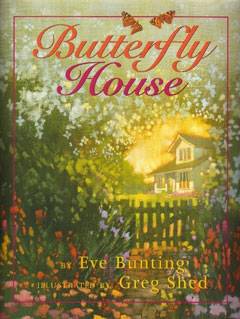
  • Teaching Life Science with Children’s Literature: Butterfly House

    Butterfly House

    Butterfly House, written by Eve Bunting and illustrated by Greg Shed, is a sentimental story about a young girl and her grandfather who raise a butterfly from a larva.  The book walks through the life stages of the butterfly and also the aging of the young girl into an old woman.  The beautiful illustrations of the larva, the butterfly’s home, the butterfly, and people are captivating.  In the back of the book, there are directions on how to raise your own butterfly.

    Curriculum Connections

     The Butterfly House can be used to teach students that animals go through a series of orderly changes as they grow and mature (VA SOL 2.4).  This book may also be used to teach students about changes in an organism’s niche at various stages in its life cycle (VA SOL 4.5e).

    Additional Resources

    Kids can color their own Butterfly Life Cycle worksheet as well as find out more about Rearing butterflies on The Butterfly Site.

    View images of butterflies in the Butterfly galleries, sorted by family and geographic region.

    Learn about gardening to attract butterflies.

    Make a butterfly life cycle mobile.

    General Information

    Book: Butterfly House
    Author: Eve Bunting
    Illustrator: Greg Shed
    Publisher: Scholastic, Inc.
    Publication date: 1999
    Pages: 32
    Grade Range: K-5
    ISBN: 0590849085

  • Teaching Physical Science with Children’s Literature: Electricity

    electricity.jpg

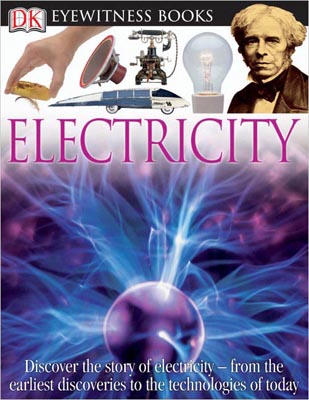
    Electricity, a DK Eyewitness book written by Steve Parker, is a great introduction to electricity.  The book is written in short sections with one topic per two page spread.  There are lots of pictures which make the book very visually interesting.  Each section discusses the science behind electricity and includes information about important historical scientists.  Topics covered include Circuits and Conductors, Electromagnets, Discoveries using electricity, Electricity in the home, and more.

    Curriculum Connections

    This book could be used help students investigate and understand the characteristics of electricity (VA SOL 4.3) like conductors and electricity (4.3a), basic circuits (4.3b), static electricity (4.3c), transformation of electrical energy into light, heat, and mechanical energy (4.3d), electromagnets (4.3e), and historical contributions in understanding electricity (4.3f).  The short sections make it conducive to using the book to supplement multiple activities and lessons.

    Additional Resources

    Learn more about electric circuits with the interactive Blobz Guide to Electric Circuits.

    Play this Conductors and Insulators game to learn more about electricity.

    Explore Static Electricity with this experiment.

    General Information

    Book: Electricity
    Author: Steve Parker
    Illustrator: DK Eyewitness Books
    Publisher: DK Eyewitness Books
    Publication date: 1992, republished 2005
    Pages: 72
    Grade Range: 3-5
    ISBN: 0756613884

  • Teaching Process Skills with Children’s Literature: Galileo

     galileo

    The book Galileo by Leonard Everett Fisher chronicles the life of the famous Renaissance scientist.  Background information is presented at the beginning about the theories of Aristotle and Copernicus about the center of the universe.  The author does a great job not only summarizing the events of Galileo’s life but also some of his most famous experiments.  Galileo challenged Aristotle’s theory that two objects of different weights fall at different speeds.  “He dropped two balls of different weights at the same time from the same height at the top of a building, possibly the Leaning Tower of Pisa.  A crowd of students and professors watched the balls land together.  Those who were loyal followers of Aristotle refused to believe what they saw.”  The author describes Galileo’s use of a “spyglass” to view the stars and planets in detail as well as the reactions of the Church.  The illustrations throughout the book – all black and white – are amazing!

    Curriculum Connections

    This book can be used in instruction to teach students about planning and conducting investigations (2.1, 3.1, 4.1) and other general science process skills.

    Additional Resources

    General Information

    Book: Galileo
    Author: Leonard Everett Fisher
    Illustrator: Leonard Everett Fisher
    Publisher: Atheneum
    Publication date: 1992
    Pages: 32
    Grade Range: 1-5
    ISBN: 978-0027352351

  • Teaching Economics with Children’s Literature: A Bargain for Frances

    cover

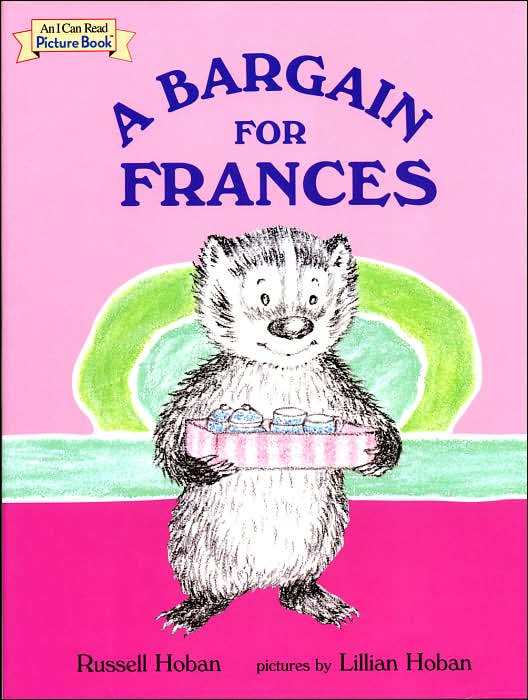
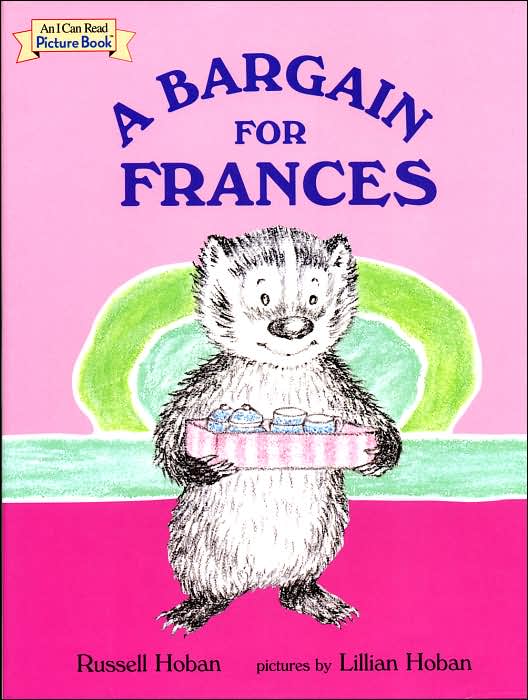
    A Bargain for Frances, written by Russell Hoban and illustrated by Lillian Hoban, teaches children about saving money, making choices, and purchasing carefully.  Frances is saving for a real china tea set with blue pictures painted on but her friend Thelma convinces Frances to buy her old plastic tea set by telling her that they don’t make real china tea sets anymore.  Then, Thelma takes the money and buys a china tea set like the one Frances had been saving for.  Frances cleverly figures out how to get Thelma to trade the new tea set for her old one.  This story has some valuable lessons for young children, not only about saving, purchasing, and making decisions but about being careful not to be tricked and about being respectful to friends.

    Curriculum Connections

    This book can be used in instruction to teach students about using money to purchase things (VA SOL K.7), making choices because you cannot have everything you want (VA SOL 1.8), and saving money to purchase things they want (VA SOL 1.9).

    Additional Resources

    • In this interactive game, players earn and save enough money to Escape from Knab
    • Kids Bank teaches kids about money and banking in a fun, interactive way
    • Learn about the Birth of a Coin on the US Mint site

    General Information

    Book: A Bargain for Frances
    Author: Russell Hoban
    Illustrator: Lillian Hoban
    Publisher: Harper Collins
    Publication date: 1970, 1992, 2008
    Pages: 64
    Grade Range: K-2
    ISBN: 006444001X

  • Teaching Ancient Civilizations with Children’s Literature: Pompeii Lost & Found

    Pompeii

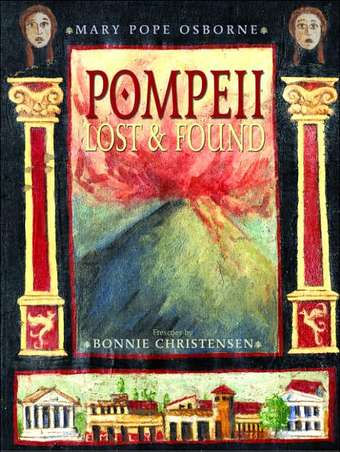
    Pompeii Lost & Found, written by Mary Pope Osborne and illustrated by Bonnie Christensen, tells the story of the eruption of Mt. Vesuvius which buried Pompeii.  The story begins right before the eruption; “As everyone went about their daily routines on August 24, AD 79, no one seemed to notice that strange things had begun to happen.”  The warning signs and the eruption are described; “Tons of hot ash rained down on Pumpeii until the town was completely buried.”  Then the story goes into the discovery of the buried city of Pompeii over 1500 years later.  Archeological findings, practices, and techniques are described.  “With all the discoveries of the archaeologists, we can now fully imagine what everyday life was like in a Roman town almost 2,000 years ago.”  The book helps children visualize the lives of the people of Pompeii by describing what their houses were like, what they ate, how they shopped, what adults and children did for entertainment, what children learned in school, and how the people worshiped their gods.  The illustrations show images from AD 79 before the eruption and from today, allowing students to make connections to the past which bring history to life.

    Curriculum Connections

    This book would be great for introducing a lesson on Pompeii or Ancient Rome in general.  The illustrations make the book approachable even for beginning readers.  This book would help students learn about the contributions of Ancient Rome, including their architecture, art, culture, sports, and hobbies (VA SOL 3.1).

    Additional Resources

    General Information

    Book: Pompeii Lost & Found
    Author: Mary Pope Osborne
    Illustrator: Bonnie Christensen
    Publisher: Knopf Books for Young Readers
    Publication Date: 2006
    Pages: 40
    Grade Range: 1 – 5
    ISBN: 0375828893