Author: Bernadine Joselyn

  • MIRC update and great connections from TISP

    Earlier this week, we presented an update on the MIRC project for TISP Forum. (As you may recall we spoke optimistically about the plan for TISP last October when we were still at “applicant” status.) This time around “we” included me, Bill Coleman and several MIRC partners: Dick Senese and Joyce Hoelting from Extension, Casey Sorenson from PCs for People, Gary Langer from Minnesota Learning Commons, and Jeannie Spaulding from Kandiyohi County.

    We’ve posted our slides below – but as is often the case, we seemed to learn as much as the attendees, both during and after the session. I was so pleased with everyone’s generosity in sharing their stories and expertise.

    I’ll try to share some of their stories below too.

    Notes from After the Session

    After the Forum, a group of us headed for a post presentation pint and conversation to further explore opportunities for collaboration with MIRC communities. Steven Renderos of Main Street Project joined us. We originally met during our late March “MIRC Intro Tour,” and Steven was gracious enough to meet us to talk again.

    Main Street Project describes itself as a “grassroots cultural organizing, media justice and economic development initiative working to help rural and urban communities face today’s realities with hope.” The project “provides creative and practical tools to give people of all ages, cultures, economic and immigration status the opportunity to more fully participate in all aspects of community life.”

    Steven said that Main Street Project’s tools to work with communities, in both Spanish and English, include:

    • digital story telling
    • media justice
    • using social media tools to organize
    • internet education – policy and practice

    Check out Main Street Project’s website for more information.

    We also met with Nghi Huynh from Minnesota Multicultural Media Consortium (MMMC). Nhgi works with AHANA communities. (AHANA was a new term for me; Nghi explained that is stands for Afro-American, Hispanic, Asian, Native American.)

    Nghi’s MMMC colleague, Al McFarlane (also Editor-in-Chief of the Afro-American journal Insight News), talked about his interest in helping immigrant communities claim a “respect” for their culture as bringing value and an enhanced quality of life to their adopted communities. Al, who grew up in Worthington, said he wants to connect with Afro-Americans living in rural places. “We want to create a public mind,” he said, “that celebrates our culture.” In addition to editing the journal, Al also hosts a weekly radio show at KFAI, an independent community radio station that offices at Cedar-Riverside.

    We learned that one MMMC partner, the Asian Community Technology Center, offers media literacy training and on-line resources for the AHANA community. Nhgi said that if invited, MMMC would welcome opportunities to bring their work to MIRC communities. MMMC is also the public awareness and outreach partner for the University of Minnesota ‘s BTOP grant in support of sustained broadband adoption in 11 public computer centers in disadvantaged neighborhoods in Minneapolis and St. Paul. They will be translating and adapting into AHANA languages online curriculum on digital literacy and other internet use topics.

    So you can see why we left more energized after talking with folks. It’s been so great to see the opportunities that have arisen even at the early stages. We’ll try to keep you updated as the project progresses.

  • MIRC Meeting with Intro by Senator Klobuchar

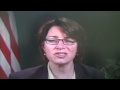
    Last week the Minnesota Intelligent Rural Communities partners met to kick off their NTIA-funded initiative. We were excited to get some words of encouragement from Senator Amy Klobuchar on our efforts. It was inspiring to hear how much Senator Klobuchar “gets it” in terms of understanding about broadband access and adoption as advantages that will help Minnesota flourish. We are thankful that she was kind enough to allow us to share her video here…

    It was great to get all of our project partners in the same room; truly the whole seems much more powerful than the sum of the parts. We are very optimistic about how broadband and the MIRC community can support Minnesota – especially rural Minnesota. Thanks to the Ultra High Speed Broadband Task Force Minnesota now has specific broadband goals to shoot for, and we are eager to add MIRC’s “horsepower” to that effort.

    It was an intense meeting, but energizing. Many participants showed up with a vague recollection of what they had signed up for last summer – but the details, practicalities and even partners were less familiar. So we slogged through the nitty gritty details such as reporting required for a federal contract – made understandable and even friendly by some of our fine Blandin accounting experts. Then we used some of the Open Space techniques we learned last year at the Minnesota Voices Online Unconference to introduce the partners to each other and initiate relationships that will hope and think will pave the road to collaboration for this project and beyond. In fact, one of the ways Blandin will define success for this project is the strength of relationships built among the partners of Regional Development Centers, town leaders, business service providers and others.

    We asked partners how they would define success for this project and capture their answers on video. (One non-video answer we have to share was a hope for serendipitous results – love the idea and the eloquence.) You can see all of the videos on our YouTube channel. Here’s a sample…

  • Impressions from Dallas: What I heard at the Broadband Properties 2010 Summit

    Bill Coleman and I are in Dallas this week to participate in the Broadband Properties 2010 Summit, “Toward a Fiber-Connected World.” We came to hear from federal NTIA and RUS officials about the FCC’s new National Broadband Plan and also to touch base with others in the Rural Telecommunications Congress’s Broadband Forum. Here are some highlights from the well attended and lively meeting:

    Joe Savage, President of the Fiber to the Home Council, shared an overview of fiber deployments world-wide. Founded in 1991, FTTH Council focuses on eliminating barriers to FTTH deployments in America. He reported that the FTTH Council has spawned two “sister councils” – in Europe, and the Asian Pacific. Today, the US has 18 million homes passed with fiber and 8 million subscribers. Europe has 3 million subscribers and Asia Pacific 30 million. That said, the North American market is the fastest growing; subscriptions have doubled in the past two years and are projected to reach 200 million by 2013. South America is seen as the market next best positioned for growth.

    We also heard from Rob Curtis, who has been working hard on the development of the National Broadband Plan in his capacity as Director of Network Strategy and Deployment for the FCC. Rob told us his research team has determined that a total of 14 million Americans in 7 million housing units currently do not have access to broadband, as defined by the goals of the new National Plan of 4 Mbps per second down, and 1 Mbps up. His team has calculated the cost of closing this gap to be $24 billion.

    Interestingly, he reported that the gaps in availability and the cost of addressing them are very closely aligned – so much so, that it is almost possible to predict cost of deployment from density, and/or density from cost of deployment.

    Rob said that serving these unserved 14 million Americans is not going to happen by relying on the market alone. The maps his team has developed show that most places where population densities yield an acceptable ROI on infrastructure investments are being served. Further, his report shows that the 250,000 most expensive to serve households account for about half the $24 billion cost – meaning a per household cost of about $56,000.

    “Why should we be concerned about those hard-to-reach households?”, someone asked. “Shouldn’t folks who choose to live at ‘the end of the road’ accept that part of the price of that choice is no broadband connectivity?”

    An audience member speculated that if the folks at the end of those roads were offered $50,000 to move, they’d probably turn it down. “Let them drive to the nearest coffee shop with a wireless hot-spot,” someone said. Rob pointed out that the National Broadband Plan doesn’t call for 100 per cent coverage, but rather something short of that, which could significantly reduce the cost of closing the availability gap his research had uncovered.

    What’s the likely fate of the National Broadband Plan? FCC staffer Curtis suggested that the recommendations directed at his agency will undoubtedly be easiest to implement, but added that very intentional efforts are being made to seed plan supporters across federal agencies with a key role to play in the plan’s success, including at Transportation and HUD.

    A number of other fairly high level federal officials attended the conference, including Jonathan Adelstein, Administrator of the Rural Utilities Service (RUS) and Anne Neville, Director of NTIA’s National Broadband Mapping Program. They were engaged, active listeners, as well as presenters. No doubt they were gratified to hear, both in the corridors and in more formal settings, the many people who echoed the observation by Appalachian Regional Commission’s Telecommunications Initiative Manager, Mark DeFalco, that “This administration has a very strong focus on wanting to solve the broadband problem.” DeFalco’s comments reflected a palpable sense I picked up that many summit participants view the federal government as an ally, not an adversary, in this work.

    What is Broadband? The Rural Telecommunication Congress portion of the meeting opened with this question. Like many other economic development entities and policy bodies, Blandin Foundation has grappled with this problem from the very beginning of our broadband initiative. After months of work to agree on a number, our Broadband Strategy Board finally gave up, and approved a vision statement for our overall initiative that instead used the language of “ultra high speed.”

    Penn State University extension educator Bill Shuffstall asked for a show of hands of those in the room who don’t have broadband. No one raised their hand. Then someone asked, “How do you define broadband?” After the knowing laughter died down, Bill bravely said, “Broadband is not a number. It’s having the capability to do what you want to do when you want to do it.” Lots of folks nodded, and I thought about how his formula is pretty close to where we’ve landed on that at Blandin as well – we say that communities define for themselves what level of broadband service they need.

    Leon Conner, Executive Director of the Southern George Regional Information Technology Authority, had a slightly edgier formula: “Broadband equals efficient access to information. Information is knowledge, and knowledge is power.”

    Like a red thread, the ongoing need to educate policy makers and the public about the benefits of broadband was a theme throughout the meeting. Richard Lowenberg, founder of the 1st Mile Institute in Santa Fe (which he describes as a “think (and do) tank”), called for a more integrated, cross-sectoral approach to this challenge, one that brings together people from transportation, medicine, energy, farming, education, health care –all the many sectors that can benefit from broadband enabled technology.

    Brent Legg from Connected Nations, which has been awarded the contract to create Minnesota’s broadband map, agreed that local leadership teams are key for bringing broadband to hard-to-serve places. I thought to myself how Blandin’s approach of creating and supporting cross sectoral leadership teams at the community level has born this out.

    Extension educator Shuffstall called for more learning, in addition to more top-down educating. Learning requires innovation, which implies a willingness to try stuff that may not work. If you are going to be a learner, you need to be ready to fail.

    The need for local technology planning was another theme of the meeting. Attendees pointed out that other key infrastructure sectors – water, sewer, roads, land use – all benefit from ongoing – often mandated – planning efforts. But because in the U.S. broadband is still regarded as private (not public) infrastructure, deployment decisions are market-based, and the community voice is often missing.

    Broadband as “essential infrastructure.” Many participants in the RTC called for broadband to be designated as “essential infrastructure.” Galen Updike, Telecom Development Manager for the State of Arizona, pointed out that the designation would help remove right-of-way barriers to deployment. David Villano, Assistant Administrator for RUS’ Telecommunications Program seemed to agree when he called broadband an “essential tool for the future of human resource and economic development in our nation.”

    The rural/urban divide is here to stay. ARC’s Mark DeFalco called the rural/urban broadband access gap an “economic issue, pure and simple.” Mark characterized the high cost/low density problem of rural deployments a “problem in search of a solution,” and said that he sees the Federal Broadband Plan as the roadmap to that solution.

    Many participants seemed to agree that it is unrealistic to expect rural/urban parity. While the Federal Broadband Plan calls for 100 Mbps to be available to 100 million American households by 2020, they are unlikely to be rural households. Arizona’s Updike hastened to add that while it may be unrealistic to expect rural/urban access parity, that doesn’t mean that rural needs are less – they are just more challenging to meet.

    What is the role for state government in all of this? NTIA’s Anne Neville suggested that an important role of states is to create incentives for state agencies break out of their silos and to understand that “thinking broadband” is part of their core mission.

    Otto Doll, CIO for the State of South Dakota, said flatly, “You need to prove that you’re going to make their lives simple and save money. Unless you can do both, they’re not that ready to listen.”

    The charismatic Graham Richard, former Mayor of Ft. Wayne Indiana (and, I’m proud to say, a former keynoter at one of Blandin’s annual broadband conferences), was also the keynote speaker here. He wowed the audience with his story of how he leveraged broadband technology to turn Ft. Wayne city government into a lean, results-producing, citizen-focused driver of an economically thriving city – a story he captured in his book, “Performance is the Best Politics.”

    Mayor Richard’s core message was also about the power of local leadership to drive change. His challenge to the audience (and I felt he was looking directly at me as he said it): “convene, connect, collaborate.” We’ll be trying to do a lot of that as we implement our Minnesota Intelligent Rural Communities BTOP grant.

  • Making the Most of BTOP: connecting across the state and the Nation

    The most recent chapter in Blandin Foundation’s learning journey to help us prepare to launch our Minnesota Intelligent Rural Community project  was a visit to Morrill Hall on the University of Minnesota campus. We went to meet with the folks who will be managing the Broadband Access Project awarded to the University through BTOP, kind of a “sister award” to ours.

    The University’s project is squarely focused on addressing the digital divide, which casts a long shadow over our state. Working through 11 community computer lab sites, including one in a public housing facility, the University’s Broadband Access Project will enhance broadband awareness and use for residents in economically challenged areas of north and south Minneapolis and the Frogtown area of St. Paul.

    Their project will focus especially on African-Americans and Hmong and Somali immigrants, a goal that will be addressed in part by partnering with the Minnesota Multicultural Media Consortium. Plans include providing broadband training to vulnerable, low-income, minority and immigrant populations, which they will accomplish in part by translating many of the project’s training materials into Hmong, Vietnamese, Spanish and Somali.

    We agreed that a larger-scale opportunity we share is to check in with other BTOP awardees nation-wide about sharing curricula and translation efforts underway in other places.

    Among our hosts was Craig Taylor, who is my counterpart for the U’s BTOP grant. Craig is Director of the University’s Office for Business & Community Economic Development, an office he founded and designed after he began working at the University eight years ago.

    From the beginning, Craig’s vision for the office has been to help expand the University’s role in supporting the economic growth and development of Minnesota communities. So it feels like this BTOP opportunity fits well with his core interests and aspirations for the University. Craig’s long experience living and working in and with North Minneapolis neighborhoods, as well as his leadership role in the University Northside Partnership, will enrich the perspectives he brings to this important work.

  • BTOP funded projects & Blandin progress

    One of the best unintended consequences of our successful BTOP project has been the people we’ve met – and keep meeting. Yesterday we participated in a conference call with “Wave 6” BTOP projects. The phone call was convened by the NTIA folks with two goals in mind – to help us cross our federal t’s and dot our federal i’s and to help us connect with each other.

    I wanted to share just a little bit about the folks we met. Their programs are innovative and may be helpful in other communities and/or worth replicating in some areas:

    MEDA – Mission Economic Development Agency works out of San Francisco but their project spans several states, included Minnesota. They focus on building personal assets in low income neighborhoods and plan to run a network of 17 computer centers. They’ll provide computer access, broadband and training to Latino populations. Here’s their official summary and a link for more info:

    The Latino Microentrepreneur Tech Net is a collaborative project led by the Mission Economic Development Agency (MEDA) of San Francisco and the National Association for Latino Community Asset Builders (NALCAB) of San Antonio, Texas. LMTN will establish Public Computer Centers and a standardized bilingual training curriculum for Latino entrepreneurs at 17 locations nationwide and create 2,100 jobs. http://tinyurl.com/y56f4np  

    Computers for Youth – Based in NY with offices in other places – they want to improve home learning environment for low income children. They are working with middle schools to bring in families for Saturday training where families can walk away with a broadband-ready computer. They also work with teachers. Here’s their official summary and a link for more info:

    Provide efficient adoption of an open Wi-Fi mesh network into the low-rent housing areas of Mar Vista, Del Rey and a newly formed open Wi-Fi mesh network in the low-rent housing areas of Venice/Lincoln. Working with the Los Angeles Unified School District’s Computers for Youth and the City of Los Angeles Community Computer Centers, we’ll provide last-mile solutions to the under served community. http://tinyurl.com/y2jsaul  

    Fayetteville State University will partner with their local Metropolitan Housing to operate a computer center near the campus for technology education as well as training to help people get into the workforce. Here’s their official summary and a link for more info:

    The purpose of this activity is to educate vulnerable populations about broadband, provide training access and equipment, and support FMHA and FSU in providing these services. Services provided will address economic growth and job creation in Fayetteville, North Carolina. http://tinyurl.com/yyv359t  

    City of Chicago is working on Smart Communities to drive broadband adoption through comprehensive training, where attendees get a computer and business training on tools such as web conferencing. They will create family-net centers and working on You-Media will be connecting kids with media skills. Here’s their official summary and a link for more info:

    One of three SmartChicago projects, Sustainable Broadband Adoption will drive broadband use through street-level outreach and user-friendly trainings including -Enhanced access at FamilyNet and Business Centers -Grassroots promotion by tech-savvy organizers -Everday Digital and Civic 2.0 workshops -Digital Youth Networks -Neighborhood portals -Hardware incentives -Business assistance http://tinyurl.com/y3qjske  

    Vermont Council on Rural Development – E-Vermont is a statewide effort to reach underserved communities that are just getting online. They will build digital literacy and cultures of use. As the only other rural project in the mix, we are especially interested in learning more from and about them. Of special interest to me is the fact that one of their project partners is “Front Porch Forum.” FPF has a vision and mission similar to Steve Clift’s e-democracy.org, with whom Blandin has successfully partnered in the past, including ongoing support for a very lively and substantive Issues Forum in Cass Lake, among others. The goal is ubiquitous use in specific towns. Here’s their official summary for e-Vermont and a link for more info:

    e-Vermont: The Community Broadband Project will help rural communities and businesses realize the opportunities of the Internet for civic engagement, community betterment, school modernization, job creation and e-commerce. Working with 24 “e-Vermont Communities” over two years, it will systematically stimulate digital culture in schools and homes, community groups and businesses. http://tinyurl.com/y34j4tj  

    Las Vegas Urban League will empower communities and ensure equal opportunities. They will be enhancing existing public access computer centers and developing new centers (a total of 30) with bi-lingual study tools for digital literacy and job application skills. Here’s their official summary and a link for more info:

    Vulnerable families will have Access to Computer Technology and Instruction in Online Networking. The ACTION program develops community technology centers and provides training to vulnerable populations in utilizing broadband to access educational and employment opportunities. ACTION is a collaboration of the Las Vegas-Clark County Urban League, Cox Communications, local government and partners. http://tinyurl.com/y78j3re  

    NY City Department of Information Technology is giving students a home computer with broadband, training and family training. Also providing training for teachers and administrators. Here’s their official summary and a link for more info:

    Broadbandexpress@yourlibrary is an innovative project with a strategic mix of 30 library-based public computer centers and 5 mobile training labs targeting unemployed, underemployed and vulnerable populations in 41 economically distressed upstate New York Counties. The State Library and its partners will also establish interactive video teleconferencing services and 24/7 job resources. http://tinyurl.com/yybjsqp  

  • Foundations’ view on broadband

    Thanks to Blandin Foundation President Jim Hoolihan for pointing me to an essay in the recent Chronicle of Philanthropy by Luis Ubinas, Jim’s counterpart at Ford Foundation. Ford is committing $50-million over the next five years to help ensure that broadband access to the Internet becomes a reality for all citizens and that public-interest values in the online space itself are protected. Ubinas writes, “The effort to ensure universal access to high-speed Internet among all citizens is a critical next step to ensuring that America realizes its great aaspiration of equal opportunity for all.” He calls for a broad consensus of government and private partners “willing to stand up for the public good.” I especially like his description of the Internet as a “gateway to democratic participation, economic opportunity, and human expression.” He even calls universal acess to an open Internet “critical to the future of our country.” The good news for all of us who agree, is that Ford’s investment will help bring attention to this message. With the help of our 19 partners and American Recovery and Reinvestment Act dollars, Blandin Foundation is humbled by the opportunity to join Ford Foundation in this important work.

  • MIRC Partner Intros: Main Street Project

    It was a full week even before Wednesday with all of our MIRC meetings – and on Wednesday we met with folks from the Main Street Project. We met with Kat Vann, Director of Communications and Development, Steven Renderos, Media Justice Organizer and Niel Ritchie, Treasurer for Main Street Board of Directors and Executive Director, League of Rural Voters.

    Main Street Project promotes and supports civic participation especially among new Americans using new technologies. Their Justice 2.0 project provides hands-on training for organizations and communities of color on media justice, digital storytelling, and how to effectively use social media tools to combat anti-immigrant and racist voices. They work with communities of color to help get their voices heard; they also encourage leaders in rural areas to reach out to other underrepresented voices.

    They had some good advice for us in terms of making sure that MIRC efforts are as inclusive as possible. They emphasized the importance of reaching deep enough into non-majority communities to ensure that we’re not just dealing only with those individuals who are comfortable volunteering to speak on behalf of others. Self appointed “representatives” aren’t always so representative.

    We realized that one step we could take would be to explicitly articulate project values, including importantly inclusivity, in print,at our initial launch meeting, and throughout the entire project. And we hope to continue to learn from Main Street Project about working effectively with vulnerable and historically marginalized populations to ensure that the benefits of MIRC are widely shared.

  • MIRC Partner Intros: PCs for People and DEED

    On Tuesday Bill Coleman, Jack Geller, Ann Treacy and I continued our meetings with new partners in our ARRA-funded Minnesota Intelligent Rural Communities (MIRC) project.

    PCs for People

    We started the day with Andy Elofson, Casey Sorenson and Sam Drong at PCs for People. PCs for People takes donated computers and rebuilds, refurbishes and redistributes them to people with limited access to technology. About 85 percent of their computer recipients have never owned a computer before. Many have used computers, at a library or public kiosk, but they haven’t owned one. After receiving a computer, 85 percent of PC for People’s computer recipients sign up for broadband.

    Andy, PC for People’s founder, is a social worker in his “day job.” He started PCs for People in Mankato in 1988. It started with a donation of a computer to a local teen at risk. The boy had been expelled from school and was floundering. Andy helped him get involved in computer rehab and building web sites and making plans for the future. Since then, PCs for people has distributed over 4,000 computers. They have a waiting list of over 1,000 families. (So if you’re looking to deal with an outdated computer around your house or workplace, please consider checking out their donations program.)

    Workforce training is a big part of PC for People’s program. They offer job training to unemployed workers who are nearing the end of their benefits. PC for People staff help the unemployed work on general employment skills in the first few weeks and then move into computer skills, including diagnostics and repair.

    Obviously, getting computers into the hands of new owners is core to PCs for People’s mission. Individuals receiving a computer are asked to provide a small donation to cover costs associated with warranties and support. They are also welcome to buy accessories at reduced rates. PCs for People also provide repairs for a flat fee of $25.

    We’re looking forward to working with PCs for People but we’re also just excited to get them in contact with more people through the project, both in terms of helping them build their computer supply chairs but also to help them get more computers into the hands of new owners – especially in rural areas. Meeting with them and hearing about their project and their needs reminded us that the strongest link in the project is the relationships built through the partnership.

    Minnesota Workforce Centers – DEED

    Tuesday afternoon we met with Jim Wroblesky, Kathy Sweeney, Anne Olsen and Judy Mortrude at DEED. I was looking forward to learning more about the Workforce Centers from some DEED insiders. There are so many moving parts to DEED it can be confusing to figure out their “org diagram.” DEED’s Workforce Centers help job seekers find employment, help businesses find workers, and help anyone at any stage explore and plan careers.

    DEED operates 50 Workforce Centers across the state, and there are no charges to the recipients of their services. Our DEED partners told us a bit about a new project that they have been working on, LearnerWeb, which is a web site that compiles information for adult learners. We suggested that they be sure to talk with the folks at the Learning Commons who are working on a clearinghouse for education resources for k-20. Again, I was reminded that new connections will be a great benefit of the partnership.

    The Workforce Centers will be providing outreach and recruitment for MIRC, as well as developing and delivering eight addition hours per center of digital literacy training for work seekers. We are also pleased to be able to help the Workforce Centers stay open longer hours.

  • MIRC Partner Intros: Extension Services, AMC and MN Learning Commons

    Now that we’ve received official word that our broadband stimulus grant will be awarded, project staff Bill Coleman, Jack Geller, Ann Treacy and I have moved out of cautious hold-your-breath mode into active project launch preparations with a series of ‘courtesy calls’ with our new project partners.

    Our visits have been very energizing – and have surfaced a few surprises. In many ways we will get the greatest value from the surprises; an early start will help turn surprises into opportunities, not issues.

    On Monday we met with University of Minnesota Extension Service, Association of Minnesota Counties and the Minnesota Learning Commons.

    University of Minnesota Extension Service

    We started the day in Coffey Hall on the University of Minnesota’s St. Paul Campus meeting Joyce Hoelting and Dick Senese from the Extension Service’s Community Vitality and Public Engagement Program. Extension’s mission is to connect community needs and University resources, and they have a long history of working in agriculture, wellness, leadership capacity development and decision support, and more recently, helping communities use technology. Many readers will be familiar with their Access.E curriculum. Through MIRC, Extension Services with be able to update and develop training and technical assistance to more businesses.

    Using technology to revitalize community: Making a difference by connecting community needs and University resources to address critical issues in Minnesota.

    Dick and Joyce and their team bring to the project deep knowledge of community capacity building and extensive-on-the-ground technical experience. Joyce and I met through the Humphrey Institute’s MPA program, and she introduced me to Dick shortly after she went to work for him at Extension. I’ve been looking for an opportunity to work more closely with Extension ever since, and now we have that chance in spades. Dick and Joyce both had some good ideas about organization and information management tools that could help keep all 19 project partners well informed about what’s happening with everyone and across the entire project.

    It was also interesting to hear about Extension Service’s new “Roadside Advertising in the Digital Age” GPS workshops. The training is based on the premise that more and more, travelers are using GPS systems such as Magellan to learn about the areas where they are visiting and vacationing. So it makes at least as much sense to make use of advertising on those online maps as it does to invest in traditional billboards. I don’t have a GPS locator yet, but I’ve driven with plenty of folks who do – Bill for example. I’m glad our demonstration communities will have a chance to learn more.

    Association of Minnesota Counties

    Next we headed over to downtown St Paul to meet Anne Olson, Director of MN Workforce Council Association and Laurie Klupacs, Membership Services Manager at the Association of Minnesota Counties. AMC is a voluntary association of counties – although all of Minnesota’s 87 counties are currently members. AMC represents their members to state government, striving to get the counties what they need; they also provide educational programs, training, research and communications for county officials.

    Our conversation focused on healthcare needs – well technology-related health care needs — and it is clear that the counties could use some help. The lingering economic downturn continues to hit many rural people hard, and the state budget deficit is cutting into local government aid that counties have previously relied on. Technology planning, vision, capacity and support in each county is uneven. Some have highly performing, interactive web sites, other counties’ internet sites are static, some have nothing. Electronic health records need to be online by 2015, but there is little to no funding to make that transition. County social services are responsible for administering many different programs, but more often than not program data bases are not integrated, with few resources in sight to improve, rationalize, or update systems. It will be exciting to see how the MIRC project can help AMC help local counties extend and improve the delivery of mental health care online.

    Minnesota Learning Commons

    We finished out our first day of meetings with Gary Langer and Jerry Johnson at the Minnesota Learning Commons. The Learning Commons is both a clearinghouse of online curriculum (for kindergarten through college and beyond) and a pathway to help learners create an educational plan to meet their needs, whether you’re an exceptional first grader or returning vet interested in new skills. The clearing house includes curriculum for instructor-led classes to support teachers and classroom materials for students and parents. We hope MIRC can help raise awareness and use of this free and innovative resource for all Minnesotans; life-long learning is a core value of the Blandin Foundation.

    The Minnesota Learning Commons will be creating new curriculum for MIRC to help workers learn more about career paths and options in the new information economy. Our shorthand for the new curriculum so far is: “knowledge worker course.” By that we mean a class that will introduce folks to the many new jobs and careers that are growing along with the new information economy, and the pathways to those jobs. The class will be online, but instructor-led, so that students have the support they need on-site to help them. Learning will happen on many levels: students will learn about knowledge worker career opportunities, they’ll learn how to better use technology, and they will have learned how to take an online course, which should open the door to greater learning.

    So far a great group is emerging.

  • MIRC Partner Intro: MNREM

    Blandin Foundation doesn’t have much experience as a grant applicant; we are more often on the other side of the grant making equation. But today we are savoring the news of our successful BTOP grant and the opportunity to bring a network of resources and support to rural Minnesota through an initiative we have dubbed “MIRC” – Minnesota Intelligent Rural Communities.

    With this glad news in hand, Friday afternoon Blandin Foundation project staff Ann Treacy, Bill Coleman and I met with Teresa Kittridge, Executive Director of Minnesota Renewable Energy Marketplace. MNREM is one of MIRC’s 19 project partners. MNREM’s focus on the retention, creation, and attraction of an educated and skilled workforce to its 36 county region of South Central, Southwest and West Central Minnesota is well aligned with MIRC’s goal of helping create technologically and economically vital rural communities through sustainable broadband adoption.

    Like many entrepreneurial organizations today, MNREM is a “virtual” operation. Teresa explained that while MNREM’s official address is in Marshall, she lives in “suburban Waconia” and spends much of her time on the road. “I basically office out of my car,” she said with a smile.

    Before today’s visit, my communication with Teresa had been strictly virtual as well; we had never met face-to-face. So it was really a treat to have the time for a leisurely real-time conversation over coffee about our aspirations for this shared work.

    Teresa has a background in both the public and private sectors, including as an officer of the Minnesota House of Representatives, president of two publishing companies, and chair of her local school board. She has rural roots and loves the rural region she serves. I liked her right away.

    Teresa explained that with the help of a soon-to-expire US Department of Labor grant, MNREM is supporting projects in a wide range of renewable energy fields including wind, biomass, biofuels, ethanol, solar, advanced manufacturing, energy-efficient mechanical systems, bioscience and mechatronics. “What’s mechatronics?” I wondered, and later visited their website to find out. At www.mnrem.org I also learned that Minnesota’s renewable energy sector today includes over 22,500 firms employing over 310,000 people in MNREM’s region alone.

    Funding through MIRC will help strengthen MNREM’s capacity to transform its primarily agriculture-dependent region to a knowledge and innovation-based economy that capitalizes on the potential of renewable energy for a sustainable and prosperous future. Under Teresa’s leadership, MNREM’s role in our MIRC coalition will include outreach, assessment, technical assistance and training for renewable energy businesses.

    Next week Bill and Ann and University of Crookston’s Jack Geller (who will help with MIRC evaluation and monitoring) and I will be meeting with other new MIRC partners to continue our getting-to-know-you better tour. The first major step in our project launch will be an initial partners’ meeting in Grand Rapids on May 11-12.

  • Rural Minnesota awarded ARRA broadband funding

    On behalf of our 19 partners in the Minnesota Intelligent Rural Communities coalition, we are very pleased to share the news our $4.7 million grant request has been approved by NTIA. Senator Klobuchar (MN) just made the announcement!

    Through this BTOP grant, over the next two years the Minnesota Intelligent Rural Communities (MIRC) coalition, led by the Blandin Foundation, will bring a network of resources and support to rural Minnesota individuals and communities—especially those unemployed and seeking employment, small businesses, coalitions of government entities, and local leaders.

    You also can expect to learn a lot about the 11 communities committed, through the initiative, to demonstrate new ideas through this grant and to share with others what they learn.

    Vital communities are connected communities. And together, through our connections, we feel we can accomplish great things.

    You can learn more about the MIRC program on the Blandin web site, our recent press release, the recent announcement from Secretary Locke or through the slides we presented at a TISP meeting last fall. We are planning to continue regular communication through the blog and other channels.