Author: Best of Blurtit

  • Why Do People Get Pinched If They Don’t Wear Green On St. Patrick’s Day?

    It has nothing to do with St. Patrick, I’ll tell you that now.

    For those who are baffled reading this question, let me explain…

    On St. Patrick’s Day (17 March), in the USA, everyone is supposed to wear Green.  If you don’t, you may get pinched, by anyone who dares.

    Some say that if you are wearing green and you get pinched by mistake, you get to pinch back ten times.

    The pinching thing is most rife among American school children. Forgetting to wear green on March 17th is the sort of mistake you don’t make two years running.

    When and where did this tradition start?  It is not native to modern Ireland, by the way!  I found it very strange, when I moved to Britain from the USA, that nobody observed any aspect of St. Patrick’s Day.

    One tradition is that the pinching started in the early 1700s, about the time that awareness of St. Patrick’s as a holiday came to the fore, too, in Boston (in the Massachusetts colony).  If you wore green it made you invisible to the Leprechauns –  else they were out to pinch anyone they could see.  So the pinching was to warn you about the Leprechauns.

    A thoroughly pagan amendment to a nominally very Christian Saint day.

  • Does It Matter Who Loves Each Other More In A Relationaship?

    Who loves who more in a relationship does not really matter if you do truly love each other then the chances are you love each other the same amount.

    This is why people who are in long term relationships or married often talk about their ‘other half’ because when you are in love that person feels like the half of you.  So they cannot love you more or less than you do: They are part of you !

    In a relationship you have to let some things just find their own course and not get too hung up on who loves who more or who loves less.  Just rejoice in the fact that you have found love.

    Many people do not find love in their lives or settle for relationships where there is little love, so you are lucky to be loved and to love!

  • Can Any Body Define Time In Technical Terms?

    Ok, this one will be challenging…

    Time is a linear, irreversible and sequential measuring of the duration of events and the intervals between them. Time is the forward progression exerted upon all matter and categorized by three states: The past (what it was), the present (what it is), and the future (what it will be). It, like most things in the universe, are relative to the observer. For example, if a tree had sentience it would perceive time differently than a human. Our observations of time are limited by a few factors; the relative speed with which we move through our universe, and how long our expected continuum of life is (life expectancy). If we lived for thousands of years, a minute to us may feel more like a second now.

    In the simplest of terms, “the rate at which time passes depends on an object’s velocity relative to the speed of light and also on the strength of intense gravitational fields.” Time is often described as the fourth dimension. For example, in three dimensional mathematics, you need three coordinates to pinpoint a location. By adding a fourth dimension (time) you can locate events. This conception makes it (slightly) easier to understand the notion of spacetime. Physicists used to think that space and time were two separate things, but Einstein theorized that they were connected (although he wasn’t the first).

    Spacetime is independent of any observer, yet time as experienced is relative to an observer. This is the one of the consequences of Einstein’s theory of special relativity. Simply put: The closer an object approaches to the speed of light, the slower time goes (for the object). This has been proven many times since Einstein first theorized it. In one experiment, atomic clocks were created (I’m not sure of their margin of error, but it’s something ridiculous like it’s accurate to .0000000000000000001 seconds). One was left on the ground, and the others were flown eastward and westward, respectively. “Relative to the atomic time scale of the U.S. Naval Observatory, the
    flying clocks lost 59+/-10 nanoseconds during the eastward trip and
    gained 273+/-7 nanosecond during the westward trip…” The jets had effectively traveled through time (as we see it). So, with Einstein’s model, a person can travel forward in time simply by taking a spacecraft that flies at (near) the speed of light and making a round trip to and back to Earth. They will have aged little, but hundreds of years will have gone by on Earth. One other thing can affect the “speed” of time too: gravity. According to Einstein’s (what a guy) theory of general relativity, the more mass an object has (and therefore more gravity), the more effect it has on time. If you had two synchronized clocks, and put one on a planet with low gravity, and one on a planet with high gravity, the clock on the low-gravity planet would appear to run slower.

    Time is such a hard thing to define, since you have to talk about the intrinsic (first paragraph), the scientific (second and third) and the quantifiable aspects. Not just “what time is” but also how we perceive and measure it. We owe our perception of time to that beautiful ball of burning gas hanging in the sky. Even though, with the invention of electricity, day and night no longer have as deep a significance (night jobs and such), our entire way of life has been built upon the cycles of the Sun, and axial orbit, and our orbit around the Sun. This is how we define time, or at least duration of time. If we lived on Mars, a year would last almost twice as long.

    I sure hope this was helpful, and coherent enough. I love questions like this, they really get me thinking, and I learn a lot in the process of research. Thanks!

  • Were There Famines In England?

    Yes there are a number of periods of Famine recorded in England.

    The 1315 famine marked the beginning of a series of hardships which hit England, during the fourteenth century. England was economically prosperous at the beginning of the fourteenth century.The Great Famine marked the beginning of a series of crises, which defined  the fourteenth century.

    Johannes de Trokelowe had this to say about the Famine:-“Famine and pestilence swept over Europe so often during the Middle Ages and exacted so frightful a toll of human life that the phenomenon has come to be regarded as one of the most impressive features of the period.”  

    “The dearth began in the month of May and lasted until the feast of the nativity of the Virgin(September 8th )…Around the end of autumn the dearth was mitigated in part, but towards Christmas it became as bad as before.”  Parts of England were devastated.

  • What Was Marriage Culture Like In Shakespeare’s Times?

    You could consider some points such as: Marriage was the only real option for women to establish themselves; it was the norm for parents to arrange marriages for their children; wives were legally subject to their husbands, and their property belonged to him also. However, in Shakespeare’s writing and some other writing of the period, there is a great respect for the idea of marriage as  a union of like-minded people and a source of happiness and strength. Wives in Shakespeare aren’t generally doormats!
     
    Re: Romeo and Juliet: It’s significant that it was not the norm for girls to be married at 14. He is definitely emphasising how young the lovers are.
     
    If you put “marriage shakespeare’s time” in a search engine, you will be taken to some intersting articles and essays on this subject.
     
    www.studyworld.com

  • Who Has Received The Most Oscars In History?

    The individual who received the most Oscars was Walt Disney, who received a total of 20 in different categories during his lifetime, and four more after his death.

    There are three films which have won 11 Oscars each – Ben Hur in 1952, Titanic in 1997 and the final Lord of the Rings film, the Return of the King (2003.) The record for the largest number of Oscars for Best Director is held by John Ford.

    As for individual performers, even after her death Katherine Hepburn still holds the record with four wins, as well as a huge number of nominations. Only a few other actors have managed as many as three – these are Walter Brennan, Jack Lemmon and Ingrid Bergman.

    The youngest ever winner was Shirley Temple at the age of 5, while the oldest were Geroge Burns and Jessica Tandy who were both 80 (though not in the same film.) However, both Myrna  Loy and Groucho Marx were awarded honorary Oscars at the age of 83.

  • How Fast Can Penguins Swim?

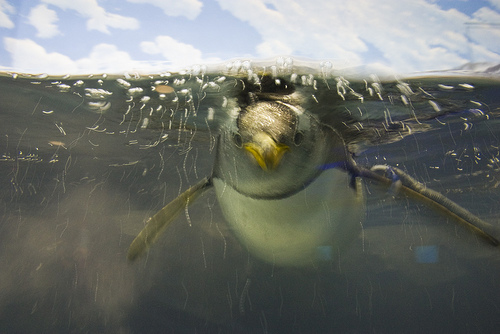
    Penguins are flightless birds that have become extremely well adapted to living in a marine environment. They use their short, stumpy wings to glide through the water and can swim extremely fast.

    The normal swimming speed for an adult penguin can be as high as ten kilometres per hour. This varies slightly according to the species but, if circumstances demand it, penguins can increase their speed even more using a technique known as ‘porpoising’.

    They swim underwater and then leap from the surface, still travelling at speed. During their time in the air they breathe in fresh air to get oxygen into their lungs. When they go back under the water, they have not lost very much of their momentum but they have recharged their system with fresh supplies of oxygen. This enables them to use their muscles more effectively for the next burst of underwater speed before launching into the air for another breath.

  • What Is The Role Of A Geologist In An Oil Company?

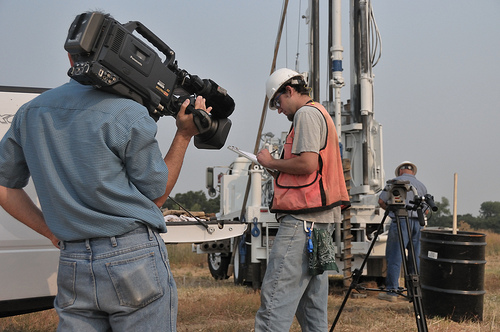
    The role of a geologist in an oil company is the role of an analyst. The oil industry requires the knowledge of geologists trained in petroleum geology, which is the study of sedimentary basins.

    Geologists evaluate sedimentary basins in relation to the source, reservoir, seal, trap, timing, maturation and migration within the basin to determine the presence of hydrocarbons/petroleum. In recent years with the technology of reflection seismology the role of geologists has become more accurate.

    Geologists evaluate and determine the quantity of organic rock containing hydrocarbons and the potential quality of hydrocarbons for refining into petroleum products such as motor oil. They also determine how quickly hydrocarbons will flow.

    Geologist determine, which seals will impede the escape of hydrocarbons such as evaporates, chalks or shales. Key among the analysis is the prevention of  hydrocarbons from escaping from the reservoir and being lost.

    The maturation is found by assessing the thermal history of the source rock and predicting the amount of hydrocarbons and how long it will take for the expulsion and generating of hydrocarbons.  The last step is determining how the hydrocarbons move from source to reservoir in the area where the search for hydrocarbons is in motion.

    There is  a very good website where you can go to get additional information and a deeper understanding of the role of geology and geologists in the search and production of petroleum, which is referred to as hydrocarbons in the oil industry.

  • Which Film Has Been Re-made The Most Times?

    The most re-made film of all time is debatable, as it can be separated into films that have actually been recreated with the same plot and characters, e.g. Psycho (1960 and 1998) and The Italian Job (1969 and 2003), or films that re-make the same original story, e.g. Frankenstein or Romeo and Juliet.

    The Guinness Book of Records cites Cinderella as the most filmed story, along with Dracula and Zorro. Additionally, Sweeney Todd has been remade five times since the 1936 original in different incarnations, including a proposed 2007 version.

    Anna and the King, Great Expectations, The Hunchbank of Notre Dame are among those that have been remade three times, while numerous films have been remade from the originals. Among the most famous re-makes are The Thing (1982 from 1951), King Kong (2005 from 1933), Scarface (1983 and 1932.), West Side Story and The Thomas Crown Affair. Other less successful remakes include the above-mentioned Psycho, Planet of the Apes and Alfie.

  • What Is Implied By The Proverb “A New Broom Sweeps Clean”?

    The usual meaning of this old saying is that when we start a new task or are in a new environment, we make a much bigger effort and probably produce better results.

    Anyone who has started in a fresh job will know the truth of this saying. So often, new tasks seem fascinating, we give them a lot of energy and seem to get on with them very well. Then, somehow, when the new job etc becomes a routine (even a routine we enjoy) the “new broom” feeling seems to fade, and with it that sense of eagerness to start the day’s work.

    This is one reason why some people like to change workplaces and even careers regularly; some feel that as soon as a job becomes known and/or manageable, it also becomes boring.

    Perhaps the other side of this saying is the phrase “Familiarity breeds contempt.” Metaphorically speaking, it’s much less fun sweeping a floor you know well!

  • How To Take Panoramic Photos?

    Some cameras now come equipped with Panoramic functions. For instance the Sony Ericsson has 3 image panoramic function – this allows you to join 3 photos together.

    Also ‘smartphones’ with Symbian OS can have small panoramic applications installed. These are easy to use and make great shots!

    If you want to take professional panoramic shots you’ll need a sturdy tripod. You then need to mark out each spot for each photo. Then they can be joined up perfectly in the darkroom.

  • What Are The Natural Causes Of Global Warming?

    The natural causes of global warming are related to years of temperature changes taking place throughout the world. The climate has continuously changed throughout centuries of the earth’s existence. Scientists have proven, natural rotation of the sun creates changes due to the intensity of sunlight as the sun moves closer to the earth’s surface.

    Another natural cause is the aerosol emissions of  volcanic eruptions, which cause blocking of sunlight, resulting in short-term cooling for areas of the earth.

    Carbon dioxide emissions from  volcanic eruptions creating greenhouse gas, causing a warming effect is a theory, which is accepted by some and denied by others. There has always been a certain amount of carbon monoxide emitted by volcanic eruptions; some believe humans cause greater damage than the volcanic eruptions.

    Ocean current changes are also considered to be a natural cause of global warming, since the rise and fall of the current creates global change. Currents have a significant effect on heat changes around the earth. The effect of ocean current on heat changes, varies from region to region and this may be related to the rotation of the sun.

  • Are There Any Untranslatable Words?

    Words. Without them we’d all be really, really good at charades. And we probably wouldn’t have gotten this far as a society. What moved us further ahead was our ability to understand one-another’s idea’s across the language barrier. By learning about the experience and culture of others through passing their words through a filter that enables us to understand them, we enrich ourselves. We attain knowledge that we probably couldn’t have attained otherwise.

    Our understanding of each others words is what brings us closer together. But, surely, there must be some words that can’t make the change over from one language to another? That’s the entire reason the phrase “Lost in Translation” exists. There are just some words, or entire blocks of words (but we won’t get in to that) that lose a little bit of their meaning and importance the moment they are carried over from one language to another – in this case, from another language to English.


    Word: Katzenjammer

    Language: German

    If you’ve ever gone out drinking, and I mean really drinking, and then totally regretted that decision in the morning, katzenhammer is the word for you. Simply put, katzenhammer is a hangover so epic that you are left to wonder why the universe hates you so much. A hangover so epic that the sound of a car passing by your home has the same effect on your brain as a sonic jet screaming overhead. This is a hangover so bad that if it were a person, it would be able to punch the peak off of a mountain; whereas a regular “hangover” couldn’t snap a twig.

    In short, it’s a hangover you wouldn’t even want to wish on your worst enemy.  


    Word: Dohada

    Language: Sanskrit

    The closest we come to Dohada in English is “cravings.” Sadly, to get the full feel for the strength of the word you have to add a bunch of other words in front of “cravings.” Something like “absolutely ridiculous crazy-pants cravings”; specifically, for pregnant woman.

    So, if you’ve ever had a pregnant wife who, at 3 in the morning, asked you for a bologna sandwich with gummy bears and a leaf off of the palm tree in the back yard…and she wants you to replace the bread with 2 t-bone steaks, then that’s Dohada.


    Word: Schadenfreude

    Language: German

    Okay, this is where we get in to the territory of weird human reactions that make us both distinctly human, and distantly insane.  And sick. And twisted. You know, all of those things that aliens hovering around out in space are entertained by.

    Let’s start off with a couple of words we’ve all probably heard: Sadism and Masochism. Sadism is deriving joy and pleasure from inflicting pain on someone. Masochism is the opposite – it’s enjoying the pain being inflicted upon you. These are two very stark (and dark) extremes in human nature. But did you know that the Germans came up with a world that is a middle ground between the two, that still manages to retain all of the darkness of the two extremes? That word is Schadenfreude, and it’s all about deriving pleasure and joy while watching someone else in pain.
      
    Directly translated, the word means “Joy in Damage.” The big difference between Schadenfreude and Sadism is that with sadism, the joy you are feeling comes from your direct involvement in the pain your dishing out. With Schadenfreude, you have nothing to do with the pain someone else feels. You’re just a casual observer that is tickled pink by someone locking their keys in their car, or going through a bad breakup, or a politician getting caught in a scandal.


    Word: Esprit De L’Escalier

    Language: French

    So you’re face-to-face with that guy in your office that you can’t stand. You both get in to a small argument that’s ready to explode. You’re both feeling it out, looking for the proper moment to strike with a powerful verbal comeback that will ravage the other guy’s entire argument and send it crashing to the floor.

    But, then…he says that one thing. That one thing that you can’t defend against. “Blah Blah Blah!!” he says. Everyone around it is shocked. They can’t believe he said that. He got you good. Now, it’s your turn. If you come back with something good, you win. So your brain races.  It’s scrambling. It might have something…maybe…sort of…no. No. No. You’ve got nothing. You have no comeback. You’re a laughingstock. This guy just made a fool out of you and you just stood there and took it.

    Hours later, you’re on the subway on the way home. To any onlooker, you’re just a young guy or gal bored out of their mind and staring out in to space; slowly rocking back and forth with the track’s many bumps and shifts. But then…

    “Oh, yeah? So’s your face!!” you randomly yell out.

    Everyone around you is lucky they all brought their mace that afternoon, because, to them, you’re the definition of crazy. But what they don’t know is that you just had a moment of Esprit De L’Escalie. Literally translated, “the spirit in the staircase.” It’s when you are publically insulted and only come up with the perfect comeback after you’ve left the situation.

    It’s a “spirit” because it could haunt you for the rest of your life.


    Word: Blita Mpash

    Language: Bantu

    When you wake up in the middle of the night screaming and covered in sweat, hoping that you’re not actually being chased by a giant donut with razor-sharp teeth and with the voice of your high school bully, you’re having what’s commonly known as a nightmare.

    But what if it’s the opposite? If you wake up in the middle of the night feeling a little…happy? What if you had some nighttime mental pictures of really nice, very sweet things?. A dream that just makes you feel good about yourself, and not thank your lucky stars that you laid down a plastic sheet before you hit the hay. In English, we don’t really have a word for “good” dreams. We have “nightmare” for the bad, scary ones; and the word “dream” is just a general term for all of the pictures we see in your heads while we sleep. The closest there is is a word in the Bantu language that means a “legendary, blissful state where all is forgiven and forgotten.”

    Sounds pleasant, doesn’t?

  • Are Killer Whales Dangerous To People?

    Not usually.

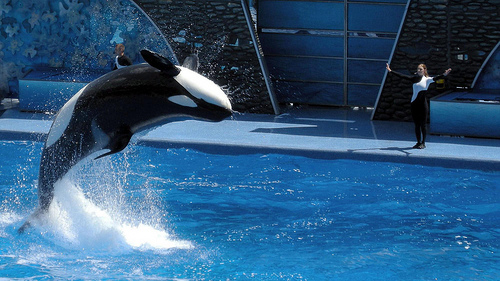
    The common name “killer whale” originated by watching the way these magnificient animals work when hunting for prey. They typically hunt in well-organised packs and they strategise.  They are also the largest of the meat-eating/hunting whales.  Unusually for whales, they will eat other whales, including dolphins, or calves of the larger whales (like Sperm whales and California Gay whales).

    They are also quite capable of aggression towards each other.  Males fight for females and even females will fight for dominance in the group.

    They also have big teeth, which is kind of scarey in itself.

    However, documented acts of aggression towards humans by orca (the preferred name for fans of the species) is relatively rare. That said, it has happened.

    There was a recent (November 2006) incident in San Diego, California, at the Sea World Park.  A Killer whale in a regularly scheduled show grabbed his trainer by the leg and held her down at the bottom of the pool for a minute — twice in a row.

    Experts speculate that whale was merely having a grumpy day.  It was back at work in performances within a week.

  • Why Do We Dream?

    The explanation for dreams are mixed and are open to interpretation. In terms of physiology they are defined as the mind’s response to sleep, while others interpret them as coded messages from the subconscious and as having deeper or prophetic meaning for the future.

    It is believed that virtually humans dream at a similar rate, while some animals do not dream at all. Some scientists believe that dreams are caused by the buildup of long term memory, triggered by electrical sensations in the brain during sleep.    

    They are also connected to the REM movement in sleep, which is used as an indicator of dreaming. Others suggest that dreams are the brain’s reaction to sensory input, and represent a combination of the different parts of the brain attempting to synthesize information that is not commonly noticed when a person is awake.

    However, it is difficult to attain a fully biological understanding of dreams, as their meaning and cause resides largely in the uncharted territory of the mind, which can only be analyzed through theoretical readings rather than surgery.

  • How Is Rubber Made?

    Some people think that all rubber is made from latex produced from trees.  This is not in fact the case.  Only about 25-30% of all rubber is made from latex, which is milked from trees.  

    The latex is a mixture of organic compounds which are produced in special cells of a tree called Hevea Brasiliensis.  The trees are tapped by removing the bark and latex then flows down grooves which have been made in the tree, to collection bowls.  Natural rubber is the preferred medium for production of radial tyres.

    Artificial rubber is made from petroleum.  Petroleum contains many carbon molecules.  These are then chemically altered so they become molecules called dienes.  These are then re-altered so they form a long chain called polymers and polymers are the finished ‘synthetic rubber’.  The growth of artificial rubber stems from the second World War, when it was very hard to source natural latex.

  • How To Say ‘Welcome’ In Different Languages?

    The word ‘welcome’ is one of the most beautiful words in any language. It indicates an openness to receive or meet somebody.  

    Here are some of the versions of the word in various languages around the world:Arabic-Ahlan Wa Sahlan.
    Chinese-Huan ying.
    Danish-Velkommen.
    Dutch-Welkom.
    French-Bien venue.
    German-Willkommen.
    Hindi-Swaagat hai.
    Italian-Ben venuto.
    Japanese-Irasshai.
    Korean-Chunn-mannay-oh.
    Polish- Dzieñ dobry.
    Spanish-Bienvenido.
    Urdu-Tashreef laayiey.

    The phrase you’re welcome is used in the following manner: French: Vous etes bienvenu or avec plaisir (with pleasure).
    German – du bist willkommein or de nada (‘it is nothing’)
    Spanish – eres agradable and Italian-prego.

  • Where Did Ice Hockey Originate From?

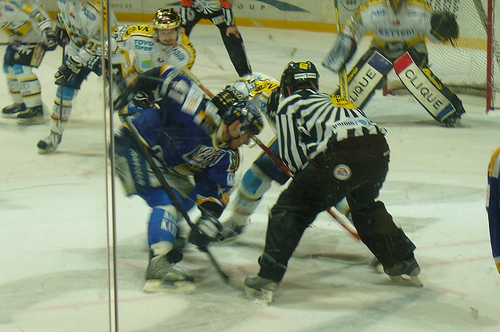
    It is believed that ice hockey originated in Windsor, Nova Scotia. These claims are based on Halliburton’s writings. But a research carried out in Egypt found some 4000 year –old paintings at the Beni Hasen tombs. These paintings represent a sport being played which is similar to ice hockey.

    Ice Hockey is a very aggressive game which is played on a thin layer of ice. The game is very fast paced and brutal.

    Ice hockey is a very popular sport in Canada and the United States of America. The International Ice Hockey Federation comprises of a total of 64 teams. However most of the 1st, 2nd and 3rd places have gone only to the United States of America, Sweden, Slovakia, Russia, Finland, Canada and the Czech Republic.

  • Which Is The Smallest Ocean In The World?

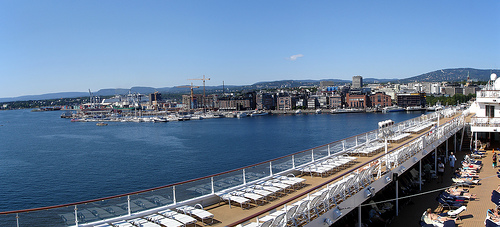
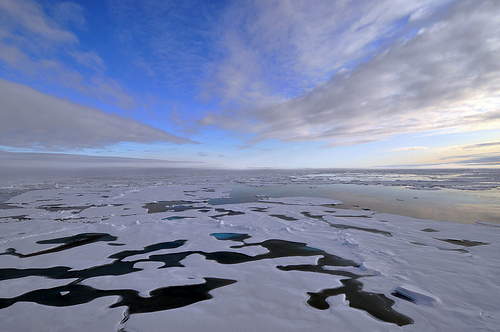
    The Arctic Ocean is the smallest ocean in the world with its size being ten times smaller than the Pacific Ocean, and about 1.5 times the surface area of the United States. It has a persistently cold climate.

    The middle of the Arctic Ocean is permanently covered by ten feet of ice. It is entirely within the Arctic Circle and was once called as the frozen ocean. Temperatures regularly go below -50F. While many early scientists believed that no wildlife could exist in the Arctic Ocean, it is home to a bunch of animals, including polar bears.

    The geometry of the Arctic Ocean (depth, seafloor area, volume) has been difficult to determine accurately and it has not been well mapped by satellites and ships as the other oceans. Despite its small size, the circulation and dynamics of the Arctic Ocean have played important roles in Earth’s recent climate.

    Some research findings about the Arctic Ocean reveal that the Arctic Ocean and its adjoining seas have extensive continental shelves whose extent is half of the entire basin. This makes the Arctic the shallowest of all of the oceans with a mean depth of only 1201 meters.

  • How Many Children Could A Woman Have?

    Assuming that a woman is healthy it is possible that she would be able to produce one
    baby approximately every nine month from the moment she was fertile to the moment she
    stopped becoming fertile.

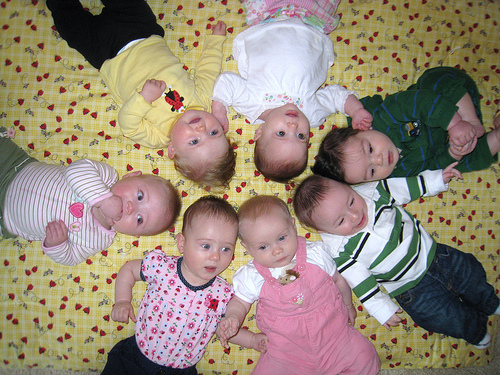
    The average woman begins to be fertile around the age of 15 and fertility stops at about the age of 55. With this in mind it would be possible for a woman to be fertile for 40 years. It would also be possible for a woman to become pregnant 53 times during her fertile period. If this happened, the minimum amount of babies she would produce would be 53. However, it is quite possible that the woman could have twins, triplets or even quadruplets! If for example the woman became pregnant with quadruplets every nine months in her fertile life, she would have a whopping 212 babies in her life time! That’s a lot of nappies!

    The world record for the greatest amount of babies born to any one woman currently goes to
    the wife of Feodor Vassilyev who gave birth to 69 babies ~ 16 pairs of twins, seven sets of
    triplets and four sets of quadruplets, from 1707 ~ 1782.. Only two of the children failed to
    survive.