Author: Brooke Borel

  • Talking s**t with Rose George: A Q&A about the global health issue no one wants to bring up

    At TED2013, Rose George talks about the global health problem no one wants to mention—poop. Photo: James Duncan Davidson

    At TED2013, Rose George talks about a major global health problem—the 2.5 billion people who live without toilets. Photo: James Duncan Davidson

    A single gram of poop contains 50 diseases, one million bacteria, 1,000 parasites, 100 worm eggs and 10 million viruses, by journalist Rose George’s tally. For people who have flushing toilets, this is something that they rarely have to think about. But for the 2.5 billion people in the world who have no toilet at all, feces is to blame for a devastating toll of disease.

    Consider these other numbers. Four thousand children die every day from diarrhea, a common symptom from exposure to many of those fecal microbes. That’s more than die from HIV/AIDS, tuberculosis and measles combined. Each year, $260 billion is lost because of lack of sanitation. Despite this, just 10 to 25 percent of related budgets focus on sanitation, compared to 75 to 90 percent for clean water. Rose George: Let's talk crap. Seriously.Rose George: Let's talk crap. Seriously.Clean water is no help when it is continuously contaminated by poor sanitation.
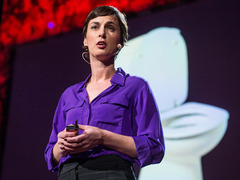
    In today’s talk, given at TED2013, George describes how she “plunged into the world of sanitation, toilets, and poop,” an odoriferous adventure that she chronicled in her 2009 book The Big Necessity: The Unmentionable World of Human Waste and Why It Matters. If you’re hankering for even more dirty talk, we spoke with George about people’s reactions to her project, the surprisingly wide-ranging impact of sanitation and the future of poop.

    In your talk, you start off with a story about your own bathroom experience — the first time you thought, “Wait, where is this stuff going?” What happened after that? How does a reporter start researching poop?

    Well, there’s a long story and a short story. I’ll give you the short one. The first thing I did when I decided that I was going to dive into the world of poop was look at who was doing stuff in that world. The first I came across was the World Toilet Organization. So one of the first things I did was to go to their annual show in Moscow. I ended up in a Russian winter near the Kremlin, and the WTO had its exhibit on one floor and, on the floor below, was a fur coat exhibition. There were more people in the fur coat exhibition.

    It’s quite a select gathering of people. It’s certainly changed over the past six years, but at that point, it was really quite a small field. That’s where I started making my acquaintances and getting to know who was who and who was doing what. A few people I met in that couple of days ended up being written up in the book — like Joe Madiath in Orissa, and Jack Sim. This guy Scott Chapman, who I met in the café, looked really bored. We started having this conversation, and he said, “Why should I be interested in toilets?” I started telling him what I had learned by that point — that 2.6 billion people don’t have a toilet — and he looked really surprised. He became a really enormous toilet evangelist. So that was really quite fun to watch.

    That is where I started, and then I went to a couple of other WTO events. I just ended up sort of wandering around the world with people who I found were doing interesting things.

    What was it like pitching the topic of poop to editors and your agent? What was their reaction? Did they get it initially, or did it take some convincing?

    I have two main publishers. My first was the British publisher Portobello. It was bit of a weird process because I went to them with another idea for a book, about Darfur. For various reasons nobody wanted it, and the publisher there, we were sitting in his little office and he said, “Rose, I don’t want that book but I do want you.” I can’t remember the exact list [I pitched him] but toilets was about number three. His face was not that impressed. And he said, “Um yeah, well, what do you mean?” So I started on my 2.6 billion, and Sulabh International, and untouchables in India who have to clean toilets with their bare hands in this day and age. And I do remember that he actually got up out of his chair with excitement, and from then on was fully behind it.

    Then on the back of that book deal was a four-part series for Slate on the world of sewage. I went down to the sewers in London and looked at a campaigning group in London called RATS, Rowers Against Thames Sewage, and I went to Sewage School and hung out with kids learning to make sewage soup and how to clean sewage. And it was great — really good fun. Subsequently, I ended up getting a publishing contract with Metropolitan Books, and they were absolutely behind it from the beginning. There was never any question — which is weird. There is certainly a perception that Americans are more prudish about this kind of stuff, but that absolutely has not been the case. Americans have been much more enthusiastic about this book all the way through, and I’ve done far more American radio interviews, far more American publicity, and I still get emails from Americans and Canadians. So that’s been quite a revelation for me.

    Why do you think this topic is so taboo in general? Obviously there are various reactions depending on where you are, but why in general do you think this is something we don’t talk about enough?

    I actually don’t think it’s true that it is taboo — I just think there’s no avenue for discussion about it. It’s been my experience that people are very happy to talk about it. When I was doing the research, which was a two-year process, honestly only about two or three people changed the subject. And I was asked all the time what I was working on, and I’d always say ‘toilets’ or ‘public health’ or ‘sanitation.’ Invariably, people would pause just to take that in. Then they would go, “Oh, well I’ve got a great toilet story!” The thing is, we do or think about this stuff every day. Every parent with a toddler has to think about it when they change a nappy or diaper. Everyone who has to find a decent toilet in a shopping mall has to think about it. Everybody has to think about it because they spend a lot of time in the toilet.

    I think there are two areas where poop still is taboo. I think it’s been taboo in advertising on TV. The toilet industry and the toilet paper industry have felt unable to be frank about their product, but I think that is changing quite a lot. In the last few years, there have been lots of plain-speaking toilet paper ads that I’ve seen in the US and in the UK as well. But the more important place where I do think it is very taboo still is in the corridors of power, and in the people who fund sanitation as a development issue. Certainly when I started, it was considered for some reason unspeakable. Politicians don’t think it is a vote-getter because they don’t hear people demanding toilets — whereas they do demand clean water. The other thing is that it sort of gets kicked around between various ministries. Because sanitation has so many effects across all aspects of development — it affects education, it affects health, it affects maternal mortality and infant mortality, it affects labor — it’s all these things, so it becomes a political football. Nobody has full responsibility. There’s no Minister of Sanitation. There doesn’t necessarily need to be one, but the responsibility for it in a political environment gets shared around and doesn’t really get the attention it deserves.

    I think that’s changed now because sanitation has become a human right, so governments are going to be obliged to take it seriously. I think that’s a wonderful change. I think the taboo is breaking all over the place, so it is quite exciting.

    You mentioned all the different areas that poop and sanitation actually touch. In your talk, you also mention education and economics. At what point in your research did you realize that your topic had such wide impact? Was it a gradual process, or was it something you had a hunch about early on?

    It was definitely a learning process. I mean, everybody is an expert on poop, really, but I started out not knowing how to make the connection. Because none of it is rocket science. If you have a girl who doesn’t have a toilet at school, she is not going to want to go to school when she’s got her period. It’s pretty straightforward. But I just didn’t make the connection. Only along the way, it was talking to people like Joe Madiath or the Water Supply and Sanitation Collaborative Council, the UN advocacy agency that deals with sanitation — people who were in the field. The other thing was there wasn’t much connection between people working in sanitation. There’s all sorts of divisions in development — in water, and health, and education and sanitation — so you kind of have to learn from all sorts of people.

    But the economics, that was actually specifically a guy called Guy Hutton who’s been really, really excellent at putting together the economic argument. And again it makes sense. If people can’t work, obviously there’s going to be an economic impact. But I would have never linked that to the toilet.

    When you started your research, did you have a hunch that toilets would have such a serious impact on human health?

    I had no idea that people — that children — were dying of diarrhea at the rate that they do. That was a real shock – in fact, I still find that shocking. It’s completely shameful because it is so preventable.

    Another thing I found really striking were the unexpected health aspects. For example, malnutrition: Children who are malnourished, you can find them in a well-fed family. Relatively recently, people have figured out, it sometimes is because they have diarrhea. So no matter how many high-protein foods the child is given, it goes straight through them. There’s now been research that links sanitation to stunted growth. That’s pretty new to me. And vaccinations. When my book came out, someone wrote to me who is a vaccinator. And he wrote, “You know, people just don’t realize that sometimes because these kids are malnourished and because they have diarrhea, we have to give them six or ten times the amount of vaccine to take it in. People don’t know the connection.” They don’t link sanitation to all these things. I find that really fascinating.

    On a lighter note, what was the silliest thing you learned about toilets or poop? Were there any crazy gold-plated toilets, or crazy advanced Japanese toilets?

    Oh yeah. I used to work at Colors magazine as a writer and researcher, before I started writing the book, and someone had a bit of an obsession with toilets. We used to regularly feature the latest gold-plated toilet, usually from somewhere in Asia. And then there is of course a senator in South Korea who built a toilet-shaped museum, or a toilet-roll-shaped museum, I think. There’s all kinds of stuff. And I think it is important to have the funny humor stuff, because that is what disarms people and makes it easier to talk about.

    People like Sulabh International, a fantastic Indian NGO that has built toilets all over India, they know that, so they set up the International Museum of Toilets, which is in a compound near the international airport in Delhi. And it’s great. It’s just one room, but it’s got replicas of toilets and it’s pretty humorous. They have a copy of a French commode in the shape of books.

    Wacky is fine — I knew I had to have some humor in it. Sulabh really helped, and Japan helped as well. But I always was careful and determined not to write a book of toilet humor. Other people have done that, and that’s fine, but it is a serious subject. It was quite tricky doing that balancing act.

    Yeah. I’ve been to Japan and I was amazed about the toilets and the technology they have.

    Once you use a Japanese toilet, you’re spoiled.

    Are there any sanitation initiatives that you think are doing a particularly good job acknowledging this poop problem and trying to address it? I’m thinking in particular of the Gates Foundation’s Toilet Challenge.

    Over the last two or three years it’s been really exciting because a lot has changed. I think the Gates Foundation should absolutely be applauded, because I think they’ve been really instrumental in that. As soon as Bill and Melinda Gates started talking about toilets — and they openly use the word ‘toilet’ — that gave the subject huge legitimacy that it didn’t have before. I think that’s broken the ice for NGOs that were maybe a little shy about talking about toilets. They disguised it as water-related illnesses, or as ‘people need water.’ And they do. But what’s the dirtiness in the water? It’s usually poop. I think that’s been an opening of the floodgates a little bit.

    And there’s all sort of exciting stuff going on. Sanitation hackathons, people working on apps. Matt Damon doing his famous press conferences. All that is really, really great. And it’s new. It makes me hopeful actually that maybe something has changed.

    Speaking of the Toilet Challenge, do you have a favorite amongst the winners?

    No I don’t, actually, and I’m sort of careful not to. When people ask me, “What’s the best toilet? What’s the best solution?” I’ve always said the solution is flexibility. The solution is understanding that we need all sorts of solutions. So I think they’re all great. This is a bit of a cop-out, but my favorite is the actual job description that they put out, which is that it has to be low-cost and it has to be sustainable. To me, that is brilliant. I don’t mind beyond that. The more ideas, the better. It’s pretty obvious if you travel in the developing and the developed world, it’s not one-solution-fits-all. Some countries have more water than others — some can afford to use clean water to flush their poop away and some can’t.

    So I think the best thing that reinventing the toilet did is not provide actual innovations in toilets — which is true, it does need innovating — but make us examine the system itself, which has been unquestioned for so long and is high-energy and high-cost. Even in the US and the UK, our sewers are crumbling. It’s a pretty unsustainable system. I think that’s what they’ve done that is really valuable. 

    One last question: What do you find most hopeful about the future of poop?

    That we’re talking about it. For heaven’s sake, I’ve just done a TED Talk on it. Six years ago, I never would have thought that was possible. I think things have changed so rapidly in the past few years, and I am really hopeful, actually, even though the statistics are still so woeful. Even though it’s the most off-track in the Millennium Development Goals, I think there is a legitimacy around it now. There are ads on American TV for, I can’t remember which toilet paper, but they were saying toilet paper doesn’t clean you — it’s like having a shower with a dry towel. And I think, “Oh, I said that!” But it’s great to see it on TV. I remember four or five years ago, Toto put an ad in Times Square showing bare bottoms, and they had to be taken down. So I really think there’s hope that this is going to be a more talkable subject. And maybe when people get an invitation from an NGO or a charity, maybe they’ll give money for a toilet and not just a clean water supply.

  • How technology can empower patients, including 4 diagnostic tools for your iPhone

    Eric-Dishman-at-TED@Intel

    Eric Dishman is used to thinking about how technology can transform the world of health care. As an Intel Fellow and general manager of the company’s Health Strategy & Solutions Group, his job is all about finding innovative new approaches to healthcare. Eric Dishman: Take health care off the mainframeEric Dishman: Take health care off the mainframe And he’s no stranger to talking about them. At TEDMED 2009, in the talk featured to the left, Dishman asked us to “Take health care off the mainframe,” boldly comparing the current American health care system to mainframe computers circa 1959.
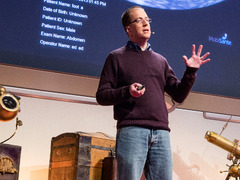
    But just two weeks ago, at TED@Intel, Dishman tells the much more personal story of his battle with kidney disease.

    To say that his battle is with disease isn’t the full story. Instead, as he describes in this second talk, his fight is not only with faulty kidneys, Eric Dishman: Health care should be a team sportEric Dishman: Health care should be a team sportbut also with a flawed healthcare system.
    Two decades ago, when he was a college student, Dishman had several fainting spells. This kicked off months of testing by six different doctors, in what he describes as a “clash of medical titans.” Dishman was told he would not live longer than two or three years.

    The doctors were wrong — but not because they weren’t good doctors. Instead, they were stuck in an old-fashioned system that lacked technologically advanced tools and a culture of communication.

    With smartphones and tablets becoming increasingly ubiquitous, and social networks connecting us more and more, Dishman sees three major steps to achieving better, individually-tailored healthcare that takes pressure off of brick-and-mortar hospitals and clinics, and empowers a patient to be the captain of a team working toward their well-being: Care anywhere, care networking, and care customization. To hear what each means, watch this talk.

    On the stage, Dishman demonstrates MobiSante’s smartphone-based ultrasound imaging system, called MobiUS, which he used to scan his newly donated kidney. A doctor hours away at Legacy Good Samaritan Hospital in Oregon examined the kidney live over the Internet, dispelling worry over a few dark spots and noting they’d double check them at Dishman’s next scheduled appointment.

    Here is a round up of other disruptive products and projects that could hugely impact the way we think about our health care. Have more to add? Put them in the comments.

    Health tests on your smartphone
    MobiSante’s affordable, portable ultrasound isn’t the only medical device to take advantage of mobile networks and the power of smartphones. Some other examples:

    The doctor isn’t in… but that’s okay
    InTouch Health’s RP-VITA Remote Presence Robot is the first-ever that will connect doctors to patients across the world.Daniel Kraft: Medicine's future? There's an app for thatDaniel Kraft: Medicine's future? There's an app for that Doctors can do rounds in a hospital across the country or the world, controlling Jetson-like robots that show their faces on a screen. Through the robots, the doctors can visit with and diagnose patients from afar.

    Another less-futuristic option: as Daniel Kraft, the chair of the FutureMed program at Singularity University, mentioned in the TED Talk, “Medicine’s future? There’s an app for that,” the website AmericanWell.com can connect you to physicians and specialists in your state who do appointments over secure chat, Skype or the telephone.

    Health care at your local drugstore
    While it isn’t tech-heavy, the move towards what this recent article from The Economist calls “retail clinics” is taking some health services out of hospitals and doctor’s offices and into malls and popular pharmacy chains. The article details how CVS and Walgreens are bringing basic care clinics to many stores – 640 and 372 of them respectively.

    Medical devices that can leave the hospital
    The U.S. Department of Health and Human Services put out a recent request for information seeking new approaches for smart medical hardware that can remain on even during power outages in natural disasters. The goal is to to protect hospital patients on life-saving medical devices — including ventilators or IV pumps — by keeping the machines on and mobile if there is need for evacuation.

    Are you interested in where health care is going? Watch the TED Playlist, the Future of Medicine, below.


  • Not just for April Fools’ Day: 8 winners of the Ig Nobel Prize, whose scientific works sounds funny but is actually perfectly serious, mostly

    Photo: James Duncan Davidson

    Photo: James Duncan Davidson

    In 1995, Kees Moeliker heard a loud bang coming from the Natural History Museum Rotterdam’s new wing. He knew exactly what it was. Kees Moeliker: How a dead duck changed my lifeKees Moeliker: How a dead duck changed my life A curator at the museum, Moeliker had gotten used to the sound of birds hitting the glass exterior of the new wing, and had even taken to stuffing the dead birds for the museum’s collection. But, as Moeliker explains in this humorous talk from TED2013, the duck that met its death on this particular day “changed his life.”

    Just how the duck qualified as a life-changing event sounds like an April Fools’ Day joke. It is not.

    Soon after the male mallard duck died, a live male duck from the same species approached it, mounted it, and — to put it in layperson’s terms — humped it for over an hour. Amazed, Moeliker did what any curious biologist would do: he grabbed his camera and his notebook, and recorded what happened. Moeliker described his bizarre observations six years later in a paper aptly titled “The first case of homosexual necrophilia in the mallard Anas platyrhynchos (Aves: Anatidae).”

    In 2003, this work earned Moeliker the Ig Nobel Prize in Biology. A parody of the Nobel Prize, the Ig Nobels honor research and work that “first make[s] people laugh and then make[s] them think.” In other words, just because research sounds ridiculous doesn’t mean it has no merit. As Ig Nobel founder Marc Abrahams tells the TED Blog over email: “Science is the continuing quest to discover — and to not overlook — things beyond or outside what we expect. The truly unexpected is surprising, sometimes funny, and, who knows, might even turn out to be important.”

    Even Moeliker’s dead duck research has a practical side. Each year on June 5th Moeliker and the victimized duck, which he naturally had stuffed, co-lead a public discussion on how to prevent birds from hitting windows — a major cause of bird death worldwide. As Moeliker shares in his talk, it could be that the mixed-up sexual behavior of animals points to something larger — that our continuous morphing of landscapes may have an affect animal behavior and species’ ability to thrive.

    For a full list of past Ig Nobel winners, head to their website. Or read on for a few of our favorites…

    Category: Entomology
    Year: 1994
    Winner: Robert A. Lopez “for his series of experiments in obtaining ear mites from cats, inserting them into his own ear, and carefully observing and analyzing the results.”
    Why he did it: Sounds uncomfortable, and it was by all accounts. Still, as Marc Abrahams reports in The Guardian, Lopez’s itchy experiment helped him prove that Otodectes cynotis mites could infect humans, which he suspected was the cause of at least one rash in a young girl who liked cuddling her mite-ridden cats.

    Category: Public Health
    Year: 2009
    Winners: Elena Bodnar, Raphael Lee, and Sandra Marijan “for inventing a brassiere that, in an emergency, can be quickly converted into a pair of protective face masks, one for the brassiere wearer and one to be given to some needy bystander.”
    Why they did it: The concept for this invention may seem silly, and the drawings in the team’s patent don’t help, but during a biological or chemical terror attack you probably wouldn’t care.

    Category: Safety Engineering
    Year: 1998
    Winner: Troy Hurtubise “for developing, and personally testing a suit of armor that is impervious to grizzly bears.”
    Why he did it: Well, to see if he could survive a grizzly attack. But, according to Wikipedia, the suit may also have applications in riots, explosions and other dangerous situations in which you’d want protection.

    Category: Peace
    Year: 2000
    Winner: The British Royal Navy “for ordering its sailors to stop using live cannon shells, and to instead just shout “Bang!”
    Why they did it: According to the BBC, the Navy decided to forego live ammunition for the childlike verbal “bangs” after the government drastically cut military budgets.

    Category: Biology
    Year: 2002
    Winners: N. Bubier, Charles Paxton, Phil Bowers and D. Charles Deeming “for their report ‘Courtship Behaviour of Ostriches Towards Humans Under Farming Conditions in Britain.’”
    Why they did it: According to the authors, an increase in ostrich farms and a lack of knowledge on how they breed in captivity spurred the research. Anecdotal evidence showed the birds got frisky whenever people were nearby, so the researchers decided to confirm whether it was true. It was. The authors concluded: “Courtship behaviour towards humans may be important in the reproductive success of ostriches in a farming environment.”

    Category: Engineering
    Year: 2010
    Winners: Karina Acevedo-Whitehouse and Agnes Rocha-Gosselin “for perfecting a method to collect whale snot using a remote-control helicopter.”
    Why they did it: Being a whale doctor isn’t easy, especially when your patient weighs multiple tons and is swimming in the ocean. One way to monitor health is to check the microbes living in and on the whale to see if they may be causing disease. As these winners have shown, it’s possible to collect at least some of those whale microbes with the marvels of modern technology.

    Category: Physics
    Year: 2003
    Winners: Jack Harvey, John Culvenor, Warren Payne, Steve Cowley, Michael Lawrance, David Stuart, and Robyn Williams “for their irresistible report ‘An Analysis of the Forces Required to Drag Sheep over Various Surfaces.’”
    Why they did it: As this Abrahams Q&A with Wired explains, the research took place in Australia, where sheep shearing is a major industry. Dragging the sheep to the equipment is difficult and dangerous and the scientists researched various floor configurations and materials to see what which surfaces made the job easiest.

  • 9 old drugs that learned new tricks: The head of the National Institutes of Health shares medicines that turned out to have multiple uses

    AZT

    A look at the crystallites of AZT, the first antiviral approved for the treatment of HIV/AIDS. Originally, AZT was created to treat cancer — but it failed in tests.

    When you pop a pill, do you know how it works? Most modern drugs target specific molecules, interacting with disease at the molecular level. But while we know the molecular causes of roughly 4,000 diseases, a very slim 6 percent of those diseases have a safe and effective drug to treat them. Why? Because of the incredible difficulty and cost of finding a compound that is perfectly shaped to interact with a molecular cause, and that also happens to be safe.

    Francis Collins, the Director of the National Institutes of Health, wants to help this process along. Francis Collins: We need better drugs -- nowFrancis Collins: We need better drugs — nowIn yesterday’s talk, given at TEDMED 2012, Collins makes a bold case for translational research to produce better drugs, faster. What does “translational” mean? It means research that takes a particular look at basic scientific discoveries and asks: how can we make an actual medicine from this? To that end he helped launch the NIH’s National Center for Advancing Translational Sciences in 2011. NCATS aims to do away with the costly and time-consuming bottlenecks that prevent new drugs from coming to market.

    Collins hopes to encourage pharmaceutical companies to open up their stashes of drugs that have already passed safety tests, but that failed to successfully treat their targeted disease. He also wants to look at how drugs approved for one disease could successfully treat another. We can teach “old drugs new tricks,” Collins says in his talk, by matching them to the molecular pathways of other diseases.

    Doing so will require academia, the pharmaceutical industry, government agencies and patient advocacy groups to work together, in conjunction with talented researchers and ample funding. After all, a single drug can cost billions to develop. Still, it’s possible.

    In his talk, Dr. Collins mentions two failed cancer drugs that were successfully repurposed: zidovudine (AZT), the first antiviral approved for HIV/AIDS in 1987 and, more recently, farnesyltransferase inhibitor (FTI), which was used to successfully treat children with the rapid-aging disease Progeria in a 2012 clinical trial.

    Fascinated, we asked Collins to share more. Below, read his list of seven drugs that have been repurposed. Of them he writes via email, “None of these drugs could have been developed without collaborations between drug developers and researchers with new ideas about applications, based on molecular insights about disease.”

    1. Raloxifene: The FDA approved Raloxifene to reduce the risk of invasive breast cancer in postmenopausal women in 2007. It was initially developed to treat osteoporosis.
      .
    2. Thalidomide: This drug started out as a sedative in the late fifties, and soon doctors were infamously prescribing it to prevent nausea in pregnant women. It later caused thousands of severe birth defects, most notably phocomelia, which results in malformed arms and legs. In 1998, thalidomide found a new use as a treatment for leprosy and in 2006 it was approved for multiple myeloma, a bone marrow cancer.
      .
    3. Tamoxifen: This hormone therapy treats metastatic breast cancers, or those that have spread to other parts of the body, in both women and men, and it was originally approved in 1977. Thirty years later, researchers discovered that it also helps people with bipolar disorder by blocking the enzyme PKC, which goes into overdrive during the manic phase of the disorder.
      .
    4. Rapamycin: This antibiotic, also called sirolimus, was first discovered in bacteria-laced soil from Easter Island in the seventies, and the FDA approved it in 1999 to prevent organ transplant rejection. Since then, researchers have found it effective in treating not one but two diseases: Autoimmune Lymphoproliferative Syndrome (ALPS), in which the body produces too many immune cells called lymphocytes, and lymphangioleiomyomatosis, a rare lung disease.
      .
    5. Lomitapide: Intended to lower cholesterol and triglycerides, the FDA approved this drug to treat a rare genetic disorder that causes severe cholesterol problems called homozygous familial hypercholesterolemia last December.
      .
    6. Pentostatin: This injectable antibiotic was originally intended as chemotherapy for some types of leukemias. It was later successful against a rare leukemia called hairy cell leukemia.
      .
    7. Sodium nitrite: This salt was first developed as an antidote to cyanide poisoning and, unrelated to medicine, it’s also used to cure meat. The National Heart, Lung, and Blood Institute is currently recruiting participants for a sodium nitrite clinical trial, in which the drug will be tested as a treatment for the chronic leg ulcers associated with sickle cell and other blood disorders.

    Interested in more thoughts on how we can change the long, clunky process of testing pharmaceuticals? Watch these 5 TED Talks with fascinating ideas for medical research »

  • Happy birthday John Snow, father of modern epidemiology: A Q&A with Steven Johnson

    John-Snow-mainShanghai. New York. Tehran. Tokyo. Today, dozens of cities worldwide are each home to many millions of people. But those masses of humanity might not exist in such tight quarters if not for John Snow. (No, not that Jon Snow. This John Snow.)
    Snow was a 19th-century English doctor who’s credited with proving that cholera, a sometimes deadly infection that attacks the small intestine, spreads through contaminated water — and not by “bad air” as was generally believed at the time.

    Steven Johnson tours the Ghost MapSteven Johnson tours the Ghost MapAs described in Steven Johnson’s 2006 TED Talk, “The Ghost Map,” a particularly vicious cholera outbreak in 1854 at a popular water pump in London killed an astonishing 10 percent of the people who lived nearby. Snow created a map showing which people had consumed the water from the pump and whether they had gotten sick. His map helped convince local health authorities that his theory was the correct one, and by the next severe outbreak in 1866 they officially recommended that people boil water before drinking or using it, curbing the spread.

    March 15 marks the 200th anniversary of Snow’s birth, which the London School of Hygiene & Tropical Medicine and affiliates are celebrating in a series of meetings and exhibits. Our present to Snow? We spoke to author Steven Johnson about the impact the doctor has had on the sustainability of modern cities.

    When did you first discover the story of John Snow and his cholera map, and what was your first reaction to it?

    I first came to it as an information design story in Edward Tufte’s amazingly beautiful design books, and then I kept encountering it in other fields. I’d be reading about a history of epidemiology and I’d stumble across it, or I’d be reading about the history of disease and would stumble across it. I think that is what makes the story and Snow’s role in it so interesting — the way it connects to so many fields.

    What were other characteristics of the story that made you decide to write The Ghost Map?

    It turned out to fit my expectations or visions of a beautiful story about the interaction between different scales of experience. It’s a story in some ways about the collusion of bacteria and the flow of water: the clean drinking water, contaminated drinking water, and waste in this huge stinking metropolis — the biggest city the world had seen at that point, with two and a half million people. Between those two scales — basically the smallest form that life takes on the planet and in some ways the largest form, the metropolis — you have this individual who’s trying to make sense of patterns that are happening in the city and trying to connect them to patterns and behavior that is happening on a microscopic scale that he can’t even see. That’s crucial to the story — that he cannot see the bacterium. He has to infer its existence from the patterns he’s detecting in the streets of London.

    Once I actually sat down to research it, there were a number of things that I found that surprised me and that had not been in the traditional telling of the story. It’s conventionally told as: Snow made the map, he saw the pattern of death pointing to the pump, and he developed the waterborne theory. But in fact, he’d been working on the waterborne theory for a very long time. The map was a marketing vehicle for his idea.

    The other thing was the important role, which is very relevant today, of public data. The city had begun releasing more complex mortality reports a decade before the outbreak, and instead of just listing so-and-so died on this date, they would list so-and-so died of this age, this gender, this disease, this exact address. Whatever data they had, they would release in these reports. The whole premise was: You create more data, you release it to the public, and the city is filled with all these interesting amateurs who don’t work for the government who might detect patterns in it. Snow ended up using a lot of that data, in addition to his on-the-ground detective work to build a map, to build his case for the waterborne theory. It’s very much connected to the kind of open data, transparency argument of today. Snow was doing it without computers, but it’s the same idea. So that was a cool surprise.

    Finally, Henry Whitehead, Snow’s collaborator. I mean, almost nobody talks about him, and he was crucial to the story. The more I dug in, the more I realized that Whitehead had done all this work Snow really couldn’t have done, because Snow was not a great social connector. A lot of the investigation needed Whitehead’s social intelligence to track down additional data on people who had left the neighborhood. And there’s an argument that without Whitehead’s contributions, the authorities might not have come around to Snow’s theory. I love that because it’s a great example of multidisciplinary collaboration where you have two very different types of intelligence coming together to solve a problem.

    In your TED Talk, you mention that modern, massive cities that exist today wouldn’t be possible without Snow’s contributions to epidemiology. Can you elaborate?

    This is why the period is so interesting in a sense. There were all these people looking around London in 1854 and saying: This is not sustainable. Human beings are not meant to live in this state, two and a half million people is just too large for a city to work. And they were right on some level — certain things had to be figured out that hadn’t been yet.

    One of the biggest was how to deal with all the human waste that is created with two and a half million people so densely populated. [Snow helped make] it clear that the separating of drinking water and waste was an absolute imperative for the city to grow. Making it clear that that could happen — and conquering cholera within 12 years — is just a staggering achievement. And that became a blueprint for every big city in the world. It enabled us to build cities of 10 million and 20 million people without necessarily having to battle these diseases.

    Now, developing-world megacities are trying to figure it out with 25 million people. And we haven’t solved all those problems. But one of the things that is so important about Snow’s achievement is that it wasn’t all that long ago. You look back 160 or 170 years and you can point to how awful London was as a city, and compare it to the amount of progress we’ve made since then, and use it as a kind of inspiration for what we need to do now.

    That nicely leads to my next question. What are the main challenges these new megacities face?

    The root cause is that the growth in these megacities is coming in areas without traditional infrastructure. When you look at the favelas in São Paulo, you have millions and millions and millions of people without a traditional electric grid, without traditional sewage, in improvised communities. It may be that the way to deal this is to just build infrastructure and support them in a traditional way that we pioneered in the 19th century. Or maybe there are new solutions.

    Are there mapping tools that are the modern-day, John Snow/cholera equivalent that are helping solve some of these problems?

    There are actually. There are a million examples of things like this, precisely because we now have Google Maps where we can drop datasets and anybody can do new dynamic maps of interesting social problems. There were some great improvised maps that were created after the earthquake and cholera epidemic in Haiti.

    You just got back from TED2013 in Long Beach, California. What was the most memorable moment for you?

    There was a talk by Alastair Parvin about this kind of open-source Creative Commons kit for building small houses, where two people with a 3D printer can assemble one in 48 hours. It was really cool, and his point was about releasing tools so that anyone can build a structure in those developing world megacities that we are talking about. An overwhelming number of the houses are actually built by members of the community cobbled with existing materials. If you have this kind of technology, it helps produce more reliable housing. And I kind of thought, that is a great. That fits perfectly with the Ghost Map.

    Additional reading:

    Haven’t had enough John Snow? For more, check out the UCLA Department of Epidemiology’s John Snow archive, which has original writing and images, as well as other treats, or try these books:

    The Ghost Map: The Story of London’s Most Terrifying Epidemic and How It Changed Science, Cities, and the Modern World by Steven Johnson

    The Strange Case of the Broad Street Pump: John Snow and the Mystery of Cholera by Sandra Hempel

    Cholera, Chloroform and the Science of Medicine: A Life of John Snow Peter Vinten-Johansen et al.

  • 10 talks to help you better understand cancer

    When you hear the word “cancer,” what do you think about? And how do you know what you think you know? Do you think of cancer as a disease of the old or as something that can affect anyone, as a death sentence or as a surmountable twist of fate? When you picture someone with cancer, who are they and where do they live?

    Today is World Cancer Day, an annual campaign organized by the Union for International Cancer Control to raise awareness about cancer-related issues. This year’s theme is “Cancer—Did You Know?” and the goal is to highlight myths about the disease and replace them with facts.

    The organization has put forth four major myths: that cancer is just a health issue, that it affects only the elderly and those in rich and developed countries, that it is a death sentence, and that it is fate. The UICC lays out its own counterpoints to these myths here, here, here, and here. The main take-home is that cancer affects people in all parts of the world, and is quickly worsening in less developed nations. All that disease is an incredible economic burden on both individuals and societies, and is particularly acute for women in developing nations who make up the majority of the 750,000 annual deaths from cervical and breast cancer.

    But, on a more positive note: advances in medical science mean that people are surviving cancers that were once thought untreatable, and preventative steps — from education on healthy lifestyles to new vaccines for certain cancers — are further reducing cancer-related deaths. The trick will be getting education programs and medical technologies to more people, particularly those in the developing world.

    In honor of World Cancer Day, here are 10 TED Talks that explore other aspects of cancer, from prevention to diagnostics to possible treatments.

    Mina Bissell: Experiments that point to a new understanding of cancer
    Breast cancer expert Mina Bissell doesn’t understand why, out of the tens of trillions of cells in the human body, cancer researchers focus on single cancerous cells. Why not also consider all the cells around it, or what Bissell calls the “context” and “architecture?” In this 2012 TEDGlobal talk, Bissell shares two key experiments that proved the prevailing wisdom about cancer growth was wrong and outlines her intriguing take on curing cancer.

    David Agus: A new strategy in the war on cancer
    With today’s advances in medical technology and genetic research, oncologist David Agus points out that the current approach to cancer identification and treatment is archaic. In this 2009 TEDMED talk, he asks: why define cancer by the body part in which it is found rather than by its own genetic profile? From there, Agus explores the future of cancer diagnoses and treatment.

    Danny Hillis: Understanding cancer through proteomics
    Scientist and inventor Danny Hillis wants to take cancer research beyond genes to the proteins they encode for — in other words, not the ingredients for a body, but what is going on in that body in the moment it is sick. In this 2010 TEDMED talk, Hillis breaks down proteomics, or the form and function of all the proteins in the human body, and what it might mean for cancer research.

    William Li: Can we eat to starve cancer?
    Angiogenesis, or the growth of new blood vessels, is vital for a healthy body. When it goes awry, it isn’t good: for example, too little can lead to chronic wounds, and too much can lead to cancer. In this 2010 TED talk, medical doctor William Li explores ways to control the blood supply to a tumor through eating naturally cancer-fighting foods.

    Jay Bradner: Open-source cancer research
    What’s remarkable about Jay Bradner’s approach to cancer research isn’t just the discovery chemistry, although it is fascinating. It’s the fact that he’s bringing it to open source. In this 2011 TEDxBoston talk, Dr. Bradner shows how sharing data and information with as broad a group as possible can help solve a real-life cancer puzzle.

    Bill Doyle: Treating cancer with electric fields
    The standard toolkit of cancer therapies includes surgery, radiation and chemotherapy. Bill Doyle adds to this set of choices, at least for certain types of cancer, by using electric fields. The fields stop the movement of electrically charged proteins in cancerous cells that are necessary for cell division (and, subsequently, cellular multiplication). In this 2011 TEDMED talk, Doyle explains the process and why it may give patients one thing that the traditional tools cannot: better quality of life during treatment.

    Elizabeth Murchison: Fighting a contagious cancer
    Cancer doesn’t just affect humans. In this 2011 TEDGlobal talk, geneticist Elizabeth Murchison explains her work on an alarming contagious cancer that is wiping out the Tasmanian Devil in Australia. What does this have to do with human cancers? Studying such cancers in animals could give insight into the rare chance of a contagious cancer in humans.

    Eva Vertes looks to the future of medicine
    Microbiology prodigy Eva Vertes was only 19 years old when she spoke at TED2005 about cancer stem cells. In the talk below, she presents research that suggests cancer might be a repair response to damage to stem cells in the lungs, liver, bones, etc. The implication she is testing? “It’s possible, although far-fetched, that in the future we could think of cancer being used as a therapy,” she explains in the talk below.

    Yoav Medan: Ultrasound surgery – healing without cuts
    Traditional cancer surgery requires cuts and slices to flesh and bone, which take a lot of time to heal. It’s a painful process. In this 2011 TEDMED talk, Yoav Medan describes a non-invasive approach to surgery using focused ultrasound, which has applications in cancer and several other diseases.

    Jack Andraka: Detecting pancreatic cancer … at 15
    The future of cancer research depends on the bright minds of young researchers. In this TED2013 Talent Search talk, fifteen-year-old Jack Andraka describes his invention: a cheap, efficient diagnostic test for pancreatic cancer.

    And a TED Book you should definitely check out on this topic …

    Controlling Cancer: A Powerful Plan for Taking on the World’s Most Daunting Disease
    Could cancer be caused by viruses pushing infected cells to the brink? Paul Ewald, a leading thinker in the field of evolutionary medicine, postulates that this may be the case. In this TED Book, he and co-author Holly Swain Ewald lay out a bold plan for attacking cancer. By attacking the virus, he believes that we could come close to eradicating cancer altogether. (Read our Q&A with Paul.)