Author: Carmi Levy

  • Actual Analysis: HP buys Palm, and the earth does move

    By Carmi Levy, Betanews

    Banner: Analysis

    HP’s just-announced $1.2 billion offer to buy Palm is as close as this industry gets to a lifejacket. Despite the fact that the deal won’t suddenly vault Palm back to the top of the mobile market it practically created, HP’s ultimate goals for its latest acquisition extend well beyond the near-term.

    It’s been clear for years that Palm simply couldn’t make a go of it on its own — that if the company hoped to remain relevant in today’s fast-evolving mobile marketplace, it needed to be acquired. The announcement earlier this spring that Palm was seeking a buyer and speaking with interested parties confirmed that it was only a matter of time before a deal was struck.

    A necessary deal

    In that context, the HP buyout is hardly a surprise, and it represents the best possible outcome for Palm. The two companies complement each other rather nicely. HP gets Palm’s innovative mobile operating system, webOS, a stable of well-regarded mobile handsets, and a treasure trove of patents. Palm gains access to HP’s prodigious marketing muscle and global reach. It’s that global reach that not even Apple can compete with, and could seriously rewrite how and where mobile devices are sold.

    For its part, HP’s efforts in mobile handsets for much of the past decade were largely ineffective. Its iPaq brand, acquired through the purchase of Compaq, was virtually ignored through much of its existence, with sporadic hardware refreshes and a stubborn adherence to the now-dead Microsoft Windows Mobile operating system. HP’s mobile offerings had near-zero consumer impact and no carrier presence. Enterprise adoption was similarly weak before the Palm announcement. With $25 million in sales last quarter, it’s easy to forgive casual observers who assumed HP wasn’t even playing in this market. In many respects, it gave up long ago.

    This deal gives HP another shot at mobile relevance, but it’ll have to invest significant resources to give Palm the push that it needs to remain current and competitive. After years of reinventing itself to the detriment of a well-stocked product pipeline, Palm now finds itself in dire need of a rebuild. As its new owner, HP will be faced with the daunting task of not only bringing new products to market, but also rebuilding shattered developer loyalty and turning webOS into the kind of platform that spawns thousands of apps and an economy all its own.

    Carmi Levy Wide Angle Zoom (v.2)A few years too late

    Palm’s mistake in introducing the Pre and webOS in 2009 was in focusing so heavily on the actual device that it forgot how significantly the market had changed since it introduced its first Treo smartphone. The offerings themselves were — and are — brilliantly engineered examples of next-generation mobility. From a usability standpoint, they even gave the market leading iPhone and Android solutions a run for their money. Had they hit the market three years earlier, they might have been enough to guarantee Palm’s independent survival.

    Unfortunately for Palm, it isn’t 2007. Apple’s iPhone and later, its App Store, rewrote the rule book that all mobile vendors must now follow. Market success is no longer determined by whoever rolls out the coolest devices. Without developer support, even the most deftly advanced piece of hardware will fail miserably. Despite Palm’s efforts to reconnect with developers who had long since defected to competing platforms, the end result was an application store filled with tumbleweed and a roadmap with no direction. With no ecosystem to support the critically acclaimed devices and operating system, Palm’s market share erosion continued to accelerate.

    It’s a process that will likely continue for some time to come. In the absence of an actual plan to kick-start the app side of the house and get developers on board, Palm will remain stuck around the fringes of a mobile market that’s rapidly passing it by. The clock is ticking for HP, and its corporate leadership — spearheaded by Tom Bradley, EVP of the Personal Systems Group — knows it. Bradley was once Palm’s CEO, so it’s likely Palm will get what it needs to market, and quickly — which includes that chance to develop its way out of its current hole.

    But the Titanic couldn’t turn on a dime, and neither can jaded and faded smartphone vendors.

    The good news for Apple and Google is they have nothing to fear. It’ll take the better part of a year to 18 months for HP to integrate what it’s just bought and begin to turn things in a more profitable, growth-focused direction. In the interim, the Apple and Google mobile juggernauts will continue to grow, virtually guaranteeing that Palm will never again be a #1 player, and it won’t directly threaten the industry giants anytime soon.

    A different definition of success

    Even so, dominance isn’t necessarily HP’s near-term goal here. For now, it’s entirely sufficient to build a new foundation and leave the long-term stuff for another day. What matters to Palm is that it now has a new corporate parent willing to give it the resources it needs to become a viable, profitable smaller player in a market that’ll eventually be large enough to support more than two dominant leaders. Apple’s Mac has carved out a respectable and profitable business with only 10% market share, albeit in the computer space; and iPhone has commanded a 16.2% share of the global smartphone space, according to iSuppli estimates published today.

    Palm has about a 1.5% stake in that smartphone realm, and the distance between it and iPhone from one point of view looks like a chasm. But Motorola is at 3.9%, which means Palm doesn’t have far to go to resume being taken seriously. If that happens, Palm could indeed regain viability in the mobile market, but only if HP plays its cards right and invests deeply and quickly enough to turn things around.

    Longer-term, however, HP will be selling Palms in places Apple and Google can only dream about. And with a global manufacturing influence that makes Apple look puny by comparison, HP can play the economies-of-scale game better than anyone. While an HP-owned Palm won’t dominate today’s market, HP’s end game likely envisions a significantly changed environment that renders 2010-based assumptions of mobile market success obsolete.

    Your chances of buying a Palm-branded device sometime this year may not have increased much as a result of this acquisition. But what you’ll be buying years down the line may very well have changed after this week’s announcement. It often takes that long to realize just how fundamentally things have changed following a business-seismic event like this. Don’t bet against HP having the patience and the wherewithal to invest, heavily, in this long-term game. Just because we didn’t feel the ground move doesn’t mean it didn’t.

    Carmi Levy is a Canadian-based independent technology analyst and journalist still trying to live down his past life leading help desks and managing projects for large financial services organizations. He comments extensively in a wide range of media, and works closely with clients to help them leverage technology and social media tools and processes to drive their business.

    Copyright Betanews, Inc. 2010


    Add to digg
    Add to Google
    Add to Slashdot
    Add to Twitter
    Add to del.icio.us
    Add to Facebook
    Add to Technorati


  • Warning! 3D TV can kill you

    By Carmi Levy, Betanews

    Poster from the 3D movie 'Eyes of Hell'If you’re like me, and you’re among the dozen or so who still watch the nightly half-hour of American commercial broadcast TV news, you’ve probably noticed that about a quarter of that time is devoted to ads. Two-thirds of those ads are devoted to drugs, and half of those drug ads are devoted to warnings about the many gruesome, horrid ways in which you might unexpectedly die. The unspoken reason why these ads appear there in the first place is because advertisers reason that if you’re still watching the Evening News, you must be afraid to touch your computer or your smartphone to read the real news from TMZ, which makes you (wait for it…) old. (Meaning, above 29.)

    Samsung’s Australian unit doesn’t want the drug companies to have all the fun. Barely a month after releasing its 3D television offerings on an unsuspecting world, the company has published a warning on its Web site down under that outlines a list of risks so serious that those network news drug spots seem tame by comparison.

    A new dimension of illness

    If you’re perfectly healthy and have a hankering to spend money on still-evolving technologies, stop reading here and head down to the electronics big box store immediately. What I’m about to say won’t interest you because you clearly need to feel the shockwaves from the depths of James Cameron’s aquamarine cinematographic soul whenever he sinks a ship or blows up a planet. If, however, you’re bothered by the potential of getting seriously ill by simply watching television, you may want to hold off on signing up to become a 3D household. Because if any of the following applies to you, Samsung recommends against watching 3D TV:

    • You’re in bad physical condition
    • You need sleep
    • You’ve been drinking alcohol

    * Possible side effects of ignoring this advice and watching anyway include the following laundry list of entertainment-related fun: epileptic seizure, altered vision, light-headedness, dizziness; involuntary movements such as eye or muscle twitching, confusion, nausea, loss of awareness, convulsions, cramps and/or disorientation.

    Funny, I didn’t see convulsions or loss of awareness in the first wave of ads for this technology. I guess they were hoping sleep-deprived drinkers who don’t exercise would stay away from the 3D TV aisle.

    This isn’t the first time that a technology comes with some health-related caveats. Nothing in life, after all, is without risk. Emissions from cell phones have long been suspected of being related to certain forms of cancers. Excessive smartphone use can cause repetitive stress injuries (RSI) for thumb typists. Watching too much conventional television, or doing so in badly lit rooms, won’t do wonders for your vision. Despite this, the Samsung warning breaks new ground in terms of relative risk and reward. That’s some scary language to digest before sitting down with a bowl of fat-free-buttered popcorn, and it’s way more than would fit into the average 30-second television spot.

    Carmi Levy Wide Angle Zoom (v.2)Does the reward justify the risk?

    So do you really want to see Avatar in your living room in 3D so badly that you’d risk seizures, convulsions, and loss of awareness? I can’t decide for you, of course, but I’m voting no for myself for two reasons: A good HDTV signal is more than good enough for me, and I don’t want to have to avoid open stairwells, or balconies every time I watch a movie.

    When I first wrote about 3D TV last month, I lamented the lack of content, distribution, affordability, and relevance. I tagged it as a solution in search of a problem, and I advised readers to wait. A long time. This latest health scare only reinforces what I originally said, and galvanizes my belief that the industry is so focused on pushing next-generation technologies on often-unsuspecting consumers that it’s willing to overlook the risks in the relentless pursuit of profit.

    If Samsung and its fellow 3D TV vendors had any sense of right and wrong, they’d pull their products from the market until the health implications can be more thoroughly — and independently — validated. I believe, now as then, that anything that requires high-tech $250 glasses that act like virtual shutters in concert with the screen is way over the top for the average consumer. The impracticalities and costs associated with this kind of prematurely deployed technology were bad enough for the average consumer. The overt risks associated with the use of these still-expensive, still-cumbersome glasses merely sealed the deal. 3D simply won’t fly until manufacturers can deliver the immersive effect without resorting to trick, health-damaging glasses. And any vendor that continues to sell these obviously interim solutions is putting the bottom line ahead of its customers.

    There is no free ride, but…

    I can accept that every technology carries a certain degree of risk. We always play the compromise game whenever we make the investment in any new gadget. But the risks with 3D seem to extend well beyond the usual aches and pains inherent in most modern devices. It’s yet another sign (to me, anyway) that this is one technology that needs a few more years of baking before it’s ready to be served.

    Until then, if I want to be scared when I watch television, I’ll simply watch the Evening News with Katie and wait for the inevitable drug ads to come on. And if I want to have a drink and hang out on my balcony, I’ll be able to do that, too. Some things, like 3D TV, just aren’t worth the risk, and should have been held back while manufacturers ironed out a clearly disturbing set of bugs.

    Poster from the terrifying 3D movie “Eyes of Hell” from the historical Web site WidescreenMovies.org.

    Carmi Levy is a Canadian-based independent technology analyst and journalist still trying to live down his past life leading help desks and managing projects for large financial services organizations. He comments extensively in a wide range of media, and works closely with clients to help them leverage technology and social media tools and processes to drive their business.

    Copyright Betanews, Inc. 2010


    Add to digg
    Add to Google
    Add to Slashdot
    Add to Twitter
    Add to del.icio.us
    Add to Facebook
    Add to Technorati


  • Twelve billion iBalls fall into Gizmodo’s lap

    By Carmi Levy, Betanews

    What’s a mobile device prototype worth?

    Depends on who you are. If you’re Apple, it’s priceless. When you tightly control every aspect of the product development process, anything that subverts the message is a potential risk to the brand. Loss of control to a company like Apple is unthinkable. If you’re Gizmodo, the answer is $5,000 — which is the amount the tech blog reportedly paid to an unnamed individual who supposedly found the prototype of Apple’s upcoming fourth-generation iPhone in a California bar.

    In return for taking the super-secret device public and outing the poor Apple engineer, Gray Powell, who left the device in a bar in the first place, Gizmodo cashed in on an audience bonanza. For better or for worse, online readers are hungry for news about anything remotely connected to Apple. So a full-on overview of an inadvertently leaked next-generation device would be more than enough to whip the masses into a frenzy.

    But at what cost? The mysterious individual who apparently picked up the forgotten device at the bar made some excuse about trying to return it to Apple. According to Gizmodo, he called Apple, was given a ticket number, and after being handed off between folks who seemingly didn’t take him seriously, was never contacted again. After living in limbo for weeks, the device ended up in Gizmodo’s hands.

    A lucrative payday

    The payoff for all this was lots of eyeballs. And in a world where audience size correlates directly to advertising revenue, this episode has doubtless added a nice bump to Gizmodo’s bottom line. As a journalist whose work is often compensated based on audience size, I understand the flurry of possibilities that flowed through the minds of the folks at Gizmodo. You can do the right thing, or you can do the profitable thing. But if the two are mutually exclusive, doing the right thing too often will have you eating ramen noodles while your less morally-upright competition enjoys steak.

    I guess it all comes down to honesty. Mysterious bar dude took a device he knew wasn’t his, and after a cursory attempt to reunite it with its owner — and a few weeks of apparent soul searching — decided to cash in on the unit’s obvious market value. Gizmodo bought the device under not entirely legitimate circumstances (did the seller provide a receipt?) with the full knowledge that it was sitting on a potential media frenzy time bomb.

    I don’t want to sound too much like a doting grandparent, but what we have here is little more than opportunistic theft.

    Sure, no one picked the iPhone out of Mr. Powell’s pocket. After enjoying some German beer, he updated his Facebook status to that extent, and did a fine job leaving it behind when he headed home. We’ve all been there before, and in most cases I’d like to believe that the Good Samaritans around us would more often than not choose to ensure said unattended device found its way back to its rightful owner.

    But in this case, no one returned it. Along the way, the device was cracked open, sold, and photographed for all the world to see. Some unidentified guy made $5,000 selling something that was not his to sell. A reputable tech blog willingly spent $5,000 on a device whose proper ownership could not be clearly established. While Apple has asked for the device to be returned and Gizmodo has wisely agreed to do just that, the damage has already been done, both to a device that likely isn’t as factory-fresh as it was when Mr. Powell last updated his Facebook status, and to the fortunes of a company whose marketing plan for its next major product release has just been turned inside-out.

    Gizmodo and its advertisers have clearly had a great week because of all the attention surrounding this surreptitious “reveal,” but one wonders whether the long-term impact will make us all feel a little dirty. We are, after all, the reason online and conventional publications go to such great lengths to get the scoop and share the news before everyone else. Winners profit and losers disappear…a process that’s been playing out in media since long before the Internet became a factor.

    Carmi Levy Wide Angle Zoom (v.2)A blog too far

    But lines are crossed when money changes hands for goods that may or may not have been either stolen or, at best, obtained under questionable circumstances. It opens up the door to further escalations in the gotta-publish-it-now arms race that seemingly drives today’s tech blogosphere. What’s next? Will wannabe-scoopsters stake out every bar within a 30-mile radius of Apple’s Cupertino headquarters in the hopes of scamming other less-than-security-conscious employees out of their under-development handsets? Will vendors start attaching small incendiary devices that automatically ignite if the individual responsible for their care and feeding drifts further than six feet away? The possibilities are endless, and more than a little frightening, but it’s clear that Apple’s already-near-maniacal security processes, including chaining devices to desks and keeping engineers in windowless rooms, are about to go into a higher state of overdrive.

    So where does Apple go from here? Its stock price took a bit of a hit in the immediate aftermath, but will likely not suffer any permanent damage. And although it’s pretty apparent now what the iPhone 4G will be, the market for this device probably hasn’t changed much. Okay, maybe it’s grown a whisker or too, but for the most part, buyers won’t care one way or another that some fairly final product details were leaked a bit early. The ultimate market for this device won’t shrink because of this affair.

    As far as Mr. Powell is concerned, one hopes he’s not unduly punished for his role in this. He made a mistake, but in a world full of nicer people, that mistake might not have led to Gizmodo getting its hands on it. For all Apple’s inconvenience, it should thank its forgetful engineer for laying the groundwork for yet another spontaneous round of viral media coverage.

    Meanwhile, in an interview today with Nick Denton, the publisher of Gizmodo’s parent company Gawker Media, for the Village Voice, the blogger — who formerly wrote for Gizmodo — asked Denton whether the scruples of any other publication, such as The New York Times, would have stopped it from running the same story. “Is there a bigger scoop in technology journalism?” Denton responded. “Any decent journalist ought to be willing to sell their mother for a story like this.” When pressed about whether he’d sell his own mom, he then added, “My mother’s dead.” She certainly is.

    We’re all left to wonder if our demand for instant knowledge of tomorrow’s must-have products is forcing some people to play fast and loose with the basic rules of honesty and community.

    Carmi Levy is a Canadian-based independent technology analyst and journalist still trying to live down his past life leading help desks and managing projects for large financial services organizations. He comments extensively in a wide range of media, and works closely with clients to help them leverage technology and social media tools and processes to drive their business.

    Copyright Betanews, Inc. 2010


    Add to digg
    Add to Google
    Add to Slashdot
    Add to Twitter
    Add to del.icio.us
    Add to Facebook
    Add to Technorati


  • The iPad delay is a crock

    By Carmi Levy, Betanews

    Sorry, Apple, but your decision to delay introducing iPads internationally doesn’t wash. Your excuse — that US demand was unexpectedly high and, as a result, you had to prioritize customers stateside until production could catch up — is about as shallow and transparent as a Petri Dish full of Joost’s good ideas.

    I don’t believe Apple’s flimsy excuse and I don’t believe anyone else should, either. If you think that Apple, master of the consumer electronics zeitgeist, was unable to accurately predict epic interest in a tablet whose existence was first speculated upon prior to the Battle of Hastings, I’ve got a bridge to sell you. (It’s in Saskatoon, but it’s a nice one.) And if you think Apple was somehow precluded from filling its global supply chain with as many iPads as its magic wand could conjure, I suggest you chuck the Kool-Aid and find yourself a tall glass of juice. Prune juice, maybe.

    All the time in the world

    All right, I may be a little bitter because of the fact that I live on the wrong side of the border between Canada and iPad-ville. If I want an iPad of my own, I’ll just have to schedule a day trip. However, those who’ve already beaten me across the customs gate have reported a range of issues accessing content from iTunes and iBooks. Even in its current Wi-Fi-only form, the iPad knows enough to thwart the efforts of conspiring non-Americans who may, try as they might to flout Apple’s carefully laid plans.

    As much as the perpetual Canadian in me hates to admit it, time is clearly on Apple’s side. Despite the rush of tablet-like announcements from major vendors since the iPad was first revealed in January, it has no natural competitors just yet. And even if these other vendors like HP, Dell, Toshiba and, if the stars align and we hold our breath just so, Microsoft bring their own tablets to market before Apple’s (say it with me) “shortage” is resolved, no competitor will have anything approaching the iPad’s momentum for some time to come, if ever.

    With this in mind, it’s not as if the majority of motivated consumers will bolt the line and buy something else. Whoever wants to pay the early adopter premium for an iPad (and that’s not even taking into account the four-figure “deals” that have just mystee-e-riously sprung up on eBay) will lay that money down, regardless of how much or how long the wait. Apple’s carefully cultivated do-no-wrong aura enables it to get away with things other companies could only dream of.

    Carmi Levy Wide Angle Zoom (v.2)An unhappy double standard

    If Sony pre-announced a tablet and then failed to deliver, critics would ask for Sir Howard Stringer’s head on a plate. (That’s assuming it wasn’t already on a plate after the reported delay of 3D Blu-ray for the PS3.) If Microsoft did the same thing, the usual Steve Ballmer-bashing and Google News headline-gaming (“Microsoft Clowns Epic Tablet Fail: Bozo Ballmer Holds Earth Hostage for One Month”) would soon be eclipsed by a hearty round of indifference. For companies with less consumer cachet than Apple, delays of this nature would quickly ruin any market momentum…or stop it from accumulating in the first place.

    I don’t begrudge Apple’s decision to engage in this little bit of marketing subterfuge. The company has earned the right to subscribe to this double standard, and it’s keenly aware of how to leverage it in its strategic marketing plan.

    Unfortunately for the rest of us, Apple’s brand/product management panache and polish isn’t all it’s cracked up to be. From where I sit, Apple’s move is a somewhat cynical, and perhaps morally questionable, means of dealing with consumers outside the US. If my Kindergarten teacher were still with us, she’d advise Apple to fess up and admit this was part of its plan all along. (Then she’d offer everyone milk and cookies.)

    I’m being deliberately obtuse, of course. No one ever said global consumer electronics marketing had to be moral or nice. Nice guys often do finish last in this business (that could be the title of Gary Kildall’s life story), and Apple didn’t get to where it is today by waiting patiently in line while the Kindergarten teacher handed out the day’s ration of chocolate chip cookies. No rules have been violated here, and no one deserves to be punished. But the ease with which market-dominant companies like Apple can manipulate consumer opinion should give us pause.

    Have we become the herd?

    How is it that so many have allowed one company to dictate the agenda by which they buy their stuff? Apple firmly controls the where, the when, and the how much. Consumers who have elevated Apple on a pedestal to the exclusion of all other alternatives have allowed themselves to be herded like sheep, while it plays fast and loose with the calendar, their wallets, and to a growing extent, their livelihoods.

    Sure, international buyers can simply walk away and head over to the friendly HP kiosk (I hear the upcoming Slate will have an SD card slot, after all, and HP also sells a small selection of convertible laptops) but do they really want to spend the next couple of years explaining to their older, smarter brothers and savvier, younger bosses why the (cheaper) device they picked is better than an iPad? As much as we want to see a vibrantly competitive market for tablet-like devices and related services, for the foreseeable future, it’s The Apple Show Starring Steve Jobs. And in the absence of any serious competitor, this show is likely to go on for quite a while.

    Time wounds all heels

    In a little over a month, this episode of history will be set aside. Apple will release the floodgates, thus magically spilling a suddenly ample supply of product to a weary, parched world of have-nots. Yea, and they shall become satisfied, and in their inebrium they will forget that they were played like pawns. More ominously, the precedent will have been set. And the next time Apple, or any other potentially popular consumer-facing company, decides to juggle global availability to generate more headlines, hype, and pent-up demand, it’ll be that much easier to pull this play out of the playbook and execute it again.

    Don’t say we weren’t warned, and don’t say we didn’t allow ourselves to be put in this position. Because if consumers refused to simply accept flimsy excuses like Apple’s at face value, and would just walk away from the long, long line rather than let themselves be mesmerized like cats with multi-colored yarn dangling in front of their faces, none of this would matter.

    Carmi Levy is a Canadian-based independent technology analyst and journalist still trying to live down his past life leading help desks and managing projects for large financial services organizations. He comments extensively in a wide range of media, and works closely with clients to help them leverage technology and social media tools and processes to drive their business.

    Copyright Betanews, Inc. 2010


    Add to digg
    Add to Google
    Add to Slashdot
    Add to Twitter
    Add to del.icio.us
    Add to Facebook
    Add to Technorati


  • Psst…Wanna buy a used Palm?

    By Carmi Levy, Betanews

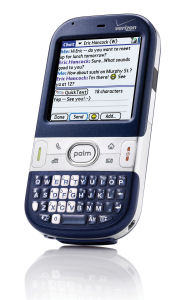
    Palm CentroAs rumors swirl around the latest chapter in Palm Inc.’s checkered journey from mobile darling to also-ran, I’ll resist the urge to place bets on which company or companies will be making an acquisition play. It almost doesn’t matter who buys Palm at this point. What matters is what that buyer does with Palm afterward, and how any acquisition would affect that company’s existing mobile strategy.

    For quite some time, it’s been obvious to everyone but Palm that it would eventually need a white knight. Palm seems to have finally clued in, as Bloomberg is now reporting that the mobile device vendor has engaged Goldman Sachs and Qatalyst Partners to find a buyer.

    I need a hero

    Although I’ve been predicting this for a while, I admit feeling more than a little sad that the end of Palm’s road is within sight. This is, after all, the plucky outfit that popularized the personal digital assistant, and had geeks everywhere taking notes in Graffiti. Unfortunately, Palm went from leader to follower when we ditched standalone PDAs for connected smartphones. Sure, the Treo 600 was a great piece of work, but after hawking essentially the same product for over six years — a long time in any business, but a hopeless eternity in tech — Palm was clearly yesterday’s news.

    This latest twist in the company’s history is a stark lesson for anyone else in tech: Take your eye off the ball once, and you risk eventually losing the game.

    PalmPalm did itself no favors by continually, and seemingly endlessly, remaking itself with spinoffs, rebrandings, acquisitions, and restructurings. The company spent so much time on its corporate image that it forgot its product image. Remaking Palm Inc. rather than Palm products diverted corporate attention from rebuilding the foundation of products that, ironically, could have sustained the image of Palm Inc., or PalmSource, or PalmOne, or whatever. Developing compelling new products that consumers and businesses wanted, and building relationships with the broader stakeholders who would have added ongoing value to those products, should have been PalmOne’s job #1.

    All the corporate gymnastics also distracted Palm from the not-so-subtle shifts that were redefining the industry it had practically created. Specifically, as platform success became ever more dependent on factors way beyond just hardware, Palm continued to bet the farm on just hardware. Instead, it should have been investing in building a community of developers who would have made a webOS-based device worth more than the sum of its parts.

    Carmi Levy Wide Angle Zoom (v.2)Great hardware. Not-so-great everything else.

    The Pre, introduced at CES 2009, was a technological home run. Its just-unique-enough design and slick webOS operating system should have been enough to get consumers out of bed in the middle of the night, and lined up around the block before dawn. And indeed, there were some developers who started lining up at the front of the queue; trouble was, Palm didn’t send anyone over to that line to start selling tickets. It assumed developers who either created the first vibrant mobile software market years earlier, or at least remembered Palm OS’ success, would naturally return to the fold. Unfortunately, Palm left its legacy products in market for so long that by the time the new stuff was ready, the developers had migrated elsewhere.

    Palm’s problem was, and is, apps. Back in the era before Internet distribution, the old Palm OS platform boasted a library of over 4,000 third-party applications. By comparison, the Palm Pre launched with barely a dozen-and-a-half third-party apps, at a time when Apple was rewriting the criteria for mobile platform success. When the Pre was announced, Apple’s App Store had 15,000 titles. By June, when the Pre began to ship, Apple boasted 50,000 titles. Today, it’s up to 185,000 with no end in sight.

    Palm? It’s just cracked a thousand titles.

    Not that I believe that total app volume is the ultimate driver of platform success. It isn’t. Apple’s App Store is home to plenty of frivolous titles that aren’t even worth a chuckle or two around the office water cooler. A smaller number of more substantive apps could just as easily sustain a healthy and vibrant smartphone platform. But image is a big thing in the minds of developers whose futures depend on which platform they’re most associated with.

    Just ask anyone today who’s known in the coding community as the iPhone developer who builds apps for webOS. You’ve seen the good kids in high school who just can’t get the more popular ones to notice them because, although they wear the right clothes, they signed up for chess club rather than track. Well, good developers can’t get noticed in any field when they’re associated with a single platform that lacks traction. Palm’s App Catalog never had a chance, because the only developers willing to risk everything on the once-and-no-future king were die-hards. Everyone else settled on developing for the sure-thing iPhone or, increasingly, Android.

    Look beyond the buyout

    Whoever acquires Palm (press rumors mention HTC, Lenovo, Dell, and even Apple and Microsoft) will gain access to not only a fairly leading-edge set of hardware designs and a promising mobile OS, but also a broad range of patents and related intellectual property.

    The key to success for that suitor will be to avoid sinking new resources into designing and releasing yet another brand new, killer phone. Palm did not fail on the hardware or OS side — its offerings are already as good as they get. Instead of putting its eggs into hardware development, Palm’s suitor would do well to actively target developers now grappling with Apple’s our-way-or-no-way approach, or Google’s fragmented-landscape mentality. Successful as these solutions are, they’re not perfect — and more importantly, neither is an ideal fit for every developer.

    There’s room for an alternative player in the still-fast-growing mobile landscape. Developers continue to hold out hope for a successful mobile platform sustained by a company that understands the way they do business, rather than building up self-sustaining provisos in its developers’ contracts. Hope is a powerful ingredient. Used well, it can produce something new and better called loyalty. But it won’t do that on its own.

    Carmi Levy is a Canadian-based independent technology analyst and journalist still trying to live down his past life leading help desks and managing projects for large financial services organizations. He comments extensively in a wide range of media, and works closely with clients to help them leverage technology and social media tools and processes to drive their business.

    Copyright Betanews, Inc. 2010


    Add to digg
    Add to Google
    Add to Slashdot
    Add to Twitter
    Add to del.icio.us
    Add to Facebook
    Add to Technorati


  • The true cost of iAd

    By Carmi Levy, Betanews

    Despite all the buzz this week that the upcoming major update to the iPhone/iPod touch/iPad operating system was all about multitasking and APIs, the real story was iAd. Although multitasking-deprived Apple fans haven’t been holding their breath for almost three years waiting for an advertising framework, the new mobile ad network is infinitely more significant to the future of the platform than the ability to run more than one app at a time.

    In many respects, iAd is nothing short of a full frontal assault on Google. While Google’s model for generating ad revenue from activity-linked behaviors has rewritten the rules of advertising over much of the past decade, the path for the mobile market has not been as linear. Desktops and laptops have more than enough bandwidth and screen real estate to easily accommodate subtle text-based ads (or not-so-subtle dancing-cow banners) without significantly disrupting the end user experience. Indeed, many users can become so engaged in a given service — search, mail, productivity, mapping, whatever — that they virtually ignore the presence of ad-containing boxes toward the edge of the screen. Even if they’re aware of them, the delivery paradigm on a traditional desktop, evolved in recent years to a ruthless level of efficiency, is largely responsible for Google’s meteoric corporate rise.

    The desktop ad paradigm isn’t portable

    What works on a large screen that we often stare at for hours during the course of a typical workday doesn’t necessarily work on a much smaller screen that we glance at quickly as we rush from one meeting to the next. On smartphones, there isn’t enough room or time for end users to consume ads the Google way. So the industry’s inability to date to concoct a formula that works now gives Apple just enough of a window of opportunity for its own formula — namely, in-app ads.

    Like everything in the Apple universe, however, this new capability comes with a cost.

    But because I’m an optimist, I’ll focus first on the good stuff. Developers will love iAd because it addresses a few of the key issues that have made coding for the iPhone something of a thankless process for many. Coders must first navigate an approval process that is still less transparent than it needs to be, and that consequently results in some submissions spending weeks or months in approval limbo. Once approved, their titles must fight for attention amid a vast, fast-growing sea of competing apps. The pricing model doesn’t do them any favors, either, as average selling prices have dropped significantly since the days of packaged software.

    Giving developers the newfound ability to continue to make money via their apps, while also moving beyond the sell-once revenue model that’s so long defined the industry, is a sea change that could give developers additional reasons to stick with Apple, while resisting the lure of up-and-coming competitors like Google’s Android.

    Carmi Levy Wide Angle Zoom (v.2)There’s a downside, too

    Not everything is perfect in iAd-land, however. If developers are happy that they’ve got new opportunities to make money, then end users must certainly be dreading yet another incursion of advertising into yet another aspect of their lives.

    Although advertisers in recent years have found ever more creative places to plaster their messages in the real world — on police cruisers, on the back of subway tickets and even atop urinals in public washrooms — nothing approaches the aggressiveness with which they’ve invaded the online world. Ordinary Web pages become riots of Whack-a-Mole, as end users try to squash unwanted and unwelcome pop-ups. Advertisers use non-standard interfaces to keep the ads displayed for a precious extra few seconds before the elusive close box can be found and clicked on. Workflow grounds to a halt as ever more intrusive ad delivery mechanisms take over what used to be pristine online ground.

    What’s annoying to the average end user on a 23-inch screen is infinitely worse on a smartphone. Not everyone has an unlimited data plan. For those who do not, the prospect of multitasking applications seamlessly sucking up bandwidth to fill the in-app advertising pipeline is frightening. For mobile users who’ve become accustomed to lightening their data load while on the go, they now face the prospect of data overages to support ads they never asked for and never wanted.

    Even if they are on an unlimited plan, the annoyance factor is potentially much higher because all that background ad-related data transfer takes bandwidth away from the stuff folks are trying to get done, like messaging, mapping, and searching. Thanks to the newly-multitasking-capable iPhone OS v4.0, it’s entirely conceivable that a few apps pulling down ad content could easily saturate one’s wireless connection. Think about everyone complaining about 3G coverage in urban areas today. Now multiply the problem by 4.

    Who owns your data now?

    In-app advertising also opens up a veritable Pandora’s Box of privacy issues, specifically around how developers will use location- and user-based knowledge to tailor what’s delivered. Since the process, delivered within the context of a given application, is one level removed from the operating system, who’s accountable for the inevitable privacy concerns that will erupt when a misbehaving developer configures a misbehaving app to cross a privacy/confidentiality line or two? I see a lot of finger-pointing between Apple and developers when the first headlines begin to filter out, as well as a lot of nervous iPhone owners wondering, just who has access now to the trove of supposedly private data in their pockets, and what do they intend to do with it?

    I don’t begrudge Apple’s desire to level the mobile advertising playing field and use its iPhone-related successes to date to give it a leg up in its quest to join Google as a Web services powerhouse. Advertising pays the freight for a growing range of online services, and it would be naïve to assume smartphones won’t eventually become advertising platforms in their own right.

    But in rushing toward a monetized mobile future and going for Google’s jugular, Apple needs to ensure it doesn’t damage the cherished end user experiences that got it to its current market position in the first place. The iAd platform will succeed or fail depending on how finely Apple can balance the competing needs of its often divergent stakeholders.

    Carmi Levy is a Canadian-based independent technology analyst and journalist still trying to live down his past life leading help desks and managing projects for large financial services organizations. He comments extensively in a wide range of media, and works closely with clients to help them leverage technology and social media tools and processes to drive their business.

    Copyright Betanews, Inc. 2010


    Add to digg
    Add to Google
    Add to Slashdot
    Add to Twitter
    Add to del.icio.us
    Add to Facebook
    Add to Technorati


  • A bill too far: With iPad, AT&T attempts a triple-dip

    By Carmi Levy, Betanews

    Do you ever get the impression your wallet is being relentlessly sucked dry? Or that consumers are being expected to pay for an ever growing list of subscription-based services that, in a less profit-mad world, would likely be free?

    Apple’s gotten quite enough publicity from me and my colleagues over the last little while. So while I hate to harp on the iPad yet again this week, I can’t let go of the fact that this particular introduction represents yet another step toward the deepening fiscal enslavement of consumers.

    Information never wanted to be free

    As an example, let’s consider the price we pay to connect to the Internet. In the very beginning, we dialed the Internet by phone on a 1200 baud connection. (Anyone remember Telenet? Paying by the minute?) A long time later, in the Mosaic era, outside of community-funded Freenets or gamey-looking PCs at the local library, we paid ISPs to go online. Cost-per-minute rate plans soon gave way to unlimited access, of course, but we were still paying every month for the privilege of sucking the Internet through the data equivalent of a straw. Information superhighway, my eye.

    Soon enough, DSL and cable-based high-speed connectivity shoved dial-up to the side, but that monthly subscription of around $20 to $30 nearly doubled in most cases. For some consumers, ISPs added insult to injury by charging extra for modem rental; in some European countries, governments charged license fees for using modems.

    As the world mobilized and cell phones became mainstream consumer offerings, our monthly budgets made room for yet another bill. As cell phones morphed into smartphones, the voice-only invoice became a voice-and-data plan. In many cases (mine included) we were paying two amounts to the same service provider/carrier to be online at home and on the go.

    Another device, another bill

    In its higher-end 3G form, Apple’s iPad threatens to add to the budgetary hurt by requiring yet another payment to access the very same Internet we’ve been paying for (twice) all along. Now, in fairness, we should thank AT&T for busting some of the old, consumer-unfriendly paradigms of the carrier biz. Its rate structure — $15 a month for 250 MB of data and $30 for unlimited — is a paradigm shift from the typically far more expensive smartphone-based plans. That it doesn’t require a contract is an even more radical change from the traditional lock-in strategy that’s hosed us all since this entire industry was first formed.

    So as much as I want to congratulate AT&T for dropping the price and making it easier for us to opt in and opt out whenever we choose, I still think it’s a crock. Thanks to Apple and its US carrier partner-in-crime, anyone who chooses to buy a 3G-capable iPad now faces a third monthly bill for the one Internet that his/her tax dollars funded oh-so-long-ago.

    Am I the only one who thinks we should be paying once no matter how we connect? It can’t be that radical a concept, can it?

    Carmi Levy Wide Angle Zoom (v.2)Like television before it

    In many respects, increasingly fee-based Internet access follows the broadcast television model. In the beginning, we picked signals out of the air for free. While the resulting experience was anything but home theater-like, it reflected the then-state-of-the-art, and was generally considered acceptable for its time. The arrival of cable distribution of those formerly free signals meant we no longer missed our favorite shows because an intense rainstorm blew the rooftop antenna out of alignment.

    The relentless march of cable/satellite bills has far outstripped the rate of inflation in both Canada and the US for the past decade. It has also given pause to consumers who have grown weary of getting their pockets picked at every turn. Keep in mind the public technically owns the frequencies over which radio and television have traditionally been broadcast.

    Fair is not free

    I’m not saying AT&T should suddenly offer its 3G service for iPads, smartphones, netbooks or any other device for free. I’m also not suggesting that a carrier that builds out separate infrastructure for terrestrial and mobile data access shouldn’t be able to define and manage separate revenue streams for each. Although we may not always have the most peaceful relationships with our carriers, we should show them a little love for choosing to do business in a very difficult sector. They make multi-billion-dollar bets on what technologies will be hot, and they deserve the opportunity to generate reasonable profits from those investments.

    The key words here are “fair,” “reasonable,” and “balanced.” Which is my politically correct way of saying that the profit motive should not be an excuse for companies to thinly slice nearly similar services, and then resell them to us as though they were unique. They are not, and despite the very different kinds of infrastructure that support terrestrial and mobile Internet users, at some point, pipes are pipes are pipes.

    We expect greater value

    If the still-with-us recession has taught us anything, it’s to question the value of the things we purchase and consume. And if we don’t feel we’re receiving value for our investment, the recession has further emboldened us to challenge the status quo and push for something better. AT&T’s iPad data pricing model may look like a great deal when compared to existing smartphone plans, but to an existing AT&T customer, it seems like an unnecessary cash grab. It’s entirely fair to ask why one customer can’t tap into one wireless account with more than one device, especially if at least one of those devices was purchased outright rather than with an up-front subsidy and a two- or three-year contract commitment.

    I know I’m likely screaming in the wind here. I get that entire business models of market-dominating carriers are based on prodding the same people to spend more and more for month after month. I get that shareholders love this kind of thing and will spank growth-driven companies if they deviate from this model.

    But the idealist in me likes to think that 2010 will be the year when the average consumer maxes out the average number of individual subscriptions for technology-related services, and that the amount we spend on things that should be either free, less expensive, or combined into simpler packages will ultimately begin to drop.

    In this context, paying once again for 3G service on an iPad could be the biggest sucker’s bet yet. Apple could end up changing the landscape again, only not in a way it had initially intended.

    Carmi Levy is a Canadian-based independent technology analyst and journalist still trying to live down his past life leading help desks and managing projects for large financial services organizations. He comments extensively in a wide range of media, and works closely with clients to help them leverage technology and social media tools and processes to drive their business.

    Copyright Betanews, Inc. 2010


    Add to digg
    Add to Google
    Add to Slashdot
    Add to Twitter
    Add to del.icio.us
    Add to Facebook
    Add to Technorati


  • RIM approaches the edge: BlackBerry needs a reboot, fast

    By Carmi Levy, Betanews

    Is the BlackBerry beginning to go bad?

    It’s becoming increasingly difficult to ignore the rising volume of speculation that the smartphone that started the smartphone revolution may be moving into a bit of a middle-aged funk. The share price of BlackBerry maker Research In Motion took a hit Thursday after the company reported lower-than-expected earnings for the last quarter. Although bottom line revenue rose by 37% and the company added 4.9 million subscribers globally, the numbers failed to meet expectations and spawned growing concern that RIM’s best days may be behind it.

    The famously secretive company will understandably not admit anything is amiss. But I’m not famously secretive, so here goes: The BlackBerry platform is under increasing threat from newer and, frankly, more exciting offerings from Apple and Google and its partners. I’ll admit I’m a little biased here. As a Canadian who lives barely an hour’s drive away from RIM’s global headquarters in Waterloo, Ontario, I feel more than a little sadness that this national icon, long the symbol of can-do Canuck tech, is under threat.

    Although Palm purists who still worship at the altar of Treo will forever claim the fallen PDA maker brought the first successful smartphone to market (three word to Palmies: Get over it), it was RIM’s BlackBerry that started the on-the-go-e-mail revolution just over a decade ago. Its platform was, and still is, robust enough for businesses to buy in aggressively, and indeed enterprise support remains a key pillar of RIM’s success. Companies love their Berrys because they continue to offer the kind of iron-clad-secure messaging that no other device, vendor, or platform can touch.

    A very different context

    If only the world hadn’t changed around RIM in the interim. If the story were still about messaging, RIM’s dominant market share wouldn’t be eroding, and Apple’s iPhone wouldn’t be threatening to take over the crown. Unfortunately for RIM, messaging is no longer the only criteria for enterprises or, increasingly and especially, consumers. No matter who’s doing the buying, applications now drive the smartphone agenda.

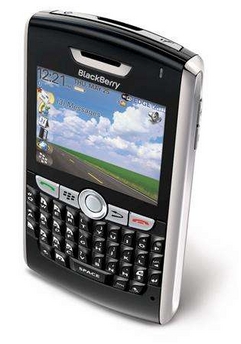
    BlackBerry 8820And it’s here where RIM continues to get its clock cleaned.

    Apple’s 150,000-and-growing iPhone apps will be soon joined by a similarly fast-expanding group of iPad titles. Google’s Android Market just topped 30,000 apps and will continue to grow, thanks to strong vendor/carrier partnerships and extensive marketing. BlackBerry App World was late to the party, launching a year ago, and has struggled to get to less than 3,000 titles. Marketing, inconsistent at the best of times, is virtually invisible now.

    In fairness to RIM, sheer numbers aren’t as meaningful as Apple and Google would have us believe. No one could possibly download and use every last app. Apple’s huge numbers are bolstered by the kind of silly titles — often related to sometimes-embarrassing bodily functions, the consumption of beer, and simulated animal sounds — that add little value beyond party conversation. And like the mega-supermarket with so much choice that the average consumer spends twice as much time wandering the aisles before giving up in frustration, there’s such thing as too much choice.

    But to consumers who are rapidly taking over from enterprises as those who define the mobile agenda, none of this matters. All they know from the figures is that Apple and Google are hot, RIM is not, and they’ll be bypassing the BlackBerry the next time they head into the store for an upgrade.

    Carmi Levy Wide Angle Zoom (v.2)RIM has faced adversity before. In 2006, as consumer interest in smartphones grew, the company introduced the Pearl and, in doing so, began a successful extension of the formerly sober enterprise-only brand into the consumer space. Though more than half of all BlackBerry devices are now purchased by consumers, their basic design remains tied to legacy hardware and software. If the Pearl was good enough for mainstream consumer adoption in 2006, its still-similar descendents are woefully outclassed by competing designs now on the market. The world moved on, but the BlackBerry seemingly did not. To close the gap, here’s what RIM needs to do:

    • Ditch its legacy operating system. The BlackBerry OS has evolved mightily to support a full range of services never envisioned a decade ago. But like a 1962 Volkswagen Beetle with a bigger engine, wheels, and brakes, the underlying architecture just can’t keep up. And, no, v5.0 of the OS won’t cut it. It’s an evolution, whereas RIM needs a revolution.
    • Toss the damn browser. Now. The BlackBerry’s built-in browser is, hands down, the worst piece of mobile code. Ever. RIM bought Torch Mobile last year to supposedly fix the problem. Time’s up. Deliver something now, because the longer it takes, the more frustrated subscribers become.
    • Focus on developers. BlackBerry’s development environment gives programmers grey hair. While competitors invest resources in making life easier for coders, RIM admits it still has a ways to go in this area. The company must bet the farm on rebuilding its developer ecosystem.
    • Go multitouch. We all know the Storm, RIM’s first touchscreen device, was an unmitigated disaster; and the Storm2, while better, failed to erase our collective memory. A new OS should clear the decks for hardware designs more akin to 2010 instead of 2000.
    • Skip a generation. With the market focused on fleshing out 3G offerings, RIM should be pedal-to-the-metal on a 4G BlackBerry. On second thought, not a 4G BlackBerry. But an entire line of 4G BlackBerrys. Across-the-board availability will leapfrog RIM back into the position of market leader. Right now, it’s just following.
    • Hug your carriers. In Verizon’s eyes, RIM could once do no wrong. The carrier’s retail outlets brimmed with gleaming BlackBerry devices right at the front of the store. Not anymore. Now, it’s an all-Android shop, with RIM relegated to the dusty corners. Apple and, now, Google have proven the value of strong, deep carrier partnerships. It’s time for RIM to stop relying on its legacy market position and aggressively court carrier/partners. They are, after all, the key to RIM’s future.

    RIM was once the lean, mean driver of the then-nascent smartphone market. It set the agenda and helped businesses and consumers alike understand the value proposition of these then-new devices. These days, it’s a follower, and its momentum won’t last forever. Nothing short of a radical rethink will change its current trajectory.

    Carmi Levy is a Canadian-based independent technology analyst and journalist still trying to live down his past life leading help desks and managing projects for large financial services organizations. He comments extensively in a wide range of media, and works closely with clients to help them leverage technology and social media tools and processes to drive their business.

    Copyright Betanews, Inc. 2010


    Add to digg
    Add to Google
    Add to Slashdot
    Add to Twitter
    Add to del.icio.us
    Add to Facebook
    Add to Technorati


  • Let’s keep the iPad in proper perspective

    By Carmi Levy, Betanews

    Can you vehemently disagree with a colleague and still respect him? Despite the often passionate claims of our readers and commenters, who may have forgotten the era of Siskel & Ebert, I believe you can.

    I’m as much a fan of a vigorous debate as anyone else. In my previous column last Thursday, Enough with the Apple bashing!, I apparently stepped on the baby toe of fellow Betanews contributor, Joe Wilcox. As scathing as his response — entitled Of course media bias favors Apple — was, I assure you I’ve got pretty thick skin.

    In the interest of open discussion — and because I was always taught to finish what I started — I’d like a chance to address some of Joe’s contentions:

    If no one cared about early sales figures, why were there so many blog posts or news stories about them?

    Popularity has nothing to do with precision, Joe. A lot of people wrote about Tiger Woods and his mistresses, too. Does that mean they all really cared about Tiger? Or did they simply want a titillating bit of trivia before they headed into work? Bloggers can ruminate about iPad pre-sales figures until they’re blue in the face, but it’ll be much ado about nothing. The only thing that matters is months from now. And when a large enough installed base results in a large enough market for advertisers to take notice, the first few days of pre-order stats won’t matter in the least.

    Ongoing rumors about iPad have helped lift Apple’s share price into the stratosphere. Investors have every reason to talk up Apple.

    Joe gives the iPad way too much credit. Last I checked, Apple sold a number of other significantly powerful product lines, including the Mac, iPhone, and iPod, all of which contribute mightily to the company’s revenue and, consequently, its stock value. As the iPhone closes in on its third birthday, it continues to expand its market share and generate rivers of cash for both Apple and its carrier-partners worldwide. Investors don’t have to make up good-news stories about the iPad when they can pick and choose from Apple’s existing products. Quarter after quarter of consistent top and bottom line revenue growth, not quick-hit new product rumors, are driving the long-term share price growth.

    [$200,000 is] a surprising amount to spend per ad on an untried new media platform with arguably low initial distribution.

    Carmi Levy Wide Angle Zoom (v.2)Desperate times spawn desperate measures. Publications like Time which, as Joe notes, has gotten major advertisers like Unilever, Toyota Motor, and Fidelity Investments to pony up the equivalent of a small condo in Indianapolis for a single ad in each of the first eight issues of Time‘s iPad edition — have no choice. Dead-tree editions of magazines and newspapers are in circulation freefall. Advertisers, suddenly awakened to the reality of an increasingly fractured, online-centric audience, are now demanding alternative means of connecting with readers. The iPad represents one possible swing-for-the-fences channel to accomplish just that. I’d worry if magazines like Time weren’t making big-time bets on the iPad. This is not a time for the publishing industry to be timid, and the hype surrounding the iPad platform could be just what this dinosaur sector needs to survive.

    Clearly some media companies and Wall Street analysts have drunk the Kool-Aid, given their seemingly unquestioning faith in the unproven iPad.

    See above. Media outfits have no choice. Either they evolve or they die, and the iPad holds a better-than-even promise of building a new form of paperless, value-added publishing industry. See “iPod” for an earlier example of a similar renaissance for the music business. As far as Wall Street analysts are concerned, no one really cares if that business dies.

    There’s reality distortion if the product is less than what the marketing makes it seem; same can be said when bloggers, journalists, media companies and their advertisers or Wall Street analysts are so positive about a product that’s unproven and not even released.

    Track record counts for a whole lot here. We can cut Apple some slack because of its relatively high percentage of successful products throughout its history. Other companies that have spent years in purgatory may not get as much free rein. When Palm, for example, released the Pre and its related webOS operating system last year, an enthusiastic response by media, analysts, and consumers to an obviously slick piece of technology was tempered somewhat by doubts about Palm’s ability to rise above nearly a decade of organizational and product mediocrity. A so-called unproven product from a company that’s proven repeatedly that it can deliver deserves a fair shake more than an unproven product from a company with a track record for failure. Palm’s results since then prove we were all right.

    Do you own a Mac or iPhone? Do you invest in Apple? Did you preorder iPad or plan to buy one next week?

    I’ve got two Macs in the house, and they coexist happily with an HP laptop, a Samsung netbook, and a couple of white-box desktops, all running various flavors of Windows. I hold no investments in Apple, and I’ll buy an iPad when Apple builds a memory card slot into a future version. Otherwise, it’s useless to me when I’m doing photography on the road. Like all consumers, I decide what to buy based on how well the feature set fits my current and projected needs. As you can see, Apple doesn’t win every battle.

    I suspect Joe and I will agree to disagree on this and many other issues, and I welcome future skirmishes on whatever issues get under our respective skin. Whether or not we drink the Apple Kool-Aid or Fanta or Crystal Light, or we believe Steve Jobs is the modern-day equivalent of a consumerist Messiah, or we plunk down our hard-earned cash on a yet-to-be-seen-or-proven iPad, I consider both of us lucky to have the opportunity to duke it out in such a public forum.

    Carmi Levy is a Canadian-based independent technology analyst and journalist still trying to live down his past life leading help desks and managing projects for large financial services organizations. He comments extensively in a wide range of media, and works closely with clients to help them leverage technology and social media tools and processes to drive their business.

    Copyright Betanews, Inc. 2010


    Add to digg
    Add to Google
    Add to Slashdot
    Add to Twitter
    Add to del.icio.us
    Add to Facebook
    Add to Technorati


  • Enough with the Apple bashing!

    By Carmi Levy, Betanews

    As the hype machine for iPad availability revs up into overdrive (and, in some cases, tacks on afterburners), in a desperate effort to restore balance to the universe — or, in some people’s lives, what passes for a universe — backlash against Apple increases to compensate. I’m thinking it’s getting more than a little ridiculous to demonize a company because it’s managed to succeed where others have failed.

    I’m thinking it’s time to stop the silliness.

    Ever since Apple’s return from the dead began about 13 years ago, it’s become almost de rigeur to criticize it for being overly secretive, cultish, and obsessive. Apple-friendly consumers are dismissed as “fanboys” having drunk the Kool-Aid (a phrase Jerry Pournelle now probably wishes he’d never have coined). CEO Steve Jobs is accused of using his “Reality Distortion Field” to get customers to buy Apple products without asking so much as a single question.

    Some opposition is well-deserved

    I can appreciate where some of the opposition comes from. Apple is, after all, not the world’s easiest company to deal with. It often seems to act in its own best interests and to the detriment of many of its stakeholders — something iPhone developers appreciate all too well. Apple’s behavior, as befits its position as the leading consumer electronics vendor of our time, isn’t always as nice as it could be. Companies that choose to build their business models around Apple’s platforms — especially the iPhone/iPod touch/iPad — must first come to terms with the cold reality that Apple may taketh away as quickly as it giveth. They know the risks going in, and they steel themselves for a rough ride as a result.

    This is the price that stakeholders pay for being part of a vibrant market. If they want something a little warmer and fuzzier, I’m sure lesser islands of sanctuary like Nokia would be more than happy to coddle them a little. Unfortunately, all the coddling in the world won’t ever make up for the fact that there’s a lot more money to be made in Apple’s App Store than Nokia’s Ovi.

    What I can’t appreciate is the deep-rooted nastiness expressed by some who insist on remaining opposed to Apple’s products or its way of doing business, on principle alone. To a certain degree, our complex allegiances to the tech companies that increasingly define the tools of our modern lives naturally lend themselves to polarized opinions and passionate clashes. In a simpler age, Chevy and Dodge aficionados would duke it out at the drag strip before declaring a victor, shaking hands, and going home. The tech industry, unfortunately, doesn’t seem to shake hands much. More often than not, the high-spiritedness of the community tends to descend to mean-spiritedness almost as soon as the first article has been published.

    Aside from being more than a little distasteful, the breakdown also clouds the core issues of whether or not a given product has value. We spend so much time flinging barbs back and forth that we forget that there may, perhaps, possibly, be something about the product that’s worth appreciating.

    It saddens me that a company can’t succeed without being slammed for being successful. It saddens me that the industry as a whole can’t seem to shake this knee-jerk, childlike behaviour. It saddens me that regular business folks, of the genus homo sapiens, observing us from behind the glass wall, conclude no one in the tech sector ever graduated beyond lame teenaged insults and put-downs. Sometimes I wish we could simply congratulate Apple for succeeding where others have failed, critique the company for its rough edges, and then move on.

    Carmi Levy Wide Angle Zoom (v.2)The conspiracy to invent a conspiracy

    So, to set the record straight, from where I sit, the media are not biased toward Apple. While there will always be those who lean one way or the other, there is no industry-wide conspiracy to paint Apple in a favorable light.

    While I’m still on the conspiracy thing: No one has it in for wannabe-competitors, either. We’d all love to see countless worthy iPad competitors, and can’t wait for other vendors to bring their offerings to market. The demand for something different has been obvious to us all since the very first tablet-like machines were demonstrated two decades ago. It’s a category that’s generated countless waves of unfulfilled hype since then, so forgive us all if we cut Apple some slack now that it has apparently cracked a very long-standing and stubborn nut. If it hadn’t been Apple, the industry would still have gone a little giddy.

    Detractors of all things Apple point to initial iPad sales figures as evidence that something is amiss. They claim supporters are manipulating the stats to depict Apple favorably. First off, no one cares about initial sales figures. They may fill editorial space on a slow news day, but they don’t say much about a given device’s long-term chances. Call me in three months and let me know how the thing is selling. Until then, trying to count a couple of days worth of sales is a patently useless exercise that proves nothing beyond the fact that some people have lots of free time on their hands.

    Success makes you a target

    In an age marked by endless waves of start-ups that are forgotten before anyone has a chance to remember them, the few companies that forge their own path to domination often become targets. In that regard, Apple is no different than IBM, Microsoft and, more recently, Google. If success is its own reward, it is also a prime motivator of the kind of mean-spiritedness that long ago might have been classified as sour grapes. It’s high time we raised the level of discourse and rediscovered the basic principles every consumer values: Namely, does the product or service being discussed meet a given need at a given price at a given point in time? Does it do so more effectively than competing offerings? Will you buy it? Did you buy it?

    Like it or not, Apple has taught itself well over the last 13 years. It reads consumers better than any other market competitor and, as a result, is able to generate levels of interest and buying activity that others can only dream about. It has learned to efficiently and effectively market itself, using processes that are rewriting the marketing zeitgeist. It succeeds where others have failed because it learns from the mistakes of others. Apple is the quintessential business success story, and we’d all do well to learn from its experience.

    We’d all do well to learn from something, anyway.

    Carmi Levy is a Canadian-based independent technology analyst and journalist still trying to live down his past life leading help desks and managing projects for large financial services organizations. He comments extensively in a wide range of media, and works closely with clients to help them leverage technology and social media tools and processes to drive their business.

    Copyright Betanews, Inc. 2010


    Add to digg
    Add to Google
    Add to Slashdot
    Add to Twitter
    Add to del.icio.us
    Add to Facebook
    Add to Technorati