Author: Chelsea H

  • Teaching Number Sense and Counting in Kindergarten

    Introduction:

    Students in Kindergarten are just getting a sense of number and counting and are motivated to count everywhere they go. Virginia SOL K. 2 deals with multiple ways of thinking about and representing numbers. For this SOL, when given a set containing 15 or fewer concrete objects, students will tell how many are in a set by counting orally, write the numeral to tell how many are in a set, and select the corresponding numeral from a given set of numerals. Students will  develop number sense through verbalizing numbers in order and connecting them to counting experiences, kinesthetic experiences involving writing number names and numerals, and practice with conservation and one-on-one correspondence.  The following are a set of book and online resources to teach number sense in a Kindergarten or First Grade classroom:

     Literature Connections:
    annos_counting_book.jpg

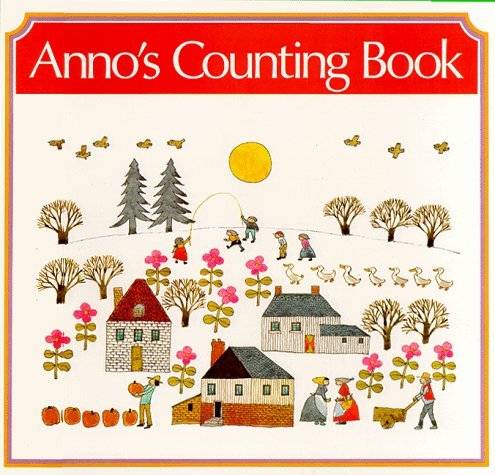
     Anno’s Counting Book introduces counting and number systems 0-12 by showing mathematical relationships in nature. Each page contains the written numeral, the number represented in unifix cubes, and the number represented pictorially in various ways. For example: Page “2″ includes the numeral, the number represented in unifix cubes, 2 children, 2 buildings, 2 cars, 2 dogs, and 2 trees.
    count.jpg

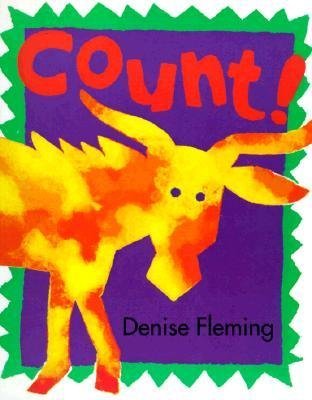
    Count! by Denise Fleming depicts the lively antics of colorful animals as they present the numbers 1-10, 20, 30, 40, and 50. This book can be used as an interactive guide for students as they wiggle with 7 worms, stretch with 5 giraffes, and leap with 40 frogs.

    cheerios-counting-book.jpg

    The text and illustrations of the familiar “O” shaped cereal will help students count from 0 to 20 and add groups of 10. Students can read and count along with the story of follow along by manipulating their own set of Cheerios. Cheerios are represented in easy, countable groups up to 90 and includes text which stresses counting groups of 10 to determine higher number values. 
    counting-crocodiles.jpg

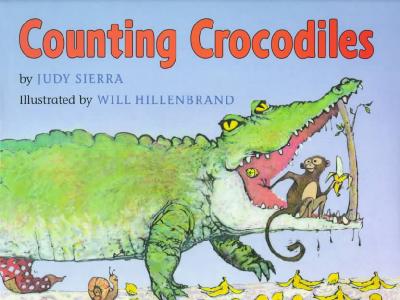
    Counting Crocodiles is a story based on an old African tale where a clever monkey uses her ability to count to outsmart hungry crocodiles and find her way off of a deserted island. This rhyming adventure follows the monkey and her friends as they count from 1-10 forwards and backwards in order to get to across the ocean and back with an armful of bananas.

    9780613363631.jpg

    Perfect for counting aloud as a group or for students working individually, no words are needed in this wonderful counting book by Teri Sloat. Join students from all over the world in counting 1-10 and by 10’s to 100. Each themed page includes a numeral, and various objects which can be counted in each picture. For example: page “6″ has the numeral represented in haystacks, 6 chicks, 6 eggs, 6 plants, 6 spiders, and 6 feed pails.

    Web Connections:

    This interactive teaching model provided by Houghton Mifflin Math for Kids involves an interactive tutorial about counting, representing, and recognizing numbers 0-31. In this teaching model, students will listen to prompts in order to learn about concepts and to practice using ten-frames, one-to-one correspondence, and manipulatives such as unifix cubes to represent numbers from 0-31.

    This counting game with one of children’s most beloved characters involves students counting a set of items (numbers 1-10) and selecting the corresponding numeral from a set of answers.  Students will get practice in conservation, representing numbers and numerals, and estimating while having fun and helping Bob the Builder and his friend Sprout fix things around the town.

      This counting game provided by AOL kids, allows students to use numeral and vocal cues to count out the correct number of ants and place them in order on a leaf for counting. Students will love using the whistle to call the ants to order and place them on a line in time for inspection.

    This amazing site provided by ABC, links to 15 different interactive games and activities that teach students about counting and number sense. Game 1 involves separating sheep into two equal groups in two separate pens allowing students to practice counting up and down from numbers greater than 10.  Game 3 involves counting items in a picture and writing the corresponding numeral.  Game 5 involves placing a certain number of objects under the corresponding numeral. Game 6 involves matching a numeral to the written number. Game 7 involves using a 10 frame to count to values greater than 5. Game 11 involves counting one more or one less than a number without starting from 0. Other games include number sense activities involving ordinal and cardinal position, classifying sets, and sorting.

    This interactive guide provided by Bornthinker allows students to see and follow along as the guide shows how to write numbers and numerals from 0-15. This website is a great resource for kids struggling in writing numbers and numerals correctly and to help students refine their fine motor skills through kinesthetic experiences.

     Additional Resources:

    This website provided by mathdrills.com is a great resource for teachers and includes free printable number sense worksheets in pdf form. Worksheets include blank and “counting by..” hundreds charts, number lines to values up to 125 by 1’s, 2’s, 5’s, 10’s, and 20’s, and place value charts for ones, tens, hundreds, thousands, etc.

    This website provided by Apples4theteacher.com includes counting flashcard printables for numbers 1-15 including pictures for counting and numeral representation in color and black-and-white flashcards.

    This website provided by A to Z teacher stuff includes fun and interesting counting lesson plans and activities for Kindergarten students including directions to make counting books, cheerio counting necklaces, M&M counting activities, and number songs and displays.

    This website provided by songsforteaching includes links to many songs that will help teachers in teaching early number concepts and skip-counting. Song topics include- counting to 100, skip-counting by 2’s, 5’s, and 10’s, concepts of greater than and less than, principles of basic addition and subtraction, and counting up and counting back. Each song includes lyrics and a clip of each song being sung.

    This 16 minute podcast includes basic principles which make up a good counting book and good counting book titles and suggestions.
  • Teaching Earth Science with Children’s Literature: Twisters and Other Terrible Storms

    51d65e1q3el.jpg 

    “In May, a twister tears through Texas. It picks up whole houses and smashed them into the ground. In August, a hurricane rages for three days in Florida. It destroys entire towns. In December, a blizzard covers most of Michigan in deep snow, trapping people in their homes for days. These terrible storms seem like nature gone wild. But their really just a natural part of our Earth’s weather.”


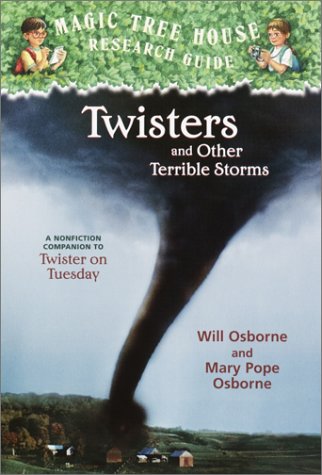
    Twisters and Other Terrible Storms is the nonfiction research guide companion of Mary Pope Osborne’s Magic Tree House book Twister on Tuesday. Used with this chapter book or on it’s own, this book is the perfect introduction to storms and weather for students of all ages. In this guide, join Jack and Annie as they learn all about weather, thunder storms, tornadoes, hurricanes, and blizzards.  Written in chapter book format and filled with real life pictures of storms and their affects as well as fun and interesting facts from the book’s heroes Jack and Annie, this book is perfect for students learning about weather and why it occurs.


    Brainy Jack gives students insight on topics such as how the atmosphere, air pressure, and sun affect and create storms as well as giving facts and information on clouds and the water cycle and how storms begin.  Jack also breaks down weather tools and what they measure and even gives a lesson on calculating the distance away storms are by listening to thunder and watching for lightening. Adventurous Annie really gets into what happens during a storm, safety tips, storm damage, and people who make a life studying and predicting storms like meteorologists and the exciting “storm chasers.”


    Curriculum Connections

    Great for any students, grades 2-5, this book is perfect for introducing storms or weather in the classroom. Younger students will learn all about weather and the wather cycle and may benefit best from read-alouds from important chapters. Although appropriate material for any students, older students will be able to learn material as a group or individually for the future storm chasers in your classroom. Older students will learn all about weather conditions and weather phenomena that occur and how they are predicted. Jack and Annie dedicate a whole chapter to describing weather measurement tools such as an anemeter, wind vane, rain gauge, barometer, hygromter, and thermometer and their purpose in measuring and predicting weather conditions (Virginia SOL 4.6). This non fiction guide will allow students to learn all about tornados, hurricanes, and blizzards through two classic children’s literature characters in a fun and interesting way.

    Additional Resources


    Sky Diary Kidstorm is a website for kids that focusses on tornados, lightning, hurricanes, and storm chasing and provides links, videos, pictures, and information. This site is a perfect companion for topics from the book.

    The “Weather Dude” Nick Walker is a meterologist who focuses on making weather facts accessible for students. Topics include clouds, water cycle, rain, snow, tornados, hurricanes, etc. Each topic includes information, common myths, links to songs or videos about each topic, and a study guide.


    Random House provides lesson ideas and activities for Twisters and Other Storms some from the author herself!

    Book: Twisters and Other Terrible Storms

    Author: Will and Mary Pope Osborne

    Publisher: Scholastic, Inc.
    Publication Date: 2003

    Pages: 120

    Grade Range: 2-5

    ISBN: 0-439-54016-x

  • Teaching Life Science with Children’s Literature: Animals Animals

    animalsanimals.png


    “Every insect(ant, fly, bee)

    Is divided into three:

    One head, one chest, one stomach part.

    Some have brains,

    All have a heart.” – Dorothy Aldis


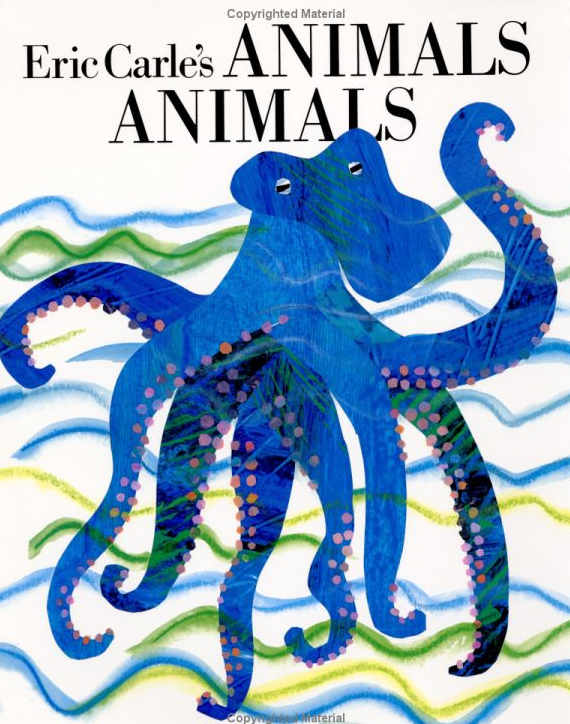
    Filled with full page illustrations by the famous writer/ illustrator Eric Carle and animal poems from famous names such as Shakespeare, Lewis Carroll, Rudyard Kipling, Emily Dickenson, and others, Animals Animals is the ultimate resource for elementary school teachers.  Some poems, geared towards younger audiences, are silly anecdotes on familiar animals such as Benjamin Franklin’s short poem The Butterfly:”What is a Butterfly? At best, he’s but a caterpillar fully dressed.”

    Others delve into some of the more exotic animals and behaviors such as Arnold Sundgaard’s poem The Duck Billed Platypus:


    “The duck billed platypus isn’t easy to imagine,
    of all the earthly creatures he is most unique,
    lays eggs like a bird but suckles like an animal,
    and swims like a fish at the bottom of the creek.”


    Each of these wonderful poems and illustration addresses different animals around the world both great and small, normal and unique, tame and wild, and silly and terrifying. Teacher’s will love using this book as an introduction to animals of all kinds or to use the animal index in the back to add to animal study one by one. Each subject is listed in alphabetical order in the back as well as by first line of each poem so you can always find just what you are looking for!


    Curriculum Connections

    As well as being a perfect introduction to poems and rhyme, Animals Animals is the ultimate teachers guide to animals, environment, life processes, and behaviors. Kindergarten and first grade students will learn about animals and their basic needs as well as certain physical characteristics which make each animal unique. Some of the characteristics discussed in various poems include body coverings, body shape, appendages, and method of movement (VA SOL K.6, 1.5). Older students through fourth grade will learn the difference between wild and tame, make a distinction between land and water dwelling animals, discuss the various methods animals have for finding and storing food and shelter, and learn how different animals raise their young (VA SOL 3.4).

    Additional Resources

    • Kinderart provides a fun and hands-on art activity in which students will research an animal and create an Eric Carle like tissue paper collage.
    • Enchanted Learning provides printable worksheets in which students can draw and compare two animals from Eric Carle’s story. Questions include comparing size, speed, color, and weight.
    • Proteacher provides a lesson plan in which students can use what they know about an animal to write an informational poems like authors from the book.

     General Information

    • Book:  Animals Animals

    • Arranged by/ Illustrated by:  Eric Carle

    • Publisher: Puffin Books

    • Publication Date:1989

    • Pages: 90

    • Grade range:  K to 3rd grade

    • ISBN:9780698118553

  • Teaching Physical Science with Children’s Literature: Amazing Magnets


    bba3810ae7a00f14d26ba110l_sl500_aa125_.jpg


    Introduction and Summary

    Have you ever held a magnet near a piece of metal? If you have, you may have felt a strange pulling force. A magnet is attracted to certain metals. It pulls toward them. Once it touches the metal, the magnet holds on. When you try to pull the magnet away, you feel an invisible force holding the magnet and the metal together. That invisible force is called magnetism.”

    Did you know that a shepherd named Magnes discovered the first magnetic rock? Or, that a magnet will stick to a can of tuna but not a can of soda? Did you know that scientists believe that the molecules making up iron, steel, nickel, and cobalt are really tiny magnets? Or, that magnets can lose their power if they get too hot?

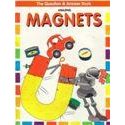
    Find out all this and more in Amazing Magnets by David Adler. Written in question and answer format, this book addresses some of the most puzzling questions students have about magnets in a fun and interesting way. With sections relating to discovery, metals, poles, practical uses, and electromagnetism, this book provides an in depth look at magnets and the principles of magnetism.

    Amazing Magnets also includes many fun experiments students can do in class using simple classroom materials. Experiments include testing magnetism in water, through cloth, and through paper. Other experiments involve using iron fillings to illustrate a magnetic field, testing poles in the classroom, and making their own compass.

    Curriculum Connections

     Filled with important facts and magnet vocabulary, this book  is perfect for 2nd grade students studying magnets and magnetism. At an independent level, this book would be better suited for 2nd grade and above but some sections are appropriate for K or 1st grade. Younger students will be able to determine that magnets push and pull objects that are metal and that magnets can move things without touching them (VA SOL K.3 and 1.3). 2nd grade students and above will be able to investigate differences between natural and artificial magnets, magnetism of metals and nonmetals, attraction and repulsion, the purpose of the polar ends, and where magnets come from and how to make them (VA SOL 2.2). Students will also get a glimpse at practical uses for magnets in their own homes and in important tools such as a compass.

    Additional Resources

    • These worksheets from the Educator’s Reference Desk follow along with 3 of the experiments from Amazing Magnets and allows students to document the steps to making their own magnets, classifying objects as magnetic or not, and how many objects one magnet can hold.
    • Magnets Millionaire Game from Quia directly relates to subjects from the book and the 2nd grade 2.2 Magnet VA SOL.
    • BBC Schools Lesson Plan- this lesson plan provides a link to videos on magnets and springs as well as a fun activity on the push and pull of magnetic poles.

    General Information

    Book:The Question and Answer Book: Amazing Magnets
    Author:David Adler
    Illustrator:Dan Lawler
    Publisher: Troll Associates
    Publisher Date: 1983
    Pages: 32
    Grade Range: 1st-4th
    ISBN: 0893758957

  • Teaching Process Skills with Children’s Literature: We’re Going on a Bear Hunt


    bear-hunt-cover.jpg


    Introduction and Summary

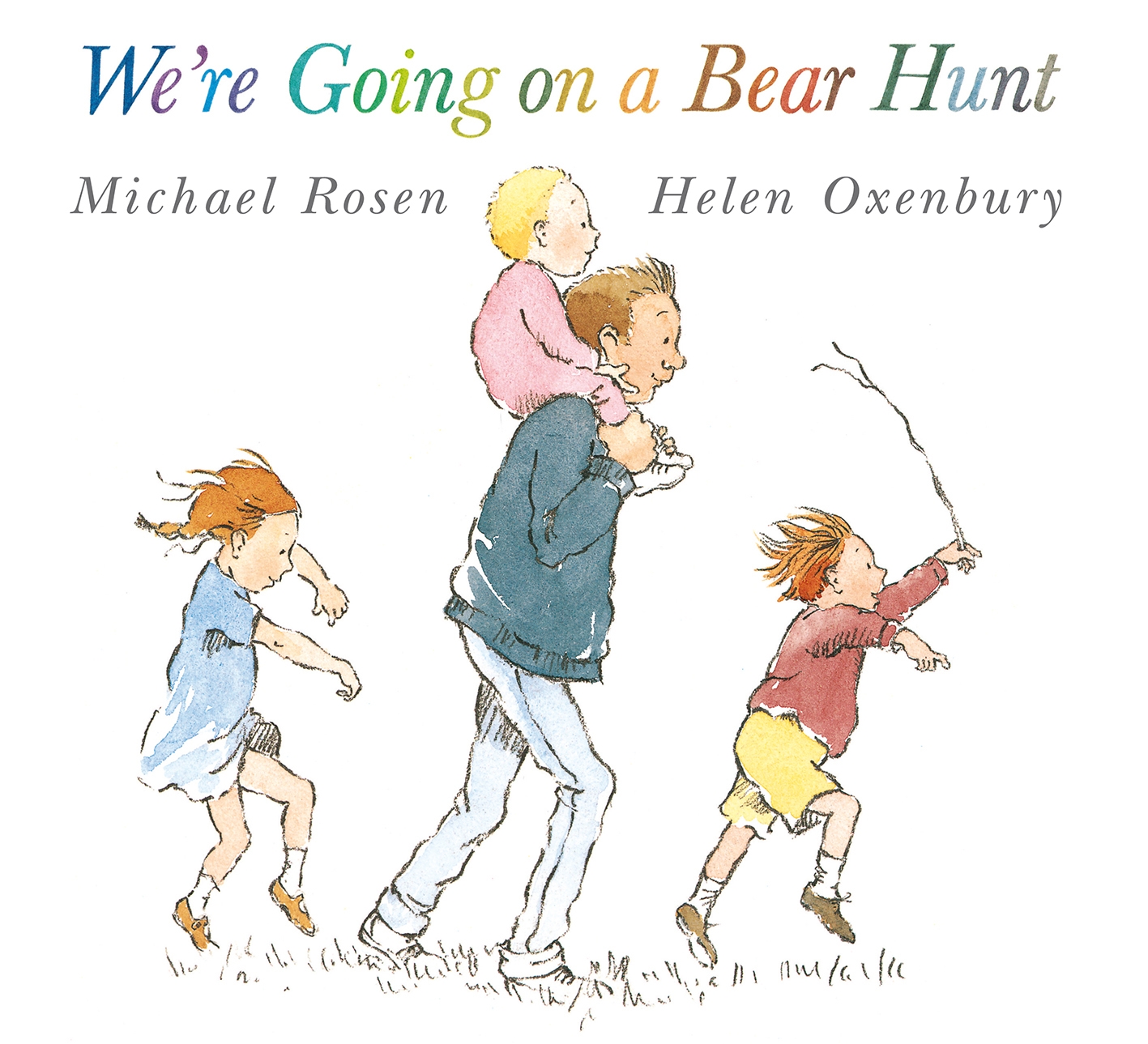
    With vivid color and black and white illustrations by Helen Oxenbury, We’re Going on a Bear Hunt by Michael Rosen, is the perfect read-aloud story for young students. Follow this adventurous family on their journey through the wilderness in search of a bear. On each page, the family encounters different obstacles in nature and must find their way through to continue their hunt. The family meets and describes each location using sensory descriptions such as; long, wavy grass, a deep, cold river, thick, oozy mud, a big, dark forest, a swirling, whirling snowstorm, and a narrow, gloomy cave. In each instance the children decide;

    “Can’t go over it. Can’t go under it. Oh, no! We’ve got to go through it.”

    Students will love interacting with the story as they repeat the noise the family makes as they stumble through each setting. When the family reaches it’s final destination, a narrow, gloomy cave, the family sees;

    “One shiny wet nose! Two big furry ears! Two big googgly eyes! Oh, No! IT’S A ____”

    Can students guess what the family might have found? Students will then love repeating back each of the sounds and adventures as the hunters run away from their prey and back into their house, up the stairs, down the stairs to close the door, back up the stairs, into the bed, and under the covers.

    “We’re not going on a bear hunt again,” the family exclaims from underneath the covers as the hungry bear wanders back into the woods.

    Curriculum Connections

    Filled with opportunities for observations and inferences, this adventurous story is perfect for introducing process skills to a pre-K, Kindergarten, or 1st grade class. Students will be able to make and confirm observations about characteristics of each obstacle the family faces. Students will be able to make predictions about what the family will do based on their observations and the patterns from the story. This book is great for younger students because verses of the story are repeated, observations and vocabulary are age and developmentally appropriate, and there is a strong text to picture relationship. (VA SOL’s K.1 g, k, K.2 b, 1.1 a, f, h)

    Additional Resources

    The Bear Hunt is an extended version of the story put to music. This link provides the music for the song as well as the lyrics. Students will love singing and following along on the adventure as well as providing their own descriptions of the obstacles and experiences along the way.

    A to Z teacher stuff provides a printout activity for students depicting each of the obstacles that the family faces and a table so that students can match words to print, make their own observations about each obstacle, or tell the story again through pictures using their own words.

    This Bear Hunt lesson plan from Early Childhood Building Blocks turns this story into a interactive activity. Prompt questions mentioned in the lesson are perfect for teaching process skills, such as; “What sound do you think the mud makes? How high do you think they had to lift their knees in the snowstorm? Do you think they move fast or slow?”

    The author, Michael Rosen, reads the book aloud in this fun and entertaining youtube video.

    General Information

    Book: We’re Going on a Bear Hunt

    Author: Michael Rosen

    Illustrator: Helen Oxenbury

    Publisher: Alladdin Paperbacks

    Publication Date: 1989

    Grade Range: pre- K – 1st

    ISBN: 0-689-85349-1

  • Teaching Economics with Children’s Literature: Ump’s Fwat

    umps.gif

    Follow caveman Ump in his economic venture selling Fwats in Ump’s Fwat: An Annual Report for Young People by Marilyn Sadler. “In the beginning… the club was one of man’s most useful tools. He used it to settle arguments, to hunt the short- tempered wooly mammoth… and, most importantly, to play fwap.” These clubs, or fwats, were used to play a game called fwap which is the caveman version of baseball. One day, the players realize that Ump’s fwat seems to allow for a quicker, more accurate swing, and therefore hit the furthest. Ump realizes that his design for his fwat is what makes it the best and he realizes that he has created a product others want.

    “Ump realized he had a MARKETABLE PRODUCT in his hands. For if he were to make fwats for fwap players all over the world, he would get, in return, many flinks.” (Flinks is a term for caveman money) Ump, with his friends and supports as investors, begins a business selling fwats. Ump bought tools, hired employees, and gained more investors which allowed him to expand his business and maximize his profits. “His shareholders, in turn, began to make huge DIVIDENDS from Ump’s growing PROFITS.”

    Curriculum Connections

    Filled with funny quotes and silly characters, Ump’s Fwat is the perfect book to introduce students to a unit on economics. Rich in economic vocabulary and with an easy to follow plot, this story is perfect for 3th to 4th graders. This story has a plot appropriate for any age but in terms of vocabulary this book works best with in upper elementary classrooms. Vocabulary such as savings, investment, product, employees, profit, dividends, demand, and stock are just some of the words that are bolded and defined throughout Umps journey into the business world. Teachers can use this story to introduce or enforce economic vocabulary, inform students about the process of building a business, or to discuss subjects such as supply and demand or the stock market.

    Virginia Standards of Learning- 3.7 The student will explain how producers use natural resources (particularly wood), human resources (people at work), and capital resources (tools, machines, and buildings) to produce goods and services for consumers.

    Additional Resources

    Book: Ump’s Fwat: An Annual Report for Young People
    Author: Marilyn Sadler
     Illustrator: Roger Bollen

    Publisher: Fieggie International Inc.

    Publication Date: 1980
    Pages: 22

    Grade Range: 3rd- 4th grade
    ASIN: BOOOGAQY18