
Author: Dan Graziano
-
Google’s DROID RAZR Jelly Bean update kills Motoblur bloat
Motorola on Thursday began rolling out an update for the DROID RAZR and DROID RAZR MAXX that brings both devices up to Android 4.1.2. Along with standard Jelly Bean features such as Google Now and Project Butter, the company has also begun to remove some of the traditional Motoblur apps and replace them with stock Android ones. In what is most certainly Google’s (GOOG) doing, the move marks the beginning of the end for Motorola’s user interface. The company has removed the Social Location app, MotoCast, MotoActv, MotoPrint, Alarm and Timer, My Gallery, My Music and Verizon Video on Demand apps from both devices. The Gallery, Music and Alarm and Timer apps have all be replaced with stock Android alternatives, while the default Web browser has been changed to Chrome.
-
T-Mobile reportedly plans to launch BlackBerry Q10 in May
T-Mobile is slated to launch BlackBerry’s (BBRY) latest flagship smartphone later this month. Recent reports have suggested that the BlackBerry Z10 will be released on March 27th, or perhaps even earlier. It was unclear, however, if the carrier would offer the QWERTY-equipped BlackBerry Q10. A BlackBerry representative reportedly confirmed to N4BB that T-Mobile plans to release the Q10 “sometime in May.” The smartphone features a 3.1-inch Super AMOLED display, 1.5GHz dual-core Snapdragon S4 Plus processor and an 8-megapixel rear camera. The device also includes 2GB of RAM, 16GB of internal storage, LTE connectivity, NFC, a microSD slot and a 2100 mAh battery.
-
Android accounted for 79% of all mobile malware In 2012
A new study has found that Google’s (GOOG) mobile operating system is targeted by hackers far more than any other mobile platform. Security firm F-Secure found that Android accounted for 79% of all mobile malware in 2012, an increase from 66.7% in 2011 and 11.25% in 2010. Apple’s (AAPL) iOS platform on the other hand has remained nearly untouched throughout the years. Malware on the operating system, which is the second most popular among smartphone buyers, was found to account for only 0.7% in 2012. The firm also found that Android saw a significant increase in malware at the end of the year, accounting for 94% of all threats in the fourth quarter. Most malware, however, is found in emerging markets. A majority of mobile users in Europe and the United States will never be affected but should still be cautious of suspicious text messages, links and emails. F-Secure’s graph outlining mobile malware threats is posted below.
-
Google reported Microsoft for violating browser commitments in Europe, leading to $731M fine
Microsoft (MSFT) was hit with a $731 million fine on Wednesday for not displaying a required browser choice screen in Windows 7. The European Commission found that nearly 15 million people weren’t given an alternative browser option in Europe from May 2011 through July 2012. According to a report from the Financial Times, the Commission was tipped off about Microsoft’s violation by rivals Google (GOOG) and Opera, both of which would have benefited greatly from the mandatory browser selection screen Microsoft failed to display in Windows.
-
Apple triumphs over Samsung in latest patent infringement trial
Apple (AAPL) scored another win against Samsung (005930) on Thursday in the latest patent infringement battle between the two companies. A UK court ruled that the iPhone maker did not unlawfully use Samsung’s protected technologies in its mobile devices, according to Reuters. The company argued that Apple infringed upon three of its patents relating to processing and transmitting data on 3G networks, however all of Samsung’s claims were dismissed. The decision comes shortly after a Tokyo courtroom also found that Apple did not infringe upon the company’s wireless technology in Japan. A Samsung spokesperson said the company was disappointed by the court’s decision and “upon a thorough review of the judgment we will decide whether to file an appeal.”
-
Facebook may someday charge users for an ad-free experience
Facebook (FB) may have plans to introduce a monthly subscription fee option that gives users more features on the world’s largest social networking site. A patent application titled “Paid Profile Personalization” describes how the company could “replace advertisements or other elements that are normally displayed to visitors of the user’s profile page that are otherwise controlled by the social networking system.”
-
Facebook users shared more data following privacy policy changes
A seven-year study from Carnegie Mellon University revealed that Facebook (FB) users actually shared more personal data after the company made some controversial privacy changes. Researchers found that modifications to the site’s interface and default privacy settings led to a “significant increase” in users disclosing personal information to Facebook, third-party apps and advertisers, PHYS.org reported. The study found that while the company’s privacy changes may have increased a user’s feeling of being in control of his or her data. At the same time, the changes led to confusion that increased the “disclosures of sensitive information to strangers.”
-
Galaxy S III unlock screen flaw opens up entire device to hackers
The iPhone and Galaxy Note II both contain vulnerabilities that allow unauthorized users to bypass the device’s lock screen. Recent reports suggest that the Galaxy S III running Android 4.1.2 can also be added to the list of vulnerable smartphones. Similar to the earlier methods, the bug in the Galaxy S III utilizes a flaw in the “Emergency Call” button on the lock screen, however unlike the other methods it gives complete access to the phone.
-
AT&T rumored to launch BlackBerry Z10 on March 15th
A new report suggests that AT&T (T) will be the first U.S. carrier to offer BlackBerry’s (BBRY) new flagship smartphone later this month. According to N4BB, the BlackBerry Z10 will be available on AT&T beginning March 15th. The company was reportedly interested in being the first major carrier to offer the device in the U.S. and is said to have moved up its plans to launch the smartphone, which was previously rumored to be released in late March. BlackBerry and AT&T are expected to face difficulties, however, as Samsung (005930) is scheduled to announce its highly anticipated Galaxy S IV smartphone on March 14th. BGR recently reviewed the BlackBerry Z10 and while we found it to be a capable device, it fell short of other high-end smartphones offered by Apple (AAPL), Samsung and HTC (2498).
-
The Internet is a much different place if you are rich
The Internet is widely regarded as a highway of free information that doesn’t discriminate against color, sexuality or religious beliefs. This is a common misconception, however. Although most people aren’t aware of it, today’s Internet is tailored to your specific needs. Companies like Google (GOOG), Facebook (FB) and others gather detailed information about users and then sell it to advertisers. A company must then decide who to target with its ads. For example, a company like Gucci wouldn’t bother paying to advertise its products to someone who makes an income below a certain threshold, knowing he or she would be less likely to make a purchase. As noted by Michael Fertik of Scientific American, the rich see a very different Internet compared to the rest of us.
-
Samsung’s Galaxy Note III rumored to feature 5.9-inch display, eight-core processor
Samsung (005930) isn’t afraid to take chances with its Galaxy Note line of smartphones. The company previously introduced 5.2-inch and 5.5-inch models, and may go even bigger with the upcoming Galaxy Note III. According to a report from The Korea Times, Samsung is said to be working on a smartphone with a 5.9-inch display to compete with similar sized devices from Huawei (002502) and ZTE (0763). The handset will reportedly be equipped with a new eight-core Exynos 5 Octa processor and is expected to be released in the second half of the year. The Korea Times notes that due to supply chain constraints, the Galaxy Note III will not feature flexible display technology. The latest report contradicts earlier rumors that suggested Samsung’s next-generation phablet would sport a 6.3-inch display.
-
T-Mobile strikes back at AT&T attack ads
AT&T (T) recently took out a full-page ad in several large newspapers in the U.S. blasting T-Mobile’s network. The company claimed that the carrier’s network has “2x more dropped calls, 2x more failed calls, 50% slower download speeds.” According to TmoNews, T-Mobile will respond to AT&T with its own ads in the next few days. One of the ads references the failed merger between the two companies, noting that “if AT&T thought our network wasn’t great, why did they try to buy it?” The second ad mocks the carrier, claiming T-Mobile is keeping AT&T up at night, and the last advertisement asks readers if they can “see the beads of sweat” in the AT&T ad. T-Mobile’s aggressive response to AT&T comes shortly before the company is rumored to unveil its new “uncarrier” strategy that looks to shake up the mobile industry by eliminating two-year contracts. Images of the upcoming ads follow below.
-
Microsoft fined $731 million in Europe for violating browser choice commitments
The European Commission on Wednesday fined Microsoft (MSFT) €561 million, equal to roughly $731 million, for failing to properly inform users of alternative Web browser options. The company was required to offer users a browser choice screen in Windows 7 that would allow them to easily choose their preferred Web browser, however it failed to do so from May 2011 through July 2012. The Commission found that more than 15 million Windows users in Europe did not see this screen over the course of a year. Microsoft acknowledged its mistake, noting that it takes “full responsibility for the technical error that caused this problem and have apologized for it.” The company does not plan to appeal the fine. The European Commission’s press release follows below.
-
Internal Microsoft projects tracks viral content on Twitter [video]
When the company isn’t focused on attacking the public’s opinion of Google, researchers at Microsoft (MSFT) are working on some interesting projects. At the company’s annual TechFest event taking place this week, Microsoft unveiled one such project, known as ViralSearch, that is meant to track the origins of popular Web content that has been shared on Twitter.
-
Sprint encourages customers to unlock old phones and use them on prepaid networks
A day after the White House came out in support of unlocking cell phones, Sprint (S) announced a new program that encourages customers to use their old devices on prepaid carriers that utilize its network. The “Bring Your Own Sprint Device” program looks to reduce the number of inactive phones in the U.S. and keep them out of landfills. At the same time, it intends to help Sprint’s MVNO partners attract customers by offsetting the burden of phone subsidies through the “reactivation of used and inactive Sprint-branded devices” on qualified price plans. Sprint’s press release follows below.
-
HTC may bring ‘ultrapixel’ cameras to mid-range smartphones
HTC (2498) previously revealed that it would not be brining any other One-branded devices to market in 2013, making it do or die for its new flagship smartphone. The company has indicated, however, that select devices will be updated to the new Sense 5 user interface. Despite only releasing one flagship smartphone this year, an HTC executive hinted that the company may bring its new user interface and “ultrapixel” camera technology to a variety of mid-range devices.
-
Jelly Bean keeps gaining ground as Ice Cream Sandwich, Gingerbread start to fade
It’s the first week of the month and you know what that means: The latest Android distribution numbers are in. The most recent version of Google’s (GOOG) operating system, known as Jelly Bean, has continued to grow in the early part of this year and now accounts for 16.5% of the Android market, an increase of nearly 3 percentage points in the last month. Interestingly enough, devices running Ice Cream Sandwich actually decreased slightly from 29% in February to 28.6% in March. Manufacturers have finally begun to release devices with Jelly Bean and continue to update older devices to the latest version of Android. Google still has a major problem on its hands, however: More than half of all Android devices continue to run versions of the operating system that are more than two years old. While the numbers are decreasing, 44.2% of devices still run Gingerbread and 7.6% are still powered by Froyo.
-
YouTube music streaming service will reportedly launch this year
Recent reports have suggested that Google (GOOG) is interested in launching a music streaming service to compete with Pandora (P) and Spotify. According to Fortune, the company is looking to launch the service through its YouTube brand later this year. The service also is expected to have some overlap with new features that are rumored to arrive in the Google Play Store. Both services are said to incorporate subscription fees that will unlock additional features, such as ad-free YouTube streaming. A Google spokesperson confirmed that “there are some content creators that think they would benefit from a subscription revenue stream in addition to ads, so we’re looking at that.” Earlier reports claimed that paid subscription options for individual YouTube channels are scheduled to roll out this spring.
-
Instagram rumored to arrive on Windows Phone 8 as a Nokia exclusive
Instagram may finally arrive on Windows Phone devices, but there is a catch. A report from Chinese website WPDang suggests that the popular photo-sharing app will only be available as a Nokia (NOK) exclusive for its Windows Phone 8 smartphones. The report comes shortly after promotional material for the Nokia Lumia 610 that included an Instagram icon was spotted. The company is reportedly planning to offer Windows Phone users an extra filter to compensate them for the delayed release, and the app is expected to be “landing shortly” in the Windows Phone Marketplace.
-
Apple could ditch the home button for pressure-sensitive casing in future iPhones
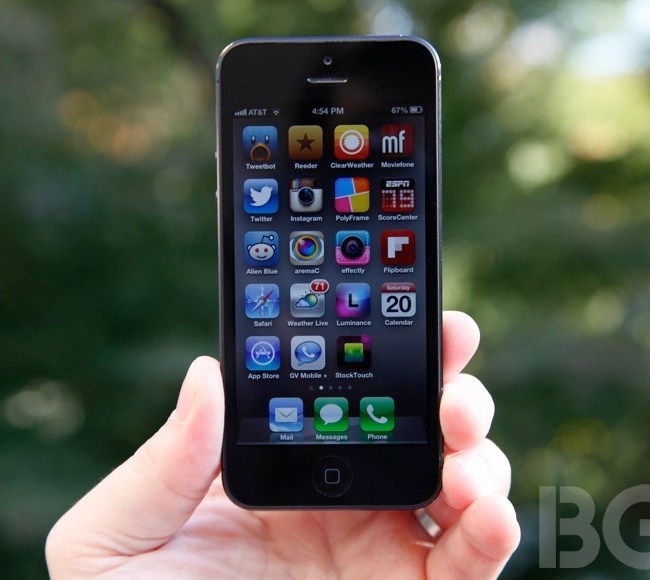
The U.S. Patent and Trademark Office on Tuesday granted Apple (AAPL) a patent for a new way to control an iPhone by squeezing it. The patent describes a system that could measure and react to different amounts of pressure applied to a device’s external casing. The invention can be utilized by a large range of electronic devices, such as smartphones, laptops and perhaps even Apple’s rumored iWatch. Apple has relied heavily on its physical home button in its iPhone, iPad and iPod touch devices in the past, but a pressure-sensitive casing could give the company more freedom when designing its next-generation products.