Author: Diego Casaes

  • Global: World Day Against Cyber Censorship

    internet_bleuInternet censorship is still a major issue in many countries worldwide. With that in mind, the Paris-based international organization Reporters without Borders (RSF) is promoting its yearly World Day Against Cyber Censorship on March 12th. On the occasion, RSF issued its latest list of “Enemies of the Internet“, where China, Saudi Arabia, Vietnam and Tunisia are among the most prominent examples of countries censoring the web.

    Reporters Without Borders will celebrate World Day Against Cyber Censorship on 12 March. This event is intended to rally everyone in support of a single Internet that is unrestricted and accessible to all. It is also meant to draw attention to the fact that, by creating new spaces for exchanging ideas and information, the Internet is a force for freedom. However, more and more governments have realised this and are reacting by trying to control the Internet.

    World Day Against Cyber Censorship Around the Web

    Jordanian blogger Naseem Tarawnah on Black Iris urged people to join an online rally for free speech. He says that over the past years there are traces that suggest the country is inclining to tough times for internet users, especially because there are “designs that the government may be planning to implement a “Cyber Law” to regulate the online world“. He calls on Twitter users:

    For my fellow tweeps, I can only ask that you come together to tweet those posts produced by the blogosphere, or tweet your own messages in support of a free internet. Perhaps we can use the single hashtag of #FreeNetJo to unite our tweets.

    And as Ramy Raoof outlined on Global Voices Advocacy:

    Do you believe in Freedom of Speech?

    Do you think its normal to be profiled or tracked while being online?!

    Do you think it’s your right to enjoy uncensored Internet search & blogging?

    Do you believe in Freedom of Information? Right to Access Information?

    Do you want to defend an Internet without restrictions and accessible to everyone at anytime and anywhere?

    Support the World Day against Cyber-Censorship, 12 March…

    Spread the Word!

    Global Voices contributor Archana Verma has written a post with thoughts and opinions from the Hindu blogosphere on freedom of speech and censorship. She adds:

    India doesn't fall in the category of “Internet Black-Holes,” hence Hindi web-writers haven't written much on it because they haven't faced this problem. However, there are some Hindi bloggers who have reflected on press-freedom from different angles.

    On Global Voices Online, we're committed to raising voices that often go unheard by traditional and mainstream media. We know that many governments do not allow its citizens to use the web openly and freely, often practicing censorship and regulating content. Below we can see some of Global Voices' projects to promote freedom of speech, cyber-activism and transparency online.

    Global Voices Advocacy

    Global Voices Advocacy is where we seek to build a global anti-censorship network of bloggers and online activists throughout the developing world that is dedicated to protecting freedom of expression and free access to information online. In this website, you'll have access to a myriad of projects that intend to help people fighting censorship on the web, as well as to blog anonymously in areas where internet users are often harassed by the government.

    Threatened Voices

    Threatened Voices is a collaborative mapping project to build a database of bloggers who have been threatened, arrested or killed for speaking out online and to draw attention to the campaigns to free them. So far, Threatened Voices has already tracked 213 cases of arrested or threatened bloggers, such as the one of Ahmad Mostafa, an engineering student at the University of Kafr el-Sheikh –the first Egyptian blogger to stand before a military court because of his blogging.

    Technology for Transparency Network

    On the other side of the coin, from Rising Voices, the Technology for Transparency Network, a new interactive website to track online initiatives that promote transparency, accountability, & civic engagement around the world is an example of how freedom of speech can help monitoring governments and deliver correct and non-regulated information to citizens of developing world, as well as observing politicians movements and actions.

    On the website, Renata Avila, a human rights lawyer and blogger in Guatemala, has presented the case of #InternetNecesario from Mexico, an online protest on Twitter and other social networks to fight a tax on the Internet issued by Mexico's Congress. This movement is an example of how a non-censored internet can empower citizens to fight for their rights.

    As Venezuelan blogger in Paris, Laura Vidal states in her comment review:

    This project is an example of how civil society agrees to organize and reunite efforts to respond to a government that acts without consulting, and a press that doesn’t connect the public opinion with the leaders of the country.

    Breaking Borders

    Finally, Global Voices and Google's Breaking Borders Award is a new prize created by both organizations and supported by Thomson Reuters to honor outstanding web projects initiated by individuals or groups that demonstrate courage, energy and resourcefulness in using the Internet to promote freedom of expression. The prize will honor work in three categories: tools that promote freedom of expression, outstanding work on policy and activism or journalism that contributed an important voice or argument – each awarded with USD $10,000. Results of the award will be made public in May, during the Global Voices Citizen Media Summit 2010.


    On this important date for the Internet, we hope for people to urge for change. To fight against censorship and to raise awareness on the importance of a free digital environment. For more highlights on the struggle for freedom of speech on the web visit our page on this subject.

  • Brazil: The Trees-per-Tweet Reforestation Campaign

    Environmental blogger Vivo Verde [pt] highlights a campaign by Brazil's major telecom VIVO promising to reforest one square meter of native forest for every tweet answering the question: “What would you do with lots of SMS messages?” and with the hashtag #oquevcfaria (#whatwouldyoudo) up to March 10th.

  • Brazil: A Snapshot of Campus Party 2010

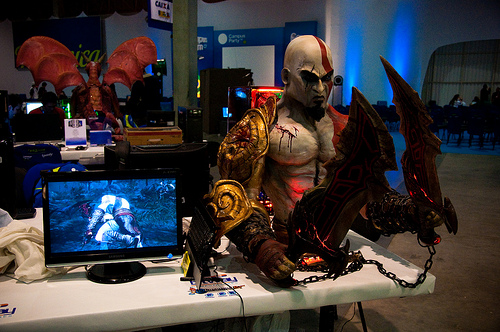
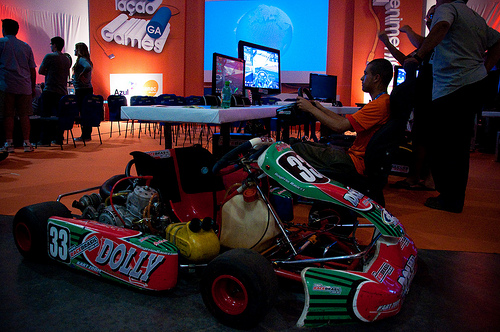
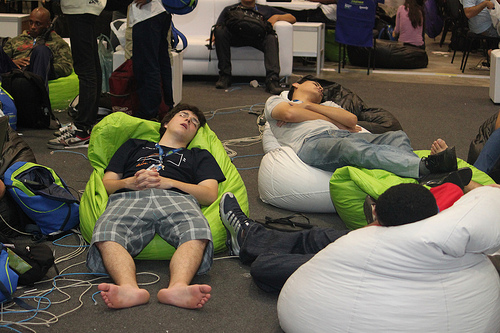
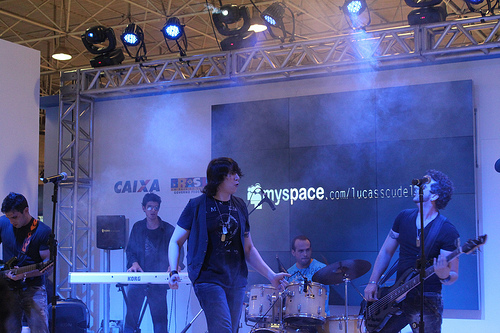
    cpartySão Paulo became a meeting place for geeks, cyberactivists and Internet addicts last month, during the Brazilian round of the Campus Party. The technology, digital culture and LAN party event took place from 25 to 31 January 2010.

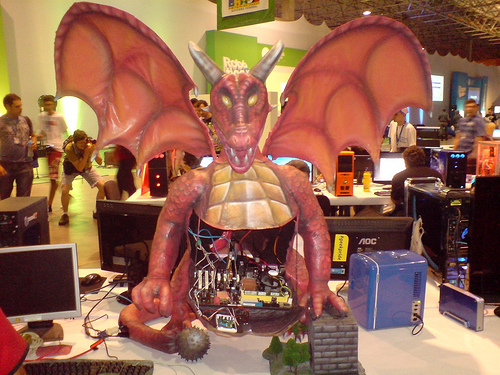
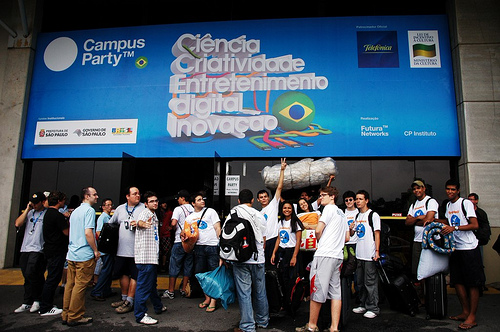
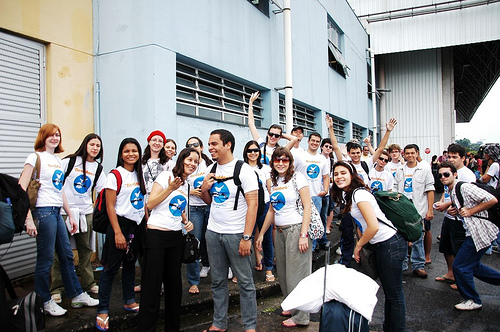
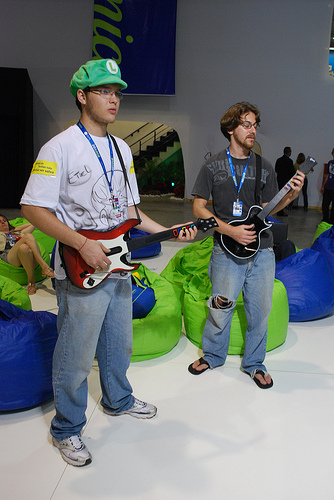
    CampusPartyMT [pt] was among the blogs covering the event. They have published some photos of Campus Party 2010:

    Photo brought by Flickr user CampusPartyMT taken by @lucasninno. Used under a Creative Commons license.

    Photo by Flickr user CampusPartyMT taken by @lucasninno. Used under a Creative Commons license.

    Photo brought by Flickr user CampusPartyMT taken by @crisguse. Used under a Creative Commons license.

    Photo by Flickr user CampusPartyMT taken by @crisguse. Used under a Creative Commons license.

    Photo by CampusPartyMT used under a Creative Commons license.

    Photo by CampusPartyMT used under a Creative Commons license.

    Photo brought by Flickr user CampusPartyMT taken by @lucasninno. Used under a Creative Commons license.

    Photo by Flickr user CampusPartyMT taken by @lucasninno. Used under a Creative Commons license.

    Bloggers of CampusPartyMT. Photo taken by @lucasninno. Used under a Creative Commons license.

    Bloggers of CampusPartyMT. Photo taken by @lucasninno. Used under a Creative Commons license.

    According to official statistics there were more than 90,000 visitors over the week. Ana Maria Modesto, one of those who attended the event, shares her experience on the Notas de Rodapé [pt] blog:

    O barato de tudo isso é o contato feito com os palestrantes e as palestras , que em muito me enriqueceram, o aprendizado no campus blog.Ainda mais quando se ouve ao vivo, grandes nomes das mídias sociais, participantes da bibliografia do meu projeto de pesquisa em Ciências Sociais, sobre o impacto da Social Media na sociedade brasileira. Ouví-los e ser ouvido e respondido por eles foi demais.

    The coolest things were networking with the lecturers, and the lectures themselves, which I found really illuminating, including the CampusBlog one. It’s even better when you can listen to the big names in social media live. These people featured in the bibliography of my Social Sciences research project on the impact of Social Media in Brazilian society. Being able to listen to them, and for them to listen to me in turn and respond to my questions was awesome.

    Photo by Flickr user liacarreira. Used under a Creative Commons license.

    Photo by Flickr user liacarreira used under a Creative Commons license.

    Photo by Flickr user amfdesigner used under a Creative Commons license.

    Photo by Flickr user amfdesigner used under a Creative Commons license.

    Photo by Flickr user amfdesigner used under a Creative Commons license.

    Photo by Flickr user amfdesigner used under a Creative Commons license.

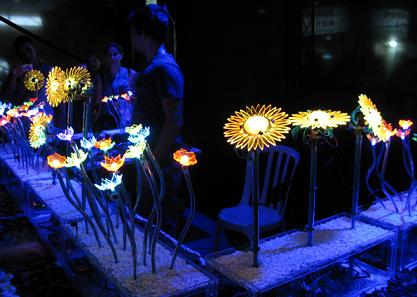
    Cyber-flowers in Campus Party. Brought by Techguru 2.0 blog.

    Cyber-flowers in Campus Party, by Techguru 2.0 blog.

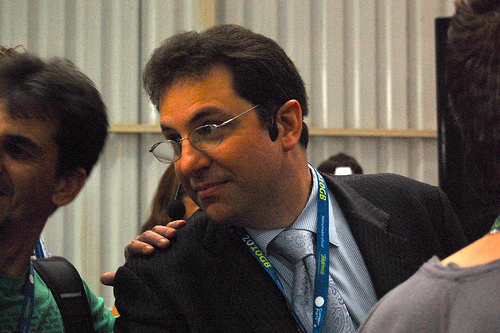
    Kevin Mitnick, the greatest hacker in the world. Photo by ManoelNetto on Flickr. Used under a Creative Commons license.

    Kevin Mitnick, the world's greatest hacker. Photo by ManoelNetto on Flickr. Used under a Creative Commons license.

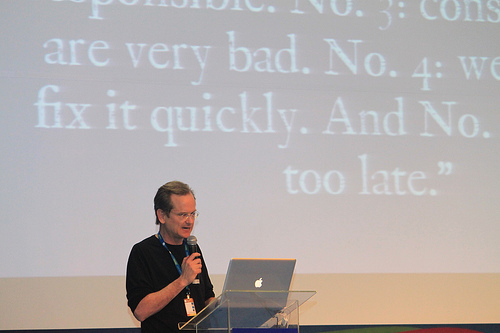
    Lawrence Lessig, founder of Creative Commons. Photo by senomoto_br on Flickr. Used under a Creative Commons license.

    Lawrence Lessig, founder of Creative Commons. Photo by senomoto_br on Flickr. Used under a Creative Commons license.

    Photo by senomoto_br on Flickr used under a Creative Commons license.

    Photo by senomoto_br on Flickr used under a Creative Commons license.

    Photo by senomoto_br on Flickr used under a Creative Commons license.

    Photo by senomoto_br on Flickr used under a Creative Commons license.

    On the other hand, the blogger at Mondo Cubano [pt] criticized this year's event, which she found lukewarm:

    Tirando poucas ações relevantes e bem feitas, a #Cparty virou uma grande lan house de promoções bizarras. As empresas caem lá sem ter a menor noção de como agradar o grande público e fazem ações estúpidas. […]

    Entendo que é uma grande arena para ações de marketing, e sinceramente até acho que se bem feitas elas também poderiam agregar valor à #Cparty. Mas o cerne do evento: a pesquisa, a troca de conhecimento, de experiência e o networking foi massacrado por adesivos, camisetas e panfletagem.

    Apart from a few relevant and well-executed ideas, #cparty has just become a massive lan house full of bizarre promotions. Companies descend on it without having the slightest notion of how to please the general public, and they just provide gimmicks […]

    I appreciate that this is a great arena for marketing, and I honestly believe that if it were done well these companies could also add value to #cparty. But the heart and soul of the event, research, the exchange of knowledge, experience and networking, were massacred by a deluge of stickers, T-shirts and leaflets.

    The fun is not over yet. Fernanda Nogueira blogs about the Campus Party Experience [pt] an itinerant version of the event which will visit more than 100 Brazilian cities over the first half of the year. For a week, a bus and tent with up to 150 computers will allow the local population to have first-hand experience of technology and the web, and will encourage debate about technology and digital culture.

    Apesar de terem algumas cidades em mente, a organização pensa em criar um processo de candidatura, onde assim como nas Olimpiadas, a própria população defenda a realização do evento na sua cidade.Além disso, cada cidade deverá criar também um comitê gestor que ficará responsável pela a cessão do local de realização do evento, todo o desembaraço burocrático (licenças, alvarás, etc), garantia de visitação por parte de estudantes e grupos de excluídos (camponeses, idosos, portadores de deficiência,etc) e manutenção de um telecentro focado em inclusão 1.0 (promoção do primeiro contato com o computador) e 2.0 (promoção do uso de serviços web e de publicação de conteúdos em blogs, fotologs, videologs e redes sociais).

    Although they have some cities in mind, the organization committee intends to open the event up to an application process similar to that of Olympics, whereby people will have to argue the case for holding the event in their city.

    In addition, each city will create a steering committee responsible for providing a venue for the event, dealing with all matters of bureaucratic clearance (permits, licenses, etc.), guaranteeing that it is open to students and marginalized groups (peasants, the elderly, people with disabilities, etc.) and maintaining a “telecenters” focused on digital inclusion 1.0 (promoting first contact with computers) and 2.0 (promoting the use of web services and content publishing through blogs, photo blogs, vlogs and social networks).

    360° view of the Campus Party. Photo by Flickr user mariacarol, used with permission.

    Campus Party in 360°. Photo by Flickr user mariacarol used with permission.

    A 3D image of the Campus Party main room made by Rene de Paula is available from this link.

    This article was proofread by Maisie Fitzpatrick.
  • Mozambique: Have African people been ‘Cursed’?

    Custódio Duma wonders whether Africans have been ‘cursed', leading to servitude of black people worldwide. He mentions biblical perspectives and says [pt]: “It's from Africa that most resources that keep the capitalism machine working comes from. Yet, Africans almost do not profit from them. […] But who has cursed Africans?”

  • Brazil: Protest Against the Government’s Disregard For Flood

    Maria Frô calls on bloggers and middle-class population [pt] of São Paulo to join her on February 8th to protest against the disregard of the city's mayor and state government for the flood striking the city. She says “it is a big chance for you to show true solidarity and prove you really love São Paulo.”