Author: Dimitra Papageorgiou & Ivana Korom

  • Meet the translator: Katja Tongucer, who translates TED Talks into German

    KatjaTED Talks are available in 102 languages, from Albanian to Vietnamese, thanks to the tireless work of our volunteer translators. So far, more than 10,000 volunteers have created upwards of 44,000 talk translations — and today, the TED Blog brings you a Q&A with one of them. Here, meet German translator Katja Tongucer.

    1. Where do you live? And what do you do by day?

    I am German, but have been living with my husband and my two daughters in Moscow, Russia, for almost four years now. We moved here for my husband’s job. Before I came to Moscow, I was working as a translator and translation coordinator for a small company in Germany. But after moving, I stopped working and focused on helping my children get familiar with the new environment. It was, and still is, a challenge.

    2. What drew you to TED?

    I first heard about TED on a German TV show in January of 2010 — they were presenting a bunch of interesting websites. After that, I visited TED.com and was simply fascinated. When I learned about the Open Translation Project, I immediately applied to be part of it. As a professional translator, it gave me the opportunity to further develop my language skills, to get familiar with subtitling and to do something useful at the same time. It is a win-win situation for me. I support the spreading of ideas with my skills and, through the Open Translation Project, I became part of a wonderful group of people who have become such a part of my life.

    3. What was the first talk you translated and how did you pick it?
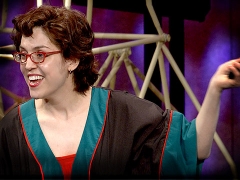
    Erin McKean: The joy of lexicographyErin McKean: The joy of lexicographyI think the first talk that I translated was Erin McKean’s The joy of lexicography. As far as I remember, I had watched it because I am especially interested in languages and linguistics. When I saw that it was available for translation, I picked it.

    4. What have been your favorite talks to translate? Why?

    There are so many talks that I really enjoyed translating. In fact, through the translation of TED Talks, I rediscovered the joy of my profession. Translating is a very creative process, but it also requires accuracy. You have to research expressions and you learn a lot. It is always a good feeling to work on a translation that you feel represents the best of the original version.

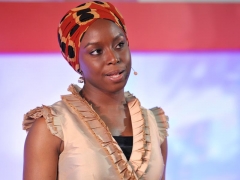
    If I have to choose one translation that I enjoyed most, Chimamanda Ngozi Adichie: The danger of a single storyChimamanda Ngozi Adichie: The danger of a single story I’d pick Chimamanda Adichie’s The danger of a single story. I loved the way she used language to tell her story, and it is still one of my favorite TED Talks. I am very happy that I had the honor to translate it.
    5. Which talk was the most difficult for you to translate and why?

    Every talk is a challenge. Every speaker has a different style — sometimes there many specialized terms, sometimes the subtitles are very long and appear only for a short time, so you have to find a way to keep the translation short and readable. That’s difficult because a German translation is usually longer than the English original. But the biggest challenge is translating poems. I had the pleasure of translating C.K. Williams’ Poetry of youth and age. I hope my translation reflects the spirit of the original.

    6. What’s a phrase in your language that you wish would catch on globally?

    That’s vey difficult to answer! I can’t think of one. But I do want to say that I wish German speakers would take more care of their own language. We tend to use more and more English expressions and don’t care about the correct use of phrases. Orthography is becoming less important, and we’re forgetting about the beauty of our own language.

  • Meet the translator: Khalid Marbou, who brings you TED Talks in Arabic

    KhalidMarbou

    TED translator Khalid Marbou at work in the nanotechnology lab.

    TED Talks are available in 100 languages, from Albanian to Vietnamese, thanks to the tireless work of our volunteer translators. So far, more than 10,000 volunteers have created upwards of 40,000 talk translations — and every week, the TED Blog brings you a Q&A with one of them. Today, meet Khalid Marbou.

    1. Where do you live and what do you do by day?

    I was born and raised in Tiznit, Morocco, and live in Cyberjaya, Malaysia, where I’m pursuing a bachelor’s degree in nanotechnology engineering. Aside from my studies, I spend most of my day online keeping in touch with friends and relatives — blogging, translating, reading and working on different projects in Malaysia and Morocco. 

    2. What drew you to TED?

    Many factors made me into a TED fanatic, but I would say that the most influential of them is my constant search for inspiration and intellectual stimulation. Before TED, I found small doses of inspiration reading novels and watching movies, but when I first discovered TED, it gave me a jolt. It’s never ceased to inspire me to this day.

    3. What was the first talk you translated and how did you pick it?

    Charles Fleischer insists: All things are MoleedsCharles Fleischer insists: All things are MoleedsMy first talk was Charles Fleischer’s “All things are Moleeds.” Most of the other translators avoided the talk because of its complexity and richness – it has made-up words and expressions — but I liked Charles’ sense of humor and wanted to share it with my friends, so they could understand it. I picked it up both as a challenge and as a test to see how prepared I would be for complex translation tasks. I managed to finish it within a day, and picked up another talk right away.
    4. What have been your favorite talks to translate? Why?

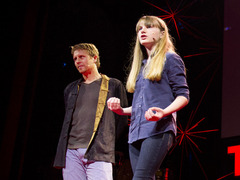
    Beau Lotto + Amy O’Toole: Science is for everyone, kids includedBeau Lotto + Amy O’Toole: Science is for everyone, kids includedI would say Beau Lotto + Amy O’Toole’s talk: “Science is for everyone, kids included.” First, because I am very passionate about science communication and involving kids in scientific activities. I’ve been working on implementing similar initiatives in Moroccan schools and raising awareness about the subject in general. And second, having attended TEDGlobal2012, I saw Beau and Amy onstage and was tremendously amazed and excited. I said to myself, “That’s a talk I want to spend hours translating.” And I did.

    5. Which talk was the most difficult for you to translate and why?

    The most challenging talk for me was indeed that first talk I translated, “All things are Moleeds.”

    6. What’s a phrase in your language that you wish would catch on globally?

    I’d like to share a quote from my native language, Tamazight:

    “أورا تمون أبلا إيح ترعي”

    Which translates into:

    “It won’t get organized unless it first gets all messy.”

  • Meet the translator: Elena Montrasio, who brings you talks in Italian

    ElenaMontrasio2TED Talks are available in 97 languages, from Albanian to Vietnamese, thanks to the tireless work of our translators. So far, more than 8,800 volunteers have created the upwards of 34,000 translated talks. To celebrate this huge accomplishment, every week the TED Blog will be bringing you a Q&A with one of our most prolific translators. Today, meet Elena Montrasio.
    Where do you live and what do you do by day?

    I live in London, U.K. I am a professor of Italian as a foreign language but at the moment I work as a literary translator.

    What drew you to TED?

    The desire to participate in a volunteer program where I could contribute my skills. That and general interest in the topics that TED deals with.

    What was the first talk you translated and how did you pick it?

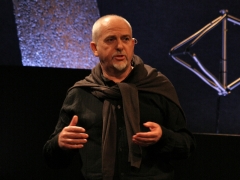
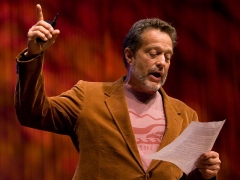
    Peter Gabriel fights injustice with videoPeter Gabriel fights injustice with videoMy first talk was Peter Gabriel’s. I chose it because I have been in love with Peter Gabriel since I was 14!
    What have been your favorite talks to translate? Why?

    My favorite talks are the ones about marine conservation issues. The decay of the oceans because of damage from human beings is a topic that is very dear to my heart.

    Which talk was the most difficult for you to translate and why?

    Capt. Charles Moore on the seas of plasticCapt. Charles Moore on the seas of plasticIt was actually a TEDx talk, “Captain Charles Moore on the seas of plastic.” Not because it was hard in itself, but because I really wanted to do my absolute very best to contribute in spreading his message. So it took me a long time to make sure I was accurate and choosing words that would portray the heart that the speaker put into the talk.

    What’s a phrase in your language that you wish would catch on globally?

    “Se chiure na porta e s’arape nu portone.” It’s literally, “When a door closes, a wider door will open.” I think in English they say: “When a door closes, a window opens.”

  • Meet the translator: Ido Dekkers, who brings you talks in Hebrew

    Ido-DekkersTED Talks are available in 97 languages, from Albanian to Vietnamese, thanks to the tireless work of our translators. So far, more than 8,800 volunteers have created the upwards of 34,000 translated talks. To celebrate this huge accomplishment, every week the TED Blog will be bringing you a Q&A with one of our most prolific translators. Today, meet Ido Dekkers.
    Where do you live? What do you do?

    I live in a small village in Israel, and I’m a front end web developer.

    What drew you to TED?

    I’ve known TED since it only had a few dozen talks, and I was always drawn to the topics and the quality.

    What was the first talk you translated and how did you pick it?

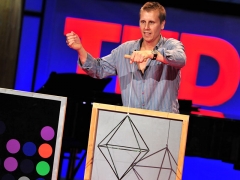
    Beau Lotto: Optical illusions show how we seeBeau Lotto: Optical illusions show how we see The first talk I translated was Beau Lotto’s “Optical illusions show how we see,” I picked it since my then 9-year-old daughter didn’t know English well enough and I was acting as an online translator. Then, I saw the translate button. Ever since then, I’ve been hooked.
    What have been your favorite talks to translate? Why?

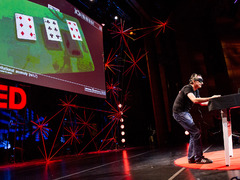
    My favorite talk to translate was … actually all of Marco Tempest’s talks. They are so riveting.

    Marco Tempest: A cyber-magic card trick like no otherMarco Tempest: A cyber-magic card trick like no otherWhich talk was the most difficult for you to translate and why?

    The hardest talk was the TED-Ed lesson “Making sense of spelling” by Gina Cooke. It talks about spelling and grammar in English, and it’s very hard to pass on to other languages.

    What’s a phrase in your language that you wish would catch on globally? 

    I think the most known phrase is “eihiye beseder” which translates to “everything will be OK.” People use it here all the time. We have so many worries, we try at least to take everything easy.

  • Meet the translator: Els De Keyser, who brings you talks in Dutch

    ElsDeKeyserTED Talks are available in 97 languages, from Albanian to Vietnamese, thanks to the tireless work of our translators. So far, more than 8,800 volunteers have created the upwards of 34,000 translated talks. To celebrate this huge accomplishment, every week the TED Blog will be bringing you a Q&A with one of our most prolific translators. Today, meet Els De Keyser.

    Where do you live and what do you do by day?

    I live in Mechelen, Belgium. By day, I work for the Financial Services and Markets Authority, in the department of supervision of the rules of conduct. Basically, we check whether financial institutions act honestly, fairly and professionally in accordance with the best interests of their clients.

    What drew you to TED?

    I stumbled onto TED in 2010 while preparing my MBA thesis on transparency as a competitive advantage in insurance. (I worked for an insurance company at the time.) Alan Siegel: Let's simplify legal jargon!Alan Siegel: Let's simplify legal jargon!  As a lawyer with a keen interest in plain language, I found Alan Siegel’s talk “Let’s simplify legal jargon” very inspiring.

    What was the first talk you translated and how did you pick it?

    I wanted to share Siegel’s talk with my colleagues at work. But that meant I had to overcome the language hurdle. I saw the “Translation” menu on TED.com and I thought, “Why not give it a try and translate it into Dutch?” The fact that the talk was only four minutes long helped too.

    What have been your favorite talks to translate? Why?

    I have a couple of favorite speakers, like Hans Rosling and Clay Shirky. They really changed my mindset. And they’re funny — I love the challenge of doing justice to their jokes. But the most moving talks, the ones that really stick with me, are often by speakers I would never have heard of if it hadn’t been for TED, Elyn Saks: A tale of mental illness -- from the insideElyn Saks: A tale of mental illness — from the insidelike Elyn Saks’s testimonial on schizophrenia and Alberto Cairo’s “There are no scraps of men.” Last but not least, I like to translate talks I saw live at TED or TEDx events, because working on the translation brings back fond memories of the experience.

    Which talk was the most difficult for you to translate and why?

    This summer, TED-Ed videos were added to the Open Translation Project. I translated a TED-Ed lesson on the art of metaphors, in which the animation illustrated the English imagery. I couldn’t just use the Dutch equivalent — because it would make the animation meaningless. In 3 or 4 seconds, I had to convey the meaning in Dutch and respect the original English image. This six minutes translation took me much longer than many an 18-minute TED Talk.

    What’s a phrase in your language that you wish would catch on globally?

    I would propose a word: “pretoogjes,” which refers to the eyes of a chuckling person who is up to mischief. It was the Dutch contribution to the Words Worth Spreading tray designed by Dick Lundgren and presented by the TED Translators at TEDGlobal 2012.

    ElsDeKeyser-with-plate

    TED translators Dick Lundgren and Els De Keyser with the Words Worth Spreading trays.


  • Meet the Translator: Alberto Pagani, who brings you TED Talks in Italian

    Alberto-Pagani-1TED Talks are available in 94 languages, from Albanian to Vietnamese, thanks to the tireless work of our translators. So far, more than 8,500 volunteers have created nearly 34,000 translated talks. To celebrate this huge accomplishment, every week the TED Blog will be bringing you a Q&A with one of our most prolific translators. Today, meet Alberto Pagani.
    Where do you live? And what do you do by day?

    I’m from Bologna, Italy — yes, the place where the ham-like thing comes from. I’m trying to make photography my full-time job, and am sort of a little more than halfway there. I also teach English, translate, volunteer for an NGO, have fun and listen to a lot of music.

    What drew you to TED?

    Random internet browsing in late 2008 or early 2009, I think. All I can remember is that I was doing some research online and I stumbled on a video from TED.com and, after watching A LOT of videos — one after the other — I realized I was hooked. Then I read about the conferences, the Open Translation Project and the TEDx program. I started translating and have gotten the chance to meet a lot of wonderful and inspiring people. Here we are five years later.

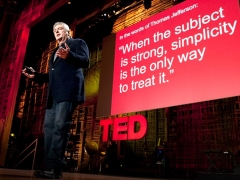
    David Deutsch: A new way to explain explanationDavid Deutsch: A new way to explain explanation

    What was the first talk you translated and how did you pick it?

    The one I stumbled on about five years ago: David Deutsch’s “A new way to explain explanation.” Halfway through watching it, I thought of some friends who would love it as well — but they didn’t speak English. So I actually started writing down the text and translating it on my own. Then I noticed a link on the page referring to translations, I clicked there and discovered the Open Translation Project. I signed up immediately and started translating all the talks I could get my hands on.

    What have been your favorite talks to translate? Why?

    I like the challenging ones — the ones that make me work hard and learn things in the process. Sometimes the things I learn are related to the topic, but more often they are related to transferring the talks into Italian — the mood, the concepts, the humor and the cultural references that are found in the talks. That being said, there is a special place in my heart for the final bit of the first talk I translated: “Take two stone tablets. On one of them carve ‘Problems are solvable,’ on the other one carve ‘Problems are inevitable.’”

    Which talk was the most difficult for you to translate and why?

    Jokes are the hardest things to translate, in my opinion, and cultural-specific references are a very close second. We need to find an equivalent in the target language that maintains the tone, the general sense and often the specific meaning of the joke. Trust me on this: from a translator’s point of view, stand-up comedy is much, much harder than rocket science.

    What’s a phrase in your language that you wish would catch on globally?

    “Let’s talk about this over coffee/lunch/dinner.”

    The idea is that to properly address important issues, people require a comfortable and relaxed environment, something a large number of Italians would not find in formal settings like an office or a meeting. I think you could roughly translate that phrase as: “I think the issue is important and I value your opinion, so it will be worthwhile to invest our free time in discussing this where we can both feel comfortable and speak our minds freely.”

    Meet more of our TED translators »

    Alberto-Pagani-TED

    Pagani snaps a photo on the TEDGlobal 2012 stage.

  • Meet the translator: Laszlo Kereszturi, who brings you TED Talks in Hungarian and Romanian

    TED Talks are available in 94 languages, from Albanian to Vietnamese, thanks to the tireless work of our translators. So far, more than 8,500 volunteers have created the upwards of 33,500 translated talks. To celebrate this accomplishment, every week the TED Blog is bringing you a Q&A with one of our most prolific translators. Today, meet Laszlo Kereszturi, pictured above right, with his family.
    Where do you live? And what do you do by day?

    I live in Oradea, Romania, and I work as an information security professional at a telecommunication company. I translate in Hungarian and Romanian.

    What drew you to TED?

    Due to my job and my living place, I have feel a lot of negative emotions every day. Before 2006, I escaped in the realm of science-fiction — but watching TED Talks has proved to be a better way. TED Talks are about positive ideas, people with real great initiatives, happening now — not in the distant future. And since 2009, when TED OTP made it possible to translate TED Talks, I am truly happy that I can contribute.

    What was the first talk you translated and how did you pick it?

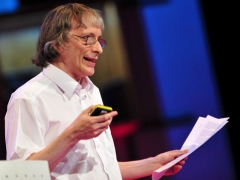
    Hans Rosling: Stats that reshape your worldviewHans Rosling: Stats that reshape your worldviewMy first talk was “Hans Rosling shows the best stats you’ve ever seen“. This talk just found me; I knew I had to translate it after watching the first five minutes. “Robert Lang: The math and magic of origami” was the second talk I translated. I knew about the art of origami before, but its implications in real life — from space exploration to medicine — were very worth sharing in my language.
    What have been your favorite talks to translate? Why?

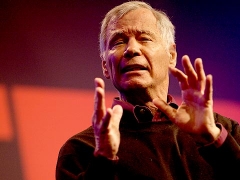
    John Hodgman: Aliens, love — where are they?” because it is funny in a clever way.Ben Dunlap: The life-long learnerBen Dunlap: The life-long learner Its final part really moved me. I also enjoyed “Ben Dunlap: The life-long learner“, because it presents his personal experience with Hungarian people and is just a great story. And “Joseph Pine: What consumers want“, because this was the first TED Talk I ever saw and is about being authentic. I have dozens of favorite talks, but I’ll stop there for brevity’s sake.

    Which talk was the most difficult for you to translate and why?

    I’ve translated talks on a wide range of subjectsSteve Keil: A manifesto for play, for Bulgaria and beyondSteve Keil: A manifesto for play, for Bulgaria and beyond and have deliberately chosen many difficult ones. A good translation takes time — you can’t rush it. Difficult translation for me means that I have a very short deadline, or the process took too long.
    The most difficult translation was exactly the one I expected to do in a very short time, for a TEDx event: “Steve Keil: A manifesto for play, for Bulgaria and beyond“. It’s not a difficult talk and I had already translated it in Romanian, so it looked like an easy job. But it wasn’t, because I had to do it during the week, after work.

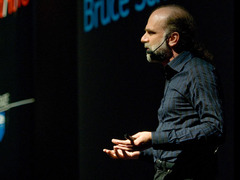
    Bruce Schneier: The security mirageBruce Schneier: The security mirage Another talk that was hard to translate was “Bruce Schneier: The security mirage“. It’s about information security, so shouldn’t have been hard for me. But my knowledge about the talk’s content made me very careful when choosing the words and the “diamond polishing” process took more time than usual.

    What’s a phrase in your language that you wish would catch on globally?

    We say in Hungarian: “A jó pap holtig tanul”. Meaning: “A good priest learns until his death”. This is very true today in the lifelong learning era.