Author: Discover Main Feed

  • NASA Workers: Flying High on Cocaine? | Discoblog

    KSC-orbiter-discoveryFlying high, NASA style!

    One of the space agency’s employees seems to have been inspired by the space shuttle’s soaring trajectory. A baggie containing a small amount of white powder residue, later found to be cocaine, was found at the Kennedy Space Center in Cape Canaveral, Florida.

    Way to go, NASA-employee-doing-coke-on-premises. You have forever altered our image of clean-cut astronauts standing around in space suits, chatting with diligent rocket scientists. But NASA is not so amused.

    According to CNN, Bob Cabana, the director of Kennedy Space Center, issued a terse statement that read in part:

    “This is a rare and isolated incident, and I’m disappointed that it happened, but it should not detract from the outstanding work that is being done by a dedicated team on a daily basis.”

    About 200 employees and contractors have access to the restricted hangar where the drug was found, and they’re now being being tested for the drug. For NASA, the incident is not just a blow to its image–the drug’s presence in a restricted area also raises questions about the work done by NASA’s elite workers. The hangar is being used to prepare for space shuttle Discovery’s launch, which is scheduled for this March.

    The Internet, meanwhile, is tittering with amusement, with one reader commenting on a news article: “There’s just so much coke in Florida, this bit probably just settled there, like pollen or something. Although! I think it makes for a great new sitcom idea. Miami Vice, Interstellar Unit!”

    Related Content:
    80beats: NASA Considers Keeping Space Shuttles in Flight Past 2010
    80beats: Cocaine Scrambles Gene’s Behavior in the Brain’s Pleasure Center
    80beats: Pepper Spray and Cocaine Make Lethal Combo
    80beats: One-Third of U.S. Cocaine Tainted with Dangerous Livestock Drug

    Image: Kennedy Space Center


  • Can an iPhone App Clear up Your Acne? | Discoblog

    acne-appA Texas doctor claims that you can now kill your acne while you chat on the phone with your friends. Houston dermatologist Greg Pearson says that his AcneApp, available at Apple’s app store for $1.99, is a great way to clear your mug of unseemly spots.

    Fox TV, Houston reports:

    The AcneApp emits alternating bursts of red and blue light from the iPhone’s screen. All users have to do is run the program then hold the phone up to their faces.

    Dr. Pearson says the phone needs to be held to the face for about two minutes a day, and callers have to remember to switch sides for maximum benefit. He isn’t quite sure of the results, and he can’t promote the app’s medical benefits because it hasn’t been FDA-approved. Nevertheless, Pearson told Fox TV that the app has been designed with “some science” in mind.

    The New York Times explains how the app is supposed to work:

    The AcneApp emits an alternating blue (antibacterial) and red (anti-inflammatory) light technology, believed to kill bacteria associated with acne and promote healing, and even act on wrinkles by stimulating collagen growth.

    Dr. Pearson also claims that light treatments have been shown to be more effective in treating acne than over-the-counter meds.

    Discoblog claims that without any testing of the light’s wavelength, intensity, duration, coverage, and orientation, it’s a laughable attempt to sell a snake oil iPhone app. But give him points for creativity.

    Related Content:
    Discoblog: True Crime, Real Time: Live Streaming Mug Shots To Your iPhone
    Discoblog: Texting and Walking Made Easy With iPhone App

    Image: AcneApp


  • Wheel of stars | Bad Astronomy

    I sometimes ruminate over how to meld astronomy, computers, and preaching to the public. There are lots of ways to make astronomy interesting and accessible, and lots of people turning those possibilities into realities.

    wheelofstarsOne of the most interesting and clever ways to do this has been done by Jim Bumgardner: he’s created a piece of software that takes the positions of stars in the sky, maps them, and then has it make an ethereal musical tone whenever a star crosses the meridian (the imaginary line in the sky that connects due north, through the zenith, to due south). He calls it the Wheel of Stars, and it’s really very soothing and wonderful.

    As he puts it:

    As the stars cross zero and 180 degrees, indicated by the center line, the clock plays an individual note, or chime for each star. The pitch of the chime is based on the star’s BV measurement (which roughly corresponds to color or temperature). The volume is based on the star’s magnitude, or apparent brightness, and the stereo panning is based on the position on the screen (use headphones to hear it better).

    I see this as being very useful in planetaria between shows, as a screen saver, or as a projector in a kid’s room. Things like this make me smile. I like clever people; they make the world a far more interesting place.


  • GM Corn & Organ Failure: Lots of Sensationalism, Few Facts | 80beats

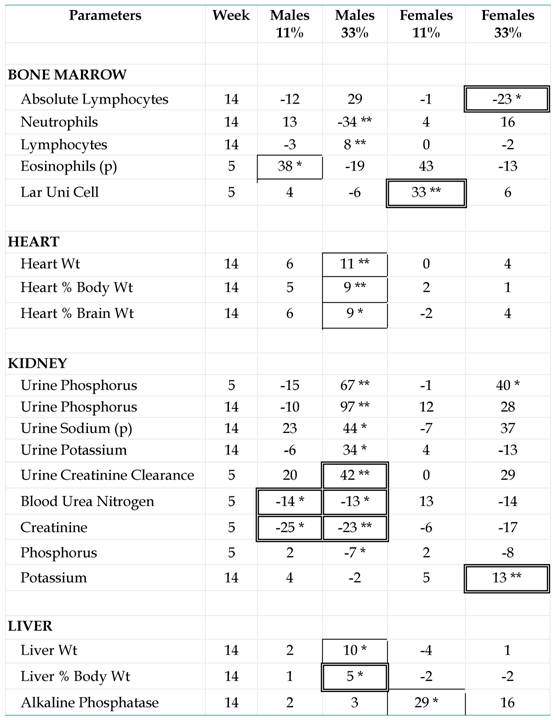
    cornOn Wednesday, we covered the overreaction by a few important online sources to an International Journal of Biological Sciences article claiming to find “signs of toxicity” in three varieties of genetically modified (GM) corn produced by Monsanto. We posted some caveats that made us uneasy about the study, such as the funding sources, the unknown quality of the journal, and the fact that the toxicity claims rely on reinterpreting statistical data that Gilles-Eric Séralini and his coauthors themselves note is not as robust as it needs to be.

    Karl Haro von Mogel, a University of Wisconsin Ph.D. student who works with Pamela Ronald (the GM expert we quoted in our last post), responded with some other problems he has on this study. He has a blog post of his own (in which he gets hopping mad at coverage that attributed organ damage, organ failure, or even cancer to the rats in the study). But here are the major issues he points out to DISCOVER:

    1. Cherry-picking. “They were picking out about 20–30 significant measurements out of about 500 for one of the sets of data they analyzed,” Haro von Mogel tells DISCOVER. “At the 95% significance level, you would expect that 5% of the observations would show a significant difference due to chance alone, which is what happened.” In other words, one would expect to get some alarming results in approximately 25 out of the 500 of the measurements, which is indeed what they found. “Picking apart what seems to be normal background variability seems to me to be data dredging.”

    2. “False Discovery Rate.” The battle over these corn varieties has been cooking for years; Séralini and others published a paper in 2007 on the same issues, and after statistical criticisms like the ones just mentioned the authors came around with this new edition. One of the main shots scientists took at the previous paper, Haro von Mogel says, was that the team didn’t employ a “false discovery rate”—a stringent statistical method that controls for false positives. This time they did, but for at least two of the three varieties—MON 810 and MON 863—the researchers themselves note p-values that are not significant. (A p-value is a measure of the likelihood that any particular finding was due to chance alone rather than a real effect. By convention, science calls anything that has a greater than 5 percent chance of being a random effect “insignificant.”)

    3. “Insignificant” results. As you can see in the study’s chart, there a significant effect shown in “Lar uni cell” (large unnucleated cell count) for female rats fed the GM corn as 11 percent of their diet. But for female rats fed three times as much GM corn, it’s not there. “Are they highlighting random variation or finding genuine effects? These are the kinds of questions that scientists need to address before concluding that they have found ’signs of toxicity,’”Haro von Mogel asks. (Séralini et al. have argued that more attention needs to be paid to nonlinear toxic effects, where greater doses would cause less harm.)

    4. Lack of corroboration or explanation. The government organization Food Standards for Australia and New Zealand (which disputed Séralini’s 2007 paper [Microsoft Word file]), also disputes the recent study, in part because there is no other science corroborating the statistical data—data that was challenged in the previous points. Their response concludes by saying, “The authors do not offer any plausible scientific explanations for their hypothesis, nor do they consider the lack of concordance of the statistics with other investigative processes used in the studies such as pathology, histopathology and histochemistry…Reliance solely on statistics to determine treatment related effects in such studies is not indicative of a robust toxicological analysis. There is no corroborating evidence that would lead independently to the conclusion that there were effects of toxicological significance. FSANZ remains confident that the changes reported in these studies are neither sex- nor dose-related and are primarily due to chance alone.”

    We emailed Séralini to ask if he would respond to these particular criticisms, and have not yet heard a response. But the study is currently available to read for free, and you can see a YouTube clip of him discussing this paper, his methods, and his criticisms of Monsanto.

    In light of these concerns regarding the study, it would be an enormous stretch to say the study proves that these corn varieties cause organ damage in mammals. But none of this puts Monsanto’s GM corn totally in the clear, either. As commenters on our earlier post pointed out, Monsanto was simply following the rather laissez-faire rules for government approval, doing the 90-day trials themselves. But Séralini’s team calls for long-term studies, upwards of two years, to get reliable data.

    With the dearth of available data, which Monsanto was loath to give up to the researchers in the first place, strong conclusions are tough to come by. As Per Pinstrup-Andersen, a Cornell food expert not associated with Haro von Mogel’s team, sums up this study: “It is very convoluted but the authors imply that the results are not scientifically valid by recommending a study “to provide true scientifically valid data,’” he tells DISCOVER.

    But, as Séralini notes in his YouTube clip, that scientifically valid study would cost a fortune. And considering that these biotech crops have already been approved, Monsanto has little incentive to continue testing them.

    Related Content:
    80beats: GM Corn Leads to Organ Failure!? Not So Fast
    80beats: New Biotech Corn Gives Triple Vitamin Boost; Professors Unmoved
    80beats: Germany Joins the European Mutiny of Genetically Modified Crops
    DISCOVER: Genetically Altered Corn tells how a corn not intended for humans got into the food supply

    Image: flickr / Peter Blanchard


  • 24 Questions for Elementary Physics | Cosmic Variance

    This weekend at Caltech we had a small but very fun conference: the “Physics of the Universe Summit,” or POTUS for short. (The acronym is just an accident, I’m assured.) The subject matter was pretty conventional — particle physics, the LHC, dark matter — but the organization was a little more free-flowing and responsive than the usual parade of dusty talks.

    One of the motivating ideas that was mentioned more than once was the famous list of important problems proposed by David Hilbert in 1900. These were Hilbert’s personal idea of what math problems were important but solvable over the next 100 years, and his ideas turned out to be relatively influential within twentieth-century mathematics. Our conference, 110 years later and in physics rather than math, was encouraged to think along similarly grandiose lines.

    And indeed people had done exactly that, especially ten years ago when the century turned: see representative lists here and here. I asked the organizers if anyone was taking a swing at it this time, and was answered in the negative. I was scheduled to give one of the closing summaries, and this sounded more interesting than what I actually had planned, so naturally I had to step up.

    Here are the slides from my presentation, where you can find some elaboration on my choices.

    hilbert1

    And here’s the actual list:

    1. What breaks electroweak symmetry?
    2. What is the ultraviolet extrapolation of the Standard Model?
    3. Why is there a large hierarchy between the Planck scale, the weak scale, and the vaccum energy?
    4. How do strongly-interacting degrees of freedom resolve into weakly-interacting ones?
    5. Is there a pattern/explanation behind the family structure and parameters of the Standard Model?
    6. What is the phenomenology of the dark sector?
    7. What symmetries appear in useful descriptions of nature?
    8. Are there surprises at low masses/energies?
    9. How does the observable universe evolve?
    10. How does gravity work on macroscopic scales?
    11. What is the topology and geometry of spacetime and dynamical degrees of freedom on small scales?
    12. How does quantum gravity work in the real world?
    13. Why was the early universe hot, dense, and very smooth but not perfectly smooth?
    14. What is beyond the observable universe?
    15. Why is there a low-entropy boundary condition in the past but not the future?
    16. Why aren’t we fluctuations in de Sitter space?
    17. How do we compare probabilities for different classes of observers?
    18. What rules govern the evolution of complex structures?
    19. Is quantum mechanics correct?
    20. What happens when wave functions collapse?
    21. How do we go from the quantum Hamiltonian to a quasiclassical configuration space?
    22. Is physics deterministic?
    23. How many bits are required to describe the universe?
    24. Will “elementary physics” ultimately be finished?

    Clearly I cheated somewhat by squeezing multiple questions into single problems. But the real challenge was thinking sufficiently big to come up with problems that people a century from now would agree are interesting. And I stuck to “elementary physics” — particle physics, gravitation, cosmology — just because I’m not competent to pick out the important problems in any other fields. Twenty-four, of course, because Hilbert had 23, and we had to go one better. There was certainly no shortage of candidates; I was coming up with more good problems and throwing out old ones right up until the last minute. Any obvious ones I missed?

  • Can Guilt Save the Oceans? | The Intersection

    This is the first in a series of guest posts by Joel Barkan, a previous contributor to “The Intersection” and a graduate student at the Scripps Institution of Oceanography. The renowned Scripps marine biologist Jeremy Jackson is teaching his famed “Marine Science, Economics, and Policy” course for what may be the last time this year (along with Jennifer Jacquet), and Joel will be reporting each week on the contents of the course.

    Guilt. Shame. These aren’t emotions commonly associated with fish. According to Jennifer Jacquet, however, they may actually be effective tools to prevent destructive overfishing. Jennifer knows a thing or two about guilt—she writes the Guilty Planet blog for scienceblogs.com. Her lecture today covered creative ways to convince corporations to buy and sell fish caught in a sustainable manner. A supermarket that sells orange roughy, for instance, might change its practices if made to feel shame for peddling this exploited fish. Greenpeace, which graded the major seafood markets for sustainability, has made headway by calling out less ocean-friendly chains like Trader Joe’s. Can we go further, though, and attach a real public stigma to the trade of unsustainably caught fish?

    Jennifer talked about the importance of corporate transparency to bring about policy changes, using examples from other industries. She mentioned the Toxic Release Inventory (TRI), which forces polluters to publicize their emission levels. On the day after the first TRI figures were released in 1989, the polluting firms saw their stocks fall a combined $4.1 million. These corporations—feeling guilty and seeking to deflect public scorn—soon announced plans to reduce emissions. Jennifer also referenced restaurant hygiene report cards, which grade the cleanliness of restaurants: you get an A if diners can eat your risotto off the floor, a C if the vermin outnumber your patrons. No restaurant wants the scarlet letter “C” tacked to its window—it would be hard to recover from the public shame of such a poor grade.

    Our class discussion, as it has a tendency to do here at Scripps, delved into a number of tangents, all of them thought-provoking. One student, who moved to San Diego from China in June for graduate school, cautioned that with shame can come unfair humiliation. He spoke of China’s Cultural Revolution, when citizens who were suspected of supporting capitalism were forced to walk through the streets wearing hats bearing the sign “Capitalist Dog.” Now, he asserts, China feels regret for putting its people through such a public disgrace because it realizes its original convictions were misguided. I brought up the success of anti-smoking campaigns and the shame placed on cigarette companies for being deceitful about the health effects of smoking and its youth-targeted advertising. Prof. Jeremy Jackson countered by pointing out that a backlash against anti-smoking campaigns actually makes smoking appealing to some young people.

    But back to fish—after all, this is a marine policy course. Can seafood retailers like Walmart and Red Lobster be guilted into changing their practices? I think we have a long way to go: it’s still a social norm to buy and eat trawl-caught shrimp, which includes 12 pounds of unintended, wasted bycatch for every pound of shrimp caught. The public looks down upon corporate misdeeds like embezzlement and pollution. It’s time to add trade in unsustainable fisheries to that list of offense.


  • Woman Gets Transplanted Windpipe That Was Grown in Her Arm | 80beats

    OrgansLinda De Croock, a Belgian woman who had her throat crushed in a car accident a quarter-century ago, received one of the odder-sounding organ transplants we’ve ever heard: For two years, De Croock had a dead man’s windpipe growing inside her arm. Reporting in the New England Journal of Medicine, her doctors say they successfully implanted the donated trachea in her forearm and then moved it from there to where it belongs.

    While the arm might seem a questionable place to put a windpipe, the point was to acclimate her body to the new organ and get her off anti-rejection drugs. Doctors at Belgium’s University Hospital Leuven implanted the donor windpipe in De Croock’s arm as a first step in getting her body to accept the organ and to restart its blood supply. About 10 months later, when enough tissue had grown around it to let her stop taking the drugs, the windpipe was transferred to its proper place [Canadian Press]. Since De Croock’s own tissue has grown around the windpipe, her body no longer considers it foreign and dangerous. A year has passed since the surgery to move the windpipe from her arm to her throat, and the doctors report she is doing well.

    After the accident, De Croock originally had metal pieces installed to prop open her windpipe. But having metal do the job became worse and worse. “Life before my transplant was becoming less livable all the time, with continual pain and jabbing and pricking in my throat and windpipe,” the 54-year-old Belgian told The Associated Press in a telephone interview [Canadian Press].

    This is the first time scientists have transplanted an organ as large as a trachea in this way—allowing it to acclimate inside the patient’s body before they set it in its proper location. Dr Pierre Delaere, the surgeon who led the team, said: ”This is a major step forward for trachea transplantation. Her voice is excellent, and her breathing is normal. I don’t think she could run a marathon, but she is doing well” [Sydney Morning Herald].

    Related Content:
    80beats: Injured Vet Receives Transplanted Pancreas Grown From a Few Cells
    80beats: First American Face Transplant is Successful (So Far)
    80beats: Doctors Use a Patient’s Own Stem Cells to Build Her a New Windpipe
    Discoblog: Organ Transplants Gone Horribly Awry
    DISCOVER: How Do Transplant Patients End Up With Killer Organs?

    Image: iStockphoto

  • Hubble in Imax 3D trailer is out | Bad Astronomy

    hubble3dI don’t think I need to say anything here other than: Imax has put out a trailer for their hi-res 3D movie about the Hubble repair mission from May 2009.

    Oh, yeah. I’m in.

    Tip o’ the spherically aberrated mirror to my old friend from college Christy Venters. Hi Christy!


  • “Blinded by Science: How ‘Balanced’ Coverage Lets the Scientific Fringe Hijack Reality” | The Intersection

    In the science world, if there is an overwhelming complaint about the media, it is that journalists tend to be too “balanced”–in other words, they give roughly 50-50 time to opposing viewpoints even when one side lacks credibility, as in the creationism-evolution battle.

    In 2004 in Columbia Journalism Review, I did a major article critiquing this problem in science coverage–an article that I guess a lot of people read and liked, since it is still mentioned to me regularly. Recently, in fact, John Fleck emailed to ask why it wasn’t available online–and I decided to do something about that.

    So here it is, “Blinded by Science,” a kind of classic critique of “phony balance” in science coverage:

    BLINDED BY SCIENCE: How ‘Balanced’ Coverage Lets the Scientific Fringe Hijack Reality

    Columbia Journalism Review, Nov/Dec2004, Vol. 43, Issue 4

    On May 22, 2003, the Los Angeles Times printed a front-page story by Scott Gold, its respected Houston bureau chief, about the passage of a law in Texas requiring abortion doctors to warn women that the procedure might cause breast cancer. Virtually no mainstream scientist believes that the so-called ABC link actually exists — only anti-abortion activists do. Accordingly, Gold’s article noted right off the bat that the American Cancer Society discounts the “alleged link” and that anti-abortionists have pushed for “so-called counseling” laws only after failing in their attempts to have abortion banned. Gold also reported that the National Cancer Institute had convened “more than a hundred of the world’s experts” to assess the ABC theory, which they rejected. In comparison to these scientists, Gold noted, the author of the Texas counseling bill — who called the ABC issue “still disputed” — had “a professional background in property management.”

    Gold’s piece was hard-hitting but accurate. The scientific consensus is quite firm that abortion does not cause breast cancer. If reporters want to take science and its conclusions seriously, their reporting should reflect this reality — no matter what antiabortionists say.

    But what happened next illustrates one reason journalists have such a hard time calling it like they see it on science issues. In an internal memo exposed by the Web site LAobserved.com, the Times’s editor, John Carroll, singled out Gold’s story for harsh criticism, claiming it vindicated critics who accuse the paper of liberal bias. Carroll specifically criticized Gold’s “so-called counseling” line (”a phrase that is loaded with derision”) and his “professional background in property management” quip (”seldom will you read a cheaper shot than this”). “The story makes a strong case that the link between abortion and breast cancer is widely discounted among researchers,” Carroll wrote, “but I wondered as I read it whether somewhere there might exist some credible scientist who believes in it …. Apparently the scientific argument for the anti-abortion side is so absurd that we don’t need to waste our readers’ time with it.”

    Gold declined to comment specifically on Carroll’s memo, except to say that it prompted “a sound and good discussion of the standards that we all take very seriously.” For his part, Carroll — now editing his third newspaper — is hardly so naive as to think journalistic “balance” is synonymous with accuracy. In an interview, he nevertheless defended the memo, observing that “reporters have to make judgments about the validity of ideas” but that “a reporter has to be broad-minded in being open to ideas that aren’t necessarily shared by the crowd he or she happens to be hanging around with.” Carroll adds that in his view, Gold needed to find a credible scientist to defend the ABC claim, rather than merely quoting a legislator and then exposing that individual’s lack of scientific background. “You have an obligation to find a scientist, and if the scientist has something to say, then you can subject the scientist’s views to rigorous examination,” Carroll says.

    The trouble is, the leading proponent of the idea that abortions cause breast cancer, Dr. Joel Brind of Baruch College at the City University of New York, underwent a pro-life religious conversion that left him feeling “compelled to use science for its noblest, life-saving purpose,” as he put it in Physician, a magazine published by a conservative religious group called Focus on the Family. Brind’s dedication to the ABC theory has flown in the face of repeated negative critiques of that theory by his scientific peers. When the National Cancer Institute convened the world’s experts to assess the question in February 2003, Brind was the only dissenter from the group’s conclusions.

    Nevertheless, a later article by Gold suggests he may have taken Carroll’s lesson to heart (though Gold says the piece “certainly wasn’t a direct response, or an attempt to change anything or compensate” following Carroll’s memo). On November 6, 2003, Gold reported on a push in Texas to revise the way biology textbooks teach the scientific theory of evolution, which some religious conservatives don’t accept. Gold opened with a glowing profile of one William Dembski, described as a “scientist by trade” but “an evangelical Christian at heart who is convinced that some biological mechanisms are too complex to have been created without divine guidance.” But according to his Web site, Dembski is a philosopher and mathematician, not a biologist. Moreover, he’s a leader of the new “intelligent design” crusade against Darwin’s theory, an updated form of creationism that evolutionary biologists have broadly denounced. (He recently took a job running the Center for Science and Theology at the Southern Baptist Theological Seminary.) The American Association for the Advancement of Science, the world’s largest scientific society and publisher of Science, the highest-circulation general scientific journal, has firmly stated that proponents have “failed to offer credible scientific evidence to support their claim” that the intelligent design theory “undermines the current scientifically accepted theory of evolution.”

    Scott Gold had it exactly right on abortion and breast cancer. Then he produced an article on “intelligent design” so artificially “balanced” it was downright inaccurate and misleading.

    * * * * *

    The basic notion that journalists should go beyond mere “balance” in search of the actual truth hardly represents a novel insight. This magazine, along with its political Web site, Campaign Desk, has been part of a rising chorus against a prevalent but lazy form of journalism that makes no attempt to dig beneath competing claims. But for journalists raised on objectivity and tempered by accusations of bias, knowing that phony balance can create distortion is one thing and taking steps to fix the reporting is another.

    Political reporting hardly presents the only challenge for journalists seeking to go beyond he said/she said accounts, or even the most difficult one. Instead, that distinction may be reserved for media coverage of contested scientific issues, many of them with major policy ramifications, such as global climate change. After all, the journalistic norm of balance has no corollary in the world of science. On the contrary, scientific theories and interpretations survive or perish depending upon whether they’re published in highly competitive journals that practice strict quality control, whether the results upon which they’re based can be replicated by other scientists, and ultimately whether they win over scientific peers. When consensus builds, it is based on repeated testing and retesting of an idea.

    Journalists face a number of pressures that can prevent them from accurately depicting competing scientific claims in terms of their credibility within the scientific community as a whole. First, reporters must often deal with editors who reflexively cry out for “balance.” Meanwhile, determining how much weight to give different sides in a scientific debate requires considerable expertise on the issue at hand. Few journalists have real scientific knowledge, and even beat reporters who know a great deal about certain scientific issues may know little about other ones they’re suddenly asked to cover.

    Moreover, the question of how to substitute accuracy for mere “balance” in science reporting has become ever more pointed as journalists have struggled to cover the Bush administration, which scientists have widely accused of scientific distortions. As the Union of Concerned Scientists, an alliance of citizens and scientists, and other critics have noted, Bush administration statements and actions have often given privileged status to a fringe scientific view over a well-documented, extremely robust mainstream conclusion. Journalists have thus had to decide whether to report on a he said/she said battle between scientists and the White House — which has had very few scientific defenders — or get to the bottom of each case of alleged distortion and report on who’s actually right.

    No wonder scientists have often denounced the press for giving credibility to fringe scientific viewpoints. And without a doubt, the topic on which scientists have most vehemently decried both the media and the Bush administration is global warming. While some scientific uncertainty remains in the climate field, the most rigorous peer-reviewed assessments — produced roughly every five years by the United Nations’ Intergovernmental Panel on Climate Change (IPCC) — have cemented a consensus view that human greenhouse gas emissions are probably (i.e., the conclusion has a fairly high degree of scientific certainty) helping to fuel the greenhouse effect and explain the observed planetary warming of the past fifty years. Yet the Bush administration has consistently sought to undermine this position by hyping lingering uncertainties and seeking to revise government scientific reports. It has also relied upon energy interests and a small cadre of dissenting scientists (some of whom are funded, in part, by industry) in formulating climate policy.

    The centrality of the climate change issue to the scientific critique of the press does not arise by accident. Climate change has mind-bogglingly massive ramifications, not only for the future of our carbon-based economy but for the planet itself. Energy interests wishing to stave off action to reduce greenhouse gas emissions have a documented history of supporting the small group of scientists who question the human role in causing climate change — as well as consciously strategizing about how to sow confusion on the issue and sway journalists.

    In 1998, for instance, John H. Cushman, Jr., of The New York Times exposed an internal American Petroleum Institute memo outlining a strategy to invest millions to “maximize the impact of scientific views consistent with ours with Congress, the media and other key audiences.” Perhaps most startling, the memo cited a need to “recruit and train” scientists “who do not have a long history of visibility and/or participation in the climate change debate” to participate in media outreach and counter the mainstream scientific view. This seems to signal an awareness that after a while, journalists catch on to the connections between contrarian scientists and industry. But in the meantime, a window of opportunity apparently exists when reporters can be duped by fresh faces.

    “There’s a very small set of people” who question the consensus, says Science’s executive editor-in-chief, Donald Kennedy. “And there are a great many thoughtful reporters in the media who believe that in order to produce a balanced story, you’ve got to pick one commentator from side A and one commentator from side B. I call it the two-card Rolodex problem.”

    The Stanford climatologist Stephen Schneider echoes this concern. A scientist whose interactions with the media on the subject of climate change span decades, Schneider has reflected at length on the subject, especially in his 1989 book Global Warming. Schneider’s climate-change Web site also devotes a section to what he calls “Mediarology,” where he notes that in science debates “there are rarely just two polar opposite sides, but rather a spectrum of potential outcomes, oftentimes accompanied by a considerable history of scientific assessment of the relative credibility of these many possibilities. A climate scientist faced with a reporter locked into the ‘get both sides’ mindset risks getting his or her views stuffed into one of two boxed storylines: ‘we’re worried’ or ‘it will all be okay.’ And sometimes, these two ‘boxes’ are misrepresentative; a mainstream, well-established consensus may be ‘balanced’ against the opposing views of a few extremists, and to the uninformed, each position seems equally credible.”

    Academics have studied media coverage of climate change, and the results confirm climate scientists’ longstanding complaints. In a recent paper published in the journal Global Environmental Change, the scholars Maxwell T. Boykoff and Jules M. Boykoff analyzed coverage of the issue in The New York Times, The Washington Post, The Wall Street Journal, and the Los Angeles Times between 1988 and 2002. During this fourteen-year period, climate scientists successfully forged a powerful consensus on human-caused climate change. But reporting in these four major papers did not at all reflect this consensus.

    The Boykoffs analyzed a random sample of 636 articles. They found that a majority — 52.7 percent — gave “roughly equal attention” to the scientific consensus view that humans contribute to climate change and to the energy-industry-supported view that natural fluctuations suffice to explain the observed warming. By comparison, just 35.3 percent of articles emphasized the scientific consensus view while still presenting the other side in a subordinate fashion. Finally, 6.2 percent emphasized the industry-supported view, and a mere 5.9 percent focused on the consensus view without bothering to provide the industry/skeptic counterpoint.

    Most intriguing, the Boykoffs’ study found a shift in coverage between 1988 — when climate change first garnered wide media coverage — and 1990. During that period, journalists broadly moved from focusing on scientists’ views of climate change to providing “balanced” accounts. During this same period, the Boykoffs noted, climate change became highly politicized and a “small group of influential spokespeople and scientists emerged in the news” to question the mainstream view that industrial emissions are warming the planet. The authors conclude that the U.S. “prestige-press” has produced “informationally biased coverage of global warming … hidden behind the veil of journalistic balance.”

    In a rich irony, a UPI report on August 30, 2004, about the Boykoffs’ study covered it in — that’s right — a thoroughly “balanced” fashion. The article gave considerable space to the viewpoint of Frank Maisano, a former spokesman for the industry-sponsored Global Climate Coalition and a professional media consultant, who called the Boykoffs’ contentions “absolutely outrageous” and proceeded to reiterate many of the dubious criticisms of mainstream climate science for which the “skeptic” camp is so notorious. In the process, the UPI piece epitomized all the pathologies of U.S. coverage of climate change — pathologies that aren’t generally recapitulated abroad. Media research suggests that U.S. journalists cover climate change very differently from their European counterparts, often lending much more credence to the viewpoints of “skeptics” like Maisano.

    In an interview, Maxwell Boykoff — an environmental studies Ph.D. candidate at the University of California at Santa Cruz — noted that if there’s one American journalist who cuts against the grain in covering the climate issue, it’s Andrew C. Revkin of The New York Times. That’s revealing, because Revkin happens to be the only reporter at any of the major newspapers studied who covers “global environmental change” as his exclusive beat, which Revkin says means writing about climate change “close to half” of the time. Revkin has also been covering global warming since 1988 and has written a book on the topic. (This fall he began teaching environmental reporting as an adjunct at Columbia’s Graduate School of Journalism.)

    Revkin agrees with the basic thrust of the Boykoff study, but he also notes that the analysis focuses only on the quantitative aspect of climate-change coverage, rather than more subtle qualitative questions such as how reporters “characterize the voices” of the people they quote.

    After all, the issue isn’t just how many column inches journalists give to the perspective of climate-change “skeptics” versus the mainstream view. It’s also how they identify these contrarian figures, many of whom have industry ties. Take a January 8, 2004, article by The Washington Post’s Guy Gugliotta, reporting on a study in the journal Nature finding that global warming could “drive 15 to 37 percent of living species toward extinction by mid-century.” Gugliotta’s story hardly suffered from phony balance. But when it did include a “skeptic” perspective — in a thoroughly subordinate fashion in the ninth paragraph — the skeptic’s industry ties went unmentioned:

    One skeptic, William O’Keefe, president of the George C. Marshall Institute, a conservative science policy organization, criticized the Nature study, saying that the research ‘ignored species’ ability to adapt to higher temperatures’ and assumed that technologies will not arise to reduce emissions.

    What Gugliotta didn’t say is this: the Marshall Institute receives substantial support from oil giant ExxonMobil, a leading funder of think tanks, frequently conservative in orientation, that question the scientific consensus on climate change. Moreover, O’Keefe himself has chaired the anti-Kyoto Protocol Global Climate Coalition, and served as executive vice president and chief operating officer of the American Petroleum Institute. Senate documents from 2001 through 2003 also list him as a registered lobbyist for ExxonMobil. (To be fair, when I discussed this matter with O’Keefe while working on a previous article, he said that he registers as a lobbyist “out of an abundance of caution” and keeps his ExxonMobil and Marshall Institute work “separate.”)

    Asked about all of this, Gugliotta said he simply didn’t know of O’Keefe’s industry connections at the time. He said he considered O’Keefe a “reasoned skeptic” who provided a measured perspective from the other side of the issue. Fair enough. His industry ties don’t necessarily detract from that, but readers still should know about them.

    The point isn’t to single out Gugliotta — any number of other examples could be found. And such omissions don’t merely occur on the news pages. Some major op-ed pages also appear to think that to fulfill their duty of providing a range of views, they should publish dubious contrarian opinion pieces on climate change even when those pieces are written by nonscientists. For instance, on July 7, 2003, The Washington Post published a revisionist op-ed on climate science by James Schlesinger, a former secretary of both energy and defense, and a former director of Central Intelligence. “In recent years the inclination has been to attribute the warming we have lately experienced to a single dominant cause — the increase in greenhouse gases,” wrote Schlesinger. “Yet climate has always been changing — and sometimes the swings have been rapid.” The clear implication was that scientists don’t know enough about the causes of climate change to justify strong pollution controls.

    That’s not how most climatologists feel, but then Schlesinger is an economist by training, not a climatologist. Moreover, his Washington Post byline failed to note that he sits on the board of directors of Peabody Energy, the largest coal company in the world, and has since 2001. Peabody has resisted the push for mandatory controls on greenhouse gas emissions, such as those that would be required by the Kyoto Protocol. In a 2001 speech, the Peabody executive John Wootten argued that “there remains great uncertainty in the scientific understanding of climate,” and that “imposition of immediate constraints on emissions from fossil-fuel use is not warranted.”

    Funny, that’s pretty much what Schlesinger argued.

    * * * * * *

    For another group of scientists, the grievances with the press have emerged more recently, but arguably with far greater force. That’s because on an issue of great concern to these scientists — the various uses and abuses of somatic cell nuclear transfer, or cloning — journalists have swallowed the claims of the scientific fringe hook, line, and sinker.

    Consider the great 2002 cloning hoax. In the media lull following Christmas, one Brigitte Boisselier — the “scientific director” of Clonaid, a company linked to the UFO-obsessed Raelian sect, and already a semi-celebrity who had been profiled in The New York Times Magazine — announced the birth of the world’s first cloned baby. At her press conference, covered live by CNN, MSNBC, and Fox, Boisselier could not even produce a picture of the alleged child — “Eve” — much less independent scientific verification of her claims. She instead promised proof within eight or nine days. Needless to say, the whole affair should have made the press wary.

    Nevertheless, a media frenzy ensued, with journalists occasionally mocking and questioning the Raelians while allowing their claims to drive the coverage. CNN’s medical correspondent, Sanjay Gupta, provided a case in point. When he interviewed Boisselier following her press conference, Gupta called Clonaid a group with “the capacity to clone” and told Boisselier, credulously, “We are certainly going to be anxiously awaiting to see some of the proof from these independent scientists next week.”

    Perhaps most outspoken in criticizing the press during the Clonaid fiasco was Arthur Caplan, the University of Pennsylvania biomedical ethicist. As one of the nation’s most quoted bioethicists, Caplan had the advantage of actual access to the media during the feeding frenzy. Yet that familiarity made little difference. As Caplan complained in an MSNBC.com column following the Raelians’ announcement, no one wanted to listen to his skepticism because that would have required dropping the story: “As soon as I heard about the Raelians’ cloning claim, I knew it was nonsense,” wrote Caplan. “The media have shown themselves incapable of covering the key social and intellectual phenomena of the 21st century, namely the revolution in genetics and biology.”

    Caplan observed that Clonaid had no scientific peer-reviewed publications to prove its techniques were up to snuff, and that cloning had barely worked in live animal species, and then only after countless initial failures. Nevertheless, Clonaid had implausibly claimed a stunning success rate — five pregnancies in ten attempts — in its experiments.

    The Clonaid fiasco shows the media at their absolute worst in covering scientific issues. Reviewing the coverage two years later is a painful exercise. As even Gupta later admitted, “I think if we had known … that there was going to be no proof at this press conference, I think that we probably would have pulled the plug.” Later on, even the Raelians themselves reportedly laughed at how easy it was to get free publicity.

    But this wasn’t just fun and games. The political consequences of the press’s cloning coverage were considerable. Widespread fear of human cloning inevitably lends strength to sweeping legislation that would ban all forms of cloning, despite the fact that many scientists think the cloning of embryos for research purposes holds significant medical promise; it would allow for the creation of embryonic-stem-cell lines genetically matched to individual patients. Thus, on an issue where one side of the debate thrives on fear, the media delivered exactly what these cloning-ban advocates desired. Where the press’s unjustifiable addiction to “balance” on climate change produces a political stalemate on a pressing issue of global consequence, its addiction to cloning cranks provided a potent political weapon to the enemies of crucial research.

    None of those examples of poorly “balanced” science reporting arise from precisely the same set of journalistic shortcomings. In Scott Gold’s case at the Los Angeles Times, he appears to have known the scientific issues perfectly well. That gave his writing an authority that set off warning bells in an editor wary of bias. That’s very different from the Clonaid example, where sheer credulousness among members of the media — combined with sensationalism and a slow news period — were the problem. And that’s different still from the problem of false balance in the media coverage of climate change in the U.S., which has been chronic for more than a decade.

    Yet in each case, the basic journalistic remedy would probably be the same. As a general rule, journalists should treat fringe scientific claims with considerable skepticism, and find out what major peer-reviewed papers or assessments have to say about them. Moreover, they should adhere to the principle that the more outlandish or dramatic the claim, the more skepticism it warrants. The Los Angeles Times’s Carroll observes that “every good journalist has a bit of a contrarian in his soul,” but it is precisely this impulse that can lead reporters astray. The fact is, nonscientist journalists can all too easily fall for scientific-sounding claims that they can’t adequately evaluate on their own.

    That doesn’t mean that scientific consensus is right in every instance. There are famous examples, in fact, of when it was proved wrong: Galileo comes to mind, as does a lowly patent clerk named Einstein. In the vast majority of modern cases, however, scientific consensus can be expected to hold up under scrutiny precisely because it was reached through a lengthy and rigorous process of professional skepticism and criticism. At the very least, journalists covering science-based policy debates should familiarize themselves with this professional proving ground, learn what it says about the relative merits of competing claims, and “balance” their reports accordingly.


  • NCBI ROFL: Did you hear about the penis microbiome? It’s got lots of cocci. | Discoblog

    The effects of circumcision on the penis microbiome.

    “METHODOLOGY/PRINCIPAL FINDINGS: We assessed the penile (coronal sulci) microbiota in 12 HIV-negative Ugandan men before and after circumcision… …Among the 42 unique bacterial families identified, Pseudomonadaceae and Oxalobactericeae were the most abundant irrespective of circumcision status. Circumcision was associated with a significant change in the overall microbiota (PerMANOVA p = 0.007) and with a significant decrease in putative anaerobic bacterial families (Wilcoxon Signed-Rank test p = 0.014)…. …[The] reduction in putative anaerobic bacteria after circumcision may play a role in protection from HIV and other sexually transmitted diseases.”

    penisome

    Next they should sequence the micropenis microbiome.

    Thanks to Matt for today’s ROFL!

  • Satellite Images Show the Extent of Haiti’s Devastation | 80beats

    NEXT>

    haiti-pic-1Satellite photos that have just been released reveal the scope of the physical destruction wrought by the 7.0 earthquake that struck the Haitian capital of Port-au-Prince on Tuesday. The human toll of is still unknown–but with much of the city reduced to rubble, experts say tens of thousands of people may be dead.

    This image shows roads covered with debris from collapsed structures, and the white-colored National Palace with damage visible along the roof line. The image was taken by the GeoEye-1 satellite from 423 miles up in space on Wednesday morning.

    Image: GeoEye


    NEXT>

  • Study: Breathing Like a Bird Helped Dino Ancestors Rise to Power | 80beats

    alligator lungsAlligators breathe like birds, with a one-way tube that flows all the way through their respiratory systems. While that might not seem earth-shattering at first, alligators and birds diverged 246 million years ago. And according to a new study in Science, that means this breathing technique goes way, way back, and could even explain how the ancestors of dinosaurs survived the great Permian-Triassic extinction.

    Unlike a mammal’s breath, which exits the lungs from the same dead-end chambers it enters, a bird’s breath takes a loopy one-way street through its lungs [Science News]. This breathing technique allows birds to explore high altitudes where oxygen levels drop off significantly.

    If the archosaurs—ancestors to birds and alligators—breathed this way, it could have given them an advantage when oxygen level tanked 250 million years ago and lots of species died off. Before the extinction, synapsids, the ancestors to modern mammals, were the dominant group. But after the extinction, the archosaurs dwarfed the synapsids, Farmer said. Prestosuchids, for example, could reach 23 feet in length, while mammals’ ancestors maxed out at just a few feet [Wired.com].

    One burning question remains, though: How the heck did we miss this for so long? “People incorrectly believe that you must have avian-style air sacs in order to have unidirectional flow,” says C.G. Farmer of the University of Utah, a coauthor of the new study. “Alligators don’t have air sacs, so no one ever looked” [Science News]. But there it was, hiding in plain sight—presuming you have the stomach to study alligator lungs.

    Related Links:
    80beats: New Fossil Suggests Dinosaur World Domination Started in South America
    80beats: Found: Dino-Munching Crocodiles Who Swam in the Sahara
    80beats: Extinct Goat Tried Out Reptilian, Cold-Blooded Living (It Didn’t Work)
    80beats: Dinosaurs Ruled the World Because They “Got Lucky,” Say Scientists

    Image: C.G. Farmer, Science/AAAS

  • Crustasham | Bad Astronomy

    treelobster_charlatanDo you read the web comic Tree Lobsters? It has lots of good skeptical and critical messages, and it’s pretty funny. This panel is from a particularly good one; click it to see the rest.

    And who knew Jenny McCarthy had a chitinous exoskeleton?


  • BPA-Heart Disease Link Confirmed, But Levels in People Have Declined | 80beats

    baby-bottlesThere’s a new addition to the parade of studies investigating potential health problems connected to the ubiquitous plastics ingredient bisphenol A (BPA). But while the new data backs up the connection between BPA and heart disease that appeared in previous studies, the nature of the link still isn’t conclusive, and other links are not clear.

    The study in PLoS One analyzed data gathered between 2003 and 2006. The association with diabetes is a bit weaker [than shown in earlier studies], but the one with heart disease remains robust. In fact, the authors are able to show a linear relationship between BPA exposure and cardiovascular disease in both data sets [Ars Technica]. While the authors confirmed that BPA-heart disease link from their 2008 study, they said they still could not sufficiently tell correlation versus causation and called for more study.

    They did find another interesting tidbit, though, this one being on the good side. BPA levels in the urine of test participants plunged by 28 percent from the 2003/04 period to the 2005/06 period. That’s odd because it predates the wave of public concern over BPA, though perhaps changed industry practices are responsible, study author David Melzer says. “BPA in baby’s bottles has been very controversial and we speculate that manufacturers may be switching to other plastics for use involving food and beverages” [Scientific American].

    Related Content:
    80beats: Study: The Chemical BPA, in High Doses, Causes Impotence
    80beats: More Bad News on BPA: Linked to Heart Disease and Diabetes in Humans
    80beats: BPA Won’t Leave Public-Health Conversation—or Your Body
    80beats: Plastic Is More Biodegradable Than We Thought. (That’s Bad.)
    80beats: FDA Declares Chemical in Baby Bottles Safe, But Doubts Remain
    DISCOVER: The Dirty Truth About Plastic

    Image: iStockphoto


  • Will Airports Soon Have Walls That Can Sniff Out Terrorists? | Discoblog

    airportThe walls are alive… with sophisticated sensors that can sniff out potential terrorists, according to Popular Science:

    Researchers at brain trust Fraunhofer Institute for Communication, Information Processing andErgonomics (FKIE) in Wachtberg, Germany have developed a network of “chemical noses” that can not only smell chemicals hidden on a person, but also identify the carrier as he or she moves through a crowded space.

    This means that someone entering an airport with individual chemical components, that can be used to make an explosive later, can be tracked right from the door itself.

    Sensitive sensors located in walls would “sniff” out the chemicals, triggering a discreet security alarm. The sequence of triggered alarms would allow security personnel to determine which direction the chemical-carrying person was moving, and a software program would zoom in on one individual in the crowd. Cameras all over the airport would track the suspect as he moves and security could then apprehend the person well before he/she reaches the crowded security checkpoints.

    Here’s how the Hazardous Material Localization and Person Tracking (HAMLeT for short) system works, according to researcher Wolfgang Koch:

    The system involves a network of highly sensitive smell sensors that follow an explosives trail. There are oscillating crystals on the sensor and whenever the electronic noses capture chemical molecules, their oscillation frequency changes. The precise nature of the change is different for different substances.

    In an experiment with the German Armed Forces, the system accurately zeroed in on five “terrorists” carrying hidden explosives. The scientists are now working on refining the prototype, so there are no false alarms.

    However, there is no mention of the dilemma faced by particularly smelly people. What if your deodorant or aftershave contained some sort of chemical that could also be used to terrorize old ladies and kids on a plane? Our suggestion? Don’t stand too close to the walls.

    Related Content:
    Discoblog: German Activists Protest Body Scanners By Stripping Down
    80beats: 5 Reasons Body Scanners May Not Solve Our Terrorism Problem
    80beats: Are Digital Strip Searches Coming Soon To Every Airport Near You?
    Discoblog: “What a Wonderful Smell You’ve Discovered!” Device Sniffs Out Dead Bodies
    80beats: New Research Points Toward Artificial Nose Based on Human Smell Sensors
    DISCOVER: Future Tech discusses the military’s interest in e-noses

    Image: iStockphoto

  • A Deep-Water Submersible That Can Switch to Autopilot

    The Nereus can take orders through a 25-mile-long fiber-optic cable, but if that snaps, it can find its way back to the mother ship.

  • Lying for skepticism | Bad Astronomy

    Is it ever OK to lie for skepticism? I would say yes, under very specific circumstances… like when you’re teaching students to think critically:

    “Now I know some of you have already heard of me, but for the benefit of those who are unfamiliar, let me explain how I teach. Between today until the class right before finals, it is my intention to work into each of my lectures … one lie. Your job, as students, among other things, is to try and catch me in the Lie of the Day.”

    […]

    This was an insidiously brilliant technique to focus our attention – by offering an open invitation for students to challenge his statements, he transmitted lessons that lasted far beyond the immediate subject matter and taught us to constantly check new statements and claims with what we already accept as fact.

    This is a wonderful story, and I think makes an effective teaching method. And it forces students to pay attention… while making them eager to do so! Read the whole thing; you’ll get a smile from it.

    Tip o’ the tweed jacket to Craig Temple.


  • Reading Courses | Cosmic Variance

    In the past I’ve often been listed as the nominal professor for various graduate students taking “reading courses,” which basically meant “I’m going to be doing my research, but there’s some university requirement that says I must be registered for a certain number of courses each term, so please sign my sheet.” But this term I have two students doing honest-to-goodness reading courses — trying to learn some specific material that isn’t being offered in any structured course offered at the moment.

    And — it’s great! Anyone have their favorite suggestions/anti-suggestions for reading courses? The method I chose was the following: the student and I consult on a course of readings for the term. Every week, the student reads through the relevant material. Then once a week we meet, and I sit in my chair and take notes as the student gives an informal lecture, as if they were the professor and I was the student.

    Obviously good for me, since I get to brush up on some things that I knew really well some time ago but haven’t thought about recently. And the students get to dig into something they really care about. But the somewhat-unanticipated bonus is that the students get fantastic practice in teaching and giving talks. Since it’s just one-on-one, we can stop at any moment for me to point something out or for them to ask a question. And I can expound upon my theories of chalkboard etiquette, such as the need to speak out loud every single symbol you write on the board. Over the course of a single hour, I can see the student’s presentation skills improve noticeably (from “good” to “even better”).

    The world being what it is, it’s not possible for every course to be taught with just one student and one professor. But despite all the very real advances in technology and pedagogical theory, I still believe that the best teaching happens with two people sitting at opposite ends of a log (or equivalent), passing words and ideas back and forth. Everything else is just trying to recreate that magic.


  • A Prompt Dose of Morphine Could Cut PTSD Risk for Wounded Soldiers | 80beats

    navyhospitalFinally, some potentially hopeful news for military veterans coming home with the lingering psychological scars associated with post-traumatic stress disorder. In a paper for this week’s edition of the New England Journal of Medicine, a team reports finding that troops wounded in Iraq who were treated with morphine right away were less likely to develop PTSD as a result of the incident.

    The study of 696 members of the Army, Navy and Marine Corps, all wounded in Iraq from 2004 to 2006, found that 61 percent of those who eventually developed PTSD had been given morphine, usually within an hour after being wounded. But 76 percent of those who did not develop PTSD had been given morphine [Reuters]. Neither the size of the morphine dose nor the severity of injury appeared to make a difference in the morphine effect, the study says.

    However, the researchers can’t yet say for sure why morphine might have this moderate protective effect against PTSD—the pain relief itself could help, but there could be indirect effects that contribute, like morphine blocking certain brain receptors that affect how the brain encodes traumatic memories. Therefore, it’s too early to use the study in the field. “I would be very reluctant to suggest any change in clinical practice,” said Troy Lisa Holbrook of the Naval Health Research Center in San Diego, who headed the study…. “We need to understand a great deal more how this appears to work” [Washington Post].

    At least the study gives medical researchers a place to start. More than 40,000 military personnel have been diagnosed with PTSD since the 2003 invasion of Iraq, and Defense Department officials say many more surely have the disorder but have not sought treatment. Overall, experts estimate that about 20% of troops and veterans suffer from PTSD, along with 8% of civilians [Los Angeles Times].

    Related Content:
    80beats: Eternal Sunshine of the Spotless Mouse: Scientists Erase Mice’s Memories
    80beats: Can Playing Tetris Ease the Symptoms of Post-Traumatic Stress?
    DISCOVER: Treating Agony with Ecstasy
    Cosmic Variance: Guest Post: Tom Levenson on the Iraq War Suicides And the Material Basis of Consciousness

    Image: U.S. Navy: Seabees building a hospital in Iraq


  • The Wonderful Thing About Science? | The Intersection

    This xkcd comic has hit my inbox a few times from readers and was recently mentioned in comments on Chris’ post as well. It highlights an important distinction about where certain religious beliefs matter–and where they do not. The tricky part is figuring out what to do when these areas collide:

    beliefs