Author: Discover Main Feed

  • Hubble Picture of the Week | Bad Astronomy

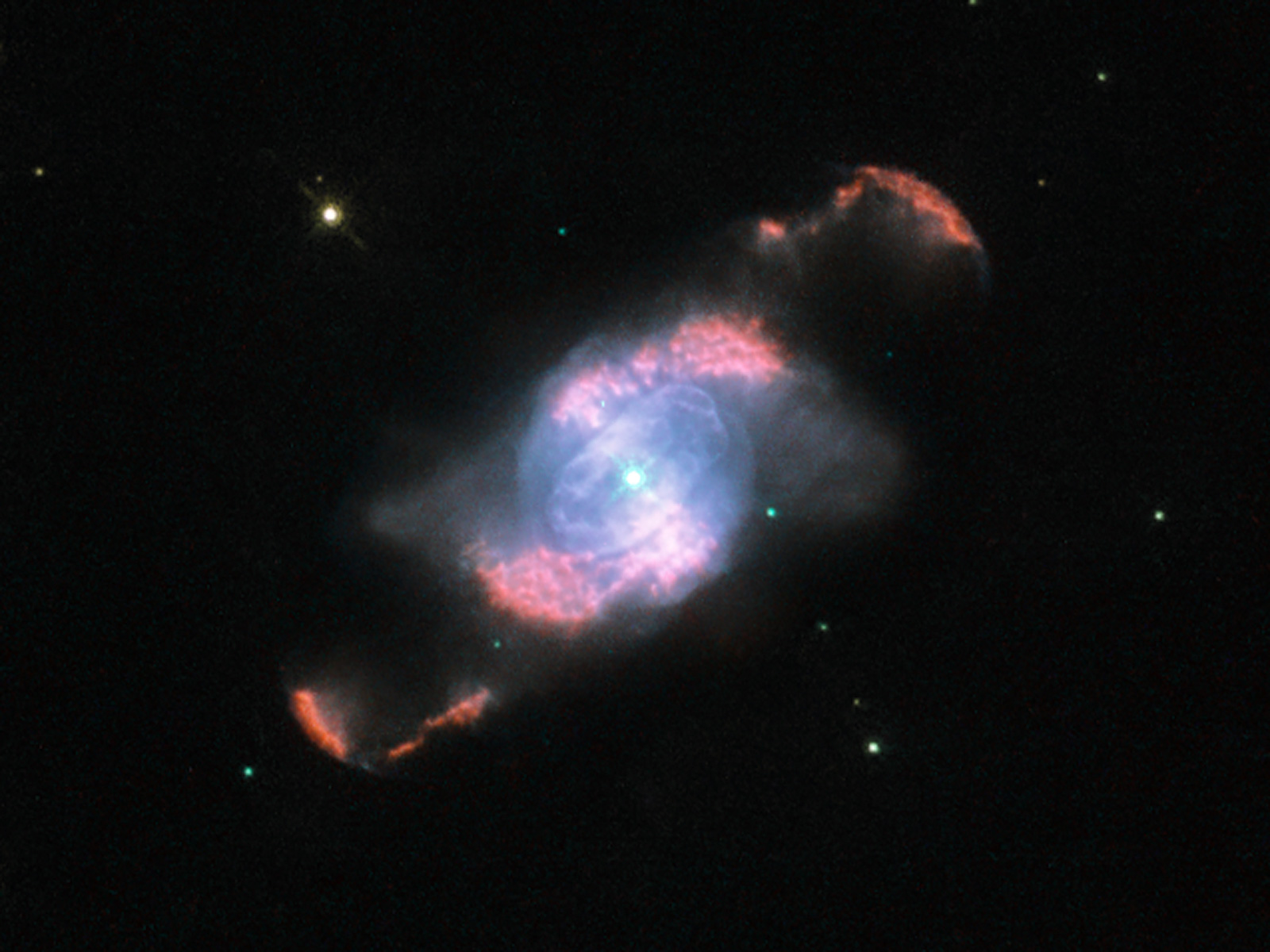
    Hubble imge of NGC 2082; click to engalactinate.Since its launch in 1990, the Hubble Space Telescope has taken… let’s see… <counting on fingers>… carry the two… about a gazillion pictures of the sky. Not all of them are gorgeous, and not all of them are news-breaking, but an awful lot are really cool but don’t get any press.

    That’ll change now. The folks at the European Space Agency side of Hubble Central have created a new feature: the Hubble Picture of the Week. This is pretty much what it sounds like: a new, way cool picture posted once a week. They’ve posted the first three already, like this one:

    hst_ic4634

    Click to embiggen. That’s the planetary nebula IC4634, a star that was once much like the Sun, but is now at the end of its life, throwing off great gusts of gas in its final paroxysms before fading away as a white dwarf.

    The galaxy image above is another one, NGC 2082, a pretty, face-on spiral about 60 million light years away. I worked on Hubble data for a long time, and I saw a lot of images that should be seen by more people, but there simply wasn’t a way to do it back then. With this new HST PotW, I bet a lot of those will get wider acknowledgment now.

    Tip o’ the lens cap to astronomer, my friend, and sometime dance partner Lars Christian Lindberg.


  • Mount St. Helens, +30 years | Bad Astronomy

    I was going to write something up about Mount St. Helens, which erupted 30 years ago today. But then The Big Picture went and did an incredible retrospective of it, so I’ll just send you there. Here’s a taste:

    mtsthelens

    If you’ve ever wondered what my nightmares are like, you’re looking at one.

    I’ll add that a few years ago, when I still lived in California, I flew up to Seattle for a meeting. I literally gasped out loud when I saw the volcano out my window. I stared at it for as long as it was visible. The whole story was laid out clearly for anyone to read it: the side of the caldera was collapsed, and I could see the long run out from the lahar, the mudslide that followed the eruption. Even nearly three decades later the devastation was incredible. Over 3 cubic kilometers (0.67 cubic miles) of rock and ash blew out of the volcano that day.

    You can read about the details of the event on the USGS site and on their 30th anniversary page. It’s a hair-raising story. [Edited to add: This NASA series of pictures is also way cool.]

    And by the way? The volcano is still active. Have a nice day.

    Image credit: USGS.


  • A Strange Journey into the Minds of Vaccine Skeptics | The Intersection

    Orac has a great post skewering an ambitious gambit over at Age of Autism: One Julie Obradovic lectures us there on how to actually save the vaccine program. Much of the advice has to do with accepting the incorrect premises of the vaccine skeptics, and humoring them. All of Orac’s criticisms are on target, but I actually thought Obradovic wrote one thing worth listening to–at least if we take the more abstract point out of the biased context in which she introduces it. It is this:
    Additionally, [vaccine skeptical parents] don’t take kindly to propaganda or threats, and they most definitely don’t like to be insulted. Telling them their choice is to go with the scientific side is juvenile in its approach, suggesting that any parent who researchers [sic] both sides of the debate, personally knows someone with a different experience, and disagrees with the one size fits all approach to vaccination is by default, non-scientific. Brilliant. Well, they actually are unscientific when they do this. However, it probably is true that the confrontational, “you’re clueless and irrational approach” is unlikely to unclog their minds or shatter their misconceptions. Why? Human beings just don’t work that way. We have vast bodies of social science …


  • An umbrella against the mutational showers | Gene Expression

    Mutations are as you know a double-edged sword. On the one hand mutations are the stuff of evolution; neutral changes on the molecular or phenotypic level are the result of from mutations, as are changes which enhance fitness and so are driven to fixation by positive selection. On the other hand mutations also tend to cause problems. In fact, mutations which are deleterious far outnumber those which are positive. It is much easier to break complex systems which are near a fitness optimum than it is to improve upon them through random chance. In fact a Fisherian geometric analogy of the affect of genes on fitness implies that once a genetic configuration nears an optimum mutations of larger effect have a tendency to decrease fitness. Sometimes environments and selection pressures change radically, and large effect mutations may become needful. But despite their short term necessity these mutations still cause major problems because they disrupt many phenotypes due to pleiotropy.

    But much of the playing out of evolutionary dynamics is not so dramatic. Instead of very costly mutations for good or ill, most mutations may be of only minimal negative effect, especially if they are masked because of recessive expression patterns. That is, only when two copies of the mutation are present does all hell break loose. And yet even mutations which exhibit recessive expression tend to generate some drag on the fitness of heterozygotes. And if you sum small values together you can obtain a larger value. This gentle rain of small negative effect mutations can be balanced by natural selection, which weeds does not smile upon less fit individuals who have a higher mutational load. Presumably those with “good genes,” fewer deleterious mutations, will have more offspring than those with “bad genes.” Because mutations accrue from one generation to the next, and, there is sampling variance of deleterious alleles, a certain set of offspring will always be gifted with fewer deleterious mutations than their siblings. This is a genetics of chance. And so the mutation-selection balance is maintained over time, the latter rising to the fore if the former comes to greater prominence.

    The above has been a set of logic inferences from premises. Evolution is about the logic of life’s process, but as a natural science its beauty is that it is testable through empirical means. A short report in Science explores mutational load and fitness, and connects it with the ever popular topic of sexual selection, Additive Genetic Breeding Values Correlate with the Load of Partially Deleterious Mutations:

    The mutation-selection–balance model predicts most additive genetic variation to arise from numerous mildly deleterious mutations of small effect. Correspondingly, “good genes” models of sexual selection and recent models for the evolution of sex are built on the assumption that mutational loads and breeding values for fitness-related traits are correlated. In support of this concept, inbreeding depression was negatively genetically correlated with breeding values for traits under natural and sexual selection in the weevil Callosobruchus maculatus. The correlations were stronger in males and strongest for condition. These results confirm the role of existing, partially recessive mutations in maintaining additive genetic variation in outbred populations, reveal the nature of good genes under sexual selection, and show how sexual selection can offset the cost of sex.

    mutAdditive genetic variance just refers to the variation of genes which affect the phenotype by independent and usually small effects which sum together to produce the range of variation of the trait. Imagine for example that the range of variation in height within the population was 10 inches, and that there were 10 genes which varied, and that each gene exhibited co-dominance. One could construct a model where every gene pair could add 0, 0.5 or 1 inch to the height independently, so that the maximum height could be constructed by adding 10 inches to the baseline and 1 inch per locus, and the minimum height by adding no inches to the baseline when each locus is homozygous for null alleles.

    Mutations can be conceived of in the same manner, with each mutation being a new variant which changes trait value. Even if most of the impact of a mutation is masked there is a small effect in the heterozygote state, and this may serve as a fitness drag. The range in mutational load can then naturally be analogized to additive genetic variance, in this case the trait under consideration ultimately being fitness, mediated through life history and morphological phenotypes.

    In this report they focused primarily on the weevil’s ability to obtain resources and transform those resources into size, which correlates with greater sexual access for males and fecundity for females (ergo, greater fitness). They bred various outbred and inbred lineages across families of these weevils, because these sorts of crosses gauge the impact of masked deleterious alleles, which will manifest in homozygote state more often between related pairs who share mutations than unrelated ones. They found a correlation of -0.24 between inbreeding and breeding value; in other words the more inbred the pair the fewer offspring. The impact of these recessively expressed alleles is mitigated in heterozygous individuals, but because of the non-trivial impact the number of these alleles within an individual will determine its fitness all things equal.

    328_892_F1Interestingly when background variables were controlled males tended to show the greatest fitness drag due to inbreeding depression. This would comport with models of sexual selection where males justify their expense (because they can not bear offspring) within the population by serving as the perishable dumping grounds of bad genes. In particular in a polygynous population a few healthy males with good genes could give rise to most of the next generation, and so providing the balance of selection to the background mutational rate.

    Of course mating patterns vary between taxa. The more reproductive skew there is, in particular for males, the more recourse selection has every generation to dump deleterious alleles via selection. In contrast monogamous populations will have less power to expunge mutations in this fashion because there is more genetic equality across males, the bad will reproduce along with the good, more or less. Therefore a breeding experiment of weevils may have more limited insight than these authors may wish to admit. Geoffrey Miller’s The Mating Mind attempted to take the insights of sexual selection and develop a model of human evolutionary history, but it does not seem that this theory has swept all before it. Only time will tell, but until then more breeding experiments can’t help but clarify where theory goes wrong or right.

    Citation: Tomkins, J., Penrose, M., Greeff, J., & LeBas, N. (2010). Additive Genetic Breeding Values Correlate with the Load of Partially Deleterious Mutations Science, 328 (5980), 892-894 DOI: 10.1126/science.1188013

  • Links of note for today | Gene Expression

    Didn’t spend enough time on the internet today for a Daily Data Dump. But,

    1) ResearchBlogCast #6, sans Kevin Zelnio.

    2) Noah Millman is on Bloggingheads.tv.

  • NCBI ROFL: Gentlemen prefer blonde hitchhikers. | Discoblog

    Hitchhiking women’s hair color. “To test the effect of women’s hair color on the frequency of offering help, male (n = 1,508) and female (n = 892) French motorists were tested in a hitchhiking situation. Five 20- to 22- yr.-old female confederates wore a wig with blonde, brown, or black hair. Each confederate was instructed to stand by the side of a road frequented by hitchhikers and hold out her thumb to catch a ride. Blonde hair, compared with brown hair or black hair, was associated with a small but significantly larger number of male drivers who stopped to offer a ride (18 vs 14%). No difference was found for those with brown and black hair (14 and 13%, respectively). No effect of hair color was found for female drivers who stopped. The greater attractiveness associated with blonde hair for women appears to explain these data.” Photo: Wikimedia commons/Roger McLassus Related content:
    Discoblog: NCBI ROFL: Bust size and hitchhiking: a field study.
    Discoblog: NCBI ROFL: Women’s bust size and men’s courtship solicitation.
    Discoblog: NCBI ROFL: Eye Tracking of Men’s Preferences for Female Breast Size and Areola Pigmentation. WTF is NCBI ROFL? Read our FAQ!


  • Lizards Can’t Take the Heat, but Are They Really Going Extinct? | 80beats

    SceloporusWhither the lizards?

    That’s what biologist Barry Sinervo has been asking lately. In a study published on Friday in Science, Sinvero’s team raised the alarm about lizards around the world, saying that at the very least 6 percent of lizard species will go extinct by 2050, and as many as 20 percent could disappear forever by 2080.

    Sinervo and his colleagues make this claim based in part on surveys they did in Mexico.

    Sinervo and his team surveyed 48 species of spiny lizards at 200 sites on the Yucatan peninsula in Mexico that had been studied in detail from 1975 to 1995 and found that 12 percent of that population had already become extinct by 2009.

    The lizards lived in well-protected areas like national parks, so it wasn’t habitat destruction that caused the population decline, Sinervo said. Instead, it was a tale of rising temperatures disrupting lizard lives [San Francisco Chronicle].

    A lot of studies point the finger at global warming in one way or another, but Sinervo’s team says that there’s a good reason why lizard populations would fade in a warmer world.

    Global warming appears to be lengthening the period of the day when lizards must seek shelter or risk fatal overheating. In the breeding season, that sheltering period is now so long that females of many species are unable to eat enough food to produce eggs and offspring [Washington Post].

    To bolster their claim, the team created their own fake lizards equipped with thermometers and set them out in the Mexican sun. In two areas where the lizards seem to have disappeared, Sinervo says, there were more than 9 hours a day on average that would’ve been too hot for the lizards to come out of hiding. In two areas where lizards still remained, the midday heat was far less brutal.

    In an accompanying essay in Science, Raymond Huey writes that the case is a strong one, and worrisome. However, he wonders, can you really make extinction predictions based on these findings?

    Huey warns that not seeing lizards doesn’t mean that they’re not there. They may just have been overlooked. “Populations go up and down,” he says. Still, he notes, Sceloporus [a Mexican lizard] is very conspicuous. “It would be hard to miss” [Nature].

    Only follow-up surveys can truly confirm that the lizards’ slow disappearance is real and not “psuedo-extinction,” Huey says. Sinervo and his team are presently in Spain, preparing to do a survey in the Pyrenees Mountains.

    Related Content:
    DISCOVER: 10 Studies That Revealed the Great Global Amphibian Die-Off—And Some Possible Solutions
    80beats: How All-Female Lizards Keep Their Genes Fresh Without Sex
    80beats: Gecko to Its Severed Tail: “Quick, Make a Distraction!”
    80beats: Australian Lizards Can “Pop Wheelies”

    Image: Fausto Mendez de la Cruz


  • Evolution is false, the Bible tells me so | Gene Expression

    In the post below I pointed to various differences in regards to acceptance of evolution by demographic. One of the issues is that just because X correlates with Y, does not entail that X causes Y (and of course, if X correlates with Y, and Y correlates with Z, that does not entail that X correlates with Z). You can use the GSS to run some regressions and see what the strongest predictive variables. Because of this I know that the variable BIBLE is very predictive of skepticism of evolution. Additionally, even smart people with college educations who have a literal inerrant view of the Bible are skeptical of evolution. To show the power of Biblical fundamentalism I thought it would be useful to plot differences in regards to the Index of Creationism by various demographics for both Fundamentalists and non-Fundamentalists. So below I have a set of charts which have two series, one for Fundamentalists, and one for non-Fundamentalists, of a given demographic. So for example one chart has Fundamentalists and non-Fundamentalists separated by attainment or non-attainment of college educations.

    The primary variables are BIBLE & SCITEST4.

    BIBLE is:

    Which of these statements comes closest to describing your feelings about teh Bible? 1. The Bible is the actual word of God and is to be taken literally, word for word. 2. The Bible is the inspired word of God but not everything in it should be taken literally, word for word. 3. The Bible is an ancient book of fables, legends, history, and moral precepts recorded by men.

    I recoded so that responses 2 and 3 are classed as non-Fundamentalist.

    SCITEST4:

    For each statement below, just check the box that comes closest to your opinion of how true it is. In your opinion, how true is this? d. Human beings developed from earlier species of animals.

    I created the Index of Creationism = (% “definitely not true”) X 3 + (% “probably not true”) X 2 + (% “probably true”) X 1, from three of the four responses to SCITEST4.

    In the charts below the blue squares = Fundamentalists. The red diamonds = non-Fundamentalists. I rescaled so that 1 is the minimum for the Index of Creationism on all charts.


    evowordsum

    evocollege

    evoincome

    evoregion

    evoreligion

    Reminder: blue squares = Fundamentalists, red diamonds = non-Fundamentalists. A few notes. For stupid, average and smart, I simply recoded the WORDSUM vocabulary test. Stupid = 0-4, Average = 5-7 and Smart = 8-10. For region, it’s pretty self-explanatory, though do note that I placed Texas and such in the South, not the West. The West are the Pacific & Mountain regions only. Those with no college degree includes all those without bachelor’s degrees (non-four year degrees).

    Do you notice the counterintuitive pattern when it comes to intelligence and Creationism, and income and Creationism? The sample size for SCITEST4 isn’t that hot, so you could chalk it up to noise, but I’ve done enough poking around the GSS to trust this. There is a pattern where very intelligent and/or high socioeconomic status Fundamentalists adhere to the viewpoint which in the general population is correlated with lower intelligence and socioeconomic status. I think the dynamic here is partly the same one when it comes to political polarization: stupid and lower status people tend to be less ideologically coherent because they don’t spend much time thinking about abstract questions. From what little field investigation I’ve performed dull human tends to fixate on sensory or interpersonal questions, not intellectual ones. In other words, very stupid Fundamentalists may not even understand what they’re being asked. Very stupid people also tend to agree that they’re political moderates more often than the intelligent; moderate seems like a good thing to say for someone who never thinks about politics. I think this issue to some extent explains the lack of effect among Roman Catholics. Unlike Protestants views about the Bible are less emphasized in Roman Catholicism traditionally, so many Catholics may not have well thought out opinions on the topic. Those who answer that they believe the Bible is the literal and inerrant Word of God may not really even know what this really should mean. The question is geared toward those with Protestant presuppositions.

    There may also be the secondary effect of self-selection when it comes to intelligence and income for Fundamentalists. Fundamentalism tends to correlate with lower intelligence and income, and those who choose to remain Fundamentalists despite higher intelligence and income may self-select for the most extreme and rigorous subset of this class. More theologically liberal and lax Protestant denominations tend to be biased toward wealthy and well-educated individuals, some of whom have switched denominations as they go up the class hierarchy. Those who refuse to switch as they ascend the class ladder may be a peculiar subset. By contrast, lower class status denominations may include more lax individuals in relation to belief or practice who would not feel comfortable in a liberal denomination because of their class status.

    This pattern of social sorting probably explains the fact that region still has a significant predictive power even controlling for Fundamentalism. Northeastern Fundamentalists are equivalent in skepticism toward evolution as Southern non-Fundamentalists. I have seen similar tendencies among black Americans in relation to social issues and religion; secular individuals who are black are invariably more socially conservative that secular individuals who are white. I think this is a function of the fact that secular blacks are embedded in a more socially conservative cultural milieu. Similarly, non-Fundamentalist Southerners are embedded in a more Creationist culture, as Fundamentalists are numerically more preponderant in the South than non-Fundamentalists. New Englanders exhibit the inverted tendency. Someone who is a conservative, Fundamentalist or Republican in New England may actually be liberal, theologically moderate and a Democrat in the South.

    Variables: Region, Wordsum, Relig, Income, Degree, Scitest4

  • Shiny New Neuroscience Technique (Optogenetics) Verifies a Familiar Method (fMRI) | 80beats

    MRI_brainAfter a quarter-million scientific papers, you’d better hope your methodology was solid.

    Most of the studies you’ve probably heard of that try to tie a specific region of the brain to an action or feeling probably relied on a functional MRI technique that tracks the flow of oxygenated blood–so when you see a region “light up” on an fMRI image, that’s not the fMRI picking up the actual neurons firing. Rather, it watches for small changes in blood oxygen levels in the region. This method, called blood oxygenation level-dependence (BOLD), presumes that active neurons use more energy and thus require more oxygen. Now, in a study in Nature, researchers at Stanford Medical Center have provided direct evidence that the inference is correct.

    Lead researcher Karl Deisseroth employed a technique called optogenetics to prove the point. He and his colleagues engineered brain cells that respond to a flash of blue light; when they did this trick on cells in the motor cortex of rats, the flash of light acted as a trigger to active the neurons there. The idea was that they would examine these rats with fMRI at the same time they stimulated those motor neurons with the blue light. If the fMRI lit up in the same places where the researchers knew they were stimulating neurons, they could be confident that fMRI was really picking up brain activation.

    Sure enough, when the neurons were turned on with a pulse of blue light, the researchers detected a strong BOLD signal emanating from the motor cortex neurons’ neighborhood. The BOLD signals were exactly what was expected. “It was very compelling and reassuring,” Deisseroth says. “Everyone can breathe a sigh of relief” [Science News].

    Still, the brain’s complexity never ceases to amaze: While the optogenetic stimulation produced neuron activity that the fMRI scans registered as a BOLD signal, there was other activity besides that showing up as BOLD activity. But, Deisseroth says, those seem to be secondary signals caused by the initial neuron activity.

    “We’re certainly not saying that other processes don’t contribute to these signals,” he says. “We’re saying that driving these excitatory neurons kicks it off” [Science News].

    Besides reassuring neuroscientists, the Stanford work could also open doors for them, like allowing them to see when brain activity is one region is connected to activity on the other side of the brain.

    Optogenetics works at micro scale and fMRI covers wide regions of the brain—together this means that scientists have a way to intervene and experiment with entire brain circuits, to finally see how a certain type of brain cell affects the wider global activity of the entire brain [Scientific American].

    Related Content:
    80beats: Neuroscientists Take One Step Closer to Reading Your Mind
    80beats: A Conventional Brain Scan Could Diagnose Alzheimer’s
    80beats: Brain Scans Could Diagnose Obsessive-Compulsive Disorder
    DISCOVER: Rise of the Mind Readers
    DISCOVER: I Didn’t Sin—It Was My Brain
    DISCOVER: The Pugnacious Paper That Aims to Turn Neuroscience on Its Head

    Image: NASA


  • A Scientist Finds out That Discussion of Bat Fellatio Is NSFW | Discoblog

    According to Dale Evans, a professor at University College Cork in Ireland, he just wanted to bring up an interesting tidbit of animal behavior while chatting with a colleague. But the journal article he referenced, “Fellatio in fruit bats prolongs copulation time,” didn’t just cause raised eyebrows, it also prompted a sexual harassment complaint. New Scientist reports:
    As part of what he says was an ongoing discussion on human uniqueness, Evans showed a copy of the fellatio paper to a female colleague in the school of medicine. “There was not a shred of a sign of offence taken at the time,” Evans says. “She asked for a copy of the article.” A week later he got a letter informing him that he was being accused of sexual harassment. The female colleague later said that she asked for a copy of the article only to cut short the conversation, which she found disgusting and offensive. Let’s just hope that she didn’t take a look at the video the original researchers put together of the bats in action. Related Content:
    Discoblog: Chimps Use Tools to Improve Their Sex Lives
    Discoblog: Endangered Frogs Encouraged to Get Amorous in an Amphibian “Love Shack”
    80beats: With Chirps and Trills, Bats Sing Love’s …


  • Shutting off a single gene could improve fertility by activating dormant egg-producing cells | Not Exactly Rocket Science

    FollicleRight from the moment of birth, women face a ticking clock, counting down to the end of their life’s fertile phase. In their fourth month in the womb, their immature ovaries begin to develop primordial follicles, the structures that will eventually give rise to egg cells. At birth, each ovary has around 400,000 follicles and won’t make any more. During each menstrual cycle, around a thousand of these cells become activated per ovary. By the time a woman goes through menopause, she has less than a thousand left and her chances of being a biological mother are slim to none.

    Follicles stay in a dormant phase that can last for months or even years, until they are gradually activated. Now, a team of Chinese, Japanese and American scientists, led by Jing Li from Stanford University, have found a way to activate these dormant cells at will. It’s a step that could help infertile women, or those who freeze their ovaries before cancer treatments, to eventually have their own children.

    Li’s work shows that despite their ability to slumber for decades, follicles only need a gentle nudge to awaken. She managed to activate dormant follicles in the ovaries of newborn mice using chemicals that shut off a single gene called PTEN. When she transplanted these clusters into mice whose ovaries had been removed, they developed into mature follicles. From these came eggs that could ultimately be fertilised and develop into healthy pups.

    As with most such discoveries, Li’s work hinges on a lot of previous research. In particular, two years ago, Pradeep Reddy from Umea Universit showed that PTEN controls the steady activation of follicles. If mice lack the gene entirely, all of their dormant follicles become activated at once and their entire supply is exhausted in early adulthood. This dramatic switch means that their ovaries fail prematurely. Li wanted to see if she could achieve the same ends in a more controlled way.

    Rather than knocking out the PTEN gene altogether, she temporarily blocked it by soaking ovaries from newborn mice in a chemical called bpV(pic). PTEN works by holding back another gene called PI3K, so Li also tried a chemical called 740Y-P, which activates PI3K. In normal ovaries, the unleashed PI3K targets a protein called Foxo3, which is then removed from the nucleus of follicle cells. This is the trigger that activates them, and that’s exactly what Li saw in her chemically treated ovaries. Foxo3 left the building and the follicles matured, particularly if they were transplanted into a living host.

    None of the cells ever developed into a tumour, which is a real concern since one of PTEN’s role is to keep cancer at bay. Instead, the activated follicles eventually produced oocytes, the precursors of egg cells, which seemed normal in every important respect. They showed the standard patterns of methylation – chemical ‘Post-it’ notes that add onto genes and affect how, when and where they are activated. When fertilised, the oocytes grew into healthy embryos and eventually into 20 healthy pups. And best of all, these pups were themselves able to bear live young of their own.

    Li showed that the same trick might work in humans too, but with more technical challenges. During operations on women with ovarian cancer, she managed to get pieces of ovary containing primodial follicles. She treated the tissues with the same chemicals as before and transplanted them into mice. The result: mature follicles and oocytes. These weren’t fertilised for obvious ethical concerns, but they seemed to show some problems with their nuclei – that will need to be checked in studies using other primates before this technique could ever be used safely in people.

    Reference: PNAS http://dx.doi.org/10.1073/pnas.1001198107

    More on fertility:

  • Texas congressman uses porn to kill science funding | Bad Astronomy

    I know that there are rules to the way laws are made by our government here in the U.S., and that sometimes these rules seem weird and arcane. In general, these rules have evolved to make sure that the majority doesn’t stomp on the minority, and the minority still has a voice.

    TXRepRalphHallBut it’s also clear that those rules can be abused. In the case of U.S. Congressman Ralph Hall (R-TX), “abuse” isn’t nearly a big enough word. “Cynically manipulated” might be a bit better. He killed a bill that would fund science innovation and education by tying it to punishing people who look at porn at work.

    Seriously. This is truly disgusting, and has to be seen to be believed. Please read that link above.

    Basically, the America COMPETES act, instituted under the Bush Administration in 2007, funds a lot of technology and other endeavors to keep the US competitive in the world market. Of course, in the current economic market, we don’t have a lot of money to go around. But this bill would have re-authorized that earlier act, funding what is essentially seed corn, making sure that in the years to come we have a robust investment in our own economy. I wasn’t that familiar with it, but after reading about it I’ll say it’s one of the few things done by the previous President I think is a good idea. So did a lot of others: this reauthorization bill had over 100 co-sponsors in the House.

    I say “had”, because after the shameful and politically transparent move by Rep. Hall, the bill is basically dead.

    This bill would have extended funding for several more years in key places, including science education. Hall is the ranking Republican on the House Science and Technology Committee that prepped the bill. There had been objections by Republicans on the committee to the amount of spending of the bill. The Democrat-controlled committee made some concessions in that area (shaving 10% of the spending off), but still passed the bill out of committee. The next step would be a vote on the floor of the House.

    However, right before it was to go to the floor, Rep. Hall called a Motion to Recommit. Because of those weird rules I mentioned above, this meant that Congress would either have to agree to the Motion and have the bill sent back to committee — where it would die — or overrule the Motion. Now follow this carefully: part of the Motion Rep. Hall submitted was language added to the bill that said that it would prevent the government from paying salaries to employees who looked at porn on government computers.

    By doing this, Hall basically bet all his chips. Hall’s move left Congress, notably Democrats, with two options: kill this much-needed bill that invests in America’s future in science and technology, or overrule a motion punishing people for downloading pornography. If they did the latter, the far right noise machine, always eager for red meat in the political arena, could then say Democrats voted to continue paying employees who looked at porn.

    Facing this sort of choice, a large number of Democrats backed off. Hall’s Motion passed, and the bill went back to committee where it’s now essentially dead.

    Of course, watching porn on the government’s dime has nothing to do with this bill. The only reason I can think of that this language was added is that it was a gambit where Hall wins either way: the bill dies, or Democrats put their head in the right-wing media guillotine. Representative Bart Gordon (D-TN), who is the Chairman of the committee, agrees:

    We’re all opposed to federal employees watching pornography. That is not a question; but that’s not what this was about… The Motion to Recommit was about gutting funding for our science agencies.

    And while Representative Hall pulls this deplorable stunt, our nation is suffering mightily in scientific education. In this heart-rending post by my friend, astronomer and educator Pamela Gay, she laments how we’re letting our teachers and our children down by not funding science, technology, engineering, and mathematics. Read her post, then read again what Hall did.

    Our future is more important than being a chip in a political game of poker. Unfortunately, in this case, Congress folded.


  • Study: Common Pesticides Linked to Attention Deficit Disorder | 80beats

    Child with learning difficultiesAdd one more to the list of environmental factors that could contribute to the rise in attention deficit hyperactivity disorder (ADHD): pesticides. A new study out in Pediatrics argues that there’s a connection between high exposure to common pesticides and increased risk for children developing ADHD.

    Maryse Bouchard and colleagues looked at more than 1,100 children aged between 8 and 15. All of them had been sampled by the National Health and Nutrition Examination Survey (NHANES) between 2000 and 2004, and 119 had been diagnosed with ADHD. Bouchard’s team studied their urine samples for chemicals called dialkyl phosphates, which result from the breakdown of organophosphate pesticides used to protect fruits and vegetables.

    For a 10-fold increase in one class of those compounds, the odds of ADHD increased by more than half. And for the most common breakdown product, called dimethyl triophosphate, the odds of ADHD almost doubled in kids with above-average levels compared to those without detectable levels [Reuters].

    According to the researchers, there are about 40 organophosphate pesticides in use in the United States, the most famous of which is malathion. It was heavily sprayed in California in the early 1980s to try to kill the Mediterranean fruit fly, and also about a decade ago to try to stop the spread of West Nile virus.

    In 2008, detectable concentrations of malathion were found in 28 percent of frozen blueberry samples, 25 percent of fresh strawberry samples and 19 percent of celery samples, a government report found [MSNBC].

    Using the large sample of children from NHANES allowed the researchers to adjust for location, race, and other factors that have confounded studies like this trying to link an environmental factor to a particular condition. However, the scientists admit, the weakness of their study is that using NHANES data allowed them to see just one urine sample taken at one point. Thus, they couldn’t determine the source of contamination, nor could they see how levels of the chemicals in question built up over time. And since that buildup over time is what would spur the potential neurochemical changes that would increase ADHD risk, Bouchard and colleagues write, their study shows correlation but not causation.

    Bouchard’s analysis is the first to home in on organophosphate pesticides as a potential contributor to ADHD in young children. But the author stresses that her study uncovers only an association, not a direct causal link between pesticide exposure and the developmental condition. There is evidence, however, that the mechanism of the link may be worth studying further: organophosphates are known to cause damage to the nerve connections in the brain — that’s how they kill agricultural pests, after all [TIME].

    So there’s a lot left to be proven. But Bouchard’s study is another reminder in favor of the old stand-by: wash your fruits and vegetables thoroughly.

    Related Content:
    DISCOVER: Vital Signs: There’s Hyperactivity… And There’s Hyperactivity
    DISCOVER: Vital Signs: Misdiagnosing ADHD
    80beats: Scientist Smackdown: Are Environmental Toxins a Huge Cancer Threat?
    80beats: Herbal Remedy Doesn’t Help Kids with Attention Deficit Disorder
    80beats: Why ADHD Kids Have Trouble with Homework: No Payoff
    80beats: Bee Killer Still at Large; New Evidence Makes Pesticides a Prime Suspect

    Image: iStockphoto


  • The Brain: The First Yardstick for Measuring Smells

    iStockphoto

    Your nose is a paradox. In some ways the human sense of smell is astonishingly precise. For example, natural gas companies add a smelly molecule called n-butyl mercaptan to natural gas, which is odorless by itself, so that people can sniff gas leaks. All it takes is one n-butyl mercaptan molecule for every 10 billion molecules of methane to do the trick. To put this precision in perspective, imagine you are standing in front of two Olympic-size swimming pools. One of them contains a grand total of three drops of n-butyl mercaptan, and the other has none. Your nose could tell the difference.

    But don’t get too smug, because in other ways your sense of smell is practically useless. To judge for yourself, find someone to help you run a simple experiment. Close your eyes while your partner raids your refrigerator and then holds different foods under your nose. Try to name each scent. If you’re like most people, you’ll bomb. In a number of studies, scientists have found that people tested on items in their own kitchens and garages give the wrong answer at least half the time. And as bad as we normally are at identifying smells, we can easily be fooled into doing worse. If orange food coloring is added to cherry-flavored soda, for example, people are more likely to say that it smells like oranges

  • Seeing Blindness | Visual Science

    This photograph of a young man born without eyes is from Stefano De Luigi’s new book “Blanco”. Photographer Stefano De Luigi said that this moment was one of the most difficult in his five-year project. “When you are confronted with blind people there is always the question-shall he/she become sighted some day? In this case the answer was straight and standing in front of me, and this lack of hope was very hard.”

    Aiming to raise awareness of the daily battle blind people face, De Luigi started began his project in 2003. With the support of “Vision 2020: The Right to Sight”, an initiative spearheaded by the World Health Organization and a broad coalition of international, non-governmental and private organizations seeking to eliminate avoidable blindness by the year 2020, he photographed blind people in 14 countries – Bolivia, Brazil, Bulgaria, China, Congo, Laos, Liberia, Lithuania, Nigeria, Peru, Rwanda, Thailand, Uganda and Vietnam.

    A boy without eyes—birth defect from exposure to Agent Orange—seen at the Nguyen Dinh Chieu school in Hanoi, Vietnam.

  • Non-Normalizable Probability Measures for Fun and Profit | Cosmic Variance

    Here’s a fun logic puzzle (see also here; originally found here). There’s a family resemblance to the Monty Hall problem, but the basic ideas are pretty distinct.

    An eccentric benefactor holds two envelopes, and explains to you that they each contain money; one has two times as much cash as the other one. You are encouraged to open one, and you find $4,000 inside. Now your benefactor — who is a bit eccentric, remember — offers you a deal: you can either keep the $4,000, or you can trade for the other envelope. Which do you choose?

    If you’re a tiny bit mathematically inclined, but don’t think too hard about it, it’s easy to jump to the conclusion that you should definitely switch. After all, there seems to be a 50% chance that the other envelope contains $2,000, and a 50% chance that it contains $8,000. So your expected value from switching is the average of what you will gain — ($2,000 + $8,000)/2 = $5,000 — minus the $4,000 you lose, for a net gain of $1,000. Pretty easy choice, right?

    A moment’s reflection reveals a puzzle. The logic that convinces you to switch would have worked perfectly well no matter what had been in the first envelope you opened. But that original choice was complete arbitrary — you had an equal chance to choose either of the envelopes. So how could it always be right to switch after the choice was made, even though there is no Monty Hall figure who has given you new inside information?

    Here’s where the non-normalizable measure comes in, as explained here and here. Think of it this way: imagine that we tweaked the setup by positing that one envelope had 100,000 times as much money as the other one. Then, upon opening the first one, you found $100,000 inside. Would you be tempted to switch?

    I’m guessing you wouldn’t, for a simple reason: the two alternatives are that the other envelope contains $1 or $10,000,000,000, and they don’t seem equally likely. Eccentric or not, your benefactor is more likely to be risking one dollar as part of a crazy logic game than to be risking ten billion dollars. This seems like something of a extra-logical cop-out, but in fact it’s exactly the opposite; it takes the parameters of the problem very seriously.

    The issue in this problem is that there couldn’t be a uniform distribution of probabilities for the amounts of money in the envelopes that stretches from zero to infinity. The total probability has to be normalized to one, which means that there can’t be an equal probability (no matter how small) for all possible initial values. Like it or not, you have to pick some initial probability distribution for how much money was in the envelopes — and if that distribution is finite (”normalizable”), you can extract yourself from the original puzzle.

    We can make it more concrete. In the initial formulation of the problem, where one envelope has twice as much money as the other one, imagine that your assumed probability distribution is the following: it’s equally probable that the envelope with less money has any possible amount between $1 and $10,000. You see immediately that this changes the problem: namely, if you open the first envelope and find some amount between $10,001 and $20,000, you should absolutely not switch! Whereas, if you find $10,000 or less, there is a good argument for switching. But now it’s clear that you have indeed obtained new information by opening the first envelope; you can compare what was in that envelope to the assumed probability distribution. That particular probability distribution makes the point especially clear, but any well-defined choice will lead to a clear answer to the problem.

    .


  • Steve Jobs to Gawker: What Have You Done for the World, Anyway? | Discoblog

    It was Friday evening, Gawker writer Ryan Tate’s wife was out of town, and he was whiling away the lonely hours by watching 30 Rock when an iPad commercial popped up that touted the new Apple gadget as nothing less than a revolution. Tate got annoyed, fired off an email, and soon found himself in an email fight with Steve Jobs himself. Apple’s CEO is known to personally answer some of the emails that flood into the [email protected] address, and it seems that Tate’s pointed message goaded the exec into action. Tate, who has long taken issue with Apple’s tight rules on how apps can be written and what content is permissible, argued that the iPad couldn’t be considered revolutionary because “revolutions are about freedom.” Several hours later, Jobs fired back with his version of what the iPad offers: “Yep, freedom from programs that steal your private data. Freedom from programs that trash your battery. Freedom from porn. Yep, freedom.” And it was on. Tate got pretty heated in some of his messages to Jobs, but in the aftermath he stresses his respect for Jobs and his methods. As Tate writes in his blog post digesting the whole affair:
    Rare is the CEO who …


  • Obese, gluttonous, and cannibalistic is no way to go through life, son | Bad Astronomy

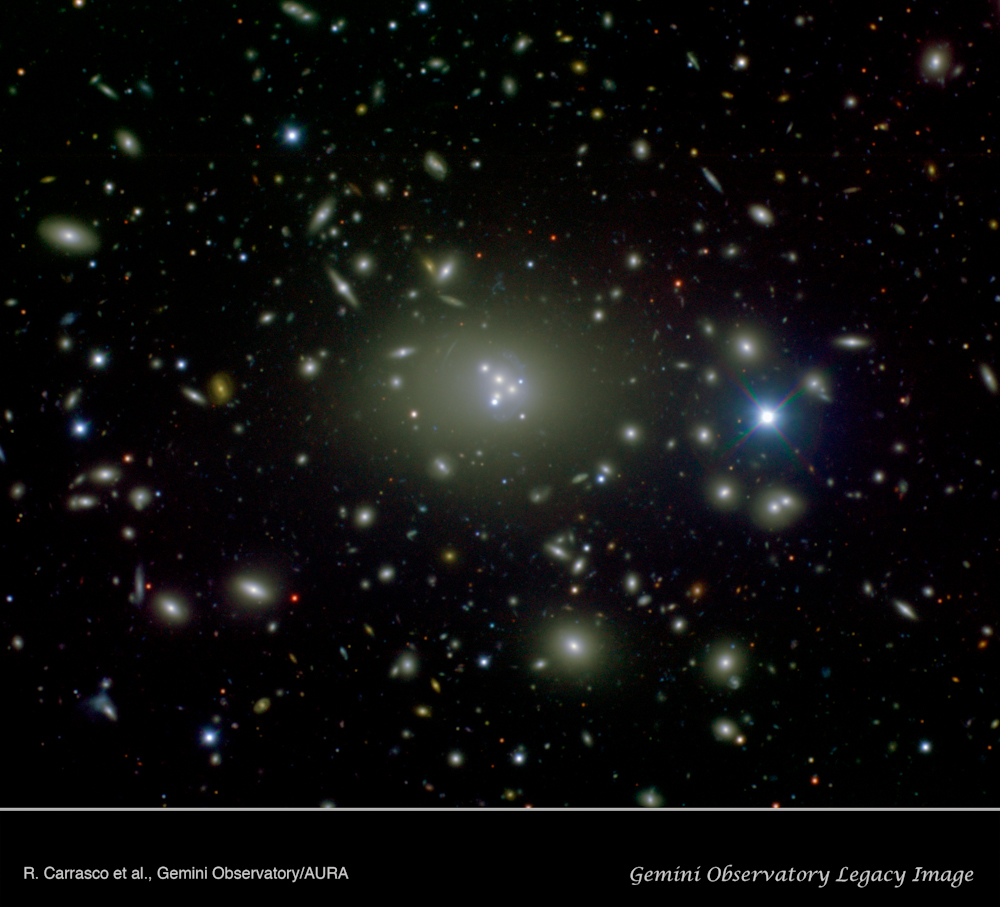
    Astronomers have found a bloated, massive galaxy that may be a record-breaker: the most massive galaxy in the near Universe. The mass isn’t exactly clear, but it may be 13 trillion times the mass of the Sun!* That’s easily twenty times the mass of the Milky Way!

    Here’s the guilty party:

    gemini_abell_3827

    OOoo, purty. Click to record-breakingly-massively embiggen.

    That’s an image from the 8-meter Gemini South telescope in Chile, and it shows the cluster Abell 3827, a 1.4 billion-light-year-distant collection of hundreds of galaxies all bound together by their own gravity. It’s a pretty rich cluster as they go. Many like it have one big galaxy in the core, called the central dominant galaxy (or sometimes cD for short), and it’s usually a few times bigger than any other galaxy in the cluster.

    In the case of Abell 3827, though, the cD — called ESO 146-IG 005 — is out of control. The Milky Way is considered a big galaxy, and has maybe 400 billion times the mass of the Sun in total, but 146-IG is hugely bigger, swollen and ginormous. It’s far more massive than any other galaxy we’ve seen out to that distance. That glow you see in the center of the cluster is just from 146-IG all by its lone self, and it dominates the entire core of the cluster.

    So how do we know this, and how did it get so big?

    abell3827_nucleiHow it got this way is clear from a close-up of the galaxy itself, shown on the right. As you can see, the galaxy has more than one nucleus! In this zoom, there are two foreground stars marked with an S, so you can ignore those. The other five objects are all galaxy cores, which to an astronomer is like a smoking gun: ESO 146-IG 005 has been very busy lately, eating other, smaller galaxies. Yup. It’s a cannibal.

    We have seen this countless times. Heck, the Milky Way is in the final stages of devouring several smaller galaxies, but in our case the process is almost complete. The nuclei of galaxies are hard to digest, so to speak: the stars are tightly bound to the core by their gravity, so it’s hard for the larger galaxy to absorb them all. It takes time. 146-IG clearly has been gulping down a lot of the other cluster members, and this is why it’s so massive. We think that most large galaxies in the Universe grew to their present size by eating other galaxies.

    So we know it’s massive. But how do we know how massive?

    Take a look at that zoom picture again. See that little arc of light to the lower left? That is a gravitational lens, an image of a distant galaxy whose light has been distorted by the gravity from 146-IG. When light passes near a massive object, its path gets bent, like a car driving on a curved, banked road. The mass of the intervening galaxy acts like a lens, hence the term, and it can have all sorts of weird effects on the light.

    The amount of distortion depends on lots of things, including the mass of the lensing galaxy, in this case 146-IG. There are other lensed background galaxies in the image as well, and the astronomers used those to get the mass of 146-IG. However, it’s not all that straightforward; it’s hard to separate out the mass of the galaxy from the cluster itself, and from gas and such inside the cluster that may not be part of the central galaxy. So all we get is an estimate.

    Worse, the astronomers used a second method to find the galaxy mass, and got a much different amount. Gas inside a cluster gets heated as it moves around and falls to the center. The amount of heating (measured by looking at the X-rays emitted by the extremely hot gas) depends on the mass of the cluster, and can be used to estimate how much stuff is there. The astronomers found an “X-ray mass” only a tenth of the mass found using the gravitational lens method. There could be any number of reasons this could happen: the models for the gas assume it’s spherical and smooth when it may be neither, for example.

    But either way, ESO 146-IG 005 is still one of if not the most massive galaxy in the nearby cosmos. It’s much larger than our own galaxy, by a comfortable amount. In the case of our galaxy, we ran out of smaller galaxies to eat, whereas 146-IG is basically still standing in the kitchen with the refrigerator door open.

    It makes me glad the Milky Way is nowhere near that cluster. Sure, we got to our present size by eating other galaxies, but the time of unrestrained gluttony is in the past, and that’s good. It would make our neighborhood something less than the calm, peaceful place it is now. Having undigested galactic nuclei flying around, quadrillions of tons of gas and dust sloshing hither and yon, and all that million degree X-ray emitting gas sitting out there… that can’t be good for property values.


    *Note that the press release linked says the mass may be 30 trillion times the Sun’s mass. This is incorrect; that’s the total mass of the cluster core, and may include stuff that’s not part of the galaxy itself.


  • Who are the creationists? (by the numbers) | Gene Expression

    My post last week about Creationism by region set off a fair number of follow up questions. I’ve actually probed the GSS evolution related variables a lot in the past, but I thought I would put it together in one post in a simple fashion for new readers. I used the SCITEST4 variable since its sample size is the largest. The question asked was: ” Human beings developed from earlier species of animals.” It was asked between 1993 and 2000.

    There are four answers, definitely true, probably true, probably not true, definitely not true. I put the frequencies in a table below, but I thought it would be useful to have one number to summarize the propensity toward creationism in a demographic. Therefore, I created a simple “index of creationism.” The formula to create it is pretty obvious:

    Index of Creationism = (% “definitely not true”) X 3 + (% “probably not true”) X 2 + (% “probably true”) X 1

    If the Index of Creationism for a demographic was zero, that means that everyone in the demographic accepted that evolution was definitely true. In contrast, if it was three, that means that everyone in the demographic believed that evolution was definitely not true. The bar chart below has the Indices of Creationism sorted. Below it is a table with the frequencies as well (unsorted, clustered by demographic kind).


    creationindex

    HUMANS DEVELOPED FROM ANIMALS….

    Demographic Definitely True Probably True Probably Not True Definitely Not True Creationism Index
    Male 19.3 33.4 15.8 31.5 1.6
    Female 12.1 32 17.7 38.2 1.82
    White 16.4 33.2 16.2 34.3 1.69
    Black 9.8 29.2 19.8 41.3 1.93
    Non-College 10.7 31.5 19 38.8 1.86
    College 30.2 36.3 10.3 23.1 1.26
    Stupid 9.6 31.9 22.6 35.8 1.85
    Average 10.7 32.4 18 38.9 1.85
    Smart 29.2 34.2 11.9 24.9 1.33
    Low SEI (17-37) 11.9 32.5 19 36.6 1.8
    Middle SEI (38-67) 15.2 32.1 16.7 36 1.74
    High SEI (68-97) 26.1 33.2 12 28.7 1.43
    Atheist & Agnostic 41.6 39.2 12.4 6.7 0.84
    Higher Power 33 48.7 10.8 7.6 0.93
    Believe in God (Doubts) 20.7 46.6 21.3 11.4 1.23
    Know God Exists 9.7 25.2 16.8 48.9 2.06
    Protestant 10.2 27.5 16.5 45.8 1.98
    Catholic 18 41.3 18.9 21.8 1.45
    Jewish 39.5 41.5 8.6 10.5 0.9
    No Religion 31.7 40.3 13.5 14.5 1.11
    Southern Baptist 6.5 23.9 11.7 57.9 2.21
    United Methodist 14.2 39.8 18.6 27.4 1.59
    Bible Word of God 6.1 20.8 16.9 56.2 2.23
    Bible Inspired Word of God 13.3 36.9 19.5 30.4 1.67
    Bible Book of Fables 35.7 44.4 13.4 6.5 0.91
    German American 14.1 31.9 18.9 35.1 1.75
    Irish American 20.1 33.1 14.4 32.4 1.59
    Italian American 23.5 37 15.5 23.9 1.4
    English American 17.5 31 10.4 41 1.75
    Scandinavian American 15.4 31.5 18.6 34.5 1.72
    “American” 5.8 27.9 31.6 34.5 1.95
    18 to 40 17 34.7 17.8 30.5 1.62
    Over 40 14.1 30.9 16 39.1 1.8
    Liberal 26.8 36.2 15 21.9 1.32
    Moderate 11.4 35.8 19.5 33.2 1.74
    Conservative 11.5 27.1 15.3 46 1.96

    Update: I forgot to add the variables for the GSS query:

    Row: sex race degree(r:0-2″Non-College”;3-4″College”) wordsum(r:0-4″stupid”;5-7″average”;8-10″smart”) sei(r:17-37″low”;38-67″middle”;68-97″high”) god(r:1-2″atheist & agnostic”;3″higher power”;4-5″Believe in god with doubts”;6″Know god exists”) relig bible age(r:18-40″18-40″;40-*”40+”) polviews(r:1-3″Liberal”;4″Moderate”;5-7″Conservative”)

    Column: scitest4

  • Good News: BP’s Oil Siphon Is Working. Bad News: Florida Keys Are in Danger | 80beats

    NASAOil517As the oil has continued to leak into the Gulf of Mexico, bad news about the attempts to stop the flow has continued to leak out, too. But this weekend, finally, brought a ray of good news: BP succeeded in installing a mile-long pipe that will siphon some of the oil up to a tanker on the shore, slowing down the rate of oil flow into the water.

    The current strategy involves snaking a tube snugly into the leaking pipe. The tube is bent at one end like a hook and equipped with thick rubber fins intended to keep oil from leaking out around the edges [Wall Street Journal].

    BP officials say the pipe is working well so far, but they don’t yet what percentage of the oil they’ll be able to capture with this method. And the siphoning pipe is a temporary solution. As the oil company presses on with the months-long process to drill a relief well to relieve the pressure on the leaking area, its engineers are also hunkered down designing a way to deliver the “junk shot” made of tires and golf balls that potentially could seal of the leak.

    Meanwhile, more bad news: We reported late last week that several scientists are now saying BP and the government grossly underestimated amount of oil leaking into the Gulf. Now, a team working out in the Gulf has backed up that assertion. They found large plumes of oil hidden from normal view, deep under the surface of the water. Samantha Joye, one of the oceanographers on board the research vessel Pelican, says:

    The plumes are depleting the oxygen dissolved in the gulf, worrying scientists, who fear that the oxygen level could eventually fall so low as to kill off much of the sea life near the plumes. Dr. Joye said the oxygen had already dropped 30 percent near some of the plumes in the month that the broken oil well had been flowing [The New York Times].

    The likeliest explanation for the drop in oxygen levels, says Joye, is that oil-eating bacteria are devouring the plumes, and consuming large amounts of oxygen in the process.

    Rather than being thick pockets of oil moving deep in the water, these plumes are probably partially dispersed, and some could be the consistency of salad dressing. And their movements have scientists worried that they could spread far beyond the already-large area of the oil slick in the Gulf.

    The National Oceanic and Atmospheric Administration warned over the weekend that plumes of oil already spilled and suspended beneath the water surface might, as soon as Tuesday night, start to get picked up by the powerful “loop current.” The current could carry the oil to the Florida Keys and beyond, scientists fear [Washington Post].

    The coral near the Keys are especially under threat, both from the lack of oxygen caused by the plumes and from the oil itself.

    Depending on the oil exposure, they can be smothered by the pollutants or become more susceptible to bleaching, which hinders reproduction and growth. While the warm temperatures of Florida could speed the recovery of damaged reefs there, some problems could be seen for a decade or more. In the deeper reefs in colder water closer to the spill, the damage could last even longer [AP].

    Our recent posts on the BP oil spill:
    80beats: Scientists Say Gulf Spill Is Way Worse Than Estimated. How’d We Get It So Wrong?
    80beats: Testimony Highlights 3 Major Failures That Caused Gulf Spill
    80beats: 5 Offshore Oil Hotspots Beyond the Gulf That Could Boom—Or Go Boom
    80beats: Gulf Oil Spill: Do Chemical Dispersants Pose Their Own Environmental Risk?
    80beats: Is the Gulf Oil Spill Headed for Florida & North Carolina?

    Image: NASA