Author: Emily

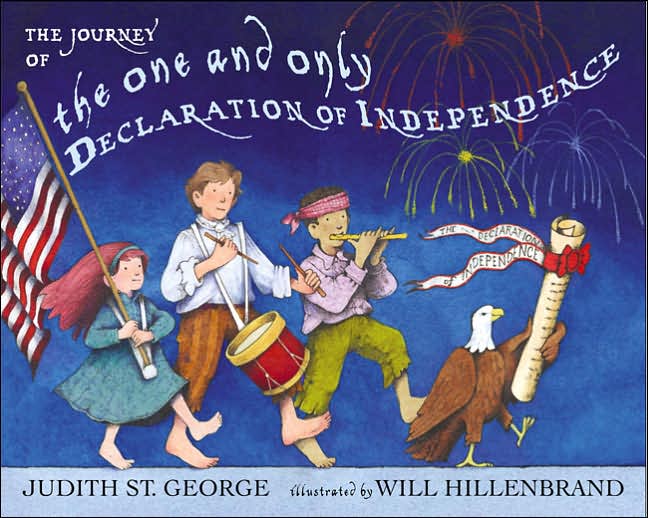
  • Teachings Civics with Children’s Literature: The Journey of the One and Only Declaration of Independence

    the_journey_of_the_one_and_only.jpg

    Introduction and Summary
    The Journey of the One and Only Declaration of Independence written by Judith St. George and illustrated by Will Hillenbrand,is

    Curriculum Connections
    This is a great book to introduce older elementary students to space rocks and gravity of the Moon. Key vocabulary could include Earth, Moon, comet, meteor, asteroid, gravity, and shooting stars. The book explores the different space rocks and also introduces how the Moon has it’s own gravity (SOL 6.8a,c). It also explores the distance and makeup of the Moon and how it is associated with the Earth (SOL 4.7c).

    3.11 The student will explain the importance of the basic principles that form the foundation of a republican form of government by a) describing the individual rights to life, liberty, and the pursuit of happiness; and equality under the law; b)identifying the contributions of George Washington, Thomas Jefferson,

    VS.5 The student will demonstrate knowledge of the role of Virginia in the American Revolution by a) identifying the reasons why the colonies went to war with England as expressed in the Declaration of Independence; b)identifying the various roles played by Virginians in the Revolutionary War era, with emphasis on George Washington, Thomas Jefferson, and Patrick Henry;

    Additional Resources

    Book: The Magic School Bus Out of This World: A Book About Space Rocks
    Author:
    Judith St. George
    Illustrator: Will Hillenbrand
    Publisher: Philomel Books
    Publication Date:
    1996
    Pages:  32 pages
    Grade Range: 2nd-5th grade
    ISBN: 0590921568
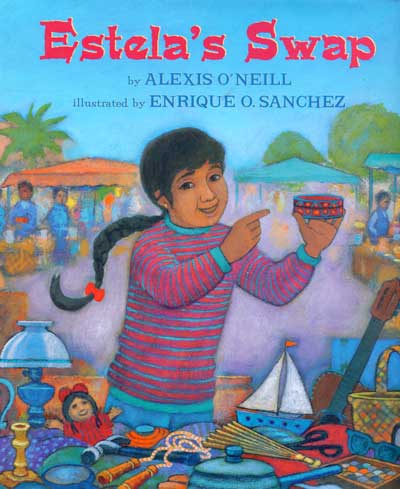
  • Teaching Economics with Children’s Literature: Estela’s Swap

    estelasswap1e.jpg

    Introduction and Summary
    Estela’s Swap written by Alexis O’Neill and illustrated by Enrique O. Sanchez,is about a young girl from Santa Ana named Estela. She is selling her music box at the Swap Meet for ten dollars so that she could pay for folk-dancing lessons that Estela has beein saving for all year. Estela learns how to bargain as she walks the meet with her father:

    “As the seller, you name a price that’s a little more than what you are willing to take. That way you have room to bargain.

    Estela encounters a old woman across the street who enjoys listening to the music box while sewing a skirt. As Estela begins bargaining with customers, a strong wind blows through the Swap Meet. Estela runs to help the old woman across the street who is selling paper flowers as they all blow away. As Estela grabs the tent, her music box falls to the ground. Estela  ignores her music box as she attempts to collect the flowers for the old woman. The woman gives Estela back her music box which is relatively unharmed from the wind. Estela decides to give the woman her box so that she can listen to music while she makes more flowers for the next Swap Meet. At the end of the Swap Meet, the old woman gives Estela the skirt she had been working on. Estela is very excited about her first swap and looks forward to next time to learn how to sell.

    Curriculum Connections
    This is a great book to introduce concepts of economics to young elementary students.  Key vocabulary could include goods, buyer, seller, money, savings, and barter . The book explores concepts of bargaining as well as selling to gain money in order to buy something else (SOL K.7b, 1.7, 2.8). Estela decides to sell her music box because she wants lessons, so she gives up something in exchange for something else (SOL 1.8). Students will enjoy learning about saving money for a specific item (SOL 1.9). A civics lesson is also incorporated into the story as Estela helps the old woman with her flowers even though she puts her own sale of the music box at risk (SOL 1.10a, K.8e)

    Additional Resources

    Book: Estela’s Swap
    Author:
    Alexis O’Neill
    Illustrator: Enrique O. Sanchez
    Publisher: Lee and Low Books
    Publication Date: 2002
    Pages:  29
    pages
    Grade Range: Kindergarten-2nd grade
    ISBN: 1584300442

  • Teaching Geography with Children’s Literature: Travels with Charlie: Travelin’ the Northeast

     northeastbook-cover.jpg

    Introduction and Summary
    Travels with Charlie: Travelin’ the Northeast written by Miles Backer and illustrated by Chuck Nitzberg, is all about the Northeast United States. It includes the 12 states from Maine to Ohio to Maryland. The book features a different state on each page with seek-and-find questions in a poetic form. Along the tab of each page is information about the state including the capital, flag, and lots of interesting facts. A dog named Charlie goes to each state and hides somewhere in the state. Can you find Charlie?

    Find Manhattan Island, home to Wall Street.
    Find the Statue of Liberty. Find hot dogs to eat.

    Where’s Charlie?”

    Curriculum Connections
    This is a great book to introduce upper elementary to the Northeast states as a region.

    Additional Resources

    Book: Travels with Charlie: Travelin’ the Northeast
    Author: Miles Backer
    Illustrator: Chuck Nitzberg
    Publisher: 
    Blue Apple Books
    Publication Date: 2006
    Pages:  36 pages
    Grade Range: 2nd-5th grade
    ISBN: 1593541627

  • Teaching Earth Science with Children’s Literature: The Magic School Bus Out of This World: A Book About Space Rocks

    magic-school-bus.jpg

    Introduction and Summary
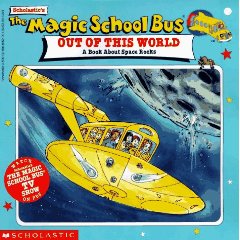
    The Magic School Bus Out of This World : A Book About Space Rocks written by Joanna Cole, is another classic in the Magic School Bus series. Mrs. Frizzle’s class is putting on a solar system play when they find out that an asteroid out in space is headed straight towards Walker Elementary School! The class rushes onto the Magic School Bus that turns into a Space Bus. On their trip to find the asteroid, they discover what shooting stars are and also get pulled into the Moon’s gravity. They defeat a comet and finally find the asteroid. They try many different ways to redirect the asteroid away from Earth until Dorothy Ann finally comes up with a plan. She says the Magic School Bus needs to become as big as the Moon to pull the asteroid into it’s gravity, then shrink at just the right time to send the asteroid far away from the Earth. After the class accomplishes this, they travel back and even get a phone call from NASA on the way home.

    Curriculum Connections
    This is a great book to introduce older elementary students to space rocks and gravity of the Moon. Key vocabulary could include Earth, Moon, comet, meteor, asteroid, gravity, and shooting stars. The book explores the different space rocks and also introduces how the Moon has it’s own gravity (SOL 6.8a,c). It also explores the distance and makeup of the Moon and how it is associated with the Earth (SOL 4.7c).

    Additional Resources

    Book: The Magic School Bus Out of This World: A Book About Space Rocks
    Author:
    Joanna Cole
    Illustrator: Bruce Degen
    Publisher: Scholastic
    Publication Date:
    1996
    Pages:  32 pages
    Grade Range: 2nd-5th grade
    ISBN: 0590921568
  • Teaching Life Science with Children’s Literature: This Is Your Life Cycle

    1208_lifecycle.jpg

    Introduction and Summary
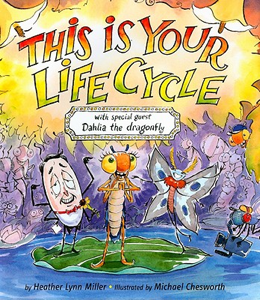
    This Is Your Life Cycle written by Heather Lynn Miller and illustrated by Michael Chesworth, is about the life cycle of a dragonfly. The book is set up like a game show with host Bob Beetle. Bob interviews his special guest, Dahlia the Dragonfly as they go through the events in her life beginning as an egg and leading up to the molten stage where she becomes an adult dragonfly and tries to eat the audience!

    We all know how that goes- right, audience? It’s the story of an insect’s life. We hatch, we grow, we mate, we die!

    Curriculum Connections
    This is a great book to introduce middle elementary students to the life cycles of insects. Many teachers have used it to introduce key vocabulary such as egg, nymph, molt, and exoskeleton. It describes the series of orderly changes in an insect’s life as they mature and grow (SOL 2.4a). This would be an amusing review for upper elementary students. It has also been suggested to be performed as a theatrical reading.

    Additional Resources

    • This is Your Life Cycle Lesson Plan  : This is a lesson plan about insect life cycles geared grades 2-6 using the book This is Your Life Cycle 
    • Life Cycle Lessons : This is a great website about the life cycle of a dragonfly complete with actual photos of these insects in each stage of life
    • Dragonfly Handout:   This is a handout that explains the incomplete metamorphesis of a dragonfly

    Book: This Is Your Life Cycle
    Author: Heather Lynn Miller
    Illustrator:
    Michael Chesworth
    Publisher: 
    Clarion Books
    Publication Date: 1998
    Pages:  32 pages
    Grade Range: 2nd-5th grade
    ISBN: 0618724850

  • Real Food Challenge: Week #1

    It’s February 1st, and that means the 28-day Real Food Challenge is underway here at Nourished Kitchen.  Day #1’s assignment – cleaning your cupboards – has been sent out and participants should be receiving it shortly.  We’ll follow up with another assignment every day for the entire month of February with goal of  introducing the principles of a nourishing diet to newcomers of the traditional foods movement while helping to reinvigorate the passion of those who’ve followed a traditional diet for some time.

    We’ve over 500 participants, and I’m thrilled to be able to host such a positive coming together of real food enthusiasts here at Nourished Kitchen.  We even have some fantastic prizes for those who participate for the entire challenge, touching base each Monday to share their progress, their trials and show support for other folks joining the Real Food Challenge.  The steps are simple, but designed to make marked, but simple improvements in the foods with which you nourish your body.

    Next Monday, it’ll be time to check in here at Nourished Kitchen to let us all know how your first week went.  In the meantime, continue to spread the word about the challenge by sharing it with your friends by email, facebook or twitter.

    If you’ve missed any days or assignments:

    If you’ve missed any of the challenge’s updates, emails or assignments please check out the challenge’s archive to get caught up (click here).

    Real Food Challenge Prizes:

    If you haven’t already, sign up now:

    The first assignment just went out during the wee hours of the morning, so if you haven’t signed up, do so now.  In the meantime, join the discussion on Nourished Kitchen’s facebook fan page.  Remember, the challenge’s assignments will not hit your RSS feed so you do need to sign up to participate if you haven’t already done so.


    Wondering where your full feed went? Click here to learn why The Nourished Kitchenmoved to summary feeds. Don’t forget to find Nourished Kitchen on Facebook, Twitter, Flickr and
    © Emily for The Nourished Kitchen, 2010. |
    Permalink |

    Post tags:

  • Teaching Physical Science with Children’s Literature: It’s Science! Solid, Liquid, or Gas?

    051626393501tzzzzzzzgif.jpg

    Introduction and Summary
    It’s Science! Solid, Liquid, or Gas? written by Sally Hewitt, is about the different states of matter. It explores matter throughout the book with a key word on each page, such as “Gas”, followed by a description of what the matter is. Each page also describes an experiment or question related to the topic of the page. For example: Gas has an experiment in the Try it Out! section that asks a child to blow into a balloon to see the gas blow it up and feel the gas come out of the balloon.

    Curriculum Connections
    This is a great book to introduce young elementary students to the states of matter and exploration of water. One of the topics is water where the different states of water are explored (SOL K.5a) as well as whether objects sink or float in the water (SOL K.5c). The question of “sink or float” can be explored in a simple experiment in small groups. The students will determine if the objects given to them will sink or float in the water. Another section of the book describes dissolving. There is an experiment determining what materials will dissolve in water (SOL 1.1). Finallly, the sections about melting and changing shape can be useful when one is learning about the processes of changing states of matter (SOL 2.3)

    Additional Resources

    • States of Matter Lesson Plan  This is a lesson plan geared for grades 1-3 about states of matter using balloons filled with ice, air, or water.
    • Song about Matter :This is a fun song about matter using the tune “Oh Dear, What Can the Matter Be?” It might be a bit complicated for Kindergarten but was used in a 2nd grade classroom. It also has a video with a child singing the song.
    • Sink or Float Lesson Plan:   This is a lesson plan about objects that sink or float that also uses a book about Christopher Columbus to incorporate how his ship floated across the ocean. What else can float in the water? What sinks?

    Book: It’s Science! Solid, Liquid, or Gas?
    Author: Sally Hewitt
    Publisher: Children’s Press
    Publication Date:
    1998
    Pages:  32 pages
    Grade Range: Kindergarten-2nd grade
    ISBN: 0613375459

  • Cold Quinoa Salad with Chicken, Pine Nuts & Feta

    quinoa salad

    Quinoa is a remarkable grain – rich in magnesium, phosphorus and manganese as well as the amino acid lysine which offers antiviral properties.  Quinoa is not truly a cereal grain in the same manner as wheat or rye; rather, it’s a pseudocereal and, as such, is gluten-free and well-tolerated by those who choose to consume it. This quinoa salad combines pine nuts, feta cheese, parsley and radicchio and is best served with a very light olive oil vinaigrette.

    This quinoa salad is fresh, and savory but also dense in nutrients.  Pine nuts offer an excellent source of vitamin E, vitamin K, thiamin and niacin as well as magnesium, phosphorus and mangnese.  Radicchio, a member of the chicory family, is a remarkably good source of inulin – a prebiotic that helps to nourish and feed the beneficial bacteria in your digestive tract (learn more about prebiotics and probiotics).

    Feta cheese, like that included in this recipe, is traditionally prepared from ewe’s milk; however, most feta cheese currently available in super markets is not made from ewe’s milk, but prepared from cow’s milk instead.  If you’re fortunate to have access to a good cheese shop, do your best to purchase a traditional ewe’s milk feta though goat milk or cow milk feta will do.  Ewe’s milk and goat’s milk are richer in tryptophan, an amino acid known for its calming properties, than cow’s milk.

    Grains, nuts and seeds, contain antinutrients which inhibit the activity of digestive enzymes and which can bind minerals preventing their full absorption.  To maximize the nutritive value of the quinoa, with all its vital minerals, take care to soak the quinoa in a warm and slightly acidic solution prior to cooking.  You may also sprout the quinoa, which offers a nice alternative and also increases the vitamins present in the grain (learn more about sprouted grain).  Quinoa also contains saponins which lend a very unpleasantly bitter, soapy flavor to the dish if the quinoa is not properly prepared.  To mitigate the negative impact of saponins on the flavor of the final dish, thoroughly rinse the quinoa in fresh water prior to soaking it.  When cooked through, quinoa is pleasantly sticky and the cooked germ will curl around each grain making for a delightful appearance.  I prepare my quinoa by first rinsing, then soaking for a few hours and boiling in broth until cooked through.

    Cold Quinoa Salad with Radicchio, Chicken and Pine Nuts

    A nutrient-dense, filling winter salad, quinoa combines with faintly bitter radicchio, chicken and salty feta cheese. This week Nourished Kitchen is being featured as FoodBuzz’s Family Bites Featured Blog, and I’ll be showcasing several new recipes all week long.  I hope you enjoy them.

    Cold Quinoa Salad with Radicchio, Chicken and Pine Nuts: Ingredients(…)
    Read the rest of Cold Quinoa Salad with Chicken, Pine Nuts & Feta (95 words)


    Wondering where your full feed went? Click here to learn why The Nourished Kitchenmoved to summary feeds. Don’t forget to find Nourished Kitchen on Facebook, Twitter, Flickr and
    © Emily for The Nourished Kitchen, 2010. |
    Permalink |

    Post tags:

  • Chipotle Chile, Black Bean and Chicken Soup

    black bean chipotle chicken soup

    Black bean soup – warm, spicy, brimming with chicken, beans and vegetables – is a dish that everyone can appreciate.  There’s nothing quite like a nourishing black bean soup on a cold winter’s afternoon, that, when paired with a salad of fresh winter greens and full-bodied unrefined olive oil, makes for a fully satisfying meal.  A good black bean soup is both hearty and delightful, and decidedly filling.  This black bean soup combines homemade mineral-rich broth with chicken while the addition of salsa and chipotle chile powder provides a lovely heat.

    While legumes rarely make it to our supper table anymore; we still enjoy a good black bean soup.  Black beans offer a good source of food folate – a B vitamin that’s critical to reproductive health and fetal development.  Indeed, low maternal intake of food folate is connected to birth defects – particularly neural tube defects though some evidence indicates low levels of folate are also implicated in cleft palate and heart defects as well.

    This version of black bean soup is easily prepared and, when you’re working from pre-cooked ingredients, the soup requires fewer than a thirty minutes to prepare.  Rather than using canned beans in this black bean soup, try preparing a large batch in advance by soaking dry beans in warm and slightly acidified water for 24 hours, draining them and then cooking them in a slow cooker until tender.  Freeze beans for easy use later.

    Chipotle Chile, Chicken & Black Bean Soup

    (…)
    Read the rest of Chipotle Chile, Black Bean and Chicken Soup (253 words)


    Wondering where your full feed went? Click here to learn why The Nourished Kitchenmoved to summary feeds. Don’t forget to find Nourished Kitchen on Facebook, Twitter, Flickr and
    © Emily for The Nourished Kitchen, 2010. |
    Permalink |

    Post tags: , , , , , , , , , , , , ,

  • Cottage Pie with Mashed Yams

    This post was generously contributed by Emily of Minneapolis Real Food Lover – one of my favorite blogs focusing on real food.  Over the coming week Nourished Kitchen will feature more guest posts by some of the best, but most undersung voices in the real food community. What will I be doing?  Why sipping fresh coconut water and lime juice from the beaches of Mexico.  If you’re interested in guest blogging at Nourished Kitchen at a later date, why don’t you drop me a line? – Jenny

    cottage pie

    I love cottage pie for supper, on a cold winter’s night, it’s a delicious comfort food. This recipe is simple, nourishing, and can be prepared using one cast-iron pan, what’s more to love? One of my health-related goals for this year is to eliminate gluten and grains from my diet, while eating more nutrient-dense food. This dish fits my criteria for a healthy meal filled with vitamins and goods fats found in grass-fed animal foods such as fat-soluble nutrients; locally raised ground beef, real butter, rich local Cedar Summit Farms cream, and no grains or gluten. As a mother, kid appeal of foods is also a key factor in meal planning and this one gets a thumbs up from folks of all ages at our house.

    Cottage Pie with Mashed Yams

    Ingredients for Cottage Pie with Mashed Yams

    • 1 lb grass-fed ground beef
    • 1 cup homemade beef stock or store bought organic beef broth
    • 1/4 cup cream from grass-fed cows
    • 3/4 stick good-quality butter (the higher fat content the better)
    • 1 large onion, chopped
    • 1 cup frozen peas
    • 1 cup diced carrots
    • 2 medium sized yams or sweet potatoes
    • 3/4 cup shredded grass-fed sharp cheddar cheese
    • 1 T arrowroot powder
    • 1 T finely chopped fresh rosemary
    • 1 tsp dried thyme
    • 2 T organic tomato paste (I like Bionaturae as it comes in glass jars)
    • 1 tsp organic Worcestershire sauce (I use Annie’s)
    • real sea salt and crushed black pepper to taste

    Method for Preparing Cottage Pie with Mashed Yams

    1. Bake yams in a 375 degree oven for 30-45 minutes or until soft when pricked with a fork. Peel yams, discarding the peel and mash them with 1/2 stick butter, 1/4 cup cream and a dash of salt in an electric mixer. When the yams are nicely mashed set aside.
    2. In a large cast-iron pan saute onions and carrots in 1/4 stick butter on medium heat, stirring until onions are translucent and carrots are slightly browned. Add in ground beef, breaking up meat into small pieces with the back of a wooden spoon. Stir occasionally until beef is cooked through, about 10 minutes.
    3. Pour in beef stock, Worcestershire sauce, rosemary and thyme, stirring to incorporate and turn heat to low. Allow the liquid to reduce a bit, about 15 minutes or so. Add in the peas, and sprinkle the arrowroot on top. Briskly stir to prevent the arrowroot from clumping, then continue stirring gently until the sauce has thickened, less then 5 minutes. Add in salt and pepper to taste. Remove pan from heat, turn oven to 375 degrees.
    4. Spread mashed yams evenly on top of the meat and veggie mixture. Sprinkle cheese over the yams. Bake for about 25 minutes or until cheese is bubbly and starting to brown.

    Enjoy this warm meal with your family on a cold day (it’s 4 degrees here in Minneapolis as I write this, brrr!).

    For more real food ramblings and recipes please visit me at MplsRealFoodLover.com


    Wondering where your full feed went? Click here to learn why The Nourished Kitchenmoved to summary feeds. Don’t forget to find Nourished Kitchen on Facebook, Twitter, Flickr and
    © Emily for The Nourished Kitchen, 2010. |
    Permalink |

    Post tags: , , ,

  • Making Fat: How to Render Lard

    how to render lard: freshly rendered lard

    Rendering lard is a lost art – a worthwhile technique forgotten in a fat-phobic, Lean Cuisine-centered culture.  Many cooks, seeking out local foods and forgotten traditions, have rediscovered how to render lard in their homes. Learning how to render lard needn’t be a difficult task; it requires clean fat, clean water, a good stock pot and a quiet afternoon in the kitchen.  The reward of a beautiful, creamy white jar full of freshly rendered, pastured lard is worth the minimal effort.

    Pastured lard is a remarkably good source of vitamin D and of monounsaturated fat – the same fatty acid found in olive oil and avocado that is heralded for its benefits to cardiovascular health.  Odd that lard, given its fatty acid profile and vitamin content, earned such a bad rap over the last few decades.  Like many wholesome, nourishing fats, lard seems to have been swept aside for a time, but it’s quickly earning a much-deserved renaissance – ensuring that taking the time to learn how to render lard is worth your effort both in terms of its redeeming nutritional value as well as in celebration of the wealth and variety of your local foodshed.  Hogs, and their nutrient-dense fat, are widely available.

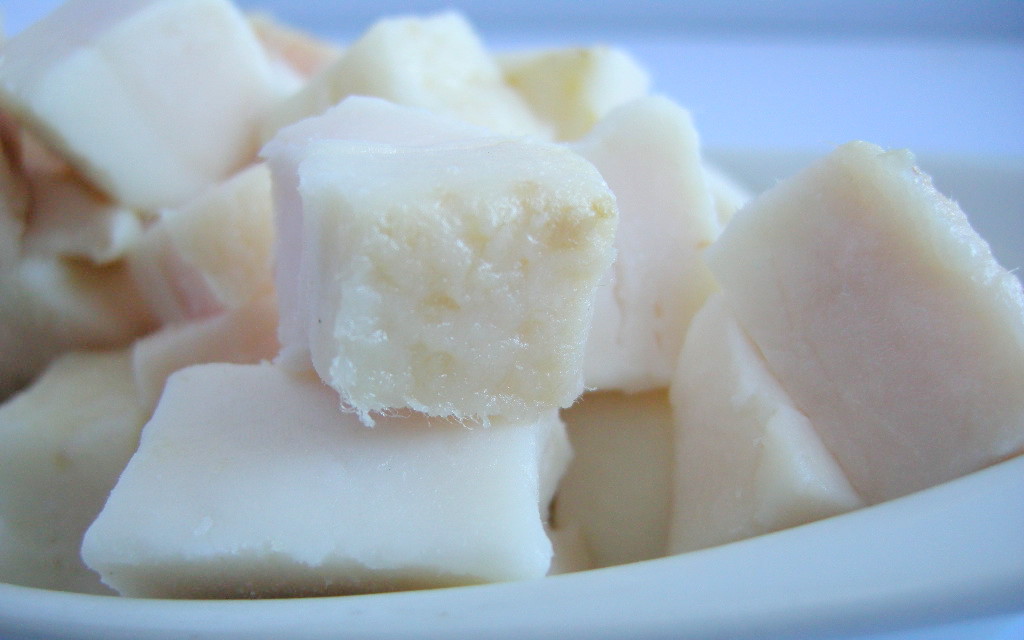
    how to render lard: cube lard first

    How to Render Lard on the Stove top

    I prefer to render lard on the stove top, so if you’re learning how to render lard from this method, take care to ensure you have a high-quality, heavy bottomed stock pot.  Two and one-half pounds of fresh leaf lard or hog fat will produce approximately one-half gallon of creamy, nutrient-dense fat.  For more step-by-step images, check out the photostream on flickr.

    Ingredients for Rendering Lard

    • 2 ½ pounds of pastured leaf lard or hog fat
    • ½ cup filtered water

    Stovetop Method for Rendering Lard

    1. With a sharp knife, trim any blood spots or remaining meat from the lard.
    2. Chop the fat into ½-inch cubes.
    3. Add the chopped fat and the filtered water to a heavy bottomed stock pot and simmer over medium-low heat, stirring occasionally.
    4. After about 45 minutes to one hour, the water will evaporate, the fat will begin to melt and the cracklings – little bits of browned fat – will begin to float to the surface of the pot.  Continue to gently stir the melted fat periodically, taking care not to let it splatter.
    5. Eventually those cracklings will sink to the bottom of the stock pot, at that point you may remove your pot from the heat.
    6. Line a fine mesh sieve with a 100% cotton cheesecloth and strain the melted fat, reserving the cracklings for another use (they’re quite nice salted and eaten as a snack or served in place of breadcrumbs in a gratin).
    7. Pour the melted fat into mason jars and allow to cool.  The melted fat will be golden-brown in color, but, when cooled, will appear a creamy white.
    8. Use your freshly rendered lard in pastries or as a fat for braising vegetables or seasoning meats.

    pastured lard on a spoon


    Wondering where your full feed went? Click here to learn why The Nourished Kitchenmoved to summary feeds. Don’t forget to find Nourished Kitchen on Facebook, Twitter, Flickr and
    © Emily for The Nourished Kitchen, 2010. |
    Permalink |

    Post tags: , , , , , , , , , ,