Author: Emily Bouckaert

  • Freshwater Delivery in the Wake of Natural Disasters

    A sample of water technologies invented to store, ship and provide one of the most critical resources for crisis recovery.

    By Emily Bouckaert
    Circle of Blue

    Freshwater Delivery

    Photo © Carmen Barker/IWT
    Local residents collect clean drinking water from a newly installed SunSpring unit at a Youth Sports Center in Croix-des-Bouquets, Haiti.

    After a natural disaster, safe drinking water is always among the most urgent needs. Without it, health conditions deteriorate. Illnesses spread quickly.

    That’s why having equipment in place that makes it easier to provide water is so crucial in disasters. Water transportation and purification technologies, say authorities, should be part of the rapid response solution in emergencies. Early forays into commercial applications for such equipment have been unsuccessful, said Pacific Institute President Peter Gleick. But he sees enormous potential for them in crisis situations.

    “If we were smart enough to pre-position these kinds of resources,” Gleick said, “either large bags for moving water or small scale technologies that are capable of treating large quantities of water quickly, I think we’d do much better at preventing, or at least reducing, the impacts of natural disasters.”

    Here are some useful new tools:

    SunSpring™

    The SunSpring™ is a solar powered water purifier created by the small Colorado-based company Innovative Water Technologies (IWT). Each unit is equipped to produce microbiologically purified water from a variety of poor quality inlet sources including rivers, wells, lakes, ponds, ditches and recycled rain water.

    SunSpring™ uses a General Electric Homespring Central Water Purifier that effectively removes bacterial and viral pathogens, as well as particulate matter from contaminated water, to meet the water quality standards of the U.S. Environmental Protection Agency. GE Homespring™ units have been used for disaster relief in the aftermath of the tsunami in Southeast Asia in 2004, Hurricane Katrina in 2005, and the earthquake in Sichaun, China in 2008. Andrew Warnes, senior channel manager at Pentair Residential Filtration (a GE-Pentair Joint Venture), said that the units need electricity to operate, sometimes limiting their ability to function in disaster relief efforts.

    “It was always a desire on our part to go completely off the grid with this technology,” Warnes said.

    Meanwhile Jack and Carmen Barker, owners of IWT, found a way to power the purifier off the grid. They reinvented the GE Homespring by combining it with a solar panel and creating a unit that could be filter water entirely independent of an electrical grid. Recently, the Sunspring™ units have been put to work in the field to help satisfy the great need for safe water in Haiti after the January earthquakes. Fourteen units have been donated to relief efforts in Haiti, each with the capacity to provide water to almost 10,000 people. Ten of these units were donated by the GE Foundation to the Clinton Global Initiative. CGI sent the Sunsprings to UNICEF, which finally forwarded them to Esperanza—a sustainable development organization—making a chain of noteworthy Sunspring™ supporters. Additionally, Jack Barker is leading the installation team and training NGO Esparanza on the ground in Haiti to maintain the units for the long term.

    One of the next major concerns in Haiti’s recovery is the threat of widespread waterborne illness, according to Warnes. IWT has created a real-time interactive map that pinpoints the sites of the donated units.

    “The intent behind these sites is to create a necklace or a string of safe havens surrounding medical facilities so that those sites don’t have to worry about ongoing water supply,” Warnes said.

    The Sunspring™ can filter 19,000 liters of water per day and last ten years, making it one of the most permanent drinking water solutions for disaster recovery.

    Spragg Bags™

    Spragg Bags™ are giant cylindrical bags designed to transport freshwater around the world. For the past 22 years, Terry G. Spragg & Associates have been developing and refining the water bag technology.

    Spragg Bags™

    Photo © Terry Spragg
    An air inflation test of two Spragg Bags.

    A test voyage in the Pacific Ocean was conducted in 1996, transporting freshwater from Port Angeles, Washington to Seattle. Each bag can hold about 770,000 gallons of freshwater. More than 1.5 million gallons were transported during the test voyage with two 230 ft bags. The Spragg Bags ™ are connected by ultra strong zipper technology and “towed” in trains.

    “The key to the whole system is the connection system. The zipper system gives you the ability to modulate,” inventor Terry Spragg told Circle of Blue.

    As suggested in a recent blog entry by the Pacific Institute’s Peter Gleick, in emergency situations empty bags could be transported with safe drinking water to nearby sites.

    Spragg is confident in the technical merits of his water bags.

    “The economics are easy to calculate, the technology is easy to demonstrate; it’s the politics of water that have been the most difficult part of my process,” he said.

    Terry Spragg’s next goal is to run another test voyage demonstration, this time between Northern and Southern California. He hopes the test voyage gives investors the data and evidence they need to support Spragg Bags.™

    WaterBox

    WaterBox Freshwater Delivery

    Photo © Mark Atherton/Brunel University
    The interior of a WaterBox purifier, housed in a one-foot by two-fooot plastic bin.

    Deveopled by professors and former students from Brunel University, the WaterBox was created for disaster relief. The purifying system can filter approximately 15 liters of water per day, which fulfills daily water needs for about 15 people.

    According to WorkingwithWater.net, the WaterBox system uses two carbon filters, a reverse osmosis filter, and ultraviolet light to purify water. The WaterBox is also equipped with a meter that triggers automatic cycling of water back to the holding tank if it doesn’t meet the necessary standards.

    The system can be powered by electricity from the grid or by solar panels.
    While the WaterBox is designed as a short-term water purifying solution, Dr. Mark Atherton told WorkingwithWater.net that the WaterBox is intended to be recycled.

    “A team based around very able mechanical engineering students had a vision for the WaterBox to be the best affordable western technology made quickly available for a disaster situation, and then retrieved and made ready for the inevitable next time occurrence.”

    Currently, the creators of the WaterBox are seeking investors for the project.

    Historically, individuals and governments alike have struggled with targeted planning to fund and distribute technologies like the SunSpring™, Spragg Bags™ and WaterBox before disaster strikes. Relief only pours in after major events. The retroactive response is more expensive, and slower. A whole spectrum of organizations, and generous individuals, usually help make ends meet. The pattern held in the recent earthquakes in Haiti and Chile, but it’s not a permanent solution.

    “I think we need to set up effective, permanent disaster response in all aspects of disaster. Not just water, but also in food and health,” Gleick said. “To rely on overstressed and overstretched non-governmental agencies just isn’t the most effective way to deal with it.”

    Carefully positioned water transportation and treatment technologies could be part of that permanent solution.

    Emily Bouckaert is a reporter for Circle of Blue. You can reach her at [email protected]

  • Coastal Fog Trend Could Harm Iconic Redwoods

    New study finds that lower levels of fog could leave coast redwoods more susceptible to drought damage.

    Redwoods in the FogReduced amounts of fog cover during the summer could be troublesome for the coast redwoods, according to a University of California at Berkeley study released Tuesday. Published in Proceedings of the National Academy of Sciences, the study suggests that lower levels of fog are exposing west coast habitat including redwoods to greater drought stress.

    The coast redwood or Sequoia sempervirens is a giant, long-lived conifer with an extremely limited distribution.  According to the International Union for Conservation of Nature (ICUN) Red List, the trees can only be found along a 725 km-long coastal belt spanning from Central California to southern Oregon.  The ICUN lists the species under “vulnerable” conservation states with a decreasing population trend.

    The redwoods have special adaptations that allow them to collect water directly from the atmosphere.  This is especially crucial during summer months, when the trees compensate for dry conditions by obtaining about 40 percent of their water intake from atmospheric moisture according to Reuters.

    To understand the fog frequency changes along the coast, lead researchers James Johnstone and Todd Dawson used historical data dating back to 1951.  They then extrapolated fog conditions back during the early 1900s for which there is no historical record.

    “Over the past 58 years, the coastal fog has decreased by about 1.3 hours a day,” Johnstone told Rueters.

    Meanwhile the causes for the decreased fog frequency remain unclear. USA Today reports that the decrease in fog frequency could be due to natural oceanic and atmospheric variations.  Climate change is also possibly a contributing factor, but Johnstone told USA Today that, “there is not clear evidence for this point.”

    Even though Dawson told Reuters that it is possible that climate change plays some role in the disappearing fog, he describes how you would need an, “analysis of fog everywhere around the world, and how it’s changed everywhere around the world, to say okay, there’s this general global pattern.”

    Sources: Reuters , USA Today, ICUN Red List, Proceedings of the National Academy of Sciences

  • Vancouver Promotes Tap Water During Olympic Games

    Attendees are encouraged to drink tap water during the 2010 Vancouver Winter Olympic Games.

    Olympics in VancouverMetro Vancouver is promoting the use of municipal tap water instead of purchasing bottled water during the Olympic Games, the CBC reports. Municipal officials seek to reduce the city’s bottled water consumption by 20 percent at the end of the year as a part of their Tap Water Campaign.

    The Fairmont Pacific Rim Hotel has joined the campaign, agreeing to no longer sell bottled water. Instead, hotel guests will be able to purchase reusable steel water bottles to keep.

    “Bottled water is a major seller in our guest rooms through the mini-bars. I was concerned about the fall-off of those sales … but it’s the right thing to do,” hotel manager Randy Zupanski told the CBC.

    If the movement gathers steam, it could affect the bottled water sales of Coca-Cola Ltd., a major Olympic sponsor.

    However, Coca-Cola spokesperson Nicola Kettlitz told the CBC he is not concerned about the tap water competition.

    “Our bottled water does not compete with tap water. It’s about having clean water available in a convenient place, and tap water is not always available in a convenient place,” Kettlitz said.

    Vancouver isn’t the only city promoting tap water consumption.  Officials in London have included plans to provide free tap water to tourists when they host the 2012 Olympic Summer Games, according to the London Evening Standard. In addition, many U.S. municipalities have already banned the purchase of bottled water for city-funded events.

    Meanwhile Food and Water Watch has published guidelines on how consumers and promoters can enjoy events that are bottled water free.

    Sources: CBC, London Evening Standard, foodandwaterwatch.org

    Read recent commentary from Peter Gleick on the bottled water battles here, here and here. Also check out Circle of Blue’s reports on other cities fighting to “take back the tap,” here and here.

  • Medications Discarded in Landfills May Be Contaminating Maine’s Water

    A survey released in Maine finds trace amounts of pharmaceuticals present in landfill leachate.

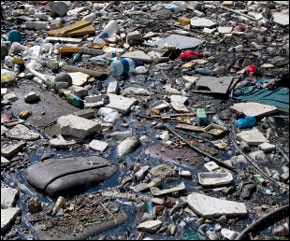
    Landfill Water Contamination
    A survey from the Maine Department of Environmental Quality has revealed that traces of medications like birth control, antidepressants, and pain relievers were found in the liquid that drains from landfills, the Huffington Post reports.

    This contaminated water is known as leachate. Most Maine landfills have systems that collect and transport leachate to wastewater treatment facilities where the liquid is treated and then pumped into rivers.

    Expired or unused medications are usually discarded in landfills. This is considered a better form of disposal than flushing, because wastewater treatment facilities in Maine are not equipped to remove medical contaminants from the liquid.

    But if the leachate contains traces of medications, those medications will still be present after the water is treated and pumped back into rivers.

    While Maine does not draw any drinking water directly from rivers that receive treated leachate wastewater, this could potentially be an issue for other states.

    These kinds of toxins can be harmful to some types of aquatic life. But lobbying organization,Pharmaceutical Research and Manufacturers of America (PhRMA) argue that the amount found in the environment are too small to pose a significant threat to the safety of drinking water.

    “The amounts of pharmaceuticals (in the environment) are infinitesimally small. We’re talking about two drops in an Olympic-size swimming pool. Those two drops are much lower than any doses that would have an effect on humans,” said Marjorie Powell, senior assistant general counsel at PhRMA told the Associated Press.

    PhRMA does not support a newly proposed bill in Maine that would call for manufacturers to fund the collection and disposal of unused medications.

    Meanwhile the Office of National Drug Control Policy has issued suggestions on how to safely dispose of unused prescriptions or expired medications. The organization suggests first checking to see if your local pharmacy has a “take back” program or if your community’s hazardous waste collection program accepts medications. If neither of these programs are available, they recommend removing medications from their original containers, mixing them with undesirable substances such as used coffee grinds or kitty liter and then placing the mixture in a seal-able container or bag before putting them in landfills.

    Sources: Associated Press, Huffington Post, and Federal Guidelines: Proper Disposal of Prescription Drugs

  • Glimmer of Optimism for Polar Ice in Antarctica

    Preliminary tests conducted under the ice in East Antarctica found that the seawater isn’t heating up.

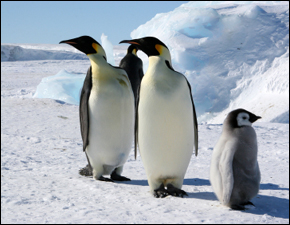
    Optimism for Polar Ice in Antarctica
    The Norwegian Polar Institute (NPI) found that seawater temperatures beneath the Fimbul Ice Shelf are hovering slightly above freezing. This data indicates the water is actually “icier” than temperature projections made by an Antarctic regional computer model, according to Dr. Nalan Koc of NPI.

    The findings at the Fimbul Ice Shelf offer an increasingly infrequent glimmer of optimism for the fate of polar ice. Recently, reports about global climate change and its effects on the polar regions have been troublesome. Earlier this fall, scientists from the Catlin Arctic-World Wildlife Federation collected data that suggested the Arctic Ocean will be ice free in summer due to rising global temperatures within 20 years. In addition, the National Snow and Ice Data Center couldn’t locate the stiff, non-navigable “multi-year” arctic ice pack they expected to find a recent expedition in the Beaufort Sea.

    On the whole, however, Antarctic ice is disappearing. Antarctica is losing over 100 cubic kilometers (24 cubic miles) of ice annually, and that rate is accelerating, according to gravity data collected by NASA’s Grace satellite.

    Much of the ice loss is occurring in the West Antarctic region. According to NASA, the East Antarctic region has experienced less ice loss along its edges due to two factors: it is situated on the large continental landmass, and precipitation in the region compensates for much of the ice loss. In contrast, the West Antarctic region is comprised of a series of smaller islands, meaning there is less continental ice and more ice shelves. Ice shelves are defined as the portions of glaciers that extend beyond the landmass. They are more vulnerable to melt due to greater exposure to fluctuating seawater temperatures. In addition, when the buffer of an ice shelf is removed, the continental glacier ice is put at greater risk for melt.

    Ole Anders Noest of NPI described the state of the Fimbul Ice Shelf in East Antarctica after his initial examination in a written statement.

    “This situation seems to be stable, suggesting that the melting under the ice shelf does not increase,” Noest Wrote.

    Source: Reuters