Author: GMO Pundit

  • Libel Reform Bill has been tabled in the House of Lords

    A Libel Reform Bill has been tabled in the House of Lords
    (From www.libelreform.org)

    Lord Lester QC has published a Private Members’ Defamation Bill to reform England’s outdated and unjust libel laws. This is the first attempt in over a century to put forward a wholesale redraft of our libel laws to address many of the issues our campaign has highlighted.
    Lord Lester’s Bill covers a great deal of the recommendations of the Libel Reform Campaign including a statutory defence for responsible publication on a matter of public interest; clarifying the defences of justification and fair comment, which will be renamed as ‘truth’ and ‘honest opinion’.


    The Bill will also:

    require claimants to provide evidence their reputation was damaged by an alleged libel before they can bring a case forward (they don’t have to do this at present) and make corporations prove financial damage before they can sue.
    Address the problems introduced by the rise of the internet and the culture of online publication including the multiple publication rule that makes each download a fresh instance of libel, and alter the responsibility of forum hosts for what is posted on their sites.
    Encourage the speedy settlement of disputes without parties having to bring in costly lawyers.
    Promote the speedy settlement of disputes without recourse to the courts.
    There is a great piece by Lord Lester on why he is doing this now here.
    And Simon Singh has written his thoughts on the bill here.

    Thanks to your support we’ve made the case that libel law reform is an issue politicians know they have to act on.

    There is widespread Parliamentary support for reform … the majority of eligible MPs signed up to an EDM supporting libel law reform in the last Parliament.
    There were general election manifesto commitments to reform from the Conservatives and Liberal Democrats, and Labour.
    Now, there is a coalition Government promise to reform the libel laws in the Queen’s Speech …

    …But we need new libel laws!
    In light of Lord Lester’s Bill, the Libel Reform Campaign is asking: will the Government now make clear its plans for reform? Will it support, adopt or develop this Bill?
    Help us keep the pressure on. Write to your MP asking them what the Government intends to do.
    Best,

    Mike and Síle
    PS – for more details of the bill and complete coverage see www.libelreform.org

    See for example

    Dr Ernesto Bustamante’s predicament

  • Gene boosts rice yields

    From the current issue of Nature Genetics: Gene improves grain yield in rice

    Alleles at the OsSPL14 gene alter rice plant architecture and enhance grain yield in rice, according to two independent studies published online this week in Nature Genetics. In small numbers of test rice plots, favorably altered alleles of OsSPL14 led to approximately a 10% increase in grain yield.
                It is thought that crop yields need to double by 2050 in order to adequately feed the world’s growing population. Identification of genetic variants that can enhance crop production is an important approach toward this problem.
                The findings from two independent studies by Jiayang Li, Moto Ashikari and their respective colleagues suggest that OsSPL14 may be useful for increasing rice crop production.

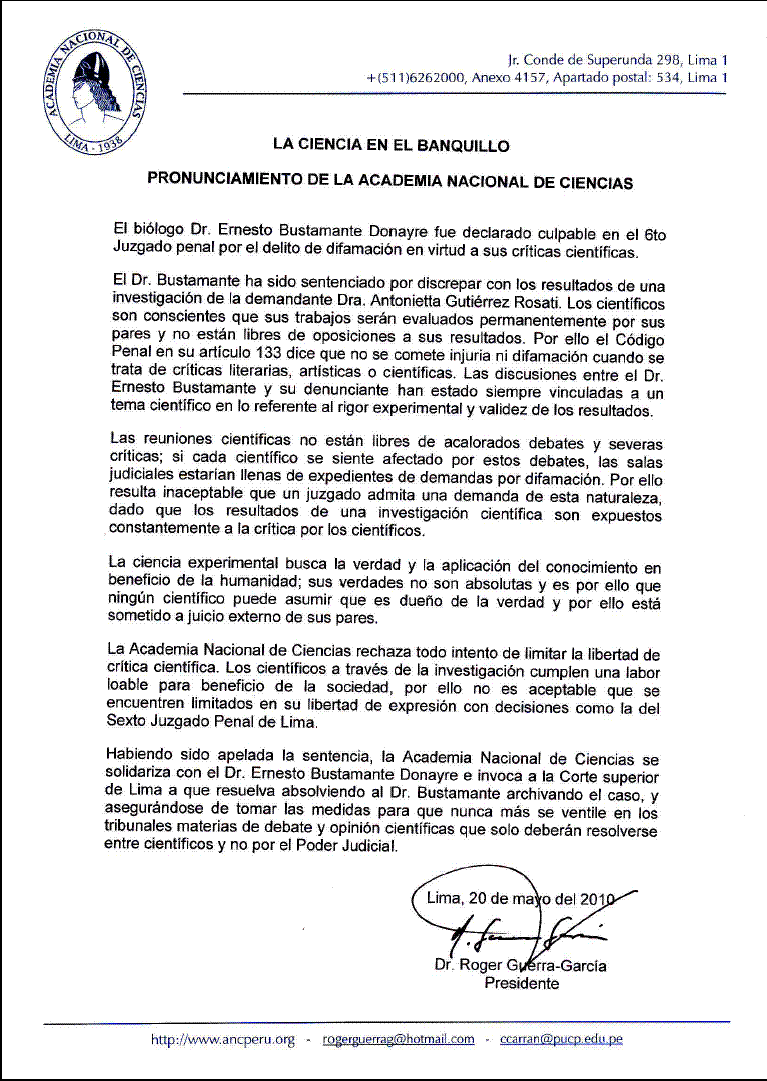
  • Pronouncement of NAS of Peru – Pronunciamiento de la Academia Nacional de Ciencias

    Pronouncement of NAS of Peru – Pronunciamiento de la Academia Nacional de Ciencias

    Estimados Colegas y amigos/ Dear Colleagues and friends,
    Con alegria les informo que la Academia Nacional de Ciencias se ha pronunciado a favor del Dr. Ernesto Bustamante y de la libertad de critica cientifica en el Peru. La Academia enviara este Pronunciamiento a las siguientes autoridades gubernamentales: Poder Judicial, Tribunal Constitucional, Consejo Nacional de la Magistratura, Defensoría del Pueblo, Asamblea Nacional de Rectores, y Ministerio Público. Asimismo, hemos sido autorizados por la ANC a difundir esta Declaracion de de la manera que creamos conveniene. Les adjunto el Pronunciamiento y la carta correspondiente.

    With pleasure I want to inform you that the National Academy of Sciences of Peru has pronounced in favor of Dr. Ernesto Bustamante and on the freedom of scientific expression and critique in Peru. The Academy will send this Pronouncement to the following Peruvian government authorities: Poder Judicial, Tribunal Constitucional, Consejo Nacional de la Magistratura, Defensoría del Pueblo, Asamblea Nacional de Rectores, y Ministerio Público. Likewise, we have been duly authorized by the ANC (NAS) to disseminate and publish this public Pronouncement as we see fit. Please, find attached the Pronouncement and the correspondent letter.

    Sinceramente / Sincerely,

    Professor
    Marcel Gutierrez-Correa, Ph.D.
    ASM Ambassador to Andean Region
    NAS-Peru Fellow

  • So many things I would have done but clouds got in my way.

    Both Sides Now
    Joni Mitchell
    I’ve looked at life from both sides now,
    From win and lose, and still somehow
    It’s life’s illusions I recall.
    I really don’t know life at all.


    Both Sides Now. Fallacies in the Genetic-Modification Wars, Implications for Developing Countries, and Anthropological Perspectives by Glenn Davis Stone

    The greens’ scorn for public research appears to some to reveal a lack of genuine concern for the welfare of developing-country populations (Nash 2001), but it more likely results from a perceived need to engage the struggle on a large scale with strong financing and a wide following.
    Large, ardent followings of check-mailing opponents of genetic modification are better mobilized by bold black-and-white slogans than by critical evaluations of the potential effects of different genetically modified products. Mass marketing has led to a shameless “dumbing down” of the issues. Greenpeace, with a global presence and around 4 million paying supporters (Purdue 2000:73), offers one of the boldest condemnations of genetic modification; it is no accident that right next to the “No Genetic Modification” banner on its web page is the “click here to join” button.

    However, the greens’ demonization of genetically modified crops has effects that are contradictory to their values. Promoting blanket disapproval of such crops helps drive public-sector genetic modification into the arms of industry. Genetic modification is expensive, and most public projects are in a constant struggle for funding. Industry provides some funds and access to genetic materials; greens provide no funding and obstruct philanthropic investment (ABC News Online 2001). Green activists may claim to have developing countries’ interests at heart, but many public researchers have devoted their careers to improving nutrition for the poor, often spurning better-paid positions in industry. Many actually share greens’ disapproval of increasing corporate control over developing countries’ food production, but they can hardly be blamed for disdaining activists who demonize public research along with corporate projects. They may fairly ask green critics why they do not approve of ongoing research such as cassava modification that is explicitly tailored to improving food security for the poor.

    Current Anthropology Volume 43, Number 4, August–October 2002

  • Garden birds prefer non-organic food to organic

    Garden birds prefer non-organic food to organic, study finds – Telegraph UK

    Garden birds prefer non-organic food to organic, study finds
    The nutritional benefits of organic foods have been called into question by some very discerning diners – wild garden birds trying to survive the winter.
    By Richard Alleyne, Science Correspondent
    Published: 2:10PM BST 18 May 2010
    Grain of truth: even when the grain in the feeders were switched around, the birds soon were able to spot the difference

    British researchers found that birds such as robins and house sparrows “instinctively” preferred non-organic seeds to the more naturally grown varieties as it appeared to provide them with greater nutritional value through the cold months.
    When offered both varieties of wheat seed, they were able to discern between the two and ate up to 20 per cent more of the conventional grown variety than the organic…

    …A spokesman for the Soil Association said: “The UK Government’s own advisors found that bird life is up to 50% greater on organic farms showing that most birds do choose organic. Animals like chimpanzees and even rats have been shown to prefer organic food. This study has absolutely no bearing on whether organic food is better for human health or not.”

    Pundit’s thoughts:

    The peer reviewed version in Journal of the Science of Food and Agriculture is yet to come on line, so we have to treat this report skeptically for the moment….

    But the Telegraph item is an example of how the press react when fed on organic chaff for an extended period.

    And as far as the Soil Association’s remarks “that bird life is up to 50% greater on organic farms”, there is this to contradict their claim.

  • Natural GMOs Part 71. They deliberately try and poison you!

    SCIENCE DAILY
    Press release May 14th, 2010
    Screening Crop Plants for Toxins

    John Innes Centre [UK] scientists are working on a way to screen crop plants for a toxic accumulation. The genetic screen will be particularly useful for crops grown in tropical and sub-Saharan Africa.

    Many plants, in response to predators or herbivores, release hydrogen cyanide to defend themselves. Cyanide precursors are kept in a compartment in the cell. Tissue damage allows them to break out of the compartment and mix with a degrading enzyme in the cell. This produces toxic, bitter hydrogen cyanide that repels the herbivore.

    This mechanism, known as cyanogenesis, is found in two thirds of the main crop species eaten worldwide, including maize, sugar cane and some legumes. The major impacts on human health are seen when it is the edible part of the plant that produces cyanogenic compounds, such as in cassava roots. In fodder crops such as sorghum it can lead to livestock poisoning.

    Without correct processing, high levels of hydrogen cyanide in the food can cause neural disease and permanent paralysis, a condition known as konzo. In drought conditions, the cyanide levels increase even higher.

    Cassava is the third largest source of carbohydrates for human food in the world after wheat and rice. The bitter varieties, favoured by farmers because of their better resistance to pests, contain two cyanogenic compounds. Various processing methods are used to remove them, such as by soaking in water for several days.

    Finding less toxic strains of these crops is a high priority, and a new genetic screen developed at the John Innes Centre will help in this search. Researchers, working on a collaborative program sponsored by the Danmarks Grundforskningsfonden (Danish National Research Foundation) with colleagues at the University of Copenhagen, developed a high-throughput way of detecting cyanogenesis-deficient mutant plants. Using the model legume Lotus japonicus, they screened more than 40,000 plants in just 10 days, identifying 44 cyanogenesis deficient mutants.

    “We are keen to extend this work to crop plants and cassava is the big target. If we could set up a system we could get to a non-cyanogenic variety of cassava quite quickly,” said Professor Cathie Martin of the John Innes Centre. “We’re now looking to identify populations of cassava that we can screen so that we can get non-cyanogenic lines to trial for performance in the field.”

    The study also found that some mutants were deficient in cyanogenesis only in certain parts of the plant and not in others, suggesting, for example, it may be possible to find mutants that retain cyanogenesis in leaves but don’t make the dangerous toxins in the edible roots of cassava. This would enable crops to keep their valuable defence mechanisms against pests, and yet reduce the considerable time required for preparation of food using cyanogenic crops and the risk to human health.

    Dr Jonathan Clarke, Head of Business Development at the John Innes Centre, an institute of the Biotechnology and Biological Sciences Research Council, (BBSRC), is working with Prof Martin to apply this technology. “The effects of cyanogenic crops impact on the lives of some of the most vulnerable people in the world. The problem is increased during times of drought when the toxin levels increase and water for soaking is unavailable” said Dr Jonathan Clarke. “We have developed a simple, rapid, and low cost screen. We are now seeking funding to use this to produce non-cyanogenic cassava for Africa.”

  • The five hallmarks of denialism.

    Denialism: what is it and how should scientists respond?
    Black is white and white is black

    HIV does not cause AIDS. The world was created in 4004 BCE. Smoking does not cause cancer. And if  limate change is happening, it is nothing to do with man-made CO2 emissions. Few, if any, of the readers of this journal will believe any of these statements. Yet each can be found easily in the mass media.

    Denialism is a process that employs some or all of five characteristic elements in a concerted way. The first is the identification of conspiracies

    …There is also a variant of conspiracy theory, inversionism, in which some of one’s own characteristics and motivations are attributed to others

    …The second is the use of fake experts. These are individuals who purport to be experts in a particular area but whose views are entirely inconsistent with established knowledge…

    The use of fake experts is often complemented by denigration of established experts and researchers, with accusations and innuendo that seek to discredit their work and cast doubt on their motivations…

    …The third characteristic is selectivity, drawing on isolated papers that challenge the dominant consensus or highlighting the flaws in the weakest papers among those that support it as a means of discrediting the entire field…

    The fourth is the creation of impossible expectations of what research can deliver

    …The fifth is the use of misrepresentation and logical fallacies

    ..Logical fallacies include the use of red herrings, or deliberate attempts to change the argument and straw men, where the opposing argument is misrepresented to make it easier to refute…

    …The normal academic response to an opposing argument is to engage with it, testing the strengths and
    weaknesses of the differing views, in the expectations that the truth will emerge through a process of debate.
    However, this requires that both parties obey certain ground rules, such as a willingness to look at the evidence as a whole, to reject deliberate distortions and to accept principles of logic. A meaningful discourse is impossible when one party rejects these rules…

    …Instead, we argue, it is necessary to shift the debate from the subject under consideration, instead exposing to public scrutiny the tactics they employ and identifying them publicly for what they are. An understanding of the five tactics listed above provides a useful framework for doing so.

    Pascal Diethelm, Martin McKee
    OxyGene`ve, Geneva, Switzerland
    London
    School of Hygiene and Tropical Medicine,
    London, UK
    European Journal of Public Health, Vol. 19, No. 1, 2–4

  • EU virtually the biggest land grabber?

    Land grabbing: is the EU the largest net importer of agricultural produce and ‘virtual’ land?
    – OPERA/Research Centre of Università Cattolica del Sacro Cuore (press release), May 11, 2010

    The independent Research Centre OPERA* presented today (Tuesday 11th May 2010) in Brussels, a new research report that warns that the European Union must encourage agricultural innovation and productivity increases to avoid charges of territorial “land grabbing”.

    Authors of the study are Professor Harald von Witzke of the Humboldt University of Berlin and Steffen Noleppa of agripol – network for policy advice. The research details the development of EU agricultural trade between 1999 and 2008 and quantifies the substantial acreage cultivated in other countries to fulfil Europe’s demand for food, animal feed and biofuels. It shows that in 2007/2008 almost 35 million hectares of land beyond European borders was used for the benefit of Europeans, with the EU the world.s largest importer of agricultural products.

    “That’s an astonishing figure: it’s almost equivalent to the entire territory of Germany,” said Professor Ettore Capri, Director of OPERA Research Centre. “This is exactly why we wanted bring these figures to the table so that the decision makers can take them into account.” 
    The report is called “EU Agricultural Production and Trade: Can More Efficiency Prevent Increasing ‘Land-Grabbing’ Outside Of Europe?” It gives the most comprehensive analysis of agricultural trade with Europe, and the impact of this trade on land-use decisions outside the EU. It’s the first such analysis embracing all 27 European Member states and it covers approximately 40 crops and 240 tradable commodity groups – more than any recent study available.

    It finds that the EU has become the world’s largest net importer of agricultural produce, and therefore the largest user of agricultural land that is not its own. In 2008 the 27 Member states of the EU exported US$127.6 billion of agricultural commodities, but imported produce valued at US$173.1 – a net import of US$45.5 billion.

    The report’s authors use a complex indicator-based approach to convert the EU.s international agricultural trade data into trade in ‘virtual. land’ “For instance, if it takes ‘X’ hectares to produce one metric ton of wheat, then exporting that wheat to Europe is equivalent to exporting ‘X’ hectares of virtual land,” said Humboldt University’s Harald von Witzke, leading author of the “Land-Grab” report.

    The EU is now a net exporter of virtual land in wheat and coarse grains only. It.s importing virtual land in all other commodities and commodity groups. Soybean alone accounts for more than 50% of the net import of virtual land.

    “We.re quick to raise our eyebrows at the acquisition of land in other countries by resource-hungry nations,” von Witzke said. “But we’re doing exactly the same, albeit virtually through market forces instead of foreign investment.”

    The Humboldt University/agripol analysis shows that between 1999 and 2008 Europe’s use of foreign land for its own agricultural production has grown by 40%, or 10 million hectares. It says the issue is compounded by change in land use in many virtual land-exporting countries, and increasing greenhouse gas emissions from the conversion from forests, grasslands and refuge into cropland.

    It analyses the effect of three potential scenarios within a reformed European agricultural policy; enhancing agricultural yields, increasing area under organic farming, and expanding the use of biofuels. Of these, enhancing the yields in Europe, seems the solution to reduce circumvent externalisation of food sources.

    The report maintains that encouraging agricultural innovation and increasing productivity in major crops by just 0.3 percentage points per year would reduce the need to farm 5.3 million hectares of cropland outside the EU. If annual incremental growth rate in the EU’s agricultural production had doubled between 1999 and 2008, it says, the importation of virtual land would have been about 10 million hectares less and would have remained roughly at the 1999 level. By contrast, expanding the acreage of organically farmed land to 20% would increase virtual land importation by almost 30%.

    And policies to achieve the EU’s 10% biofuel objective would also increase the rate of land-grabs. OPERA’s Policy Team Coordinator, Alexandru Marchis says the EU is not only morally obliged to enhance agricultural yields and use its own land as effectively as possible, but should also be looking at the issue from a strategic perspective.

    The term ‘land grabbing’ has hugely emotive connotations but the EU has to acknowledge the global implications of its policy decisions and the effects generated by not tackling the issue of competitiveness and productivity of European agriculture. “Long-term food security is a major issue. The EU should be working now to encourage all means of increasing the productivity of our farmland,” Member of the European Parliament (MEP) Mairead McGuinness said at the panel discussion which followed the event.

    “The challenge is to produce more using less of our scarce resources; land, energy and water. The challenge is also to produce better in terms of high quality, high value produce. ” “To secure long-term productivity growth in agriculture not just in Europe, but around the world, it is necessary for countries to provide increased public funding for agricultural research and to create a policy environment that encourages private research investment,” added McGuinness.

    The full study is available online at
    http://www.opera-indicators.eu/assets/files/News/Final_Report_Humboldt_Opera.pdf

  • Legal threats used to silence an inconvenient truth in Peru

    Pundit’s view: When human health, nutrition and food security is on the line, finding the truth is more important than protecting faulty ideas from criticism.

    Press Release from South America:
    The Peruvian Association for the Development of Biotechnology – PeruBiotec

    Public Pronouncement
    We warn the citizens about a serious attempt to stifle and censor scientific criticism and opinions. The Sixth Criminal Court of Lima made a grave mistake when admitting to process a criminal action for aggravated defamation submitted by Dr. Antonietta Ornella Gutiérrez Rosati, Head Professor at La Molina National Agricultural University, against Dr. Ernesto Bustamante Donayre, well-known scientist, member of this Association, who has a track record in academic and private areas both domestic and international.


    Dr. Gutiérrez felt her honor offended after Dr. Bustamante questioned, in academic forums and in the media, press and radio, the methodology, conclusion and results of a scientific investigation. Nonetheless, this criticism was not directed to her person but exclusively to the quality of her research work, which is a universal and common scientific practice. This unfortunate and unprecedented judicial act would imply the future silencing of free scientific discussions in Peru as a result of intimidation. Free criticism and discussions of scientific methods and results are a common practice among scientists in the world and constitute an essential requirement for the free development of knowledge through the continuous search for truth. It is our responsibility as scientists to defend such freedom.

    This wrongful action completely violates Article 133 of the Criminal Code of Peru, which exempts literary, artistic and scientific criticism from being characterized as defamation. The prestigious international scientific publication Nature Biotechnology published on its February 2010 issue that this occurrence affects the capacity of free scientific debate and is incompatible with the content of the American Convention of Human Rights—which Peru has signed—and with the 1995 pronouncement made by the Inter-American Commission on Human Rights. This attempt against free scientific expression is already generating the frightening effect of preventing the scientific and technical development of the country.

    We respectfully request the Judicial Power to put an end to this outrage by dropping the action, providing an absolutory resolution and filing it due to its improperness. This action would be in benefit of the whole Peruvian society, as scientists would be freed from their fears of expressing themselves due to the stifle that would be imposed on them after long and illegal criminal actions for expressing discrepancies on matters of science and technology.

    Translated versión of the Public Pronouncement of PeruBiotec published in El Comercio of Lima, Peru, on
    Monday 01 March 2010. See: http://elcomercio.pe/impresa/edicion/2010-03-01/ecas010310a24/08

    (Sent by Dr. Ing. Javier Verástegui, Member of PeruBiotec Association, Consultant – Biotechnology, Science, Technology and Innovation, Calle Severini 102, depto 302, San Borja, Lima 41, Perú.)

    [For more details see next posting at GMO Pundit]

    Pundit’s comments

    Dr. Bustamante deserve strong support from fellow scientists after becoming a victim of the legal process while making measured, normal scientific criticisms in public. It is is now a worryingly frequent occurrence world-wide for legal threats to be used to stifle inconvenient criticism of bad scientific and pseudo-scientific arguments that frequently emerge in public debate. On more than one occasion, critics of biotechnology have responded with threats of legal action when their erroneous reasoning or factual errors are displayed in public debate. Such resort to legal redress instead of logical rebuttal is scientifically unethical.

    On such issues a strong reliance on  professional peer-reviewed evidence (which entails considerable private elimination of mistakes) makes public criticism of scientific errors largely redundant. A good example of how this works out to avoid public criticism  is the 2005 CSIRO GM pea episode, where there was no public criticism of CSIRO’s dramatic findings by the scientific community at the time of its announcement. Further constructive refinement of their interpretation was carried out via measured and respectful commentary in the peer-reviewed literature.

    But when the publically silent scientifically normal process of private peer-review is completely by-passed, as it was in the case of the ill-fated Austrian mouse reproduction tests, with Dr Arpad Pusztai’s GM potatoes (first aired on the BBC), and Dr Irina Ermakova’s soybean experiments with rodents, there is a need for  public criticism of any flawed science. This is essential because robust debate minimises public harm from wrong advice and promotes scientifically robust public policy. When human health, nutrition and food security is on the line, finding the truth is more important than protecting faulty ideas from criticism.

  • Natural GMOs Part 63. Fungus genes make aphids pink.

    Photo credit – Prof David Stern, Princeton. Coloration is important in survival. Creatures like aphids signal to their predators about their suitability as food through the visual cue of colour. There are green aphids, red aphids and in between color aphids. These little animals have gained the ability to make their own pink coloration which comes from chemicals called carotenoids. They learnt this chemical ability by capturing genes for the synthesis machinery from fungi. This incredible story of trans-kingdom gene movement from “plants” to “animal” has been reported recently in a story appearing in Science 30 April 2010


    Lateral Transfer of Genes from Fungi Underlies Carotenoid Production in Aphids
    Nancy A. Moran and Tyler Jarvik

    Carotenoids are colored compounds produced by plants, fungi, and microorganisms and are required in the diet of most animals for oxidation control or light detection. Pea aphids display a red-green color polymorphism, which influences their susceptibility to natural enemies, and the carotenoid torulene occurs only in red individuals. Unexpectedly, we found that the aphid genome itself encodes multiple enzymes for carotenoid biosynthesis. Phylogenetic analyses show that these aphid genes are derived from fungal genes, which have been integrated into the genome and duplicated. Red individuals have a 30-kilobase region, encoding a single carotenoid desaturase that is absent from green individuals. A mutation causing an amino acid replacement in this desaturase results in loss of torulene and of red body color. Thus, aphids are animals that make their own carotenoids.

    “A survey of the draft aphid genome identified more than 10 genes of lateral transfer origin. However, the carotenoid synthetic genes were overlooked because the survey was designed to detect bacterial genes in the eukaryotic genome. In comparison with prokaryote-prokaryote and prokaryote-eukaryote lateral gene transfers, less attention has been paid to eukaryote-eukaryote lateral gene transfers. Although such transfer events might have been relatively rare, the recent explosive accumulation of eukaryotic genome information opens a new window to lookinto unexplored dynamic evolutionary processes.”

    Science 30 April 2010:
    Vol. 328. no. 5978, pp. 624 – 627
    DOI: 10.1126/science.1187113

    PERSPECTIVES, EVOLUTION:
    A Fungal Past to Insect Color
    Takema Fukatsu

    Many animals recognize and respond to the environment, foods, and enemies by making use of visual cues. Hence, animal body color is an ecologically important trait, often involved in prey-predator interactions through mimicry, aposematism (colors that warn), and crypsis (camouflage) (1). In the pea aphid Acyrthosiphon pisum, an insect that destroys plants by feeding on the sap, red and green color insects frequently coexist in natural populations (see the figure). Among its major natural enemies, lady beetles preferentially attack red aphids on green plants (2), whereas parasitoid wasps deposit eggs in green aphids more frequently (3). It has been hypothesized that these opposite predation and parasitism pressures maintain the color variation in natural aphid populations. This represents one of the classical views on the evolutionary ecology of animal color polymorphism (1). On page 624 of this issue, Moran and Jarvik (4) report an unexpected layer interwoven under this well-known evolutionary scenario: Genes transferred from a fungus to the aphid genome underlie the red and green coloration.

    National Institute of Advanced Industrial Science and Technology (AIST), Tsukuba 305-8566, Japan.

    Science 30 April 2010:
    Vol. 328. no. 5978, pp. 574 – 575
    DOI: 10.1126/science.1190417

    The Pundit’s thoughts:
    Golden Rice, Golden Sorghum, Golden Banana, and now the Natural Golden Aphid.

  • The canary in the mine?: Corn purchases in the US by China

    Rumors & facts: Is China making its grand entrance to the U.S. corn trade?

    At Agriculture.com Apr 28 2010

    Rumors & facts: Is China making its grand entrance to the U.S. corn trade?
    Small tender might be the start of longer-term buying program, traders say
    Mike McGinnis & Jeff Caldwell
    Agriculture.com Editors
    4/28/2010, 10:23 AM CDT
    0211export

    Rumors about a possible corn-buying program by China — one that, if realized, could add a huge new demand factor to the U.S. corn trade — received more fuel Wednesday morning with the announcement the nation will buy 2 cargoes of corn, amounting to 115,000 metric tons, from the U.S.

    Continues at link.

  • GMO statistics Part 8. False alarm causes harm

    False-positive mammograms have negative effects

    (From breastcancer.org)

    The number of false positives from mammograms are a major issue in the breast cancer screening debate. When a mammogram identifies an abnormality that looks like a cancer but turns out to be normal, it’s called a false positive.
    Ultimately the news is good: No breast cancer. But there is a cost to false positives: psychological stress and extra tests and procedures. A false positive requires follow-up with one or more doctors and usually more tests. The study reviewed here underscores what many women know: Worrying that you might have breast cancer and waiting to find out for sure causes a huge amount of anxiety.
    No screening test is perfect. A screening can raise a false alarm when there is no problem. A screening also can falsely reassure when there is a major problem. Mammograms are no exception. To make up for these limitations, you need more than mammography. You also need to:

    • practice breast self-examination
    • get regular breast exams by a doctor
    • in some cases, get another form of breast screening, like ultrasound or MRI

    This challenge that comes with breast cancer screening is NOT a good reason to delay or give up screening. The challenge should motivate doctors to find even better ways to screen for breast cancer—techniques that minimize false positives and false negatives.

    In the meantime, you can minimize how a possible false alarm affects you and maybe even lower the risk of a false alarm in the first place.

    Ask your doctor if one mammography center is better than another. Staff members’ skill and the technology used at the center can affect the accuracy of mammogram readings.

    Insist that your current mammogram be compared with older mammograms when being read. This has been shown to affect the quality of a mammogram interpretation.

    Ask if the center routinely has a second person review any suspicious mammograms before the final interpretation is made. This also has been shown to improve the mammogram accuracy.

    Know that there is always a chance that your mammogram may suggest breast cancer when there is no cancer. If your mammogram suggests cancer, take a deep breath and remember this fact. Then do what you need to do to find out for sure as quickly as possible.

  • The real food crisis we face.

    Attention Whole Foods Shoppers – By Robert Paarlberg | Foreign Policy

    From Whole Foods recyclable cloth bags to Michelle Obama’s organic White House garden, modern eco-foodies are full of good intentions. We want to save the planet. Help local farmers. Fight climate change — and childhood obesity, too. But though it’s certainly a good thing to be thinking about global welfare while chopping our certified organic onions, the hope that we can help others by changing our shopping and eating habits is being wildly oversold to Western consumers. Food has become an elite preoccupation in the West, ironically, just as the most effective ways to address hunger in poor countries have fallen out of fashion.
    Helping the world’s poor feed themselves is no longer the rallying cry it once was. Food may be today’s cause célèbre, but in the pampered West, that means trendy causes like making food “sustainable” — in other words, organic, local, and slow. Appealing as that might sound, it is the wrong recipe for helping those who need it the most. Even our understanding of the global food problem is wrong these days, driven too much by the single issue of international prices. In April 2008, when the cost of rice for export had tripled in just six months and wheat reached its highest price in 28 years, a New York Times editorial branded this a “World Food Crisis.” World Bank President Robert Zoellick warned that high food prices would be particularly damaging in poor countries, where “there is no margin for survival.” Now that international rice prices are down 40 percent from their peak and wheat prices have fallen by more than half, we too quickly conclude that the crisis is over. Yet 850 million people in poor countries were chronically undernourished before the 2008 price spike, and the number is even larger now, thanks in part to last year’s global recession. This is the real food crisis we face.
    Continues at Foreign Policy
  • $52 billion in economic benefits from biotech crops, say PG Economics

    Press release: 28 April 2010: Dorchester, UK

    Biotech crops continue to make important contributions to sustainable farming and to global food affordability 


    Two new studies show biotech crops continue to deliver significant global economic and environmental benefits and make important contributions to global food production, food security and lower real prices for food and feed crops

    “Since 1996, biotech crop adoption has contributed to reducing the release of greenhouse gas emissions from agriculture, decreased pesticide spraying, significantly boosted farmers’ incomes and resulted in lower real world prices for corn, canola, soybeans and the main derivatives of these crops,” said Graham Brookes, director of PG Economics, co-author of the reports. “The technology has also made important contributions to increasing crop yields, reducing production risks, improving productivity and raising global production of key crops. The combination of economic and environmental benefit delivery is therefore making a valuable contribution to improving the sustainability of global agriculture and affordability of food, with these benefits and improvements being greatest in developing countries”

    Previewing the findings of the two studies, the key findings are:

    • Biotech crops have contributed to significantly reducing the release of greenhouse gas emissions from agricultural practices. This results from less fuel use and additional soil carbon storage from reduced tillage with biotech crops. In 2008, this was equivalent to removing 15.6 billion kg of carbon dioxide from the atmosphere or equal to removing 6.9 million cars from the road for one year;

    • Biotech crops have reduced pesticide spraying (1996-2008) by 352 million kg (-8.4%) and as a result decreased the environmental impact associated with herbicide and insecticide use on the area planted to biotech crops by 16.3%;

    • Herbicide tolerant biotech crops have facilitated the adoption of no/reduced tillage production systems in many regions, especially South America. This has made important contributions to reducing soil erosion and improving soil moisture levels;

    • There have been substantial net economic benefits at the farm level amounting to $9.4 billion in 2008 and $52 billion for the thirteen year period. The farm income gain in 2008 is equivalent to adding 3.65% to the value of global production of the four main biotech crops of soybeans, corn, canola and cotton;

    • Of the total farm income benefit, 50.5% ($26.25 billion) has been due to yield gains, with the balance arising from reductions in the cost of production. Two thirds of the yield gain derive from adoption of insect resistant crops and the balance from herbicide tolerant crops;

    • The share of the farm income gains, both in 2008 and cumulatively (1996-2008) has been about 50% each for farmers in developing and developed countries;

    • The cost farmers paid for accessing GM technology in 2008 was equal to 27% of the total technology gains (a total of $12.8 billion inclusive of farm income gains ($9.4 billion) plus cost of the technology payable to the seed supply chain ($3.4 billion ));

    • For farmers in developing countries the total cost of accessing the technology in 2008 was equal to about 15% of total technology gains, whilst for farmers in developed countries the cost was 36% of the total technology gains. Whilst circumstances vary between countries, the higher share of total technology gains accounted for by farm income gains in developing countries relative to the farm income share in developed countries reflects factors such as weaker provision and enforcement of intellectual property rights in developing countries;

    • Since 1996, biotech traits have added 74 million tonnes and 79.7 million tonnes respectively to global production of soybeans and corn. The technology has also contributed an extra 8.6 million tonnes of cotton lint and 4.8 million tonnes of canola;

    • If GM technology had not been available to the (13.3 million) farmers using the technology in 2008, maintaining global production levels at the 2008 levels would have required additional plantings of 4.6 million ha of soybeans, 3.5 million ha of corn, 2.2 million ha of cotton and 0.3 million ha of canola. This total area requirement is equivalent to about 6% of the arable land in the US, or 21% of the arable land in Brazil;

    • World prices of corn, soybeans and canola would probably be respectively 5.8%, 9.6% and 3.8% higher than 2007 baseline levels if the technology was no longer available to farmers. Prices of key derivatives (eg, soymeal) would also probably be 5% to 9% higher and prices of related cereals and oilseeds (eg, wheat, barley, sunflower) would be 3% to 4% higher;

    • The global cost of consuming cereals and oilseeds would probably increase by $20 billion (+3.6%) relative to the 2007 baseline cost of consumption if biotech traits were no longer available to farmers;

    • Average global yields would probably fall 1.5%, 4.3% and 0.65% respectively for corn, soybeans and canola if biotech traits were no longer available to farmers.

    For additional information, contact Graham Brookes Tel +44(0) 1531 650123. www.pgeconomics.co.uk

  • Denialists replace the rigorous and open-minded skepticism of science with the inflexible certainty of ideological commitment.

    I kept running into different versions of that student, people who were convinced that, largely in the name of science, we had tres-passed on nature’s ground. The issues varied, but not the under-lying philosophy. Society had somehow forgotten what was authentic and there was only one effective antidote: embrace a simpler, more “natural” way of life. No phenomenon has illustrated those goals more clearly than persistent opposition to genetically engineered food. “This whole world view that genetically modified food is there so we have no choice but to use it is absolutely terrifying and it is wrong,” Lord Peter Melchett, a former British Labour minister, told me when I met him a few years ago.

    Today, Lord Melchett, whose great-grandfather founded one of the world’s largest chemical companies, is policy director of the British Soil Association, the organic food and farming organiza-tion. The first time we spoke, however, he served as executive di-rector of Greenpeace, where he was in the midst of leading a furious campaign against Monsanto (which he referred to as “Monsatan”) to rid the world of genetically engineered foods. “There is a fundamental question here,” he said. “Is progress really just about marching forward? We say no. We say it is time to stop assuming that discoveries only move us forward. The war against nature has to end. And we are going to stop it.”
    I felt then—as I do now—that he had gotten it exactly wrong; scientists weren’t waging a war at all, he was—against science itself. Still, I saw Lord Melchett as a quaint aristocrat who found an interesting way to shrug off his family’s industrial heritage. His words were hard to forget, though, and I eventually came to realize why: by speaking about a “war against nature,” he had adopted a system of belief that can only be called denialism. Denialists like Lord Melchett replace the rigorous and open-minded skepticism of science with the inflexible certainty of ideological commitment.
    We have all been in denial at some point in our lives; faced with truths too painful to accept, rejection often seems the only way to cope. Under those circumstances, facts, no matter how detailed or irrefutable, rarely make a difference. Denialism is denial writ large—when an entire segment of society, often struggling with the trauma of change, turns away from reality in favor of a more comfortable lie.
    Denialism comes in many forms, and they often overlap. Denialists draw direct relationships where none exist—between childhood vaccinations, for example, and the rising incidence of diseases like diabetes, asthma, and autism. They conflate similar but distinct issues and treat them as one—blending the results of different medical studies on the same topic, or confusing a general lack of trust in pharmaceutical companies with opposition to the drugs they manufacture and even to the very idea of science.
    Unless data fits neatly into an already formed theory, a denialist doesn’t really see it as data at all. That enables him to dismiss even the most compelling evidence as just another point of view. In-stead, denialists invoke logical fallacies to buttress unshakable beliefs, which is why, for example, crops created through the use of biotechnology are “frankenfoods” and therefore unlike anything in nature. “Frankenfoods” is an evocative term, and so is “genetically modified food,” but the distinctions they seek to draw are meaningless. All the food we eat, every grain of rice and ear of corn, has been manipulated by man; there is no such thing as food that hasn’t been genetically modified.

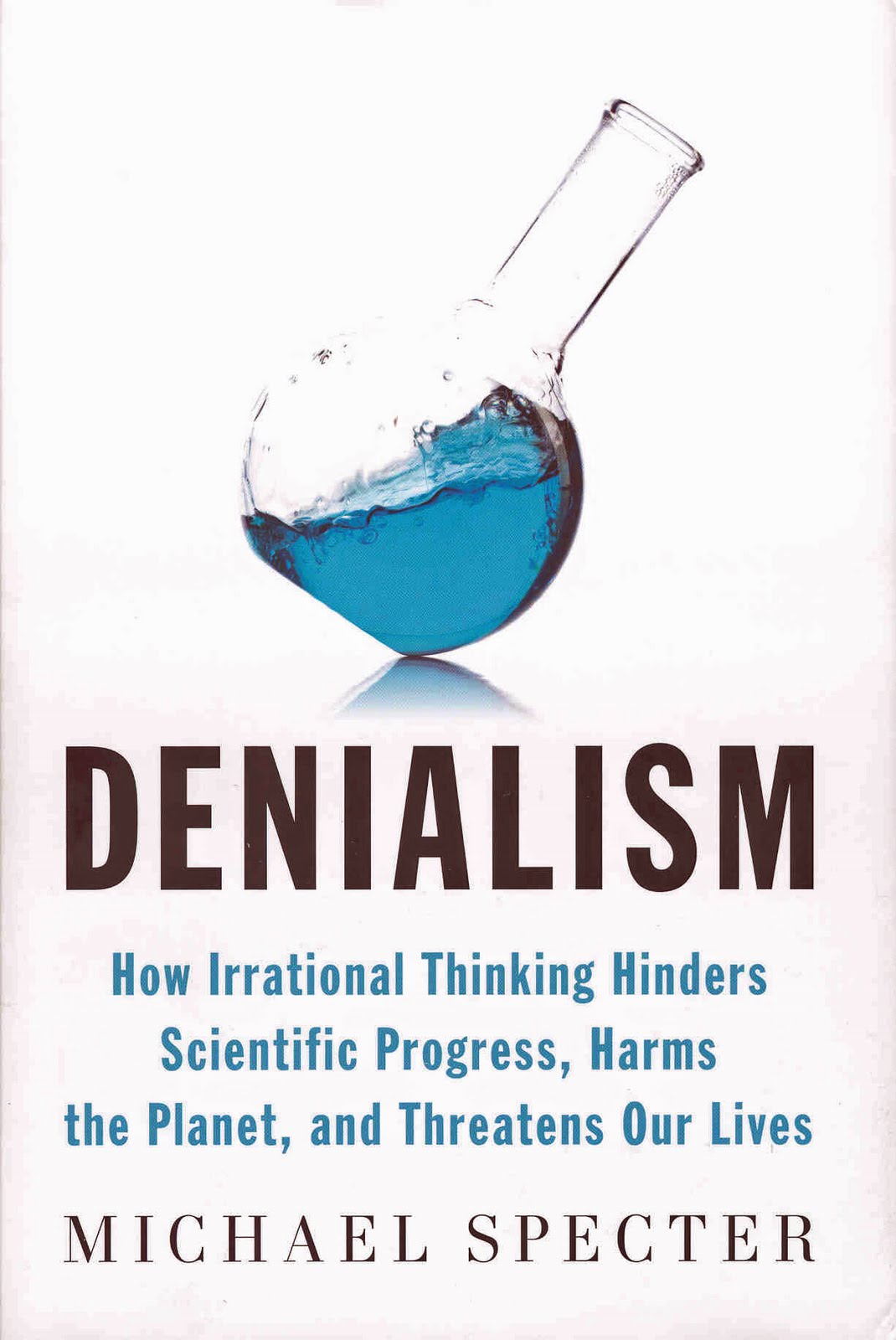
    From: Denialism, How Irrational Thinking Hinders Scientific Progress, Harms the Planet, and Threatens Our Lives.

    Michael Specter, The Penguin Press, 2009

    Pundits Thoughts.

    Another great book to go on the bookshelf next to Stewart Brand’s The Whole Earth Discipline, and Tomorrow’s Table in the Turq library

  • GM rice can be healthier than non-GM rice

    Postprandial glycaemic and insulinaemic responses to GM-resistant starch-enriched rice and the production of fermentation-related H2 in healthy Chinese adults.
    Li M, Piao JH, Tian Y, Li WD, Li KJ, Yang XG.

    Institute of Nutrition and Food Safety, Chinese Center for Disease Control and Prevention, 29 Nan Wei Road, Xuanwu District, Beijing 100050, People’s Republic of China.
    Abstract
    Consumption of resistant starch (RS)-enriched foods is associated with decrease in the postprandial glycaemic and insulinaemic responses, accompanied by the production of fermentation-related gases in the large bowel. The present study aimed to determine the postprandial glycaemic and insulinaemic responses to the GM RS-enriched rice and the fermentation-related production of H2 in young and healthy Chinese adults. A total of sixteen young adults (nine men and seven women) were recruited and divided into three groups. Their postprandial glycaemic and insulinaemic responses to 40 g glucose, carbohydrates of RS or wild-type (WT) rice were tested by a crossover model with a washout period of 7 d. The concentrations of blood glucose and insulin as well as breath H2 were measured before and after food intake. Although the mean concentrations of fasting blood glucose, insulin and breath H2 were similar, consumption of the RS rice significantly decreased the values of glycaemic index (GI) and insulin index (II), as compared with the intake of WT rice (48.4 (sem 21.8) v. 77.4 (sem 34.9) for GI, 34.2 (sem 18.9) v. 54.4 (sem 22.4) for II, P < 0.05), respectively. Conversely, intake of the RS rice meal significantly elevated the concentrations of breath H2, as compared with WT rice (38.9 (sem 17.6) v. 10.5 (sem 3.7) parts per million for peak levels of breath H2, P < 0.05) through a period of 16-h tests. Consumption of the GM RS-enriched rice meal decreased the postprandial glycaemic and insulinaemic responses and promoted RS fermentation-related production of H2 in the large bowel of young and healthy Chinese adults.

    Br J Nutr. 2010 Apr;103(7):1029-34. Epub 2009 Nov 24.

  • More on the Rosi-Marshall corn trash in streams paper.

    Exposure and Nontarget Effects of Transgenic Bt Corn Debris in Streams
     
    Abstract:
    Corn (Zea mays L.) transformed with a gene from the bacterium Bacillus thuringiensis (Bt) comprises 49% of all corn in the United States. The input of senesced corn tissue expressing the Bt gene may impact stream-inhabiting invertebrates that process plant debris, especially trichopteran species related to the target group of lepidopteran pests. Our goal was to assess risk associated with transgenic corn debris entering streams. First, we show the input of corn tissue after harvest was extended over months in a stream. Second, using laboratory bioassays based on European corn borer [Ostrinia nubilalis (Hubner)], we found no bioactivity of Cry1Ab protein in senesced corn tissue after 2 wk of exposure to terrestrial or aquatic environments.

    Third, we show that Bt near-isolines modify growth and survivorship of some species of invertebrates. Of the four nontarget invertebrate species fed Bt near-isolines, growth of two closely related trichopterans was not negatively affected, whereas a tipulid crane fly exhibited reduced growth rates, and an isopod exhibited reduced growth and survivorship on the Cry1Ab near-isoline but not on the stacked Cry1Ab + Cry3Bb1 near-isoline. Because of lack of evidence of bioactivity of Bt after 2 wk and because of lack of nontarget effects on the stacked near-isoline, we suggest that tissue-mediated differences, and not the presence of the Cry1Ab protein, caused the different responses among the species. Overall, our results provide evidence that adverse effects to aquatic nontarget shredders involve complex interactions arising from plant genetics and environment that cannot be ascribed to the presence of Cry1Ab proteins.

    Author(s): Jensen, PD (Jensen, Peter D.), Dively, GP (Dively, Galen P.), Swan, CM (Swan, Christopher M.), Lamp, WO (Lamp, William O.)
    Source: ENVIRONMENTAL ENTOMOLOGY    Volume: 39    Issue: 2    Pages: 707-714    Published: APR 2010   

    Pundit’s response:

    This report substantially challenges the interpretation of Rosi-Marshall et al 2007

    For the overall context and further ecological analysis see Science versus politics in Germany.

  • Tests activists tried to destroy: Breeding causes more changes in plants than does genetic engineering

    “The impact of transgenes is basically limited to their immediate function”


    Reproduced from GMO Safety, Germany


    It is often maintained that genetic interventions may have unintended consequences for the metabolism of modified plants and by implication for human health and the environment as well. A recently completed research project compared gene expression and plant substances in different conventional and transgenic barley lines. GMO Safety discussed the findings with Uwe Sonnewald, one of the project leaders.


    Prof. Uwe Sonnewald from the University of Erlangen-Nuremberg.


    Most significant research results

    Research material: transgenic barley plants of the “Golden Promise” and “Baronesse” varieties and the conventional parent lines

    – Comparison of conventional and transgenic “Golden Promise”: no significant differences

    – Comparison of conventional and transgenic “Baronesse”: Differences in the expression of 22 genes and 4 metabolites. The researchers were able to demonstrate that these differences were due to a previous crossing with a different variety.

    – Comparison of the two conventional parent lines: Differences in the expression of around 1,600 genes


    GMO Safety: What were the aims of your research project?

    Uwe Sonnewald: In our joint project with the University of Giessen and the State University Washington we aimed to test the extent to which different varieties of barley differ from one another, the extent to which transgenic and non-transgenic barley plants differ from one another and the impact of environmental factors. To this end we studied gene expression in the plants and the composition of the metabolites, i.e. the metabolic products. We originally intended to study the leaves and the grains but as it turned out we were unable to complete the grain studies due to repeated crop vandalism in Giessen.

    GMO Safety: What are your most important findings?

    Uwe Sonnewald: Firstly, we found virtually no differences between the genetically modified barley plants under investigation and their non-transgenic parent lines, either in terms of metabolites or gene expression. We then found that colonisation of the barley plants by mycorrhizal fungi produced virtually no changes in gene expression, but did change the metabolites. This demonstrates the value of combining both approaches. We also discovered that differences between conventional varieties can be considerable. Approximately 1,600 genes in the two conventional varieties that we compared are differentially regulated. We don’t even know the function of many of these genes.


    Extract from a microarray used to analyse gene expression. Each dot corresponds to a single gene. In total, the activity of around 32,000 genes was investigated.


    GMO Safety: The following statement was deduced from your findings: Conventional breeding causes more changes in plants than the introduction of a single transgene. Can you make such a generalisation? After all, you only looked at barley. Have comparable studies been carried out on other genetically modified crops?

    Uwe Sonnewald: As far as I know, this was the first time that both methods had been used in a simultaneous investigation. Researchers have studied either gene expression or plant substances in wheat, potatoes and maize and have come to very similar conclusions. The impact of transgenes is basically limited to their immediate function. For example, if I insert a gene for fructan biosynthesis in potatoes, it is hardly surprising that these potatoes then produce fructan and so differ in this way from their parent lines. But only negligible additional differences were found. I know of no instance where a more significant change in gene expression has been caused by a single transgene. However, great variability exists between individual varieties of all the crops mentioned and the obvious explanation for this is that often the breeding objective is to create resistance to external stress factors, and this involves a large number of genes.


    GMO Safety: Do you consider that it would be useful to use the profiling methods that you have just applied to assess the safety of genetically modified crops in the future?

    Uwe Sonnewald: First you would have to perform a kind of cataloguing, in other words you would have to determine the gene expression and plant substances of different existing varieties of each crop type. Only on this basis can you then decide whether a change in a new plant gives any cause for concern. This type of cataloguing is currently available only for metabolites, and then only for the main substances, which is too crude.

    Metabolic profiling could be useful in principle if a genetic modification had been carried out with the aim of modifying specific metabolic processes. Since different metabolic pathways are interconnected, it is certainly useful to establish whether anything other than the intended modification has changed in other metabolic pathways – for example, whether a plant produces too few vitamins because it produces increased amounts of a specific substance.

    Studying gene expression is even more problematic. Important differences emerge even from a comparison of conventional varieties and in most cases I am unable to say what these changes signify because I don’t even know the function of the genes. Therefore it would not be useful to make this type of investigation a prerequisite for approving a plant.

    GMO Safety: Thank you for talking to us.


    More from GMO Safety
    Safety research on genetically modified barley: Eliminating undesired side effects
    Transgenic fungus-resistant barley – effects on pathogenic and beneficial fungi, University Giessen
    Transgenic fungus-resistant barley – effects on gene expression and plant substances, University Erlangen-Nuremberg

    Research Paper:
    Karl-Heinz Kogel, Lars M. Voll, Patrick Schäfera, Carin Jansen, Yongchun Wuc, Gregor Langen,
    Jafargholi Imani, Jörg Hofmann, Alfred Schmiedl, Sophia Sonnewald, Diter von Wettstein, R. James Cook,
    and Uwe Sonnewald
    PNAS | April 6, 2010 | vol. 107 | no. 14 | 6198–6203
    (Free access)


    But wait, this just in:


    Activists have “occupied” a field designated as a location for a trial of MON810. The plan is to remain until it’s too late to plant.
    http://www.br-online.de/studio-franken/aktuelles-aus-franken/schrwarzach-genmaisgegner-besetzen-feld-2010-kw16-ID1272006550902.xml
    http://www.mainpost.de/lokales/kitzingen/Gentechnik-Gegner-besetzen-Genmaisfeld;art773,5548634
  • At long last! A Google ad about GM food that’s not negative whining from the same tired old naysayers

    These people do good stuff:


    Agricultural Development


    Approximately 1 billion people live in chronic hunger and more than 1 billion live in extreme poverty. Many are small farmers in the developing world. Their success or failure determines whether they have enough to eat, are able to send their children to school, and can earn any money to save.
    Hey, they also know about web 2.0 design. It’s a clean beautiful happy, indeed joyous web page. Thanks Mr Google and Mr You-know-who.

  • Cibus find a route to market for new traits in Canadian flax breeding

    The Flax Council of Canada Selects Cibus Global to Develop Non-Transgenic, Value-Added Crops | Business Wire

    The Flax Council of Canada Selects Cibus Global to Develop Non-Transgenic, Value-Added Crops
    Innovative RTDS Technology Sets Stage for New Paradigm in Plant Trait Development
    WINNIPEG, Manitoba–(BUSINESS WIRE)–The Flax Council of Canada has announced an alliance with Cibus Global to develop non-transgenic traits that will help expand and enhance the Canadian flax industry. Using Cibus’ Rapid Trait Development System (RTDS™), the collaboration will develop non-transgenic crop traits that will improve yields for flax farmers and promise healthier flax-based oils for consumers without jeopardizing access to Europe, the world’s biggest flax market, which currently restricts transgenic-based flax products. The partnership is supported by the Government of Canada.
    “The Flax Council of Canada is the flax industry’s preeminent trade group, and they are setting a responsible, strategic precedent by opting for a non-transgenic approach to trait enhancement”
    “New and improved flax varieties will give Canadian farmers increased flax yield and more opportunities to succeed in international markets,” said Federal Agriculture Minister Gerry Ritz. “The Government of Canada knows that agriculture is a cornerstone of our economy and that’s why we’re pleased to partner with the Flax Council of Canada to help keep farmers on the cutting edge with investments in research and innovation.” In February, the Government of Canada announced that the Flax Council will receive up to CAN $4 million (US $3.99 million) toward the project with the end goal of maintaining Canada’s position as the world’s top flax producer.
    An incredibly versatile crop, flax’s Omega-3 fatty acids and other nutritional benefits have made flax seeds and oils (linseed oil) popular food ingredients for people of all ages. It’s also ideal for animal consumption, fibers such as linen and industrial output, including linoleum and other building materials. While Canadian flax is exported globally, 70 percent of Canada’s flax is exported to Europe, underscoring the importance of 100 percent non-transgenic flax crops—such as those that will be developed with RTDS.
    In the European Union, crops developed using mutagenesis techniques are exempted by the 2001 E.U. Directive on GMOs under Article 3, Annex 1B exemption. The U.S. Department of Agriculture has determined that Cibus’ RTDS crops are non-transgenic, mutagenesis-derived products; an independent team of Belgian scientists published a report with the same conclusion in Environmental Biosafety Research (2009). Pathways for regulatory approval in Canada for mutagenesis-derived products are straightforward, with no Canadian regulatory time delays expected. The RTDS-developed oilseed flax, which will allow North American growers to utilize a more effective and efficient weed control system, is expected to come to market in 2015.
    “The Canadian flax industry has set ambitious goals for acreage expansion and product improvement in the coming years while remaining fully committed to responding to European consumers’ concerns around transgenic crops and crop contamination,” said Barry Hall, President, Flax Council of Canada. “Cibus will make these goals a reality thanks to its non-transgenic RTDS system that will deliver us the high-value traits we need to make flax easier and more profitable to grow while maintaining the level of quality that our customers demand. We hope it is just the first of many traits we develop together, including oil quality and quantity improvements.”
    “The Flax Council of Canada is the flax industry’s preeminent trade group, and they are setting a responsible, strategic precedent by opting for a non-transgenic approach to trait enhancement,” said Keith Walker, President, Cibus Global. “In that regard, we’re delighted to receive this endorsement of Cibus’ RTDS by a major trade organization, backed by a global agricultural super power, and the recognition that RTDS is a viable alternative to transgenics.”
    Mutagenesis-derived flax is already produced and readily accepted globally. RTDS is a more precise version of mutagenesis that will use flax’s natural process of gene repair to yield desired traits. By mimicking natural methods in a highly targeted way, RTDS technology avoids the introduction of foreign genetic material into plants, as well as the regulation associated with transgenic (GM) crops.
    MEDIA AVAILABILITY (April 22, 11:00am ET): Members of the press are invited to participate in a tele-conference featuring senior leadership from The Flax Council of Canada and Cibus Global. For dial-in number, please contact Shawna Seldon, 917 971 7852 or [email protected].
    VIDEO: Cibus Global: The Environmentally Friendly Alternative to Transgenics: http://www.cibus.com/video2.php
    About The Flax Council of Canada
    The Flax Council of Canada (www.flaxcouncil.ca) is a broad-based, non-commercial association. Its mandate is to promote the use of flax and flax products. The Council represents and has input from all sectors of the flax industry, some of which include: seed growers, producers, grain handlers, traders, manufacturers, marketing agencies, processors, private and public researchers, educational institutions and governments. The Council fosters crop and product development, exchanges information and communicates throughout the industry. Located in downtown Winnipeg, the Council operates at the hub of Canada’s grains and oilseed trade.
    About Cibus Global
    Cibus Global (www.cibus.com) develops advantageous crop traits with far-reaching implications in agriculture, alternative energy and product development. Through its proprietary Rapid Trait Development System (RTDSTM), Cibus creates traits in a directed way with more precision than traditional breeding techniques and without the introduction of foreign genetic material. RTDS has proven itself in the laboratory with several different applications, as well as in initial field trials of Cibus’ first commercial crop, canola. Cibus’ products will be brought to market through strategic, crop-specific partnerships; in September 2009, Cibus announced a strategic alliance with Israeli-based Makhteshim-Agan to develop traits in multiple crops.
    B-roll of Cibus executives, laboratory and greenhouse is available at www.cibus.com/br