The Russian Ministry for Economical Development published a list of requirements for governmental Web sites that provide online services, reports lenta.ru. All the documents on the sites should be accessed without any pre-registration and additional software requirements and content on the sites should be reached with no more than 5 clicks.
Author: Gregory Asmolov
-
Russia to Investigate Closure of iFolder
Russian Minister of Interior Rashid Nurgaliev gave an order to check if the action of police against a popular Russian hosting ifolder.ru was legal. According to Lenta.ru, the order was given following request by president Medvedev.
-
Russia: Blog Report from Penal Colony
Photojournalist Maks Avdeev (LJ user Avdeev) published photos from a penal colony in Arkhangelsk region. More pictures can be found on his Flickr account.
-
Russia: TV Star Calls For Young Talents Online Project

Tina Kandelaki (Photo by Anton Nossik)
When famous celebrities use the blogosphere and make headlines because of it, it’s difficult to decide if it’s just another self-promotion or there are pure intentions involved… or maybe it’s both.
This is the case of what happened in Russia last week when a famous TV host Tina Kandelaki [ENG] published a blog post [RUS] titled “Don’t ask who is guilty, but ask what to do” where she expressed an idea of an innovative online project that would empower the young generation of talented Russians thus strengthening the country.
This Internet-born initiative was eventually supported by the Russian Minister of Education Andrey Fursenko. It was also positively covered by many Russian traditional media. At the same time, the debates around initiative and the nature of Kandelaki’s intents spread all over the Russian blogosphere.
Kandelaki is well known in Russia as a controversial performer. She appeared on the cover of Russia's Playboy and her name was involved in scandal that was linked to a famous Russian oligarch. Kandelaki is also a successful TV persona who regularly hosts a popular teenager show “The most clever,” which provided a TV platform for talented children from Russian regions.
Recently Kandelaki became a member of a Civic Chamber of Russian Federation [ENG] and stated [RUS] that her goals was to improve an education system and make the chamber more interactive via online technologies. Kandelaki is also very active in the field of new media. She is not only a blogger but also one of the most active Russian Twitter users.
In her blog, Kandelaki wrote [RUS] that Russia had a lot of young talented children and teenagers but no one knew about them. She argued that information technology should help in personal development of these children and, at the same time, facilitate technological development of Russia.
Kandelaki suggested that Russian “economic miracle” can be created thorough launching an Internet-based platform that would expose young Russian talents:
Нужно собрать воедино тех, у кого есть воля менять жизнь к лучшему. Тех, кто устал говорить о переменах, тех, кто хочет эти перемены совершать. А хотим мы все одного и того же – великих русских открытий, первых мест на Олимпиаде, экономического чуда в России по примеру американского, послевоенного западногерманского или азиатского. Но этого не будет, если мы с вами вместе не сделаем общее дело под названием «русское экономическое чудо». У нас у всех очень много идей, предложений и сил для реализации этого чуда. Нам только нужно найти друг друга.
We need to gather those who has a will to change life for the better. Those who are tired of talking about changes, those who want to make those changes. And we all want the same thing: great Russian discoveries, first places at the Olympics, economic miracle in Russia following the example of America, post-war West Germany or Asia. But it won't happen if we don't perform a common task known as “Russian economic miracle.”Я предлагаю создать площадку в Интернете, где каждый мог бы рассказать о своих способностях, успехах и достижениях, а также о своих знакомых и друзьях, которые заслуживают внимания общества. В дополнение к площадке необходимо создать систему скаутов, которые будут искать таланты по всей стране. Всем этим людям нужно дать возможности для развития и познакомить их друг с другом.
I suggest creating a platform on the Internet where everyone would be able to tell about their talents, successes and achievements, about their acquaintances and friends who deserve the attention of society. As an addition to the platform, we need to create the system of scouts who would be looking for talents all across Russia. We need to give all those people an opportunity to develop and get to know each other.According to Kandelaki, the new platform will expose new talents as it has been done by YouTube. However, it won’t work without a special institute of mediators who will develop the links between young talents and leading teachers . Kandelaki concludes:
Благодаря проекту, направленному на развитие талантов, в России появится больше героев. Это будущие победители Олимпиад, чемпионатов мира, выдающиеся математики, гениальные менеджеры, авторы открытий, меняющих мир и жизнь каждого из нас. Мы сами будем их находить и продвигать. Мы будем гордиться ими. А результаты их труда сделают жизнь каждого из нас лучше, комфортнее и удобнее. Это сила, о которой мы так много говорим и которой, на самом деле, являемся мы сами!
Thanks to the project targeted at developing the talents, Russia will have more heroes. Those are the future winners of the Olympics, world championships, outstanding mathematicians, general managers, authors of discoveries changing the world and life of everyone of us. We will find and promote them ourselves. We will be proud of them. And the results of their work will make the life of everyone of us better, more comfortable and more convenient. This is the force that we talk a lot about but, in truth, we are this force.The blog post caused a significant resonance and was covered by most of major traditional media outlets in Russia. Hundreds of Internet users sent letters with suggestions to a special e-mail that Kandelaki left at the end of her blog. More than 700 people left comments to blog post itself.
Many of them were very excited about Kandelaki’s initiative and fully supported it. LJ user Sasadziro wrote [RUS]:
А я считаю идея что надо!!!
По сути – это виртуальный молодежный технопарк 🙂 Проблема в другом. У нас в России сформировался ГИГАНТСКОГО размера стереотип, что ТАМ (за рубежом) лучше чем в ЗДЕСЬ. Вот что нужно ломать в головах людей!!! Это блеф поддерживаемый всеми кто ТАМ не был… У нас люди с идеей боятся идти к людям с деньгами, потому что считают что те их кинут.I think it is a good idea! In a nutshell, it is a virtual youth techno park. 🙂 But the problem is in another thing. A gigantic stereotype has been formed in Russia that THERE (abroad) is better than HERE. That is what needs to be broken in the hands of people!!! This is the bluff supported by all who have not been THERE… Our people with an idea are afraid to go to the people with money because they believe that those would cheat them.Some of the users, like crystal_style, wrote [RUS] that they were ready to volunteer for the project:
готова быть волонтером) нужна какая-либо помощь, я здесь. сама учусь в РЭА им.Плеханова и думаю, если вообще будет нужна помощь студентов, объединимся и сделаем))
I am ready to be a volunteer. I am here if you need any help. I study at the Russian Economic Academy named after Plekhanov and I think we can unite and help if you need the assistance from students.Some media claimed that the project might turn to be a national HR-based, which would shape the future of Russian governance and business. This idea was supported by an oligarch Aleksandr Lebedev who said that he would follow the Web site and make an effort to engage young talents in his business. Moreover, the initiative was endorsed by the Russian Minister of Education Andrey Fursenko. He said [RUS]:
Это полностью вписывается в нашу программу. Я могу сказать, что мы однозначно эту инициативу поддержим, и в принципе у нас появились определенные возможности поддержать ее не только морально, но и материально. Это точно будет развиваться. Я считаю, что это вещь однозначно полезная.
This fully goes in accord with our program. I can say that we will definitely support the initiative and, in principle, we have some abilities to support it not only in morally, but also financially.However, some bloggers were not sure that Kandelaki’s project addressed the right problem. LJ user stga wrote:
Инновации, модернизации, и прочие интеллектозации востребованы должны быть прежде всего экономикой. Причем экономикой направленной на создание конечного продукта. Не инноваций и идей которые сами по себе ничего не стоят (…) Поддержка талантов ради поддержки, без востребованности это глупость.
Innovations, modernizations and other intelectualizations must be demanded by the economy. By the economy that is targeted at creating a final product. Not innovations and ideas that are not worth anything (…) Supporting talents just for the sake of supporting talents without the demand from the economy is stupid.LJ user gr_ushanka suggested that the main problem was not a wrong approach to talents, but a system of education in general:
И в чем конкретно должна заключаться помощь этим самым талантливым людям? Мне кажется, что думать надо в первую очередь про нашу систему образования, про обеспечение инфраструктуры регионов, про веру людей в то, что они могут что-то сделать сами.
And what is the help to the talents should consist of? I think that we need, first of all, to take care of our system of education, ensuring infrastructure in regions, developing the belief among people that they can do something by themselves.LJ user i12runoff was even more pessimistic in his reaction:
Стоит создать такой орган поиска талантов и он моментально превратиться в очередной элемент отбора “элиты”. Побеждать в конкурсах там опять будут “по знакомству” или за деньги.
Once this body of talent search is created, it will momentarily turn into an element of searching for “elite.” Only people who have money and know someone would be winning the academic competitions.Other bloggers asked who was going to sponsor this projects and expressed concerns not in regard to the idea, but how it would be implemented.
On the contrary, bloggers like tan_de were annoyed [RUS] by the critical approach:
Прочитала пост на одном дыхании. Замечательная идея! но как всегда, нашлись люди, полные пессимизма, придирающиеся к каждому слову. Нет, критическое мышление – это хорошо, но давайте направлять его на конструктив. Например, на реализацию этого проекта.
I read the post with one breath. Wonderful idea! But, as always, there are people full of pessimism and picking on every word. Critical thinking is good but let's direct it constructively. On making the project possible, for example.However not only the idea itself, but Kandelaki motive’s and her intents were under scrutiny of bloggers. Some of them suspected that the blog post is not an own initiative by Kandilaki, but a part of political plan by Russian ruling party “Edinaya Rossiya” and president’s administration. LJ user sash13ok wrote [RUS]:
“Идея” – хорошая. Но, я надеюсь, что данный пост с его “всенародным обсуждением”, это только один из тактических шагов Тины на пути реализации этого проекта. Ведь Тина не просто “большая девочка” и брюнетка, а человек походивший по “коридорам” и общающийся с умными дядьками. Поэтому, уверен, что в АП уже назначен “посевной инвестор” из упоминаемых в “Форбсе”, которому посоветовали проявить социальную ответственность. А данная “туса” в ЖЖ (в хорошем смысле), это “социологический замер” размера поддержки и творчества масс.
The idea is good. I hope that this post with its “nationwide discussion” is one of Tina's tactical steps on the way to make the project work. Tina is not only a “big girl” and brunet, but also a person who walked along “corridors” and talked to smart men. I am sure that the president administration already appointed an “investor” from those mentioned in Forbes who was advised to show social responsibility. And this “party” (in good sense of the word) is a social measure of the size of support and creativity of masses.LJ user Alex-mazurov commented [RUS] on the fact that Kandelaki was supported by the minister of education and recognized in it soviet roots:
В прежние времена, как говорится, до исторического материализма-олигархизма, с такими инициативами могли бы выступить представители класса гегемонов – знатная бетонщица или, например, знатная доярка.
Теперь инициативу, наверняка, поддержит “Единая Россия” и так далее. Свято место пусто не бывает – место гегемона занимают теперь гламурло гламурные персонажи. Тоже знатные …In the past, as they say, before historic materialism-oligarchy, only representatives of the class of hegemons could come up with those ideas – famous woman cement worker or famous milkmaid. Now the initiative is likely to be supported by “United Russia” party and so on. A holy place is never empty. The place of a hegemon is now occupied by glamorous characters. Also famous…Some bloggers suggested that the problem was not only Kandilaki’s intents, the project’s idea or the education system, but the entire political system. According to imajin only comprehensive political reform might have an impact:
Не с того предлагаете начать.Вы пытаетесь найти внутренние ресурсы для развития. Между тем есть громадная дыра, через которую эти ресурсы становятся недоступными для страны. Я имею ввиду неконкурентноспособную политическую систему. Из-за ее коррупционности никаких ресурсов не хватит для развития. Сколько ни вливай – будет распилено и рассовано по карманам.
Эта дыра давит на всё. На некомфортность жизни здесь. Нет нормального образования, здравоохранения, милиции. Пока политическая ситуация не решится, остальное – как мертвому припарки.You suggest to start with a wrong thing. You try to find internal resources for development. Meanwhile, there is a huge hole through which those resources become unavailable for the whole country. I mean uncompetitive political system. Because of its corruption, no resources are enough for development. No matter how much you pour into it , it will be shoved among different pockets. This hole presses on everything. It presses on discomfort of life here. No normal education, no heal care, no police. Until the political situation is resolved, all efforts are as infective as poultice for the dead.Kandilaki’s post and its endorsement by the Russian government is an evidence that Russian Internet not only becomes a space for politics but a part of the politics. The real impact of it is questionable, but it’s certainly exposes the polarization between those who excited by the Internet-oriented policy shift and new opportunities to interact with public figures and those whose mistrust the state. The time will probably show if Kandelaki's idea was nothing more than self-promotion, government-based initiative or a start of a successful project.
-
Russia: Regions Encouraged to Use E-Government Services
Russian Ministry of Telecommunication will encourage regions to provide services via e-government portals. Director of Department for Informational Policy Artem Ermolaev announced that his ministry would start an intensive program for local administration that would be completed in two months.
-
Russia to Launch Social Network for Public Officials
Russia will launch asocial network for governmental officials involved in implementation of e-government program. The Minister of Telecommunication Igor Schegolev explained that the network would foster communication between the federal government and regions.
-
Russia: Most of Media Practice “Copy-Pasting”
Russian magazine Kommersant Money published an analytical investigation on plagiarism in online media. It suggests that the majority of media content in Russia is based on “copy-pasting” practice usually done by special software that substitutes original words with synonyms to pass the product as a different article.
-
Russia: Authorities to Eliminate “Digital Divide” in 2010
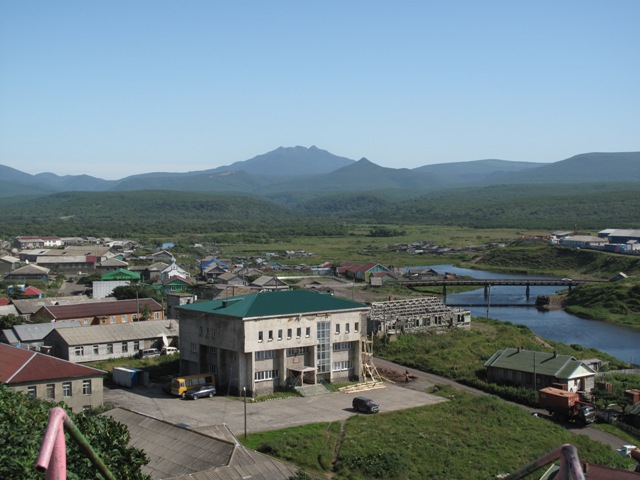
Far from Moscow: Kurilsk city at the Kuril Islands. The Internet here is very expensive and very slow.
The Internet penetration in Russia continues to grow. A report by Gfk Group says [RUS] the number of Russian families that have an access to the Internet significantly increased. Currently, every third Russian family browses the Web. Not surprisingly, Moscow has the biggest Internet penetration rate of 52 percent while the Russian Far East region has the lowest penetration rate of 21 percent. The report also says that 72 percent of Russians reported that the economical crisis had no effect on the level of their Internet usage. Another interesting fact is the increase in the number of Russians who go online via mobile devices. According to the same report, 46 percent of Internet users use their hand-held devices. The majority among those users consists of young people 16-19 years old (81 percent).
According to ACM-Consulting, the number of Runet (Russian Internet) users who have a broadband access in 2009 has raised by 36 percent from 8.3 to 11.3 millions. At the same time, the size of Russian broadband market increased by 60 percents during last year and it is currently estimated at $2.7 billion. According to Russian newspapers “Vedomosty” [RUS], the telecommunication experts predict that in 2010 the broadband market will primarily develop in Russian regions, since ¾ of the families of Moscow Internet users already have broadband access. Consequently, Internet providers will focus more on smaller cities.
The recent International Telecommunication Unit report “The Information Society Statistical Profiles 2009: CIS” [ENG] supports the claim that the Russian Internet grows very fast. According to ITU, there are 45,250,000 Internet users in Russia as of June 2009. That is 32.3 percent of population. The report also explains the nature of a major gap in Russian Internet infrastructure and supports the recent finding of Gfk in regard to the Russian Far East:
In Russia, a substantial digital divide can be observed among the major cities across the country’s regions. For example, the average speed of Internet access in Moscow and St.-Petersburg is about seven Мbps, compared to around 410 kbps in other large cities. This divide affects the price policies of Internet providers, with the cost of Internet services in regional cities largely exceeding that in Moscow and St.-Petersburg.
The high prices for Internet access cause outrage among inhabitants of the Russian Far East. In September 2001, people went to streets [RUS] to express their frustration with the lack of equality in Internet access. Ilya Ignatov, a resident of Yuzhno-Sahalinks and Livejournal blogger Votangi, initiated a public appeal to the President Medevedev and Russian Minister of Communication Igor Schegolev. The appeal called for eliminating unjustified high prices for Internet access. Ignatov published [RUS] the letter on his blog.
The recent attempt to connect the Sakhalin Island to broadband infrastructure – that could significantly decrease the prices – has failed [ENG]. The next attempt is planned for 2011.
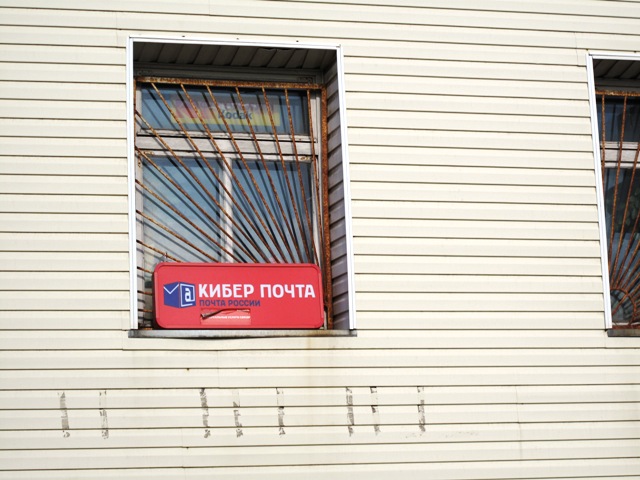
"Cyber-mail" service at Kurilsk post office. The only way to access the Web for many local residents.
However, it looks like Russian authorities don’t want to wait untill 2011 and just hope that the next attempt to connect the Island will be successful. The Federal Antimonoply Service (FAS) [ENG] announced on March 4 that it might start the prosecution process against some of local operators of the major Russian telecommunication company “Svyazinvest” [ENG]. The Deputy Head of FAS Anatoliy Golomolzin told [RUS] Russian journalist that his organization already initiated legal proceedings against few Internet providers and some of them received “orders” to reduce the prices and minor fines.
FAS currently works on evaluation of prices for the Internet access on the regional markets of Russia where the price is significantly higher than in Moscow. Golomolzin said [RUS] that FAS intended to make the price for Internet access equal in any place of the country by the end of 2010 and solve the problem of digital divides by mitigating the gap between the center of Russia and its regions.
The announcement of FAS was treated [RUS] with careful excitement by Russian Internet users:
Нде, засудить этот сибирьтелеком! 1100 за мегабит в Хакасии, при 400 рублях за 2 мегабита у того же провайдера в Новосибирске. При этом всём еще и качество связи так себе. Даешь равные условиях для всех пользователей!
Sue this “Sibirtelecom.” They ask 1,100 rubles ($36) for 1Mbps in Hakasiya when the same provider ask 400 rubles ($13) for 2Mbps in Novosibirsk. And the quality of connection in Hakasiya is so-so. Give the equal conditions to all users!А 999 р за 200 килобит у Дальсвязи еще хуже. Притом что и этого не получаешь, магистральный кабель перегружен.
“Dalsvyaz” is much worse. They ask 999 rubles ($33) for the speed of 200 Kbps. And you even don’t get this speed since the cable is overloaded.Вот любопытно, если ФАС признает данное нарушение фактом, имею ли я право, как пользователь данной сети, на компенсацию перерасчётом…
Interesting, if FAS recognizes that high prices are against the law, would I be able, as a user of this provider, to ask for compensation and refund?Russian efforts to decrease the price of the Internet access might have a strong linkage to defining the development of electronic government as a major priority on the Kremlin’s agenda. Previously, in February 2010, Russian minister of Telecommunication Igor Shegolev asked from “Svyazinvest” to consider establishing low “social prices” in region that are supposed to be around 500 rubles ($16).
The “Svyazinvest” representative complained [RUS] against the position of FAS in interview to RBC Daily:
«Позиция ФАС не очень понятна — государство хочет, чтобы «Связьинвест» был эффективной рыночной компанией, приносящей прибыль своему основному акционеру. Если государство хочет, чтобы мы выполняли социальные функции, это тоже возможно, но надо понимать, как и на каких условиях это будет реализовываться»
The FAS position is not clear – the government wants “Svyazinvset” to be an effective market company bringing revenue to its stockholders. If the government wants us to fulfill social responsibilities, it’s possible, but we should understand how and on what terms we will do it.Yuriy Bryukvin, a general director analytical agency “Rustelecom” explained [RUS] to RBC that sometimes the high prices are justified because the cost of infrastructure development in distant regions is higher than in the center. At the same time, Brukvin agreed that the decrease of price from 1,000 rubles to 500 rubles per month is an important step that should increase the availability of the Internet. Moreover, Bryukvin argues that it’s not enough and the monthly price of the Internet access should be the same as monthly payment for the phone line – 300 rubles ($10).
Next day after Golomolzin’s conversation with journalists , FAS officially announced [RUS] that it initiated the investigation against “Dalsvyaz” [ENG] since it was suspected in having exaggerated prices as the only provider of the Internet access in many regions in the Russian Far East.
В результате анализа тарифов ОАО «Дальсвязь» ФАС России установила, что тарифы в Камчатском крае превышают тарифы, установленные в Москве и Санкт-Петербурге на 350-1700 %, а в Сахалинской области – превышают тарифы, установленные в других городах Дальневосточного федерального округа на 250%, в Москве и Санкт-Петербурге – 1800-5100 %. (…)
ФАС России полагает, что необоснованное завышение цен на услуги доступа к сети Интернет недопустимо, может ущемлять интересы граждан Российской Федерации, в том числе может препятствовать реализации гражданами своих прав на получение государственных услуг в электронном виде.
After analysis of the prices by “Dalsvyaz,” FAS of Russia found out that in the Kanchatka region the price is 350-1,700 percent higher comparing to Moscow and St. Petersburg, and in the Sakhalin region the prices is 250 percent higher than in other cities of the Far East region and 1,800 -5,100 percent higher comparing to Moscow and St. Petersburg.
FAS of Russia claims that unjustified exaggeration of Internet access prices in not acceptable; it might threaten the interests of Russian citizens including realization of the right to receive governmental services in electronic form.Ilya Ignatov, the leader of Sakhalin protest, published the letter from FAS in his blog under the title “Good news”. He wrote [RUS]:
Больше всего удивила и в некоторой степени порадовала дата рассмотрения дела 5 апреля, как раз в мой день рождения что ж, очень приятно…
I was most amused and to some extent happy about the date of Dalsvyaz hearing – April 5. It’s my birthday and it is very nice… -
Russia: More People Use Twitter
The number of Twitter users in Russia multiplied 26 times in one year. There are currently 183.000 Russians using Twitter. The recent statistics were published by the Russian Internet company “Yandex.” According to the data, 60% of users use the microblogging service on a daily basis and leave 150,000 tweets when only 5% among them are re-tweets.
-
Russia: Every Third Family Has Internet Access
Every third Russian family has an access to the Internet, a new Russian telecommunication market research by Gfk showed. According to Lenta.ru, Moscow has the biggest Internet penetration rate of 52 percent, while the Russian Far East region has the lowest penetration rate of 21 percent.
-
Russia: “Merry Gnome” Medvedev. Story of the Meme
Few month ago, a major Russian Internet company Yandex decided to close its rating of Russian blog posts [ENG]. This decision raised a lot of debates revolving around the assumption that the decision was a form of political censorship. One one hand, Yandex claimed that the rating was closed since it was vulnerable to manipulation by bloggers.
One the other hand, some people claimed that the rating, which was shaped according to algorithm and not editing policy, turned to be an alternative mechanism of agenda setting for Russian media environment since it provided significant visibility to topics that were raised by bloggers, and not only by traditional media. Because of the rating, the blogosphere turned to be not just a space of informational chaos of thousands of bloggers, but something that have actual impact on public opinion.
As we might see in the following story, the Russian blogosphere indeed might create a significant political effect threatening the image of Russian government even without the blog posts rating. It doesn’t necessary have to be a pure news story with a critical approach to one of the Russian officials.
Unlike traditional media, social media space, and blogs in particular, provide a unique environment for development of Internet memes [ENG]. Unlike news story that appears and vanish next day, memes might have a long range impact on shaping perception of the political leaders. It might be based on a particular news story, but its consequences are much far going than news. Moreover, in a case of memes, the question of credibility of information is secondary and that makes the meme immune to attempts to deny it.
At the beginning of February, Russian President Dmitry Medvedev visited Omsk, a big city in Siberia. The visit raised a lot of media attention due the scandal around a promotion poster for Russian ruling party “Edinaya Rossiya” that had a portrait of both Russian leaders Dmitry Medvedev and Vladimir Putin.
Few days before the visit, local officials have decided to remove Putin from the poster and leave only Medevedev on it. When the story was exposed, Putin was moved back and few people from local government lost their jobs. Few days later, the incident with Putin’s removal was shadowed by a story of another poster.
On February 18, one week after the Medvedev’s visit, a regional media blog on the Web site of radio station“Echo Moskvy” republished an article [RUS] titled “Tragicomedy. ‘President is coming to us: A screenplay for one spectator that was directed by the government of Omsk region.'”(Трагикомедия. «К нам едет президент». Пьеса для одного зрителя в постановке правительства Омской области). The article was written by a journalist from Omsk Andre Zaharyin. He described a long list of radical (and foolish) steps taken by the Omsk government before the president's visit (e.g. spreading a fresh snow on the local river).
Злые языки утверждают, что перед приездом президента с театра-студии Любови Ермолаевой была снята афиша спектакля «Ждём тебя, весёлый гном». Возможно из-за того, что Дмитрий Медведев, человек невысокого роста, мог принять это на свой счёт. Правда, в театре эту информацию не подтверждают.
Evil tongues claim that shortly before a visit by the president a poster proclaiming “We await you, merry gnome” was taken down from Lyubov Ermolova theater. Maybe it was done because Dmitry Medvedev is not a tall man and he could view it as something that mocks him. However, people in theater don’t’ confirm it.The poster in question has been designed for the children's New Year theater show about gnome from Lapland who came to visit Russian Santa Claus (Ded Moroz) to celebrate the New Year together. According to the report, the poster was removed from a street where the president's convoy was supposed to pass during his visit to Omsk. Other Russian news Web sites added [RUS] how the poster was actually removed:
По свидетельству очевидцев, афишу детской сказки убрали чуть ли не топорами с молниеносной скоростью.
According to witnesses, the poster with advertisement of the fairy tale for children was removed immediately and almost with hatchets.They also emphasized that the main sources of information for this story were “regional media and blogs”. The story was soon published almost in every Russian online media outlet. Some of journalists recalled the 2008 article [ENG] from British Guardian “Who is the shortest world leader?” that claimed that Russian president might be the shortest leader in the world. The story about the fairy tale poster, gnome and president Medvedev also quickly reached the international media. Reuters published [ENG] a story “Gnome poster removed before Medvedev visit?”
The incident turned to be one of the most discussed topics on the Russian blogosphere. Some of comment were very brief. “Paranoids,” wrote user tankar. “A country of idiots,” wrote kliuv. The user hel_sim wrote [RUS]:
Напоминает советские времена с поисками вторых и третьих смыслов. Висела бы себе афиша и ничего.
It reminds me of Soviet times with its search for second and third meanings. The poster could just be there and nothing wouldn’t happen.A blogger Alek-ya shared [RUS] his concerns in regard to publication of fairy tales with gnomes in Russia.
Не везет России с кремлевскими карликами. Теперь из переводимых сказок могут странным образом исчезнуть леприконы, Белоснежка окажется в лесу в совершенном одиночестве. Даже ставший популярным “Властелин колец” может оказаться лишь путеводителем по загадочному миру, лишившись массы основных персонажей.
Russia has been unlucky with Kremlin gnomes. Now leprechauns will strangely disappear from all translated fairy tales and Snow White will happen to be all alone in the forest. Even popular “The Lord of the Rings” can happen to be only a guide for the mysterious world loosing many main characters.A blogger Alesadov gave [RUS] an opposite interpretation while focusing on the fact that the destiny of the poster turned to be the top news:
Заголовок в ленте новостей из серии нарочно не придумаешь. Кто еще может сомневаться в отсутствии цензуры в российских СМИ?
The headline on news wires couldn’t be invented for purpose. How after it anyone can doubt the lack of censorship in Russian media?A lot of users avoided discussions on the political meaning of the story. A typical reaction by an LJ user zlaya_zadnica was [RUS]:
У меня такое настроение плохое было, а теперь наоборот, хорошее. Словно это ко мне едет веселый гном
I was in a very bad mood and now it’s great. It’s like the merry gnome is going to visit me.Some bloggers tried to express their opinion about the story through poetry. LJ user Efrosine wrote [RUS]:
– Где же наш весёлый гном?
– Он зарублен топором!Where is our merry gnome? He was killed by a hatch!In a poem “We await you, merry gnome” LJ user Basjad suggested [RUS] that there were not one but two gnomes
Ждём тебя, весёлый гном
В граде славном – Омске том!
Поскорее приезжай,
Нам веселья тоже дай!Дай нам счастья и работ,
Дай нам отдых от забот!
Не один ты на Руси –
И другого привози!Вместе будем вас встречать
И плакатами махать!
Только пусть допустит нас
Губернатор …. тарара-с…(славный НАШ)!We await you, merry gnome
In the glorious city of Omsk!
Come here quickly
And bring us some fun!Give us happiness and jobs,
Give us a break from routine!
You are not the only one in Russia.
Bring another gnome with you!We will meet you together
And we will wave our posters!
If only our governor
Allows us to do so!The story also raised a wave of creativity among fans of visual art. For instance, LJ drygoj offered [RUS] everyone to repost a collage with a big Putin and small Medvedevev on the horse. Olga Gromova, LJ user vsyako, created [RUS] a picture of the Russian president as Merry Gnome. LJ user e-enotov went to more surrealistic direction [RUS].
Despite the fact that it was not the first poster scandal related to Medvedev’s visit to Omsk, some of users were not sure about its credibility since no actual evidences were presented.
An LJ user hnue wrote [RUS] in a community of Omsk inhabitants:
Люди, кто-нибудь в курсе, это правда? Меня все спрашивают, а я не знаю, что ответить.
People, does anyone know if it’s true? Everyone asks me and I don’t know what to answer.An LJ user Dubrovska in her post “'Merry gnome' or how myths, legends and fairy tales are born,” got a call from her friend who played a role of fox in the famous performance about the gnome’s visit. Following the call, Dubrovska shared [RUS] her version of the story.
Короче, может, теперь уже и неважно, но не висела никакая афиша про гнома и никто её не врубал ни топором, ни каким другим инструментом.
In short, maybe it is not even important now, but there wasn't any poster about a gnome and nobody took in down with a hatch or any other tool.Based on a conversation with the actress, Dubrovska listed a number of factors that showed that the story about poster was absolutely improbable. She also called the director of the theater that confirmed that the story about the poster wasn’t true.
Online Russian media told that the source of information was a local blogger and local media. But there was no blogger who might be identified as the source of information. The only blogger that was quoted later was a LJ user denbrough who wrote [RUS] after the story was already published:.
«Сам живу в двух шагах от этого театра, информацию об афише подтверждаю – была такая»
“Personally, I live very close to this theater and I can confirm the information about poster: there was one like that.”Victor-korb explained [RUS] why this information couldn't be treated as a confirmation:
Свидетель говорит лишь то, что “афиша была”. Ну да, это вполне возможно. И даже то, что она провисела два месяца после окончания показов новогоднего детского спектакля, тоже возможно. А вот то, что “сняли афишу на пути следования президентского кортежа”, – глупая натяжка, потому что кортеж перемещался по улице Нефтезаводской, а не по улице Химиков.
The witness says that “there was a poster.” Yes, it is possible. It’s also possible that it was there for two month after the New Year children performance. But the fact that it was removed on a way of the president's cortege is a silly imagination. The cortege used another street.Some of LJ users discovered that the first time the story appeared online was on February 13 – four days before it was discovered by media. A person who presented himself as Anikey Skovorodkin (which doesn't sound like a real name) wrote [RUS] in the thread of the city forum at Omsk.com that was dedicated to Medvedev’s visit:
За пару часов до того, как Медведева должны были провезти по Нефтяникам в сторону нефтезавода, кто-то обратил внимание на афишу театра Ермолаевой. анонс сказки звучал так: “Мы ждали тебя, добрый гном!”)))) по словам очевидцев, афишу демонтировали чуть ли не топорами с молниеносной скоростью.
Two hours before Medevedev was supposed to go through Neftyanika street, someone’s attention was attracted by a poster from Ermolova’s theater. The poster with fairy tale advertisement said: “We await you, merry gnome.” According to witnesses, the poster was removed immediately, almost with hatchets.The story of the merry gnome show show social media play a significant role in diminishing the border between true and false, between joke and news. It happens due to the power of viral distribution and especially few mediators that take the information from rumors and humor and legitimize it as news. In this case, we have seen that this role was played by the blog of “Echo Moskvi” radio station and primarily the two news Web site “Noviy region” and “Delovoy Peterburg”. The last two build a bridge between the anecdote and news item.
Some people claimed that if the information is true or false doesn’t really matter in this case. The program director of “Echo Moskvy” Vladimir Varfolomeev wrote on his blog:
«Даже если снятие рекламы – всего лишь случайно совпало по времени с визитом, в усердие и перестраховку чиновников верится очень легко. Времена такие».
Even if removing the advertisement was just accidental with the time of visit, we might easily believe that the official could do it. We live in such times.Lj user Victor_korb wrote [RUS]:
Я вовсе не отрицаю реальности этой истории. Просто мне очень не нравится то, насколько некритично, с грубыми ошибками ее принялись транслировать все СМИ.
I don’t say that the story wasn’t true. I just don’t like how the media reposted this story without any consideration and with significant mistakes.Some of the bloggers expressed their frustration about the fact that the story probably wasn’t true.
“It’s very pity that it’s a myth,” shared [RUS] his feeling Petrosov .
An LJ user Nachiketos wrote [RUS]:
Эх, зачем же было докапываться до истины. народу нужны зрелища и мифы, должно же быть что-то позитивное в суровых жизненных реалиях. если не справедливые выборы, то хотя бы веселые гномы =)
Why should one look for the truth? People need spectacles and myth. We should have something positive in our difficult reality. If we don’t have fair elections, we at least could have merry gnomes.LJ user Dubrovska concluded [RUS]:
История получилась красивая, хотя и неуместная, как новогодняя сказка, рассказанная в преддверии весны.
The story was very beautiful but inappropriate like a New Year fairy tale that was told right before the spring comes.However, the people who actually questioned the credibility of story were a minority. Nowadays, the expression “Merry gnome” as a nickname for Russian president already appears in different contexts not related to his visit to Omsk.
An LJ user akharin wrote [RUS]:
Х а, “Веселого Гнома”, приклеилось. Спасибо безымянным долбоебам-чиновникам.
Ha, “Merry gnome” stuck. Thanks to unnamed stupid government officials.An LJ user quasar wrote [RUS]:
К запросу в поисковиках “Почему Путин краб” теперь добавится “Почему Медведев веселый гном.”
To the search engine quires “Why Putin is a crab” is now added “Why Medvedev is a merry gnome?”Lj user Akater asks [RUS]:
Интересно, начнёт ли теперь народ на митингах кричать что-нибудь про весёлого гнома?
I wonder if people will start to yell something about a merry gnome during protests…Unlike news, a myth doesn’t need any verification.
Lj user Victor_korb concluded [RUS]:
…приятный сухой остаток от этой истории: появление нового т.н. мема – “веселый гном”. В дополнение к другому – “злобному карлику” 🙂
There is a pleasant and dry aftertaste after the story: emergence of a new meme “merry gnome.” In addition to another meme: “evil dwarf.”In the merry gnome story, we could see how the Russian Internet works. The blogosphere and media together gave a birth to a new meme. The story shows that the Internet might be not only a space that reflects the reality in a different way from traditional media, but also shapes this reality in a way that it has political output.
-
Many Russians Ready to Pay for Content Online
A new research by Nielsen shows that almost a half of Russian internet users are ready to pay for online content. The surprising results of the research and its comprehensive analysis are published by Slon.ru.
-
Russia: Closure of Torrents.ru Makes People Suspicious of .Ru Zone
The major Russian domain provider RU-Center has recently frozen the domain of the biggest Russian torrent trackers service Torrents.ru. The investigation committee explained that it was done due to the site's violation of copyright law and illegal distribution of software that was developed by”1С” and Autodesk firms. The Web site has moved to a new location in the .org domain zone.
The decision to close Torrents.ru is certainly controversial and became one of the major discussion topics in the country. On one hand, many people claimed that it provided unique content that couldn't be found anywhere else and that content exchange is a new cultural phenomenon that should be recognized as evolution of information society. Some bloggers claimed that Torrents.ru is not responsible for the violations since it only provided tracks and didn't distribute the content by itself.
Other bloggers argued that Torrents.ru was distributing content illegally and those who oppose its closure just want to continue enjoying free and illegal access to information protected by the copyright law.
One of the main topics that were raised was not the fact that Torrents.ru was closed, but the way the Russian authorities went about the closure. Lenta.ru news agency pointed out [RUS] that according to the law, RU-Center provider should have given Torrents.ru one month to resolve the issue. However, it decided to close the Web site almost immediately because of the agreement that had been previously reached between the provider and investigation committee.
The owner of Torrents.ru said in an interview to “Echo Moskvy” radio station:
Абсолютно неправовые. Оспаривать будем, но в данном случае это уже не так важно. Прецедент уже создан, и если вы являетесь владельцем домена в зоне ру – знайте – он в любой момент может быть заблокирован из-за предписания следователя.
It was absolutely illegal. We will appeal against it, but in this case it’s not the most important thing. The precedent is created. If you are an owner of domain name in .ru zone, you should know that it can be suspended at any moment by the order of an investigator.Blogger serj-nickel wrote [RUS] a post that became one of the most popular ones regarding this issue and was re-posted by many other bloggers:
Во-первых, что это за “приостановление делегирования”? Я что-то не пойму – там что, есть решение суда?! Я не юрист, но с позиции здравого смысла мне кажется, что в столь экстренном порядке что-то закрывать можно лишь в том случае, когда это реально угрожает чьей-то безопасности. А здесь что происходит? 16 февраля накатали какую-то там бумагу – и через два дня уже всё готово, всё закрыто? Ну допустим, в России плохой суд, нечестный и коррупционный, но здесь-то не было никакого суда!
First, what is this “freezing the delegation?” I can’t understand – is there any decision of the court? I am not a lawyer, but from point of common sense, I think that you can close something so fast with so extreme measures only when it poses a threat to security. And what happened here? On February 16, someone wrote some paper and after two days everything is done. Everything is closed. Let’s say that in Russia we have a bad corrupted unfair court, but in this case we had no any court at all.In addition, serj-nickel claimed that Torrents.ru was the most loyal Russian track torrent service in regard to copyright laws, since it promised to delete any track to content that violates copyright if the creator of content submits a request. Later, a public petition to the president, prime minister and the general prosecutor was placed on a petitions Web site. On behalf of Russian Internet-community, the author of petition wrote that the investigation committee went beyond its authority:
Действующее уголовно-процессуальное законодательство не предусматривает такой меры уголовно-процессуального принуждения, как приостановление делегирование домена, в нем содержится исключительный пречень таковых мер, не подлежащий расширительному толкованию.Следовательно, следователи, вынесшие данное произвольное решение, явно вышли за пределы своих полномочий, чем причинили ущерб более чем 4 млн. пользователей трекера.
The current criminal legislation doesn’t include an option of “suspending delegation of domain.” It contains the list of those measures immpossible to be interpreted generally. Thus, the investigators who made this arbitrary decision obviously went beyond their powers and caused damages to more than 4 million users of the tracker.So far, the petition was signed by more than 10,000 people.
The story of torrents.ru initiated a broader discussion if the domain .RU can be trusted by Internet users. LJ user kouzdra wrote [RUS]:
История с torrents.ru в очередной раз вызвала вопрос – а на зачем вообще пользоваться услугами российских регистраторов и доменом .ru? Потому что то эта хня, то паспорта проверять начинают – то еще какую куйню выдумают. Не то, что это все ужос – но возникает вопрос – нафиг эти приключения нужны?
The story with torrents.ru again raises the question: why should we use services from Russian domain providers and .ru domain? Because it's bulls..t. They start checking your passports or come up with some other bulls..t. It's not that all this is a nightmare but one should ask a question: why would I need all those adventures?The argument that the .ru domain zone wasn't the place where Internet users could feel confident was expressed by Oleg Rodin, a journalist from Sochi, on a Web site of “Echo Moskvy” radio station. In a blog post titled “‘Olympic sprint' or 'stealing the domain,'” he wrote [RUS]:
Интернет кипит негодованием по поводу изоляции по решению прокурорских органов торрент-портала, благодаря которому пользователи могли обмениваться своими файлами с музыкой, фильмами или компьютерными программами. А вот ликвидация адреса sochi.ru прошла куда тише, без глобального кипения страстей и массовых возмущений.
Взяли и убрали этот адрес вообще, а при попытках зайти на сайт с этим именем происходит автоматическая переадресация на портал sochi2014.ru, где размещаются материалы, имеющие отношение к Зимней Олимпиаде 2014 года, запланированной в Сочи.
The Internet is bowling with frustration due to the prosecution decision to suspend Torrents.ru domain where people could exchange their music, films and computer software. But the elimination of the domain sochi.ru went without any global noise or mass protests.
They just took and removed this web address, and now if you try to visit this Web site, you automatically readdressed to sochi2014.ru portal with content about 2014 Winter Olympics Games, which are supposed to take place in Sochi.The story that Rodin mentioned took place at the end of August, 2009. Sochi.ru was, indeed, a popular Web portal for the city of Sochi. It provided various kinds of services including news, forums and e-mail. At the end of summer, the Russian Olympic Committee has decided that the expression “Sochi.ru” would be a part of a symbol of the 2014 Winter Olympic Games. As a result, the ownership to Sochi.ru was transferred to the Russian Olympic Committee in just a few days. The city portal has been moved to Sochi.com and many people lost their Sochi.ru e-mail accounts.
The full story behind the ownership of Sochi.ru remains unclear. The administration of the Web site published a comment on its forum that said:
Сообщаем, что никакого “отбирания собственности” и т.п. действий, противоречащих законодательству РФ, не происходило. Как жители города Сочи, мы действительно пошли на просьбу коллег из Олимпийского комитета и желаем продвижения бренда “Олимпиада Сочи 2014″ в России и на мировом уровне!
We should clarify that “taking property” and other actions that goes against the Russian law did not take place. As citizens of Sochi, we actually satisfied the request of our colleagues from the Olympic Committee and we wish them luck in promoting the brand “Olympic Games Sochi 2014” in Russia and worldwide.However, no official clarification about the nature of the deal has been made. Some people claimed that the owners were paid by the Russian government. The majority of Internet users thought that the Sochi.ru administration was forced to satisfy “voluntary” the request of Russian authorities.
Andrey Vorobiev, head of PR department of RU-Center, clarified [RUS] the situation to Cnews.ru. He explained that according to the law of Sochi Olympic Games that was approved in 2007, all the symbols related to 2014 Olympic Games, including domain names, automatically belong to the Olympic Committee.
“Maybe the owner of the Web site [Sochi.ru – G.A.] was offered some compensation, but this option wasn’t included in the law,” Vorobiev said.
Most of Sochi.ru users believe that the Web site has been actually expropriated by the government. They concluded [RUS]:
Что цари решили, то мы холопы должны исполнить. Скоро крепостное право снова введут. И города с холопами отписывать друг другу будут…
Мы в России господа!!!, не смотря на то что все кричат вокруг какие мы стали хорошие, интеллигентные, на деле оказывается, что все осталось на прежнем уровне. Одним словом БЕСПРЕДЕЛ и законы существуют для всех, кроме тех, кто эти самые законы выдумывает!
What the Kings decided, we, slaves, have to do. They will soon return slavery. And they will start trading cities with slaves in them.We are in Russia, gentlemen!!! Despite the fact that everybody yells how good and intelligent we became, the reality indicated that everything remained the same. In other words, lawlessness and the laws are the same for everyone except those who invent the laws. -
Russia: New Military Doctrine and Information Security
In February, Russia published its updated military doctrine [RUS] for the next ten years (English translation is here). Although not mentioning cyber security or Internet directly, the document deals with informational aspects of security that, by definition, imply Internet, media, and cyber security.
The most significant unclassified document related to information security, the doctrine was published for the first time ten years ago. The current document provides an interesting opportunity to evaluate the role of information from security perspective. This perspective may apply to the issues of cyber security and Internet, as well as other information platforms (e.g. mass media).
This article provides translation of the Russia's military doctrine paragraphs related to information security. It also briefly analyzes the current doctrine in regards to the issues of cyber security and Internet.
4. Военная доктрина отражает приверженность Российской Федерации использованию политических, дипломатических, правовых, экономических, экологических, информационных, военных и других инструментов защиты национальных интересов Российской Федерации и интересов ее союзников.
4. the military doctrine reflects the commitment of Russia the use of political, diplomatic, legal, economic, environmental, informational, military and other instruments to protect the national interests of Russia and the interests of its allies.The fourth paragraph acknowledges Russia's intent to use information measures to defend the country's national interests and those of its allies.
The ninth paragraph of the document, “The major internal military threats” (Основные внутренние военные опасности), defines a threat as follows:
в) дезорганизация функционирования органов государственной власти, важных государственных, военных объектов и информационной инфраструктуры Российской Федерации.
b) disruption of the functioning of public authorities, important state, military facilities and information infrastructure of Russia.The 12th paragraph names some characteristics of the modern military conflict (Характерные черты современных военных конфликтов):
а) комплексное применение военной силы и сил и средств невоенного характера
г) усиление роли информационного противоборства
a) integrated use of military force and capabilities of non-military
g) strengthening the role of information confrontationThe 13th paragraph of the doctrine elaborates on the nature of information struggle. It defines characteristics of the modern warfare (Особенности современных военных конфликтов)
г) заблаговременное проведение мероприятий информационного противоборства для достижения политических целей без применения военной силы, а в последующем – в интересах формирования благоприятной реакции мирового сообщества на применение военной силы.
g) early interventions information confrontation to achieve political objectives without the use of military force, and subsequently – in the interest of creating a favorable reaction of the international community to use military force.The 19th paragraph lists the main goals of the Russian Federation in the field of deterrence and prevention of military conflicts (Основные задачи Российской Федерации по сдерживанию и предотвращению военных конфликтов). According to the document, the first goal is:
а) оценка и прогнозирование развития военно-политической обстановки на глобальном и региональном уровне, а также состояния межгосударственных отношений в военно-политической сфере с использованием современных технических средств и информационных технологий;
a) evaluation and prediction of development of military-political situation at the global and regional level, as well as the state of interstate relations in the military-political sphere with the use of modern technology and information technology.The 30th paragraph defines the main priorities of a military organization (Основные задачи развития военной организации):
к) совершенствование системы информационного обеспечения Вооруженных Сил и других войск;
k) improving information management system for the Armed Forces and other troops.The 41st paragraph lists the main tasks equipping the Armed Forces and other troops of arms, military and special equipment (Задачи оснащения Вооруженных Сил и других войск вооружением, военной и специальной техникой):
в) развитие сил и средств информационного противоборства;
г) качественное совершенствование средств информационного обмена на основе использования современных технологий и международных стандартов, а также единого информационного поля Вооруженных Сил и других войск как части информационного пространства Российской Федерации;
b) the development of forces and means of information confrontation.
g) the qualitative improvement of information exchange through the use of modern technologies and international standards, as well as a single information field of the Armed Forces and other troops as part of the information space of RussiaAnalysis:
- The doctrine emphasizes the importance of information struggles as a part of modern warfare (it may refer to cybersecurity or any other kind of information)
- The doctrine approaches the information warfare within its impact on public opinion and the role of public opinion in regards to an ability to conduct military operations. Consequently, any impact on public opinion may be approached as a part of military aggression and the first stage of military operation.
- The doctrine sets a goal to develop information warfare capabilities including offensive capabilities (recent McAfee report named Russia as one of the countries that has cyber offensive capabilities in addition to U.S., China, France and Israel)
- The doctrine defines as of of the goals modernization of military forces as a part of informational space of Russia.
One of the main points of the doctrine in the information field is a lack of definition of the information struggles elements. Consequently, cyber security, Internet (including any kind of Internet-based activity), as well as traditional media, can be approached as a part of information security from military perspective.
The broad definition of information security is a traditional part of Russian approach toward this field. It has to be noted that the current strategy should be approached with difference between Russian and Western perspective in mind. The U.S. and Western approach to cyber security tends to focus primarily on regulation of cyber crime and legislation that may provide exterritorial jurisdiction to follow cyber criminals.
The western countries look for strategies to restricts the threat that caused by individual actors. In contrary, Russia is primarily concerned with information threats that caused by state actors and makes efforts to develop international agreements that will restrict the states – and not individuals – in the informational security field.
-
Russia: Torrents.ru Is Suspended
The major Russian torrent (files exchange) service torrents.ru has been suspended due to investigation of copyright violations, RIA Novosty reported. The service continues to work via another domain.
-
Russia: When Politicians Go Online
Censorship and prosecution against oppositional bloggers are not the only possible threats to the blogosphere and social media in Russia. The active usage of blogosphere as an instrument of political promotion and governmental PR may significantly weaken the trust of public in social media and damage credibility of blogs as sources of independent information.
The wide discussion that questioned the place of blogs in Russia has begun when a governor of Kirovsk region Nikita Belyh wrote [RUS] in his blog that he declined an offer from a Russian PR agency to develop and promote his online diary:
В мою пресс-службу одна довольно известная PR-контора прислала коммерческое предложение по созданию и ведению блога губернатора. То есть моего блога. Не удержусь и процитирую избранные места: «На декабрьском Госсовете, посвященном “Электронному правительству”, президент фактически дал понять представителям госструктур, что в ближайшем будущем политические деятели, не присутствующие на постоянной основе в интернет-пространстве, не будут восприниматься как серьезные претенденты на высокие позиции», «Сегодня у Вас есть уникальная возможность выйти на новый уровень освещения деятельности Администрации Губернатора, с помощью работы с платформой livejournal.com, тем самым способствовать росту авторитета и доверия к Губернатору Кировской области Никите Юрьевичу Белых».“
My press office got a commercial offer from a well-know PR firm that offered to develop and manage a governor’s blog. It means my blog. I can’t deter from quoting some selected parts of this offer: “In December 2009, at the governmental council meeting that was dedicated to electronic government, the president actually sent a message to the governmental officials saying that those politicians who won’t have permanent presence on the Internet won’t be treated as candidates for high-rank positions. <…> Today, you have a unique opportunity to raise the coverage of the activities of the governor’s administration to a new level and consequently contribute to the growth of trust in Kirovsk region governor Nikita Yureivich Belyh. It can be done with the Livejournal.com platform.”The full text of the offer, which was also published in Belyh’s blog [RUS], included the prices for development and management of a blog. It costs 163,000 rubles (approx. $5,500) to set up a blog. And it costs 84,000 rubles (approx. $3,000) to manage the blog. The promotion will cost 199,900 rubles ($7.000). The promotional activities include paying other bloggers who have more than one thousand “friends” to publishing information about the blog and distribute the links to the blog across various platforms.
Evgeny Puchkov at FPG-Media PR agency confirmed [RUS] to a Russian newspaper “Vedomosti” that the blog promotion deals were offered to many politicians including high-rank officials in local and municipal offices. He also said that about 15 of those who got the offer expressed their interest in FPG-Media services.
The above-mentioned offer to the governor is not just an anecdote. It is an inication of a significant shift in the state of the Russian Internet.
“The government officials will conquer the Internet in 2010,” claimed [RUS] Shamil Yusupov from the Russian PR sector news portal Sostav.ru.
As we know, the Internet proved its political efficiency through few stories (e.g. abandoned hospital [ENG] or nursing home [ENG]) when social movements were very effective in achieving their goals.
“Many governors and mayors started to adopt blogs as a channel for communication with public a long before Russian president decided to open his own Livejournal blog,” Russian Forbes magazine wrote. “But after that, a movement of governmental official to the Internet became a very wide phenomenon.”
Forbes recently published the rating [RUS] of the most popular Livejournal blogs created and managed by Russian officials. According to the rating, the most popular bloggers-government officials are the President Dmitriy Medvedev (1) followed by the Deputy Head of the Kirovsk region government Maria Gaidar(2), the governor of the Permsk region Oleg Chirkunov (3), the governor of Kirovsk region Nikita Belyh (4) and the Chairman of the Council of Federation Sergey Mironov (5).
Many of those popular bloggers holding government positions come from the same region where blogs are actively used by local governors (e.g. Perms and Kirovsk). Moreover, the governors use their blogs to present bloggers who work for there administration.
Ekaterina Egorova, a president of Nikkolo M group that provides political consulting, explained [RUS] to Russian Forbes the nature of the blogosphere popularity among Russian politicians:
Спрос большой, и он нарастаетРяд политиков и чиновников стали копировать Медведева. Есть политические фигуры, которые посредством блога создают психологическое поле, на котором пытаются вырастить новый интерес к своей фигуре, как, например, Татьяна Юмашева. И это в определенном смысле удается.
The demand is big and it’s increasing. There are politicians and governmental officials who started to copy President Medvedev. There are some political persons that through their blogs create a psychological field where they raise an interest toward themselves, e.g. Tatyana Yumasheva [a daughter of the first Russian President Boris Yeltsin – G.A.]. And to some extent they are successful in achieving these goals.However, the meaning and consequences of “blogepidemy” among Russian politician is very debatable. Livejournal blogger turbinsky wrote [RUS] in response to the blog post by the Governor Belyh about the blog promotion offer:
Ничего удивительного. В России очень много губернаторов, но очень немногие из них могут грамотно два слова связать, не говоря уж о мыслях:))) И уж тем более далеко не каждый из них обладает литературным даром, подобным вашему. Простор для развития бизнеса:))) таких вот ПиаР контор. Почему нет? Особенно за бюджетные деньги )))
There is nothing surprising [in this offer – G.A.]. There are a lot of governors, but only few of them are able to connect two words together, not talking about expressing thoughts. Moreover, not everyone among them has a writing talent as you do. It is a field for business development for that kind of PR firms. Why not? Especially when it's paid from the governmental budget.“Is it legitimate to manage private blog with public money?”asked [RUS] mt6561.
“It’s very easy. It will be enough to say that it’s not private but work blog. Moreover, our officials know how to use money from governmental budgets,” answers [RUS] neo50nick.
“The statement by Medvedev created an entire market,” concludes [RUS] propovednick.
The head of the PR firm pu4kov denied [RUS] the accusations that he used the President Medvedev appeal to go to the Internet for accumulation of public money.
“We don’t talk about governors’ PR and don’t try to manipulate the Russian president’s statement but we talk about effective information cooperation on the Internet, which can be good for a concrete governor and region, by providing a new channel for communication with population,” he explained.
This explanation hasn’t convinced many bloggers and journalists.
“The president’s intent to raise an Internet literacy of governmental officials turned to be a subject for speculation,” summarizes [RUS] Russian newspaper Gazeta.
“I am very glad that I manage my blog by myself. I save so much money for our budget,” noted the Governor Belyh.
But he represents a small minority of politicians who write their blogs themselves.
“I'm afraid to even think how much money we spend for managing Dmitry Anatolievich's [President Medvedev – G.A.] blog,” wrote [RUS] LJ user pogorsky
Some bloggers claimed [RUS] that PR firms managing blogs is against blogs' nature:
Блог – дело личностное. В том числе и для политика. Хочется в блоге видеть не столько губернатора- но человека. Для Губернатора есть оф. сайт, эл. почта., приемная, обращение граждан и прочее, прочее, прочее. Не хотелось бы чтобы блоги превращались в официальные закостенелости.
Blog is a personal thing. It's also personal for a politician. We would like to see not a governor but a person on the blog. A governor can use his official Web site, e-mail, his office for public affairs, etc. But it will be very unfortunate if a blog turns into an official restricted platform.But probably the most significant concern is that the broad movement of Russian officials into Livejoural and other social media platforms will significantly change the face of the Russian blogosphere. Unlike TV, which is controlled by the government, the blogosphere is considered to be the most independent media platform. Expanding the artificial and unnatural presence of the government officials – including bloggers motivated by governmental goals and don’t even write the blogs by themselves but hire PR firms to do it – may “poison” the Russian independent public sphere.
A Lenta.ru columnist Anna Vrazhina wrote [RUS] an open letter to the President Medvedev where she called to defend Livejournal.com from a wave of Russian politicians and protect the Russian blogosphere from becoming a strictly political tool.
Я вам не как гражданка президенту пишу, а как блогер блогеру. Мы с вами оба старые интернетчики, вот я и хочу у вас спросить: зачем, ну зачем, Дмитрий Анатольевич, вы сказали на этом злосчастном Госсовете в декабре, что не будете назначать на ответственные должности людей, которые… как там было… “не присутствуют на постоянной основе в интернет-пространстве”?
Дмитрий Анатольевич, вам же самому еще в этом интернет-пространстве жить! <…>
Дмитрий Анатольевич, я вас по-блогерски прошу: не надо их интернетизировать. Ну пожалуйста. Оставьте нам хотя бы “Яндекс” ЖЖ. Чтоб хоть туда ЭТИ не лезли.<…>
Короче, Дмитрий Анатольевич, я вас очень прошу, дезавуируйте как-нибудь это свое заявление, а? А то и так уже в блогосфере от имен-отчеств да от “уважаемых друзей” ни вздохнуть, ни пё… ой, извините.
I write to you not as a citizen to president but as a blogger to blogger. We are both experienced Internet users and I want to ask you why, what for, Dmitry Anatolievich, you said at the government council meeting in December that those… how you said it “who are not present on the Internet permanently” would not be promoted.Dmitry Anatolievich, you are also supposed to live in this Internet space!<…>Dmitry Anatolievich, I ask you in a blog-way, don’t push them to the Internet. I beg you. You should leave for us at least Yandex Livejournal. Make it so that THOSE people wouldn’t go there.<…>To conclude, Dmitry Anatolievich, I really ask you to do something to neutralize your statement. We can’t breath due to increase of those “respectful friends” on the blogosphere…
This case ma present a new model of the Internet regulation when independent platforms are not restricted, censored or limited by government per se. However, an active governmental penetration gradually leads to diminishing trust to the blogosphere as an independent and valuable source. The active usage of PR tactics may cast a shadow over entire blogosphere when every popular blog may be suspected as propaganda and considered to be not a private diary but a promotion platform for political or commercial purposes.
A blogger d_fedot wrote [RUS]:
Ещё в прошлом году эксперты отмечали снижение доверия читателей к официальным новостям, всё больше юзеров пытается черпать информацию из неофициальных источников, которые кажутся более правдивыми и откровенными. К таким в первую очередь относится и ЖЖ.
Интересно, что многие пользователи ЖЖ настроены категорически против коммерциализации в любом её виде, считая блогосферу каким то закрытым личным пространством. Я же считаю это закономерным развитием блогов в России. Жаль лишь, что после обнародованного предложения, доверия к журналам публичных людей, а тем более политиков, которые будут появляться в будующем, не будет.
Last year experts pointed out the decrease of readers' trust toward official news. More and more users try to get information from unofficial sources that seem to be more credible and open. One of the most significant examples for this kind of sources is Livejournal.com.It’s interesting, that many Livejournal bloggers tend to strongly oppose any commercialization and they consider the blogosphere a close private space. I believe that the development of blogs in Russia is logical. However, it’s a pity that after publication of information about the offer [to Belyh – G.A.], the trust toward future blogs by public persons, certainly politicians, will disappear.Indeed, there is nothing wrong with the fact that politicians want to have blogs. But a combination of active penetration of officials due to the president's statement with active use of PR tools can lead to the situation when the Russian blogosphere loses its status as a source of authentic, independent and relatively credible information. To some extent, the first who lose in this situation are politicians themselves. The attempt to use the blogosphere as another PR platform destroys the space that provided a real opportunity for development of new dimensions of political identity and new kind of interaction with people.
-
Russian Search Giant Plans To Buy ICQ
The Russian online search giant Yandex.ru became one of the top candidates to purchase a popular instant messaging service ICQ, Russian news agency Lenta.ru reported [RUS].
-
Russia May Use E-mail Addresses As ID Tools
The Russian minister of communication and mass media Igor Shegolev said [RUS] that Russia considered using e-mails accounts as additional identifications for Russian citizens along with traditional passports. According to the minister, it would make it easier for the government to communicate with citizens.
-
Russia Wants To Be Twitter Trend
A new Russian Internet campaign [RUS] focuses on Twitter and aims to make #Russia one of the ten most discussed hashtags. So far, about 3,000 users joined the Russian Twitwave [RUS]. The campaign was initiated by a member of the Russian parliament and Internet activist Konstantin Rykov
-
Russia: Another Video Blogger Arrested
Grigoriy Chekalin, a former deputy prosecutor of Uhta region, who published [RUS] a YouTube video where he accused local official in falsification of investigation materials regarding a fire in a local mall, has been arrested [RUS] by the Russian police. Chekalin is being accused of providing false information to investigators.