Author: Ingrid Lunden

  • Chris Dixon: 3D Printing Will Transform Manufacturing, Social Media Startups Are Facing “General Fatigue”

    dixon

    Chris Dixon, the entrepreneur-turned angel investor-turned general partner at VC firm Andreessen Horowitz, today said that he believes the 3D printing movement has the potential to revolutionize manufacturing and that it is an area where he would like to make multiple investments in the future. In contrast, he described startups in areas like social networking facing “general fatigue”. Earlier this month, Chris Dixon and Andreessen Horowitz led a $30 million Series C round in Shapeways, a 3D printing company, where he has now joined the board.

    Shapeways is indicative of an untapped opportunity in hardware, he said. “3D has been talked up a lot, but it’s received very little investment from traditional VC firms,” Dixon said today on stage in an interview TC Disrupt.

    “For us, we think it’s a major, incredibly significant innovation. It will transform manufacturing and I can see us making multiple investments.” Indeed, a lot of the smaller hardware players have turned to platforms like Kickstarter instead not just to raise money but also to drum up consumer interest and profile for their projects. This has almost become like a testing ground, with the most successful then eventually converting that growth into more traditional investment routes for startups.

    New York, he said, has become a kind of “hub” for hardware, and it has opened up the opportunity for new startups and new investing in the city. New York, he said, is at the center of what he calls a “hardware renaissance”, with the clever engineers who had in the past put all their efforts into working on social networks “now working on hardware devices.”

    He said this is because social networks are in the middle of a “general fatigue” and so people have turned to wanting to do “something tangible.”

    The huge rush of smartphone devices hitting the market has also had an impact on the larger market for hardware and wearable computing products, he said. “The smartphone explosion has lowered the cost for a lot of components and that has dramatically lowered the costs of producing devices,” he noted.

    He points out that the kind of disruption that a company like Shapeways provides is “innovation at the high end.”

    He also compared hardware developments to “the same forces that when you think about what the internet did for written work.”

    “Before the Internet you had to go to a publisher and get an investment. Now you can publish you ebook or blog and it dramatically lowered the cost and enabled the long tail, democratized writing. We can see 3D printing doing that to manufacturing. You can cut a deal with manufacturing now and have a Shapeways printer and the batch size is one.”

    Dixon also compared the general climate for startups in New York in general to life in San Francisco.

    “There are plenty of great investors here and that attracts a lot of entrepreneurs. The one thing that is missing is a whole mid-level layer. If a company has a hit product and want to scale and hire employees 50 to 100. If you want to go international, or scale a sales force. If I want to figure out a monetization thing in San Francisco I can go to Google to get that.” That acceleration is still developing here in New York, he says.

    San Francisco is similar to New York with a lot of consumer stuff. Down the peninsula you have infrastructure and hardware but San Francisco is pretty similar to the New York scene, taking technology and applying it to the real world.

    Watch the full video of Chris Dixon’s interview here:


  • As Smartphones Reach A Global Tipping Point, Leader Samsung Shipped 71M Devices In Q1, Nearly 2X As Many As Apple

    tipping point

    IDC is the first of the big analyst companies to come out with quarterly mobile device shipment numbers that indicate Q1 as the first quarter where smartphones have outnumbered more basic feature phones in worldwide shipments: in a total market of 418.6 million devices, 216.2 (51.6%) were smartphones. But it is was a kind of tipping point of another sort, too: it is a sign of how Apple is not the juggernaut that it once was.

    (BTW… for those of you keeping track, this is not the first quarter where Android has all but dominated the top-five rankings, save Apple’s presence. That happened in Q4 2012, according to IDC’s figures.)

    Samsung shipped nearly 71 million smartphones in the quarter, giving it a market share of almost one-third of the whole of the smartphone sector (32.7%). Apple, meanwhile, shipped 37 million devices — just over half as many as Samsung, for a market share of 17.3%. With all others in the top-five — LG, Huawei and ZTE — still with less than 5% market share apiece, Samsung and Apple remain a strong top-two.

    But looking at the pattern of growth something else comes out: Apple only grew its volumes by 6.6% over the same quarter a year ago. In fact, in that regard, that growth puts it far behind not only Samsung (at 60.7% volume growth), but also behind LG (110.2% growth); Huawei (94.1%); and ZTE (49.2%). As a point of comparison, Samsung and Apple were more nearly level a year ago, in Q1 2012, (44 million versus 35.1 million in Q1 2012), and respectively saw growth of 267% and 89% in shipment volumes — the only two that increased:

    Today:

    A year ago:

    As we’ve pointed out before, shipments to those who sell devices are not the same thing as sales to users, but it is an important barometer for where the wider market is going. (The most recent figures from Kantar Worldpanel, which track sales, spell out how the difference between Android-based and Apple sales is not as wide as 2:1 in every market, but is in fact significantly wider in some.)

    It’s notable that Nokia, BlackBerry, and HTC whose shipments were on the decline last year but still enough to keep them in the top-five, are now out of the picture altogether. It also shows that Nokia’s sub-10 million sales of smartphones, with 5.6 million Lumias, are not big enough figures to break out of the sizeable ‘others’ category.

    With Apple still shipping more than three times as many devices as its next-closest competitor, LG, even if things continue as they are today, it will likely still be some time before it gets overtaken by the others in the list. Its performance also was enough to keep it in place as the world’s third-largest mobile handset maker overall, in a list otherwise dominated by companies that make both smartphones and feature phones:

    IDC notes that LG, which shipped 10.3 million smartphones in the quarter, a rise of over 110% over the year before, was helped by three factors in the last quarter. The first of these was the popularity of the Nexus 4 device it created with Google; the second was the success of its lower-priced L Series (15 million sold in this category alone since launched); and the third was its LTE line. These three point to how those Android handset makers that can create strong enough and distinctive handsets that are set apart from the rest of the Android crowd can continue to pull away from the crowd.

    Apple’s iPhone brand has never been seen as anything other than premium, and true to type, it is still not playing at the same level as others smartphone industry in creating new models that aim at the “cheap smartphone” market.

    CEO Tim Cook did not discuss the prospect of a new, low-cost device, on Apple’s earnings call this week — the focus remains on selling older models, namely the iPhone 4, in markets like China as a route to bringing new smartphone users on to the platform. Other handset makers like Samsung, Nokia and many “others” are building out portfolios that hit not only at high-end users but those looking for entry devices priced at closer to $100 or even less. Some handset makers, specifically in emerging markets, are targeting only this market.

    On the other hand Cook also left open the possibility that whatever comes next may be something different altogether: the “really great stuff” coming out in the autumn and in 2014 could be another iPhone. Equally, it could be something else altogether, and not a handset at all.

    Image: Flickr

  • Meet Genesis Angels, A New $100M Fund For AI And Robotics, Co-Founded By Investor Kenges Rakishev And Chaired By Israel’s Ex-PM

    Genesis Angels logo

    For those startups in newer areas like robotics, artificial intelligence and augmented reality who complain that VCs are too focused on consumer internet companies, help is at hand: Genesis Angels is a new VC that has raised a fund of around $100 million, with a large chunk coming from co-founder and serial investor and Kazakh petrochemical mogul Kenges Rakishev, which it plans to use for early stage investments in emerging areas like these and others. Based in Israel, but looking for startups worldwide, Genesis launched just this week, naming ex-Israeli prime minister Ehud Olmert as its chairman.

    Moshe Hogeg, the other co-founder behind Genesis Angels (and founder and CEO of mobile video/photo startup Mobli, pictured here with Rakishev, left, and Olmert, center), says that the idea for Genesis came out of his and Rakishev’s observation that while the market for consumer internet services is saturated with a lot of me-too companies, there is a flourishing world of R&D in areas like robots and artificial intelligence that is not getting enough attention. It’s mostly giant tech companies like Google and Microsoft and academic institutions that are putting money into the very cutting edge of technology.

    (Indeed, it was just yesterday, during Google’s earnings call, that CEO Larry Page talked about the “big bets” that Google wants to make on new technology. Google is not afraid to make big investments, he said, because the fear is that if it doesn’t it may miss out on the next big thing.)

    The problem with this is that it leaves little room for startups. And although more recent developments like Kickstarter and Indigogo are creating a new groundswell of interest and financial support for some of these projets, there are yet others that will not want that kind of public profile for what they’re working on.

    Hogeg describes Genesis’ role as something between the concept stage and when a VC may typically become interested in a company working on cutting-edge technology. “You can send the most brilliant scientist to a VC, but often it might take that scientist and his startup five years to create their products,” he explained in an interview. “VCs will say, ‘No problem, come back in four years.’ Genesis will invest in those companies in the meantime.” Typical investments will be in the range of $200,000 and $2 million.

    If you visit Genesis Angels’ site, you will see that it already lists a number of companies in its portfolio, including Hogeg’s. These are listed, he says, because they are some of the investments Rakishev himself has made. Genesis, he notes, is still raising money for its first fund, with the total in play currently close to $100 million. Among those contributing to the fund are merchant bank Forbes & Manhattan, as well as private individuals who are well-known in the space of angel investments specifically around areas like hardware and new technology. The first three investments that are being made out of the new fund, Hogeg says, will be coming out shortly.

    Ehud Olmert’s appointment as chairman is about laying the groundwork for the kind of assistance that Genesis Angels will be able to offer its portfolio companies, Hogeg says.

    “He is a big believer in technology. Irasel invested the most in this area when he was still prime minister,” he notes. The relatively small country currently has some 3,000 tech companies, according to this report from the AP on the launch of the new VC.

    Olmert took office in 2006 but left in 2009 under a corruption scandal cloud that he is still fighting. But that, apparently, has not affected his wider influence. “Mr Olmert is a very powerful man and he can use his contacts to help us and our companies, for example in partnering and joint ventures. He can open any door in the world.”

    There have been other VC funds focused on these emerging areas. Dmitry Grishin, for example, the CEO of Mail.ru and founder of Grishin Robotics, last year started a $25 million fund dedicated to investing in other robotics companies (examples of his investments here, here and here).

    It may be that Genesis teams up with people like this to cooperate on investments. “He shares a vision with us about this space,” says Hogeg.

  • BlackBerry’s QNX Inks Deal With 7digital For In-Car Music Service, Gears Up For Automotive Rivalry With Apple

    qnx

    BlackBerry has been hit hard by Apple and Android in the enterprise smartphone market, and now it’s making some moves to make sure that it doesn’t face the same fate in the automotive segment. QNX, BlackBerry’s operating system subsidiary that makes the new BB10 operating system, today announced that it would be adding music streaming service 7digital into its in-car entertainment and information system, QNX CAR.

    The deal gives QNX more leverage against Google and its own car ambitions, as well as Apple, which has made some moves into the automotive segment, and is the world’s biggest seller of digital music today. The QNX deal will see access to 7digital’s catalog of 23 million tracks, and HTML5-based music store, via the QNX system; the music service will work across the 40 countries where 7digital already has licensing agreements. It follows on the heels of QNX deals with other music providers including Pandora, Tune In, and Slacker.

    (As a point of comparison on footprint, yesterday music streaming service Spotify added several new markets in Asia, Latin America and Europe to its global coverage, and now works in 28 countries.)

    QNX says that this will in turn mean that automotive OEMs and others working on in-car systems can now build customized digital music stores into QNX-based “infotainment systems.” These will link up with 7digital’s wider service across mobile and web platforms so that subscribers can access their music on all of them.

    The move is another sign of how everything, including cars, are fair hardware game today. “The lines between in-car systems, mobile devices, and the web are blurring,” said Derek Kuhn, vice president of sales and marketing at QNX Software Systems, in a statement. “Our partnership with 7digital is a testament to how well digital music services can be integrated into a seamless automotive user experience.”

    At the same time, digital music specifically has a huge opportunity in the next generation of cars — something companies like Spotify and Apple are also considering as they also look to integrate with new platforms.

    “Connected and mobile devices have changed the way music is consumed, but one thing that hasn’t is people’s desire to listen to music in the car,” said Ben Drury, CEO of 7digital. “We’re already working with partners in the automotive sector and now, for the first time, automotive companies using the QNX CAR platform can leverage our HTML5 music store, where their customers can access the largest collection of digital music from the convenience of their vehicles.”

    For 7digital, this is another way of making sure its service remains relevant for its existing subscribers. It already has a strong relationship with BlackBerry; the service is preloaded on a range of the company’s smartphones, including the newest BB10 devices. The company, based in the UK, has raised $18.5 million to date, with its named investors including Sutton Place Managers and Balderton Capital. Its last round of funding, $10 million in October 2012, came from “two public technology companies.” I’ve reached out to 7digital to ask if BlackBerry happens to be one of them.

    Samsung is another strong partner of 7digital; the streaming company powers the world’s biggest smartphone maker’s Music Hub music service. 7digital also works on Pioneer’s in-car system.

    For its part, QNX, which was acquired by BlackBerry in 2010 as part of its bigger drive to update its mobile platform, has been an early and strong player in in-car systems for years already, and it works with companies like Audi, Toyota, BMW, Porsche, Honda and Land Rover.

    Interestingly, it has something in common with BlackBerry in that both have reputations as workhorses. “The only way to make this software malfunction is to fire a bullet into the computer running it,” an automotive customer once said of QNX.

    But as the mobile industry has shown us many times, it’s not always the early movers who are the long-term winners in this space.

    While QNX has built a reputation with reliable in-car navigation and other legacy car-computer systems, in the new age of connected everything, the car could well become a hot battleground, like the smartphone is already, in the bigger war of ecosystems. QNX has been, like others, developing next-generation systems to meet that demand.

    There are already companies working on ways of synchronizing the apps in one’s phone with those in the car, and companies like Apple and Google, as well as automotive companies themselves, all want a piece of the action. Cars and car news featured prominently at both the CES and MWC events earlier this year.

    The bigger risk for BlackBerry is that QNX goes the way of its crown jewel, the BlackBerry smartphone, which was once the default smartphone — the only smartphone in many cases — used by enterprises. These days, it’s a different picture. IDC noted last November that iPhones are bing bought “in droves” instead of BlackBerry handsets. Some of this is down to individual users bringing in their own devices; and some is down to larger corporate contracts.

  • With Smartphones, Consumers Think Brand And Price First, Carriers Second, Finds Compete/Google Research

    Old Cash Register

    The growth in smartphone usage — supported by ever-faster mobile network speeds — is also giving rise to a much more competitive landscape among carriers, handset makers and other phone retailers targeting consumers on the hunt for new devices. Google today is releasing a report it compiled in partnership with Compete to show how that is playing out in one market in particular, the U.S. It shows that while carriers may still hold the key to making a call or getting online with a smartphone, when it comes to buying one, carriers are taking a backseat as users seek out brands and best prices first, with carriers as the follow-up to that.

    Here is the graphic from Google’s report that spells out how the retail landscape is changing:

    Google notes that while we are still seeing some competition among handsets, it’s on the decline. Some 66% of users surveyed in March 2013 noted that they considered 2 or more handsets when buying their last device in the past year. That number, however, is down by 9% over 2011.

    This speaks to the continuing consolidation we’re seeing in overall smartphone rankings, where brands like Samsung and Apple increasingly dominate in sales, to the detriment of companies like Nokia, HTC, RIM and others. (These figures out earlier this month from Kantar Worldpanel put iOS and Android sales at nearly 93% of all smartphone sales in the U.S. in the last three months, with Samsung very much the biggest of the Android OEMs.)

    But look over to the next graphic and you can see quite the opposite trend. When it comes to considering carriers, some 47% of users are these days considering more than one, with that number up by 134%: in other words, carriers are gradually losing their brand grip. And I’d hazard to guess that carriers come into the equation with a heavy price rider: with those offering the best deals getting more attention if a user isn’t locked into a plan elsewhere. That’s further demonstrated by the fact that these days, 30% of consumers switch carriers when they’re upgrading, a rise of 39%.

    Although a lot of people made a big deal about users switching to Verizon when it finally started to carry the iPhone in 2011, after years of exclusivity on AT&T’s (less good quality, they argued) network, the Google/Compete numbers seem to tell a slightly different story: It found that one-third of buyers select phones first, and carriers second, with 25% of those purchasing devices in the last year doing so because they wanted the “latest and greatest.” So much for network quality. Meanwhile, upgrade eligibility, which ties users in to signing with the same carrier, only motivated 9% of purchases.

    Indeed, there are other signs that many of the stronger controls by carriers are on the wane. T-Mobile’s big marketing push in the U.S. as the “Un-carrier” plays testament to that, as do services like Three in the UK, which lets users sign up to smartphone tariffs on rolling, monthly contracts. (Yes, you can argue as Darrell has that these are more marketing tactics, with the user getting billed one way or the other; but all the same tariffs that further decouple phone services from contracts are on the rise.)

    Among its other findings — unsurprisingly highlighted by a company that makes the bulk of its revenues from digital advertising — Google said it found that 80% of all mobile phone shoppers research for their handsets online, although the majority (61%) of sales are still completed in physical stores, with another 4% on the phone. It also found that the trend for multi-screen content consumption is also being echoed in mobile device shopping habits: the number of those using mobile handsets and tablets to look up info about mobile phones has tripled; with one-third taking that browsing into stores themselves. That’s also seen a rise in video usage too, with those browsing for phones online including 30 minutes or more of video-watching as part of their research.

    As with other kinds of technology, younger demographics are proving to be the least price sensitive: 62% of 18-34 year-olds spent over $100 on phone purchases last year, Google notes.

    Google will be publishing the full report on its retail blog later today.

  • Nokia Plays Up Asha’s Smartphone Cred With New Premium Developer Program

    nokia asha line

    Nokia’s Asha line of less-expensive smartphones, not developed on Microsoft’s Windows Phone but Nokia’s own proprietary OS, is getting a new boost of attention today. The company is unveiling a new (and free) premium developer program for Asha developers. Modelled on a premium program started for Lumia developers last year, those participating will get extra developer resources, credits towards promoting finished apps in Nokia’s app storefront or via advertising in other apps, and a free device.

    Not only will this help to boost the number of apps in the Nokia store, but it furthers the idea of Asha as the “other” smartphone line being pushed by Nokia — and not just another high-end feature phone. As IHS analyst Ian Fogg noted after seeing the news: “Nokia builds the case for Asha to be considered a smartphone.”

    Nokia says that for developers to be considered, there are some criteria to be met. For “stage-one productivity membership” (this includes extra developer support, the free device and expanded remote access), a developer need to have at least two apps built for any mobile platform and currently in any mobile store (not just those run by Nokia itself). For “stage-two” membership (this includes the promotional options of either app store placements or $500 worth of advertising), the developers need to agree to develop and publish at least one app for the Nokia Store to work on an Asha device.

    The Lumia premium developer program, Nokia says, has proven to be its most successful developer program ever.

    But if Nokia’s Lumia line is considered its “flagship” fleet of smartphones, then the Asha devices are the company’s ever-essential workhorses.

    In Nokia’s Q4 results that it reported in January, the company announced 9.3 million Asha devices sold, more than twice the number of Lumia devices (at 4.4 million). While Nokia has been working hard to create Lumia handsets that are stretching ever further into the low cost segment — the most recent being the $180 520 handset unveiled at the Mobile World Congress this year — Asha devices were already there, with devices going for under $100 already unveiled last year.

    This fact makes the Asha and ever-more important link in the chain that Nokia has to be careful not to break as it tries to bring its vast population of users in emerging markets on to Nokia smart devices, rather losing them to the rival Android ecosystem as led by Samsung, Huawei and dozens of other handset makers. Samsung in particular has approached the market with an aggressive device strategy across virtually every mobile handset price point (and feature set).

    The developer program and its stated purpose to create apps for Asha devices is very much part of that strategy. As Apple has very conclusively proven both with the iPhone and iPad tablet, one of the biggest draws to a particular piece of hardware is the software that you will be able to use on it. We’ve reached out to Nokia to ask how many apps are available for Asha phones today, and will update this post as we learn more.

    The idea, of course, are for those apps to be quality as well as in quantity. “We want to reward apps that really engage the user,” Kenny Mathers, director of developer programs and monetisation at Nokia, said in a statement. “We’ll be looking for high-quality graphics and user interface, plus great user reviews, with a minimum rating of four stars from at least 25 Nokia Store user reviews.”

  • Larry Page Says There Have Now Been 750M Android Activations

    Android_robot

    In Larry Page’s note moments ago about Andy Rubin stepping down as head of Android to be replaced by Sundar Pichai, he also provided an update on Android device activations: there are now 750 million of them, across smartphones and tablets from 60 hardware makers. This an update on the 500 million figure noted in September 2012.

    From Page’s note:

    Fast forward to today. The pace of innovation has never been greater, and Android is the most used mobile operating system in the world: we have a global partnership of over 60 manufacturers; more than 750 million devices have been activated globally; and 25 billion apps have now been downloaded from Google Play. Pretty extraordinary progress for a decade’s work.

    And here’s a visualization of how Android has grown, courtesy of Benedict Evans.

    By many estimates from analysts, Google’s Android is currently the world’s biggest smartphone platform. The most recent figures from Gartner, for example, put it at 70% of the market in terms of recent devices sold. Activations are a slightly more nebulous stat, however, because, as Evans points out, they don’t include, for example, Android devices sold in countries where Google services might get used, such as China. And they don’t count secondary-owners of devices, as you may sometimes get in developing markets.

    750 million Android activations implies an active base of somewhere around 675 million, Evans says. “Plus China, of course.” As a point of comparison, iOS is at about 400 million.

    Analyst Horace Dediu, based on today’s 750-million figure and historical growth, predicts that Android will reach 1 billion activations by mid-August 2013.

    Last week, Google provided an update on how ebooks and music have been progressing on the platform: there are now over 5 million ebooks and 18 million songs available on Google Play, one year on after it got rebranded from its previous name of Android Market.

  • Foursquare CEO Looks Beyond Mobile Handsets: Anywhere There’s A Screen, We Want To Be On It

    dens-mwc

    Google has yet to release the Mirror API that will open Google Glass as a platform, but developers of some of the more popular mobile apps today are gearing up for when wearable computing products, like Glass, will. Today, speaking at a keynote at the Mobile World Congress in Barcelona, Dennis Crowley, CEO of social location app Foursquare, highlighted Google’s new headgear as an example of how mobile screens are evolving, and later he told TechCrunch that Foursquare is looking at how it can evolve along with that.

    “Anywhere there’s a screen, we want to put our stuff on it, whether that’s on a phone, or a watch, or whatever,” he said. He also added that Foursquare hasn’t yet worked with Google Glass itself.

    This week at MWC, Google did not have a formal presence at the main exhibition, but it’s been here nevertheless. Apart from the many Android device makers here — with the biggest of all, Samsung, taking stand space in multiple halls and even the train station nearby — Google had its usual Android party and there have been Google Glass sightings both at the official event and elsewhere.

    Wearable computing devices like Google Glass, which make interacting with services ever more seamless, dovetail with how Foursquare is trying to make its services more automatic and easy to use, requiring less proactive input from consumers in order to function.

    Crowley said that Foursquare would like to launch a new feature that builds on this concept, enhancing the “contextual awareness” (his words) introduced by like Radar. (Introduced in 2011, Radar alerts users to when they are near places that they have flagged in their app.)

    “The best version of Foursquare is the one you don’t think about using,” he told TechCrunch on the sidelines of today’s keynote. “The relaunch of Radar is inevitable: it’s very important to us.”

    And while for Foursquare part of reaching that goal is to be on as many platforms as possible, it’s also about integrating with other applications, furthering its own position as a platform for location services. The company already works with 40,000 developers to power location services, including Path, Instagram and Evernote. “We’re slowly starting to become the location layer for the Internet,” Crowley said.

    In January, Google started to run its first hackathons, in San Francisco and New York, for developers interested in Google Glass and getting an early look at the Mirror API.

    More from TechCrunch’s longer conversation with Crowley coming soon.

  • Nokia Pulls Away Its Name From Its Mapping And Navigation Services, Rebrands As “HERE” To Push More Cross-Platform Business

    Screen Shot 2013-02-25 at 08.56.13

    Nokia is taking one more step to push its mapping and devices services as a standalone business. Today, the company announced during the handset maker’s press conference at the Mobile World Congress in Barcelona that it would be rebranding all of its Nokia-branded mapping and navigation services as “HERE” going forward.

    The Here suite comes pre-installed on the Lumia 520 and includes HERE Maps, HERE Drive and HERE Transit — a public transport guide “that you can use even in unfamiliar surroundings” Nokia’s design chief Marko Ahtisaari said today. You can pin your home location on it as well — and use that as the base for all the data. “These personal experiences are meant to help you spend more time engaging in the world around you rather than navigating your smartphone,” he said.

    Elop noted that Nokia will begin integrating the Here suite into non-Nokia phones later this year to help enhance the data. “The growing scale of the platform is beginning to be recognized by more and more partners,” said Elop at the press conference. Those include Amazon and (of course) its OS partner Microsoft.

    The company is also adding more functionality and integration into HERE, by integrating it with Sight — an augmented reality service that lets you take pictures of places to help you initiate maps and navigation functionalities. “We want to bring Sight and Location to more and more applications,” he noted.

    And it also introduced a wireless charging holster that can be used in cars — which again link up with the car navigation’s capabilities. Nokia has been moving closer to in-car navigation services, with its most recent deal with Toyota Motors in Europe to embed the technology in its connected cars.

    The rebranding move is a sign of how Nokia continues to keep advancing its mapping business as a standalone effort, and as a revenue stream that may grow through partnerships with others, while it continues to exist as a suite of services for Nokia devices themselves. It could also be a sign that so far that effort has not had as much traction as Nokia would have hoped — perhaps because of the association with Nokia.

    Yesterday, Nokia was revealed as one of the launch app makers for the Firefox OS platform. Mozilla and its partners are taking a route (a gamble, some might argue) not focused on native apps but HTML5-based web apps to fill out content for the new smartphone platform.

    This also follows along with Nokia’s intention, when it first launched the HERE brand for maps last year, to make the service available via APIs both for other Windows Phone handset makers as well as developers on Android and other platforms. It’s part of how Nokia is also trying to open up more and more of its APIs to developers.

    In an interview with TechCrunch, CEO of Nokia Stephen Elop noted the importance of Nokia’s navigation and mapping efforts and how it’s part of Nokia stepping back from being a strong brand in all cases — quite a seachange for the company.

    “Instead of hearing us talk about Nokia Maps and Nokia Drive, you’ll here us talking about HERE Maps and HERE Drive but we’ll also be talking about those capabilities, or some of those capabilities being taken across a broader collection of Windows Phone devices, beyond Nokia devices,” he said.

    Still, Nokia’s mapping and navigation unit has for a while been a small sibling compared to its bigger (if challenged) handset and hardware business. Although full-year results saw the division raising sales by 5% in the last year, it declined by 9% to €278 million in Q4, whereas handsets devices brought in 3.8 billion in the same quarter.

  • Galaxy Note 8.0 Features Air View-Enhanced Flipboard App, Free Awesome Note For Android, And Other Content Perks

    note8-3

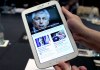
    The Galaxy Note 8.0 — the newest device in Samsung’s many-sized range of tablets, unveiled today at Mobile World Congress in Barcelona — has just managed to trump Apple’s iPad Mini in the small tablet category with one-tenth of an inch more of screen space (more on the device in our hands-on). At the same time, Samsung is also introducing a few new services and features — including expanded hovering capabilities and more apps, which it hopes will also help it gain more consumer ground against the world’s biggest tablet maker. The extra features show that Samsung sees improved services and content this as key to improving its market share in the tablet space.

    Don’t touch, just hover

    Samsung’s S Pen stylus has been upgraded to work both on the touchscreen of the Note 8.0 as well as with the physical navigation buttons, and Samsung is also extending the functionality of the pen in other ways. And the Air View feature, where users can initiate previews by hovering their pen over something without touching the screen, is now getting expanded to third party apps. The first of these is a new version of the Flipboard social newsreading app, where users can select and expand a tile by hovering the pen over a selection.

    Yes, you can argue that this is more of a gimmick than a useful element at this point: why, exactly, do you need to hover the pen over the over a tile when it’s just as easy to tap and select? And isn’t the point of the touchscreens that you can “touch” them? But I can also see how this could become more useful as the feature develops and gets used elsewhere. For example, one of the annoying issues with touchscreens are accidental clicks, such as those made on ads when you are trying to navigate around an app.

    Companies like Google are introducing ways of reducing accidental clicks; others are even playing around with the touchscreen to de-sensitize them for those with less precise fingers. But the hovering pen — whose pin of light needs to rest for a brief moment to select an item — could be another way to select what you want to see and do.

    In addition to the Flipboard app, the hovering already works with file folders, email, gallery views of photos and videos, a spokesperson notes, and it will also work with more apps in the future, as developers upgrade them to recognize and respond to the S Pen’s proximity to the screen.

    New apps, and new features in older apps

    With the Note 8.0, Samsung is also ushering in a couple of new developments on the apps front, in addition to the new version of Flipboard.

    In keeping with Samsung’s original vision of the Note acting as a kind of organizer and productivity device — more screen than a phone for planning; but smaller than a tablet to make it portable — Samsung has scooped an exclusive on a new Android app launch. Awesome Note, a note-taking that lets you track progress and make lists across different categories, has up to now only been available for iOS devices, where the full edition of the app for iPad retails at $4.99.

    Now developers Bird are releasing an Android version, and while this will also be sold as a paid app in the Google Play store, Samsung will be bundling it as a free app on the Note 8.0 “for at least a year,” according to Michael Lin, marketing manager, Samsung Electronics.

    Other apps that will be preloaded on the device include the newest version (2.0) of Chat-On, Samsung’s cross-platform, cross-media group and direct messaging service; Reading Mode that modifies the screen brightness for reading; and Smart Remote, Samsung’s universal remote control and electronic program guide, playing into the fact that nowadays a lot of consumers (80% in the U.S., claims Samsung) use a second device like a tablet while watching TV.

    Talk to me, but not everywhere

    The camera features, as Chris pointed out, are not brilliant on the Note 8.0 — and so we may not see too many people doing this with them:

    Nor, it seems, will we see many people in some parts of the world using the Note 8.0 to do this:

    Although the Galaxy Note 8.0 is incorporating, as Lin says, “all of the capabilities of a smartphone into a tablet,” the phone feature will be disabled on the device when it launches in the U.S., both in the initial WiFi version as well as in the 3G/LTE versions. Whether this is because carriers have asked Samsung to remove this to keep the device from cannibalizing handset sales, or whether it’s because of consumer taste, or for another reason entirely, is not clear.

    It’s a pity, because while you may not want always to talk on your tablet, it can come in useful as an occasional phone, both for video and voice calls. Our test of the phone found the voice quality decent.

    The voice calling feature will be included in the device when it launches in other parts of the world, Samsung says.

    Nortre Dame cathedral photo: Tumblr

  • Orange Ramps Up Own-Brand Range With 3 More Android Handsets, And Its First LTE Device, Has Sights On Windows Phone

    Orange Lumo

    Perhaps aware of the tsunami of news that will hit during Mobile World Congress, we are seeing an increasing amount of news releases coming out before the actual event. France Telecom/Orange has already told us about one device — an Android smartphone with Fujitsu aimed at the senior market — and now it is following that up with three more, own-branded, Android handsets aimed squarely at the middle market of smartphone users.

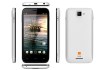
    The Lumo (pictured) is the carrier’s first own-branded LTE device; the Nivo is a device aimed at the budget segment; and the San Remo is a large-screened 4.7″ device with a brushed-metal casing. All will be out in selected markets in the first half of this year.

    And while each of these devices will come loaded with Android 4.1, Patrick Remy, the VP of devices for France Telecom, also notes that we may soon start seeing own-brand handsets from the carrier not built on Android. “There is no willingness to only have Android devices in this range,” he said. “We believe the best opportunity is with Android right now, but we are looking at other operating systems, specifically Windows Phone, but potentially others.” 

    On the subject of Firefox OS — the mobile platform being built by Mozilla with other partners — “we are monitoring what is being done there,” says Remy. “We are not announcing any launch of such devices at this point in time, but we are definitely interested in that area and depending on the opportunities, there is a chance for an Orange-branded device among those.”

    Remy also admits that Orange’s own-brand smartphone devices do not move the needle when compared to the volumes sold by carriers from smartphone leaders Samsung and Apple. But they are proving to be small hits for the carrier, specifically when targeting users in the mid-market — or “higher-end pay-as-you-go or lower end contract customers,” in Remy’s description.

    This naturally means these devices do best in markets where these segments are biggest. “Not Luxembourg,” Remy joked of the very affluent little principality where the carrier offers services. But other markets do quite well. In Spain last year, Orange’s best-selling device was the Monte Carlo, another handset in its own-brand range. Overall sales of this line of devices has grown by 62% over the last year. But it’s telling that there are currently “no plans” for any of these three to be offered in the UK this year.

    France Telecom/Orange does not release sales numbers on how well these smartphones do but did note that last year its entire range of own-branded devices — including both feature phones and smartphones — were about 10% of all handset volumes, “and that’s increased a bit to about 12%,” says Remy. He notes that within that proportion smartphones are a “significant part of that.”

    Orange has struck deals with Alcatel/TCL, Gigabyte, Huawei and ZTE to make its own-brand devices. The Lumo and Nivo come from Gigabyte, whereas the San Remo is made by Alcatel/TCL, with Huawei and ZTE sitting out in this particular round.

    Perhaps more than other European telcos, Orange has over the years dedicated a lot of time and energy to creating devices that are filled with Orange-customized services and the Orange brand. These devices play into that theme, but for now will not be packing as much Orange-punch as they can.

    Baidu, for example, which has inked a deal with Orange to provide a customized browser for its devices, will not be making an appearance on the devices for now, although this may be something we will see going forward, says Remy. “They’ll come with our standard suite of services and customization,” he noted. These include customized lock-screens, the ability to port your services when roaming, and links to Orange services specific to your home country.

  • Fujitsu Finally Enters Europe’s Smartphone Market With A Senior-Focused Android Device With France Telecom, Starting In June

    STYLISTIC_S01_front_FR

    It was exactly a year ago that news began to surface of Fujitsu’s intention to come to Europe with its Android-based smartphones. Now the Japanese company is finally coming good on those reports: on Tuesday, Fujitsu is launching its first device in Europe, marking its first “extensive foray into the smartphone market outside Japan.”

    But it’s not the company’s high-end Arrow Android phones that will be leading the charge. Instead, it is the Stylistic S-01, a senior-focused, Android 4.0 device with big icons, enhanced audio and a de-sensitized touchscreen aimed at elderly users. The device will sell first in France, starting in June and in partnership with France Telecom/Orange. The first devices will be shown at the Mobile World Congress event in Barcelona next week.

    While targeting elderly users first may seem like a strange tactic for a smartphone market debut, it actually makes sense for a number of reasons.

    According to WPP’s Kantar Worldpanel, there are already countries in Europe where smartphone penetration has passed the 50 percent mark (the UK is 61 percent). France is not quite one of them yet, but it is close at 46 percent.

    That means that in a world where Samsung and Apple are dominating smartphone sales, competition is getting tight to sell to mass market, younger demographics and some more specific targeting is needed.

    Smartphone penetration among seniors in France is only around 20 percent, but some 75 percent of mobile users in the senior age bracket plan to buy a smartphone in the next year, according to one survey. France Telecom tells me that it has more phones in the pipeline for seniors. “We’d like to see what the appetite for this device is but we recognise the senior user segment as a new market for us to target, so we will be considering other devices for these users in the future,” a spokesperson says.

    Indeed, Orange is also bucking the ageist trend that assumes smartphone technology is only for young people. “The senior customers within our customer base are just as hungry for smartphone technology and mobile internet services as anyone else,” noted Yves Maitre, SVP of device and mobile multimedia, France Telecom-Orange.

    Fujitsu says that it has sold some 20 million phones in its Raku-Raku senior phone line since its launch in 2001 in Japan, where it is sold exclusively by NTT Docomo. Fujitsu’s only other foray outside of Japan has been for a trial of smartphones in China.

    The Stylistic S-01 has several features that make it more friendly to the older user. Among them, the homepage icons that appear on the four-inch screen have been simplified and cast in a larger typeface to make them easier to see. The touchscreen, meanwhile, has been made less sensitive, with users required to push extra hard, as they would on a keypad, in order to tap through a command or number. While this might be annoying to the average smartphone user, Fujitsu says this reduces the amount of accidental touches that an older person might make on the device.

    Other features include a personal security alarm and audio technology that slows down fast talkers, and adjusts the frequency of voice callers relative to a person’s age, and water resistance.

    A France Telecom spokesperson says that for now there are no plans announced for further country rollouts, nor has it specified how it will be priced.  It will depend on what Orange France decides to roll into the tariff and what services it ultimately bundles with the device.

    But it looks like Fujitsu, at least, has plans for this to be the first stage in a wider international plan.

    “As Fujitsu’s first extensive entry into the smartphone market outside Japan, we are delighted that Orange – a company that holds a strong position in the European market – will be offering our phone, which features Fujitsu-exclusive human-centric technologies,” said Nobuo Otani, Corporate SVP, Fujitsu Limited, in a statement. “We are committed to the success of this partnership as we strive to expand our smartphone business overseas, while advancing the promotion of Japanese technology worldwide.”

    Full release with more device specs below.

    Fujitsu and Orange Partner to Deliver Smartphones to the Rapidly Growing Senior Market in Europe

    Intuitive, feature-rich STYLISTIC S01 smartphone to debut June 2013 in France

    Tokyo and Paris, February 19, 2013 – Fujitsu Limited and France Telecom-Orange today announced a new partnership to offer mobile phones and services in Europe. The partnership marks Fujitsu’s first extensive foray into the smartphone market outside Japan. The initial offering will be the STYLISTIC S01, a smartphone designed especially for senior users, and will be available through Orange in France in June 2013.

    As the senior population in Europe continues to grow rapidly, smartphone usage in this demographic is expected to rise. With the release of the STYLISTIC S01, Fujitsu and Orange plan on offering users in this market segment an innovative smartphone that provides outstanding usability. The STYLISTIC S01 will include services like Orange Cineday (*1) and Orange et Moi (*2), which are unique to Orange. Based around the human-centric technologies that Fujitsu has cultivated for over a decade, the STYLISTIC S01 also offers a variety of original, convenient functions designed to reduce barriers to smartphone adoption by maximizing ease of use.

    One of these barriers is conventional touchscreens, which do not offer the tactile sensation of pressing a physical button. The STYLISTIC S01, however, employs a unique screen technology that requires users to apply the same level of pressure to on-screen icons as they would to buttons on a keypad. This helps users avoid inadvertent touches, preventing unintended operations and improving input accuracy. Furthermore, the intuitive graphic user interface features extra-large icons and a simplified layout to ensure straightforward navigation for easier operation. The STYLISTIC S01 is also equipped with a loud personal security alarm that can be used to alert people in the surrounding area in emergency situations.

    The handset incorporates audio technology that optimizes the frequency range based on a user’s age, making it easier to hear the voice of the person on the other end of the call. Another user-friendly audio function slows down the speech of callers who speak rapidly without lowering the pitch of their voice or changing the length of the conversation. These and other innovative features are currently in use in the Fujitsu Raku-Raku Phone series for seniors, which has been offered by NTT DOCOMO since 2001 in Japan where it has sold over 20 million units.

    “The senior customers within our customer base are just as hungry for smartphone technology and mobile internet services as anyone else. We are thrilled to be working together with Fujitsu to leverage our combined strengths to provide products for an emerging smartphone market segment in Europe,” said Yves Maitre, Senior Vice President of Device & Mobile Multimedia, France Telecom-Orange.

    “As Fujitsu’s first extensive entry into the smartphone market outside Japan, we are delighted that Orange – a company that holds a strong position in the European market – will be offering our phone, which features Fujitsu-exclusive human-centric technologies,” said Nobuo Otani, Corporate Senior Vice President, Fujitsu Limited. “We are committed to the success of this partnership as we strive to expand our smartphone business overseas, while advancing the promotion of Japanese technology worldwide.”

    The STYLISTIC S01 will be on display at the Fujitsu stand (Hall 5 Stand 5E120) and can also be viewed upon request at the Orange stand (Hall 5 Stand 5H110) during Mobile World Congress 2013, to be held in Barcelona, Spain starting February 25, 2013.

    STYLISTIC S01 Product Specifications

    · 130 x 64 x 10.9 mm
    · 4-inch WVGA (800×480) touchscreen with unique tactile feedback technology
    · Camera: back 8.1 MP; front: 0.3 MP
    · Connectivity: GSM/GPRS/EDGE/UMTS/HSPA, Wi-Fi/Bluetooth, GPS
    · Memory: 4 GB + microSD
    · OS version: Android Ice Cream Sandwich 4.0
    · Chipset: Qualcomm MSM8255 1.4 GHz
    · Battery: 1800 mAh
    · Water- and dust-resistant (IPX5/8, IP5X)

    Glossary and Notes
    1. Orange Cineday
    Allows Orange customers to take a friend to see a movie every Tuesday for free.

    2. Orange et Moi
    A free application enabling Orange customers to understand and manage all their account details directly from their mobile in an efficient and easy manner. Customers can track their consumption, top up their account, take out options, find out about special offers, access Orange help, and also discover all the applications published by Orange with just one click.


  • iPads (Thanks To The Mini) Were 1 In 6 ‘PCs’ Shipped, Tablets One-Third, And Windows RT Didn’t Even Break 1M: Canalys

    ipad-with-ipad-mini

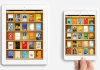
    The PC market is fast shifting into a touchscreen world, and Apple is leading the charge. Some new numbers from the analysts at Canalys note that in Q4 of 2012, one in every three PCs shipped was actually a tablet, and that Apple’s iPad accounted for about half of them, or one in every six PCs shipped.

    Canalys senior analyst Tim Coulling tells me that by “tablet,” Canalys means any computing device with screen of seven inches or more. By combining PC and tablet numbers — a logical thing to do, given that many are substituting tablet purchases and usage for PC purchases and usage — Canalys figures that worldwide PC shipments are actually on the rise — up by 12% on last year to 134 million units for the quarter. That’s in contrast to figures from Gartner, which in January noted that Q4 PC shipments were down by 5% on last year — without factoring in tablets.

    Adding Apple’s iPad sales to its Mac sales puts it into the lead among PC vendors. The company shipped 27 million PC units in Q4, giving it a 20.1% share of the market. The number-two vendor was HP, whose market share is based on its PC prowess. It shipped 15 million PCs, for an 11.2% share of the market. That let it edge just ahead of Lenovo, which shipped 200,000 fewer units.

    Still, Android continues to make inroads. Canalys points out that this is the first quarter where Apple’s iPad has not accounted for more than 50% of all tablets shipped — it was 49%, as it happens, with Android accounting for 46%.

    Apple’s savior was the iPad Mini: “Apple timed the launch of the iPad mini well,” writes Pin-Chen Tang, Canalys research analyst. “Its success proves there is a clear demand for pads with smaller screens at a more affordable price. Without the launch, Apple would surely have lost more ground to its competitors.” Indeed, that fact may well encourage Apple to look at more sizes and price points for its iOS devices in the future.

    Overall, Canalys points out that the tablet market grew by 75% in Q4 to 46.2 million units, and that full-year shipments were 114.6 million units. Given that trend, Lenovo, which has been making some interesting hybrid models incorporating both touchscreen and keyboard features, could well pull ahead of HP if the latter doesn’t make some significant tablet inroads in the next couple of quarters.

    Meanwhile, Samsung is at the other end of the spectrum: its strong performance, placing it into fourth place with 11.7 million units (9% market share) is based mostly on the success of its line of Galaxy Tab tablets. It shipped 7.6 million of these in Q4, a rise of 226%.

    Dell, which is hoping for a turnaround as a private company, rounded out the top five. Dell’s reputation “continues to fade,” Canalys writes, resulting in a 19% drop in shipments in the quarter. “A turnaround in fortunes is likely to take years,” they note — so just as well that Dell will not have to answer so quickly to the markets for its performance.

    As other analysts have pointed out, Windows 8 has so far had little impact on worldwide PC shipments, and an almost negligible impact on tablets — with only 3% of tablets shipped in the quarter based on Windows 8.  That has had a knock-on effect both for Windows and for those who make devices using the OS. “Microsoft’s involvement in the Dell buyout raises eyebrows in the light of its recent aspirations to become a hardware vendor,” Canalys notes. “But it is not likely to solve Dell’s problems as even Microsoft struggles with pads.” Equally difficult was Windows RT, which failed to break even 1 million units at 720,000 shipped. “The outlook for Windows RT appears bleak,” noted Tim Coulling, Canalys senior analyst. He believes the only way out for this is for Microsoft to drastically reduce the licensing price, cutting further into its margins on the product.

    Western Europe’s slow economy also continues to weigh things down.

    Amazon, selling only tablets and no PCs (yet?), didn’t make the top five but still managed a substantial volume shift. Its shipments were 4.6 million units, almost mirroring Dell’s decline with growth of 18%. With the Kindle Fire now selling in more markets worldwide, it will be interesting to see if Amazon can see a big boost this year or if it will be stymied by Apple and Samsung. For now, international is doing a good enough job to offset some small declines in the U.S., where the launch of the higher-priced Kindle Fire HD not proving to be a runaway success as the initial launch of the Kindle Fire was a year ago.

  • Orange Inks Widgets Deal For Mobile, With Tablets To Come Next?


    netvibes screenshot

    More apps for the non-smartphone set: mobile operator Orange has announced a deal with Netvibes, the France-based widget developer, to roll out its library of 200,000 widgets covering brands like Facebook, Twitter and BBC, to most of its portfolio of signature feature phones. These pared-down “apps” are all free to download, but Orange says that in future they will also include paid widgets, and those with in-widget charging options.

    Orange, which this week also had its merger approved with T-Mobile in the UK, also said that it is already working with Netvibes on services for other screens: these include the operators’ IPTV service as well as future services for tablets—Orange has been among the operators rumored to be in talks with Apple over supplying the iPad in European markets. “We’ve been focussing first on mobile and having that ready but we’re also looking to develop and test what widgets would mean on other channels like tablets and set-top boxes,” says David Nahmani, director of business development and partnerships at Orange.

    Orange says that it is the first mobile operator to partner with Netvibes, although Netvibes already offers access to its widget catalog directly through its own wap portal for basic phones as well as portals for specific devices such as Apple’s iPhone.

    Orange has been offering widgets on mobile handsets since July 2009. The hope is that widgets will boost mobile data usage among their 130 million subscribers, most of whom do not use smartphones. This deal will give that strategy a big boost: Orange had only rolled out widgets to 25 of its handsets on devices like the Nokia (NYSE: NOK) 6500 and the LG (SEO: 066570) 505 but now plans to make widgets available with a pre-installed link on 80% of its devices by the end of this year.

    “We still have a lot of people who are heavy users who are not on smartphones that would like to access applications,” says Nahmani.

    It looks like widgets may be coming of age here. Orange plans also to make the widgets available on smartphones by linking the Netvibes catalog to its own Orange App Shop, and presumably when a widget is accessed from a more enhanced device, it will give a user a more enhanced experience.

    And in an attempt to attract more developers to the widget platform, Orange also said that it is releasing tools for developers to create apps that can be sold for a fee, or include the functionality to charge for the service within the widget—the service would link up with Orange’s own billing system. These areas, says Nahmani, are still in development. They would have a “classical” revenue share model behind them, he says, although he would not reveal more specifics.


  • Teletext: 300,000 iPhone Downloads For DMGT’s App Publisher


    Teletext

    Teletext’s loss-making non-commercial content operations, which ran via TV signals, may have been shelved last year, but the brand has lived on in the form of commercial projects like Teletext Holidays, Teletext Racing and TeletextCasino. And now it also seems to be looking for a new lease of life as a mobile publisher.

    Teletext Digital Services, which is owned by DMGT’s Associated Northcliffe Digital, says that it has seen 300,000 downloads of its portfolio of mobile apps on the Apple (NSDQ: AAPL) app store in the first six weeks of their launch. But it’s worth pointing out that not all of these apps are actually Teletext services. TDS is acting as publisher for the portfolio, which includes an app not only for Teletext Holidays but also other AND businesses such as FindaProperty, Motors.co.uk and two Daily Mail-branded puzzle apps, among others…

    With the exception of the Daily Mail (LSE: DMGT) games apps, which sell at £0.59 ($0.89) a pop, the rest are free. Teletext says it plans in future to explore “a variety of other app types and business models, particularly those developed by third parties with subscription or transactional monetization models.” It also says it wants to work on apps for non-AND businesses as well.

    As publisher, Teletext says it provides product development, marketing, PR and commercial skills to support the apps. Teletext also has provided some capital for some of the projects, although in most cases these apps came out of the budgets of the individual AND businesses.

    Here are the numbers on downloads:

    FindaProperty: This has been the most popular of the apps so far, with downloads of 120,000 since January. The GPS-driven app, which lets people find houses and agents based on current location, has been ranked number-two in the lifestyle category and 13th in the top-25 free apps.

    Jobsite: Perhaps it’s a reflection of the current economic climate, but the second-most popular of the apps so far has been Jobsite. It’s been downloaded 35,000 times, and is ranked first in jobs and 15th in the UK’s lifestyle section.

    Teletext Holidays: Working under the brand name Travel Tip-Off (the name of the site’s e-newsletter that has travel deals of the day), this site has had 11,000 downloads.

    Motors.co.uk: 11,000 downloads for this one, too, which links up with the website and has a catalogue of 150,000 cars for sale.

    Localpeople: the companion app to AND’s hyperlocal site initiative has had a not-very-impressive 1,000 downloads.

    Add all this up and it comes to 178,000. On top of this, AND’s free app for Metro, which launched in 2009, has had 130,000 downloads.

    Those three game apps from the Daily Mail have had 5,000 sign-ups. Selling at £0.59 per app, that’s a grand total of £3,950 in sales from those (that’s before Apple or any developer partners take their shares). Still a pretty long shot in making up for the losses at the old Teletext, which had reported a loss of £4 million in the year to October 2009.

    Related


  • Mobile Content Bits: Vodafone/Foursquare, FoneStarz/Disney; 3UK/Warner Bros


    Foursquare Logo

    Vodafone/Foursquare: A European operator deal for the location-aware mobile social media app. Vodafone (NYSE: VOD) UK customers can now “check-in” to Foursquare, through Vodafone’s live! portal, through the MyWeb sign-on, or by texting Foursquare to 97886. Normal data charges still apply to use the app, though.

    FoneStarz/Disney: More content deals for Vodafone…the Vodafone 360 app store will now feature apps for various Disney (NYSE: DIS) brands. They are being developed by FoneStarz, which had a pre-existing relationship with Disney, building and managing its mobile content portals in the UK and eight other countries.

    3UK/Warner Bros.: The mobile operator has now added WarnerTV to its subscription VOD service, which it launched back in November 2009 in partnership with Mobix Interactive (part of the On Demand Group division of SeaChange). The deal gives 3UK subscribers access to full-length episodes of Warner Bros. (NYSE: TWX) TV shows such as “Two and a Half Men,” “The Mentalist,” and “Friends.”


  • Mobile Developer July Systems Raises $7 Million


    July Systems logo

    More funding going to middleware that aims to help mobile content make money: July Systems, which develops a platform for content companies to publish, distribute and monetize mobile internet content, has raised $7 million.

    The funding round was led by Intel (NSDQ: INTC) Capital, with Sequoia Capital (an existing investor) and Footprint Ventures also participating. The company says it is now cash-flow positive after seeing a 300 percent increase in revenues over the last year.

    July Systems today also announced three new customers—ESPN (NYSE: DIS) Cricinfo, Univision and Discovery Networks. This takes its total customer number up to 80. Existing clients include a number of media companies in the U.S. such as CBS (NYSE: CBS) Sports, Vh1, Fox Entertainment Group and other News Corp (NYSE: NWS). properties, as well as Comedy Central and NBC Sports.

    In India, the company works with NDTV, Zoom TV from the Times of India group, and CricketNext, among others.

    July says that it will use the new funds announced today to expand its operations in both Asia Pacific and North America, as well as invest in R&D around its Mi mobile platform.

    In particular, it will focus on enhancing its cross-platform publishing (between the mobile web and apps), mobile advertising technologies, and micro-payment systems. It is also investing in enhancing its real-time interactive video services—which fits in with the fact the company already has several TV and sports media companies on its books.

    The company has offices in Bangalore, Los Angeles and New York.

    Related


  • What The T-Mobile/Orange UK Merger Means For The Mobile Web


    Orange UK's Tom Alexander and T-Mobile UK's Richard Moat

    The European Commission has approved the much-needed 50/50 JV merger of France Telecom’s Orange UK and Deutsche Telekom’s T-Mobile UK, subject to them giving away a small chunk of radio spectrum – creating the UK’s largest mobile network, with 30 million customers, or 37 percent of the market.

    The combined operator, which may get a new name after 18 months, will instantly have significant clout in mobile telephony – but what’s it mean for the fast-growing mobile internet market..?

    O2 has a data network rival: Right now, O2 users are responsible for more UK mobile internet traffic than any other network (after all, it’s the largest operator and has enjoyed iPhone for some time). T-Mobile is really languishing on internet users despite a high-profile campaign. But pooling T-Mobile and Orange will mean the combined operator contributes nearly as much UK mobile data as their rival.

    T-Orange takes the lion’s share of web visits. When you consider unique users to mobile internet portals, here’s where Orange/T-Mobile will pip ahead, on GSMA data…

    Orange already gets roughly the same amount of traffic going through its mobile web sites as Vodafone (NYSE: VOD) and O2; when this 19 percent is combined with T-Mobile’s six percent, this will put it ahead of the rest of the pack. comScore (NSDQ: SCOR) says the combined presence will make it the third-largest mobile web property owner behind Facebook and Google (NSDQ: GOOG). Facebook in December 2009 had nearly five million unique visitors, while Google (and related sites like YouTube) had 4.6 million.

    T-Mobile could finally get aboard the internet. T-Mobile has built out less of a mobile internet portal presence over the years than its competitors. This is in contrast to Orange, which owns mobile ad agency Unanimis and has strong ambitions, like other mobile operators, in monetising its traffic in the face of commoditized voice and data pricing.
    Integrate or separate?. But this combo almost sounds like trying to combine Yahoo (NSDQ: YHOO) and Google, with Orange playing the part of Yahoo and T-Mobile playing Google: “T-Mobile has made their portal lightweight. They have made it very easy for people to leave,” a mobile analyst tells me. “Orange has presented itself as much more of a media company. They’re much more about keeping an their audience on their sites and monetising that.”


  • Orange Has Already ‘Discontinued’ UK Wing, As Revenue Beats Forecasts


    Orange shop logo

    Today’s earnings from France Telecom (NYSE: FTE) were a signal that the operator wants to look ahead and put the last year behind it.

    The telco said 2009 revenue was down by 1.8 percent to €45.8 billion (£40.4 billion; $61.8 billion), and net income also decreased by 6.4 percent to €4.85 billion (£4.3 billion; $6.5 billion). Still, these numbers beat analyst expectations: those polled by Bloomberg had expected profits of €4.6 billion.

    In another forward-looking gesture, France Telecom stripped out of earnings the results of Orange UK, ahead of its merger with the operator and T-Mobile UK. This deal has yet to get final approval from regulators, but France Tel is already viewing Orange UK as a “discontinued” operation and seems to view the antitrust process as more of a formality than a potential hurdle. With the UK included, revenue for the year would be €50.95 billion.

    Broadband and fibre: Total broadband customers for the group are now at 13.5 million, an increase of 4.1 percent over last year. The operator has reiterated its plans to deploy a fibre-to-the-home network in France, with pricing for the service to be made public in the middle of this year. The company is investing €2 billion in this project and aims to have the whole country, plus three overseas districts, covered by 2015.

    IPTV still growing: France Telecom says it now has 3.2 million IPTV customers, making it the biggest IPTV provider in Europe. It currently only offers IPTV services in France and Poland. In France, where it has 2.8 million IPTV subscribers—representing a 45 percent growth over the year before—it has 1.1 million people taking premium pay-TV packages including 663,000 taking Orange Sport and its Cinema Series channels.

    The mobile subscriber base is now at 132.6 million users, a growth of 8.8 percent. Mobile broadband subscribers (those using dongles) shot up by 20.2 percent. Newer mobile ventures are proving to be revenue drivers for the company right now: in the UK, the company says revenues (which were €5.1 billion) were boosted by 3.7 percent, partly due to MVNO deals; and emerging markets, where Orange offers mobile services, revenues of €3.4 billion were up by 5.2 percent.


  • Clearwire: Narrows Loss, On Track In Its 4G Rollout


    Clearwire

    WiMax operator Clearwire (NSDQ: CLWR) says it remains on track in its “aggressive” plan to roll out its 4G network to 120 million people by the end of this year, with Houston the next market to launch in the coming weeks. Other cities due to launch toward the end of this year include San Francisco, New York, Boston, Minneapolis, Washington DC and Kansas City. Total subscribers are still growing and are currently at 688,000.

    Clearwire, which reported earnings for the fourth quarter today, nevertheless reported a loss of $98.7 million on revenues of $79.9 million, compared to a loss of $118 million for the same quarter a year before.

    Wholesale partners remain a major part of the company’s strategy. Clearwire already counts Sprint (NYSE: S), Comcast (NSDQ: CMCSA) and Time Warner (NYSE: TWX) among its distribution partners (as well as investors) and says that third-party partners represent 100 million users. “We intend to enter into additional third-party wholesale aggreements later this year,” said William Morrow, the CEO of Clearwire. How attractive that offer will be to companies that are not investors, though, remains to be seen. Targets, says Morrlow, will be ISPs, fixed/wireless carriers, as well as consumer electronic companies and other retailers.

    Strong capex, future funding and equipment writedown. Clearwire is committing to investing $2.8 billion-$3.2 billion in 2010 on network expansion this year. It has confirmed investor’s statements that it is funded sufficiently now for its 120 million target, but Morrow says it will need to raise more money if and when it decides to extend its network again in 2011 and beyond. On a more bum note, Clearwire says that it wrote off $30 million in equipment inventory—the details will come out in Clearwire’s next 10-k.

    Usage stats for service to-date. Clearwire says that half of its customers are using its WiMax service as a replacement for past internet connections. So far the service has been most popular among younger, more mobile people under the age of 35 and apartment dwellers. There’s increasing interest now too from small businesses and families. The average customer is using 7 gigabytes of data per day. Pre-4G customers double their usage when they upgrade to 4G.

    Related