Author: J Marra

  • Android outdated? Blame Google, not cellular carriers

    You can still buy phones running Android 2.3 (Gingerbread), even though Google released the last distribution, version 2.3.7, in September, 2011. In the meantime, numerous security flaws have been discovered in Gingerbread and users are vulnerable to them.

    For this, the ACLU blames AT&T, Sprint, T-Mobile and Verizon Wireless. The logic in their plea to the FTC is so shoddy that I have to suspect an ulterior motive. In whose interests is the ACLU operating here?

    I got in an argument with a bunch of lawyers about this on a mailing list, and you can see how so many want to believe the worst about the carriers. It’s easy to bash the carriers and I don’t like them either, but that doesn’t make them at fault for this problem.

    Once they start releasing a new major version of Android, Google stops updating the old ones. Note that the release date of 2.3.7 is September 11, 2011 and the release date for 4.0 (Ice Cream Sandwich) is October 19, 2011. Version 3.x (Honeycomb) was a dead-end of sorts that started as Google’s attempt to support tablets on Android, but was largely abandoned for 4.0. The next version for phones after 2.3.7 was 4.0.

    And yet the hardware requirements for 4.0 are substantially greater than those for Gingerbread. See chapter 7 in both the Android 2.3 Compatibility Definition and the Android 4.0 Compatibility Definition: Just one of the differences is that the minimum RAM requirement went from 128MB to 340MB.

    I’m sure Gingerbread devices typically have no more than 256MB, and no phones are upgradable for memory. The result is that it’s impossible for the carriers to update the phones.

    Who is to blame? If there’s any to asses, I’ll give it to Google for providing security patches only in a new major version of the operating system with elevated hardware requirements. Contrast this with, for example, Microsoft’s continuing provision of security updates for Windows XP, even for pirated copies, 12 years after initial release.

    Someone suggested to me that maybe this is true for Gingerbread, but what about Ice Cream Sandwich phones that aren’t upgraded to Jelly Bean (Android 4.1 and 4.2)? I think it’s worth pointing out that there are also hardware and software requirements changes in 4.1 that would take time for carriers to implement, and it’s possible that handset makers didn’t deem such task as possible or worth the trouble to provide the update.

    Notice I didn’t say “carrier” in that last paragraph, because it’s not their job to write updates. They provide updated software given to them by handset makers and Google. Many of the handset makers only do what the carriers tell them to do, but obviously they’re involved. The real blame, once again, is on Google for not providing patches for ICS after Jelly Bean became available.

    The carriers are old and easy villains for the ACLU. They’re bad big business. Google, Apple and the handset makers, on the other hand, are good big business. (Microsoft more resembles Google and Apple in this regard, but definitely bad big business. Why is left as an exercise to the reader in the comment section below.)

    Now I’d like to think I’m not stupid and I recognize that Google’s patching practices are arguably in the interests of the phone makers and carriers (who sell almost all the handsets) in that they increase the need to upgrade phones rapidly. Perhaps the whole system is wrong and everyone’s hands are dirty.

    Photo Credit: M. Dykstra/Shutterstock

  • Taxing Internet sales is the right thing to do

    The fight to keep brick and mortar commerce subsidizing e-commerce is in a crucial stage today.

    You never heard of that fight? It also goes under the guise of fighting “Internet sales taxes”. A bill (the “Marketplace Fairness Act”) is moving along in the Senate that requires merchants with $1 million or more in revenue to collect any sales taxes due in the state of the buyer.

    The buyer is already responsible for such taxes, called “use taxes” when paid by the buyer. Real businesses actually pay these taxes, but only a small proportion of consumers, sometimes known as “suckers”, pay them. It’s rare for anyone to get in trouble (although I did once in 1986).

    I am, by inclination, a small-government type, a quasi-libertarian. A new way to tax people for engaging in commerce is not what I’m usually looking for. That’s not the issue here: sales taxes are applied at stores with physical presence in the state but not those selling remotely. This is inherently unfair to the brick-and-mortar businesses. I’m probably all for cutting sales tax rates to “starve the beast” but I’m not for taxing commerce sold one way and not the other.

    Would online sales taxes help or hurt small business? Some would be helped, some would be hurt. Small businesses operating in the venue of big businesses like eBay would be hurt because the auctioneer clearly does more than $1 million in revenue. For this reason, eBay has started a “spam your congressman” campaign to oppose the legislation. Amazon.com, on the other hand, actually supports the new law. Amazon and its local affiliates have been the target of states for not collecting such taxes from out-of-state customers and perhaps company execs think that they’re well-positioned to benefit from an environment where everyone has to collect them.

    The main complaint about such taxes used to be based on the legal reason why, back before e-commerce, courts found that out-of-state merchants were not obligated to collect them: It was too great a burden. There’s no credible case left for the substantial burden argument. Software and Internet services are very capable of determining sales taxes owed based on an address.

    Now the complaint is the burden to small business. Well, if you’re doing your own e-commerce collections and have under $1 million in revenue it’s not a problem for you. The $1 million ceiling for the exemption is likely to create some perverse incentives for companies near that number, perhaps to split into multiple businesses so as to stay under the limit. Personally, I wouldn’t even support the limit. Everyone who does e-commerce above the level of emailing “send me a check and I’ll mail it you” uses outside services which are, or should be, perfectly capable of collecting such revenues.

    I’ve seen some really lame complaints about this: “Local businesses use the local services that the taxes pay for; a business out of state doesn’t”. True, but sales taxes are consumption taxes. The buyer pays, not the merchant. That’s why the buyer has to come up with the money. And the buyer is in the state where the taxes are due.

    Lame complaint #2: “Internet buyers are already paying for shipping, why should they also have to pay taxes?” They should pay for shipping because they are getting the item shipped. Taxes have nothing to do with this. And there are lots of circumstances, more and more lately, where shipping costs are not directly charged. I’m an Amazon Prime customer and one of the things I get is 2-day shipping included on most of the items I buy.

    I would respect the arguments of businesses and Republicans organizing against sales taxes for remote Internet sales if they showed some concern for the injustice that the system creates for local businesses. Is there a better solution? I’m willing to listen.

    Photo Credit: 3Dstock/Shutterstock

  • Boston bombing lesson: Surveillance cameras work

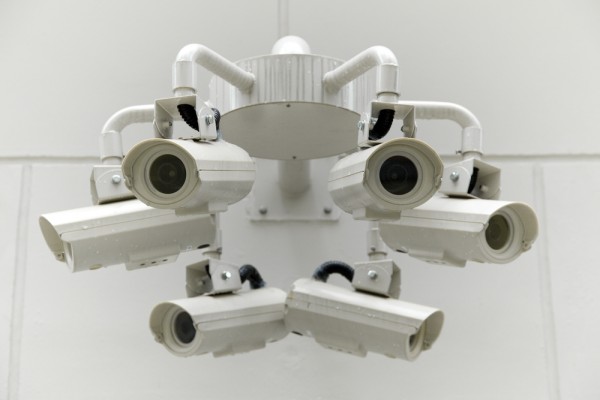
    As we all recap the Boston bombing and manhunt events in our minds, looking for lessons learned, the one that sticks out in my head is the value of surveillance cameras. They were essential to catching the perpetrators and doing so quickly. More aggressive use of them might have resulted in even faster capture, and the civil rights and privacy concerns people express about them are hysterical overreaction.

    The value of surveillance cameras was obvious almost immediately after the event. I remember many experts interviewed predicting that they would be used to narrow down suspects rather quickly. In fact, you don’t need an expert to understand this. The only people who didn’t seem to understand it well were the Tsarnaev brothers. They stayed in town and tried to go on with their lives, indicating that thought they wouldn’t be detected. They must have freaked out when they saw their pictures on the news, but they still didn’t get out of Dodge.

    The People Difference

    One of the more fascinating stories is that one of the victims, marathoner Jeff Bauman who lost both his legs as a result of the explosion, gave the police crucial witness testimony early on, according to Bloomberg News:

    He woke up under so much drugs, asked for a paper and pen and wrote, ‘bag, saw the guy, looked right at me,’ [the victim’s brother] Chris Bauman said yesterday in an interview…While still in intensive care, Bauman gave the FBI a description of the man he saw, his brother said. Bauman’s information helped investigators narrow down whom to look for in hours of video of the attack, he said.

    In other words, the witness account helped the police to use the video evidence more effectively. The description on its own would probably not have helped all that much.

    We still don’t know what led to them shooting an MIT policeman, starting a chain of events leading to both perpetrators being shot and the younger brother getting away for a time. But it’s safe to say that the massive lockdown of the city in that intervening period did not lead to the suspect being caught. In fact, what led to him being caught was that they ended the lockdown. That’s when the boat owner went out to look at his craft and noticed the blood. By taking people off the streets, the government also removed their eyes and ears.

    If you’re going to take human eyes and ears off the street you need alternatives: More public cameras and (and perhaps microphones) might have found the suspects sooner than they were found.

    Set Clear Rules

    Many people don’t like the idea of public surveillance cameras, fearing their rights will be violated. Consider this thought exercise: Wherever you have the camera (and perhaps a microphone), would you object to having a police officer in that spot looking and listening? Usually there’s no good reason to object. What’s the difference? The difference amounts to the fact that many cameras and microphones and big data analysis are more effective than human police. Is this really a reason to object? I say no.

    The 1984 image of Big Brother always watching wasn’t so scary because he was watching street corners and public plazas, but that he was watching in your house and in your car and at all times. Public surveillance cameras don’t belong where people have a reasonable expectation of privacy, and nobody has a reasonable expectation of privacy out on the street. It makes no sense to say that the police shouldn’t have the ability to observe public places.

    If only to make people more comfortable with the prospect, I think it’s reasonable and important to set clear laws on how data from this surveillance can and cannot be used. For instance, it might be reasonable to say that video can only be used in criminal, not civil investigations. Access to the data should be carefully controlled and all access, or at least all offline access to the data, should be carefully logged to show who was accessing it and for what reason. Abuse of the data for personal reasons should be punished.

    The above rules follow logically for cameras owned and operated by a governmental agency, but many of these cameras are privately owned. Even so, when government gains access to the data from private cameras the same rules can and should follow for government personnel. If Lord and Taylor has a camera showing the sidewalk outside their store then their security personnel aren’t under the same rules, but neither can they arrest nor prosecute people.

    It’s not surprising that people find public cameras spooky, but there’s no real need for surveillance to result in violations of any rights. Just because police officers are capable of violating someone’s rights doesn’t mean we do away with them. More effective law enforcement is a good thing.

    Photo Credit: brodtcast/Shutterstock

  • Why is there no Android app for Amazon Instant Video?

    Consumers have a rich selection of services for TV and movie content: iTunes, Netflix, Hulu, and I’m sure there are more I’m forgetting. Some of these are tied to hardware (like iTunes) and others try to be agnostic in this regard.

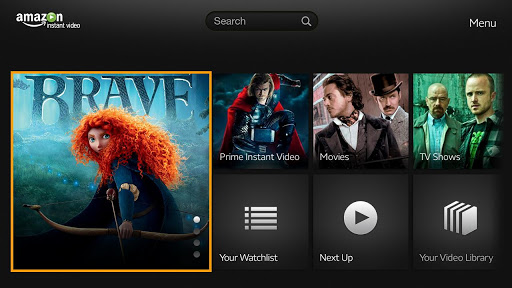
    My service of choice is Amazon Prime Instant Video. Amazon Prime is a $79 annual membership that gives you 2-day shipping on most items you buy from the retailer, allows you “to stream thousands of movies and TV shows” and access to the Kindle Lending Library with thousands of books.

    When I first joined Amazon Prime I was thinking mostly of the 2-day shipping, but my whole family quickly fell in love with the video. I watch the service on desktop PC and Mac, on our iPad, even on the Wii U. And then there’s the Google Nexus 7 tablet I have. No-go for Amazon Prime Instant Video there.

    Go to the Google Play store and there’s no app for Amazon Prime Instant Video. Go in the browser to the website and it doesn’t work, at least not on Android 4.0+, because the web version requires Adobe Flash, and there is no Flash for Android client anymore. Developers typically deal with this problem by writing their Flash software as an application/app using Adobe Air, which embeds a Flash runtime in the app.

    Amazon has chosen not to do this. If you want to view Amazon Prime Instant Video on Android, your only option is Kindle Fire, Amazon’s Android fork.

    Is it possible that Amazon shuts out other Android devices in order to protect Kindle? There’s a crude kind of logic to this, but it doesn’t withstand much scrutiny. For one thing, there’s the fact that the retailers supports most every other platform. Amazon doesn’t seem to have anything specific against Google since there’s a Google TV app for Amazon Instant Video. But more importantly, Kindle doesn’t exist so much to make money on its own, but to sell content. Amazon can’t be making a whole lot of money on Kindle with the prices they charge for it.

    So if the point is to sell content, why lock Android users out of the market for Amazon Prime Instant Video? I’d criticize it as a bad business decision, but I’m not really sure there’s even a bad decision behind it. I can’t fathom a reasonable argument for Amazon’s strategy. Can you?

    I’ve asked Amazon about this, both publicly (tweeting @AmazonVideo) and by leaving voice mail and e-mail for Amazon press relations. I haven’t received a response.

  • Can Microsoft admit its Windows 8 mistake?

    What were they thinking?

    It made sense when Microsoft decided to update Windows to be an operating system not just for PCs, but for tablets. In fact, it was a rather clever strategy: Declare tablets to be PCs, and then show that Windows tablets do more than Android or iOS, including running all those existing Windows programs. So far, makes sense.

    Then Microsoft went further, too far: Not only did the company create the touch-oriented Windows Modern UI, formerly known as Metro, but forced users to use it, even on conventional desktop PCs and notebooks with no touch. And then the the company went even further by making the Desktop Mode less usable.

    The idea must have been to force quick growth of the Modern UI ecosystem, but we don’t have to wait any longer to know that this was a mistake. Microsoft didn’t need to disadvantage desktop users in order to promote the Modern UI. No wonder large institutional buyers are turned off to Windows 8. Maybe they’re buying lots of tablets for tablet tasks, but they still buy PCs for PC tasks.

    The good news for Microsoft is that this problem is easily remedied. At least the technical part is easy. It does, however, require an act of profound public contrition: Microsoft admits miscalculation with the initial design of Windows 8. Here’s what the fixed version needs, and all of these things are fairly easy to do, whether in Windows Blue or some other update:

    • Windows 7-like mode of operation, called the Old-Fashioned Mode if you want. Let users or administrators set the system to boot into this mode.
    • Antique Mode should be able to launch Modern UI apps just like desktop apps. Running apps should appear in the taskbar.
    • Modern UI home screen needs an obvious, fixed thing to click on to go to desktop mode.
    • Modern UI also needs a fixed date/time display.

    There are more-sophisticated, less urgent ideas related to these that would work well. I can see it preferring the Modern UI in some ways if the system is operating purely as a tablet, but desktop mode when a keyboard and mouse are connected.

    Yes, the Modern UI has its own issues. Lots of people don’t like it, but that’s another matter and a less important one in the short term. The important thing for right now for Microsoft is to stop undermining the message that Windows 8 is a PC operating system.

    The message that Windows 8 works with both tablets and PCs, and that tablets are just another kind of PC, is a good one and can still succeed. Personally, I think there is nobody as credible as he who freely admits his mistakes.

    Photo Credit: JStaley401/Shutterstock