Author: Jay Donovan

  • The FitBark Pet Activity Monitor Is A Reasonable Device For Pet Owners

    FitBark

    I don’t want to awaken the ire of any committed pet owners — because I think you can do whatever you want with your pets (and your money) — but I would be lying if I said I didn’t cringe a little bit when I hear about extreme pet products and services like doggie treadmills, pet psychiatrists or pet fitness centers and the like.

    In a quick conversation behind the stage at TechCrunch Disrupt, an unofficial, unscientific, non-statistically sound poll indicated that “if you don’t have time to walk your dog and need to outsource that to a health club…maybe you just shouldn’t have a dog.”

    I concur with those results.

    Still, I came across FitBark on the floor of the Hardware Alley at TechCrunch Disrupt NY 2013 and while it could, at first, seem “extreme” I found that after talking to these guys and hearing their explanation, their little device actually seems pretty reasonable.

    What is the FitBark? From a technological standpoint, it is a wearable accelerometer that you put on your dog’s collar to monitor their activity. In most ways the product is very similar to products like the Nike Fuel + Band or the FitBit, however the strategy behind it — and this is the reasonable part — is quite different.

    FitBark is not designed to be a performance indicator or weight loss utility or competitive device for animals. Instead, it’s just an activity monitor so loving pet owners can make sure their dogs are getting enough activity.

    How it works is that, as the dog moves about, their activity is captured and stored on the device (up to three weeks of data can be stored).

    Whenever the FitBark comes into the proximity of the owners iPhone’s or optional homebase unit — via Bluetooth 4 or Wi-Fi — the data is transferred off of the FitBark, passed through the FitBark app on the iPhone and transferred up to the cloud where that data is stored.

    The historical data can then be visualized on any of the iOS devices that are allowed to view the data. In this way, dog owners can have real-time info about the pet’s activity.

    Another hint that the FitBark is reasonable is their one-time pricing model. There are no ongoing monthly service fees or memberships required. You buy the hardware device upfront ($99 from their Kickstarter page), and you get the data it produces for free. I”’m guessing they have worked their data hosting costs into the hardware price.

    In this way, it really seems like a tool for care and not a stingy racket for recurring fees.

    I’m not sure this is a product I myself would ever use, as I tend to think dogs are evolutionarily equipped to survive living in what James Brown would call “a man’s world.” However I can see how loving, caring and yes, reasonable pet owners might like to see this data about their dogs. Because of that, the FitBark seems like a useful piece of hardware.

  • Charge Your Phone While You Ride Your Bike With The Siva Cycle Atom

    siva

    While you are riding into work on your daily bike commute, why not charge your phone? There’s a bit more to it than that, but ultimately that is exactly what the Siva Cycle Atom does. A brilliant idea.

    Reaching their KickStarter goal of $85,000 after only a week, the newly funded Atom is on display on the floor of Hardware Alley at TechCrunch Disrupt NY 2013.

    The Atom is a generator, complete with a detachable battery, that is fixed to the rear of your bicycle. As you pedal away, the generator is charging the attached battery. However it can also directly charge your phone too, using a smart switching system that goes back and forth between the device and the battery.

    For example, if your phone is hooked up to the device it will directly charge your phone while you are pedaling, however when you come to a stop, your phone will automatically draw from the battery to keep you topped off.

    Once you reach your destination, you simply detach the 1300mAh battery and take it with you for extra juice for your smartphone.

  • Review: The Timbuk2 Espionage Camera Backpack

    Timbuk2 Espionage Camera Backpack

    The tale of this backpack review is one of love and regret; I love how this backpack works and I regret that I did not take it on my last trip. In short, it’s a good pack, generally does what it is designed for and does it well. As I know a lot of you are photographers (or at least enjoy carrying around thermos-shaped objects from place to place), I thought I’d talk a bit about what this bag can do.

    Here’s what I love:

    Love
    The Timbuk2 Espionage Camera Backpack has 5 basic compartments: a hard-sided camera compartment at the bottom, a large zipper compartment built into the camera compartment opening flap, a medium size rucksack-like area above of the camera section, a full size laptop sleeve, and a phone compartment. It also has external straps to hold a small tripod along one side and a water bottle along the other side.

    The large padded camera section — which can be customized with anti-scratch, tricot walls — can hold a decent amount of camera gear. A DSLR camera body with either a standard or telephoto lens attached, flashes, additional lenses, plugs, brackets, cables — pretty much most of what you would need on a regular day of shooting. The hard sides protect the camera equipment pretty well. As good as or better than any other non-enclosed hard case bags I have used.

    The zipper compartment built into the opening flap of the camera area is wide and deep enough to house an iPad. The rucksack area above the camera section is big enough to hold a small coat, and maybe a few loose odds and ends. The laptop sleeve along the back will hold up to a 17 inch laptop. I was able to fit a phone and small pair of headphones in the phone compartment. The profile is about as small as you could get while still letting you carry this amount of equipment.

    Despite any protection the bag provides I would be remiss without mentioning the key, critical feature the pack sports; the bottle opener. What photographer is ever without a beverage in their hand at some point during a busy day? Indeed, this critical feature alleviates the need to carry or even pack, a bottle opener. I’m, of course, joking here about it’s importance, but trust me, it is still appreciated. It comes standard on many Timbuk2 packs.

    The black, ballistic nylon outer shell seemed sturdy enough and padding along the back plus a waist strap looked helpful.

    Last but not least, the name of the pack — the Espionage — is a hint as to the possible aid this pack could provide to thwart would-be camera thieves (e.g. it doesn’t look like a normal camera bag and instead looks like a regular backpack, therefore no one will think to rip you off).

    I am not so sure I completely buy this approach as I assume that all would-be backpack thieves are as eager to steal a regular backpack that could contain thousands of dollars worth of computer equipment as they are to steal a camera bag that could hold thousands of dollars worth of camera equipment. But who knows, maybe it will work.

    Regrets
    And now to the regrets. Why oh why did I not take this pack with me to SXSW last week? I needed to shoot a bunch of pictures. I needed to write a bunch of stories. It would have been perfect for the trip. But I didn’t take the Espionage with me to give it a proper test because of fear, my friends. I was afraid. Afraid of what exactly?

    Well, when I first put the pack on, I’ll be honest that it felt a little uncomfortable to me. Maybe it was the stiffness of the hard-shell protection of the camera area? Maybe it was because it doesn’t exactly form-fit to your back when you put it on? I was afraid that while toting the bag around all day at SXSW and standing in line to watch and cover speakers, I would eventually fatigue (first world problem for sure).

    I also thought it might be a bit too small. Surely I couldn’t fit everything I would need for a full day of blogging and photography, and batteries and cables and silly conference schwag?

    In retrospect, the backpack could not have been any more uncomfortable than the the gigantic, pack I ended up taking that was overstuffed with things I probably didn’t need. (I barely collected any schwag anyway). Plus, I couldn’t open any beer bottles. Damn it!

    Super-Secret Discovery
    This wasn’t advertised in the manual, but it appears that the top of the camera area will unzip and fold flat, which means that if you take out the tricot dividers, you can combine the areas of the hard-sided camera section with the rucksack top to make one larger area. When both compartments are combined, the maximum total length of the larger area appears to be a little more than 20 inches — big enough to hold books or notebooks or larger items on those days when you don’t carry your camera with you. This changed everything for me when thinking about how I could actually use this backpack on a daily basis.

    The Bottom Line
    In the end, I think this is a much better backpack than I initially thought. I am glad I took a little extra time to use it and think about it. In fact, the only things I can really find wrong with it are it’s previously mentioned non form-fitting nature (a consequence of its protection) and that a few of the zippers are hard to unzip. But because of the multiple ways it can be used and its slim profile, maybe the Timbuk2 Espionage Camera Backpack really is the ultimate backpack?

    Price: $199

    Available at Timbuk2.com


  • Mobile World Congress 2012 Flashback: Jerzy Drozd Basses (Video)

    Jerzy Drozd

    Yours truly won’t be attending the Mobile World Congress this year, but I found a story I wrote last year about a little excursion I took on the last day of the Barcelona-based mega trade show in 2012. So I guess this is not really about the GSMA trade show itself, but rather is about Barcelona, the city. However, the story reminded me of the hopefully obvious truth that technology can work hand in hand with designers and artists and that the marriage of an artistic approach and technical delivery, can make all the difference in product design and creation.

    Up a steep hill, far away from the hustle and bustle of the Plaça d’Espanya in Barcelona is a small Luthier shop called Jerzy Drozd Basses.

    I had heard of the bass guitar maker before and really appreciated his complex, unique designs and aesthetics, but hadn’t really paid attention to where his shop was located.

    Last year in February of 2012, as my travels to Barcelona approached for the Mobile World Congress, I realized that Jerzy Drozd was actually based in Barcelona. What luck and what a shame it would be to travel 8000 round-trip miles  and not see the shop of this most interesting Luthier.

    The Hike
    With the news cycle dead by the last day of the Mobile World Congress, I ditched the Fira early that Thursday and headed up the hill to the north part of Barcelona.

    Hill is possibly somewhat of an understatement. In fact, the walk up to the Horta-Guinardó district was steep enough to have an “incline track car” that I unwisely dismissed as unnecessary.

    30 minutes later, I arrived at Jerzy’s studio, drenched in sweat, out of breath and late to my appointment, yet exhilarated to have seen a beautiful view of what seemed like the “real” city of Barcelona to me.

    After a few moments, Jerzy emerged from the depths of the studio and easily forgave my tardiness stating that “everyone is always late” finding the studio in the remote streets at the top of Montressa. We started a tour of his fantastic wood shop/studio.

    The New Approach
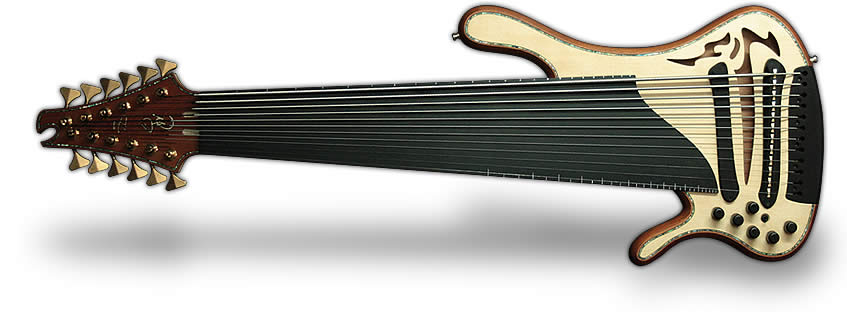
    I had seen Jerzy’s basses before in magazines, and their marvelous, organic shapes are easy to remember. This guy makes bold, innovative and daring concepts come to life (check out the 12 string model he once created — that’s 12 string bass, not guitar.

    Obvious comparisons to the architecture of Antoni Gaudi come to mind when looking at the undulating organic shapes of his basses. I asked about this however Jerzy told me that if that if there is a relation between his bass designs and modernism of Gaudi’s colossal influence on Barcelona, it is unintentional. He just follows his gut when designing.

    To look at the finished products, you would think that these bass guitars are built completely by hand – soup to nuts – however I was shocked and impressed to find out that Jerzy is as much a technologist as a craftsman.

    While Jerzy used to build all his basses completely by hand, he has been able to evolve his methods using technology in a way that allows him to keep the same aesthetic and quality, but cut down on the time he spends on the less intricate portions of the labor in making a bass. This actually allows him to focus more effort and time on the craftsmanship parts like inlays and custom bodies and detail work.

    I want to emphasize here that he is using technology as part of his art and not replacing it. It is a modern approach to craftsmanship and he has been able to increase his throughput, while still maintaining an independent shop he runs by himself.

    Design and Wood Shop
    Jerzy uses software by Rhinoceros and MecSoft (VisualMill) to design the initial bodies of most of his bass guitars these days and has his cutting machines in the lower area of his studio networked directly to his computer workstation.

    His basic designs are mechanically hewn from the wood and then he works the gorgeous details and inlays (of which there are many) by hand. With this approach he is better able to meet increased demand for his basses.

    The Sound
    There was no way I was getting out of his shop without playing one of his basses. His Obsession 4-string model was in the foyer of his studio and I played it. Jerzy ran the camera while I showed off a bit.

    The video doesn’t accurately communicate all of the tonal qualities of the bass, but trust me, the lows were rich and the highs cut through easily. Light and sturdy, the bass was a dream to play and the extra detail Jerzy puts into his bass guitars is noticeable in the feel of this instrument. It has a unique, comfortable, feel.

    So What Am I Really Saying Here
    It’s not unique that Luthiers use mechanized, computer aided tools these days, even at a small scale or in independent shops. It’s the contemporary way to produce. But for some reason, it is surprising to me that Jerzy’s basses are started this way — these just aren’t your every-day instruments. What I mean is that they just don’t look like this could come from a machine. And I guess they don’t really come from a machine. They come from Jerzy’s mind. The palette of his tools is just a modern way of working and evidence of his ability to innovate and adapt while hanging on to his vision — the mark of a great craftsman.

  • Ogio Renegade RSS Backpack Makes For A Solid Hackathon Carry-All

    ogioPack2

    The Ogio Renegade RSS backpack arrived in the mail last week — perfect timing for a business day trip I needed to make and a great test of this backpack’s capability. The bag soft launched in 2012, but they are just now getting review units out because, apparently, consumer demand has been quite high for this backpack.

    How did it work for me? Great. I love it. But why?

    THE GOOD

    Compartments
    The backpack has so many compartments, that you can realistically put every device you carry into a different place. This means that you can easily separate devices from each other (as well as device cords) so that when you want one specific device, you can access it without all the rest tumbling onto the floor — great for air travel.

    Size
    Speaking of air travel, I put it to the test last week and the bag mostly fits under an airline seat (within regulation anyway). The very top could get stepped on by the person sitting next to you, but it didn’t happen to me.

    The pack easily fit through security scanners.

    Profile
    The bag can have a slim profile on your back if it is not completely packed, but still has the ability to stretch out a bit too when you need maximum space. You could easily fit all your gadgets plus a change of clothes or two for short trips, which is nice.

    Protection
    It also has two crush-proof compartments (one large and one small) for laptop and sunglasses, respectively. The laptop sleeve is easily accessible and fits up to a 17” laptop and is actually suspended from the bottom of the bag so it never touches the ground when you set your bag down — hence the name RSS (Reactive Suspension System).

    Labels
    Ogio thoughtfully labeled each compartment with an icon representing what they recommend goes into it. You can, of course, put anything you want in any compartment, but it’s a nice touch to do some of the thinking for you.

    Comfort
    I thought the backpack was pretty comfortable. It’s an electronics backpack so I wasn’t about to thru-hike with it.

    THE BAD

    Profile
    It can have a slim profile, however for a smaller guy like me, it is still a full size backpack and can look a tad large — almost parachute-like. It’s a good thing I don’t rock out skin tight jeggings and a white belt that often or else this backpack could make my butt look HUGE.

    But seriously, it’s just a trade off. If you really need to carry a bunch of stuff, this pack is perfect for it. If you are trying to have a minimalist setup, you might not need this much space.

    WHAT’S DIFFERENT
    The bag is $150. That’s a lot of money. What is different about it to justify the expense?

    Besides the previously mentioned crush-proof, suspended containers (which seem to be the main differentiator) you are getting some pretty good customer service from Ogio. Their website and chat window were helpful. The representative I chatted with was quite knowledgeable about the products and was eager to help me understand the features and differences. It was a good experience, casual and helpful for decision making.

    I also learned that, apparently, the review unit sent is not the 2013 model as that version will be out in a month or so and is not black but rather is more of a grey color.

    THE SPECS

    • $150
    • 19.5” x 14” x 8”
    • 3.6 lbs

    THE VIDEO
    Straight from the product page at Ogio’s website.

    THE BOTTOM LINE

    As you can see from above, there are more good things about this pack than bad. Translation: this is an excellent full-sized backpack. Comfortable and appropriate for the person who has to tote a multitude of gadgets with them, for daily travel. Thumbs up!

    More info at Ogio.com

  • Review: AAARR! AAARRR! Kill Zombies with Zombie ShootAR.

    Zombie ShootAR (get it…AR as in Augmented Reality) is a fun and innovative first-person shooter for Smartphone that pits you against a legion of virtual zombies. You play the game by using your phone’s camera and screen to search for, shoot, chop-up or otherwise destroy the virtual zombies that appear integrated into your surroundings via augmented reality. Just watch the video below of me playing the game at my local library if you don’t understand. Good thing it’s AR—bystanders everywhere in the library. But before you get your hopes up for rocking this little blast-fest on your iPhone, let me get this out of the way right now. This game, which officially launches today, is currently available ONLY for Nokia N95 phones via the Ovi Store. Owners of phones with operating systems like iPhone, Android or Windows Phone, will have to wait a bit longer to play. But it will be worth the wait! The game creator, a Munich based company called Metaio, plan to release this game on other platforms soon. Check back for exclusive information about that.

    Why only on the N95? I’ll come back to that.

    While Zombie ShootAR is definitely not the first AR game out there (see other titles like Sky Siege, and Pandemica), its concept will appeal to any enemy of the undead. Who wouldn’t want to walk around your house, street or office shooting zombies as they spawn all around you? And when I say zombies, I don’t mean the casual pre-coffee co-worker who closed down the local pub the night before. I mean actual blood thirsty, doll-eye-having, pasty, vicious zombies, visible only in the augmented reality of your Smartphone’s screen. (I guess the first version of the game was a little TOO gory and actually had to be toned down a bit. Too bad.) But what else have you got going on that you can’t spare a few moments of your time in service of all humanity with this excellent mobile “shoot-em up” game?

    On a side note, as cool as Zombie ShootAR is, games like this are totally going to wreck my “gaming on the throne” column concept, because you just have to move around a lot to play them. Definitely don’t try this one on the office throne—it might get weird. At least mute the phone. I digress.

    Game Dynamics
    To reiterate, virtual zombies spawn all around you and as they do, you aim your phone view finder and use the phone controls to shoot them with a variety of weapons. Gradually more and more attack at the same time, so you have to pick up the pace while conserving your bullets.

    There is also a convenient 360 degree targeting radar in the lower left corner to keep you informed of the whereabouts of other zombies about to attack.

    Interestingly, you can’t run away from the zombies. What I mean is, once they spawn, if you back away from them, they don’t seem to get further away in space. But I guess that is just like in the movies. No one seems to be able to get away from them there either, no matter how slow they are.

    User Experience
    This has pros and cons. The concept is solid and honestly, it’s how we really want to play games—play them as though we are actually in the environment of the game. But from a user experience standpoint, I worry as much about looking like an idiot while playing in public as I do about arm fatigue from holding the phone up. Even considering those negatives, this concept of game play is undeniably compelling. It’s a first step in a new direction. When integrated eyewear comes along, game play will become more natural and even less transparent to others. So all your friends who irritatingly text 5 people while they are talking to you will soon be shooting zombies over your shoulder at lunch, visible only in their glasses. Nice.

    Since this game has actually been available as a private, unadvertised demo for a month or so you may have seen some of the concept videos floating around out there, but today it becomes “officially” available in the Ovi store. Why the Ovi store? Originally, I postulated that it must have something to do with reach. It’s important to remember that, while we are so focused on the iPhone and Android platform here in the U.S.A, Nokia still commands 34% of worldwide handset market share. But after having a last minute conversation with Metaio CTO Peter Meier this morning, there seems to be more to it than that. This is not just a traditional mobile game launch. It’s actually bigger than that. Metaio is, admittedly, not a game company. They are a technology company first and foremost and are focused mostly on pioneering Best of Breed AR techniques. And while Zombie ShootAR may have originally been developed only for N95, due to technical reasons related to image recognition and keeping the zombies firmly planted on the ground, the game really represents an invitation for developers to take Metaio’s Junaio and Unifeye SDKs and use them to create even greater gaming experiences. We’ll see where that goes, but know that they still plan on bringing this game to iPhone and other platforms soon.

    Metaio sent me a phone with the demo on it and I have to say IT ROCKED! Zombie ShootAR is the coolest mobile game I have played in some time! I can’t wait to see what’s next for this kind of mobile gaming.

    Additionally, I have to admit that the immature part of my personality finds comic value just in seeing zombies alongside people in the real world. It makes me think there is still an awesome opportunity yet to be exploited by this kind of technology. The “have-your-picture-taken-with-a-Zombie” app.
    Who’s with me on this one?

    Anyone? Hello? Is this thing still on? Hello…