Author: Jeff Yeager

  • How to compost almost anything

    jeff yeager and his compost, gomer pile

    (Photo: Denise Yeager)

    Composting is the ultimate act of green frugality, turning unwanted organic material into rich humus for use in the garden rather than sealing it in plastic trash bags to spend eternity in a landfill. But for some of us, composting is something even more special — a hobby, a passion, almost a religion. I’ve even named my beloved compost pile; “Gomer,” as in Gomer Pyle (get it?).

    As compost enthusiasts say, “A rind is a terrible thing to waste.” But composting fruit and veggie rinds and other trimmings, along with leaves, grass clippings, shredded paper, and cardboard is only the beginning.

    Here are some compostable items you might not think about:

    Dryer lint
    If you must dry your clothes in an electric clothes dryer (it significantly shortens the lifespan of many garments, plus wastes energy and money) instead of using a clothesline, at least compost the lint.

    Hair and fur
    With my receding hairline, I don’t have a lot of my own hair to share with Gomer, but our four cats shed enough to make up for it. Hair adds nitrogen and other beneficial nutrients to compost.

    Fireplace ashes
    Wood ashes (including ashes from charcoal made from wood) help to retain moisture in the compost pile. Wood ashes also contain potassium, a major plant nutrient that can be beneficial depending on the soil type.

    Jell-O (gelatin)
    “There’s always room for Jell-O.” I recently found a bowl of old, rubberized Jell-O in the back of the fridge and decided to give it Gomer as a special treat.

    Cotton, wool, and silk clothing/fabric
    After a long and productive second-life as dust rags, worn-out clothing made of natural fibers will decompose faster if you shred them before composting.

    Full vacuum cleaner bags
    Paper vacuum cleaner bags and their contents — as well as all species of non-synthetic dust bunnies — are welcome in the compost pile.

    Nail clippings
    The byproducts of pedicures, manicures, and even pet nails — are all compostable, provided that they’re polish-free.

    Rope and string
    Rope and twine made out of natural fibers (e.g., cotton, hemp, jute, and manila ropes) will decompose in the compost pile.

    Leather goods and clothing
    From leftover lederhosen to a leather glove that lost its mate, natural leather products will decompose (albeit slowly) in the compost pile.

    Skunky beer, wine, and corks
    Gomer likes a brewski once in awhile. Leftover alcohol (if such a thing exists) can be added to the compost pile, as can the corks from the bottles.

    Pet food leftovers
    Dry dog, cat, and fish food is OK for the compost pile (bury it in the pile to deter rodents and other unwanted pests), and even too-chewed rawhide dog chews can be composted.

    Spoiled milk and dairy products
    Meat products are generally a compost pile no-no, but spoiled dairy products like moldy cheese, sour milk, and yogurt are okay.

    jeff yeager's compost, gomer pile

    White glue and masking tape
    Check for toxic ingredients, but most white glues (like Elmer’s brand) and paper masking tape can be composted. (by the way, Post-It-Notes can be, too.)

    Teabags and coffee grounds
    Of course at our house, we use them at least twice before they’re ready for the compost pile. And remember that paper coffee filters can be composted too.

    Latex condoms and cotton/cardboard feminine hygiene products
    Yes, it’s true. Yes, it’s gross.

    Cotton balls and Q-Tips
    Just make sure that your cotton swabs like Q-Tips are 100% cotton and have cardboard or wooden sticks (NOT plastic).

    Seaweed/kelp
    If you live on an ocean or other waterway and your shoreline is being invaded by washed up seaweed or kelp, add it to the compost pile — it’s often used in organic fertilizers.

    Eggshells
    Eggshells have many great uses around the house and garden, but composting them is an eggcellent idea, too, since they add calcium to the soil.

    Stale bread and other grain products
    Of course, I have too many other uses for stale bread to go feeding it to Gomer, but leftover grain-based food products, including pasta, rice, cereal, crackers, pizza crusts, etc., can be composted (again, bury them in the pile to deter unwanted pests).

    Organic holiday decorations
    If you’re not going to eat your Halloween jack-o-lantern like I do, it can be composted, along with wreaths and pine boughs from Christmas, latex balloons from birthday parties, and that long-dead bouquet you paid too much for at Valentine’s Day. Next year, try planting a rose bush for her instead, using the compost from your own Gomer.

    Jeff Yeager is the author of the book The Ultimate Cheapskate’s Road Map to True Riches and the forthcoming The Cheapskate Next Door. His website is www.UltimateCheapskate.com. Follow Jeff Yeager on Twitter and friend Jeff on Facebook. Friend TDG on Facebook and follow TDG on Twitter.

    More from The Daily Green

    Reprinted with permission of Hearst Communications, Inc
  • Eight great perennial vegetables almost anyone can grow

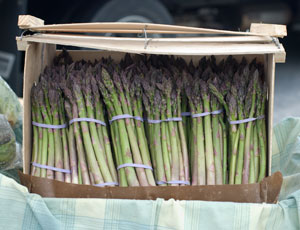
    bunches of asparagus at farmers market

    I’ve confessed before that my enthusiasm for gardening usually dies on the vine long before the first cucumbers of summer are ready to harvest. I’m always looking for easy ways to satisfy my green thumb and, of course, ways to get the most broccolis for my gardening buck. That’s why I’m a big fan of growing perennial vegetables in my garden — plant them once, and enjoy the fruits (well, actually, vegetables) of your labors for years to come.

    I’ll always remember when the UPS man delivered a mysterious, rather dirty looking box to our new home the first spring we lived here. The box was carefully packed with damp sphagnum moss, the packaging material of choice for shipping the sacred Yeager Roots, a housewarming gift from my parent.

    Other families pass down jewelry or antique furniture, but for the Yeager clan, the holy triumvirates of family heirlooms are root starts of asparagus, horseradish, and rhubarb. They are the direct descendants of the original Yeager Roots, dating back at least to my great-grandparents, and — family legend has it — much, much further. After all, my great-great-grandmother was a Lungfish (that was her maiden name, not her species, mind you). But I digress.

    Although — unlike fruits — there aren’t too many vegetables that are perennials, many of the ones that do exist grow in a wide range of climates and, once established, are low-maintenance enough even for a lazy gardener like me. They’re also among the healthiest veggies for you, and they’re generally inexpensive to purchase, if you don’t come from a family with its own royal roots line. Here are my personal eight great perennial vegetables:

    * Asparagus: Grows best in full sun and non-soggy, somewhat sandy soil. I like it cut into one-inch pieces and stir fried raw with sesame oil and a little sliced ginger (top with toasted sesame seeds). Or, brush with olive oil and crushed garlic and grill whole spears on the bar-b.

    * Bamboo Shoots: We have a good sized stand of bamboo that was on the property when we moved here, so I guess bamboo will be my contribution to the lineage of Yeager Roots. Not all varieties of bamboo shoots are edible (or tasty), so do your homework first. We boil ours to remove the bitterness, then sauté them in butter and a little sherry or sweet vermouth for flavor. Also, be advised that many varieties of bamboo are highly invasive and can be toxic if eaten in large amounts.

    * Bunching Onions: This is a variety of onion that grows in clumps and multiplies on its own, and they are hardy in the ground even in fairly cold climates. The bulbs themselves are fairly small and pinkish in color (at least the ones I grow). I like to pickle them as something a little unusual for the relish tray…or in the martini glass.

    * Garlic: As the saying goes, “If your lover doesn’t like garlic, get a new lover.” Garlic is a healthful perennial, although it’s often grown and harvested as an annual. Here’s how to keep it coming back every year. I like to rub a whole head of unpeeled garlic with olive oil, wrap it in aluminum foil, and stick it in the oven or on the grill for an hour or so when I’m cooking something else; squirt the warm, creamy pulp of each clove onto a cracker or piece of bread for a heavenly appetizer.

    * Horseradish: As long as you harvest just the side roots, horseradish taproots will continue to produce a new harvest every year. To use as a condiment, clean and peel roots; cut into small chunks, and grind in a blender or food processor with a little water to the desired consistency. Add 1/2 teaspoon of salt for each cup of blended horseradish, and 2 or 3 tablespoons of white vinegar; seal and store in the refrigerator.

    * Kale and Collard Greens: Perennial varieties will grow in many climates, and are among the healthiest of all vegetables. I eat greens at least once a week, and find that the secret is to not overcook them. Chop greens into half-inch strips and plunge into a pot of boiling, salted water for 10-15 minutes; remove and dress with butter/olive oil, vinegar/lemon juice and salt or feta cheese. And you thought you didn’t like greens.

    * Radicchio: Think you can’t grow any perennial vegetables in your garden? Don’t be radicchio! Seriously, radicchio (aka “Italian chicory”) will come back every year in most climates if you don’t dig it up for blanching, as some chefs do. I like to add young, raw leaves to spice up a tossed salad, or grill older bunches (brushed with olive oil) to remove some of the bitterness.

    * Rhubarb: Prefers colder climates, well-drained soil, and part-shade. Strawberry-rhubarb pie is hard to beat, but I also like to make rhubarb sauce instead of apple sauce: Cook two cups of inch-long pieces of cut up rhubarb stems in one-half cup of water until totally broken down, then add sugar and cinnamon to taste.

    Jeff Yeager is the author of the book The Ultimate Cheapskate’s Road Map to True Riches and the forthcoming The Cheapskate Next Door. His Website is www.UltimateCheapskate.com. Follow Jeff Yeager on Twitter and Friend Jeff on Facebook

    More from The Daily Green

    Reprinted with permission of Hearst Communications, Inc

  • Join the spring cleaning of America’s rivers

    jeff yeager after river cleanup

    Jeff Yeager after a river cleanup.
    (Photo: Denise Yeager)

    Ah, springtime, and a cheapskate’s fancy turns to … trash. As Jim Carrey said in the movie The Grinch, “One man’s toxic waste is another man’s potpourri.” Well, not really. But I’ve found some pretty nifty stuff scavenging through what others have cast aside.

    In the springtime particularly, I combine my love of trash picking with my passion for being outdoors and helping the environment. This Saturday (April 10th) I’ll be participating in the 22nd Annual Potomac River Watershed Cleanup, sponsored by my friends and neighbors at the Alice Ferguson Foundation here in southern Maryland.

    Over the years more than 50,000 volunteers have spent a day picking trash out of the Potomac and its surrounding watershed.

    Last year alone, that effort netted 290 tons of trash collected at over 500 sites throughout the region. Not only is it a day to give Mother Nature a makeover — and realize just how much trash ends up in our rivers and other waterways — but it is, at least for me, “My favorite shopping day of the year.” (Check out the photo of some of my prized Potomac finds over the years.)

    If you don’t live in the Potomac watershed or can’t join us on Saturday, don’t despair: This spring and summer there will be more than 3,000 river cleanup projects across the country, all looking for able volunteers. The nationwide campaign — 2010 National River Cleanup — is coordinated by American Rivers, a nonprofit organization dedicated to protecting and restoring America’s rivers for the benefit of people, wildlife and nature. On their website you can find a cleanup near you.

    Or, if you want to organize a river cleanup of your own, you can register it on the site to help generate volunteers and publicity for your project — American Rivers even provides free trash bags and instructional materials to cleanup organizers if you register your cleanup in their database.

    June is National Rivers Month, and many cleanups happen during that month or earlier, a sort of spring cleaning as people get outdoors to enjoy nature’s waterways. Since the start of the nationwide cleanup campaign in 1991, more than 600,000 volunteers have cleaned up 100,000+ miles of waterways. All that trash, and still no sign of Jimmy Hoffa.

    It’s true what they say: Everybody lives downstream from someone else. The goal of the Alice Ferguson Foundation is to make the Potomac “trash-free” by 2013. I wholeheartedly support that goal and will do my best to make it happen, although when that glorious day comes I’ll need to find another source for occasional anniversary gifts and other trash treasures I’ve been picking up in the Potomac every April.

    Jeff Yeager is the author of the book The Ultimate Cheapskate’s Road Map to True Riches and the forthcoming The Cheapskate Next Door. His website is www.UltimateCheapskate.com. Follow Jeff Yeager on Twitter and friend Jeff on Facebook.

    More from The Daily Green

    Reprinted with permission of Hearst Communications, Inc

  • Don’t use so much! – Use the bathroom the cheapskate way

    man using toothpast

    (Photo: Getty Images)

    [Don’t use so much! That’s the Green Cheapskate‘s mantra. In an ongoing series of articles on The Daily Green, Jeff Yeager will show you easy ways to save money — and the Earth’s resources — by cutting back on things you use every day.]

    I was never a big believer in feng shui, the ancient Chinese art of design and aesthetics intended to improve life by receiving more positive energy.

    Although, I was reading a book about feng shui the other day and the author was talking about how the water drains in your house, if not properly positioned, can “drain wealth” out of your life.

    “Aha!” I said to myself. “Maybe there’s something to this feng shui stuff after all!” You see, I know for a fact that most people waste a lot of money in their bathrooms every day, and there are usually more drains in the bathroom than any other room in the house. Here’s how to save in the bathroom:

    Shampoo
    Most people think nothing of lathering up with a handful of shampoo. But according to the website hairfinder.com, you should think in terms of pocket change when washing your hair:

    “Most package directions for shampoo call for a ‘quarter-sized’ (2.5 cm circle) amount. These instructions are intended for hair of average length — somewhere between chin and shoulder length. If you have really short hair (shorter than chin length) you should use a little less (a ‘nickel-sized’ [1.5 cm circle] amount). If you have longer hair (length that is past the shoulders) use more (a ‘half-dollar-sized’ [4 cm circle] amount).”

    Of course, with my balding dome, I use just a dime-sized dollop, and I feel like I should even get change back from that.

    Toothpaste
    I grit my teeth whenever I see a toothpaste commercial showing a toothbrush loaded up with what looks like a small Vienna sausage of paste.

    The American Dental Association says a pea-sized dab of toothpaste is all you really need. In fact, it’s the brushing action much more than the toothpaste that cleans your teeth. Hold the toothbrush at a 45-degree angle and brush inside, outside and between your teeth, and even a small amount of paste will foam enough to cover all of your teeth.

    Some dentists even believe that using too much paste can damage the teeth because of the abrasives and chemicals they often contain.

    Deodorant
    According to the market research firm Euromonitor International, in 2006 Americans spent more than $2.3 billion on deodorant and antiperspirant. Apparently everyone bought a shopping cart full, except the guy on the bus sitting next to me.

    Dr. Jeanine Downie, a dermatologist in Montclair, N.J., was quoted in an article in the New York Times saying, “Most people who are not in constant high-stress situations could get away with wearing a lot less (deodorant/antiperspirant) than they do. They’d probably be fine just using a little powder.”

    Overuse can also damage clothing, trigger allergic reactions, and create other possible health problems. Fitness magazine beauty director Gwen Flamberg said, “Your best bet is to apply just one swipe back and forth.” (Ed. Note: Unless you’re that guy sitting next to me on the bus, that is.)

    Toilet paper
    Every celebrity should champion a worthy cause, and singer Sheryl Crow has apparently taken on toilet paper abuse as her cause célèbre. Crow — in what I’m hoping isn’t “My Favorite Mistake” — once suggested on her website using “only one square per restroom visit, except, of course, on those pesky occasions where two to three could be required.”

    Apparently Crow was making a bit of a joke, but my father always talked about (usually over dinner) toilet paper rationing during WWII, when using no more than a few sheets per restroom visit was considered one’s civic duty.

    The Natural Resources Defense Council says we could save 423,900 trees annually if each of us cut back by about 500 sheets per year, which is only about 4% of what most of us use.

    Water
    One thing is for certain: Those feng shui masters know what they’re talking about when it comes to flushing our wealth down our bathroom drains. Even a short four-minute shower uses approximately 20 to 40 gallons of water — you can cut that to just 10 gallons by installing inexpensive low-flow showerheads.

    The typical toilet uses four to seven gallons per flush. Put a water-filled plastic soda bottle in the tank to reduce the amount of water used, and check for water-wasting leaks by putting a little food coloring in the toilet tank (if the coloring appears in the bowl without flushing, you have a leak that needs fixing).

    Even simple things — like turning off the water while you’re brushing your teeth, and filling the basin to rinse your razor when you shave — will save the typical household more than ten gallons of water per day. (Try this online water use calculator.)

    While I still have my doubts about feng shui, feng cheap is a different matter entirely.

    Jeff Yeager is the author of the book The Ultimate Cheapskate’s Road Map to True Riches. His website is www.UltimateCheapskate.com.

    Follow Jeff Yeager on Twitter and friend Jeff on Facebook. Friend TDG on Facebook and follow TDG on Twitter.

    More from The Daily Green

    Reprinted with permission of Hearst Communications, Inc


  • ‘Grow Your Own Drugs’: A perfect guide for the recreational user

    My enthusiasm for gardening normally peaks right about now for the year. It’s triggered by the first prematurely warm days of spring and the stack of colorful seed and garden catalogs stockpiled on the nightstand for my bedtime reading. I fall asleep dreaming of my perfect garden: one filled with eggplants bigger than my head and bordered by neatly spaced rows of zinnias in every color of the Crayola 64 pack.

    But it’s always all downhill from here. When I actually stick the spade in the ground for the first time every year, I’m reminded that my clay soil isn’t nearly as easily tilled as the pillow-soft-loamy-stuff they always picture in the catalogs. Then, when things finally start to sprout, The Great Rabbit Wars begin. I start dreaming less about my forthcoming meals of braised carrots, and more about braised rabbit, served with carrot stubs.

    By the 100-degree days of July — when the weeds have officially overpowered everything I so carefully planted in neat little string-lined rows with the seed packets stuck on sticks to mark them — I’ve pretty much had my fill of gardening for the year. Yep, I’m at best a recreational user when it comes to gardening.

    But this year my gardening enthusiasm is really revved-up by a terrific new book I just read called Grow Your Own Drugs, by James Wong. Wong was trained at the Royal Botanical Gardens (Kew, England) in “Ethnobotany” — that’s the study of “plant lore and customs.”

    Wong writes in the introduction to his book:

    “… this perception of plants as purely ornamental objects is a strange cultural anomaly that has existed in only one civilization in history — our own (i.e. modern day western culture). In every other culture, the plants that surround us are a living supermarket, pharmacy, a home improvement center, and even a liquor store — all rolled into one.”

    That was enough to hook me. Wong gives practical advice and all-natural recipes for tapping the health benefit of plants — many of which you can easily grow yourself — for everything from curing athlete’s foot and cold sores to preventing bad breath and flatulence (how’s that for beginning to end?) I particularly appreciate the final chapter, an authoritative (and colorful) guide to the “Top 100 Medicinal Plants” you should consider growing to make herbal remedies from your own garden.

    Even though affordable healthcare is apparently (finally!) on its way here in the U.S., I’m going to hedge my bets this summer and plant a few containers filled with Wong’s “Top 10 Medicinal Herbs”: chamomille (indigestion), echinacea (colds/flu), johnny-jump-up (anti-inflammatory), lavender (pain), lemon balm (anxiety), marigold (sunburn), peppermint (headaches), rosemary (memory), sage (coughs/congestion), St. John’s wort (antidepressant).

    With the help of Grow Your Own Drugs, I’m hoping that my gardening high will survive even the Cutworm Invasion this year and make it all the way to the first frost of fall.


    More from The Daily Green

    Jeff Yeager is the author of the book The Ultimate Cheapskate’s Road Map to True Riches.
    His Website is www.UltimateCheapskate.com.

    Reprinted
    with permission of Hearst Communications, Inc

  • 10 weird things I freeze to save money

    full freezer of jeff yeager, with pantyhose, food, mask

    (Photo: Jeff Yeager)

    It’s official: I’ve become my grandmother. I realized it the other morning when I opened the door to our freezer.

    That icy vault was packed to the brim. But — in the finest tradition of my Grandma Yeager — it wasn’t filled so much with leftovers, like you’d find in most household freezers.

    You see, my Grams had a few deep frozen secrets. She knew about weird stuff; weird stuff you can deep-six in the freezer and maybe save some money in the process.

    Candles: Keep your wax candles in the freezer and they’ll burn longer. It’s especially good for slim table tapers that normally burn very fast.

    Batteries: A number of studies have shown that storing batteries in the freezer helps them retain their charge longer.

    This is less true for alkaline batteries (freezing extends their shelf life by only about 5%) than it is for NiMH and Nicad batteries often used in electronics. Keeping NiMH batteries in the freezer can boost battery life by 90%.

    Plant seeds: Many (but not all) types of plant seeds will keep longer and germinate more successfully when stored in the freezer. Consult a copy of Seed Storage of Horticultural Crops, by S.D. Doijode, for more than you’d ever want to know about this fascinating topic.

    Many of the planet’s most important seeds are being stored in the chilly “doomsday” seed vault in Norway.

    Cheap booze: In the interest of full disclosure, my Grams was a teetotaler. Me, I need an attitude adjustment from time to time, and I’ve found that storing cheap booze — not just vodka, but all types of distilled spirits — in the freezer makes it taste smoother (and more expensive).

    Wine cubes: Speaking of keeping alcohol in the freezer, when you have a little leftover wine from dinner, pour it into an ice cube tray and freeze it. “Wine cubes” are perfect to use in making stock and other cooking.

    Plastic soda bottles filled with water: Grandma knew that keeping her freezer chock-full helped to insulate it and perform better, and kept things cold longer if the electricity failed.

    I like to fill empty plastic soda bottles nearly full with water, and put them in the freezer to take up any vacant space. Plus they make convenient “drip-less ice cubes” to use instead of real ice cubes in my ice chest.

    Wooden voodoo mask: A carved wooden mask I picked up at Mardi Gras last year is showing the telltale pinholes of a woodworm infestation. As they know in the furniture refinishing business, placing a wooden item in the deep freezer for a couple of weeks will kill woodworms and their eggs.

    Pantyhose: Like Grandma Yeager, I don’t wear them, but my wife sure does. She swears that if she keeps her pantyhose in the freezer, they’re less likely to run and they last longer. (I just can’t imagine how she gets up enough courage to slide into an icy pair every morning.)

    Some actual food: Sure, we do keep some food in our freezer, but even that’s a bit unusual. We store our spices and coffee in the freezer to keep them fresher, and by freezing our popcorn and popping it while it’s still frozen, it pops lighter and with fewer un-popped kernels.

    Laundry: Grams always had a plastic bag filled with damp laundry in her freezer; she claimed that freezing clothing after she washed it made it easier to iron. We don’t do that, primarily because we haven’t ironed clothes at our house since the Johnson administration.

    Nor, for that matter, do we keep spare cash hidden in the freezer, like Grandma did. I remember once when I was a kid, Grams went to pay me for mowing her lawn. She peeled a stiff $5 bill off of her frozen girdle in the icebox and handed it over to me.

    And you wonder why I have issues?

    Editor’s note: It’s worth pointing out that Jeff has a regular side-by-side fridge-freezer unit (photo above is his actual unit!). He’s clearly as efficient at packing as he is at saving money!

    Follow Jeff Yeager on Twitter and friend Jeff on Facebook. Friend TDG on Facebook and follow TDG on Twitter.

    More from The Daily Green

    Reprinted with permission of Hearst Communications, Inc

  • Top five money-saving tips

    Happy America Saves Week! Whatever you do, don’t run out and buy me a present. That would defeat the whole purpose of the holiday.

    America Saves Week 2010 (February 21-28) is a nationwide campaign involving more than 1,000 nonprofit, government, and corporate groups that encourages individuals and families to save and build personal wealth. The event’s website is loaded with free resources and advice, including a nifty calculator that allows you to track your net worth. (Warning: The calculator is easy to use, but the results might be hard to take.)

    America Saves Week is a perfect time to start getting your financial house in order and maybe jump-start that flagging New Year’s resolution to spend less and save more.


    Here are my top five tips to help get you started:

    1) Go on a fiscal fast:
    Swear-off all spending for a couple of days – or ideally an entire week – as a sort of “spending detox.” It’s time to use it up, make it last, or do without.

    A fiscal fast will save you some money (put it into savings or pay off some debt with what you save!), and teach you about how you spend — and probably waste — money in a typical week. It’ll also remind you of how many terrific things in life are free.


    2) Practice spending procrastination:
    When it comes to discretionary spending, it usually pays to put off buying until tomorrow what you’re tempted to buy today. Studies have shown that we have regrets about nearly 80% of the discretionary purchases we make within the first year of making the purchase.

    Force yourself to wait at least a week between the time you see an item in a store and when you go back to purchase it. Chances are great that you’ll reconsider and never go back to buy it.


    3) Put your finances on autopilot:
    To paraphrase Jack Nicholson’s character in A Few Good Men, “The money? You can’t handle the money!” Have your paychecks and other income deposited directly into your bank account(s), including automatic allocations into designated savings and investment accounts.

    Then authorize your creditors (e.g., credit card companies, mortgage lender, insurance company, etc.) to automatically withdraw your payments every month from your account. By putting your finances on autopilot, savings becomes automatic and you’ll never have late fees or missed payments again.


    4) Pay with cash only:
    Studies have shown that when you pay with a credit card, you’re more likely to buy something than when you pay with cash, and you’re more willing to pay more for it (see my previous post on credit cards).

    Psychologically, it’s just harder to part with actual greenbacks than it is to whip out the plastic. Try paying for everything with cash for a week and see how much you save.


    5) Conduct a “What the heck was I thinking?” audit:
    Sit down once or twice a year and look back at your major discretionary purchases during the preceding months. Then ask yourself one simple question: “If I had it to do over again, would I have bought that?”

    Make a list of expenditures you regret, and learn from those mistakes. You’ll probably notice some patterns, like maybe you’re prone to buy clothing on a whim that you regret later. Or maybe you rush out to buy the latest tech gadget the day it comes out, before the bugs have been worked out and increased demand causes prices to drop.


    So, break out the box wine and join me in a toast to America Saves Week 2010.


    Jeff Yeager is the author of the book The Ultimate Cheapskate’s Road Map to True Riches. His website is www.UltimateCheapskate.com.

    Follow Jeff Yeager on Twitter and friend Jeff on Facebook. Friend TDG on Facebook and follow TDG on Twitter.


    More from The Daily Green

    Reprinted with permission of Hearst Communications, Inc

  • Can’t decide if it’s clutter or treasure? Read this

    clutter

    (Photo: Brian Clark Howard)

    Given my proclivity for adopting minimalist New Year’s resolutions, I’m really pushing the envelope this year by vowing to thoroughly declutter my house and my life.

    In January, I dove head over long into my decluttering campaign, rummaging through the garage, closets, and dresser drawers for items I haven’t used in at least the past year or two. I’ve told myself that those are the things I should seriously consider parting company with.

    My pile of rarely used items quickly began to take over the living room floor, and when I stood back to appraise my progress, a wave of anxiety hit me. It was a veritable tsunami of materialistic nostalgia.

    This is great stuff, I said to myself. I can’t give it away!

    My original intention had been to cart everything off to a local thrift store or maybe post it on the Freecycle Network, as those are terrific ways to redistribute things you no longer need. But I decided that my old stuff is so special, it deserves the best possible new home.

    Parting is such sweet sorrow, but after some online research, here’s my last will and testament concerning the distribution of my stuff to some very special new homes:

    • My favorite-but-now-sadly-threadbare fleece jacket: I’ll drop it off at the local Patagonia store, where it’ll be recycled into new clothing as part of Patagonia’s Common Threads recycling program.
    • The speed-bag that nearly knocked me out last time I tried to use it: SportsGifts.org will pass it along to an aspiring Rocky Balboa, since this group uses donated sports equipment to create community-based sports programs for underprivileged kids around the world.
    • A duplicate copy of Stuart Little, one of my all-time favorite books by E.B. White: I know it will find a good home and delight some young reader when I donate it to Project Night Night, a nonprofit organization that provides “Night Night” tote bags filled with books and other items to homeless children.
    • Six partially used gift cards, each with such a small credit balance that I know I’ll end up spending more on stuff I really don’t need if I go shopping to redeem them: I’ll donate the balances to some of my favorite charities through Gift Card Donor.
    • Our overabundance of used blankets, towels, and linens (where did we get all this stuff?!): Local animal shelters often need donations of such items to use in animal cages. Visit Pets 911 to find animal shelters near you.
    • The suits and ties I (thankfully) don’t wear anymore, ever since I quit my last “real job” to become a writer: To Career Gear, a nonprofit organization that distributes business clothing to disadvantaged men who are trying to re-enter the workforce. (I’m happy to help, but just don’t hold my taste in ties against me.)
    • The saxophone I bought during my Kenny G. phase, but never learned how to play: The Mr. Holland’s Opus Foundation will find a good home for it, since this organization refurbishes used instruments and donates them to underfunded school musical programs.
    • And finally, I think I’ll take my big stack of old magazines — including Boxing Digest, GQ, and Saxophone Monthly — over to the local hospital and some nearby retirement homes to see if they need reading material.

    I’ll sleep better tonight knowing that my special stuff has found some very special new homes. Now, who deserves my Chia Pet collection?

    Follow Jeff Yeager on Twitter and friend Jeff on Facebook. Friend TDG on Facebook and follow TDG on Twitter.

    More from The Daily Green

    Reprinted with permission of Hearst Communications, Inc

  • 12 surprising ways to reuse aluminum foil

    aluminum foil

    (Photo: Lauri Rantala,
    Wikipedia)

    [In his ongoing but sporadic series Don’t Throw That Away!, the Green Cheapskate shows you how to repurpose just about anything, saving money and the environment in the process. Send him your repurposing ideas and challenges, but whatever you do, don’t throw that away!]

    Ever since the mandatory conversion to digital TV — the proverbial death knell to rabbit ear television antennas — I’ve wondered if aluminum foil sales have plummeted.

    If you grew up with rabbit ears, you know what I’m talking about. Who didn’t fashion aluminum foil into a homemade antennae appendage in hope of enhancing the reception of their rabbit ears? I was never convinced that it worked, but at least it gave us something to do, since we couldn’t see what was happening on the screen.

    Even with the demise of rabbit ears, aluminum foil sales are still big business. Over 1.3 billion pounds of aluminum foil is produced every year in the U.S. — that’s a heck of a lot of leftovers. While aluminum foil is just as recyclable as aluminum cans, many curbside recycling programs won’t accept it for sanitary reasons (check with your local recycling program for their foil policy). That’s a shame, because recycling aluminum uses only about 5% of the energy that it takes to produce aluminum from raw materials.

    Alas, until aluminum foil recycling becomes more commonplace, here are some ways to get the most mileage — and most value for your money — from your aluminum foil by using it more than once:

    Wash it and use it again (and again):
    I swear my mother is still reusing foil from the time of Christ for wrapping and rewrapping leftovers in the fridge. Just wash it in soap and water, flatten it out with a rolling pin on the kitchen counter, and it’s good as new. (Caution: Foil that has come in contact with raw meat should not be reused for other food purposes.)

    Sharpen scissors and garden shears:
    Fold used foil so that it’s six to eight layers thick, then cut thru it a few times with dull scissors to instantly sharpen them. To sharpen hefty garden and pruning shears, fold the foil so that it’s even thicker.

    Reduce static cling:
    I don’t understand how it works, but if you throw a crumpled piece of aluminum foil into the clothes dryer, it seems to magically reduce static electricity. A true miracle of cheapskate science.

    Make shoe/boot forms:
    Wad up balls of old foil and stuff them into leather boots and shoes to help them keep their form when you’re not wearing them.

    Texture paint and plaster:
    Use crumpled up foil to add interesting texture to painting and plastering projects. Also when you’re painting, old foil is handy for masking doorknobs and other fixtures you don’t want painted and for wrapping your paintbrushes and rollers in during a lunch break.

    Deter pets and other animals:
    For no apparent reason, our cat started using our fireplace instead of her liter box. We put a couple of sheets of used aluminum foil on the floor of the fireplace — which cats, dogs, and other animals can’t stand — to break her of that bad habit. Hang strips of used foil on strings around the garden to deter birds, deer, and other unwanted pests, too.

    Protect young plants:
    Make a collar out of used foil to fit loosely around the stems of young tomato plants and other plant starts in order to keep cutworms and other insects at bay.

    Make metals shine:
    Scrub rust off of steel and chrome with a wad of aluminum foil instead of using steel wool — it works even better. You can also use aluminum foil and simple household products like baking soda and salt to clean silver and gold, with the proper know-how.

    Shim a table leg:
    Ball up some old foil for under the short leg of an uneven table to make it a level field once again.

    Scrub grills and baked-on messes:
    A wad of used foil makes a great scouring pad for cleaning the gunk off BBQ grills and stuck-on food from pots, pans, and inside ovens.

    Repair stripped threads:
    People often say that I have a screw loose. When I do have a nut, bolt, or screw with stripped threads, I wrap a little aluminum foil around the bolt or screw and try gently tightening it again. A quick temporary fix.

    And remember your 10th wedding anniversary:
    Lucky break for your wallet! Believe it or not, 10th wedding anniversaries are traditionally celebrated by exchanging gifts made of aluminum. What could be more romantic than a piece of homemade aluminum foil art?

    When I was working on this piece I read that some folks recommend putting sheets of used foil on snowy sidewalks to help melt the ice faster and make shoveling easier. Well, I tried that this weekend at home and had no such luck. So I’m not sure about that one.

    Now, if I could just find some creative ways to repurpose my old rabbit ears…

    Jeff Yeager is the author of the book The Ultimate Cheapskate’s Road Map to True Riches. His website is www.UltimateCheapskate.com.

    Friend us on Facebook and follow us on Twitter.
    Follow Jeff Yeager on Twitter.

    More from The Daily Green

    Reprinted with permission of Hearst Communications, Inc