Author: John Helmer

  • The Kremlin Just Cut A Killer Pipeline Deal With Ukraine (OGZPY)

    black sea(This is a guest post from Dances With Bears.)

    A gas supply agreement signed yesterday by the presidents of Russia and Ukraine dramatically changes the prospects for both oil and gas shipment across and under the Black Sea; extends Russia’s Black Sea Fleet lease of the Sevastopol base by another 25 years; and costs Gazprom nothing.

    The terms of the deal promise to change the future investment prospects for the Ukrainian ports of Odessa and Yuzhny at the expense of Burgas, Bulgaria. Constanta , Romania, will also gain at Burgas’s expense if the new agreement changes the routing for Gazprom’s South Stream gas pipeline across the Turkish and Bulgarian seabeds, to permit the shorter seabed route via Ukraine and Romania.

    According to the press announcements so far, Presidents Dmitry Medvedev and Victor Yanukovych have agreed to a 30% discount price for 30 billion cubic metres of Russian gas to be delivered to Ukraine this year, and 40 bcm to be delivered annually from next year to 2019. The effective purchase price for Kiev will be about $230 per thousand cm, well below the $334 asking price from Gazprom, which has been on the table since the start of this year. The export volumes to Ukraine for this year have been lifted from 33.75 bcm, agreed with Naftogaz-Ukraine last November, to 36.5 bcm; the discount will cover the first 30 bcm sent to Ukraine, and the first 40 bcm thereafter.

    The savings, estimated at $40 billion ($4 billion per annum) over the term of the agreement, will be applied to the extension of the Sevastopol naval facility lease. But Gazprom will not lose this amount from its revenue stream. Instead, a zero export duty for Gazprom deliveries to Ukraine will be introduced, which is equivalent to the 30% discount in pricing. As a result, the Russian government will receive less tax – about $3 billion less per annum, according to one bank estimate.

    By removing the risk of Ukraine-related disruptions of gas flows and Gazprom’s sales revenues to Europe, the agreement relaxes a costly drag on Gazprom’s share price and market value. The company’s current market capitalization is $141 billion, down 6% in the year to date, trailing well behind Russia’s other oil and gas companies, and behind the RTS stock market index as a whole.

    A Ukrainian offer is also on the table for Gazprom to take equity in Ukraine’s gas distribution and pipeline system to further reduce the likelihood of supply cutoffs for European consumers in future.

    Read more at Dances With Bears –>

    Join the conversation about this story »


  • Putin Orders Price-Rigging Investigation Of Russia’s Leading Steelmakers

    vladimirputin tbi(This is a guest post from Dances With Bears.)

    Russia’s Prime Minister Vladimir Putin has requested that the Federal Antimonopoly Service (FAS) open an investigation of price rigging in the domestic sale of steel products. It is the first direct intervention by the prime minister against the pfoti-taking by oligarch-owned companies since August of 2008, when his last, if temporary victim was Igor Zyuzin, owner of the Mechel steel and mining group.

    Putin acted on a complaint from Uralvagonzavod (“Ural Wagon Works”, UVZ), the state-owned manufacturer of railway cars and tanks, road-building vehicles, metallurgical products, tools, and the Russian Army’s main battle tank. In the complaint lodged by UVZ’s chief executive Oleg Sienko, it was reported that four steel suppliers — Evraz, Mechel, Magnitogorsk, and Severstal — had demanded price increases, starting on April 1, of 10% to 30% above the previous contract delivery level for UVZ.

    Sienko’s submission to FAS argues that in principle the rise in costs of raw materials to the steelmakers, such as coking coal, iron-ore, and scrap, should not be passed on to consumers, and that domestic prices should be frozen for a year. If the steelmakers refuse, UVZ is calling on the government to increase foreign steel competition, forcing the domestic steelmills to lower their selling prices. UVZ’s complaint calls for cancellation of import duties on steel, and the introduction of a 15% export duty on steel shipped abroad; this is comparable to the 15% export duty on exports of scrap which has been in effect for more than a decade.

    A report by UBS steel analyst, Alexei Morozov, told clients on Monday: “we don’t see any major price caps at this stage, especially as those would involve limiting growth in iron ore, coking coal and scrap prices, which may destabilize the whole steel production chain (affecting investment programs, destabilizing companies’ financial positions, etc.). However, we don’t rule out that longer-term contracts might be imposed domestically, both for steel and for raw materials.”

    The involvement of Putin and FAS revives sore memories on the part of Mechel, whose chief executive, Igor Zyuzin, was publicly upbraided by Putin in July of 2008 for abusing his pricing power in the domestic market for coking coal. That public attack caused Mechel’s share price to drop by more than a third. The FAS went to penalize the coking coal units of Mechel, Evraz, and others. A report by Troika Dialog said Monday “whether this story will repeat itself and to what extent are the big questions.”

    Read more about Russia at Dances With Bears >>

    Join the conversation about this story »

  • Russia’s Evraz Will Build $440 Million High-Speed Rail Line, But Skips Court-Ordered Waste-Water Treatment Plant

    russia high speed rail(This is a guest post by John Helmer from Dances With Bears.)
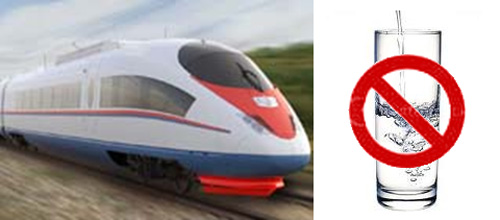
    The Evraz Group, Russia largest steelmaker, has started a $440 million project to reconstruct the Novokuznetsk Metallurgical Combine (NKMK) mill to produce 25-metre and 100-metre rails for high-speed railway lines being built in Russia.

    A company announcement says the new mill at Novokuznetsk city, in the Kemerovo region, will be commissioned in 2012, and will have production capacity for about one million tonnes of high-speed rails, including 450,000 tonnes of the 100-m type. At present, this type is not produced in Russia. According to Evraz, reconstruction of NKMK will involve a new automatic rail-rolling line, as well as rail hardening and straightening equipment to bring the product up to the quality standard of imports.
     
    The state-owned Russian Railways company will buy most of the product for new fast and high-speed rail projects. In June 2008, Prime Minister Vladimir Putin signed the government’s special “Strategy for Developing Rail Transport to 2030”. The novelty is the construction of fast (up to 160km/hr) and high-speed (up 350km/hr) passenger rail travel. The first high-speed line will open next year between Helsinki and St. Petersburg. The connexion to Moscow will follow after that.

    The fast-speed rail service known as Sapsan started operating between Moscow and St. Petersburg last December. Other priority fast and high-speed lines in the plan, according to a Russian Railways release, are Moscow to Smolensk in the west, and Moscow to Nizhy Novgorod in the east. As the Russian Railways map shows, Novokuznetsk is to be linked by fast line to five other cities in central Siberia.

    The hefty new investment in what has been, until now, the most obsolete of Evraz’s three steelmills in Russia — the other two mills are Nizhny Tagil and Zapsib — does not include the Rb2.4 billion ($80 million) cost of a new waste-water treament system. This had been accepted by Evraz in 2006 to comply with Kemerovo regional court, and federal regulatory agency orders. Pollution from both NKMK and Zapsib has been flowing into the river serving drinking water for the city of Novokuznetsk, the regulator and the courts had found. The agreement to build the treatment plan was also negotiated with the local city authorities, and with the Kemerovo regional government, headed by Governor Aman Tuleyev. If Evraz had refused, both Zapsib and NKMK were subject to closure.

    In 2006, the spokesman for the enviromental monitoring agency, Rospriradnadzor, Yevgeny Snegirev, told SteelWEEK that on February 16 of that year, his agency had sent an official order to Evraz for closure of the Novokuznetsk plant’s water treatment plant. Oleg Mitvol, who is deputy head of Rospriradnadzor, told SteelWEEK on December 14 of the same year that his agency had agreed that, in return for rescinding the order to close the old water-treatment plant and halt steel production at Novokuznetsk, Evraz had agreed to invest Rb2.4 billion ($92 million at the time, now $80 million) in new treatment and anti-pollution facilities at Novokuznetsk, as well as at Zapsib. “It is an unprecedented decision and we are very happy to reach it,” Mitvol added. At the time, the enforcement of environmental controls against a major Russian industrial group was unprecedented, according to industry sources. Rospriradnadzor had told Evraz at the start of 2006 that Novokuznetsk, as well as Zapsib, were polluting the two rivers which supply drinking water to the city. Zapsib was fined. Evraz admitted in a 2005 circular to investors in a London share placement that its “operations generate large amounts of pollutants and waste.” It also conceded it is subject to environmental regulations “that require the clean-up of contamination and reclamation.” The company noted that clean-up costs are “often impossible to assess unless environmental audits have been performed and the extent of liability under environmental laws is clearly determinable.”

    This week Evraz spokesman Alexander Agureyev did not confirm that the waste-water treatment plant project has been built yet. He declined to say what plan for the waste-water treatment plant Evraz is currently considering.

    Join the conversation about this story »

    See Also: