Author: John Monczunski

  • Winter Olympics: past and present

    Sports fans watching the Winter Olympics in Vancouver may not realize the connection to the 1964 movie The Pink Panther, in which Peter Sellers’ bumbling Inspector Clouseau tried to match wits with David Niven’s suave, aristocratic jewel thief. The Pink Panther was filmed in Cortina d’Ampezzo – the Alpine resort in Italy that hosted the 1956 Winter Olympics.

    The scenes in Cortina are a reminder of how quaint and charming the Winter Olympics used to be when they took place in tiny villages, often in Alpine resorts like St. Moritz, Garmisch-Partenkirchen and Cortina. These little villages could accommodate the Olympics because the Winter Games used to be so much smaller. Before adding events like freestyle skiing and short-track speed skating, the Winter Olympics could be held in an area so compact that a spectator in the middle of the Olympic campus in 1960 could see every competition venue at Squaw Valley.

    Not only were the games small in those days, they had a magical, fairy tale quality. Prince Albert of Monaco – an actual prince! – competed in the bobsled in five Olympics. The tiny Alpine principality of Liechtenstein – at only 62 square miles, so small that 16 Liechtensteins would fit into Rhode Island – produced skiing medalists out of all proportion to its size. Speed skaters from the Netherlands turned their nation’s frozen canals into nurseries for Olympic medalists.

    Of course there were occasional political overtones in Cold War Winter Olympics. Among the most dramatic were the U.S.-Soviet hockey collisions in 1960 and 1980, and the figure-skating showdown at Calgary in 1988, where East German Katarina Witt and American Debbi Thomas dueled for the gold medal after both chose to skate to music from Bizet’s Carmen. Even though they were Cold War allies, Czechoslovakia and the Soviet Union battled bitterly in hockey, especially in Sapporo in 1972 when the gold medal was at stake in their first Olympic hockey meeting after the Soviet invasion of 1968.

    Despite these episodes, the Winter Games have rarely experienced the overt politicization that has long afflicted their summer counterparts. Bigger in every way, the Summer Olympics have long been fraught with political controversy. At Berlin in 1936, Hitler turned the games into a festival of Nazi propaganda. At Melbourne in 1956, the Soviet invasion of Hungary triggered fights in a water polo match that literally bloodied the pool. At Mexico City in 1968, protests against the games’ lavish cost brought a violent response by government forces that left unknown numbers dead.

    Mexico City was also the site of the famous Black Power salute on the medal stand by Tommie Smith and John Carlos. At Munich in 1972, the kidnapping of Israeli athletes tragically ended in their deaths. At Montreal in 1976, African nations boycotted to protest the participation of white athletes representing the white supremacist regime in Rhodesia.

    At Moscow in 1980, the United States and other nations boycotted to protest the Soviet invasion of Afghanistan. At Los Angeles in 1984, the Soviets and their friends retaliated against the United States with a boycott of their own. At Atlanta in 1996, the games were marred by a fatal bombing attack. At Beijing in 2008, Chinese hosts were offended by protests during the Olympic Torch relay against China’s human rights policies.

    If The Pink Panther is a suitable reminder of the endearing quaintness that once characterized the Winter Games, the best cinematic metaphor for the Summer Games may be Olympia. This – it stretches on for 3½ hours – was a documentary of the 1936 Berlin games made by Hitler’s favorite filmmaker, Leni Riefenstahl. The film’s scope, critical acclaim and political controversy capture those of the Summer Olympics.

    The Winter Olympics have outgrown the tiny villages that once hosted them and moved to larger cities like Salt Lake City, Torino and Vancouver. In 2014, they will go to the city of Sochi, Russia, where the long shadow of Vladimir Putin threatens to create controversy that has long been part of the Summer Games. Putin, a former KGB official turned post-Communist tsar, has never been known for the charm or silliness of The Pink Panther. His sport is a martial art, judo, and his approach to “summer games” in 2008 was an invasion of neighboring Georgia – fighting a small war just kilometers from Sochi. No one can tell what protests or controversy Mr. Putin might generate when his nation hosts the 2014 Winter Olympics.


    John Soares, a Note Dame visiting assistant professor of history, is an historian of sport, the Cold War and U.S. foreign policy.

  • The Betty White phenomenon

    bettywhite

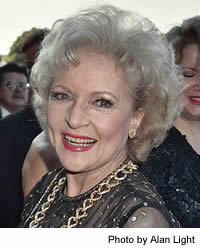
    The most talked about popular culture figure right now isn’t a Twilight starlet, a teen pop sensation, or a reality TV publicity hound. Contrary to the obsessive focus on youth in contemporary media entertainment, the flavor of the month is an octogenarian: Betty White, who has emerged as the hippest grandmother a college student could imagine.

    The Screen Actors Guild gave the 88-year-old legend a Life Achievement Award last month, but what has particularly stirred attention around White in the past few weeks is an achievement she hasn’t yet added to her filmography: host of NBC’s Saturday Night Live. Specifically, a 29-year-old fan recently launched a campaign via the social media networking site Facebook urging NBC to hire White to host an episode of the network’s long-running comedy sketch show, and over 400,000 Facebook users have signed on as fans of the idea. Unquestionably, this exaltation of Betty White is coming from younger generations, which raises the questions of why? And why now?

    One of the foundational concepts behind stardom is authenticity; we connect with our favorite stars because we perceive them to be genuine in some way. Media-steeped youth are aware of how packaged and contrived stardom can be today and often respond positively to anything they perceive as operating outside of such calculated machinery. Thus, a fan-fostered movement surrounding a star whose age alone makes her unlikely to be part of a corporate marketing agenda is readily attractive.

    White’s Facebook supporters also rightfully insist that she deserves to be featured by Saturday Night Live because she’s a genuinely talented, nimble comedienne who thrives in live settings. She has proven this on television over many, many decades and, for the YouTube generation, via countless online video clips, which particularly show her excelling at spontaneous humor, from game show retorts to awards show banter.

    In that regard, White’s support can also be taken as a backlash against the perceived plunge in Saturday Night Live’s quality over the past decade and the transparently commercial hosts offered by the show as a matter of course, such as the selection of actress Megan Fox, not because she has any aptitude as a host or comedian but because she’s a headline-grabbing name with a blockbuster film to hawk. One can even see this movement dovetailing with the resentment generated by NBC’s Tonight Show debacle, which similarly saw youth culture and social media mobilize behind what was decried as the profit-driven mistreatment of Conan O’Brien.

    As this indicates, the role of social media popularity waves must be considered too. It’s likely the majority of those who aligned with “Team Coco” on Facebook to rally behind O’Brien had rarely, if ever, watched his show (If they had, O’Brien might still have one). But joining a Facebook page or tweeting support takes little time and effort. With a mere mouse click, you can become part of the clever vanguard, and you can broadcast that perception to the rest of the online community. This is not to question the sincerity of the members of White’s Facebook fan page but to acknowledge how readily such social media trends can snowball.

    In White’s case, we can’t discount the role of traditional media either. Generation Y grew up with Golden Girls reruns on television, and White’s bemused reactions to Facebook (“I’m such a technological spaz, I can’t…I don’t understand any of that stuff”) echo her Golden Girls character Rose’s befuddlement. Further, White still embodies the social taboo, and hence the hilarity, of seniors acting naughty, which helped to sustain Golden Girls for seven seasons. During her Screen Actors Guild acceptance speech, White bawdily commented, “I look out at this audience and I see so many famous faces. But what really boggles my mind is that I actually know many of you. And I’ve worked with quite a few. Maybe had a couple.” And during a recent appearance on Late Night With Jimmy Fallon, White played a spirited game of beer pong with the host. A college student couldn’t conceive a cooler grandmother.

    That ability to stay relevant in popular culture generation after generation has enabled Betty White to appear on television in an astounding eight different decades. Whether she’ll add Saturday Night Light to her filmography remains to be seen, but even if that hope goes unfulfilled, she has to be the only actor who can point to both a 1949 TV show, Hollywood on Televison, and a 2010 Facebook campaign as markers of achievement.


    Christine Becker is an associate professor in the Department of Film, Television and Theatre who specializes in the history of film and television. She is the author of It’s the Pictures that Got Small, an analysis of the role of Hollywood film stars in 1950’s television.