Author: Kelly

  • Teaching Addition and Subtraction Facts in First Grade

    This post is meant for first graders learning basic addition and subtraction facts suited for VA SOL 1.5:  The student will recall basic addition facts with sums to 18 and the corresponding subtraction facts.  The following books may be useful in teaching this topic to students.

    Text Annotations:
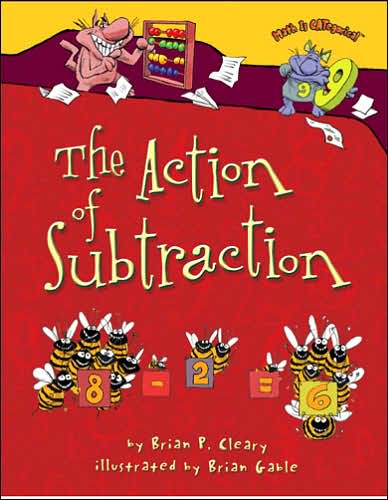
    11820944.jpg

    The Action of Subtraction by Brian Cleary and illustrated by Brian Gable is a kid friendly resource that describes to students the meaning of subtraction by giving several examples which are easy to understand.  The text explains that “Subtraction is an action that will make your total less.”  It explains the term “minus,” and that “is” means “equals” in their number sentences. 

    19731529.jpg

    Mission Addition written and illustrated by Loreen Leedy provides excellent pictures and child friendly examples.  It explains the terms “addends” and “sum” in simple language.  This resource asks students questions throughout and the answers are provided at the end of the book.
    55302772_a.jpg

    You Can, Toucan, Math written by David Adler and illustrated by Edward Miller, is a colorful fun book for kids.  This resource reviews addition, subtarction, multiplication, and division.  This text provides examples of addition and subtraction for children utilizing problems involving toucans, pelicans, and hens.
    19614952.jpg

    Domino Addition by Lynette Long, would be an excellent resource for teachers who have lesson plans involving dominos.  This text would be a great way to introduce domino use in the classroom.  It demonstrates how adding the amounts on the top and bottom half of dominos can give kids the total number.
    14600594.jpg

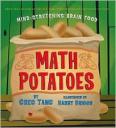
     Math Potatoes, written by Greg Tang and illustrated by Harry Briggs, is a highly interactive text for students.  The author offers riddles which pose a problem to the students, offering them helpful hints along the way.  Students who find ways to group numbers will find their answers much easier!  At the end of the text, the author provides answers and tells students helpful ways to solve each problem. 

    Web Annotations:

    Basic Addition Facts Exercise: This website provides an interactive game for students in which they count how many bugs, snails, etc on two leaves.  The the animals move to the third leaf and the students add to get the total.

    UFO Mystery: This interactive game for students ask them to click on a UFO on the right side and then click the right answer.  After students answer all the items correctly they see what is hidden.

    Balloon Addition Activity: This website tells students to add the numbers on the red balloons and click the green balloon with the correct answer.

    Hidden Picture: This interactive game provides students with answers to addition equations and asks them to select the appropriate number sentence to reveal a hidden picture of an iceberg.

    Ruffie Wrap: This site allows for two different levels.  It asks students to select the numbers that will add up to fill up the box before the whole screen is covered in numbers.

    Additional Resources:

    Add it Up Lesson Plan: This lesson plan is designed to teach students to use manipulatives to solve addition problems while recognizing the symbols of addition and equal value.

    Center Activities: This website provides students the ability to practice their addition and subtraction skills by participating in center activities.  This link reviews several activities teachers can utilize as well as all of the attachments needed for each one.

    Math on a Roll: This link provides activities with which students can utilize dice to build their math skills.

  • Teaching Economics with Children’s Literature: The Kid’s Guide to Money

    0590538535_lg.jpg


    Introduction and Summary:

    The Kid’s Guide to Money: Earning It, Saving It, Spending it, Growing it, Sharing it, by Steve Otfinoski, provides kids with information on several different areas regarding money.  This book tells kids that to get money you will have to earn it.  It reviews several chores you may do in order to get an allowance.  It also provides information on jobs that kids may be interested in when they grow up.  This text has a chapter about spending money and focuses on the responsibilties of spending and the importance of making a budget.  It goes through detailed steps of how to make a budget.  Further information is provided on how to be a smart consumer.  This text further talks about the rewards for young children to put their money in a bank and how adults put their money in other areas, like the stock market and bonds.

    Curriculum Connections:

    This text would be useful in helping children understand that in order for studens to get the things they want, they have to work to earn them. (VA SOL K.7 b).   In addition, this reference contains very helpful information regarding saving money, informing students “if you want something you can’t afford right away, the best way to get it is to save for it.”   This text provides four reasons why it is helpful to put your money in a bank and talks about the usefulness of a savings account (VA SOL 1.9).  This book contains appendices which provide books for further reading, a glossary, and an index.

    Additional Resources:

    Money, Money Honey, Bunny is a lesson plan that utilizes this book and provides information on the difference between spending and saving and goods and services.  This lesson also provides a matching game to review content from the story and practice of rhyming words.  This lesson is for ages 6-8.

    The Pickle Patch Bathtub is a lesson plan that focuses on opportunity costs and savings.  This lesson is for ages 8-10.

    Introducing the Classroom Economy: This website provides a lesson to set up a classroom economy, providing classroom jobs to students and assigning daily or weekly salaries to these positions.  This lesson has a component involving credit and debit that could be left out for elementary students.

    General Information:

    Book:     The Kid’s Guide to Money
    Author:  Steve Otfinoski
    Illustrator: Kelly Kennedy
    Publisher:  Scholastic Inc
    Publication Date:  1996
    Pages:  1-128
    Grade Range: k-6
    ISBN: 0-590-53853-5

  • Teaching Ancient Civilizations with Children’s Literature: Ancient Greek Children

    9781403401311.jpg

    Introduction and Summary:

    Ancient Greek Children, by Richard Tames, provides a wealth of information about how it was for children growing up in Ancient Greece.  This book reviews information regarding caring for children, slavery, education, sports, and beliefs and behaviors.  This text reviews that Ancient Greece is the origin of the Western Civilization.  “Greeks invented democracy, drama, and trial by jury.”  In addition, many of the words we use today are of Greek origin.  This resource describes that young girls were treated as “pure and innocent,” while boys were taught to be “tough and competitive.”  A woman’s job was to “have children, bring them up, and organize the household.”  Women had a much shorter life span, as childbirth was risky in those times and many women died by the age of 40.  Families preferred to have boys so that they could carry on the family name.  Until the age of 6 all children spent their time in the women’s quarters of the home.  Most Greek children did not learn to read or write.    This text contains a glossary and index for students easy reference.

    Curriculum Connections:

    This resource would be appropriate for a third grade classroom. Given the amount of information in the text it may be useful to read  sections to the class at different times and have open discussions regarding the information.  This text would be useful in explaining how the contributions of ancient Greece have influenced the present world in terms of democracy and sports (VA SOL History 3.1).

    Additional Resources:

    This resource provides information on the Ancient Greek Olympics and describes the differences between the Olympians from Sparta, Athens, Corinth, Angos, and Megora.  This provides further support of the importance of sports in Greece.

    This resource provides an activity that asks children to draw on a vase what is happening in the 21st century, as people in ancient Greece often drew what was happening in their world on vases to share about their history.

    This resource provides a video clip of what life was like in Ancient Greece.

    General Information:

    Book:   Ancient Greek Children
    Author: Richard Tames
    Illustrator: Tinstar
    Publisher: Heinemann Library
    Publication Date: 2002
    Pages: 1-48
    Grade Range: 3-5
    ISBN: 1-58810-639-X

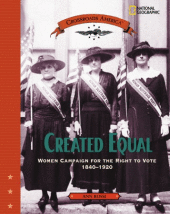
  • Teaching Civics using Children’s Literature: Created Equal: Women Campaign for the Right to Vote

    created-equal.gif

    Introduction and Summary:

    Created Equal: Women Campaign for the Right to Vote, written by Ann Rossi, is a highly informative text outlining the women’s rights movement and their journey towards gaining the right to vote.  This resource highlights influential women in history such as Elizabeth Cady Stanton, Lucretia Mott, and Susan B. Anthony, to name a few.   Rossi describes how events such as the Temperance Movement and the Civil War gave women the opportunity to demonstrate how they could contribute.  They helped with the effort during the War and gained leadership skills.  With these skills, women founded organizations, such as the American Equal Righs Association to fight for women’s right to vote.  This text describes how the 14th and 15th amendments were passed, with women still not given voting rights.  It discusses how some influential women’s rights leaders disagreed if women should continue to wait or to press to gain their rights with the 15th amendment.  This book contains quotes from women’s leaders, as well as from the man who provided the final vote giving women the right to vote, Harry Burn.  This resource provides a wealth of information for students and is well written and easy to read.  At the end of the book there is a glossary of important terms and an index.

    Curriculum Connections:

    This would be a great resource for a second grade classroom to understand and learn about influential members of the women’s rights movement, such as Susan B. Anthony and Elizabeth Cady Stanton (VA SOL 2.11).  It may be beneficial to read this book to a second grade classroom depending on the children’s reading ability.  It may be read in separate sections due to the amount of information presented.  This text would also be useful as a tool to demonstrate the importance of voting and how citizens can work to achieve change.

    Additional Resources:

    This link provides a women’s suffrage word search which will help children become familiar with some of the vocabulary from this time in history.

    This link provides several activities that classes could do together; to include matching quotes, multiple choice, and unscrambling words.

    This link shows the petition that Susan B. Anthony wrote to the US Congress.  This would be interesting for children to see what she actually wrote.

    General Information:

    Book:   Created Equal: Women Campaign for the Right to Vote (1840-1920)
    Author:  Ann Rossi
    Illustrator: National Geographic
    Publisher: Crossroads America
    Publication Date: 2005
    Pages: 1-40
    Grade Range: 3-5
    ISBN: 0-7922-8275-2

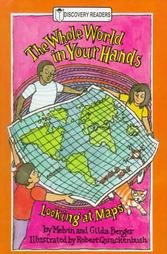
  • Teaching Geography using Children’s Literature: The Whole World in Your Hands


    05_8.jpg

    Introduction and Summary:

    In The Whole World in Your Hands, by Melvin and Gilda Berger, chidlren will be introduced to maps and their uses.  They will look at their town, state, country, and world.  This text defines the continents, the equator, the oceans, and the poles.  This text also explains north, south, east, and west.   This resource is interactive and gives children a map of a subdivision with street names and asks them to trace certain routes that the children in the story can take.  The authors discuss that on a state map there can be symbols that informs what type of crops are grown there and what kind of animals live there.  In addition, this text provides a map of the United States and asks children to locate certain states.  The text describes why most people do not live the equator nor near the poles, but in between.  At the end of this book is an index for quick reference.

    Curriculum Connections:

     This text would be useful for kindergaten level geography.  This resource describes locations using words like right and left to describe east and west (K.3).  This text further provides examples of maps as flat representations and of the round globe, teaching that the world is round like the globe,  It further uses child friendly stories to help students track how they would get to certain real life places on a map (school).  Finally it reviews the oceans and other features of maps. (K.4 a, b, c)

    Additional Resources:

     This link provides an interactive and hands on activity for students to assist in their city map reading skills.

    This link provides students the opportunity to become more familiar with their own geography in an activity called Where I Live.  In this activity kids write information about themselves, and parents could assist them if they have difficulty with writing.

    This link provides many hands on activities which will get children moving in order to learn more about reading maps.

    General Information:

    Book: The Whole World in Your Hands
    Author: Melvin and Gilda Berger
    Illustrator:  Robert Quackenbush
    Publisher: Ideals Publishing Corporation: Discovery Readers
    Publication Date: 1993
    Pages: 1-48
    Grade Range: Kindergarten
    ISBN: 0-8249-8646-6

  • Teaching about Money in Kindergarten

    This post focuses on teaching money to Kindergartners. The resources below will be useful for teaching young children to name and identify the value of pennies, nickels, dimes, and quarters and to count collections of coins up to 25 cents (in Virginia this relates to Kindergarten Math SOL K.7).  

    Recommended Books for Teaching Money to Kindergartners

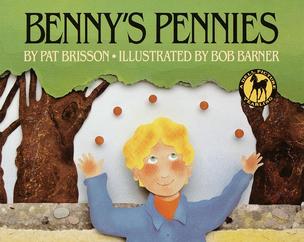
    0440410169.jpg

    Benny’s Pennies by Pat Brisson, illustrated by Bob Barner – The book Benny’s Pennies by Pat Brisson tells the story of Benny McBride who has five new pennies that he decides to spend buying things for his family and pets. As he walks through his neighborhood, Benny spends one of his pennies on each of his family members and then he arrives home with five simple but splendid gifts – a rose for his mother, a cookie for his brother, a paper hat for his sister, a bone for his dog, and a floppy fish for his cat. This book is perfect for Kindergarten and is a great way to introduce a lesson about the penny.

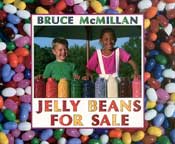
    36-jellybeansforsale.jpg

    Jelly Beans for Sale written and illustrated by Bruce McMillan – The book Jelly Beans for Sale by Bruce McMillan uses colorful jellybeans to illustrate the value of pennies, nickels, dimes, and quarters and how to count coins up to 25 cents. This book starts with the poem “One for a penny. Ten for a dime. Count them and buy them. You’ll have a good time!” and then shows pictures of children using different combinations of coins to buy 1, 5, 10, or 25 jellybeans. Each page also includes a number sentence at the bottom of the page to explain how to count each set of coins. For example, one of the pages has a picture of 5 pennies, 1 nickel, and 10 jellybeans and then at the bottom of the page it says “1¢ + 1¢ + 1¢ + 1¢ + 1¢ + 5¢ = 10¢”. This book would be a fun way to introduce young children to the basic concepts of counting money.

    51n8gcyvpbl_sl110_.jpg51rcxem5xpl_sl110_.jpg

    51zmbs1bv9l_sl110_.jpg51f371qpywl_sl110_.jpg

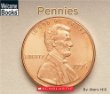
    Welcome Books: Money Matters series written and illustrated by Mary Hill – The nonfiction Welcome Books: Money Matters series by Mary Hill includes the books Pennies, Nickels, Dimes, and Quarters, which would all be great for introducing children to each coin. Some of the information in these books includes what coins are made of, which president is on each coin, the meaning of the symbols on the coins, the value of each coin, and how many of each coin it takes to make a dollar. This series is geared toward Kindergarten and 1st graders and would be useful as part of lessons about each individual coin.

    518d0h732zl_sl500_aa240_.jpg

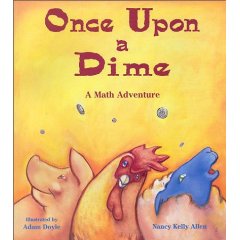
    Once Upon a Dime written by Nancy Allen and illustrated by Adam Doyle – In the book Once Upon a Dime by Nancy Allen, Farmer Worth notices a little tree growing on his farm where nothing had ever grown before and discovers that this special tree produces a new variety of crop – money. The tree produces different kinds of money, depending on what animal manure he uses to fertilize it. Students will enjoy listening to this story about farmer Truman Worth, his special tree, and a young boy’s journey to learn the value of money.

    0689711999.jpg

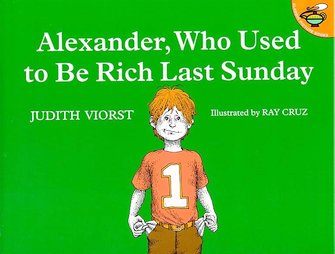
    Alexander, Who Used to Be Rich Last Sunday by Judith Viorst, illustrated by Ray Cruz – In Judith Viorst’s book, Alexander, Who Used to Be Rich Last Sunday, Alexander’s grandparents give him a dollar and he thinks he is rich. Little by little, however, the money disappears, as Alexander spends it on lots of small things, such as 15 cents for bubble gum, 15 cents for losing bets with his brother and his mom, and 12 cents to rent his friend’s pet snake. By the end of the book, Alexander has spent all of his money and has only a few useless objects and some bus tokens. This would be a great story to read aloud and then have students practice counting pennies by using pennies to show how much money Alexander spent or lost in each part of the story.

    Websites for Kindergarten Kids

    • Money to Build a Robot – This game from the Kindergarten section of the Harcourt Math website focuses on identifying coins. In this game, kids will be asked to count the number of pennies, nickels, dimes, or quarters in a set of coins and type their answer in the box. For each correct answer, one part of a robot appears and after answering 4 questions, the kids will get to see the completed robot fly around the screen.
    • Kindergarten Money Game – In this game, kids use coins to buy 9 different food items. They are given a simple direction at the bottom of the screen and then as students drag coins onto the correct food, the game counts the value of the coins for them. This game does not require much prior knowledge about coins and all students will need to be able to do in order to play is find the coins that match the pictures at the bottom of the screen. Playing this game will help kids learn both the names and value of the coins, as well as how to count pennies.
    • Spending Spree Game – In this game, kids choose from two sets of coins to select the correct amount to buy each toy. Some of the questions might be a little hard for kindergartners, but many of the amounts are less than 20 cents or use a single coin. Once kids have learned the value of each coin, this game will be a great way to practice counting small sets of coins.
    • Coin Sort Game – In this game, kids sort pennies, nickels, and dimes into the correct piggy banks. As each coin is placed on the piggy bank, the total value of the coins in that bank is shown below the bank. Playing this game will provide practice with identifying and distinguishing between these 3 coins and will also show kids how pennies are counted by 1s, nickels by 5s, and dimes by 10s.
    • Penny and Dime Sort – In this activity, kids sort pennies and dimes into piggy banks labeled ”1¢” and “10¢”. This will help kids distinguish between pennies and dimes, as well as identify the value of each of those coins.

    Additional Resources (For Teachers)

    • Money Song from TeacherTube – This is a great 1 1/2 minute song video for helping students to recognize each coin and it’s value.
    • Money Printables from MakingLearningFun.com – This site includes lots of printables and math and literacy activities to go with the story Benny’s Pennies, as well as several other money related activities.
    • Once Upon a Dime Readers’ Theater – This would be a great cross-curricular activity for students to do after reading the book Once Upon a Dime as a class. If used in Kindergarten, the teacher might want to read the narrator parts herself.
    • Little Giraffes Math Centers about Money – This website includes several center activities related to money that would be good for kindergarten, as well as money songs and poems to teach students.
    • “My Own Store” Money Activity – This is a fun activity where students each make their own store using magazine pictures and then use coins and/or coin stamps to show the money they would use to make purchases from each others’ stores.
  • Teaching Earth Science with Children’s Literature: The Planets in our Solar System

    books.jpg

    Introduction and Summary:

    In The Planets In Our Solar System, by Franklyn Branley, the author reviews the nine planets; including Pluto in the discussion.  The author explains that several of the planets look like bright stars; but for others (Uranus and Neptune) you would need a telescope to see them.  This text explains that asteroids, comets, and meteoroids are part of the solar system and describes each.  This book explains to students that the planets move around the sun in orbits.  The author informs that the coldest planets are those farthest away from the sun (Neptune).  Mercury and Venus are the hottest planets as they are the closest. 

    Curriculum Connections:

    This text would be a great resource for a fourth grade classroom to learn the planets in the solar system, their order, and their sizes.  This book includes excellent visual aids for students to gain a clearer understanding of these concepts.  It provides several different pictorial representations of these concepts, as well as a chart that explains how long it would take for each planet to go around the sun.  (VA SOL 4.7 a, b, c).    This text further provides two projects that students can complete.  One involves creating a mobile of the solar system to show the differnet sizes of the planets.  Another project involves using a wall to make a model to demosntrate the nine planets and their distances from the sun. 

    Additional Resources:

    KWL: This site provides a booklet for students to record what they know, what they want to know, and what they have leanred about the solar system.

    Solar System Shuffle: Game in which students match the planet with the correct description.

    Where, or Where Does that Little Object Go:  Game in which students match which planet goes into which orbit on the map.

    General Information:

    Book:  The Planets in our Solar System
    Author: Franklyn Branley
    Ilustrator: Don Madden
    Publisher: Harper Collins Publishers
    Publication Date: 1981
    Pages: 32
    Grade: K-4
    ISBN: 0-690-04579-4

  • Teaching Life Science Through Children’s Literature: A Tree is Growing

    treegrowing.gif

    Introduction and Summary:

    In A Tree is Growing, by Arthur Dorros, the text explains the changes that trees go through over the seasons and how big trees continue to grow and change.  It discusses how trees need sunlight, air, soil, and water to grow.  This book describes the function of the roots and the bark of the tree.   The author describes how tree branches are bare in the winter, but that they are preparing for spring as they have small buds which will become leaves.  The text also demonstrates the process of photosynthesis with a helpful pictorial example.  This children’s book provides examples of many types and shapes of leaves and explains that all leaves make food (sugar) for the tree.  Throughout the pages of this text, the author provides interesting factual information about certain types of trees.

    Curriculum Connections:

    This text could be utilized in a variety of classrooms (kindergarten-fourth grade).    The author describes how trees change as they grow and explains that bark protects the tree; when a tree is young, the bark is smooth; as it grows older, the bark become rough and cracked.  The book provides an excellent picture of the inside of the bark showing the growth rings.  It also describes how trees have no leaves in the winter, but in the spring the leaves reappear again.  In addition, it describes that trees get minerals from the soil in order to help them grow (VA SOL k.7). 

    This text also describes the process of photosynthesis with a pictorial example demonstrating how tree leaves “breath in” carbon dioxide and release oxygen into the air (VA SOL 4. 4c).

    Additional Resources:

    This tree research worksheet provides students with a word bank to fill in important points of the tree life cycle.

    This link provides information on vocabulary, activites, songs, and poems about leaves. 

    This interactive website provides children with pictures of how four different trees go from a seed to a plant.

    General Information:

    Book: A Tree is Growing
    Author: Arthur Dorros
    Illustrator: S.D. Schindler
    Publisher: Scholastic Press
    Publication Date: 1997
    Pages:29
    Grade Range: K-4
    ISBN: 0-590-45300-9

  • Teaching Physical Science with Children’s Literature: The Solid Truth about States of Matter

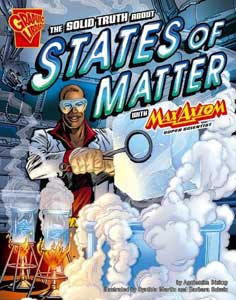
    17528.jpg

    Title: The Solid Truth about States of Matter with Max Axiom
    Author: Agnieszka Biskup
    Illustrated by: Cynthia Martin and Barbara Schulz

    Introduction and Summary: This book contains four distinct chapters.  In the first chapter, Max describes how eveything is made of matter.  He describes that matter can be hard or soft, any color, and any texture.  He discusses the difference between mass and weight.  The book reviews that atoms and molecules are always moving; and how fast they move depends on their form.   The second chapter describes the differences between solids, liquids, and gases.   In the third chapter, Max discusses melting, boiling, and freezing.  The final section describes the difference between evaporation and condensation.    Max presents how the different states of matter are important in our everyday lives.  This book contains a glossary and index in the back and additional book resources.  This book is written in a cartoon format that kids may find enjoyable. 

    Curriculum Connections:

    Matter: 2.3 The student will investigate and understand basic properties of solids, liquids, and gases:
    2.3b: identification of distinguising characteristics of liquids, solids, and gases.
    2.3c: changes in phases of matter with the addition or removal of energy.

    Additional Resources: 

    This website allows the teacher to search by subject to locate useful books.  The website is very kid fiendly.

    This website provides examples of the states of matter and uses sound to help aid understanding.   This site would be helpful for visual and auditory learners.

    This website provides a hands on activity that will help second graders understand the concept of how states of matter change depending on temperature.

    General Information:
    Book: The Solid Truth about States of Matter
    Author: Agnieszka Biskup
    Illustrated by: Cynthia Martin and Barbara Schulz
    Publisher: Capstone Press
    Publication Date: 2009
    Pages: 1-32
    Grade Range: 2
    ISBN: 13: 978-1-4296-2339-1