Author: kempton

  • Spark: Two different looks at how to reclaim meaning in your work life

    Nora Young’s Spark 97 – Jan 3 & 5, 2010 online episode (runs 54:00 mp3) features interesting interviews with Seth Godin and Matthew B. Crawford.

    You can download Seth’s free eBook “What Matters Now“.

    [HT Wendy]

    Posted in audio, book, Canada, CBC, Creative, Creative Commons, people, social media, social network, united states

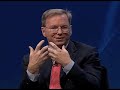
  • Google’s Eric Schmidt on What the Web Will Look Like in 5 Years

    I am late on this one. But the Oct 27, 2009 video is still worth watching.

    * Interesting: Chrome’s tabs have individual address spaces (like an OS) to enhance security.

    [via ReadWriteWeb HT Alyssa]

    Posted in China, Google, Science & Technology, Video, World, YouTube

  • Letter to Hong Kong – from Legislator Audrey Eu

    Ms. Audrey Eu, Hong Kong Legislator, shares her insight about the harsh 11 year prison term of Liu Xiao Bo, the pending “de facto referendum”, and the implication of Liu’s sentence in Jan 3rd, 2010 RTHK radio program “Letter to Hong Kong” (audio program with text).

    *******

    I am enclosing Ms. Audrey Eu’s letter to Hong Kong here for the record. Emphasis and comments added.

    *******

    It was especially cold last Christmas, not because the Copenhagen conference succeeded in halting global warming, but because the well known dissident Liu Xiao Bo was given a harsh 11 year prison term on charges of inciting subversion of the State, and stripped of his political rights for 2 years.

    The fact that he was held for a year and then dealt a harsh sentence on Christmas Day, a day traditionally for peace and celebration, seems like a cruel joke that China is intent on playing with the rest of the world. [Kempton’s note: This is China’s way of saying “F*** You” to the world. Or “財大氣粗”, a rich man’s ability to ignore the world.]

    Liu was charged with co-authoring the 08 Charter and disseminating 6 articles. The 6000 words judgment mainly consists of evidence which is not in dispute, namely he wrote and disseminated the documents in question, but it carries no explanation as to how this contravenes the Criminal Code. The critical part of the judgment is but one tenth of its length. It mentions 4 provisions of the Criminal Code without stating what they are, let alone explain how they apply. [Kempton’s note: To those who claim China has a good legal system, I don’t know how can they kid themselves.] It says the writings spread quickly and widely on the internet and thus goes beyond the bounds of freedom of speech and amounts to a serious crime that justifies a heavy sentence. There is no explanation of where lies the boundary of freedom of speech, who has been incited to do what or what harm the State has come to, or how Liu’s act is different from the tens of thousands who have co-signed the Charter. Anyone who has illusions that a strong China means a modern China should wake up.

    Some Hong Kong people may think this does not concern us because we are protected by the two different systems though under the one State. But look closer. The 08 Charter is based on the universal values of freedom, rights, equality, democracy and constitutional guarantees, not some alien western concepts, but stuff found in our Basic Law. The 6 articles which Liu wrote are not about violence or revolution, but really the gradual strengthening of civil society and civic awareness. They talk about human dignity, protection of rights, rule of law and the gradual and orderly expansion of people’s power. In short, the sort of things we take for granted in Hong Kong. The promise of Two Systems is only as good as the goodwill of those in power unless Hong Kong people are ready to stand up for it. Only recently, Mainland officers crossed the border to grab a Hong Kong reporter across whilst Hong Kong police turned a blind eye. It is unrealistic to think the human rights can be guaranteed by merely drawing a line across a border.

    One of Liu’s articles is titled “Do Chinese people only deserve democracy according to the Party?” The sentence charged with subversion says “For a free China to emerge, rather than place hopes on the rulers to come up with a ‘new deal’, better rely on continuous expansion of ‘new power’ from civil society”. This echoes a lot of the sentiment in Hong Kong. Many of us believe that Beijing will never give us true democracy, civil society has to keep renewing our demands at least twice a year, by marching on 1st Jan and 1st July. Another of Liu’s articles is titled “Changing the state power through changing civil society”. The passage charged says specifically it is not calling for any rapid or aggressive change but a slow growing civil society to bring about a free China.

    These passages remind me of what the Civic Party is saying about the de facto referendum and a strong civil society. For over a century, Hong Kong existed on the divide between British colonialism and Chinese sufferance, living in “borrowed space and borrowed time”, hoping for a better tomorrow. We embraced the return to the motherland thinking that this means a high degree of autonomy, Hong Kong people being their own masters and ruling Hong Kong except in the context of national defence and foreign affairs.

    Some say we should wait and trust in the leadership. The time for democracy will come. The truth is that the Basic law only decided the first ten years of the political system from 97 to 07. We were promised gradual and orderly progress since 2007 but this was dashed by the NPC decisions in 2004 and again in 2007. The political system has remained stagnant since then. We are already past the first decade in the new millennium. By 2020, another decade would have gone by and we will be almost into half of the fifty years promised under the Basic Law, yet we are still not told if the functional constituencies which are meant to be transitional will be scrapped by then. Meanwhile we are told to create more functional constituency seats for the interim. it is said that Hong Kong will have democracy when the rest of China has it. And looking at the 11 year sentence handed to Liu, when do you think our time will come?

    Rather than weep over Liu, let us turn our waiting into action. The Civic Party’s plan for one legislator in each of the 5 districts to resign and then force a de facto referendum so the voters can decide for themselves if they will vote for early universal suffrage and the abolition of functional constituencies. Many think this is political suicide. We will not only lose the seats but also damage the democratic movement. But the democratic movement is not about the Civic Party, it is about Hong Kong people having the right to choose, holding Donald Tsang to his election promise that he will resolve the issue of universal suffrage in his term, holding Beijing to its promise in the Basic law. What we are proposing is much milder than any act of civil disobedience advocated by the Gandhi and it is totally within the framework of the established law and order. It is not about quitting the establishment but being re-elected with the people’s mandate.

    If Liu’s story has any lesson for Hong Kong, it is this. We are part of the One Country. His fate is our fate unless civil society can be strong enough to defend individual rights of freedom and democracy. The de facto referendum is exactly what Liu has been saying, expanding the new forces of the people rather than wait for a new deal by those in power. Collectively we express our views through the ballot box, it is the after all the very essence of democracy.

    *******

    P.S. In my opinion, Ms. Eu’s poetic reference in writing “the Copenhagen conference succeeded in halting global warming” in passing was rather unfortunate and Ms. Eu allowed the poetic image to confuse a rather solid letter.

    Posted in audio, China, Hong Kong, Law, people, politics, RTHK, World Affairs

  • William Butler Yeats, The Worst Journey In The World (and others are Free at Last!)

    Works by William Butler Yeats and books like The Worst Journey In The World by Apsley Cherry-Garrard has now entered into the public domain and outside of the “protection”/”prison” of copyright. See a list of authors and books that come into public domain in this entry by Wallace McLean. Quoting Wallace,

    The public domain is the cultural property and intellectual heritage of an entire people and the entire world in which a given work is now unencumbered by copyright. It’s your public domain to use, adapt, preserve, promote, and enjoy.

    Short live copyright! And long live the public domain!

    [HT Michael]

    Posted in Canada, copyright, Law

  • “You might be an economist if you refuse to sell your children because …”

    I found the following WSJ article and forwarded it to my economist friends as I found it pretty funny. I highlighted a few interesting bits and added some comments. Enjoy.

    *******

    Secrets of the Economist’s Trade: First, Purchase a Piggy Bank

    By Justin Lahart (WSJ)

    Academic economists gather in Atlanta this weekend for their annual meetings, always held the first weekend after New Year’s Day. That’s not only because it coincides with holidays at most universities. A post-holiday lull in business travel also puts hotel rates near the lowest point of the year.

    Economists are often cheapskates.

    The economists make cities bid against each other to hold their convention, and don’t care so much about beaches, golf courses or other frills. It’s like buying a car, explains the American Economic Association’s secretary-treasurer, John Siegfried, an economist at Vanderbilt University.

    “When my wife buys a car, she seems to care what color it is,” he says. “I always tell her, don’t care about the color.” He initially wanted a gray 2007 Mercury Grand Marquis, but a black one cost about $100 less. He got black.

    Some of the world’s most famous economists were famously frugal. After a dinner thrown by the British economic giant John Maynard Keynes, writer Virginia Woolf complained that the guests had to pick “the bones of Maynard’s grouse of which there were three to eleven people.” Milton Friedman, the late Nobel laureate, routinely returned reporters’ calls collect.

    Children of economists recall how tightfisted their parents were. Lauren Weber, author of a recent book titled, “In Cheap We Trust,” says her economist father kept the thermostat so low that her mother threatened at one point to take the family to a motel. “My father gave in because it would have been more expensive,” she says.

    “Where do I begin?” says Marisa Kasriel when asked about the lengths to which her father, Northern Trust Co. economist Paul Kasriel, will go to save a buck: private-label groceries, off-brand tennis shoes and his 1995 Subaru, with a piece of electrical tape covering the “check engine” light.

    Mr. Kasriel says he buys off-brand shoes “so that my lovely children could have Nikes.”

    David Colander, an economist at Middlebury College in Vermont, says his wife — his first one, that is — was miffed when he went shopping for the cheapest diamond. Economist Robert Gordon, of Northwestern University, says he drives out of his way to go to a grocery store where prices are cheaper than at the nearby Whole Foods, even though it takes him an extra half hour to save no more than $5.

    Mr. Gordon, however, is no ascetic. He, his wife and their two dogs live in a 11,000-square-foot, 21-room 1889 mansion on the largest residential lot in Evanston, Ill., outside Chicago.

    “The house is full, every room is furnished, there are 72 oriental rugs and vast collections of oriental art, 1930s art deco Czech perfume bottles and other nice stuff,” he says.

    Some economists may be cheap, at least by the standards of other people, because of their training or a fascination with money and choices that drives them to the field.

    In recent research, University of Washington economists Yoram Bauman and Elaina Rose found that economics majors were less likely to donate money to charity than students who majored in other fields. After majors in other fields took an introductory economics course, their propensity to give also fell.

    “The economics students seem to be born guilty, and the other students seem to lose their innocence when they take an economics class,” says Mr. Bauman, who has a stand-up comedy act he’ll be doing at the economists’ Atlanta conference Sunday night. Among his one-liners: “You might be an economist if you refuse to sell your children because they might be worth more later.”

    Economists long have studied “free riders,” the sort of people who take more than their fair share of something when circumstances permit. Think of the person who orders the most expensive entr[eacute]e at a restaurant, knowing that the check will be shared equally among companions.

    University of Wisconsin sociologists Gerald Marwell and Ruth Ames, in a 1981 paper, found that in experiments,economics students showed a much higher propensity to free ride than other students. In questioning after the experiment, the sociologists found that for many of the economics students, the concept of investing fairly “was somewhat alien.” [Kempton note: “investing is to try to find an “edge” in the deployment of money, thus “fairly” is a bit paradoxical in “investing”, I think.]

    Cornell University economist Robert Frank, working with a pair of psychologists, mailed questionnaires to college professors asking them to report the annual amount they gave to charity. Their 1993 paper reported that 9.1% of the economists gave no money at all — more than twice as many holdouts as in any other field.

    The professors also ran an experiment in which participating Cornell undergraduate students could get a higher payoff if they agreed to have their partner get less. Economics majors were more likely to go for the higher payoff, they found.

    Some dispute the notion that economists tend to be skinflints. “They aren’t cheap,” but they are concerned with a loss of economic efficiency, says Betsey Stevenson, an economist at the University of Pennsylvania’s Wharton School. “That means that they often fail to do the nice little social gifts that seem wasteful to economists.”

    And the principles that can make economists seem cheap sometimes lead them to hire help, because they are taught to value their own time.

    Ms. Stevenson and Justin Wolfers, also of the Wharton School, gave a friend $150 to hire movers instead of helping him themselves. Harvard University economist David Laibson pays to have a driver pick up his sister from the airport rather than driving himself.

    Stanford University economist Robert Hall, incoming president of the American Economic Association, values his time so highly that his wife, economist Susan Woodward, occasionally puts her foot down. “Bob doesn’t see why we can’t just hire people to trim the Christmas tree,” she says. “I tell him that’s not what it’s supposed to be about.” [Kempton note: this para reminded me of a blog entry Wallace wrote about Canadians seem to do a lot more of our household chores and fix our cars, etc much more than HKers.]

    Given their understanding of the odds of gambling, economists seldom frequent casinos, which is one reason the meeting isn’t held in Las Vegas. A decade ago, a hotel sales representative showed Mr. Siegfried a chart showing how little economists gambled compared to other people, he says.

    The American Economic Association meetings, however, have been held in New Orleans, which has a few casinos.

    One year, Yale University economist Robert Shiller, who’d never gambled in his life, found himself at a casino there. He says that was because Wharton economist Jeremy Siegel realized that by using coupons offered to conventioneers, they could take opposing bets at the craps table with a 35 out of 36 chance of winning $12.50 each. Over two nights, Mr. Shiller netted $87.50.

    He hasn’t gambled since.

    [HT Krugman]

    [Kempton: Please don’t blame me if you start gambling, especially applying the “Shiller technique”. 🙂

    Hope you had fun and wishing you a happy & healthy new year.]


    Posted in Economics, Fun, funny, investment, Milton Friedman, people

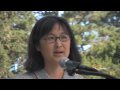
  • Dr. Maya Lin (best known for her Vietnam Veterans Memorial)

    Just finished watching the very enjoyable and Oscar winning documentary about Dr. Maya Lin for the fourth time before I have to return it to the library. Maya won the open competition to build the Vietnam Veterans Memorial when she was 21 years old Yale student. (a link to her studio here)

    There is also a free iTune lecture by Maya, “MCASD/SDMA 2008 Axline Lecture: Maya Lin”. You can also search and find some videos about Maya on YouTube, including this NYT video.

    Maya Lin Systematic Landscapes Documentary

    And this very interesting, “What is Missing?”

    Posted in Architecture, Arts, Creative, Love, people, Science, Video, World, YouTube

  • Arguing to death, Fourth branch of gov & A Socratic Dialogue

    I enjoyed reading The Economist’s “The tyranny of the majority: The fourth branch of government has run amok in parts of America” and ended up also enjoying “Arguing to death: From Socrates, history’s quintessential nonconformist, lessons for America today” the way I enjoyed the TV series Deadwood.

    It is my pleasure to get to know the two articles’ author Andreas via his blog. Here is my reply to one of Andreas’ latest entry “WordPress: Plato’s Academy Today” which I hope you may enjoy reading,

    Andreas,

    Thanks for creating a community for us to amuse ourselves, teach ourselves, challenge ourselves, feel safe to contradict ourselves, and sometimes to be plain silly.

    This piece and others you linked to reminded me of a lovely little Chinese book I read more than 20 years ago when I was wiser, more self-assured, handsomer and video game machines didn’t dare to tell their owners they were obese! 🙂

    The tiny Chinese book was a translation of Hungarian mathematician Alfréd Rényi’s “Dialoge über Mathematik” which contains the charmingly insightful “A SOCRATIC DIALOGUE ON MATHEMATICS”. (more on Rényi here and here)

    I took some time yesterday to try to find something to share. Well, I lucked out and found an English version of this gem of a socratic dialogue as imagined by Rényi. Plus I was delighted to find the author’s postscript which was not in my Chinese translation.

    Have a read, “A SOCRATIC DIALOGUE ON MATHEMATICS“.

    It is wonderful to see you crediting many people in the community who contributed to our shared discovery and even took time to include this sporadic visitor. 🙂 And then I thought of what Confucius wrote in Analects,

    三人行,必有我師焉。擇其善者而從之,其不善者而改之。(ref)

    Which I venture to translate as,

    “In a group of people, I can always learn from someone.
    Observe their merits and try to learn from them.
    Observe their mistakes and try to reflect and correct our own failings.”

    P.S. Sorry for taking longer to reply to this post than I had originally thought.

    P.P.S. I quite enjoy “The tyranny of the majority”. And to be honest, I didn’t think I would enjoy “Arguing to death” at all as I don’t have the slightest idea about most of the long dead Greeks, Athens, Carthaginian, et al (Fabius, Scipio, … huh, who?). Fortunately, to my surprise, I ended up enjoying “Arguing” like I enjoyed (very much) the TV series Deadwood (which I don’t understand about 20% of their words).

    [Tangent: David Milch, creator of Deadwood & NYPD Blue, speaking at MIT]

    By the way, you and your publisher have probably thought about something like this. Will there be a companion blog/website to your book pre and post book launch where lively discussions about things, views, and ideas in and around the book can be further explored? Freakonomics is one model and I am certain there are many just as or more interesting ideas to be explored.

    P.S. I asked my wise friend Mr. Tong for his insight re the translation of “三人行,必有我師焉。擇其善者而從之,其不善者而改之。” He shared a lot of good ideas and gave two suggestions,

    “Here are the translations. The first one is in an old style by James Legge; the second one is done in a more plain language.

    [older style] The Master said: “When I walk along with 2 others, they may serve me as my teachers. I will select their good qualities and follow them, their bad qualities and avoid them.”

    [plain language] Confucius said: “When 3 men walk together, there is always something I can learn. Choose to follow what is good in them and correct what is not good.”

    Posted in Democracy, insightful, Law, Math, people, politics, social network, united states, World Affairs

  • TSA Withdraws Subpoenas Against Bloggers

    Excerpt from Wired “TSA Withdraws Subpoenas Against Bloggers” (emphasis added),

    In the wake of public outcry against the Transportation Security Administration for serving civil subpoenas on two bloggers, the government agency has canceled the legal action and apologized for the strong-arm tactics agents used.

    Travel writer and photographer Steven Frischling, who was served with a subpoena by two TSA agents on Tuesday, told Threat Level that he received a phone call Thursday evening from John Drennan, deputy chief counsel for enforcement at TSA, telling him the administration was withdrawing its subpoena.

    Frischling was told the TSA would no longer be pursuing the investigation into how he received a security directive that he published on his personal blog, Flying with Fish, on Dec. 27.

    The administration told the Associated Press that its investigation was “nearing a successful conclusion and the subpoenas are no longer in effect.”

    Posted in Law, media, people, politics, security, social media, united states

  • Happy 2010 ! Kissed and Be Kissed !

    Love those blue hats.

    Posted in advertising, Business, Creative, united states, Video, World, YouTube

  • Happy 2010 ! Happy Beginning !

    A romantic way to end 2009 and begin 2010! Happy 2010!

    From New York! Now, I don’t know how much Toshiba paid to be right up top, but whoever decided to give the giant NIVEA blue hats out deserve a bonus for the free ad. 🙂 [So this is the second year already!]

    Posted in Love, people, Video, YouTube

  • Interview with Soda – director of award-winning documentary “Mental”

    Award-winning documentary "Mental" by director Kazuhiro Soda

    Mental” Trailer on YouTube

    The subject matter of mental health is never one easy to handle and handle well. Director Kazuhiro Soda’s documentary Mental was not only engaging and insightful, it is also a personal film for Soda to make.

    [HT to Mad Dog]

    The following time codes and descriptions will give you a quick way to revisit a topic that you want to see again.

    Time Codes for Part 1

    0:00 Did Soda expect “Mental” to be an award-winning film and be so successful in Japan when he finished the film?
    1:28 Why is the film a personal film for Soda and him sharing his personal experience with mental illness.
    2:25 People suffering from mental illness in Japan and in the modern world.
    4:05 The process of getting permission to shoot in the clinic. And the patients’ reactions.
    5:14 Feeling very responsible for the people’s images and futures.
    5:40 Talking about the sensitive story in the documentary about a lady and her baby. Soda’s thinking process and considerations.

    Time Codes for Part 2

    0:00 Depicting the whole story in its fuller complexity and not in an isolated manner.
    1:26 An update of the patient.
    1:35 Talking about how did Soda get the permission to make the film from the doctor and the clinic? And Soda’s style of making an observational documentary.
    4:00 Talking about Dr. Yamamoto. Other psychiatrists’ comments after watching the film.
    4:52 Is shooting a film like “Mental” possible in North America?
    7:05 Soda’s experience in writing and publishing his book “Mental Illness and Mosaic” including in-depth interview with Dr. Yamamoto and panel discussions with patients appearing in the film and them watching it.
    8:50 I really think Soda has done a great service to the mental health profession and patient communities in Japan and probably around the world where they have chance to watch the film.

    You can also read Soda’s blog in Japanese and sometimes English here.

    Posted in Documentary, Healthcare, Healthcare Sector, InterviewByKempton, InterviewByKempton-Arts, Japan, Video, YouTube

  • Letter from Prime Minister Office re: Ana’s Playground

    Readers of this blog may have read and seen my video interviews with Eric Howell about his film Ana’s Playground.

    1. Eric Howell Ana’s Playground interview @ 2009 Calgary International Film Festival (with video interview)
    2. Eric Howell Ana’s Playground (2009 CIFF) – Best Short & Best Film at Norwich Film Festival (with video interview)
    3. Ana’s Playground qualifies for an Oscar nomination in 2010

    Here is a trailer.

    What you may not have known is that I’ve also written a letter, including a copy of the movie, to Prime Minister Stephen Harper. And today, a letter from Office of the Prime Minister arrived. I hope Prime Minister Harper will enjoy the film and be more active in trying to resolve the worldwide tragedy of child soldiers. (click here for a larger and readable version of the letter)

    Letter from Office of the Prime Minister re: Eric Howell's film Ana's Playground

    Posted in Calgary, Calgary International Film Festival, Canada, drama, InterviewByKempton, InterviewByKempton-Arts, Law, Love, politics, Video, YouTube

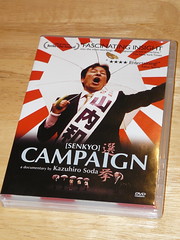
  • Interview with Soda – documentary director of Peabody-award winning “Campaign”

    Peabody-award winning documentary "Campaign" by director Kazuhiro Soda

    Campaign” Trailer on YouTube

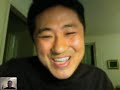
    Filmmaker Kazuhiro Soda’s observational documentary Campaign is a fascinating film about one candidate’s campaign in the strange world of Japanese election. In the following Skype video interview, Soda and I chatted about Campaign, the Peabody-award winning film I love, and his latest project temporary entitled Theatre.

    [HT to Mad Dog for introducing me to Soda’s film]

    The following time codes and descriptions will give you a quick way to revisit a topic that interests you the most.

    Time Codes for Part 1:

    0:00 Soda’s Peabody award experience and of being told on April 1st
    0:53 How did Soda convince “Yama-san” and the LDP party to let him shoot the film?
    2:05 Why Soda knows the film is going to be interesting before he shoots? The traditional political party of LDP vs the liberal and Bohemian “Yama-san” (this is a great story, you need to hear where Yama-san went to for honey-moon)
    3:45 More about the conflicts b/n LDP and Yama-san
    4:39 What makes this story interesting
    5:05 Soda’s advice to new filmmaker to film an election?
    6:13 Soda’s idea of an observational film and how to make an interesting documentary.

    Time Codes for Part 2:

    0:00 How many hours of footage did Soda shoot for his films (Campaign, Mental, and Theater)?
    1:10 An update on “Yama-san”
    2:38 Talking about Soda’s editing process.
    3:55 Does Soda write a script when he is editing?
    5:38 Soda’s process of creating/finding logic & POV.
    7:10 What does Soda focus on when he shoot?

    Time Codes for Part 3:

    0:00 What happens in the editing room
    0:37 When to start and stop recording/shooting? For example, when shooting Campaign, Mental, and Theater.
    3:34 What kind of equipment Soda used to shoot? Shot three films with Sony HDV Z1.
    5:15 What is Soda’s advices to people who want to make a documentary? (very insightful)

    Posted in Documentary, InterviewByKempton, InterviewByKempton-Arts, Japan, politics, Video, World, YouTube

  • R.I.P. Michelle Lang – Journalist

    R.I.P. Michelle Lang - Journalist

    You can pay your respect to Michelle at this Facebook group “R.I.P. Michelle Lang – Journalist”.

    *******

    An excerpt from “Calgary journalist’s fiance mourns love of his life“,

    “It didn’t take long for Lang and Louie to fall in love.

    They met in Calgary at a group dim sum gathering, knowing their mutual friend thought they should date.

    They did a few weeks later, talking effortlessly for three hours at a cocktail bar, he recalled.

    “The conversation never stopped and it was never awkward. It was at that moment I was like wow, she’s kind of amazing,” he said of their first date 18 months ago.

    Lang was smitten by Louie, said her friend Robin Summerfield, the subject of Lang’s matchmaking.

    After Lang and Louie were together for six weeks, Summerfield teased her friend about the new romance and asked whether she was in love.

    “You know, I think I am,” she told Summerfield, a former Herald reporter.”

    *******

    Dear Michelle,

    Like many others, I haven’t had the pleasure of meeting you. And now I can only get to know you through the beautiful digital footprint you’ve left us. Your work ethics, deep dedication to journalism and high standard are what I will aspire to achieve when I do my own reporting.

    Love,

    Kempton

    *******

    More in this earlier blog entry, “Calgary Herald reporter Michelle Lang and four soldiers killed in Afghanistan“.

    Note: Here is a link to Michelle’s last blog entry in “Afghanistan Dispatches” where you can read more of the blog entries and the related newspaper articles. And an Calgary Herald editorial, “We’ll miss our Michelle

    Posted in Alberta, Calgary, Canada, Love, media, people, politics, social media, World, World Affairs

  • Isabel Allende: Tales of passion

    My pleasure to watch the following TED Talk by Isabel Allende. Just found out that “The House of the Spirits“, a film I love, was based on her book.

    [HT 周游]

    Posted in insightful, Love, people, TED, Video, YouTube

  • Calgary Herald reporter Michelle Lang and four soldiers killed in Afghanistan

    Calgary Herald reporter Michelle Lang, seen in this 2005 file photo, was killed by an improvised explosive device in Afghanistan Dec. 30, 2009, while covering the war for the Canwest News Service. Four Canadian soldiers also died in the blast.

    I write with deep sadness that Calgary Herald reporter Michelle Lang and four Canadian soldiers were killed in a bomb blast Wednesday in Afghanistan. (You can pay your respect to Michelle Lang at this Facebook group.)

    Reports from Calgary Herald, Calgary SunCBC (with video), G&M, CTV (with video), Maclean’s, and a heartbreaking portrait by Robert Remington at Calgary Herald.

    An excerpt from Calgary Herald,

    Award-winning Calgary Herald reporter Michelle Lang was killed Wednesday in Afghanistan while reporting on the Canadian mission in the southern regions of the war-torn country.

    Four Canadian soldiers also died in the blast, while a Canadian civilian was injured, the Department of National Defence said late Wednesday.

    Lang, 34, was on patrol with a Canadian convoy of soldiers in the Kandahar area when the military vehicle they were travelling in struck a roadside bomb.

    She is the first Canadian journalist to die in the Afghan war since Canada joined the international mission in 2002, and is believed to be the first Herald reporter ever killed on the job in the paper’s 126-year history.

    An excerpt from Robert Remington’s heartbreaking portrait,

    As we got the horrible confirmation Wednesday from Lorne Motley, our editor-in-chief, stunned colleagues hugged and cried. We had heard the rumours earlier in the day, that Michelle had been killed by a roadside bomb en route to do a story on reconstruction efforts. She was outside the safe confines of Kandahar Airfield, and my first thought was that I wished it was me rather than her. All I ever wanted to be was a foreign correspondent. But Michelle was young, Afghanistan was a better “career move” for her, and off she went with commitment, although not without some trepidation.

    We talked about it a bit, but not at length. Michelle told me that her mom was scared about her Afghanistan assignment. She also told me of the day not long ago when she filled out the Department of National Defence forms regarding next of kin, which made her feel nervous. I encouraged her, even envied her, but told her that if anything bad happened to her over there, I would be “very upset.”

    Upset doesn’t begin to describe it. Like most everyone in our sad newsroom, I’m numb and haven’t stopped sobbing all day. I cannot grasp that Michelle, one of the nicest people I have ever known, is gone.

    And an excerpt from Calgary Herald Don Braid’s “Michelle earned respect for fair, honest reporting“,

    On May 22, Michelle won a National Newspaper Award, the equivalent of an Oscar in our business. She was deemed Canada’s best beat reporter, meaning she’s the cream of everyone who regularly covers anything, anywhere — from courts to crime, schools, city halls, legislatures, Parliament and much more.

    Dec 31st, 2009 Update: The 4 soldiers have now been identified and they are,

    Sgt. George Miok, 28, Cpl. Zachery McCormack, 21, both of Edmonton, Sgt. Kirk Taylor, 28, of Yarmouth, N.S., and Pte. Garrett Chidley, 21, of Cambridge, Ont.

    My thoughts are with the families and loved ones of Michelle, George, Zachery, Kirk, and Garrett.

    Sgt. George Miok, Pte. Garrett William Chidley, Sgt. Kirk Taylor and Cpl. Zachery McCormack (from left to right)

    Posted in Alberta, Calgary, Canada, Law, Love, media, people, politics, Video, World, World Affairs

  • Another sad day for democracy in Canada – PM suspends Parliament

    Today is another sad day in Canadian history and for Canadian democracy. Prime Minister Stephen Harper has decided it fits his political interests to shutdown the parliament and don’t reopen it until March 3rd (delay from the scheduled date of Jan 25th). The PM’s action is amount to holding in contempt the democratic process and tradition in Canada and turning prorogation into his favourite toy & tool to avoid being held accountable by parliamentarians elected by Canadians from sea to sea.

    See reports from TorStar, CBC., and CTV.

    Posted in Calgary, Canada, Democracy, Law, politics

  • How to Run a Meeting Like Google

    An excerpt from “How to Run a Meeting Like Google” (emphasis added),

    Mayer holds an average of 70 meetings a week and serves as the last stop before engineers and project managers get the opportunity to pitch their ideas to Google’s co-founders, Sergey Brin and Larry Page. Eight teams consisting of directors, managers, and engineers—all at various stages of product development—answer to Mayer.

    In a shop like Google (GOOG), much of the work takes place in meetings, and her goal is to make sure teams have a firm mandate, strategic direction, and actionable information, while making participants feel motivated and respected. Mayer’s six keys to running successful meetings follow:

    1. Set a firm agenda.
    Mayer requests a meeting agenda ahead of time that outlines what the participants want to discuss and the best way of using the allotted time. Agendas need to have flexibility, of course, but Mayer finds that agendas act as tools that force individuals to think about what they want to accomplish in meetings. It helps all those involved to focus on what they are really trying to achieve and how best to reach that goal.

    [HT O’Reilly Radar]

    Posted in Business, Google

  • Quantum Cryptography Cracked

    Interesting “Quantum Cryptography Cracked“.

    Posted in Cryptography, Math, Science & Technology, World