Author: kp3bn

  • Teaching Ancient Civilization with Children’s Literature: The Desert Is Theirs

    desert.jpg

    Summary:

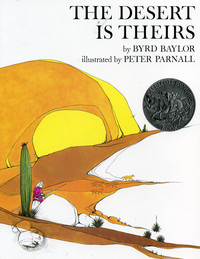
    The Desert Is Theirs, written by Byrd Baylor and illustrated by Peter Parnall talks about the close relationship of people, animals and how they share the land. The author addresses the many aspects of living in the desert from what the desert looks like, how it feels (weather) and what is living in the desert (animals, plants, ect). This book can teach children about different cultures and their views.

    Curriculum Connections:

    The Desert Is Theirs would be great for teachers to read aloud to their third grade class. This is because there are some lengthy pages and difficult words to pronounce. The book has detailed pictures the students can look at. The students can go online and research the Papago tribe to understand their culture. (SOL 3.2)

    Additional Resources:

    Ancient Civilization Clipart and Photos– These photos are perfect to hang in your classroom when you are teaching your lesson on Ancient Civilization. This gives kids a visual way to understand our history.

    The Middle East and Beyond– The students become a traveler which they are to explore the Middle-East to gain an understanding of cultures and where they exist

    Lesson Plan Central– This website allows students to learn lessons and worksheets on Ancient Civilization

    Book: The Desert Is Theirs

    Author: Bryd Baylor

    Illustrator: Peter Parnall

    Publication Date: 1975

    Grade Range: 2-5

    ISBN: 33082001937878

  • Teaching Earth Science with Children’s Literature: Living Sunlight

    sunlight.jpg

    Summary:

    Living Sunlight How Plants Bring The Earth To Life, a book written by Holly Bang and Penny Chisholm. This book introduces kids to photosynthesis in a simplestic way. In the book it discusses how plants and animals take in the sunlight to grow and make food for the child who then eats the plants and drinks the sunlight and grows. Throughout the book the pulse of the child is seen as the pulse of the world and the warmth of the child is seen as the warmth of the sun. The colorful illustrations in the book are great for first and second graders. In conlusion this book can be used to teach students about the science cirrculum.


    Curriculum Connection:

    1.4(a) plants need air, water, light and a place to grow. The book describes how the sunlight melts glaciers, warms the land and create your winds . (c) The book then goes on to describe that the secret starts in green plants because they suck up H2o from the earth plants and can be classified on a variety of characteristics. (2.5a) With adquete food, shelter, space or cover the plants trap the energy as little packets.  

    Additional Resources:

    Water experiments: Surface tension is one of water’s most important properties. It is the reason that water collects in drops, but it is also why water can travel up a plant stem, or get to your cells through the smallest blood vessels. Water experimetns allows you to experiment with surface tension using just a few household items.

    People and Space: Students will understand preservation of food and space-saving storage, also what dehydration means and how dehydrated foods can be consumed by mixing the food with saliva from the eater’s mouth or by adding water

    The Living Earth: Discuss glaciers, how they change the land and how the planets structure changes

    General Information:

    Book: Living Sunlight

    Author: Holly Bang & Penny Chisholm

    Publication Date: 2006

    Pages: 1-30

    Grade Range: 1-3

    ISBN: 3 3082 01074 2996


  • Teaching Life Science with Children’s Literature: Butterflies and Moths

    butterflies.jpg

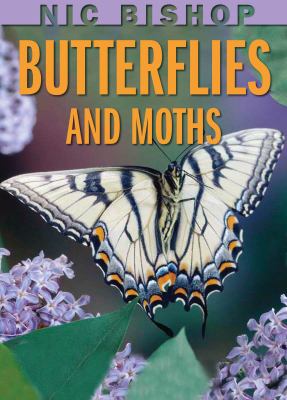
    Butterflies and Moths, written by Nic Bishop. This book provides basic information about moths and butterflies.  The book goes on to discuss facts about the insects appearance and habits. For example Moths have fatter bodies, covered with furry hairs. One can tell a moth from a butterfly by the antennae on the moths head. The book then goes on to discuss the life cycle of a butterfly and moth. First it begins with an egg, then the caterpillar crawls out, and lastly the caterpillar wanders to a safe place into a pupa. This book is great for K-4 graders because of the colorful illustrations and detailed facts about butterflies and moths.

    Cirrculum Connections

     Butterflies and Moths is a great way to teach children the four stages of the butterfly. The illustrations are bright and colorful for students to look at. This book is for K-4 graders because of the basic facts that are provided about the insects. K.1g)The four stages of the butterfly allows the students to observe and record the result of each stage. 2.4a) and 2.4b) Allows the teacher to teach about the butterflies life cycle and habits.

    Additional Resources  

     Colorful Art Butterfly– In this activity students cut off part of an egg cartoon then the students can paint the carton any color they want. This activity is great for students who have read a book about caterpillars.

    Life Cycle of a Butterfly– Students will identify the four stages of a butterflies life cycle

    The Ugly Caterpillar– This program features four different reading leavels. This program is great for guide reading


    Book: Butterflies and Moths
    Author: Nic Bishop
    Publisher: Scholastic Inc.
    Publication Date: 2009
    Pages: 48 pages
    Grade Range: K-4
    ISBN-10:
    3082 01039 0721

  • Teaching Physical Science with Children’s Literature: What is the World Made Of?

    science-pic.jpg

    Introduction and Summary:

    • In the book, What is the World Made of by Kathleen Zoehfeld it describes the three states of matter solid, liquid and gas. The book then goes on to state each one of the matters attributes. This book introduces young readers to important science concepts. For example the book teaches children the difference between solids, liquids and gas. The book uses simplestic concepts like why a child cannot walk through a wall to help the child better understand science. This book is great for K-3 because of the colorful illustrations and easy concepts for children to grasp.

     Curriculum Connections:

    • This book introduces young children to the basics of science and help satisfy their curiosity about how science works. K.1a) By looking at all three matters you can identify there physical state by direct observation. K.2b) Sensory descriptors. In the book they use perfume to describe how you can smell it in different parts of a room when the top is taken off the bottle. 1.1a) The senses are used to to observe different physical properties. For example when you put water in a ice tray one can observe the water changing to a solid when put in the freezer.

    Additional Resources:

    • Solids, Liquids and Gases– This lesson allows students to distinguish between liquids, solids and gases. The students will observe experiments. The students will also be able to identify some of the physical properties of each of them
    • What is Matter ?- This three minute video allows students to learn more about liquids, solids and gases. Singing Karaoke about the three matters will help the students understand a new way of learning.
    • Matter– This site defines the three stages of matter. There are activities and videos to further explain the three different stages of matter.

    Additional Resources:

    Book: What is the World Made of?

    Author: Kathleen Zoehfeld

    Illustrated: Paul Meisel

    Publication Date: 1998

    Pages: 4-32

    Grade Range: k-3

    ISBN: 0-06-445163-1

  • Teaching Geography with Children’s Literature: How I Learned Geography

    georaphy2.jpg

    Introduction and Summary:

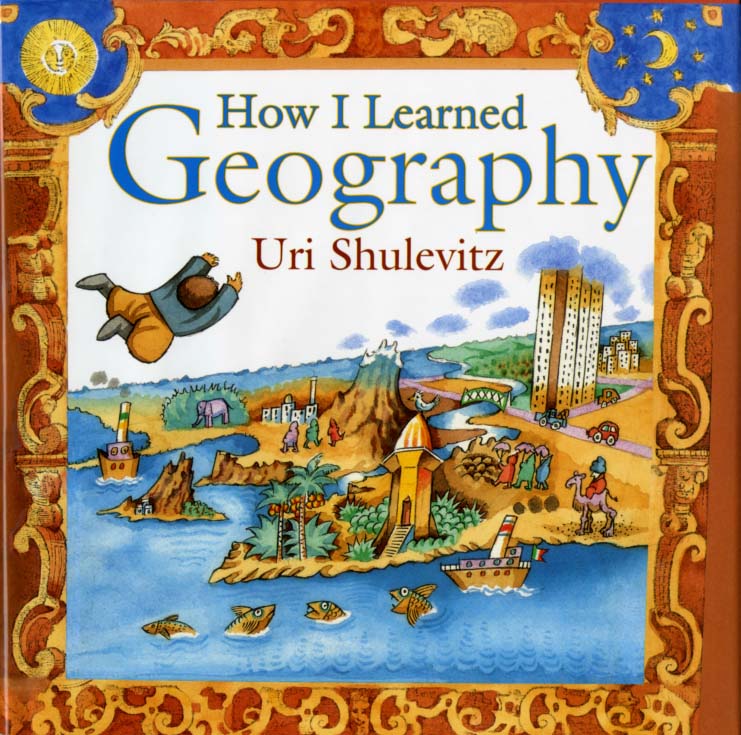
    • In the book, How I Learned Geography by Uri Shulevitz it tells the story of a family who fled their troubled homeland to live in another country. One day since the food is scarce the father brings home a map instead of food for his son. The boy ends up studying the maps every detail. As a result every place the boy studies on the map he is transported too. The boy goes to these exotic places without even leaving the room. The boy eventually becomes more content with the map than food because he can travel to places he never would have dreamed of going.

     Curriculum Connections:

    • This book could be used to teach k-3 graders to develop map skills.  (K.4) The students are able to understand how to locate land and water on maps. (1.4) The boy in the book was transported to far away places. The boy learned how to recongnize certain symbols like land and water on the map when he traveled from place to place.

    Additional Resources:

    •    Map Skills– This activity teaches the students how to read and use a map. This lesson is a great activity for field trips

    • Map Coloring Worksheet– Color the maps. The two states that do not share the borders may be the same color. Also the states that meet at the same point may be the same color.

    • BB- Social Studies– In this lesson create a map and on the map create different names for the landforms on the map. Position the symbols on the map to show their locations

     General Information:

    Book: How I learned Geography

    Author: Uri Shulevitz

    Publication Date: 2008

    Pages: 1-30

    Grade Range: k-3

    ISBN: 2007011889

  • Teaching Process Skills with Children’s Literature: The Simple Truth About Scientists

    science.jpg

    Introduction and Summary

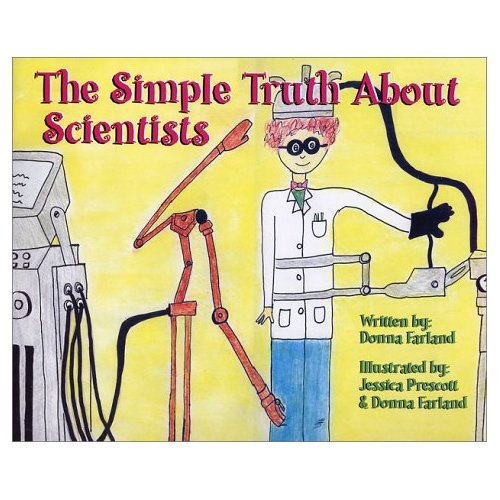
    • In the book, The Simple Truth About Scientists, written and illustrated by Donna Farland it discusses the many myth’s about scientists. The book explains five different myth’s that are associated with scientists. The myths are scientists only work in laboratories, wear lab coats, cause explosions, are geeky, and lastly scientists are geniuses. The book then gives examples to counter the five myths. One myth from the book said scientists are geeky, the book then states the truth by saying many normal people of all races enjoy being scientists. This book is great for kintergarteners and first graders to help them know the real truth about scientists.

    Curriculum Connections

    • This book helps students understand the five myths of scientists. It could be taught to simplify areas in science. (K.1b) In the book it discusses that scientists spend most of their time observing  and collecting their data for tests. (K2.b) Scientists need to use thier brain to describe the objects around them. (K.1f) Scientists when mixing chemicals together do a lot of observating and then predicting the outcomes.

    Additional Resources

    Color Mixing– allows the students to work hands-on. Students need to get used to handling science tools. This lesson allows the students to understand the idea of scientific experimentation. The students will mix different colors together seeing  the different outcomes of the colors

    Caterpillars to Butterflies– This lesson plan lets student observe the development of caterpillar into butterflies. This teaches students how to observe which is one major part of being a scientists 

    Water Magic– This lesson allows students to use everyday experiments to help them understand the scientific method. Students are able to observe and experiment the three physical forms of water.

    General Information

    Book: The Simple Truth About Scientists

    Author: Donna Farland

    Illustrator: Donna Farland & Jessica Prescott

    Publisher: Authentic Perceptions Press

    Publication Date: 2002

    Pages: 1- 11

    Grade Range- K-1

    ISBN: 0-9724170-2-8

  • Teaching Economics with Children’s Literature: The Giving Tree

    pic.jpg

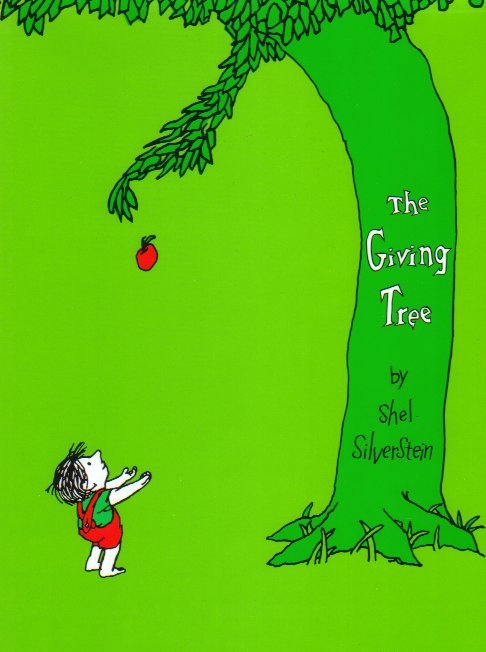
    The Giving Tree, written by Shel Silverstein, is about a little boy who would visit the same apple tree every day. On his visits he would play games, eat the apples and swing from the tree. As the boy grew older the boy left the tree alone. Until one day the boy finally visited the tree and asked the tree how he could make money. The tree told him to take the apples off the branches and sell them in the city. The boy continued to barely come visit, but when he did he always asked for something in return, until one day the tree had nothing to give.

    Curriculum Connections
    This book can teach children the art of giving and how to make a profit. The tree gave everything to the boy from her apples, to her branches and eventually her own trunk. The book also showed that the boy would be able to make a profit off the trees apples by selling them in the city. As a result the ending proved that the value of friendship can take you a long way. ( 2.7) Students will be able to understand what natural resources are from the tree giving away its branches and tree trunk to the boy. (2.9) The boy had to make a choice by using the trees apples to make a profit.

    Additional Sources

    Book: The Giving Tree
    Author:  Shel Silverstein
    Publisher: HarperCollins
    Publication Date: 1992
    Pages: 50 pages
    Grade Range: Recommended K-2
    ISBN: 780060 58751

  • Teaching Civics with Children’s literature: How We Crossed the West The Adventures of Lewis & Clark

    lewis-and-clark.jpg

    In the book, How We Crossed the West The Adventures of Lewis & Clark, President Thomas Jefferson and the Congress of the United States asked Captain Lewis to explore the Western rivers across North America to the western ocean.  Lewis asked friend, William Clark to help lead the Corps of discovery on a journey that would lead to many new discoveries. The expeditition began on May 1, 1804. Throughout the two year journey the corps of discovery acomplished new detailed maps, plants and animals unknown to science, and established peaceful relations with the Indians. On Sunday September 21, 1806, the explores successfully returned to St. Louis with new discoveries from their two year long journey.

    Cirriculum Connections:

    The Adventures of Lewis and Clark is used for K through 5th grade students. This book describes the route Lewis & Clark took from Mississippi to the Pacific Ocean. On their route to the Pacific ocean they discovered unknown plants and animals. Also they learned the customs, languages, and artifacts of western Indian nations. The children are able to learn new types of plants discovered by the corps like osage orange, salmonberry, and prairie apple. A teacher can include maps of the routes Lewis & Clark discovered on their expedition. (VA SOL 2.10a,d,e; 3.10b ;3.11d,)

    Additional Resources:

    Outdoor activities/Nature-Nature walk activities that involve learning about nature and animals

    Culture Boxes– Learning about your own culture by decorating the outside of your box with images representing your culture

    The Lewis and Clark Expedition (The Corps of Discovery)– Expand skills for historical and geographical studies

    Book: How We Crossed the West The Adventures of Lewis & Clark

    Author: Rosalyn Schanzer

    Plublisher: National Geographic Society

    Publication Date: 2002

    Pages: 1-37

    Grades: K-5

    ISBN: 0-7922-3738-2