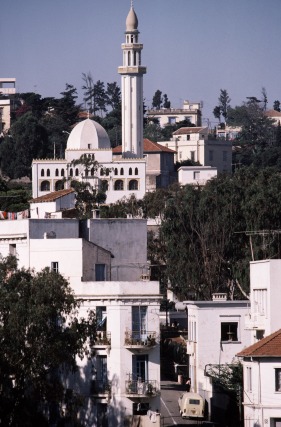
The Casbah of Algiers (little old narrow streets)


The Casbah of Algiers (little old narrow streets)


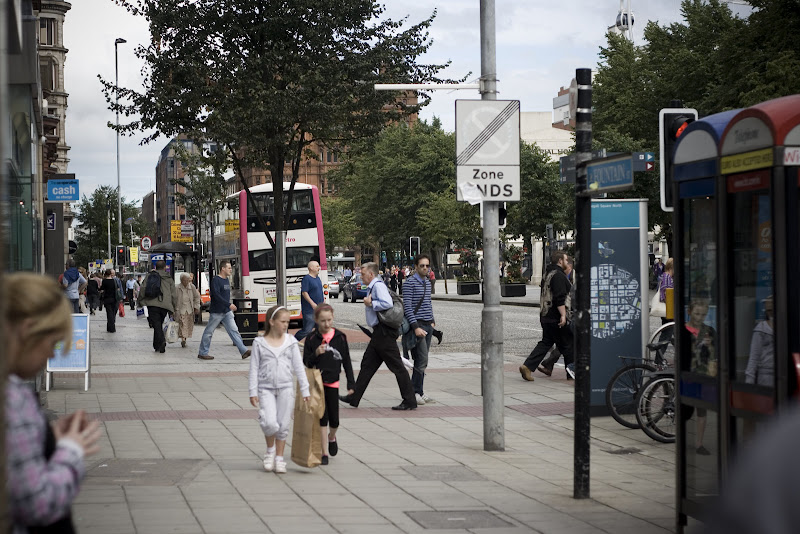
Belfast City Hall


Botanic garden


Black taxi
Police cars


Malmaison, Hotel


Please when you answer try to give the city and country name + a picture if it is possible ‘please’
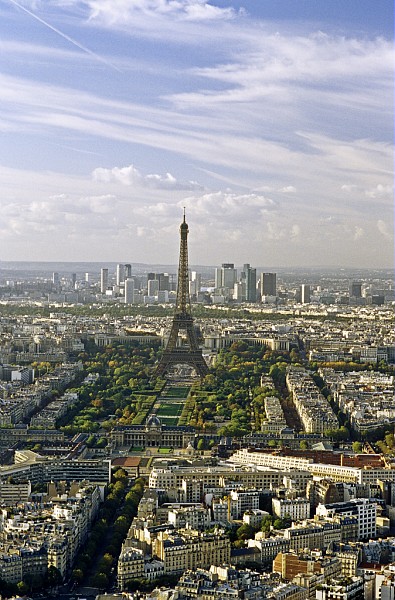
This week’s favourite city is going to be FRANCE, why? most people find that this time of the year is the right time to travel to ‘Paris’ which is the capital of France 🙂
France, Paris

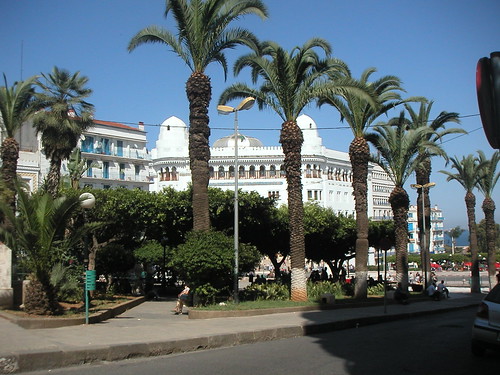
My favourite destination would have to be North Africa, Algeria, 1st because I am originally from there and its Amazing with Tunisia on the east and Morocco on the west ! you can’t ask for more, with its large coast across the Mediterranean and beautiful blue beaches and green ATLAS mountins across the NORTH, then in the south there is the GREAT Sahara Desert. France invaded Algeria for Nearly 200 years so you find the cities built with the French Architecture .. the seconde language in Algeria is also French and the same for the other North African countries.
I have a question to ask and I am sure some other people, I have Noticed that ‘Algerians’ have changed completely and has grown more Islamic and stricter it keeps on going, comparing to decades ago! what i want to ask is what is the reason of this ?

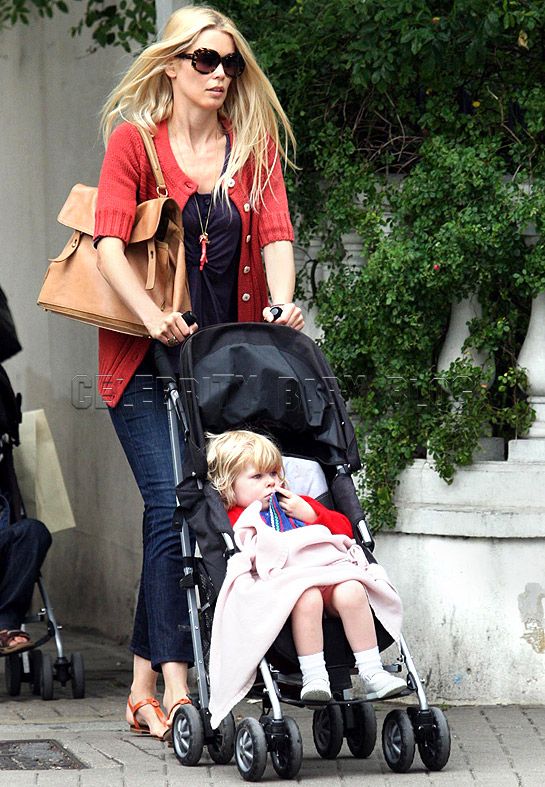
German beauty Claudia Schiffer is pregnant with her third child.
The 39-year-old and her film producer husband Matthew Vaughn have confirmed the new addition to their family, revealing Claudia is five-and-a-half months pregnant.
We are delighted with the news and can’t wait to add to our family," the couple told Grazia magazine.
Claudia and 38-year-old Matthew, who married in 2002, are already parents to two children, son Casper who is six and their five-year-old daughter Clementine.
Microsoft rejected the warning, saying that the risk to users was low and that the browsers increased security setting would prevent any serious risk.
However, German authorities say that even this would not make IE fully safe.
Thomas Baumgaertner, a spokesman for Microsoft in Germany, said that while they were aware of the warning, they did not agree with it, saying that the attacks on Google were by "highly motivated people with a very specific agenda".
"These were not attacks against general users or consumers," said Mr Baumgaertner.
"There is no threat to the general user, consequently we do not support this warning," he added.
Microsoft says the security hole can be shut by setting the browser’s security zone to "high", although this limits functionality and blocks many websites.
However, Graham Cluley of anti-virus firm Sophos, told BBC News that not only did the warning apply to 6, 7 and 8 of the browser, but the instructions on how to exploit the flaw had been posted on the internet.
"This is a vulnerability that was announced in the last couple of days. Microsoft have no patch yet and the implication is that this is the same one that exploited on the attacks on Google earlier this week," he said.
"The way to exploit this flaw has now appeared on the internet, so it is quite possible that everyone is now going to have a go."
Microsoft traditionally release a security update once a month – the next scheduled patch is the 9th of February. However, a spokesman for Microsoft told BBC News that developers for the firm were trying to fix the problem.
"We are working on an update on this issue and this may well be involve an out of cycle security update," he said.
Fix development
However, this is no easy task. Not only have the firm got to fix the loophole, but they have to ensure it does not create another one and – equally importantly – works on all computers. This is a challenge compounded by the fact they have to fix three different versions of its browser.
Microsoft said that while all versions of Internet Explorer were affected, the risk was lower with more recent releases of its browser.
The other problem facing developers is that the possible risk might not be prevented by anti-virus software, even when recently updated.
"We’ve been working to analyse the malware that the Chinese are using. But new versions can always be created," said Mr Cluley.
"We’ve been working with Microsoft to see if the damage can be mitigated and we are hoping that they will release an emergency patch.
"One thing that should be stressed is that every browser has its security issues, so switching may remove this current risk but could expose you to another."
News from: www.bbc.co.uk
A man in Haiti identifies a woman he sees on the street as the missing person whose photo is posted on CNN’s iReport. A husband reels off the names of missing college students and a stranger hundreds of miles away confirms they are safe.
It is a scenario being played out again and again. Somehow, desperate pleas relayed mouth-to-mouth, through the Internet, on television and in text messages become fodder for celebration with the confirmation: They’re alive.
iReporter Wolin Delerme sent in a frantic video about her sister who had left for Haiti on Monday, a day before the 7.0-magnitude quake struck. Minutes after her plea aired on CNN, a man in Haiti contacted her.
"He saw my sister not too far from where he’s standing," Delerme said.
Watch Delerme describe the amazing connection with her missing sister
Choking back tears, she said, "I am very overwhelmed, and full of joy in my heart. There’s just no words that can explain it. I am just so happy." She has since spoken with her sister.
Kristy Springer sought information on her mother and several church members who were in Haiti on a missionary trip. "I am here waiting for you mom. You need to be OK," Springer told iReport.
Her mother sent a text message at 1:30 a.m. Thursday. Everyone was "at least safe for now."
iReporter Darius Hyworon found similar good news. His wife, Mariah Levin, was with a group of Tufts University students in Haiti at the time. In the quake’s aftermath, he scrambled to learn their fate. The U.S. Embassy was able to tell him everyone is OK.
"Thank you for those who helped in the effort," he said. "Please pray for the millions of people who are affected by this tragedy."
iReport: Are you looking for loved ones?
Much of Haiti’s infrastructure crumbled during the quake, knocking out power and other communication networks, further hampering people’s efforts to get word of missing relatives and friends.
Mark Frohardt is heading to Haiti with two "radio suitcases," mobile communication devices with a range of about 30 miles that can tap into radio waves. A veteran of disaster efforts in the 2004 tsunami and the 2008 Pakistan quake, Frohardt hopes to disseminate critical information about humanitarian efforts over the radio in Haiti. As of Friday, 13 radio stations were up and running.
"Part of that is ‘family tracing,’ " he said, "working with organizations and radio stations on getting the word out — who’s alive and getting messages back to loved ones."
iReport: I’m alive — messages from Haiti
There is no confirmed death toll from the earthquake. Bodies litter the streets of the capital, Port-au-Prince, and barely functioning clinics are overwhelmed with injured. Survivors wander the streets.
For loved ones seeking information on the missing, the wait is anguishing. Sometimes the answers that come are not reliable.
Len Gengel and his wife have endured a parent’s worst nightmare. Their daughter Brittany was visiting Haiti with a group of students from Lynn University in Florida.
The parents were initially told their daughter survived. Upon reaching South Florida for what they thought was going to be a reunion, the parents learned the original information was wrong. Brittany was still missing, along with three other students and two professors.
"We are praying that our daughter Brittany be one of the rescued today and be brought home safe," her father told CNN-affiliate WCVB.
The International Committee of the Red Cross has set up a Web site for people trying to find information on the fate of relatives in Haiti. However, inside Haiti, the Red Cross has not been able to collect and publish identities and whereabouts of survivors.
Frohardt, a vice president for Internews Network, hopes to help change that.
"The focus," he says, is "connecting the community so they know where all their loved ones are."
News from: www.cnn.com
Before Friday’s vote Russia was the only one of the Council of Europe’s 47 member states that had not ratified Protocol 14.
The court based in Strasbourg, eastern France, has a huge backlog of cases.
Protocol 14 is part of the European Convention for the Protection of Human Rights. It was ratified by 392 Duma deputies, with 56 against.
Ratification in the upper house, the Federation Council, is expected to be a formality.
Russia faces the largest number of cases pending before the court – 28% of the total.
The Duma had refused to ratify Protocol 14 in 2006, with deputies alleging that it was incompatible with Russian law.
This prompted officials in Strasbourg to warn that the court was on the verge of collapse.
But after a Council of Europe meeting on 14 December, Duma Speaker Boris Gryzlov said the Council had agreed that a Russian judge would participate in any decisions concerning Russia.
Friday’s vote is a major change in policy and appears to be the result of a call from President Dmitry Medvedev, the BBC’s Richard Galpin in Moscow says.

Streamlining court’s work
Protocol 14 would cut down the number of judges on panels charged with deciding issues such as the admissibility of cases.
It also paves the way for new rules to ensure that states implement fundamental changes to national laws or practices, as ordered by the court, European affairs analyst William Horsley says.
Experts say the changes would speed up the handling of cases by up to 25%.
The European Court of Human Rights currently has more than 100,000 cases on its books.
Russia’s reluctance to sign up to the reform until now is because more than a quarter of all the complaints sent to the court concern alleged violations of human rights by the Russian state, particularly in the predominantly Muslim region of the North Caucasus, our correspondent says.
He says that in the past the court has upheld many complaints against Moscow ordering that compensation be paid to families whose loved ones were either killed or abducted by the security forces in areas such as Chechnya.
The families often see the court in Strasbourg as the only place where they can seek justice, he adds.
News from: http://news.bbc.co.uk/1/hi/world/europe/8460934.stm
The offer of 10,000 tonnes of food was made in October, but no response has been given until now.
It will be the first official aid since relations soured two years ago. The UN said last year the North was very short of food following a disastrous harvest.
Meanwhile, a UN official said the North was handing out tougher punishments to citizens who tried to flee the country.
Analysts believe that harsher international sanctions imposed following the North’s missile and nuclear tests last year have been hurting the country.
Aid reliant
The amount of food on offer is relatively insignificant, says the BBC’s John Sudworth in Seoul, but its acceptance may be another sign that Pyongyang is looking to improve relations with the South.
President Lee stopped unconditional aid to the North after he took office in February 2008, linking aid to progress in nuclear disarmament.
Before then, Seoul had annually sent hundreds of thousands of tonnes of food aid to the North.
The country has been reliant on foreign aid to feed its people since a devastating famine killed hundreds of thousands of people in the 1990s.
The UN World Food Programme said last September that one-third of North Korean women and young children were malnourished and predicted a shortfall of almost 1.8 million tonnes of food in 2009.
Talks offer
Pyongyang pulled out of talks on ending its nuclear programme last April following widespread condemnation of a long-range missile launch.
International pressure grew following an underground nuclear test in May – which drew UN sanctions and further missile tests.
But in December, North Korea said it would work with the US to "narrow remaining differences," and earlier this week said it could return to talks on its nuclear disarmament in exchange for a peace treaty with the US and an end to sanctions.
The 1950-53 Korean War ended in a ceasefire, but not a peace treaty.
As the offer of aid was accepted, a special envoy appointed by the UN to examine North Korea’s human rights record said a tougher approach by Pyongyang to people caught fleeing the North meant fewer refugees were making the attempt.
Vitit Muntarbhorn, a Thai law professor, described grave human rights violations, including a denial of basic rights such as access to food.
He spoke in Seoul following interviews with defectors and aid organisations which work in North Korea.
Mr Muntarbhorn, who is preparing to hand over to a successor, has never been allowed by North Korea to visit since taking up the post in 2004.
News from: http://news.bbc.co.uk/1/hi/world/asi…ic/8461022.stm
Police also fired tear gas at hundreds of stone-throwing protesters calling for Abdullah al-Faisal to be freed.
Faisal is in detention in Nairobi after Kenya failed to deport him.
Kenya wants to expel him citing his "terrorist history". He was jailed for four years in the UK for soliciting the murder of Jews and Hindus.
Sources at the Kenyatta Hospital have told the BBC that one person has died, while seven others sustained bullet wounds. Doctors say their lives are not in danger.
Islamist flag?
Muslim youths began the protest match after Friday prayers at the Jamia Mosque in the centre of Kenya’s capital, Nairobi.
They wanted to present a petition to Immigration Minister Otieno Kajwang and Prime Minister Raila Odinga’s office.
But police had banned the march and intervened.
One banner read: "Release al-Faisal, he is innocent", reports the AFP news agency.
Some reports suggest that the protesters were waving flags of Somali Islamist group al-Shabab.
Reuters news agency reports that some people joined the security forces in attacking the protesters.
Faisal was arrested on 31 December 2009, a week after he is believed to have arrived from Tanzania.
Mr Kajwang says The Gambia has agreed to take him in but Kenya was unable to send him there because airlines in Nigeria refused to carry him.
Tanzania has also refused to let him re-enter its territory.
Faisal was born Trevor William Forrest in St James, Jamaica – though he left the island 26 years ago, initially living in the UK.
His parents were Salvation Army officers and he was raised as a Christian.
Map of Africa
But at the age of 16 he went to Saudi Arabia – where he is believed to have spent eight years – and became a Muslim.
He took a degree in Islamic Studies in the Saudi capital of Riyadh, before coming back to the UK.
Faisal spent years travelling the UK preaching racial hatred urging his audience to kill Jews, Hindus and Westerners.
A year after being deported from the UK in 2007, he was preaching in South Africa.
The Kenyan authorities said Faisal had arrived in Kenya on 24 December 2009 after travelling through Nigeria, Angola, Mozambique, Swaziland and Malawi and Tanzania.
News from: http://news.bbc.co.uk/1/hi/world/africa/8461425.stm
There is little sign of aid supplies beyond the airport, and correspondents cite increasing anger among survivors.
Many are spending another day without food and shelter in the ruined capital.
The US defence secretary said the Haiti relief effort was the main US priority in the western hemisphere, as an aircraft carrier arrived off the coast.
On Friday, the UN said a total of about $270m (£165m) in international aid had been pledged so far for the relief effort.
It will launch an emergency appeal for $550m later on Friday, UN spokeswoman Corinne Momal-Vanian said.
News from: http://news.bbc.co.uk/1/hi/world/americas/8460574.stm