Author: Mallary

  • Teaching Kindergarten Math: Shapes

    The following Instructional Resource Set focuses on the recognition and mastery of two dimensional geometric shapes at the Kindergarten level.  In its entirety, this comprehensive plan places emphasis specifically on Virginia Standards of Learning  K.11-K12.  With these resources, in addition to lesson plans and activities, children will learn to recognize the four basic geometric shapes (circle, square, rectangle, and triangle) but are also faced with less traditional shapes such as diamonds, hearts, octagons, and ovals.  Children also learn to compare sizes of geometric shapes and positions relative to one another.  The books, websites, and online activities listed below aid in teaching these concepts to students.    

    Text Annotations: Children’s Literature 

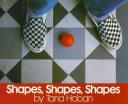
    Shapes, Shapes, Shapes by Tana Hoban
    shapes-shapes-shapes.jpg

    Hoban is well known for her wordless, yet instructionally brilliant children’s books and this book is no exception!  If children have never been introduced to one of these unique books, they will be in for a treat as they sit down to this one.  Children can become an author, putting their own words to each page; or, teachers can be the author, taking children which he/ she reads to on a geometric journey.  Each page includes interesting and beautiful urban landscapes, portraits, and still life, thus relaying to children that shapes are all around them, every day, in every way!  Children will have fun studying each page, looking hard to find shapes within each one.  A plethora of circles, stars, triangles, trapezoids and more are embedded within each photograph.  The great thing is that before the book even begins, Hoban provides readers with a key of shapes to look for as they delve into each page.  A shape lesson can begin to take form before the teacher and the students even turn to the first page!

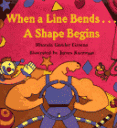
    When a Line Bends, A Shape Begins by Rhonda Gowler Greene
    linebends.gif

    How does a shape even become a shape?  Where many shape books for children never really answer that question, this book serves as a phenomenal introduction to the line being the basis for all shapes.  Perhaps a line is a jump rope laid out straight, or lots of little black ants in a row?  Whatever it is, when it bends, a shape begins!  Through pictures and catchy rhyming verse, the traditional square, circle, triangle, diamond, rectangle, octagon, and oval are presented for children.  Even the less traditional star, heart, and crescent get some attention too!  No matter how popular, every shape has its own verse and double-page spread loaded with visual examples for children to see. This book could be utilized as an enhancement to any geometric shape lesson, or simply a really cute read-aloud with which children will easily fall in love. 

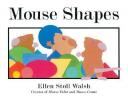
    Mouse Shapes by Ellen Stoll Walsh
    mouse.jpg

    Ellen Stoll Walsh, once again, proves she is a master of children’s concept books with this cute companion to her classic concept books, Mouse Paint and Mouse Count.  Here, three quirky little mice are on the run from a big, scary cat!  In their adventure to hide, they discover shapes and work as a team to create larger things out of the smaller geometric figures.  The clever mice are curious as to what they can create with two circles, or a square, or perhaps, even eight triangles?  How about a wagon, or a house, maybe even a cat?!  Children will love to follow the story line of this enticing book, thus permitting them the opportunity to further learn shapes and colors.  Teachers can easily extend this book into a true lesson by using large, cut-out shapes for children to find as the mice do too!        

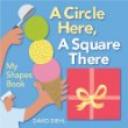
    A Circle Here, A Square There  by David Diehl
    circle-here.jpg

    Yet another wonderful book to use in the classroom to help children identify shapes as common elements in every day life.  Every page of this book displays the single word for each shape in large, bold print with accompanying pictorial examples beneath. A square is represented by a beautifully wrapped gift, the circle by a delicious scoop of ice cream.  These are just a couple of the book’s very relatable examples for children to see.  Among the book’s other shapes are the heart, oval, diamond, crescent, and even an octagon. 

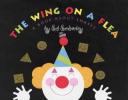
    The Wing on a Flea: A Book about Shapes by Ed Emberley
    flea.jpg

    In this fun rhyming book that serves as a renovated version of the 1961 edition, shapes are presented to children as things they eat, see, or play with in their daily lives.  Children will be completely mesmerized by clean-cut shapes, cheerful colors, varying sizes and the world that is created by combining them all together.  Each shape is taught apart from every other, however, that does not stop the author from utilizing a combination of every shape in all pictures.  All geometric figures are displayed as solid colors on a black background, thus allowing children to see the shapes clearly with no distractions.  “Look and you can see that a wing on a flea is a triangle!”

    Web Annotations: Children’s Website

    The Story of Shapes presents a furry, quirky animal telling the story of shapes and providing descriptions for each as he draws them on a chalkboard for childre nto see!

    The Shape Train asks that children identify the correct shapes in order to get the train to take off from the station.  This can also be done using colors, whereby the child must choose the correct colors to get the train to take off.  For a more advanced activity, the child can choose to mix colors and shapes!

    Purpy’s Shapes allows children to have fun with Purpy while finding some his favorite shapes.  Children are first asked to match objects that are seen in every day life to corresponding geometric shapes.  Secondly, they must find a given number of shapes in a presented picture.   If the child succeeds at this task, he/ she is then presented with a kid-friendly explanation of how circles and squares are “squished” to get ovals and rectangles.  Each time a child gets a page correct, he/ she must locate an increased number of shapes in a new picture!

    On this site, Kids Online Resources Presents Learning is Fun, children are shown shapes first, then asked to drag their mouse over real-life objects that match the given shape.  Once correct,  the child gets the opportunity to create large, sometimes silly, pictures or objects out of that shape.

    With I Spy Shapes children are presented with various scenes, which include several shapes throughout the picture.  Children must locate the shapes and click on them with the mouse as a number ticker keepts track of the shapes found.  The picture is completed and the children are praised when all are successfully located!

    Additional Resources

    Hummingbird Education Resources: Lesson Plans

    From catchy songs to cute in-class crafts, this site offers a comprehensive listing of various ways for teachers to implement and teach the shapes in Kindergarten classrooms.

    With Shapes Recognition Practice several downloadable printables, listed from easiest to hardest to aid in differentiated learning, are presented to teachers to utilize in reinforcing the learning of shapes, sizes, and relative positions.

    Step by Step Childcare Presenting Shapes

    From edible ideas using common shapes to a list of children’s literature, this is a great site for teachers providing multiple methods to enforce the recognition of shapes. 
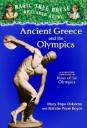
  • Teaching Ancient History with Children’s Literature: Ancient Greece and the Olympics

    ancient-greece-and-the-olympics-a-nonfiction-companion-to-hour-of-the-olympics1.jpg

    Ancient Greece and the Olympics, written by Mary Pope Osborne and Natalie Pope Boyce, illustrated by Sal Murdocca, is part of the infamous Magic Tree House Series that aims to realistically take children on a voyage through ancient history.  This particular journey to Greece begins with an introduction to the country’s history and its people, then moves to the country’s religion, its daily life and its culture.  All of these integral elements serve as the foundation for the major focus of this book.  Children are granted with a thorough understanding of Greece’s background so as to see how the concept of the Olympic games originated within this magical culture of gods and goddesses.  “The ancient Greeks believed that strong bodies and sports pleased [these] gods, so they honored [them] with sporting events and contests, [thus] the Olympics began as a festival to honor Zeus, [ruler of all the gods]” (69).

    Curriculum Connections

    This book does a fabulous job uncovering history for children with vivid images, quirky captions, and easy to understand examples, but it also serves as a superb reference tool.  Children could easily utilize this guide when studying, writing about, or researching Ancient Greece and/ or how the country contributed to the creation of the Olympics Games as we know them today (VA SOL 3.1).  The authors provide frequent summaries recapping what prior pages have revealed, pronunciations of unfamiliar vocabulary, as well as italicized and bold terms with definitions that are crucial to the book’s understanding.  For example, as the authors describe Athens, they tell readers that “Ancient Athens was divided into about 300 city-states, or poleis (POE-lace)” (14).

    Additional Resources

    This kid friendly site offers simple summaries, interactive activities, fun facts, and quizzes for children all about Ancient Greece.

    With this website, children can learn about the Ancient Greek influence on the English language as they “Go for the Gold” in the Olympic Games. 

    This site presents teachers with a mini-unit on theOlympics in Ancient Greece.  Each day is planned out as students meet the Olympians, prepare for various Olympic games, experience the traditional “Opening and Closing Procession” and so much more! 

    Book: Ancient Greece and the Olympics: A Nonfiction Companion to Hour of the Olympics

    Authors: Mary Pope Osborne and Natalie Pope Boyce

    Illustrator: Sal Murdocca

    Publisher: Random House Books for Young Readers

    Publication Date: June 8, 2004

    Pages: 128

    Grade Range: Recommended Ages 6-10

    ISBN: 978-0375823787

  • Teaching Civics with Children’s Literature: A Very Important Day

    a-very-important-day.jpg

    A Very Important Day, written by Maggie Herold and illustrated by Catherine Stock serves as an exceptional introduction to the naturalization process.  Two-hundred nineteen people from thirty-two counties around the world travel to the same courthouse downtown New York to be sworn in as citizens of the United States of America.  It was a very important day.  Family and friends of the individuals waiting to be sworn in fill the building as the judge begins the oath of citizenship.  Upon repeating the oath, the judge declares his congratulations and says to all two-hundred nineteen new citizens, “You are carrying on a tradition that dates back to the earliest days of our country, for almost all Americans have come from somewhere else; may citizenship enrich your lives as your lives enrich this country, welcome, we are glad to have you.”  They all recited the Pledge of Allegiance and some recieved symbols of this great land, small American flags.  It was a very important day.  Now, all can vote, serve on juries, compete for government jobs, and travel freely outside of the United States.

     Curriculum Connections

    As a tool in the classroom, this book would work well as students can easily relate to the vivid imagery of other children from other countries playing in the snow, eating pancakes with mom and dad, and racing friends outside.  In this, American children can see that other children, no matter where they come from, are similiar to themselves.  There is only one temporary difference–their home lands.  This can all change through the process of naturalization, which students will learn about throughout the course of this book.  The child from Mexico, the child from Ghana, and the child from Russia, carrying diverse customs from around the globe, are naturalized as they come together to become citizens of this great nation (VA SOL 3.12).   

    Additional Resources

    A Very Important Day is designed to work hand-in-hand with the actual book, presenting a game for children to play matching citizenship terms to the correct definitions. 

    This site, comprised of a unit’s worth of lesson plans and activities, is great for teachers to utilize and refer to when teaching citizenship. 

    C is for Citizenship, as part of CongressforKids.com, is an informative tool for children to refer to when learning about civics.  It is subdivided into several kid friendly categories such as becoming a US citizen, how to be a good citizen, etc…   

    Book: A Very Important Day
    Author: Maggie Herold
    Illustrator: Catherine Stock
    Publisher: Harper Collins
    Publication Date: August 14, 1995
    Pages: 40
    Grade Range: First-Third
    ISBN:0-688-130658

  • Teaching Earth Science with Children’s Literature: On Earth

    on-earth.jpg

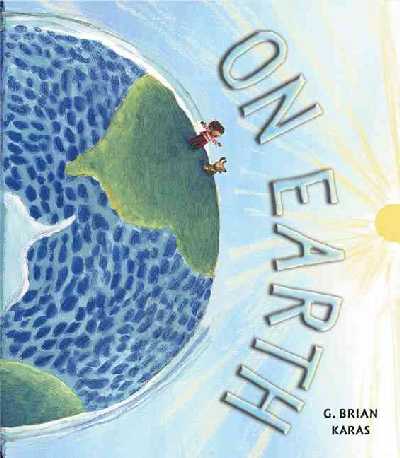
    G. Brian Karas’s, On Earth, is dedicated to explaining the Earth’s daily and yearly cycles, as well as the Earth’s orbit, rotation, and tilt that contribute to these cycles.  Karas also sheds light on how and why we have the given seasons and what makes the day time light, and night time dark. Though the concepts are complex in nature, the book aims to describe them in a simple, poetic way in order to help children form a general understanding.  This gentle, child-friendly method is exemplified often throughout the book.  Take for example, Karas’ explanation of night where he states that “at night we turn away from the sun and see a universe of stars and planets while we dream of what we can do tomorrow.”  The information is not presented in a typical fashion, whereby all parts are connected.  Instead, to assist in child comprehension, Karas utilizes a step-by-step approach so as to focus on elements loosely and individually.  The author’s main goal appears clear: Have young readers think big concepts that are old in time.

    Curriculum Connections

    On Earth is an exceptional tool for use in early elementary classrooms.  The text is simple and pleasing, while the illustrations are vibrant, detailed, and helpful.  As previously stated, children are forced to begin thinking about complex concepts and procedures.  Chances are, these topics will be confusing and overwhelming to begin, but in the way Karas presents the information, the book is a great place to start.  The distinctively colorful, sometimes sideways pictures are intriguing and draw readers in, while the diagrams and text work to explain the brilliant images with simple words and phrases.  The book does a great job introducing elements that contribute to the understanding of Virginia Standards of Learning ES.4 and ES.13, both regarding Earth and sun relationships causing seasons, day, night, etc…Young children can also relate to the occurrences in the book.  For example readers see other children going to school as the seasons change…just as they do, celebrate birthdays as years progress…just as they do, and stand by small trees in their growth stages…just as they do.  The more a child can relate, the more easily he/she can understand the difficult concepts.

    Additional Resources

    This link provides teachers with a helpful, fun lesson explaining how Earth’s rotations contribute to day and night.  Children will love this experiment and it can work with all age groups!

    This interactive extended dictionary for kids helps children to actually see the solar system and click on various elements for an in-depth explanation.  It provides facts, pictures, and definitions.  In addition to highlighting Earth and the sun, it can also be helpful for lessons on outer space as it extends well beyond the two basic elements.

    This site provides a fun activity for children to utilize online to better understand Earth’s rotation, its position, time between rotations, etc…It is interactive and presents the correct answer automatically after children give the questions a try first!

    Book: On Earth
    Author: G. Brian Karas
    Illustrator: G. Brian Karas
    Publisher: Puffin Books, A Division of The Penguin Group
    Publication Date: 2008
    Pages: 32 pages
    Grade Range: Recommended K-3
    ISBN: 978-0-399-24025-6 (hc)

  • Teaching Life Science with Children’s Literature: Tell Me, Tree

    life-science-tell-me-tree.jpg

    Tell Me, Tree, by Gail Gibbons, presents a close-up look for children at many important characteristics, purposes, and behavioral traits of trees.  Gibbons exposes readers to an abundance of different types of individual trees, as well as the parts, functions, and growth methods of a trees in general.  She even touches on photosynthesis and how trees are helpful to humans, animals, and the environment.  Each page begins with, “tell me, tree,” and is followed by an insightful explanation about a various aspect of trees.  For example, page seven reads, “tell me more, tree” and is followed with an illustration of the inside of a tree trunk, whereby stating that underneath the bark is a thin layer called phloem, that carries food from leaves to the branches, roots, and trunk.  Gibbons completes this vividly colorful, instructional book with directions for children to create their very own tree identification book.

    Curriculum Connections
    This book is perfect as an instructional tool in the classroom due to the over-sized, dramatic images that are labeled in detailed and easy to understand.  It can also be used as a reference source, or even a dictionary, for children when completing experiments, projects, or in-class work that focuses on plant life.  The book helps readers to see the importance of trees in everyday life as children in the book are seen observing, using, and appreciating trees and plants.  In thoroughly highlighting plant life, plant characteristics, and photosynthesis, Tell Me, Tree works in direct correlation with Virginia Life Science Standards of Learning LS.4 (a), LS.5 (b) and LS.6 (a-c).

    Additional Resources

    This Photosynthesis Lesson  is a great online tutorial for kids, giving them the opportunity to read text and fill in the blanks to test knowledge.

    Children can use this interactive tree key to better understand how to identify trees.

    Children can go to this page to find exciting plant experiments they can easily conduct to discover interesting facts about plants.

    Book: Tell Me, Tree
    Author: Gail Gibbons
    Illustrator: Gail Gibbons
    Publisher: Little, Brown and Company
    Publication Date: 2002
    Pages: 30 pages
    Grade Range: Recommended K-3
    ISBN: 0-316-30903-6

  • Teaching Physical Science with Children’s Literature: Switch On, Switch Off

    switch-on-switch-off.jpg

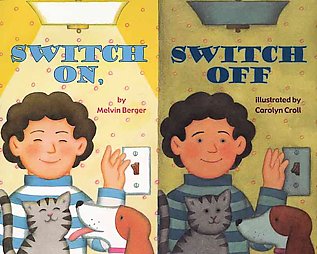
    Light switches are everywhere!  They are in every house: in the kitchen, the bedroom, the office, the bathroom…but are they really magic?  When it’s time for bed and mom yells “lights out,” is it truly magic within that switch that allows the room to go dark?  Switch On, Switch Off, written by Melvin Berger, illustrated by Carolyn Croll is an excellent resource for young children to begin exploring the magic within the light switch, or what is better known as electricity!  The story begins just this way, with a child heading to bed, curious as to how his light switch operates.  This commences the lesson where Berger youthfully explains circuits, generators, light bulbs, and plugs, thus demonstrating how electricity is produced and even used.  With the help of Croll’s easy to understand illustrations, children can not only read about electricity, but they can see pictures that enforce how the processes work.  The author even offers a live experiment that children can do to create their own electricity using just a magnet, compass, and piece of wire.

    Due to its text-book like specificity and instructional images, Switch On, Switch Off is perfect for use in young classrooms.  The text is extremely kid-friendly, leaving out any elaborate, overwhelming explanations.  For example, in explaining how circuits are split into many other circuits as they enter a house, Berger compares them to small roads coming off of a big highway.  In addition, the pictures are all labeled, allowing children to better understand the core elements necessary for the creation of electricity.  Though the book is aimed for grades K-3, Virginia Standards of Learning do not address electricity until grade four.  Even so, this book address Virginia  Standards of Learning 4.3 (a), (b), (d), and (e) as starting points for children to begin discovering the concept so they can be more familiar in expected later grades.

    Additional Resources:

    Electricity Circuits and Conductors  is a great interactive tool for children to experiment with electricity conductors.

    Electricity and Magnetism is a help site for children to utilize if they have questions or need clarification about the concepts.  Within specific sections under various topics are games, activities, histories, and helpful hints.

    Electricity Teaching Resources is a site to be used by teachers wishing to explore electricity with students.  The site contains activities, games, teaching strategies, physical science links, quizzes, tests, and more!

    Book: Switch On, Switch Off

    Author: Melvin Berger

    Illustrator: Carolyn Croll

    Publisher: Harper & Row, Publishers, Inc.

    Publication Date: 1989

    Pages: 32

    Grade Range: K-3

    ISBN: 0-690-04786-X