Author: Melanie McDonald

  • International Human Rights Society Presentation

    Daniel Philpott Daniel Philpott, associate professor of political science and peace studies at Notre Dame’s Kroc Institute, will deliver a talk titled “After Atrocity: Reconciliation as a Vision for Dealing With Past Injustices” on Monday, March 1. The presentation takes place at 12:30 p.m. in room 1140 of Eck Hall of Law, and is sponsored by Notre Dame Law School’s International Human Rights Society. The event is free and open to the public.

    Philpott will discuss reconciliation as an alternative to the globally dominant “liberal peace” for countries torn apart by civil wars, dictatorship, and genocide. He is in the process of completing a book titled Just and Unjust Peace: An Ethic of Political Reconciliation and will discuss his scholarship, his experiences as an activist in Kashmir and Burundi, and various case studies of efforts to bring peace and justice to nations recovering from conflict.

    Philpott pursues interests in international relations, political philosophy, and peace studies as well as religion and global politics. He is currently completing God’s Century, which documents a resurgence of religion in global politics over the past generation, and seeks to explain why religious actors take on diverse political pursuits including democratization, peace, reconciliation, civil war, and terrorism.

    For more on Philpott, visit http://kroc.nd.edu/people/directory/faculty/daniel-philpott.

  • Call for Nominations

    The Notre Dame Law Association (NDLA) Board of Directors requests nominations for alumni representatives to fill upcoming vacancies in the following regions:

    Region 4: Minnesota, North Dakota, South Dakota, and Wisconsin

    Region 5: Iowa, Kansas, Missouri, and Nebraska

    Region 6: Illinois (excepting Cook County) and Northwest Indiana

    Regions 15/17: Florida, Georgia, North Carolina, South Carolina, and Puerto Rico

    At Large: An alumnus who graduated in the year 2000 or later

    Nominations may be sent to Melanie McDonald at [email protected].

    Members of the NDLA Board of Directors meet each fall and spring, and work to further the mission of Notre Dame Law School.

    For more information about the NDLA and its Board of Directors, visit
    http://law.nd.edu/alumni/notre-dame-law-association/ or call Melanie McDonald at 574-631-6891.

  • Featured Faculty: Paolo Carozza

    International Law

    faculty_carozza According to Notre Dame Associate Professor of Law Paolo Carozza, international law is inextricably linked to, well, just about everything. “You could be making RVs in Indiana, but you’re still linked to the economy in China. You might be practicing family law in Arizona, but much of that work is about the migration of persons across jurisdictions when a family originates from Mexico,” says Carozza. “Understanding international law is, as a practical matter, a necessity for being a good, competent, able, creative lawyer regardless of what field of law you’re practicing in, period.”

    Still, Carozza emphasizes that the reasons for learning international law transcend practicality. “Law, at some level, is about dedicating your life to solidarity with other human beings; about trying to organize life in a way that helps us achieve things that we want for our families and communities and for our world. Those things don’t stop at borders.”

    Carozza believes that Notre Dame is home to one of the best public international law and international human rights programs in the country. “Not only are our scholars top in their field, we also have the capacity to become more globally present through other units of the greater University,” such as the Kellogg Institute for International Studies, the Kroc Institute for International Peace Studies, and the Nanovic Institute for European Studies. Carozza is a fellow of all three.

    As a former member and past president of the Inter-American Commission on Human Rights (IACHR) – the international body principally responsible for the promotion and protection of human rights in the 35 nations of the Western hemisphere – Carozza traveled throughout the Americas monitoring human rights conditions, and at IACHR headquarters in Washington, DC, he adjudicated individuals’ claims of rights violations by their governments. Carozza’s four-year term with the Commission ended in December 2009.

    “It’s pretty impressive to note that, among those who work in the major human rights organizations around the world, Notre Dame graduates are represented extremely well.”

    A member of the Notre Dame faculty since 1996, Carozza is actively involved in the Law School’s Center for Civil and Human Rights (CCHR), and serves as director of the doctoral program in international human rights law. He earned both his bachelor’s and law degrees from Harvard, and pursued graduate studies at Cambridge University and at Harvard Law School as a Ford Foundation Fellow in Public International Law. After law school, he served as a judicial clerk for the Supreme Court of the Federated States of Micronesia and worked as an associate at the Washington, D.C., law firm Arnold & Porter.

    For more information about Professor Carozza, visit his faculty profile page.

    More features

  • Prof. Garnett joins distinguished panel at U. of Chicago

    Rick Garnett fall08 Notre Dame Professor of Law Richard Garnett joins a distinguished panel of scholars next week (Feb. 25-26) for a conference titled “Public and Private: Feminism, Marriage, and Family in Political Thought and Contemporary Life” at the University of Chicago. The scholars will discuss themes of the book Public Man, Private Woman: Women in Social and Political Thought, authored by University of Chicago Professor Jean Bethke Elshtain.

    Through a series of panels, the speakers will take up multiple understandings of public and private, examining how the boundaries between them have shifted over time. They will address the ways in which Elshtain’s thought has contributed to the wider scholarly and civic conversation. As distinguished scholars in their own right, contributors will present their reflections on the conference theme based on their own areas of expertise. Professor Elshtain responds to each panel and offers her own comments at the close of the conference.

    In addition to Garnett, participants include scholars from The Brookings Institution, Harvard Law School, the University of Chicago, Northwestern University, the University of Michigan, and the Institute for American Values.

  • Dean Newton Welcomes Bishop Rhoades

    dean newton bishop Notre Dame Law School Dean Nell Newton and Notre Dame Professor of Law and Associate Dean Peg Brinig extended a warm welcome to Bishop Kevin C. Rhoades of the Fort Wayne-South Bend Diocese at a reception in the University’s Main Building. The reception followed a Mass of Thanksgiving on February 9 in the Basilica of the Sacred Heart, in honor of Rhoades’ recent installation as leader of the local diocese.

    Bishop Rhoades presided and preached at the Mass, which was concelebrated by Rev. John I. Jenkins, C.S.C., Notre Dame’s president, and other priests from the Notre Dame community. The Mass was followed by a public reception in the rotunda of the University’s Main Building.

    Bishop Rhoades was installed January 13, 2010, as successor to Bishop John M. D’Arcy, who had led Notre Dame’s home diocese since 1985.

  • A Tale of Two Campuses: NDLS in London and South Bend

    London building 2010 “Many students are unaware of the London Programme until it is advertised to them as 1Ls,” says Katrina Stagner ’02, who spent her 2L year at Notre Dame Law School’s London campus. “The London Programme was one of the unique selling points of NDLS for me, with no other top-tier law school providing such an opportunity.”

    For more than 40 years, the Notre Dame Law School has offered second-year law students in good standing an opportunity to study in London. The Notre Dame London Law Center, centrally located in Trafalgar Square, has two choices for students looking to learn abroad. The Concannon Programme in International Law is a full year program, and the Law in London Summer Programme is a five week experience from late May to early August prior to the 2L school year.

    The curriculum includes standard second year classes, like Business Associations and Evidence, but the ultimate concentration is international law. In most classes, a comparative law element from one or more foreign systems is added to the base of the American law. The rest of the curriculum consists of international and comparative law electives such as Public International Law, European Community Law, and International Regulation of Trade and Business.

    “Students who come to London do so because they appreciate the increasingly global aspects of practicing law in the United States,” explains Programme Director Geoffrey Bennett. “No longer is international law of interest only to multinational corporations that typically have a need for international expertise. Any practitioner now may need to be conscious of how easily a problem in domestic relations, intellectual property, or even crime can involve an international dimension.”

    More features

  • Prof. Mayer on healthcare reform and nonprofits

    faculty_mayer Notre Dame Associate Professor of Law Lloyd Hitoshi Mayer is quoted extensively in the latest issue of “The Non-Profit Times,” a business publication for non-profit managers. Mayer addresses the potential impact of a proposal in the Senate’s healthcare reform bill to develop a federal program known as the Consumer Operated and Oriented (CO-OP) program.

    Here is an excerpt from the publication:

    “There’s going to be an influx of people establishing these nonprofits because there is money there,” said Mayer. “And the big unknowns are how are they going to work, how well are they going to be monitored and how are we going to make sure these are truly nonprofit entities and that there are not owners.”

    Mayer explained that the nonprofit CO-OP might be easier to swallow than the well-debated and controversial public option. “I think it makes a big difference because what people don’t like and what they are concerned about, and rationally so, is government bureaucrats making the decisions,” said Mayer. “They are much more comfortable with a private entity, that’s subjected to some government restrictions and requirements, but a private entity.”

    For the complete article, visit http://www.nptimes.com/10Jan/npt-100115-1.html.

    Professor Mayer’s areas of research interest and expertise include advocacy by nonprofit organizations, the growing intersection of election law and tax law with respect to lobbying and other political activity, and the role of nonprofits both domestically and internationally.

    For more on Professor Mayer, visit http://law.nd.edu/people/faculty-and-administration/teaching-and-research-faculty/lloyd-hitoshi-mayer.

  • Taking Law to the Stage

    Kaveny play story The phrase “all the world’s a stage” became particularly relevant to a group of law and theology students taking Notre Dame Professor of Law and Professor of Theology M. Cathleen Kaveny’s seminar titled Faith, Morality, and the Law. The class met with performers from Tim Robbins’ The Actors’ Gang, a Los Angeles theatre troupe on campus to perform “The Trial of the Catonsville Nine.”

    “The play’s subject matter really illustrates the intersection of faith, morality, and the law,” says Kaveny, who will deliver a talk prior to two of the performances (February 12 at 6:15 p.m. and February 13 at 6:45 p.m.). The show tells the story of nine men and women who, in May 1968, entered the Selective Service Offices in Catonsville, Maryland, removed several hundred draft records, and burned them with homemade napalm in protest against the war in Vietnam. The nine were arrested and, in a highly publicized trial, sentenced to jail.

    During the discussion, the actors reflected upon the challenges involved in portraying characters based on actual persons, some of whom are still alive, as well as their ideas on how to communicate the political tensions of an era that many in the audience do not remember. In turn, the law students and theology students commented on the difficulties that might be involved in being a Christian, a citizen, or a lawyer in our own time.

    At the Law School, Kaveny teaches a number of seminars which explore the relationship between theology, philosophy, and law. One seminar, “Mercy and Justice,” explores those concepts using texts drawn from case law, analytic philosophy, Byzantine history, and both medieval and contemporary theology. Another seminar, “Ethics and Law at the End of Life,” looks at the issues of assisted suicide and euthanasia from an interdisciplinary perspective.

    Professor Kaveny has published more than eighty articles and essays, in journals and books specializing in law, theology ethics, and medical ethics. A regular columnist for Commonweal, Kaveny also is on the roster of Newsweek/Washington Post’s “On Faith” web commentators, as well as a contributor to the New York Times’ “Room for Debate” online discussion. She is currently finishing a book entitled Prophetic Discourse in the Public Square.

    More features

  • Alumnus Appointed to Superior Court

    alumnus Christopher Coury Arizona Governor Jan Brewer recently appointed Notre Dame Law School alumnus Christopher Coury to the Maricopa County (Ariz.) Superior Court. Coury—who currently serves on the Notre Dame Law Association Board of Directors—earned a B.A. from Notre Dame in 1991 and his J.D. with honors in 1994.

    Coury is a partner with the law firm Ryley Carlock & Applewhite, where he has worked
    since 1999. Prior to that, he was a deputy county attorney with the Maricopa County Attorney’s Office from 1996 to 1998. As a prosecutor, Coury tried numerous cases as lead counsel. His final assignment was to the Gang/Repeat Offender Bureau in the Major Felony Division. He was an associate with O’Connor Cavanagh between 1995 and 1996, and worked as a judicial law clerk at the Arizona Court of Appeals for the Honorable Edward C. Voss from 1994 to 1995.

    Coury’s current law practice focuses on financial services litigation, commercial and securities litigation, and business crimes litigation. “Chris Coury’s impressive background in civil and criminal law make him well qualified to serve as Maricopa County Superior Court’s newest judge,” says Governor Brewer. “Chris is thoughtful, deliberative and caring, and I am certain he will work diligently to assure that justice is administered fairly to all who appear before him.”

    At Notre Dame Law School, Coury was a Thomas J. White Scholar, President of the Student Bar Association, and Student Articles Editor of the Notre Dame Journal of Law, Ethics and Public Policy.

  • LL.M. Alum Lauded for Work in Haiti

    Jean Marc Brissau A January 28, 2010 post on The Huffington Post online praises Notre Dame’s Haiti Program and its efforts to combat the disease lymphatic filariasis. One of the Program’s leaders is Jean-Marc Brissau, who earned an LL.M. degree from the Notre Dame Law School’s Center for Civil and Human Rights.

    Excerpt:
    “Our excellent hosts were the program’s administrators, Wesley Pierre and Jean-Marc Brissau, who have worked at [Notre Dame’s] Programe Filiarose for 15 years, and from what I saw, they were running the show, completely on top of the situation. Such great guys. Wes studied Computer Science in Port-au-Prince and one of his many, many tasks is to handle the logistical coordination of medical and computer equipment. Jean-Marc took a short leave of Leogane for the US to earn a master’s degree in International Human Rights from Notre Dame [Law School], all the while still helping to coordinate the program.”

    Read the entire post at http://www.huffingtonpost.com/nick-demas/wes-jean-marc-and-the-fig_b_440658.html.

    Read more about Jean-Marc and other Notre Dame Law School LL.M. alumni here:
    http://law.nd.edu/center-for-civil-and-human-rights/classes/class-of-2008

  • Robert Greene ’69 has close ties to Haiti

    Bob Greene The January 12 earthquake in Haiti rocked the world of 1969 NDLS alumnus Robert Greene. He has participated in medical missions to Haiti since 2001, and visits the impoverished nation about twice each year. He was en route to Haiti when the earthquake struck, and was forced to return home.

    “Besides monitoring the news channels, I have been getting sporadic email reports through the Sisters of Mercy,” says Greene, who also worked to raise funds for Centre Notre Dame de Lourdes, an orphanage for girls and a neighborhood clinic in Port-au-Prince. “The orphanage is destroyed and three kids are confirmed dead with others missing. Madame Paula, the director, is living with 50-plus girls outside. Catholic Relief Services finally got to the orphanage on Thursday, nine days after the quake, with water, food, and some supplies.”

    Greene learned about the orphanage during one of his medical missions, and has been involved in fundraising for the Centre ever since. He raised tens-of-thousands of dollars to complete an OB/GYN clinic, purchase equipment for the clinic’s laboratory, and install a water purification system for the Centre.

    Bob Greene 2 Now, it’s all gone.

    Greene hopes to rebuild the orphanage, and has already begun plans for a trip to Haiti when the rescue effort is over and USAID says it’s alright to go. “If these children don’t have a safe place to live, they’ll be out on the street or will go to the Dominican Republic to work as slaves in the sugar cane fields.”

    Greene is a 1969 graduate of Notre Dame Law School, and practices law as a partner in the firm of Phillips Lytle LLP, Buffalo, New York.

  • Prof. Cassel speaks at Conference on EU-US Relations

    faculty_cassel The European Union (EU) invited Notre Dame Professor of Law Douglass Cassel to serve as a panelist at their conference in Brussels, Belgium, January 25-26. The United States Ambassador to the EU will open the conference, which includes high level EU participation.

    The conference is titled “Mapping the Future of the EU-US Strategic Partnership: Policy and Research Perspectives.” Cassel’s contribution focuses on how the EU and US can best work together to promote human rights worldwide, in an era when global economic and diplomatic power is shifting rapidly to China and other nations less committed to human rights.

    Cassel, who serves as the director of the Law School’s Center for Civil and Human Rights, is a scholar and practitioner of international human rights, international criminal and international humanitarian law. His scholarly articles in English and Spanish are published in the United States, Latin America and Europe, and he lectures at universities and conferences worldwide. On behalf of retired United States diplomats, and leading experts on international law, he has filed several amicus curiae briefs in the United States Supreme Court, involving the rights of prisoners at Guantanamo, and accountability for human rights violations under the Alien Tort Claims Act. He represents victims of human rights violations in Colombia, Guatemala, Peru and Venezuela, in cases before the Inter-American Commission and Inter-American Court of Human Rights.

    Cassel has served as Legal Advisor to the United Nations Commission on the Truth for El Salvador; Executive Council member of the American Society of International Law; co-chair of the International Committee of the Board of Directors of the Lawyers’ Committee for Civil Rights Under Law; Chair of the Independent International Panel on Alleged Collusion in Sectarian Killings in Northern Ireland; and consultant to the Department of State, Department of Justice, Ford Foundation, the President of the American Bar Association, and non-governmental human rights organizations. In 2000 and again in 2003, he was nominated by the US Government, and elected by the Organization of American States, to serve on the Board of the Justice Studies Center of the Americas, of which he was elected President. Since 2000 he has been President of the Due Process of Law Foundation, based in Washington, D.C., which promotes judicial reform throughout the hemisphere.

    Link to Cassel’s human rights commentaries on Chicago Public Radio, 91.5 FM WBEZ, here:
    http://law.nd.edu/center-for-civil-and-human-rights/commentaries

  • Law School professors Garnett and Mayer on Supreme Court’s campaign contribution decision

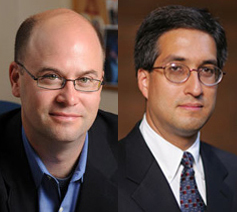
    Richard W. Garnett and Lloyd Hitoshi Mayer

    Today’s narrow Supreme Court decision that corporations may spend freely to support or oppose candidates for president and Congress drew reactions from two Notre Dame Law School faculty members.

    According to Notre Dame Law School professor Richard W. Garnett, the court’s 5-4 decision in Citizens United v. Federal Election Commission, is “welcome and correct.”

    “The notion that regulating ‘negative ads’ or ‘reducing money in politics’ could return us to an imagined ‘Golden Age’ of clean and civil politics is, at first, attractive,” Garnett said. “However, politics in a free society is necessarily messy, and often unedifying. The alternative, management by insiders and incumbents of the tone and terms of public debate, is worse.”

    According to Garnett, “Justice Kennedy got it right: Our First Amendment is ‘premised on mistrust of government power,’ and is well understood to prohibit attempts by regulators, even high-minded ones, to disfavor certain subjects, viewpoints or speakers.

    “Oprah Winfrey has a lot of money and influence—more than the Chamber of Commerce, perhaps—but her power to influence others certainly would not justify limiting her speech. It is true that insurance companies can shape views through their speech and spending, but so does The New York Times.”

    Garnett said that today’s ruling will not end reasonable regulations that are carefully crafted to prevent election-related corruption, and he noted that it did not invalidate existing disclosure and disclaimer requirements. “It is one thing,” he said, “to regulate expression—to
    reduce political speech—out of fear that it will ‘distort’ the public conversation. It is another thing to say that, as a general matter, people are entitled to know who is paying for the election-related messages they hear.”

    Lloyd Hitoshi Mayer, associate professor of law in the Notre Dame Law School predicts consequences from the decision.

    “This decision will further the shift in electoral power away from the political parties, which still face sharp limits on their ability to raise funds for elections, to 527s and other independent groups that now can receive unlimited amounts of corporate and union money,” Mayer said.

    “That said,” Mayer added, “the decision does not mean we will suddenly see lots of election ads paid for directly by big corporations such as GE or Microsoft. Given that the disclosure provisions survived, such corporations will not want to risk alienating a large portion of their customers and shareholders. They will rather pay for such ads indirectly through increased contributions to nonprofit organizations such as the U.S. Chamber of Commerce and trade associations.

    “Expect to see many more ads from such groups, and from labor unions and other nonprofit advocacy groups, in this year’s elections,” Mayer said.

    Contact: Professor Garnett, 574-631-6981, [email protected]; Professor Mayer, 574-598-0740, [email protected]

    Originally published by at newsinfo.nd.edu on January 22, 2010.

  • NDLS supports Haitian relief

    haiti story Within two days of announcing the establishment of donation centers within the Law School for Haitian relief, the Black Law Students Association (BLSA) raised nearly $1,000 for the cause. Fundraising continues, and BLSA is on track to collect nearly $2,000 to give to the American Red Cross to assist victims of the January 12 earthquake that left the nation devastated.

    “Our organization felt a direct call to action not only as a result of the depth of the tragedy, but because 95 percent of Haiti is black,” says Danisha Anderson, president of BLSA at Notre Dame Law School. “Many of our members have familial ties to the Caribbean as well, and as a result, their family circles include residents of Haiti.” The National Black Law Students Association (NBLSA) has a historic connection and commitment to Haiti as well, participating each year in visits to the country to raise awareness about problems including child labor, gang violence, and barriers to education.

    In addition to fundraising, Law School students organized a prayer service for victims of the tragedy. “The response from my peers has been immediate, generous, and overall inspiring,” says Anderson.

  • Montana SC Justice and U.S. Attorney are NDLS alums

    From the Great Falls Tribune (Montana):

    When Michael Cotter first met his future bride at the University of Notre Dame School of Law in 1975, neither would have imagined that they were headed to the pinnacle of Montana’s legal world.

    Today the newly-minted Montana U.S. Attorney and his wife, Montana Supreme Court Justice Patricia Cotter, say they’re lucky to have built a loving family and successful legal careers together.

    For the entire article, visit: http://www.greatfallstribune.com/article/20100118/NEWS01/1180301

  • Patti Bobb ’72 Honored by Women’s Bar Association

    Patricia Bobb alumni feature Patricia Bobb ’72 is no stranger to award receptions. She has been honored many times over the course of her career, including her selection as the leading woman lawyer in Illinois three years in a row by the Leading Lawyers Network, and her selection by the Chicago Sun Times as one of the 100 most influential women in Chicago.

    Bobb’s latest award is from the Women’s Bar Association of Illinois, which will present her with the Esther Rothstein Award for having “demonstrated a visionary approach in [her] professional endeavors by making a contribution to the well-being and empowerment of women, while freely giving back to other women and members of the legal profession.”

    “She was a real trailblazer,” says Illinois Appellate Court Justice Sheila O’Brien ’80 of Bobb. “She was a woman trial lawyer in Chicago when no other women were. She is respected and liked by everyone, which is hard to manage.”

    Bobb is principal of the law firm Patricia C. Bobb & Associates. A civil trial lawyer, Bobb specializes in plaintiffs’ personal injury law with an emphasis in medical malpractice litigation.

    Prior to working in the private sector, Bobb served as an assistant state’s attorney for Cook County in the felony trial division after graduating from Notre Dame Law School.

    Bobb is involved in the training of other lawyers as a member of the Board of the National Institute of Trial Advocacy having previously served as its chairman. She serves as an appointed member of the Chicago Police Board and a member of the Chicago Network Board of Directors. She is also a member of the Illinois Trial Lawyers Association and currently serves on its board of managers.

    Bobb has taught, spoken, and written for various bar associations and advocacy programs for more than 30 years, including the American Bar Association, the American Trial Lawyers Association, the Chicago Bar Association, and many other state and national organizations.

    More features

  • Prof. Gurulé selected as Fulbright scholar

    Jimmy Gurule Notre Dame Professor of Law Jimmy Gurulé will spend the spring 2011 semester in Chile as a Fulbright scholar. Gurulé will conduct field research on Chile’s legal efforts to hold persons accountable for international crimes and human rights abuses committed during the military rule of former President Augusto Pinochet. He will work from Diego Portales Law School in Santiago.

    “Several years ago, I visited Chile and was impressed. It’s one of the most economically developed countries in South America, but it has a checkered past,” says Gurulé of the nation"s years under the Pinochet regime.

    Gurulé will focus his research on how the Chilean Ministry of Justice and the courts have been able to avoid the application of Amnesty Law No. 2.191, which was enacted by Pinochet to grant amnesty to all those responsible for criminal acts committed from September 11, 1973 to March 10, 1978— time of brutal violence by Pinochet’s military. “It was intended to be a stay out of jail free card for Pinochet and members of his administration,” says Gurulé. “But the courts and Ministry of Justice have found creative ways to hold people accountable for their crimes during that period of time.”

    Gurulé plans to write a book about what he learns from his Fulbright research, focusing on Chile’s approach to avoiding impunity and ensuring accountability for serious international crimes.

    Gurulé is an internationally known expert in the field of international criminal law, terrorism, terrorist financing, and anti-money laundering. He is the author of “Unfunding Terror: The Legal Response to the Financing of Global Terrorism.” He is currently working on “Principles of Counter-Terrorism Law,” scheduled to be published by Thomson West. As Under Secretary for Enforcement in the U.S. Department of the Treasury (2001-2003), Gurulé had oversight responsibilities for the U.S. Secret Service, U.S. Customs Service, Bureau of Alcohol, Tobacco, and Firearms (BATF), the Financial Crimes Enforcement Network (FinCEN), Office of Foreign Assets Control (OFAC), and the Federal Law Enforcement Training Center (FLETC). Gurulé also served as Assistant Attorney General in the U.S. Department of Justice (1990-1992), and as Assistant U.S. Attorney, where he served as Deputy Chief of the Major Narcotics Section of the Los Angeles U.S. Attorney’s Office (1985-1989).

    For more on Gurulé, visit: http://law.nd.edu/people/faculty-and-administration/teaching-and-research-faculty/jimmy-gurule.

    The Fulbright Program is the flagship international educational exchange program sponsored by the U.S. government and is designed to increase mutual understanding between the people of the United States and the people of other countries. Participants contribute to finding solutions to shared international concerns.

    More features

  • Intensive Trial Advocacy

    trial ad student Some of the best litigators and judges in North America gathered at Eck Hall of Law to teach Notre Dame Law Students the art of advocacy during the week-long Intensive Trial Advocacy course, January 3-10, 2010.

    Second- and third-year law students are eligible to enroll in the course, which begins a week before the start of each semester. “We cover all parts of the trial and go from a 7:30 am faculty meeting and an 8:30 am start with the students until 6:30 p.m.,” says Professor James Seckinger, who developed the popular course in 2003 and has led it ever since. “After a week of simulated courtroom exercises, our judges couldn’t believe they were the same students. Many commented that they were better than some of the lawyers they see practicing in their courtrooms.”

    Thomas Heiden of Latham & Watkins LLP, one of the participating “faculty” members, had this to say about the program:

    “What a service to the profession and the art of trial advocacy…Professor Seckinger assembles a large group of the very top trial lawyers and trial judges from across the U.S. and Canada. The presentations and demonstrations are extremely well choreographed…Each student learns and develops skills at a remarkable pace. Congratulations. I believe [Notre Dame Law School is] providing these young men and women a professional academic experience simply not offered anywhere else.”

    seckinger news While teaching with the National Institute for Trial Advocacy [NITA], Seckinger developed his own case-study approach to teaching trial advocacy. He has developed this innovative method for learning advocacy skills through teaching practicing lawyers and law students. Seckinger comments that teaching practicing lawyers working in the profession and law students in the academy has a synergistic effect on both.

    Intensive Trial Ad participants continue to meet once a week throughout the duration of the spring semester. During that time, each student acts as a trial lawyer in two trials—one jury and one judge trial—and also serves as a witness or observer in one jury and one judge trial.

  • Professor O’Connell quoted in “National Journal” cover story on drones

    Mary Ellen Oconnell Mary Ellen O’Connell, the Robert and Marion Short Professor of Law and Research Professor of International Dispute Resolution—Kroc Institute at the University of Notre Dame, tells the “National Journal” that “there simply is no right to use military force against a terrorist suspect far from any battlefield.” Her comments are featured in the Journal’s January 9, 2010, cover story titled “Are Drone Strikes Murder?”

    Link to the full article here: http://www.nd.edu/~ndlaw/news/Drones.pdf

    O’Connell is an expert on the international law governing the use of force. She chairs the International Law Association’s Committee on the Use of Force. She is the author of the leading American law school casebook on the subject: International Law and the Use of Force, Cases and Materials (Foundation 2d ed. 2009). She is the lead author of the next edition of The International Legal System (Foundation 6th ed. 2010) as well as the author of The Power and Purpose of International Law (OUP 2008) and International Law and the “Global War on Terrorism” (Editions-Pedone 2007) among many other books and articles.

    O’Connell teaches a number of courses in the international law area including international law, international law and the use of force, international art law, international dispute resolution, and international environmental law, as well as the law of contracts.

    She is a member of the American Society of International Law, the International Law Association, the Germany Society of International Law, and the International Institute for Humanitarian Law.

    For more on Professor O’Connell, visit her faculty profile web page.

  • Notre Dame Alumnus Portrayed in Movie “Extraordinary Measures”

    John Crowley story John Crowley, a 1992 Notre Dame Law School alumnus, is the subject of “Extraordinary Measures,” a movie that tells the true story of Crowley’s search for a treatment for Pompe Disease. Two of Crowley’s three children have the life-threatening genetic defect. Actor Brendan Fraser plays Crowley, and Harrison Ford plays the researcher that discovered the treatment.

    Notre Dame will host a screening of the movie in Browning Cinema of the DeBartolo Performing Arts Center on Thursday, Jan. 14, 2010, at 6:30 p.m. and 9:30 p.m. Crowley will be on hand to introduce the movie at the 6:30 showing. The event is free but ticketed. Call the ticket office at 574-631-2800 to reserve tickets.

    The movie is set for nationwide release in theatres on January 22, 2010.

    For a preview of the movie and additional background about Crowley, visit http://extraordinarymeasuresthemovie.com/. The screenplay is derived from a 2006 book about Crowley by Pulitzer Prize winning writer Geeta Anand entitled “The Cure: How a Father Raised $100 Million- and Bucked the Medical Establishment- in a Quest to Save His Children.” (www.thecurebook.com).

    Pompe Disease, which affects just 10,000 people worldwide, causes progressive muscle weakness throughout the body and affects various body tissues, particularly the heart, skeletal muscles (including those involved with breathing), liver, and nervous system.